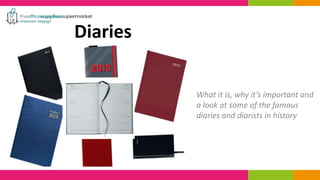



Diaries
What it is, why it’s important and
a look at some of the famous
diaries and diarists in history
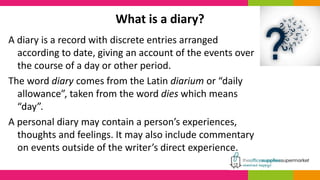
What is a diary?
A diary is a record with discrete entries arranged
according to date, giving an account of the events over
the course of a day or other period.
The word diary comes from the Latin diarium or “daily
allowance”, taken from the word dies which means
“day”.
A personal diary may contain a person’s experiences,
thoughts and feelings. It may also include commentary
on events outside of the writer’s direct experience.
Diaries written to record the activities and events involving
institutions play a role in many aspects of human civilisation.
These include:
government records
business ledgers
military records
In the modern sense a diary is more personal in nature, normally
intended to be privately read or circulated amongst relatives
and close associates only and not publicised.
Diary vs Journal
The term “journal” is also interchangeably used to refer to a
diary.
The word journal comes from diurnus meaning “of the day”
through the old French jurnal.
The general distinction between the two is that a diary is
intended to contain daily entries, as opposed to less frequent
writing in journals.
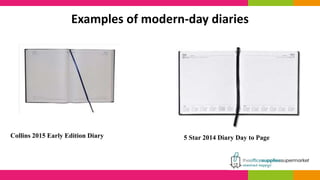
Examples of modern-day diaries
Collins 2015 Early Edition Diary 5 Star 2014 Diary Day to Page
Significance in recording history
Diaries of important personalities or of ordinary people
containing narrations of significant events in history
serve as a window with which we can look into what
life was like in the past.
Diaries are also used by historians and students to fill
the gaps in knowledge of events unrecorded in
historical, military and political chronicles.
They are also used as a picture of their writers’ time
and personality.
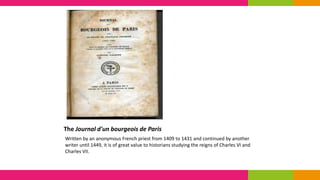
The Journal d'un bourgeois de Paris
Written by an anonymous French priest from 1409 to 1431 and continued by another
writer until 1449, it is of great value to historians studying the reigns of Charles VI and
Charles VII.
Famous diaries, journals and writers
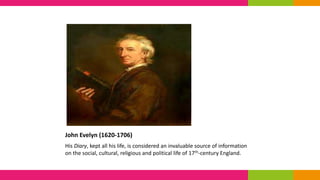
John Evelyn (1620-1706)
His Diary, kept all his life, is considered an invaluable source of information
on the social, cultural, religious and political life of 17th-century England.
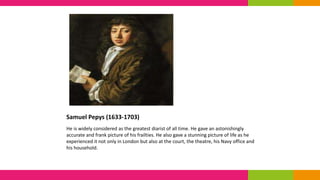
Samuel Pepys (1633-1703)
He is widely considered as the greatest diarist of all time. He gave an astonishingly
accurate and frank picture of his frailties. He also gave a stunning picture of life as he
experienced it not only in London but also at the court, the theatre, his Navy office and
his household.
the Journal of Katherine Mansfield (1927)
the Diary of Virginia Woolf
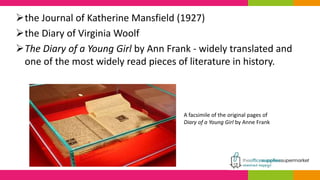
The Diary of a Young Girl by Ann Frank - widely translated and
one of the most widely read pieces of literature in history.
A facsimile of the original pages of
Diary of a Young Girl by Anne Frank
CONTACT US
08451 701 601
sales@theofficesuppliessupermarket.com
http://www.theofficesuppliessupermarket.com

Diaries

  • 1.
    Diaries What it is,why it’s important and a look at some of the famous diaries and diarists in history
  • 2.
    What is adiary? A diary is a record with discrete entries arranged according to date, giving an account of the events over the course of a day or other period. The word diary comes from the Latin diarium or “daily allowance”, taken from the word dies which means “day”. A personal diary may contain a person’s experiences, thoughts and feelings. It may also include commentary on events outside of the writer’s direct experience.
  • 3.
    Diaries written torecord the activities and events involving institutions play a role in many aspects of human civilisation. These include: government records business ledgers military records In the modern sense a diary is more personal in nature, normally intended to be privately read or circulated amongst relatives and close associates only and not publicised.
  • 4.
    Diary vs Journal Theterm “journal” is also interchangeably used to refer to a diary. The word journal comes from diurnus meaning “of the day” through the old French jurnal. The general distinction between the two is that a diary is intended to contain daily entries, as opposed to less frequent writing in journals.
  • 5.
    Examples of modern-daydiaries Collins 2015 Early Edition Diary 5 Star 2014 Diary Day to Page
  • 6.
    Significance in recordinghistory Diaries of important personalities or of ordinary people containing narrations of significant events in history serve as a window with which we can look into what life was like in the past. Diaries are also used by historians and students to fill the gaps in knowledge of events unrecorded in historical, military and political chronicles. They are also used as a picture of their writers’ time and personality.
  • 7.
    The Journal d'unbourgeois de Paris Written by an anonymous French priest from 1409 to 1431 and continued by another writer until 1449, it is of great value to historians studying the reigns of Charles VI and Charles VII.
  • 8.
  • 9.
    John Evelyn (1620-1706) HisDiary, kept all his life, is considered an invaluable source of information on the social, cultural, religious and political life of 17th-century England.
  • 10.
    Samuel Pepys (1633-1703) Heis widely considered as the greatest diarist of all time. He gave an astonishingly accurate and frank picture of his frailties. He also gave a stunning picture of life as he experienced it not only in London but also at the court, the theatre, his Navy office and his household.
  • 11.
    the Journal ofKatherine Mansfield (1927) the Diary of Virginia Woolf The Diary of a Young Girl by Ann Frank - widely translated and one of the most widely read pieces of literature in history. A facsimile of the original pages of Diary of a Young Girl by Anne Frank
  • 12.
    CONTACT US 08451 701601 sales@theofficesuppliessupermarket.com http://www.theofficesuppliessupermarket.com