Subject - specific ICT pedagogy:
design, use and experience
Presenter:
Sagar Lamsal (76127007)
One - year B.Ed., NOU
Pedagogy
• Any conscious activity by one person designed to enhance learning in
another (Watkins and Mortimore, 1999)
• A sustained process whereby somebody acquires new forms or
develops existing forms of conduct, knowledge, practice and criteria
from somebody or something deemed to be an appropriate provider
and evaluator (Bernstein, 2000)
ICT and Pedagogy
• ICT is a generic referring to technologies, which are being used for
collecting, storing, editing and passing on information in various
forms (SER, 1997)
• Information and Communication technology (ICT) can enhance the
effect of teaching-learning process. The development of ICT has given
new dimension to the pedagogy.
• ICTs are potentially powerful tools for extending educational
opportunities; it brings more materials and resources for classroom
interaction.
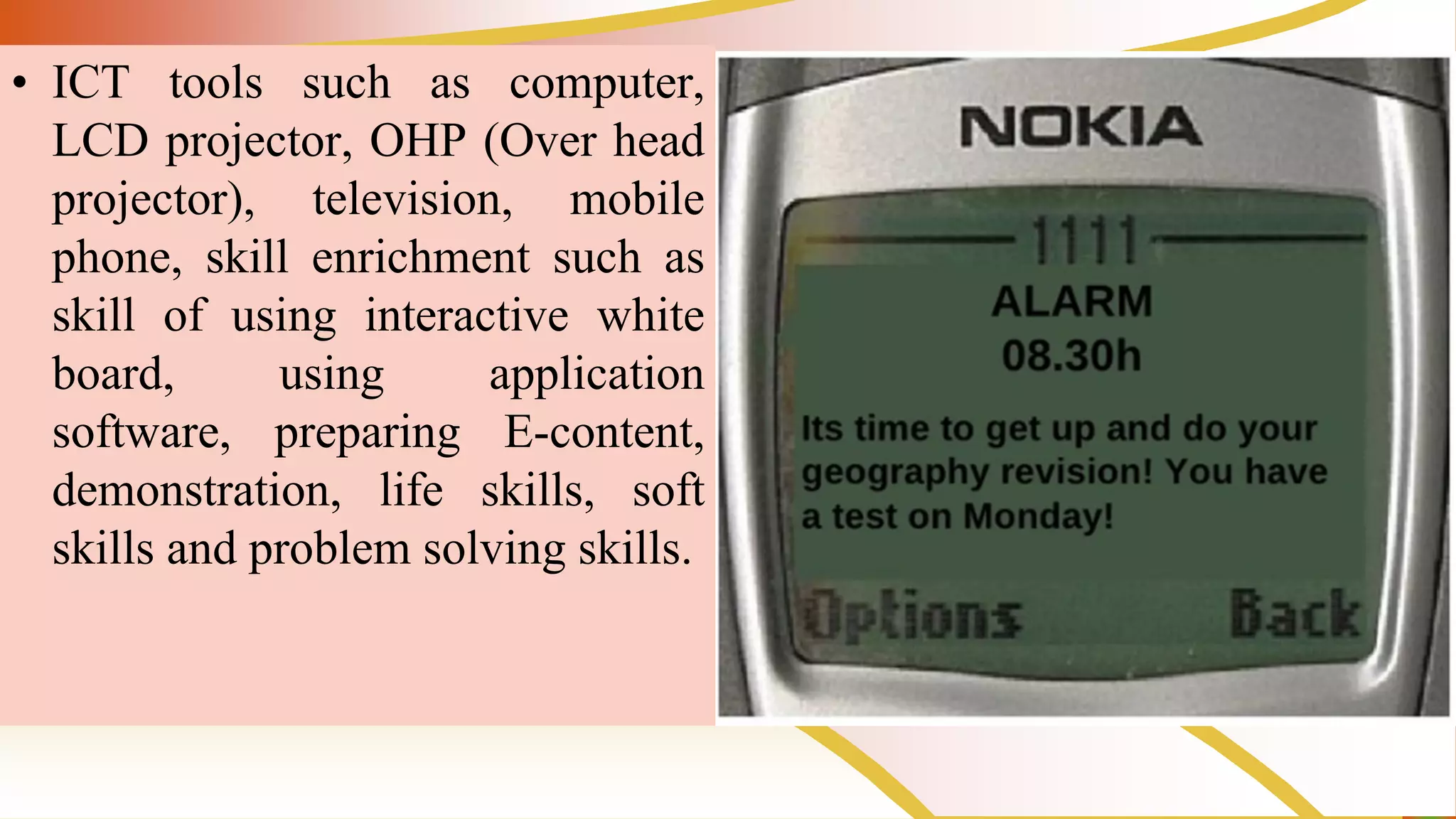
• ICT tools such as computer,
LCD projector, OHP (Over head
projector), television, mobile
phone, skill enrichment such as
skill of using interactive white
board, using application
software, preparing E-content,
demonstration, life skills, soft
skills and problem solving skills.
Subject-specific ICT Pedagogy
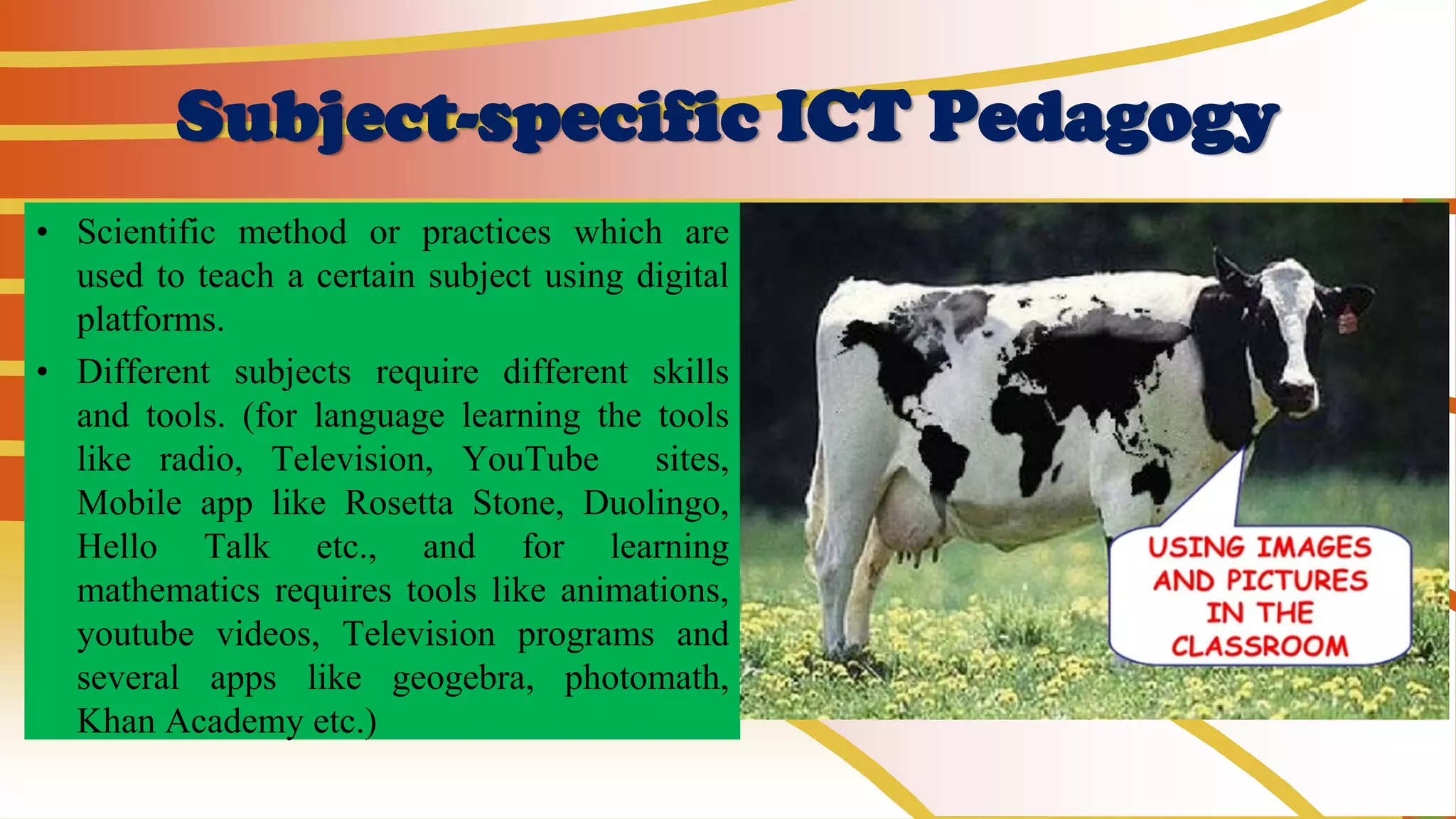
• Scientific method or practices which are
used to teach a certain subject using digital
platforms.
• Different subjects require different skills
and tools. (for language learning the tools
like radio, Television, YouTube sites,
Mobile app like Rosetta Stone, Duolingo,
Hello Talk etc., and for learning
mathematics requires tools like animations,
youtube videos, Television programs and
several apps like geogebra, photomath,
Khan Academy etc.)
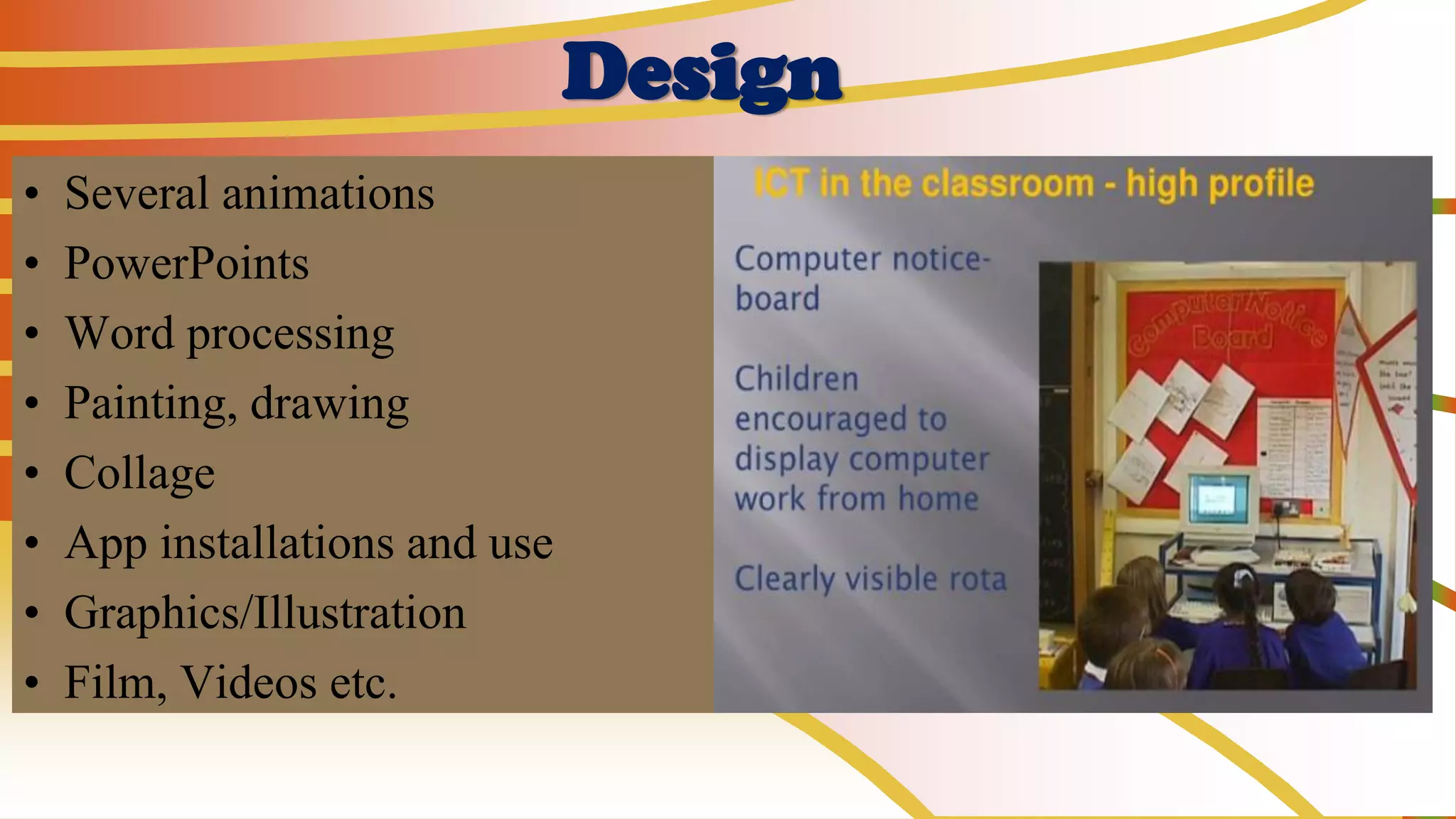
Design
• Several animations
• PowerPoints
• Word processing
• Painting, drawing
• Collage
• App installations and use
• Graphics/Illustration
• Film, Videos etc.
ICT tools uses
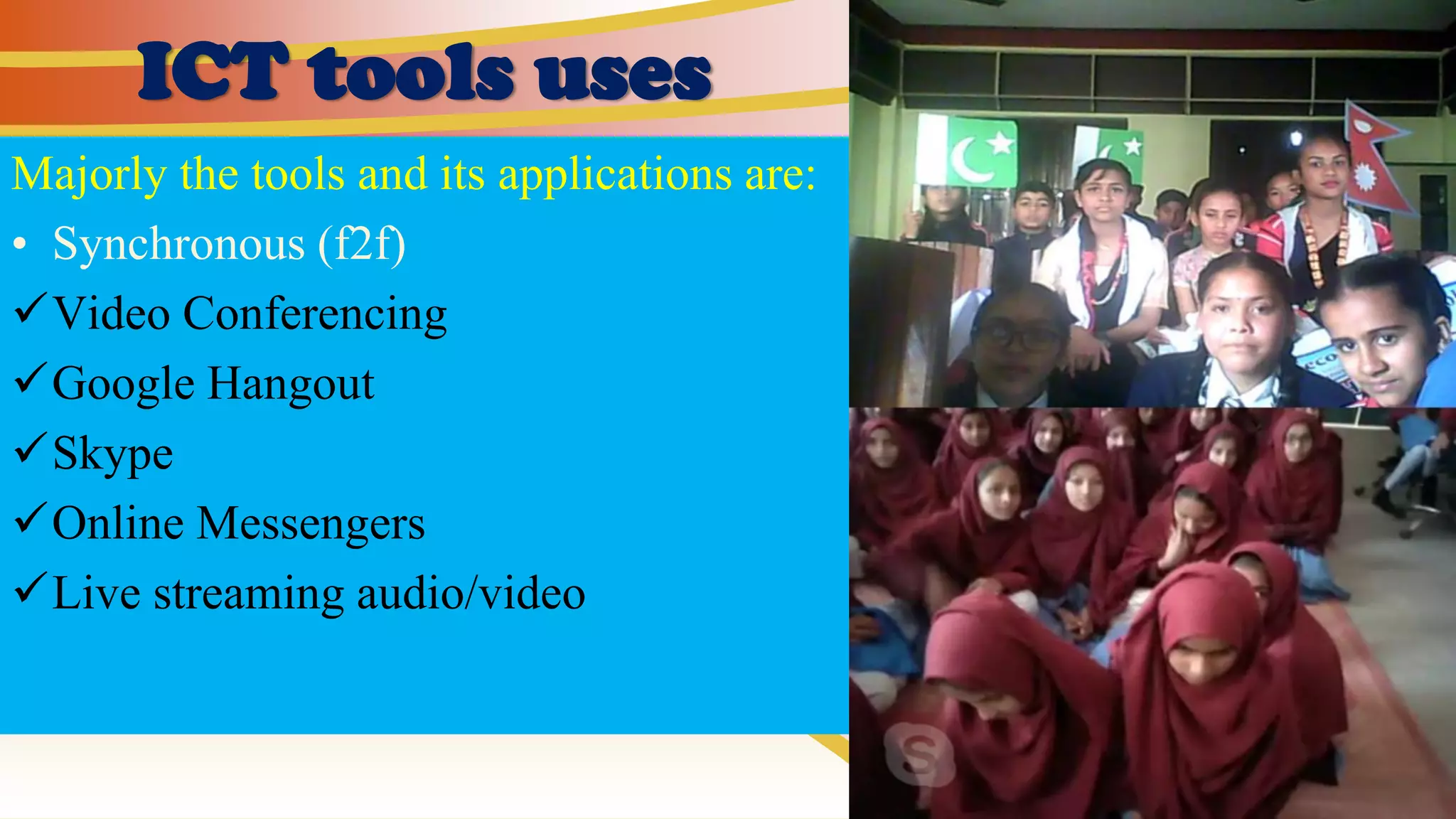
Majorly the tools and its applications are:
• Synchronous (f2f)
✓Video Conferencing
✓Google Hangout
✓Skype
✓Online Messengers
✓Live streaming audio/video
ICT tools uses
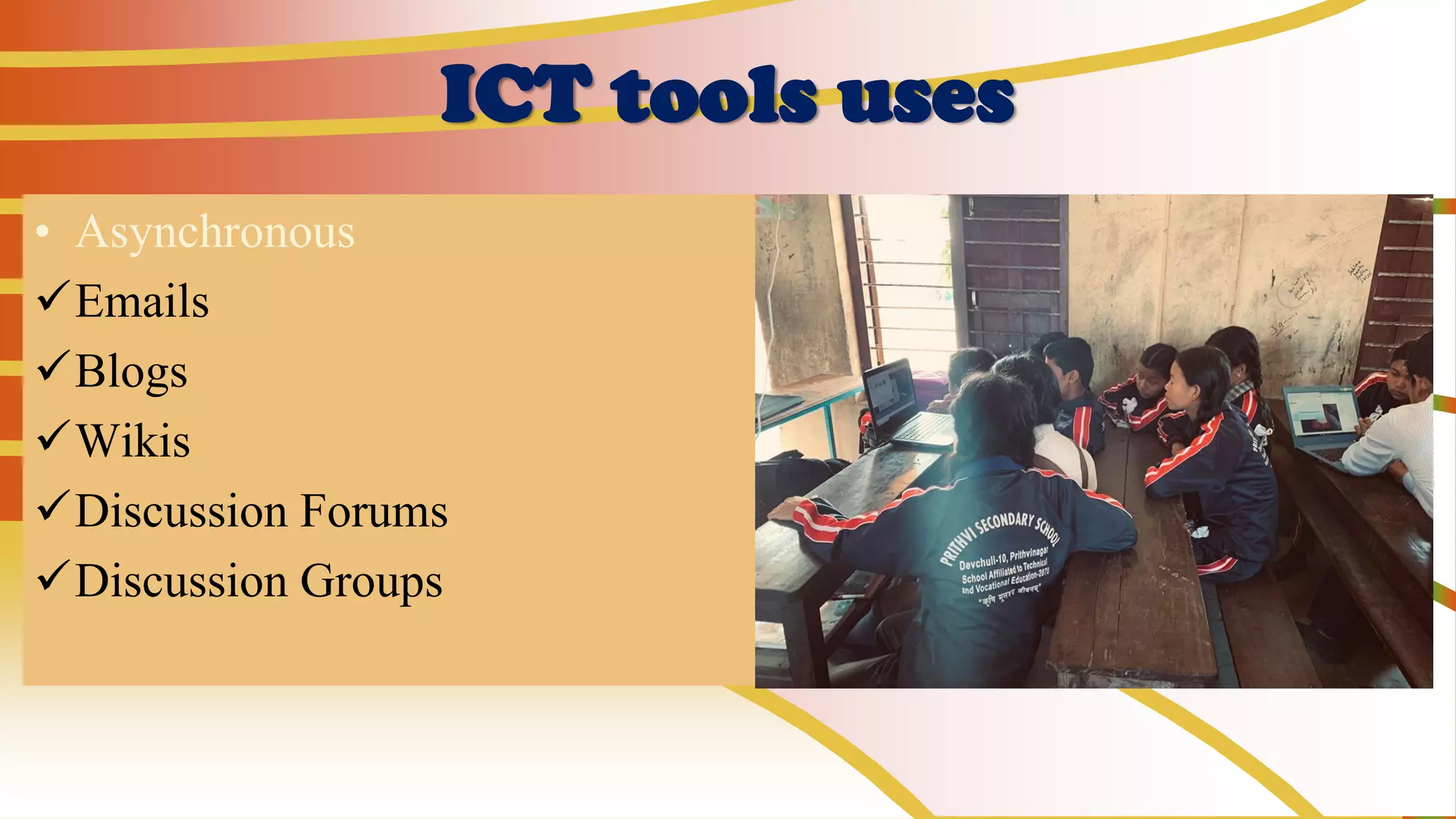
• Asynchronous
✓Emails
✓Blogs
✓Wikis
✓Discussion Forums
✓Discussion Groups
Type of ICT tools available
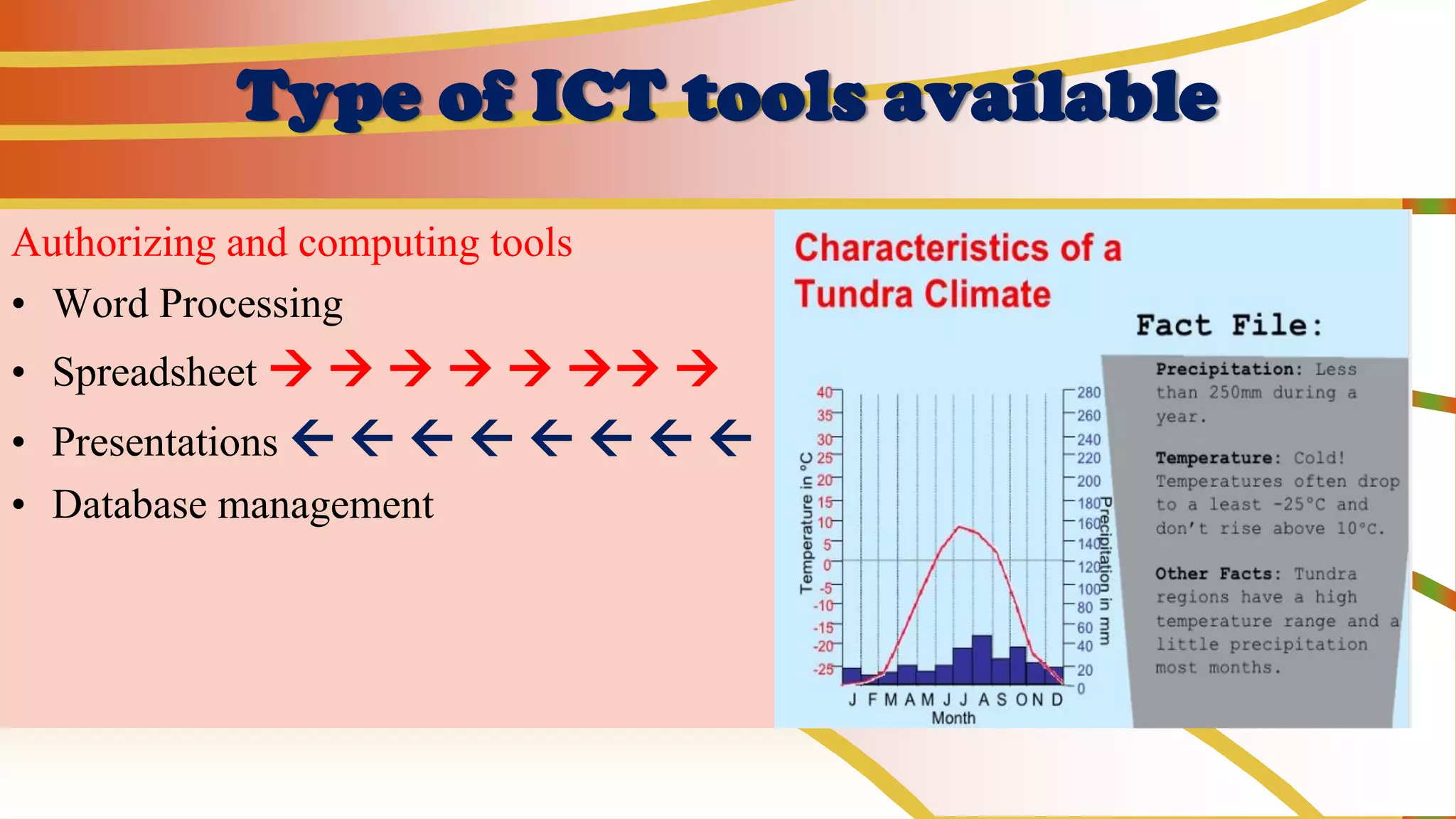
Authorizing and computing tools
• Word Processing
• Spreadsheet → → → → → →→ →
• Presentations        
• Database management
Types of ICT Tools available
Learning Management Systems
• Moodle
• Google Classroom
• Edmodo
• Flipgrid
• Kahoot
Types of ICT Tools available
Communication tools
• Google meet
• Facebook messenger
• Voov
• Zoom
• MS-Teams
Types of ICT Tools available
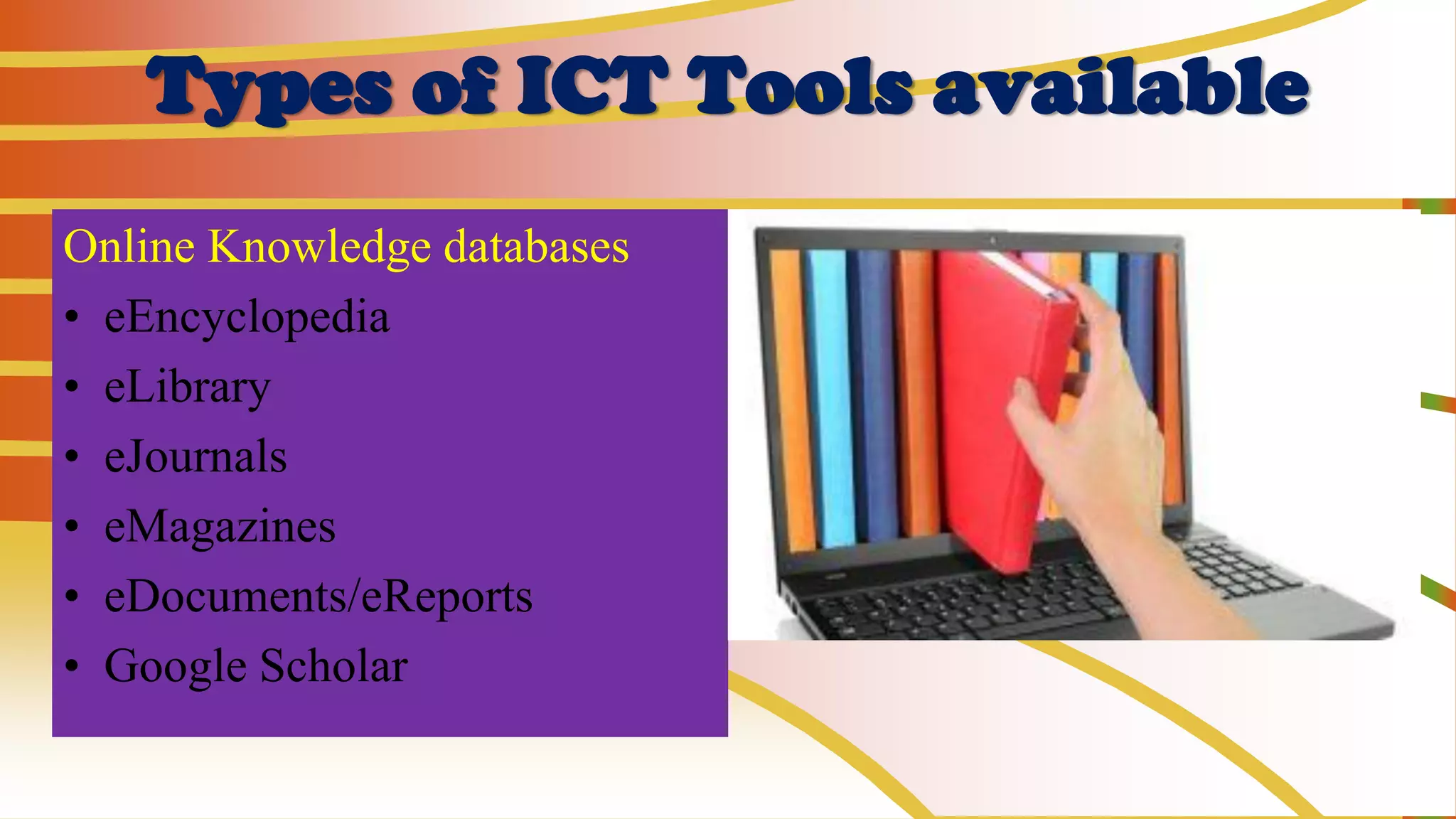
Online Knowledge databases
• eEncyclopedia
• eLibrary
• eJournals
• eMagazines
• eDocuments/eReports
• Google Scholar
Types of ICT Tools available
Social Networking
• Twitter
• Facebook
• LinkedIn
• Instagram
• Pinterest
• Flickr
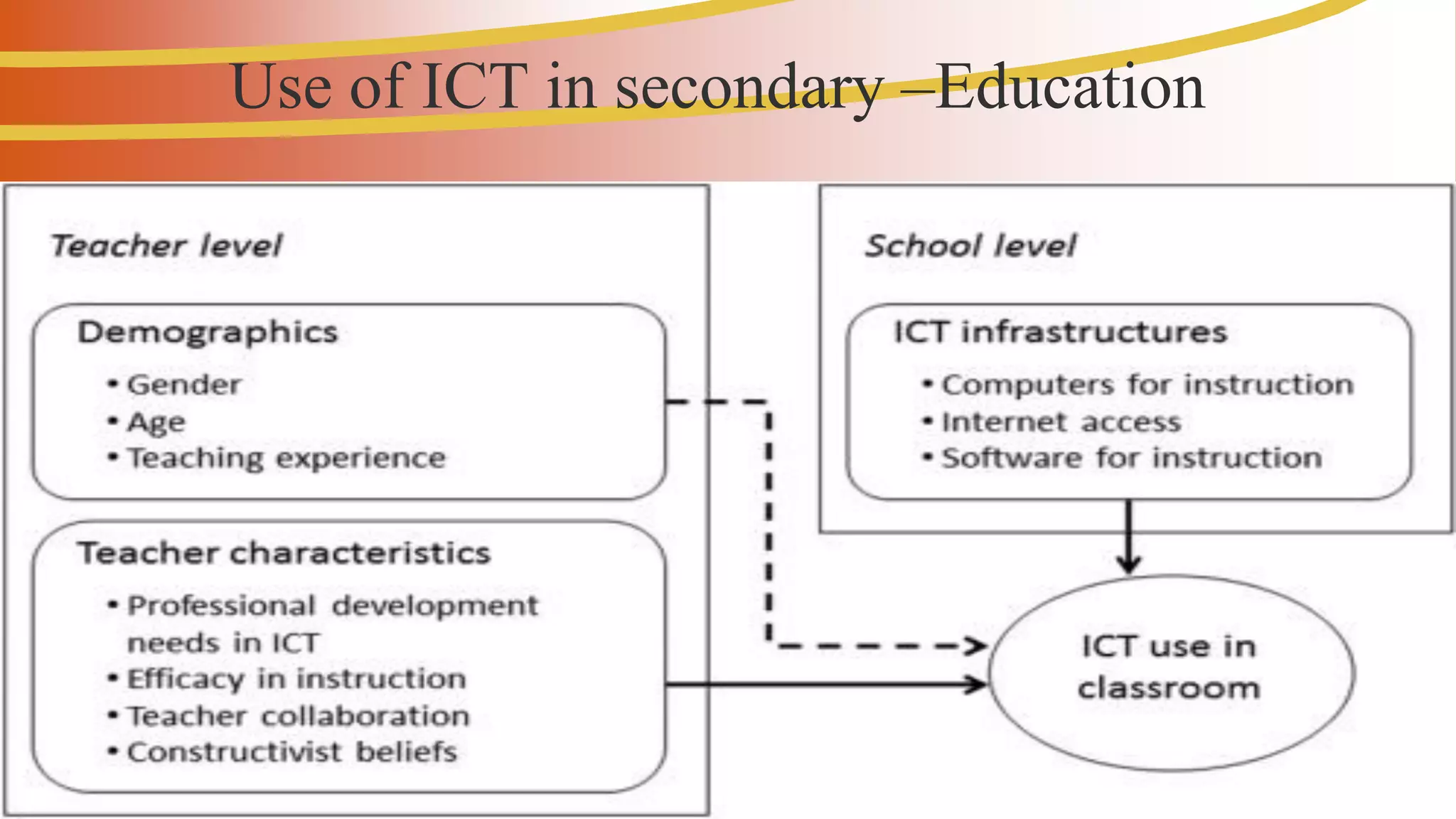
Use of ICT in secondary –Education
ICT as Medium of Curriculum Transaction
• Integrating curriculum in the Classroom
• Training of teachers to use ICT effectively
• Fostering creativity , collaboration , communication and
cultural diversity for personal development of learners
• Assessment of student learning , increasing learner
activeness.
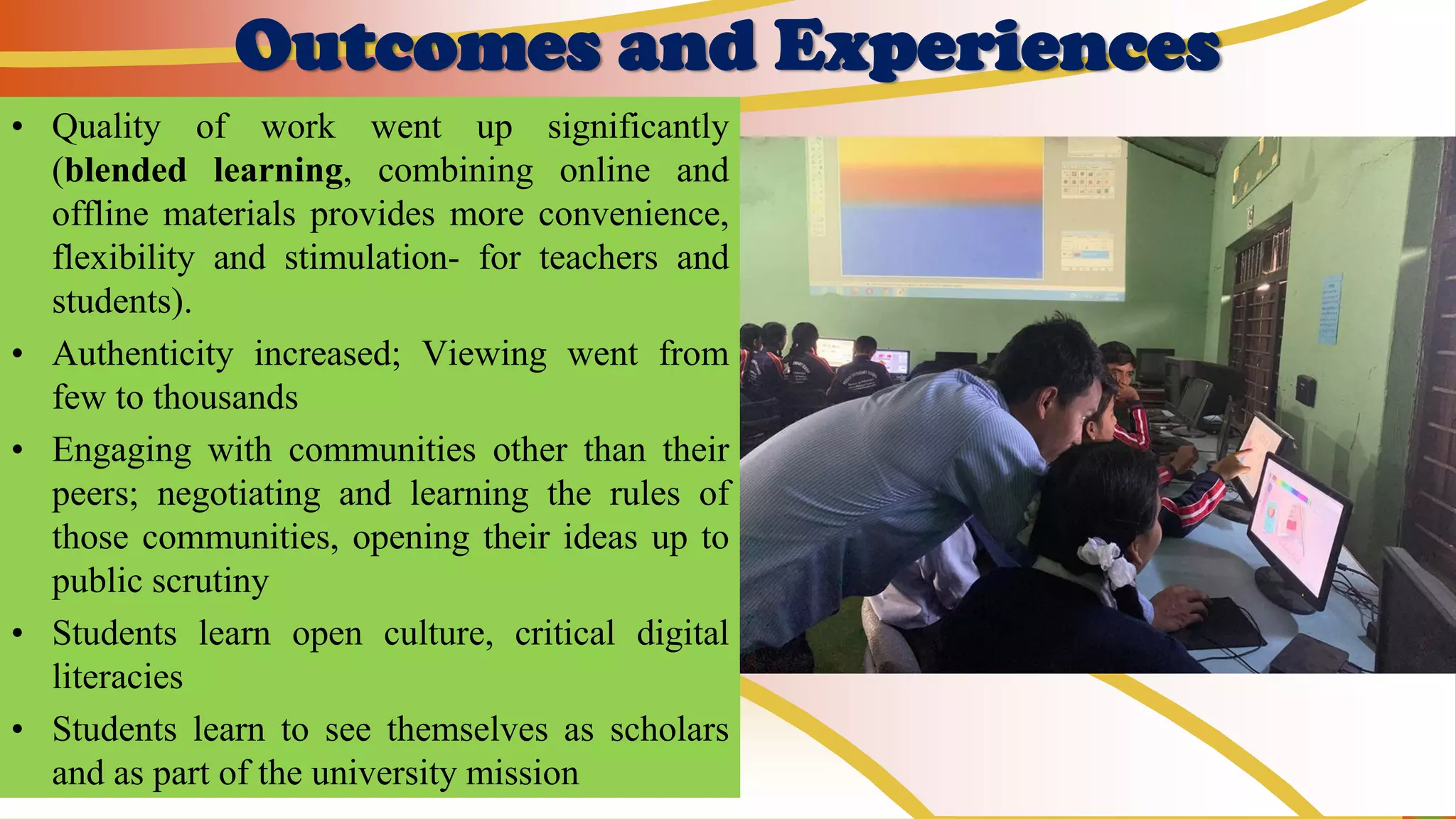
Outcomes and Experiences
• Quality of work went up significantly
(blended learning, combining online and
offline materials provides more convenience,
flexibility and stimulation- for teachers and
students).
• Authenticity increased; Viewing went from
few to thousands
• Engaging with communities other than their
peers; negotiating and learning the rules of
those communities, opening their ideas up to
public scrutiny
• Students learn open culture, critical digital
literacies
• Students learn to see themselves as scholars
and as part of the university mission
Thank you

Subject - specific ICT pedagogy: design, use and experience

  • 1.
    Subject - specificICT pedagogy: design, use and experience Presenter: Sagar Lamsal (76127007) One - year B.Ed., NOU
  • 3.
    Pedagogy • Any consciousactivity by one person designed to enhance learning in another (Watkins and Mortimore, 1999) • A sustained process whereby somebody acquires new forms or develops existing forms of conduct, knowledge, practice and criteria from somebody or something deemed to be an appropriate provider and evaluator (Bernstein, 2000)
  • 4.
    ICT and Pedagogy •ICT is a generic referring to technologies, which are being used for collecting, storing, editing and passing on information in various forms (SER, 1997) • Information and Communication technology (ICT) can enhance the effect of teaching-learning process. The development of ICT has given new dimension to the pedagogy. • ICTs are potentially powerful tools for extending educational opportunities; it brings more materials and resources for classroom interaction.
  • 5.
    • ICT toolssuch as computer, LCD projector, OHP (Over head projector), television, mobile phone, skill enrichment such as skill of using interactive white board, using application software, preparing E-content, demonstration, life skills, soft skills and problem solving skills.
  • 9.
    Subject-specific ICT Pedagogy •Scientific method or practices which are used to teach a certain subject using digital platforms. • Different subjects require different skills and tools. (for language learning the tools like radio, Television, YouTube sites, Mobile app like Rosetta Stone, Duolingo, Hello Talk etc., and for learning mathematics requires tools like animations, youtube videos, Television programs and several apps like geogebra, photomath, Khan Academy etc.)
  • 10.
    Design • Several animations •PowerPoints • Word processing • Painting, drawing • Collage • App installations and use • Graphics/Illustration • Film, Videos etc.
  • 11.
    ICT tools uses Majorlythe tools and its applications are: • Synchronous (f2f) ✓Video Conferencing ✓Google Hangout ✓Skype ✓Online Messengers ✓Live streaming audio/video
  • 12.
    ICT tools uses •Asynchronous ✓Emails ✓Blogs ✓Wikis ✓Discussion Forums ✓Discussion Groups
  • 13.
    Type of ICTtools available Authorizing and computing tools • Word Processing • Spreadsheet → → → → → →→ → • Presentations         • Database management
  • 14.
    Types of ICTTools available Learning Management Systems • Moodle • Google Classroom • Edmodo • Flipgrid • Kahoot
  • 15.
    Types of ICTTools available Communication tools • Google meet • Facebook messenger • Voov • Zoom • MS-Teams
  • 16.
    Types of ICTTools available Online Knowledge databases • eEncyclopedia • eLibrary • eJournals • eMagazines • eDocuments/eReports • Google Scholar
  • 17.
    Types of ICTTools available Social Networking • Twitter • Facebook • LinkedIn • Instagram • Pinterest • Flickr
  • 18.
    Use of ICTin secondary –Education
  • 20.
    ICT as Mediumof Curriculum Transaction • Integrating curriculum in the Classroom • Training of teachers to use ICT effectively • Fostering creativity , collaboration , communication and cultural diversity for personal development of learners • Assessment of student learning , increasing learner activeness.
  • 21.
    Outcomes and Experiences •Quality of work went up significantly (blended learning, combining online and offline materials provides more convenience, flexibility and stimulation- for teachers and students). • Authenticity increased; Viewing went from few to thousands • Engaging with communities other than their peers; negotiating and learning the rules of those communities, opening their ideas up to public scrutiny • Students learn open culture, critical digital literacies • Students learn to see themselves as scholars and as part of the university mission
  • 22.