Peter Browning and
Continental White Cap
Content
▪ White Cap Background:
1. History
2. Corporate Culture
3. Challenges
▪ Peter Browning’s Background
▪ Challenges at White Cap:
1. Pros and Cons of Management team
▪ Implementing changes
2
White Cap History
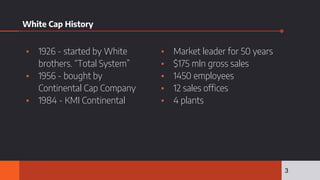
▪ 1926 - started by White
brothers. “Total System”
▪ 1956 - bought by
Continental Cap Company
▪ 1984 - KMI Continental
▪ Market leader for 50 years
▪ $175 mln gross sales
▪ 1450 employees
▪ 12 sales offices
▪ 4 plants
3
Corporate Culture
▪ Paternalism
▪ Management without confrontation
▪ High salary & Job security
▪ Incentives for employees & favors on need basis
▪ Rife with ceremonies and traditions
▪ Status Quo mentality
4
Challenges
▪ Price competition - significant competition in domestic and
international markets
▪ High overheads - company kept enhancing products that no
longer satisfied customers’ need which lead to low value and
further costs
▪ Need for new technologies - innovations suggested by other
vendors were well received by customers
5
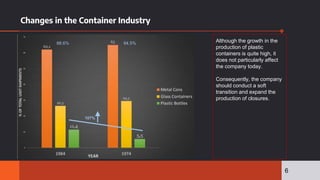
Changes in the Container Industry
6
107%
Although the growth in the
production of plastic
containers is quite high, it
does not particularly affect
the company today.
Consequently, the company
should conduct a soft
transition and expand the
production of closures.
88.6% 94.5%
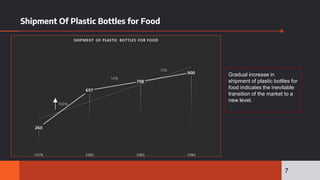
Shipment Of Plastic Bottles for Food
7
168%
14%
13%
Gradual increase in
shipment of plastic bottles for
food indicates the inevitable
transition of the market to a
new level.
Peter Browning’s Background
▪ In White Cap and Continental Can since 1964 (sales
representative > marketing).
▪ Vice President and general manager of Bondware
since 1979: policy of “radical surgery”.
8
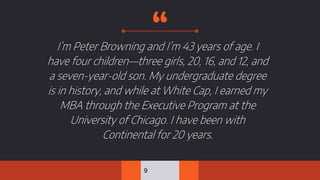
“I’m Peter Browning and I’m 43 years of age. I
have four children—three girls, 20, 16, and 12, and
a seven-year-old son. My undergraduate degree
is in history, and while at White Cap, I earned my
MBA through the Executive Program at the
University of Chicago. I have been with
Continental for 20 years.
9
Challenges at White Cap
P.Browning
Corporate Owners
[Cut Costs]
Employees
[Corporate Culture]
10
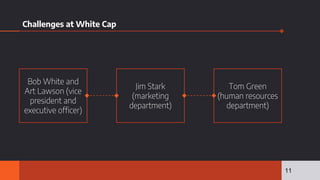
Challenges at White Cap
11
Bob White and
Art Lawson (vice
president and
executive officer)
Tom Green
(human resources
department)
Jim Stark
(marketing
department)
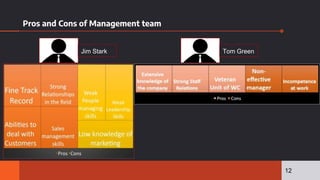
Pros and Cons of Management team
Jim Stark Tom Green
12
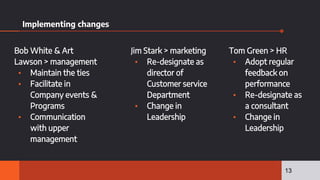
Implementing changes
Bob White & Art
Lawson > management
▪ Maintain the ties
▪ Facilitate in
Company events &
Programs
▪ Communication
with upper
management
Jim Stark > marketing
▪ Re-designate as
director of
Customer service
Department
▪ Change in
Leadership
Tom Green > HR
▪ Adopt regular
feedback on
performance
▪ Re-designate as
a consultant
▪ Change in
Leadership
13
Implementing changes
▪ Gradual Change Management
▪ Transformational change:
1. Cut costs + enrich customer's basis + expand product
line
2. Reduce overheads > performance based
compensation
▪ Employee oriented policy + task oriented actions
14
Implementing changes: how to get rid of Paternalism
▪ Policy of Openness and Transparency
▪ More informal meeting environment
▪ Open dialogue and exchange of ideas
▪ Organizing group presentations
▪ Question/Answer sessions
15
Implementing changes: how to get rid of Paternalism
▪ Policy of Openness and Transparency
▪ More informal meeting environment
▪ Open dialogue and exchange of ideas
▪ Organizing group presentations
▪ Question/Answer sessions
16
17
THANKS!
ANY QUESTIONS?

Peter browning and continental white cap

  • 1.
  • 2.
    Content ▪ White CapBackground: 1. History 2. Corporate Culture 3. Challenges ▪ Peter Browning’s Background ▪ Challenges at White Cap: 1. Pros and Cons of Management team ▪ Implementing changes 2
  • 3.
    White Cap History ▪1926 - started by White brothers. “Total System” ▪ 1956 - bought by Continental Cap Company ▪ 1984 - KMI Continental ▪ Market leader for 50 years ▪ $175 mln gross sales ▪ 1450 employees ▪ 12 sales offices ▪ 4 plants 3
  • 4.
    Corporate Culture ▪ Paternalism ▪Management without confrontation ▪ High salary & Job security ▪ Incentives for employees & favors on need basis ▪ Rife with ceremonies and traditions ▪ Status Quo mentality 4
  • 5.
    Challenges ▪ Price competition- significant competition in domestic and international markets ▪ High overheads - company kept enhancing products that no longer satisfied customers’ need which lead to low value and further costs ▪ Need for new technologies - innovations suggested by other vendors were well received by customers 5
  • 6.
    Changes in theContainer Industry 6 107% Although the growth in the production of plastic containers is quite high, it does not particularly affect the company today. Consequently, the company should conduct a soft transition and expand the production of closures. 88.6% 94.5%
  • 7.
    Shipment Of PlasticBottles for Food 7 168% 14% 13% Gradual increase in shipment of plastic bottles for food indicates the inevitable transition of the market to a new level.
  • 8.
    Peter Browning’s Background ▪In White Cap and Continental Can since 1964 (sales representative > marketing). ▪ Vice President and general manager of Bondware since 1979: policy of “radical surgery”. 8
  • 9.
    “I’m Peter Browningand I’m 43 years of age. I have four children—three girls, 20, 16, and 12, and a seven-year-old son. My undergraduate degree is in history, and while at White Cap, I earned my MBA through the Executive Program at the University of Chicago. I have been with Continental for 20 years. 9
  • 10.
    Challenges at WhiteCap P.Browning Corporate Owners [Cut Costs] Employees [Corporate Culture] 10
  • 11.
    Challenges at WhiteCap 11 Bob White and Art Lawson (vice president and executive officer) Tom Green (human resources department) Jim Stark (marketing department)
  • 12.
    Pros and Consof Management team Jim Stark Tom Green 12
  • 13.
    Implementing changes Bob White& Art Lawson > management ▪ Maintain the ties ▪ Facilitate in Company events & Programs ▪ Communication with upper management Jim Stark > marketing ▪ Re-designate as director of Customer service Department ▪ Change in Leadership Tom Green > HR ▪ Adopt regular feedback on performance ▪ Re-designate as a consultant ▪ Change in Leadership 13
  • 14.
    Implementing changes ▪ GradualChange Management ▪ Transformational change: 1. Cut costs + enrich customer's basis + expand product line 2. Reduce overheads > performance based compensation ▪ Employee oriented policy + task oriented actions 14
  • 15.
    Implementing changes: howto get rid of Paternalism ▪ Policy of Openness and Transparency ▪ More informal meeting environment ▪ Open dialogue and exchange of ideas ▪ Organizing group presentations ▪ Question/Answer sessions 15
  • 16.
    Implementing changes: howto get rid of Paternalism ▪ Policy of Openness and Transparency ▪ More informal meeting environment ▪ Open dialogue and exchange of ideas ▪ Organizing group presentations ▪ Question/Answer sessions 16
  • 17.