Structure of global
organisation
Meaning
• A company's functions, teams, and personnel are outlined in a
hierarchical framework called the organisational structure.
• An organizational structure is a system that outlines how certain
activities are directed in order to achieve the goals of an
organization. These activities can include rules, roles, and
responsibilities.
• The organizational structure also determines how information flows
between levels within the company.
• A structure of formal authority and responsibility is created.
Factors influencing structure of global
organisation
• Mode of Entry
• External Environment
• Overall Objectives
• Nature of Business
• Organisational climate
• Management Style
• Size of an Enterprise
• Technology
Types of Global Organisational Structure
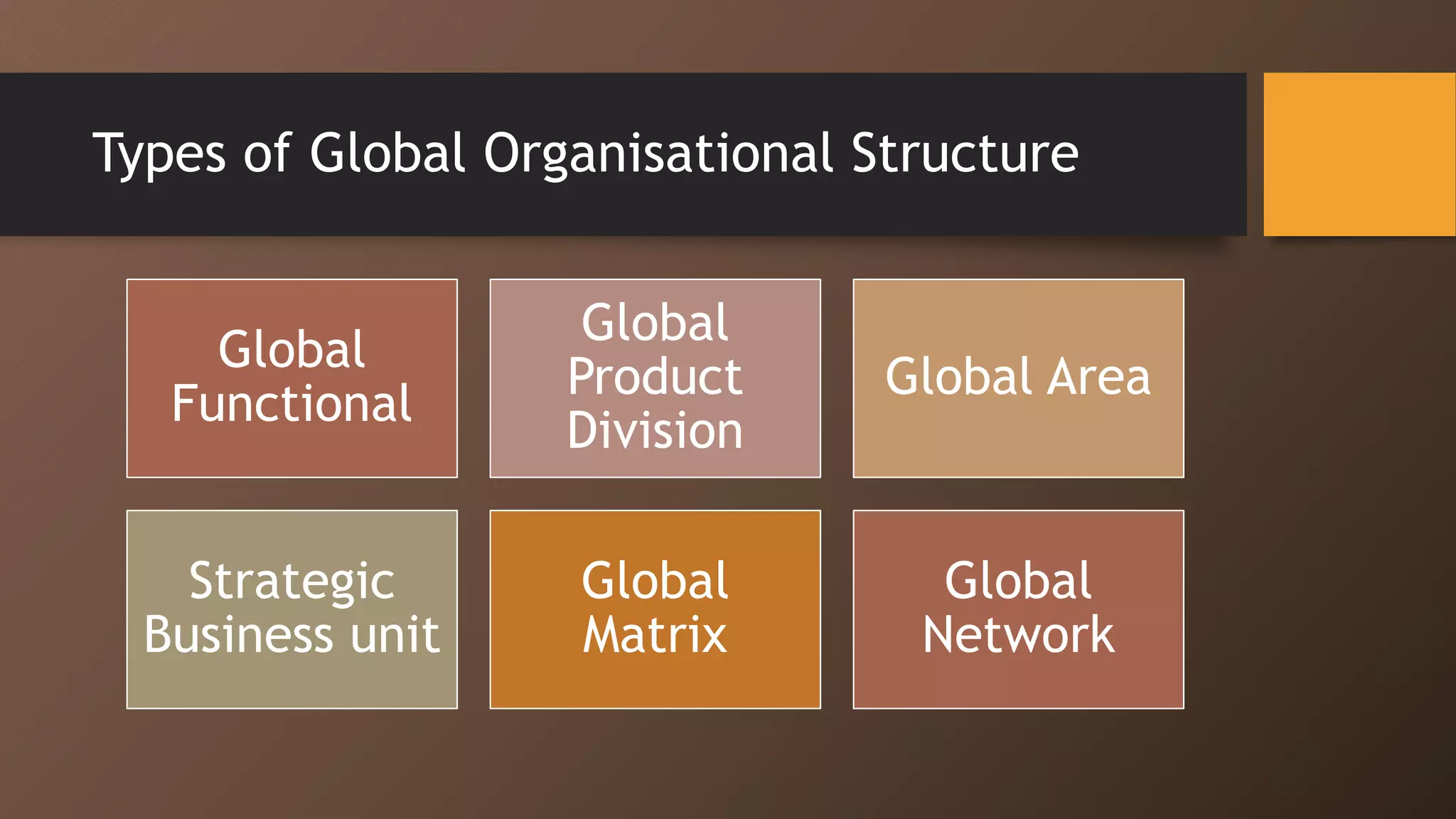
Global
Functional
Global
Product
Division
Global Area
Strategic
Business unit
Global
Matrix
Global
Network
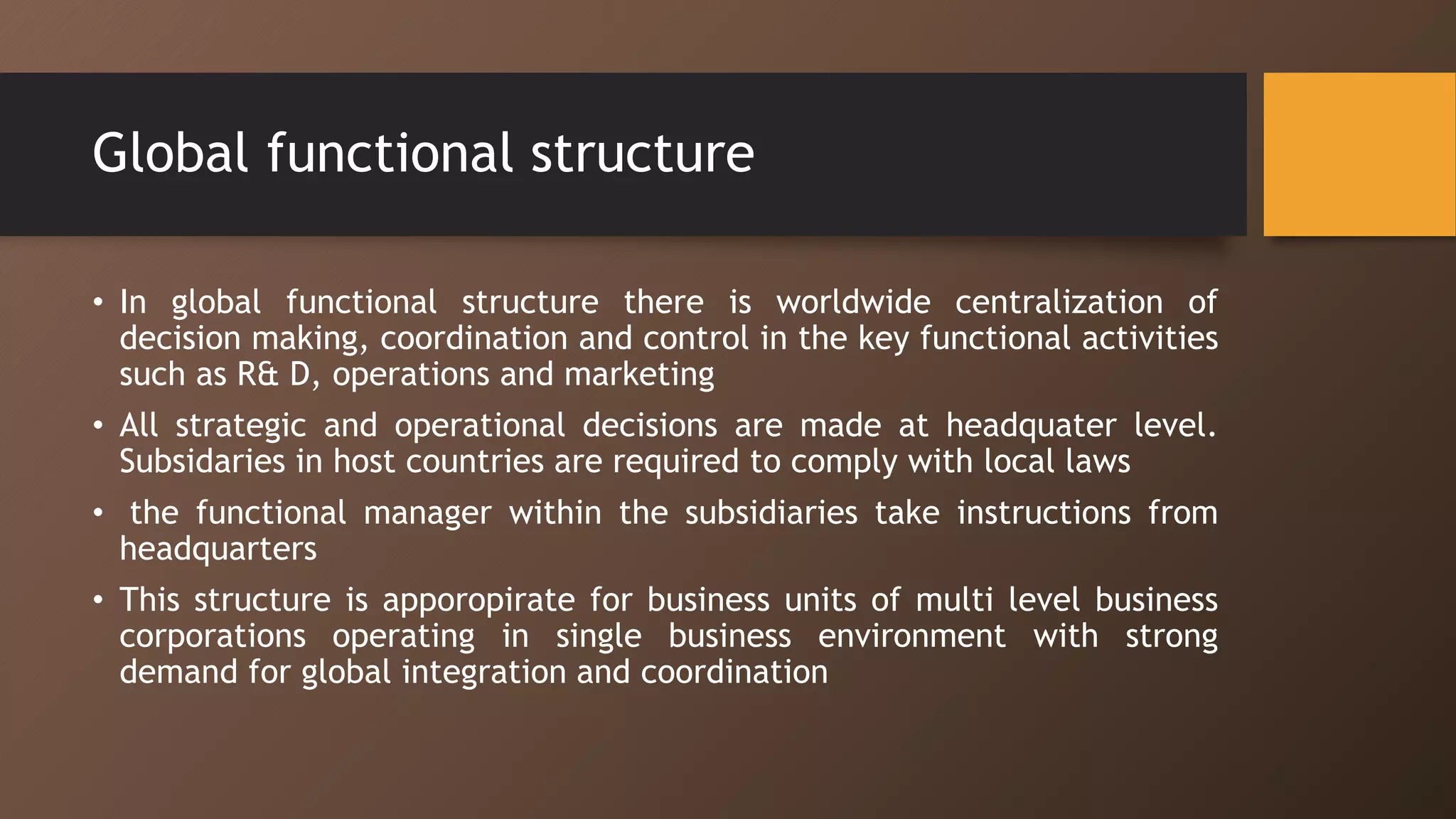
Global functional structure
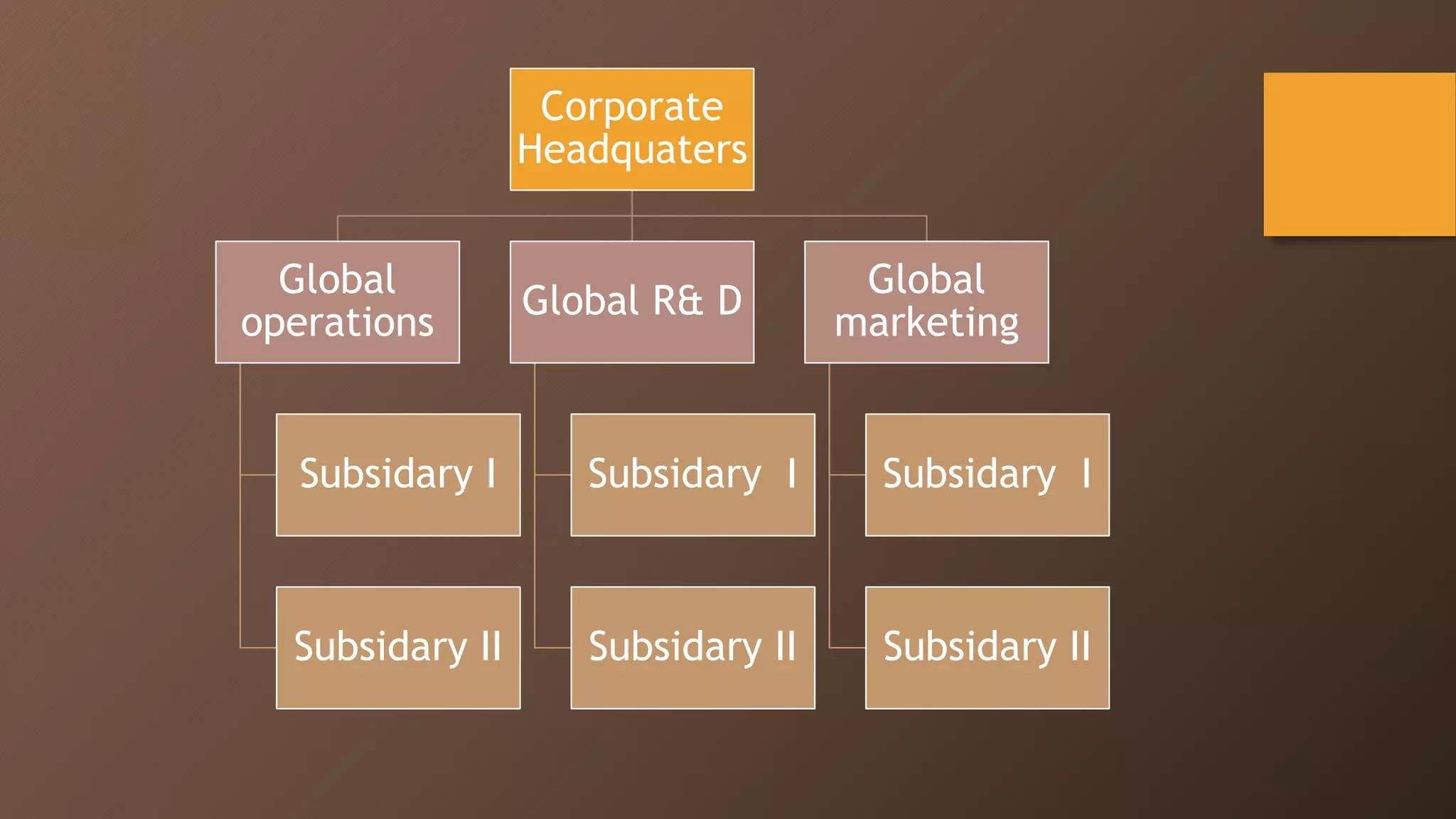
• In global functional structure there is worldwide centralization of
decision making, coordination and control in the key functional activities
such as R& D, operations and marketing
• All strategic and operational decisions are made at headquater level.
Subsidaries in host countries are required to comply with local laws
• the functional manager within the subsidiaries take instructions from
headquarters
• This structure is apporopirate for business units of multi level business
corporations operating in single business environment with strong
demand for global integration and coordination
Corporate
Headquaters
Global
operations
Subsidary I
Subsidary II
Global R& D
Subsidary I
Subsidary II
Global
marketing
Subsidary I
Subsidary II
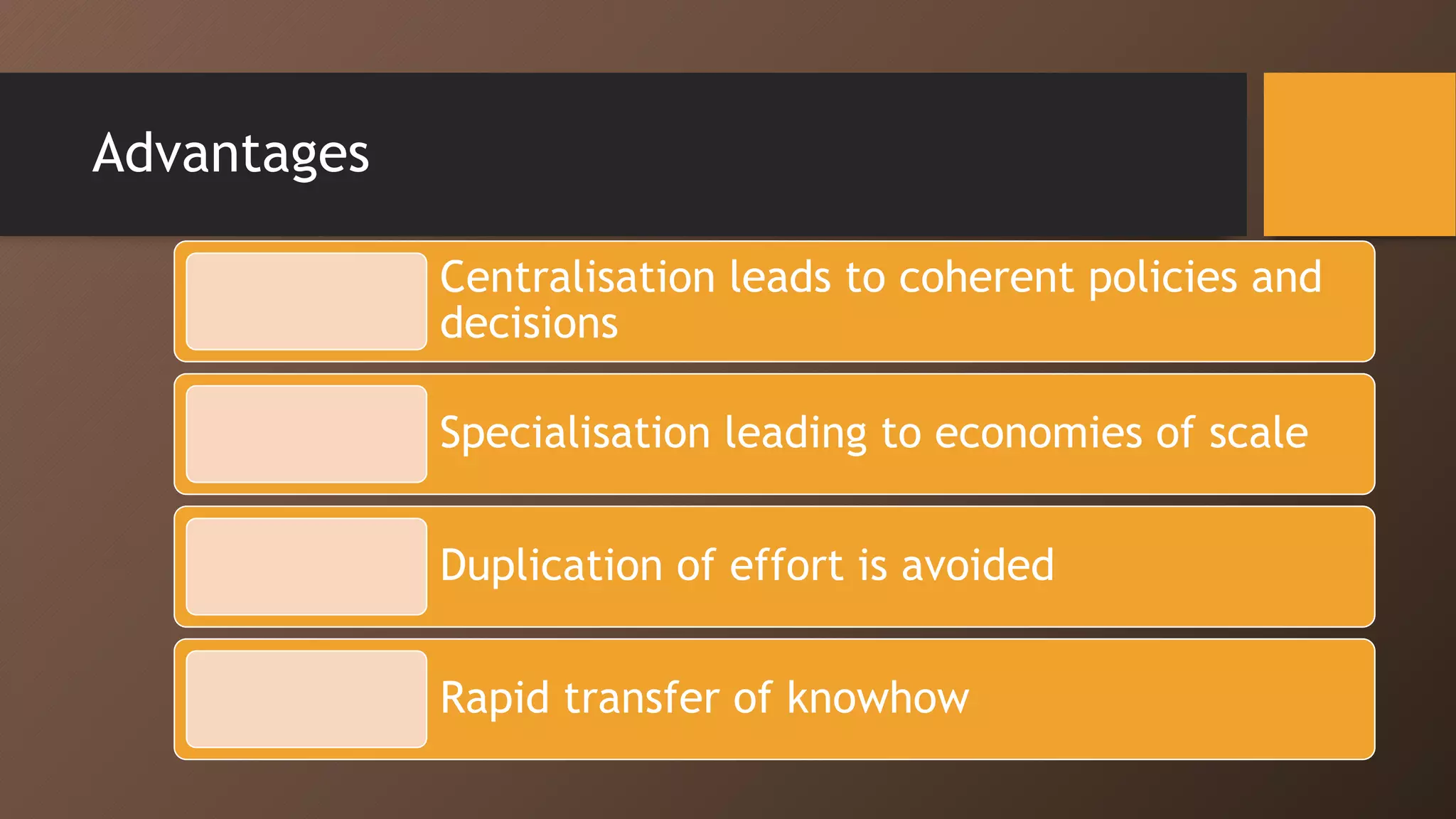
Advantages
Centralisation leads to coherent policies and
decisions
Specialisation leading to economies of scale
Duplication of effort is avoided
Rapid transfer of knowhow
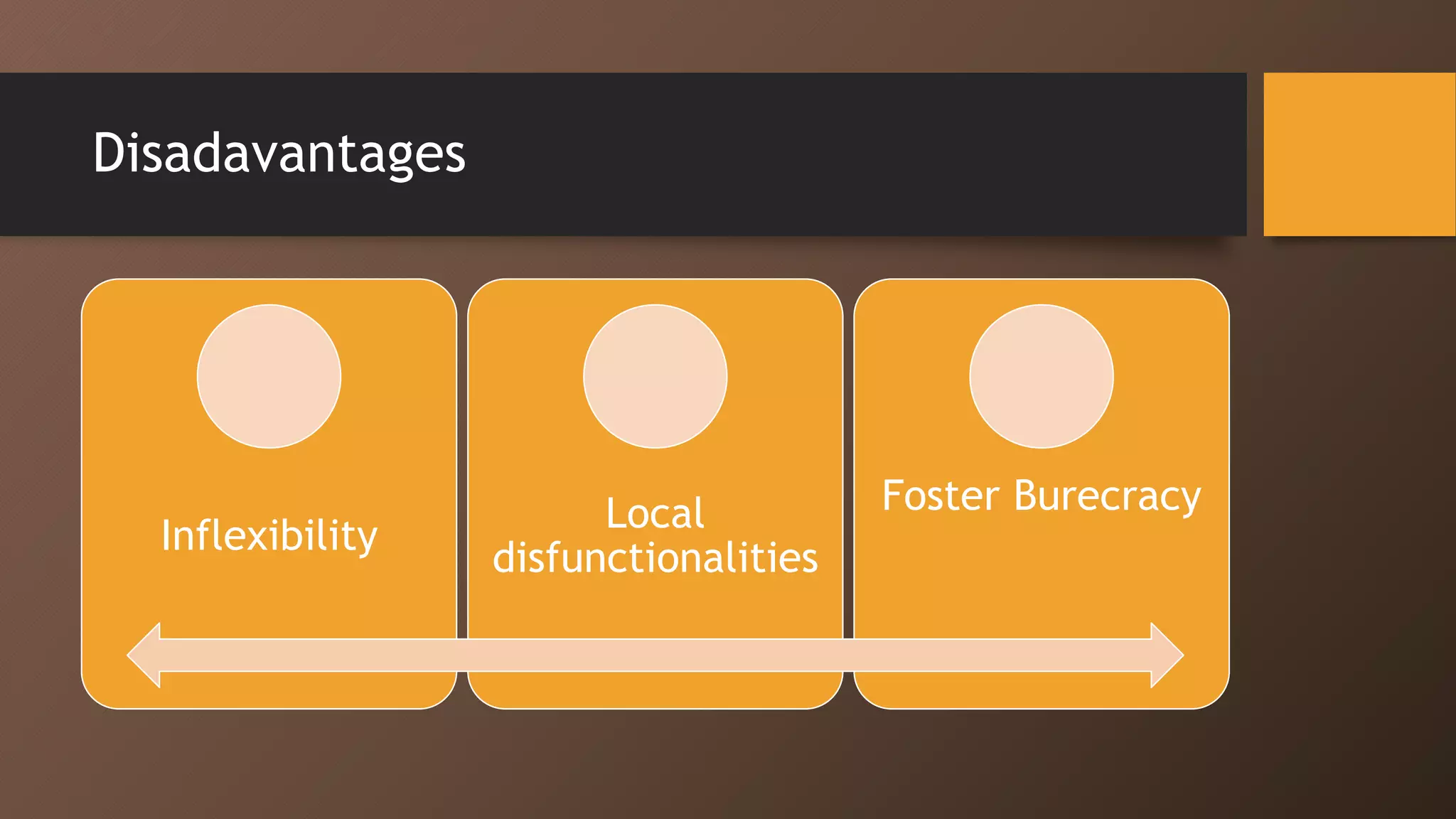
Disadavantages
Inflexibility
Local
disfunctionalities
Foster Burecracy
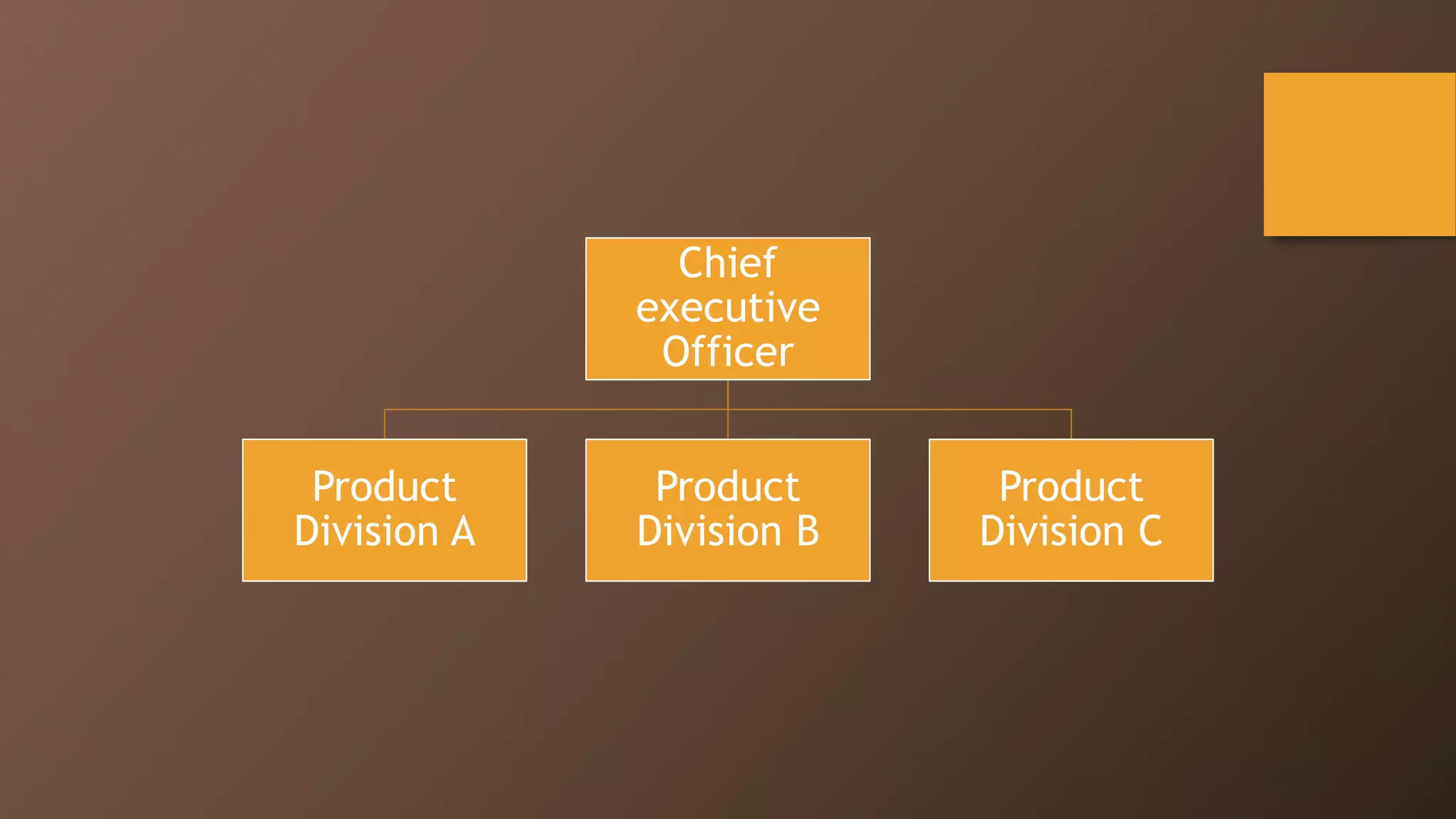
Global Product Division
• World wide responsibility for specific product group is assigned to
separate operating divisions within the company
• Ex: a company dealing in consumer products may have separate division
for laundary products, personal care products,
• the divisional head is given the line authority and responsibility for
worldwide management of functions such as marketing , finance
• The product division has to function within overall corporate plan and
strategy
• The top management mantains control through budegetory allocation
and approval for certain vital decisions
Chief
executive
Officer
Product
Division A
Product
Division B
Product
Division C
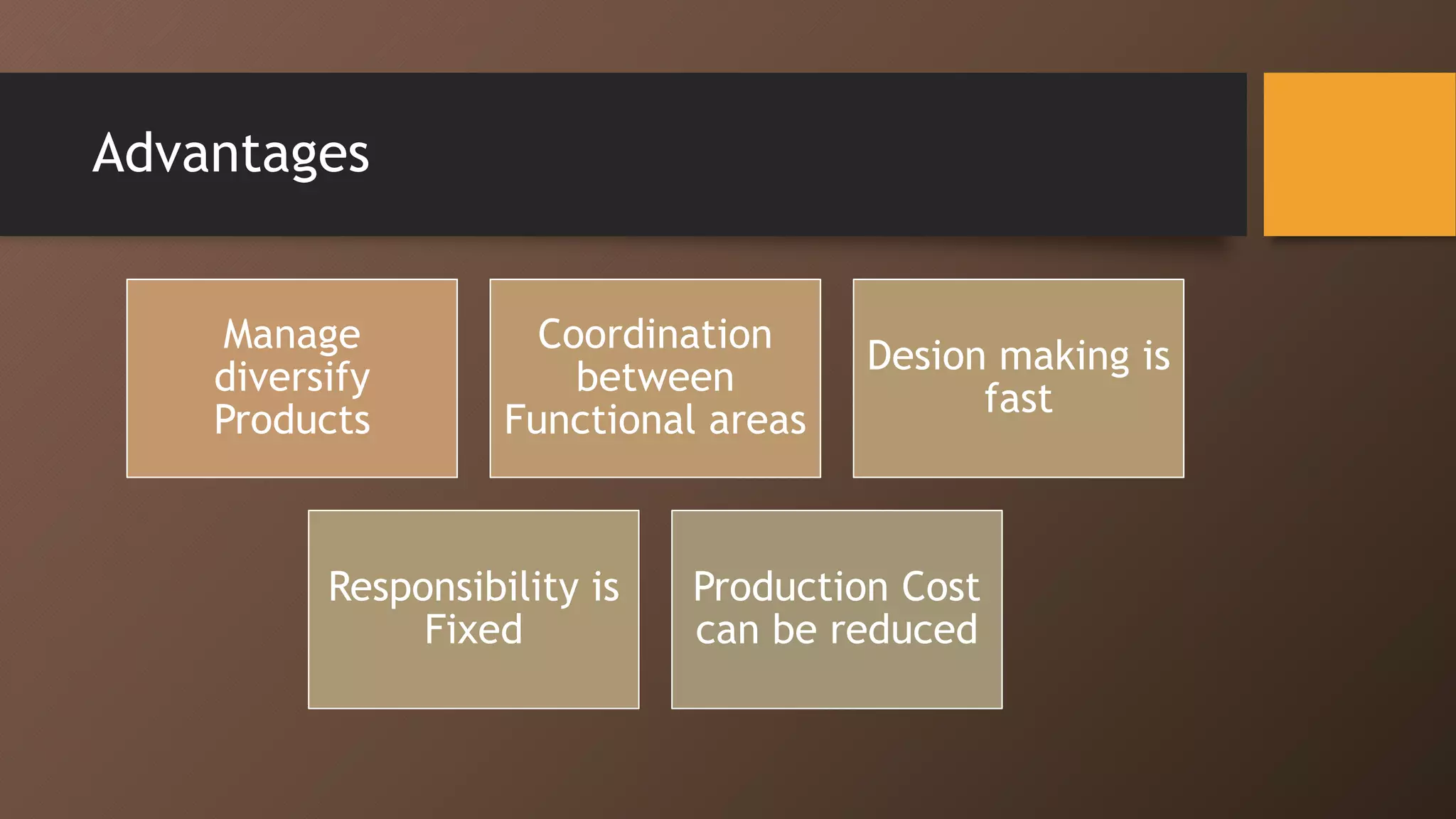
Advantages
Manage
diversify
Products
Coordination
between
Functional areas
Desion making is
fast
Responsibility is
Fixed
Production Cost
can be reduced
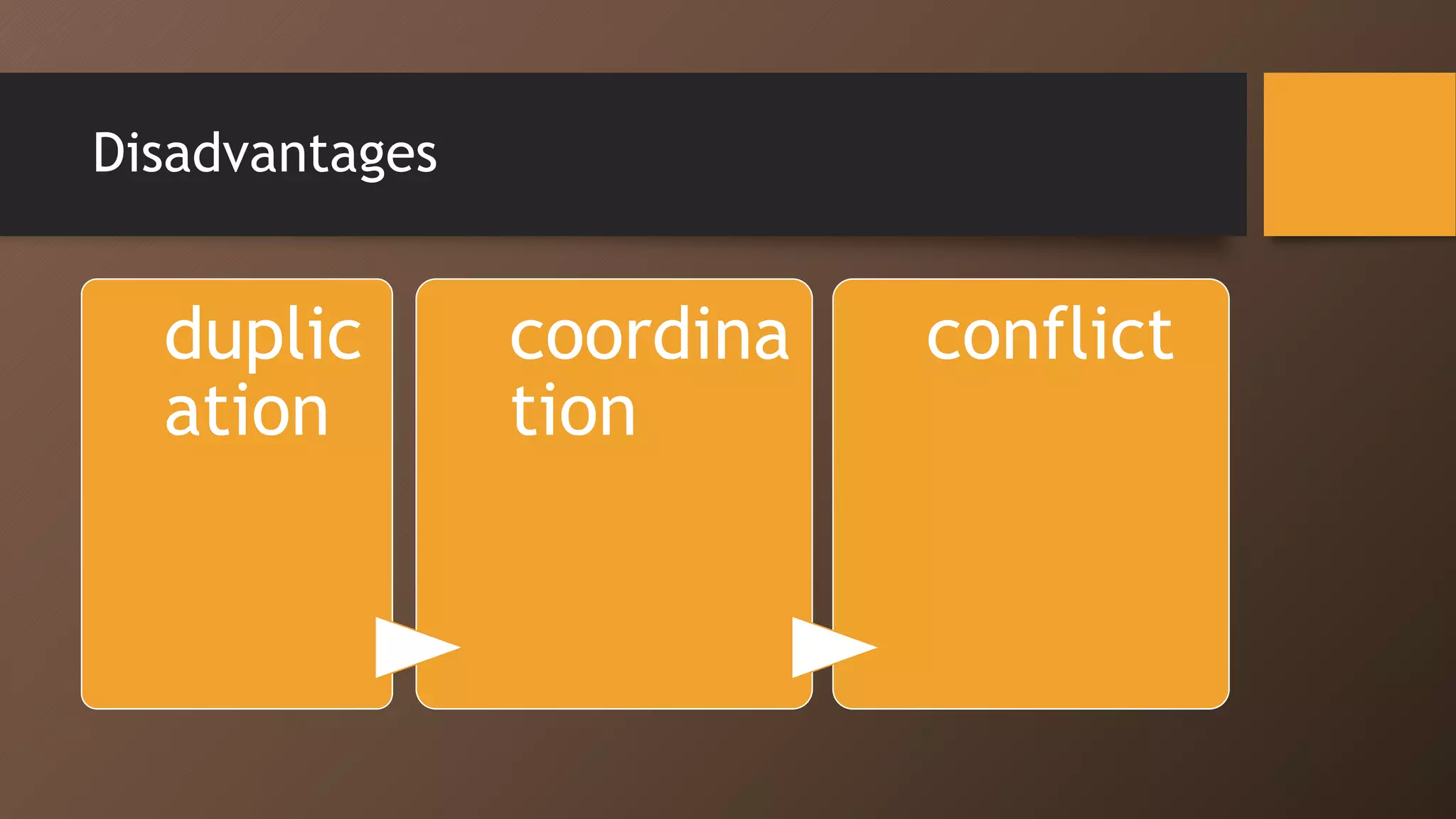
Disadvantages
duplic
ation
coordina
tion
conflict
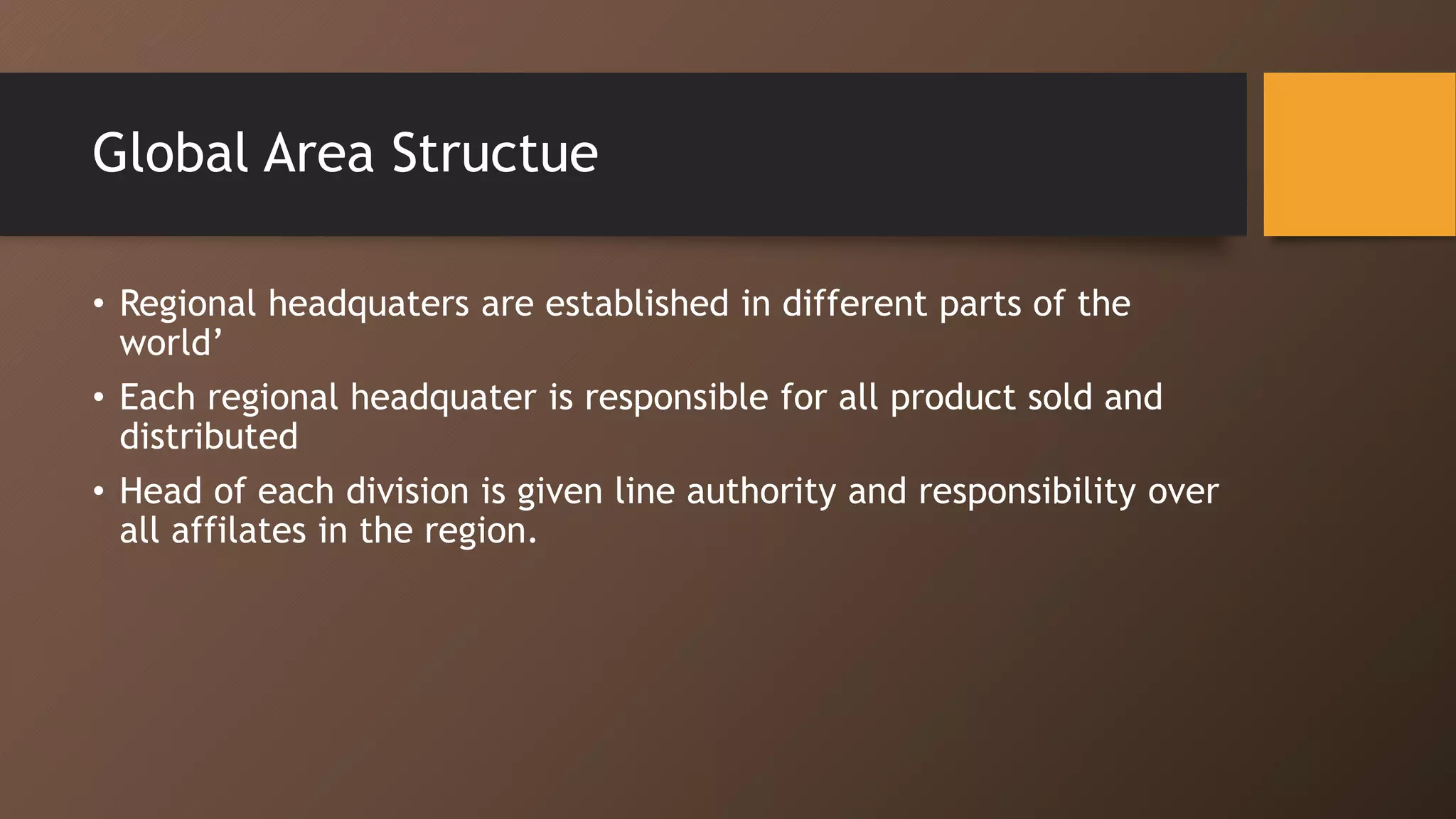
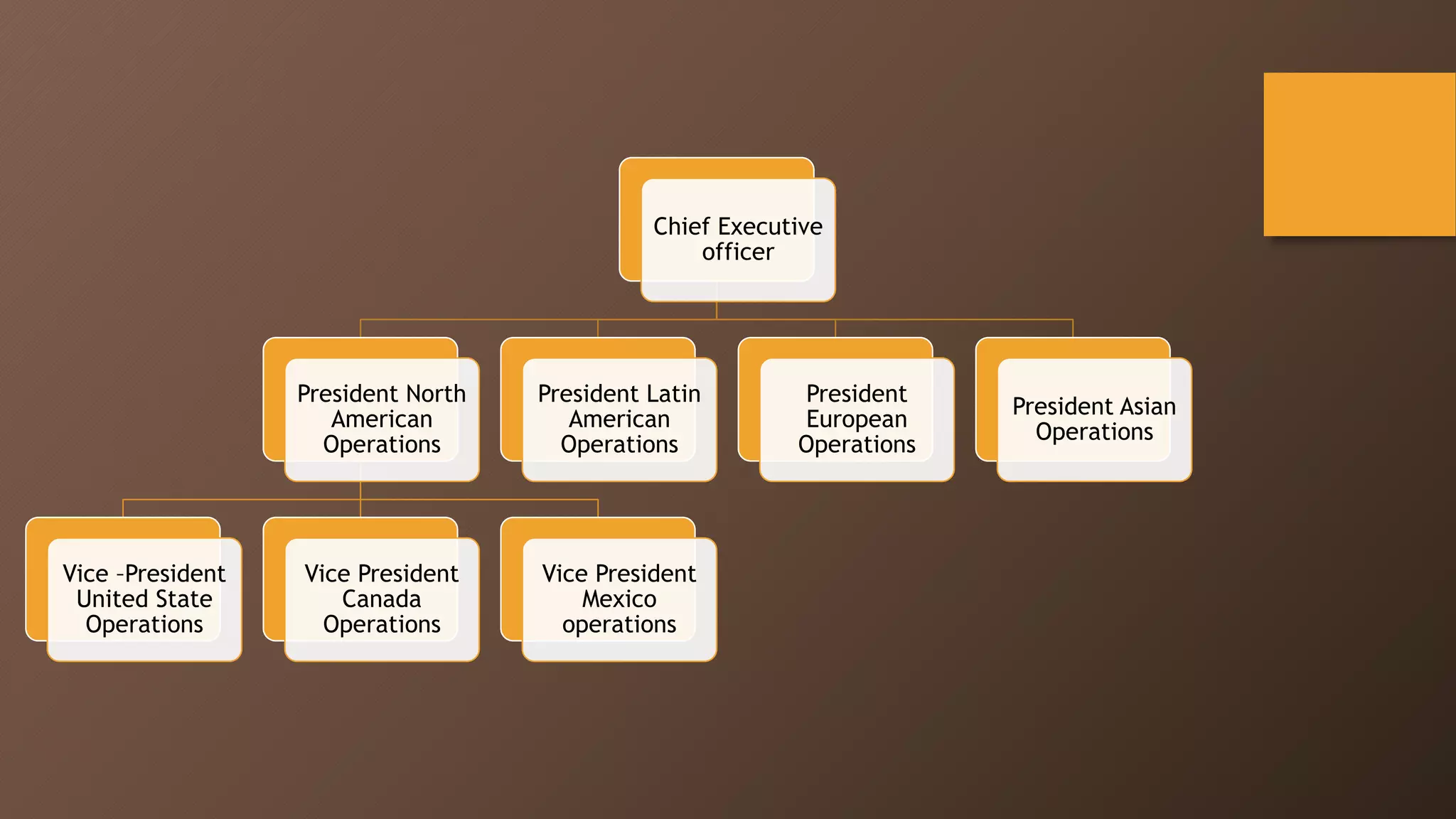
Global Area Structue
• Regional headquaters are established in different parts of the
world’
• Each regional headquater is responsible for all product sold and
distributed
• Head of each division is given line authority and responsibility over
all affilates in the region.
Chief Executive
officer
President North
American
Operations
Vice –President
United State
Operations
Vice President
Canada
Operations
Vice President
Mexico
operations
President Latin
American
Operations
President
European
Operations
President Asian
Operations
Advantages
Local Needs Responds
quickly
Resonsibility Firm can
adapt
varying
political and
legal
systems
Disadvantages
Duplication of facilities and Personnel
Cost may rise due to lack
Coordination
Uniformity of quality
Consistency
Strategic Business Unit
• SBU is grouping of related business which have some strategic
elements in common.
• The common elements may be closely related to strategic mission
a common need to complete globally, a common set of
competitors, technology.
• the SBU heads are assigned the authority and responsibility for
the management of SBUs.
• They report to chief executives
Chief
Executive
Officer
Headquater
Level
Functiontional
President SBU 1
President SBU 2
Advantages
• Managerial Burden of
corporate head reduce.
• Better coordination
• Corporate resources can be
allocated
Disadvantages
• Corporate headquarters may
become distant
• Conflict
• Difficulty to understand
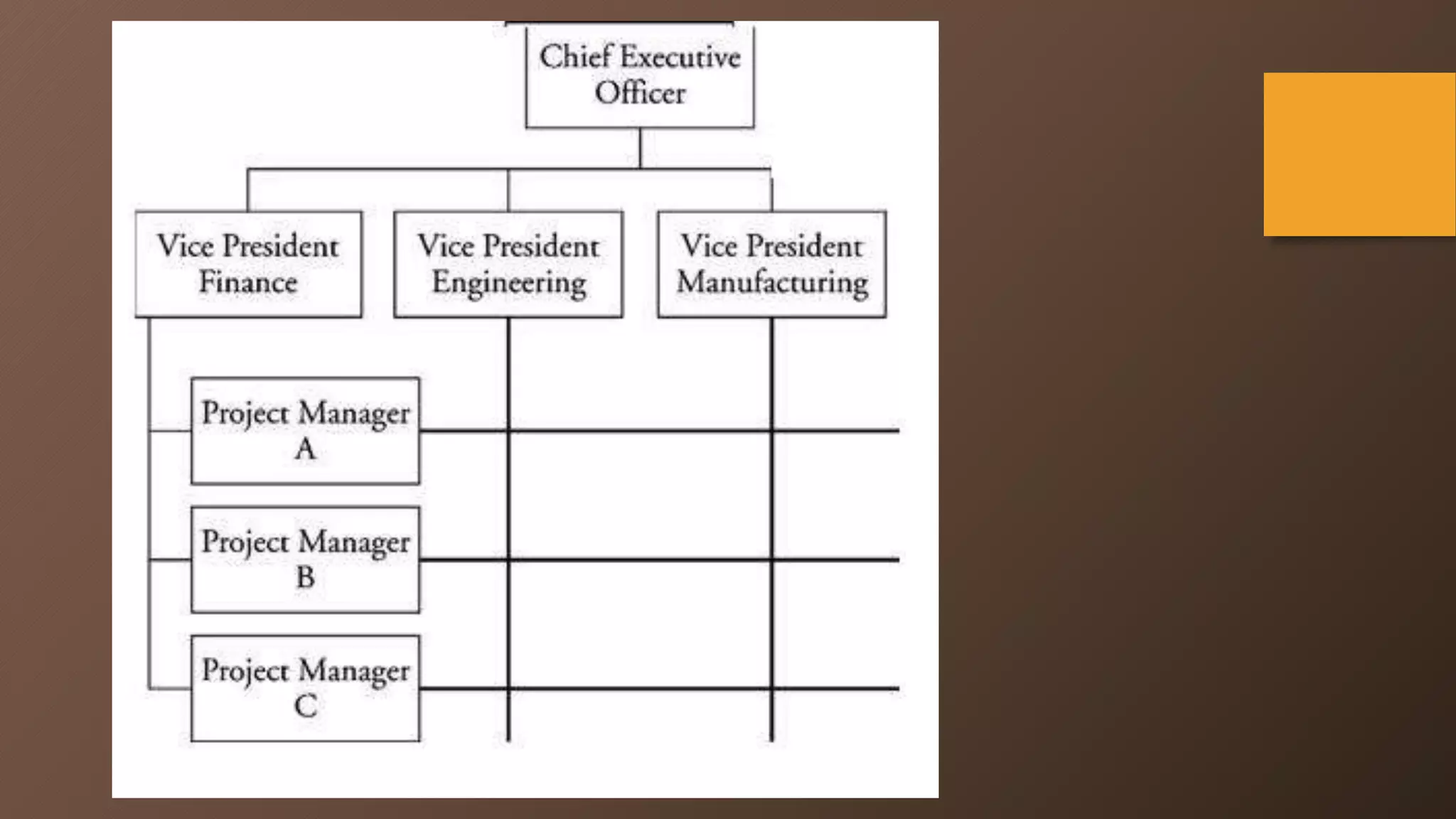
Global Matrix structure
• It is a hybrid design as it involves combinantion of functional and
divisional structure. Some department are organized on functional
basis so that employyes who perform similar task can be grouped
together. Others are assigned tto various sub divisions
• Global functional Structure + Global product/ Global Area
Structure
• The foreign affiliates report simauntaneously to more than one
divisional headquters.
Suitability
Diverse
information
Managerial
attention
Sharing of
resources
Respond to environmental factors
Movement of info
Flexibility
Motivation and Job Satisfaction Increases
Project manager gain experience in general management functions
Disadvantages
Unity of Command
Lack of accountability
Time in meeting
Difficulty to maintain consistency
Global Network structure
• It combines elements of functional, product and area structure
• At the center there is Nodal unit responsible for coordinating
information relating to functional, product and areas.
• Different product lines adopt different structures’
Headquaters
(Newyork)
Design
Company
germany
Distribution
Company
Singapore
Finance
Company
canada
Manaufacturing
Company
India
Advantages
• Global competitiveness
• Flexibility and motivation is
high
• The headquater team can
persue distinct competency in
virtualally market situation
Disadvantages
• Outstanding negotiation and
managerial skills
• Lack of hands on control by
the headquater team.
• Employees have little loyality

Structure of global organisation.pptx