
STROKE
BR.SARATH THOMAS CHAMAKALAYIL
,MARIAN COLLEGE KUTTIKANAM, sarathcthomas@gmail.com
INTRODUCTION
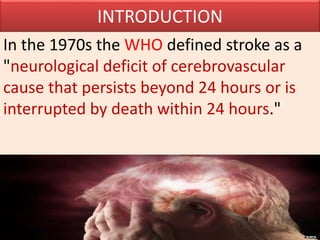
In the 1970s the WHO defined stroke as a
"neurological deficit of cerebrovascular
cause that persists beyond 24 hours or is
interrupted by death within 24 hours."
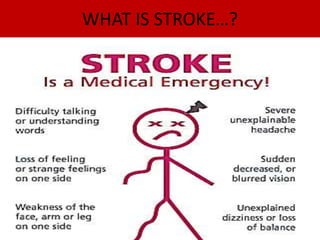
WHAT IS STROKE…?
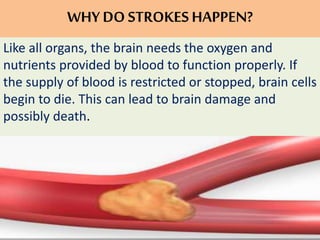
WHY DO STROKESHAPPEN?
Like all organs, the brain needs the oxygen and
nutrients provided by blood to function properly. If
the supply of blood is restricted or stopped, brain cells
begin to die. This can lead to brain damage and
possibly death.
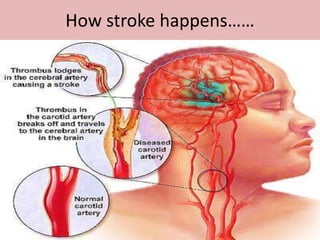
How stroke happens……
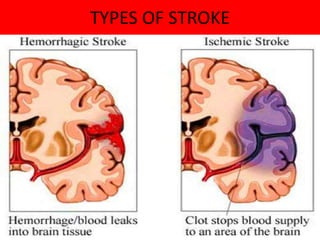
TYPES OF STROKE
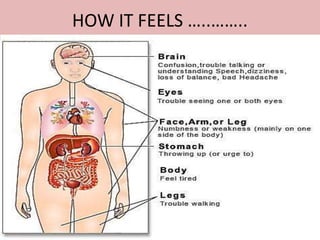
HOW IT FEELS …..……..
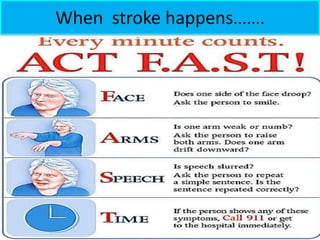
When stroke happens.......
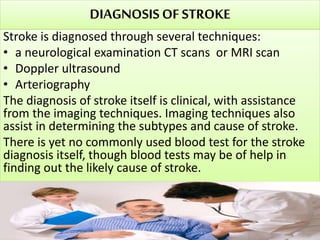
DIAGNOSISOF STROKE
Stroke is diagnosed through several techniques:
• a neurological examination CT scans or MRI scan
• Doppler ultrasound
• Arteriography
The diagnosis of stroke itself is clinical, with assistance
from the imaging techniques. Imaging techniques also
assist in determining the subtypes and cause of stroke.
There is yet no commonly used blood test for the stroke
diagnosis itself, though blood tests may be of help in
finding out the likely cause of stroke.
TREATING A STROKE
• Treatment depends on the type of stroke you have,
including which part of the brain was affected and what
caused it.
• Most often, strokes are treated with medicines. This
generally includes drugs to prevent and remove blood
clots, reduce blood pressure and reduce cholesterol levels.
• In some cases, surgery may be required. This is to clear
fatty deposits in your arteries or to repair the damage
caused by a haemorrhagic stroke.
CONCLUSION
The damage caused by a stroke can be widespread and long-
lasting. Some people need to have a long period of rehabilitation
before they can recover their former independence, while many
will never fully recover.
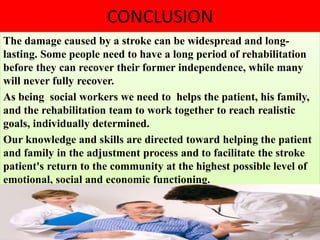
As being social workers we need to helps the patient, his family,
and the rehabilitation team to work together to reach realistic
goals, individually determined.
Our knowledge and skills are directed toward helping the patient
and family in the adjustment process and to facilitate the stroke
patient's return to the community at the highest possible level of
emotional, social and economic functioning.
THANK
YOU

Stroke: causes and the essential things to be taken care of

  • 1.
    STROKE BR.SARATH THOMAS CHAMAKALAYIL ,MARIANCOLLEGE KUTTIKANAM, sarathcthomas@gmail.com
  • 2.
    INTRODUCTION In the 1970sthe WHO defined stroke as a "neurological deficit of cerebrovascular cause that persists beyond 24 hours or is interrupted by death within 24 hours."
  • 3.
  • 6.
    WHY DO STROKESHAPPEN? Likeall organs, the brain needs the oxygen and nutrients provided by blood to function properly. If the supply of blood is restricted or stopped, brain cells begin to die. This can lead to brain damage and possibly death.
  • 7.
  • 8.
  • 9.
    HOW IT FEELS…..……..
  • 10.
  • 11.
    DIAGNOSISOF STROKE Stroke isdiagnosed through several techniques: • a neurological examination CT scans or MRI scan • Doppler ultrasound • Arteriography The diagnosis of stroke itself is clinical, with assistance from the imaging techniques. Imaging techniques also assist in determining the subtypes and cause of stroke. There is yet no commonly used blood test for the stroke diagnosis itself, though blood tests may be of help in finding out the likely cause of stroke.
  • 12.
    TREATING A STROKE •Treatment depends on the type of stroke you have, including which part of the brain was affected and what caused it. • Most often, strokes are treated with medicines. This generally includes drugs to prevent and remove blood clots, reduce blood pressure and reduce cholesterol levels. • In some cases, surgery may be required. This is to clear fatty deposits in your arteries or to repair the damage caused by a haemorrhagic stroke.
  • 13.
    CONCLUSION The damage causedby a stroke can be widespread and long- lasting. Some people need to have a long period of rehabilitation before they can recover their former independence, while many will never fully recover. As being social workers we need to helps the patient, his family, and the rehabilitation team to work together to reach realistic goals, individually determined. Our knowledge and skills are directed toward helping the patient and family in the adjustment process and to facilitate the stroke patient's return to the community at the highest possible level of emotional, social and economic functioning.
  • 14.