Striking an Ideal Balance:
Being a Librarian in the 21st Century

 Pratt Institute
 Assistant to Director
 McEntegart Hall Library
 St. Joseph’s College
               Caitlin Bronner, MLIS (Candidate, May 2013)
Purpose
Describe:


• Qualities of a 21st century librarian
• How we can deliver information in the best ways possible
• How we can keep up with a changing environment
Provide Examples of:


• My skills by providing project examples
Characteristics of a 21st
Century Librarian
• Technology
• Library Research & Statistics
• Education & Outreach
• Leadership/Management Skills
• Copyright and Fair Use
• Technical & Professional Writing Skills
• Ability to be innovative and adaptable, while maintaining
   the core values and mission of librarianship
Technology...
...is increasingly at the center of everything libraries do.


...is changing collection development because so much
    information is available online or in electronic form.


...enhances communication between librarians and patrons.


...enables better decision-making in the library.


...saves time.
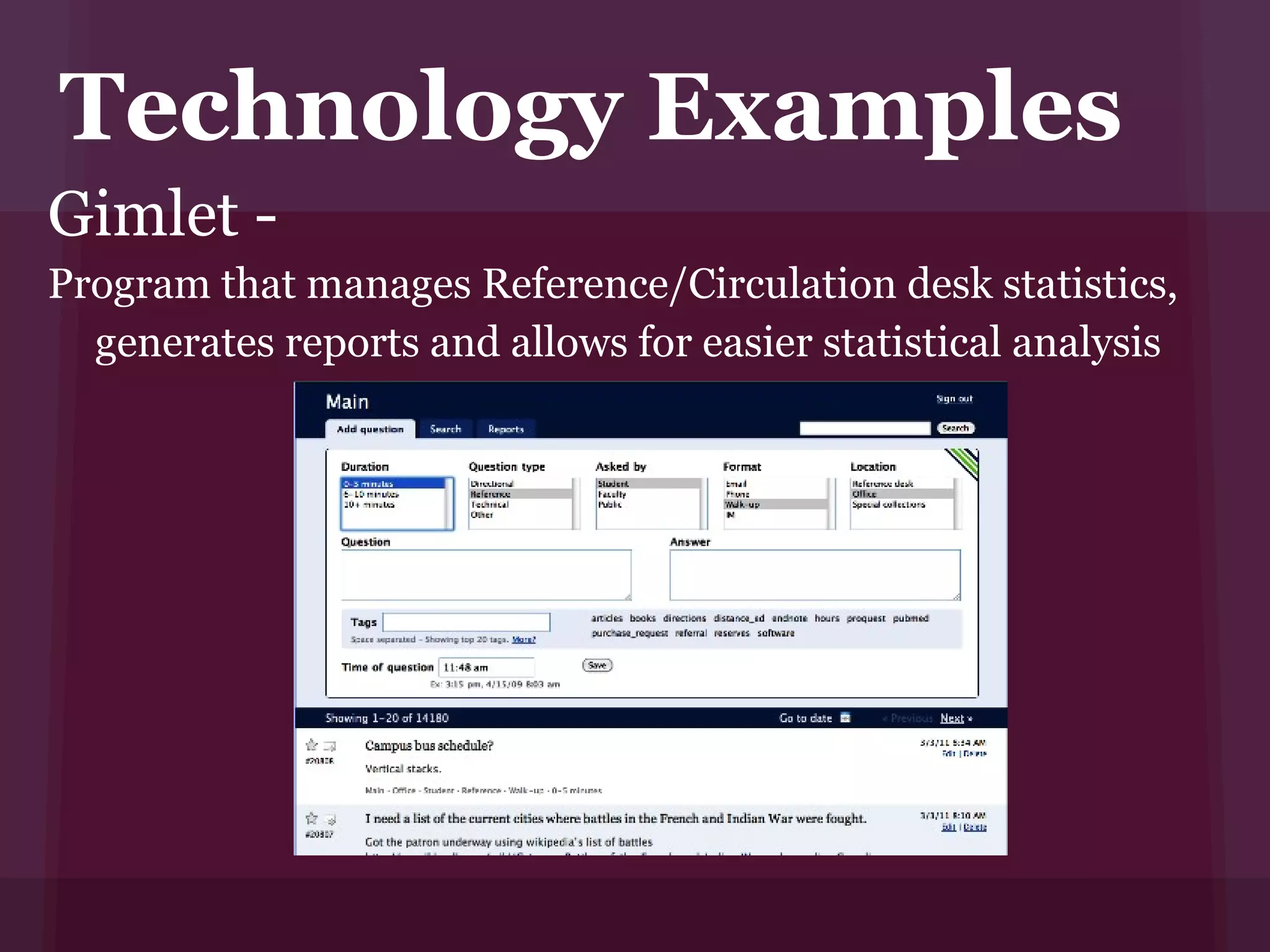
Technology Examples
Gimlet -
Program that manages Reference/Circulation desk statistics,
  generates reports and allows for easier statistical analysis
Flickr               www.flickr.com

• Program that allows users to digitally archive
     their photos
•   Users can organize their photos into sets and
    collections
•   Photos can be made available online free of
    charge to the public (or kept private)
•   Free method of library promotion
•   Also a great source to find images for reuse
Omeka omeka.org; omeka.net
"Omeka is a free, flexible, and open source web-
  publishing platform for the display of library,
  museum, archives, and scholarly collections
  and exhibitions."

• Allows museums, libraries and personal users to create
   high quality online exhibitions using free and open
   source software that is designed with the non-IT user in
   mind.


[Retrieved from: omeka.org/about/]
Creative Commons
creativecommons.org


 • Types of copyright licenses
 • Websitein a free andusers to upload, share and reuse
   content
            that allows
                         legal way
 • A nonprofit organization that enables thefree legal and
   use of creativity and knowledge through
                                              sharing
                                                       tools.


                                         By John Randell [Public
                                         domain], via Wikimedia
                                         Commons
Open Access &
         Open Source
• Free
• Accessible to all (with internet access)
• Breaks down barriers to information
• Fosters a culture of collaboration among
    academics, scholars and the public
•   Supports the idea that knowledge is meant to
    be shared (which is a good thing!)
•   Directory of Open Access Journals: doaj.org
LibGuides:            springshare.com/libguides/


• Guides can be subject, assignment, location
  or course specific


• Usually created by librarians

• I've created LibGuides for Mathematics,
  Accounting, Computer Science and History
  at St. Joseph's College
Library Research & Statistics

• In-house qualitative and quantitative
    research
•   Needs assessments
•   Grant Writing
•   Funding Justification
Education & Outreach
• Bibliographic instruction
• Information technology troubleshooting
• Educational programming
• Technology Troubleshooting
• LibGuides
• E-newsletter
• Patron surveys & focus groups
Leadership/Management Skills
Important because:


• Libraries & information centers have less administrative
  personnel than ever before, so librarians are often being
  placed in leadership roles


• It’s important to be prepared for the future
  …and to be a role model!
Copyright & Fair Use
As 21st century librarians, we need to know:
• What constitutes fair use and copyright infringement
• General copyright knowledge


Cool Tools from American Library Association's
  (ALA) Copyright Office:
Section 108 Spinner
Public Domain Slider
Fair use Evaluator


Adapted from the ALA's Copyright Office,
[Retrieved from: http://www.ala.org/advocacy/copyright]
Technical & Professional
                Writing Skills

• Library policies & procedures
• Grant writing
• Publication
• Networking & professional
 correspondence
Maintaining Our Core
         Values & Mission
The ALA's Office for Intellectual Freedom and their Foundation of Modern
   Librarianship list the core values of librarianship as follows:


-Access
-Privacy/Confidentiality
-Democracy
-Diversity
-Education & Lifelong Learning
-Intellectual Freedom
-Preservation
-The Public Good
-Professionalism
-Service
-Social Responsibility
Conclusion


As librarians in the 21st century, we have many
  responsibilities and many hats to wear, but the relevant
  skills and passion we bring to our work will allow us to be
  successful in our mission of providing the best possible
  services and resources to our communities.
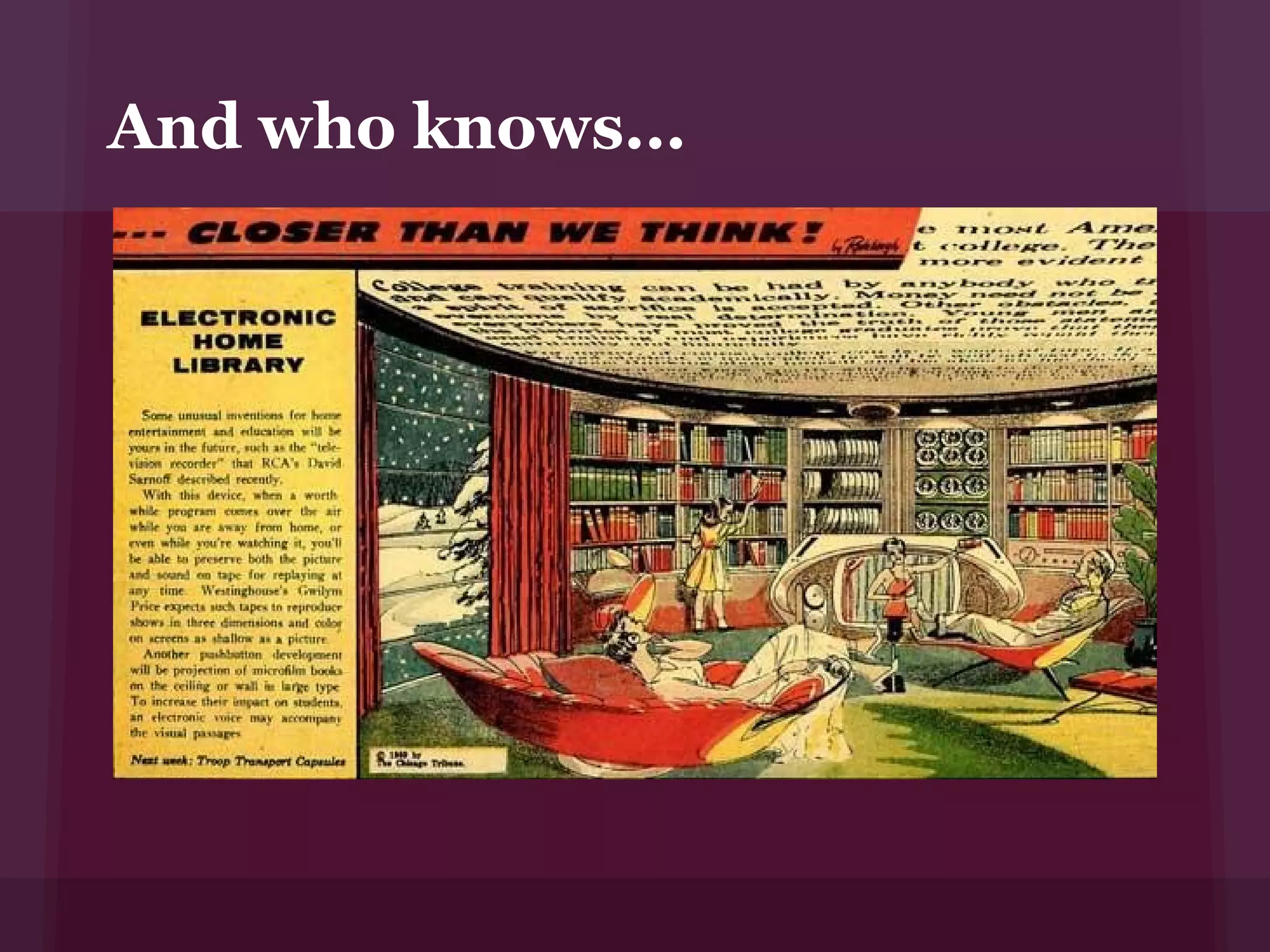
And who knows...
...what the future may bring!


  Children play educational games on an iTable in Denmark
  Photo courtesy of 21st Century Analog Boy Blog
  [http://21stcenturyanalogboy.wordpress.com/2011/12/16/the-childrens-library-of-the-future]/
Thank You!


Questions & Comments

Striking an Ideal Balance

  • 1.
    Striking an IdealBalance: Being a Librarian in the 21st Century Pratt Institute Assistant to Director McEntegart Hall Library St. Joseph’s College Caitlin Bronner, MLIS (Candidate, May 2013)
  • 2.
    Purpose Describe: • Qualities ofa 21st century librarian • How we can deliver information in the best ways possible • How we can keep up with a changing environment Provide Examples of: • My skills by providing project examples
  • 3.
    Characteristics of a21st Century Librarian • Technology • Library Research & Statistics • Education & Outreach • Leadership/Management Skills • Copyright and Fair Use • Technical & Professional Writing Skills • Ability to be innovative and adaptable, while maintaining the core values and mission of librarianship
  • 4.
    Technology... ...is increasingly atthe center of everything libraries do. ...is changing collection development because so much information is available online or in electronic form. ...enhances communication between librarians and patrons. ...enables better decision-making in the library. ...saves time.
  • 5.
    Technology Examples Gimlet - Programthat manages Reference/Circulation desk statistics, generates reports and allows for easier statistical analysis
  • 6.
    Flickr www.flickr.com • Program that allows users to digitally archive their photos • Users can organize their photos into sets and collections • Photos can be made available online free of charge to the public (or kept private) • Free method of library promotion • Also a great source to find images for reuse
  • 7.
    Omeka omeka.org; omeka.net "Omekais a free, flexible, and open source web- publishing platform for the display of library, museum, archives, and scholarly collections and exhibitions." • Allows museums, libraries and personal users to create high quality online exhibitions using free and open source software that is designed with the non-IT user in mind. [Retrieved from: omeka.org/about/]
  • 8.
    Creative Commons creativecommons.org •Types of copyright licenses • Websitein a free andusers to upload, share and reuse content that allows legal way • A nonprofit organization that enables thefree legal and use of creativity and knowledge through sharing tools. By John Randell [Public domain], via Wikimedia Commons
  • 9.
    Open Access & Open Source • Free • Accessible to all (with internet access) • Breaks down barriers to information • Fosters a culture of collaboration among academics, scholars and the public • Supports the idea that knowledge is meant to be shared (which is a good thing!) • Directory of Open Access Journals: doaj.org
  • 10.
    LibGuides: springshare.com/libguides/ • Guides can be subject, assignment, location or course specific • Usually created by librarians • I've created LibGuides for Mathematics, Accounting, Computer Science and History at St. Joseph's College
  • 11.
    Library Research &Statistics • In-house qualitative and quantitative research • Needs assessments • Grant Writing • Funding Justification
  • 12.
    Education & Outreach •Bibliographic instruction • Information technology troubleshooting • Educational programming • Technology Troubleshooting • LibGuides • E-newsletter • Patron surveys & focus groups
  • 13.
    Leadership/Management Skills Important because: •Libraries & information centers have less administrative personnel than ever before, so librarians are often being placed in leadership roles • It’s important to be prepared for the future …and to be a role model!
  • 14.
    Copyright & FairUse As 21st century librarians, we need to know: • What constitutes fair use and copyright infringement • General copyright knowledge Cool Tools from American Library Association's (ALA) Copyright Office: Section 108 Spinner Public Domain Slider Fair use Evaluator Adapted from the ALA's Copyright Office, [Retrieved from: http://www.ala.org/advocacy/copyright]
  • 15.
    Technical & Professional Writing Skills • Library policies & procedures • Grant writing • Publication • Networking & professional correspondence
  • 16.
    Maintaining Our Core Values & Mission The ALA's Office for Intellectual Freedom and their Foundation of Modern Librarianship list the core values of librarianship as follows: -Access -Privacy/Confidentiality -Democracy -Diversity -Education & Lifelong Learning -Intellectual Freedom -Preservation -The Public Good -Professionalism -Service -Social Responsibility
  • 17.
    Conclusion As librarians inthe 21st century, we have many responsibilities and many hats to wear, but the relevant skills and passion we bring to our work will allow us to be successful in our mission of providing the best possible services and resources to our communities.
  • 18.
  • 19.
    ...what the futuremay bring! Children play educational games on an iTable in Denmark Photo courtesy of 21st Century Analog Boy Blog [http://21stcenturyanalogboy.wordpress.com/2011/12/16/the-childrens-library-of-the-future]/
  • 20.