STRESS
IS THERE A POSITIVE OR
NEGATIVE STRESS?
Reaction of the body and mind to unkind
or challenging life incidents such as
tense feelings, worry, and discomfort.
The imbalance between the demand
from the environment and the person’s
ability to cope can trigger feelings of
anxiety.
Some responses like being irritated,
frightened, or anxious can cause
headache or stomach ache.
STRESS
Positive stress
Enhancing influence on our
productivity and satisfaction
Promotes growth and
accomplishments and stimulates
you to go on
EUSTRESS
Negative stress
Causes poor performance
DISTRESS
WHAT CAUSES STRESS?
Event or situation that causes
stressful situations, which are
seen as risks to the well-being of
a person.
STRESSOR
 Acute stress
- the most common form, arises from recent,
past and foreseen difficulties. It occurs briefly and
appears in bits of thrill
 Cumulative stress
- series of stress that has built up
 Chronic stress
- form of stress that is recurring. It is a
prolonged stress that is dangerous and can lead to
severe health problems.
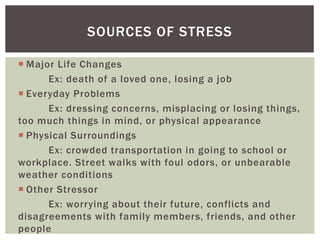
 Major Life Changes
Ex: death of a loved one, losing a job
 Everyday Problems
Ex: dressing concerns, misplacing or losing things,
too much things in mind, or physical appearance
 Physical Surroundings
Ex: crowded transportation in going to school or
workplace. Street walks with foul odors, or unbearable
weather conditions
 Other Stressor
Ex: worrying about their future, conflicts and
disagreements with family members, friends, and other
people
SOURCES OF STRESS
WHICH OF THESE
COMMON REACTIONS
DO YOU EXPERIENCE
DURING STRESSFUL
SITUATIONS?
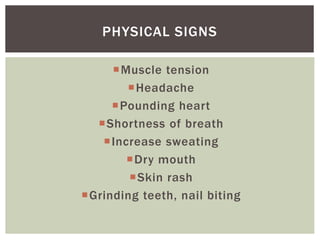
Muscle tension
Headache
Pounding heart
Shortness of breath
Increase sweating
Dry mouth
Skin rash
Grinding teeth, nail biting
PHYSICAL SIGNS
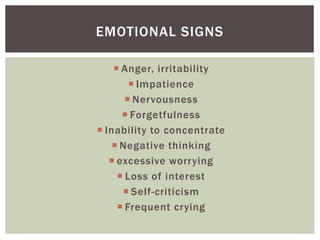
 Anger, irritability
 Impatience
 Nervousness
 Forgetfulness
 Inability to concentrate
 Negative thinking
 excessive worrying
 Loss of interest
 Self-criticism
 Frequent crying
EMOTIONAL SIGNS
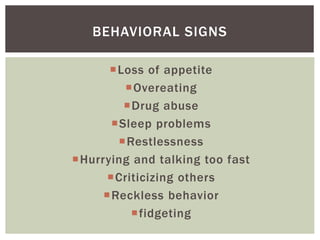
Loss of appetite
Overeating
Drug abuse
Sleep problems
Restlessness
Hurrying and talking too fast
Criticizing others
Reckless behavior
fidgeting
BEHAVIORAL SIGNS
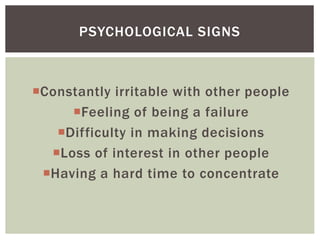
Constantly irritable with other people
Feeling of being a failure
Difficulty in making decisions
Loss of interest in other people
Having a hard time to concentrate
PSYCHOLOGICAL SIGNS
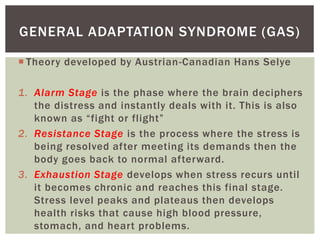
 Theory developed by Austrian-Canadian Hans Selye
1. Alarm Stage is the phase where the brain deciphers
the distress and instantly deals with it. This is also
known as “fight or flight”
2. Resistance Stage is the process where the stress is
being resolved after meeting its demands then the
body goes back to normal afterward.
3. Exhaustion Stage develops when stress recurs until
it becomes chronic and reaches this final stage.
Stress level peaks and plateaus then develops
health risks that cause high blood pressure,
stomach, and heart problems.
GENERAL ADAPTATION SYNDROME (GAS)
APPROPRIATE STRESS
MANAGEMENT
STRATEGIES
HOW CAN STRESS
BE MANAGED?
Manage stressors
Rest and sleep
Exercise
Use relaxation methods in coping with
stress
a. Progressive relaxation
b. Deep breathing
c. Meditation
d. Visualization
COUNTERPRODUCTIVE
COPING STRATEGIES
Defined as the capacity to respond and
recover from something stressful
Conscious response to psychological
stress in an attempt to balance mental
and emotional conditions.
COPING
Adpative coping involves direct
confrontation and prevention of
stress
Maladaptive coping is a
counterproductive mechanism
that includes the use of alcohol
and drugs
COPING STYLES
Active coping strategies comprise
the recognition of the stressor to
lessen its adverse consequences
Avoidant coping strategies ignore
the issue or deny the problem. Ex:
alcohol intoxication, sleep, and
isolation
COPING CLASSIFICATION
Time management
Sharing and talking about problems with
someone
Using adrenaline-raised energy for
simple task
Being at ease lying or sitting down while
emptying the mind with upsetting ideas
Having good laugh with friends or family
COPING STRATEGIES
Humor – “Positive Reframing” – look at
the funny side of a problem
Seek support
Problem-solving
Relaxation
Physical recreation
Adjusting expectations
Venting
SPECIFIC COPING STRATEGIES

Stress jill-allarey

  • 1.
  • 2.
    IS THERE APOSITIVE OR NEGATIVE STRESS?
  • 3.
    Reaction of thebody and mind to unkind or challenging life incidents such as tense feelings, worry, and discomfort. The imbalance between the demand from the environment and the person’s ability to cope can trigger feelings of anxiety. Some responses like being irritated, frightened, or anxious can cause headache or stomach ache. STRESS
  • 4.
    Positive stress Enhancing influenceon our productivity and satisfaction Promotes growth and accomplishments and stimulates you to go on EUSTRESS
  • 5.
  • 6.
  • 7.
    Event or situationthat causes stressful situations, which are seen as risks to the well-being of a person. STRESSOR
  • 8.
     Acute stress -the most common form, arises from recent, past and foreseen difficulties. It occurs briefly and appears in bits of thrill  Cumulative stress - series of stress that has built up  Chronic stress - form of stress that is recurring. It is a prolonged stress that is dangerous and can lead to severe health problems.
  • 9.
     Major LifeChanges Ex: death of a loved one, losing a job  Everyday Problems Ex: dressing concerns, misplacing or losing things, too much things in mind, or physical appearance  Physical Surroundings Ex: crowded transportation in going to school or workplace. Street walks with foul odors, or unbearable weather conditions  Other Stressor Ex: worrying about their future, conflicts and disagreements with family members, friends, and other people SOURCES OF STRESS
  • 10.
    WHICH OF THESE COMMONREACTIONS DO YOU EXPERIENCE DURING STRESSFUL SITUATIONS?
  • 11.
    Muscle tension Headache Pounding heart Shortnessof breath Increase sweating Dry mouth Skin rash Grinding teeth, nail biting PHYSICAL SIGNS
  • 12.
     Anger, irritability Impatience  Nervousness  Forgetfulness  Inability to concentrate  Negative thinking  excessive worrying  Loss of interest  Self-criticism  Frequent crying EMOTIONAL SIGNS
  • 13.
    Loss of appetite Overeating Drugabuse Sleep problems Restlessness Hurrying and talking too fast Criticizing others Reckless behavior fidgeting BEHAVIORAL SIGNS
  • 14.
    Constantly irritable withother people Feeling of being a failure Difficulty in making decisions Loss of interest in other people Having a hard time to concentrate PSYCHOLOGICAL SIGNS
  • 15.
     Theory developedby Austrian-Canadian Hans Selye 1. Alarm Stage is the phase where the brain deciphers the distress and instantly deals with it. This is also known as “fight or flight” 2. Resistance Stage is the process where the stress is being resolved after meeting its demands then the body goes back to normal afterward. 3. Exhaustion Stage develops when stress recurs until it becomes chronic and reaches this final stage. Stress level peaks and plateaus then develops health risks that cause high blood pressure, stomach, and heart problems. GENERAL ADAPTATION SYNDROME (GAS)
  • 16.
  • 17.
  • 18.
    Manage stressors Rest andsleep Exercise Use relaxation methods in coping with stress a. Progressive relaxation b. Deep breathing c. Meditation d. Visualization
  • 19.
  • 20.
    Defined as thecapacity to respond and recover from something stressful Conscious response to psychological stress in an attempt to balance mental and emotional conditions. COPING
  • 21.
    Adpative coping involvesdirect confrontation and prevention of stress Maladaptive coping is a counterproductive mechanism that includes the use of alcohol and drugs COPING STYLES
  • 22.
    Active coping strategiescomprise the recognition of the stressor to lessen its adverse consequences Avoidant coping strategies ignore the issue or deny the problem. Ex: alcohol intoxication, sleep, and isolation COPING CLASSIFICATION
  • 23.
    Time management Sharing andtalking about problems with someone Using adrenaline-raised energy for simple task Being at ease lying or sitting down while emptying the mind with upsetting ideas Having good laugh with friends or family COPING STRATEGIES
  • 24.
    Humor – “PositiveReframing” – look at the funny side of a problem Seek support Problem-solving Relaxation Physical recreation Adjusting expectations Venting SPECIFIC COPING STRATEGIES