© Ashridge Executive Education 2015
Organisation Design: Going
from strategy to operating model
to organisation structure
Andrew Campbell
© Ashridge Executive Education 2015
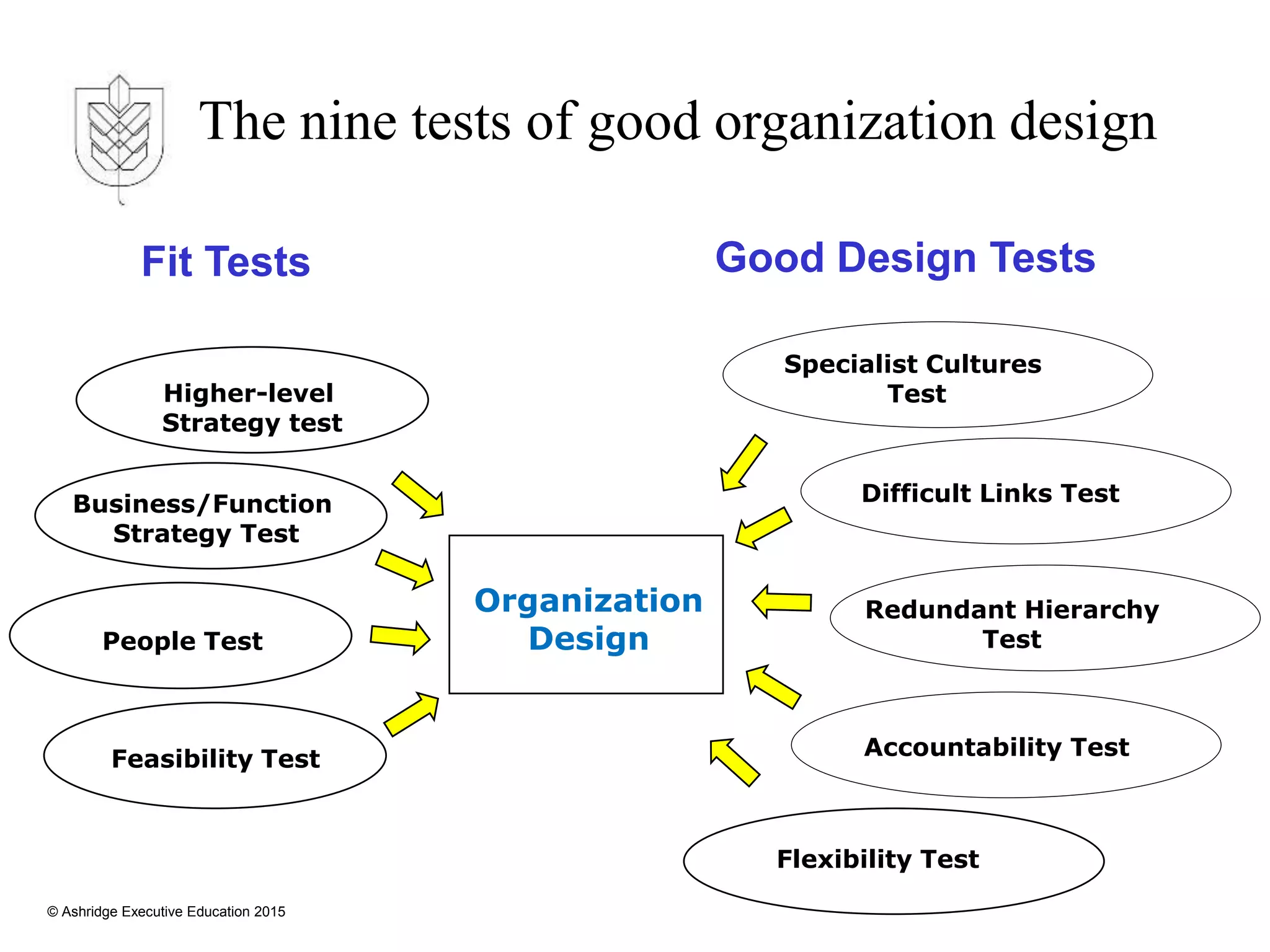
Organization
Design
People Test
Feasibility Test
Specialist Cultures
Test
Difficult Links Test
Redundant Hierarchy
Test
Accountability Test
Flexibility Test
The nine tests of good organization design
Business/Function
Strategy Test
Higher-level
Strategy test
Good Design Tests
Fit Tests
© Ashridge Executive Education 2015
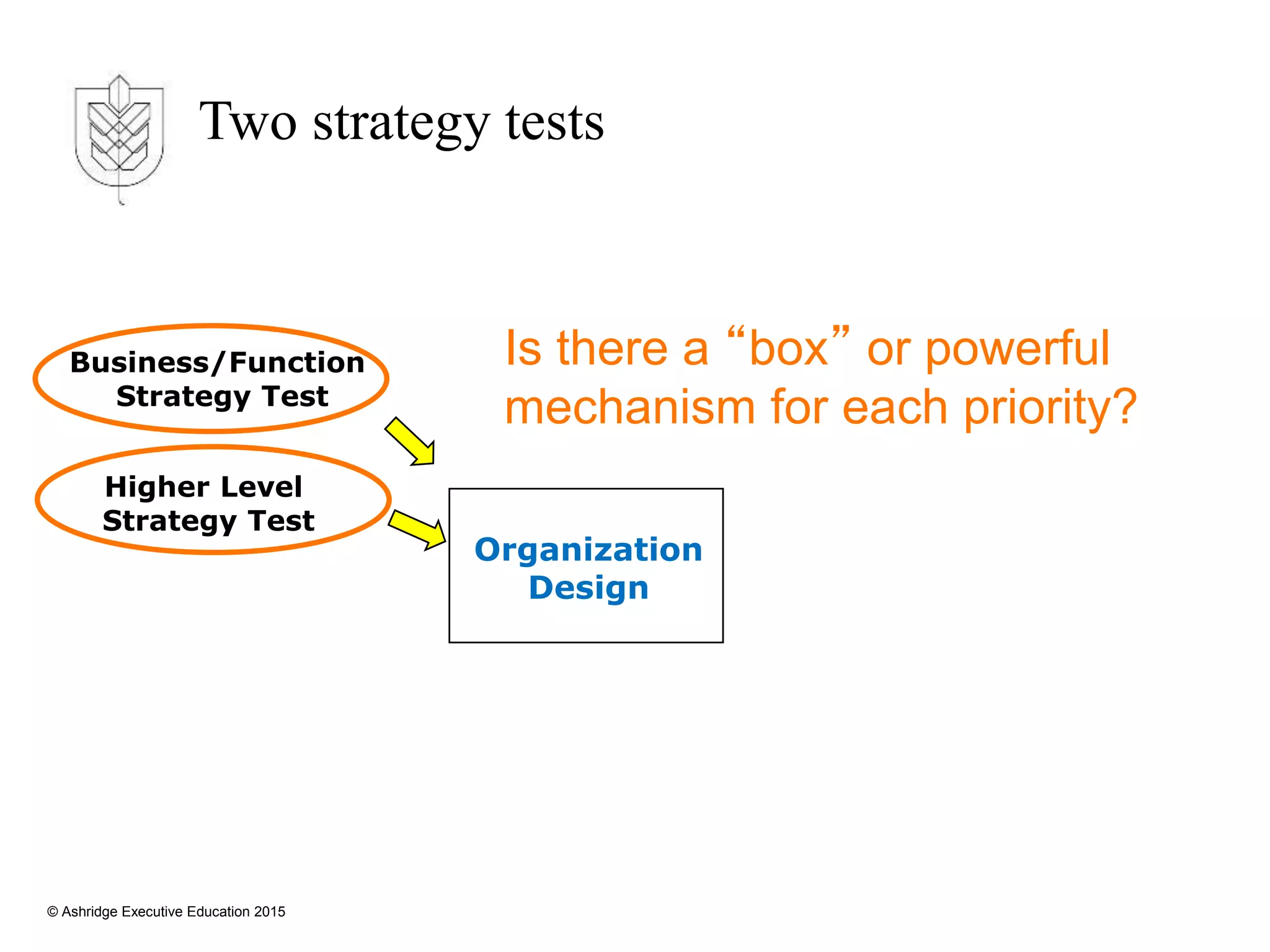
Organization
Design
Higher Level
Strategy Test
Business/Function
Strategy Test
Two strategy tests
Is there a “box” or powerful
mechanism for each priority?
© Ashridge Executive Education 2015
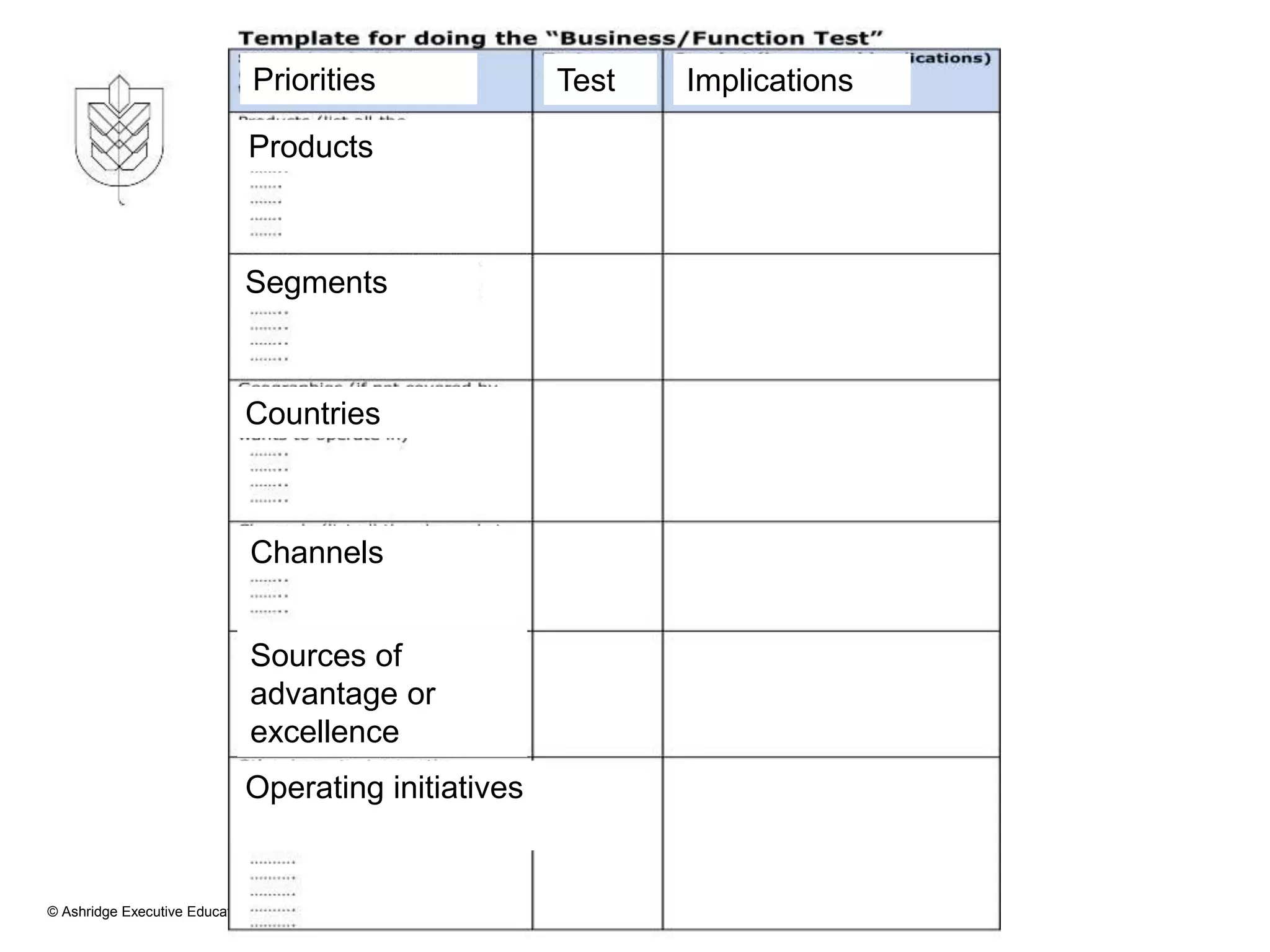
Products
Segments
Countries
Channels
Sources of
advantage or
excellence
Operating initiatives
Implications
Test
Priorities
© Ashridge Executive Education 2015
Products
Segments
Countries
Channels
Sources of
advantage or
excellence
Operating initiatives
Implications
Test
Priorities
Standard
Bespoke
Yes
Yes
Construction
Industrial
Automotive
Aerospace
Yes
No
No
No
UK
Germany
Middle East
Asia
Yes ?
Yes ?
Yes ?
Yes ?
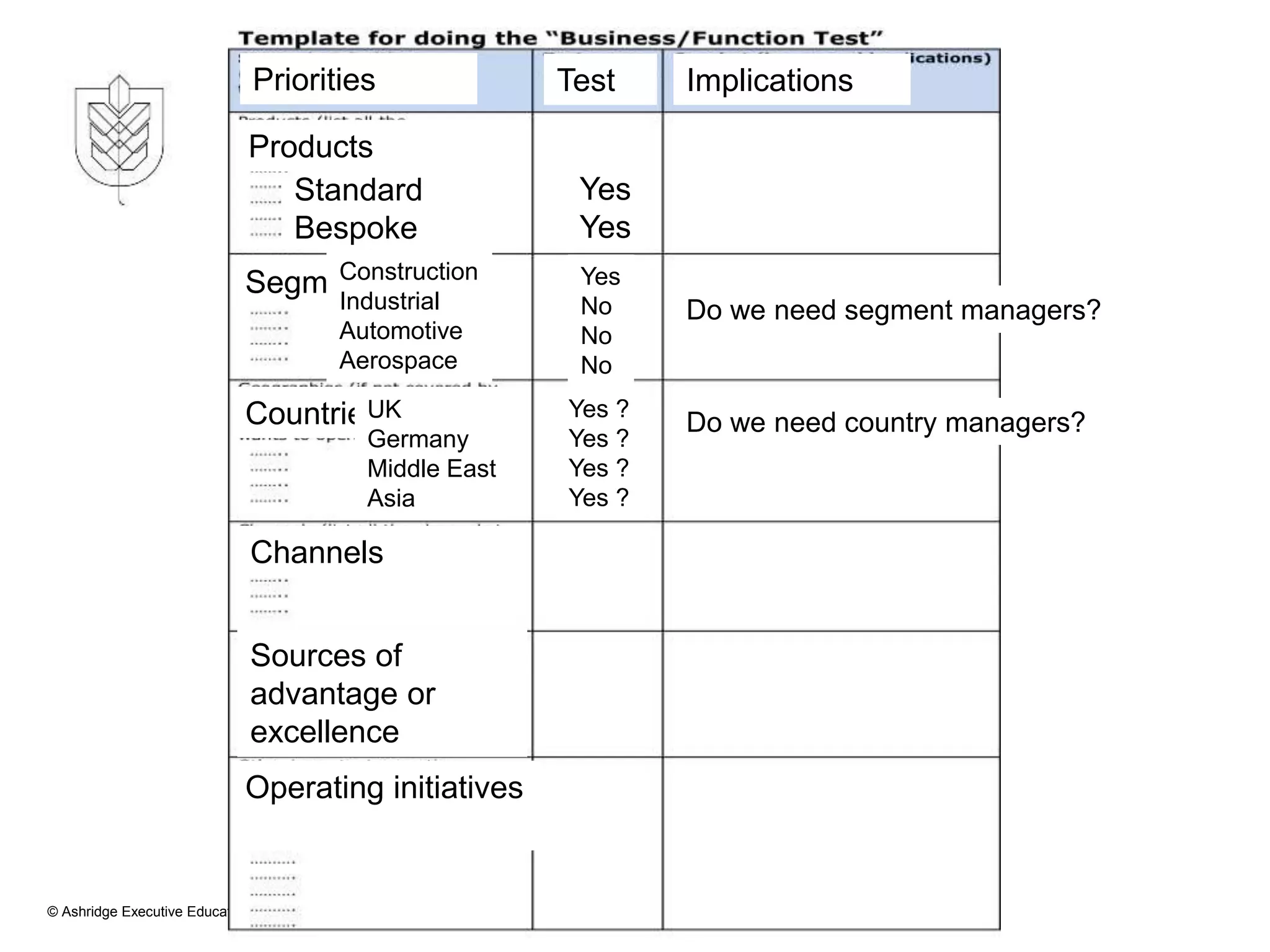
Do we need country managers?
Do we need segment managers?
© Ashridge Executive Education 2015
The Business Model Canvas
Key Partners
Customer
Segments
Value
Proposition
Cost Structure Revenue Streams
Key Resources Channels
Key Activities
Customer
Relationships
For whom?
What?
How?
© Ashridge Executive Education 2015
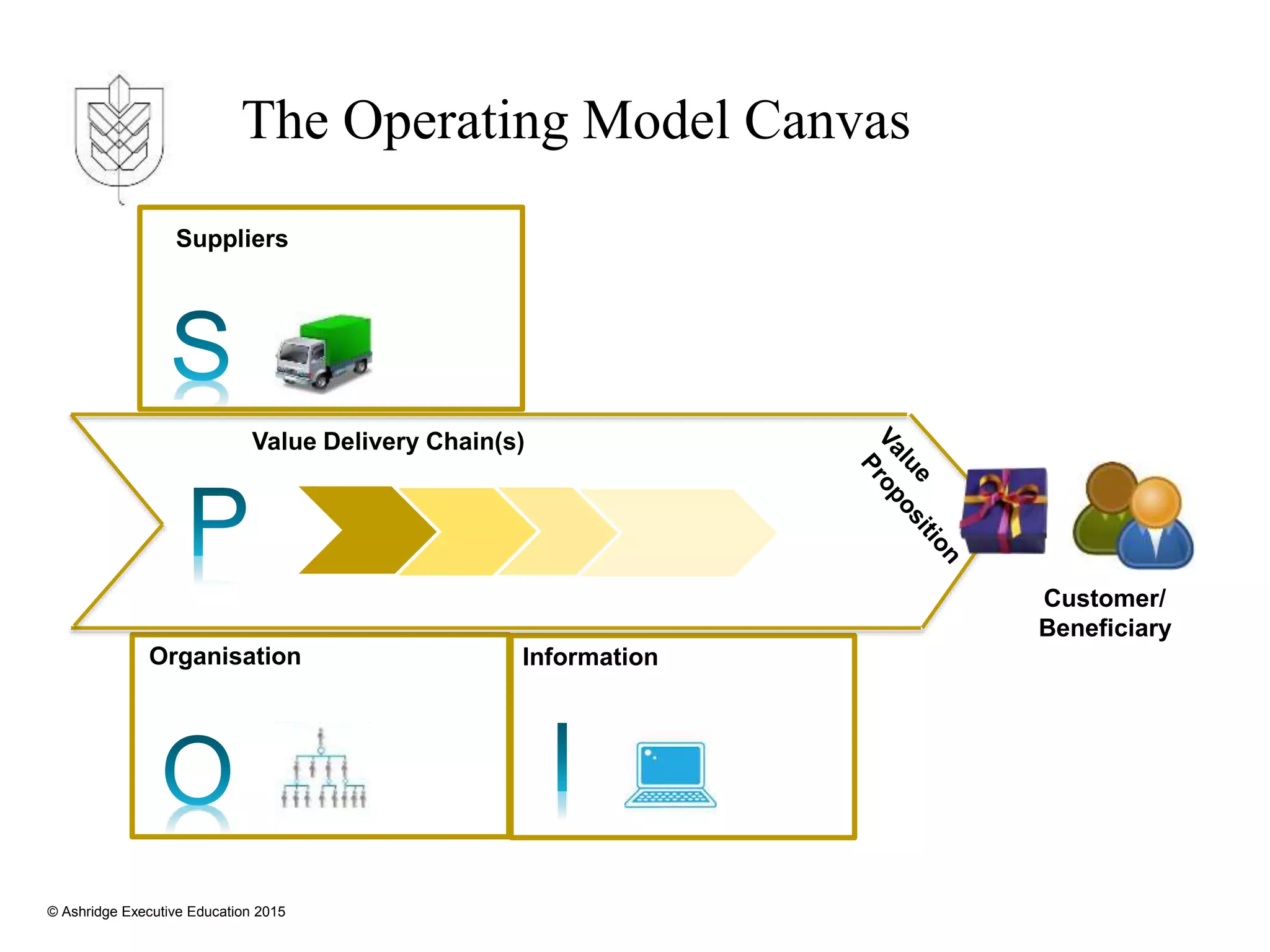
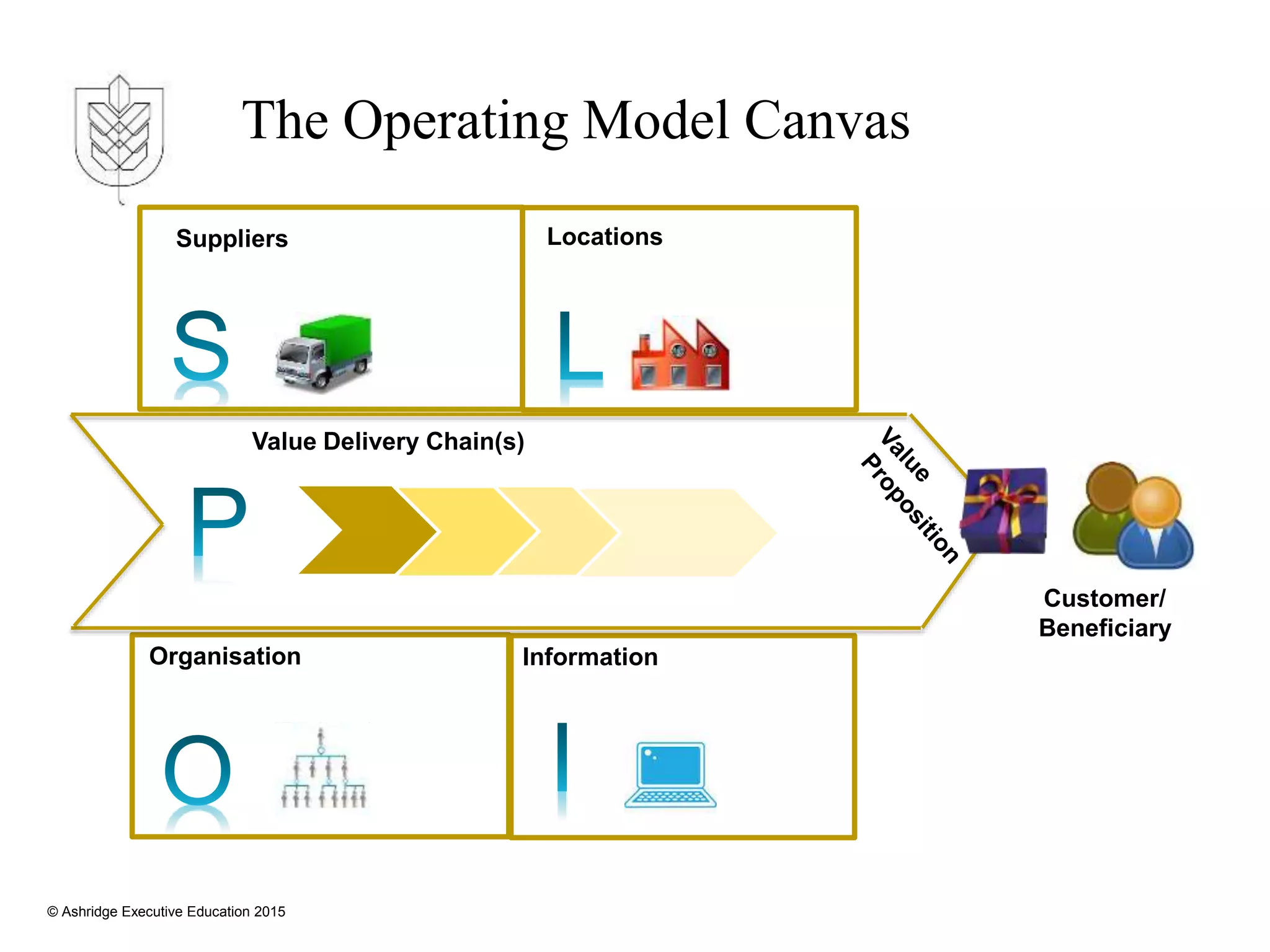
Suppliers
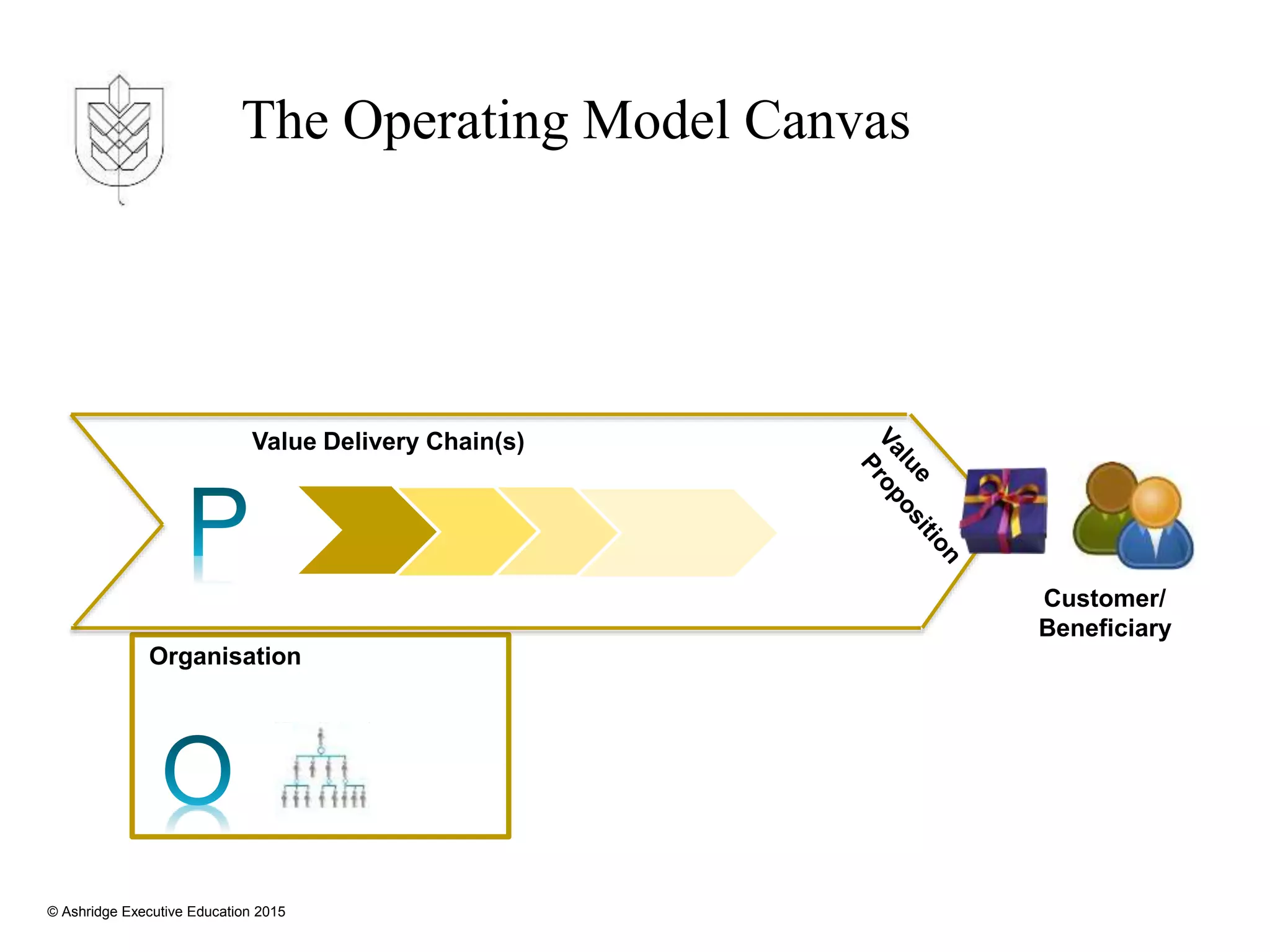
Organisation
Customer/
Beneficiary
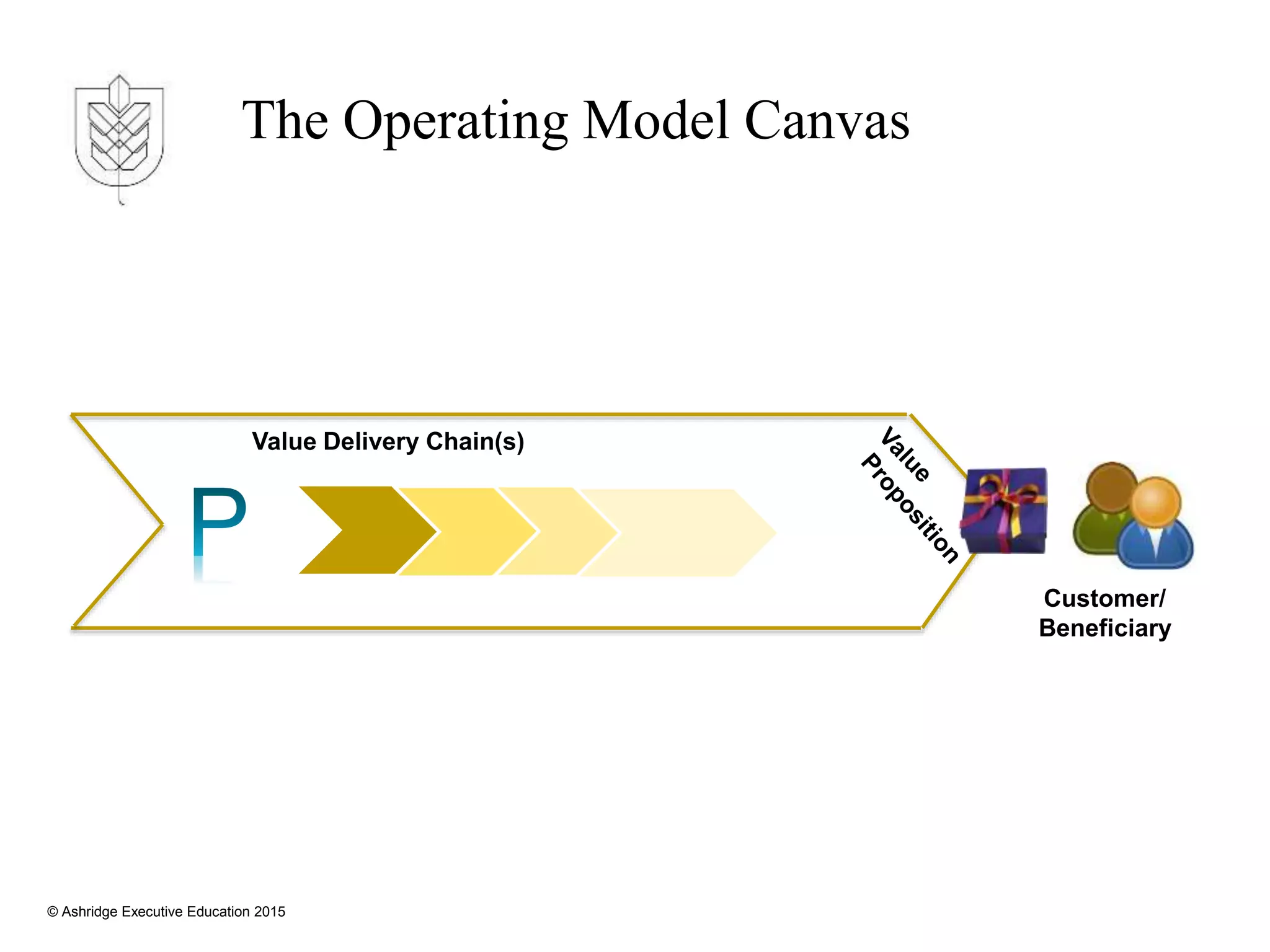
Value Delivery Chain(s)
The Operating Model Canvas
Locations
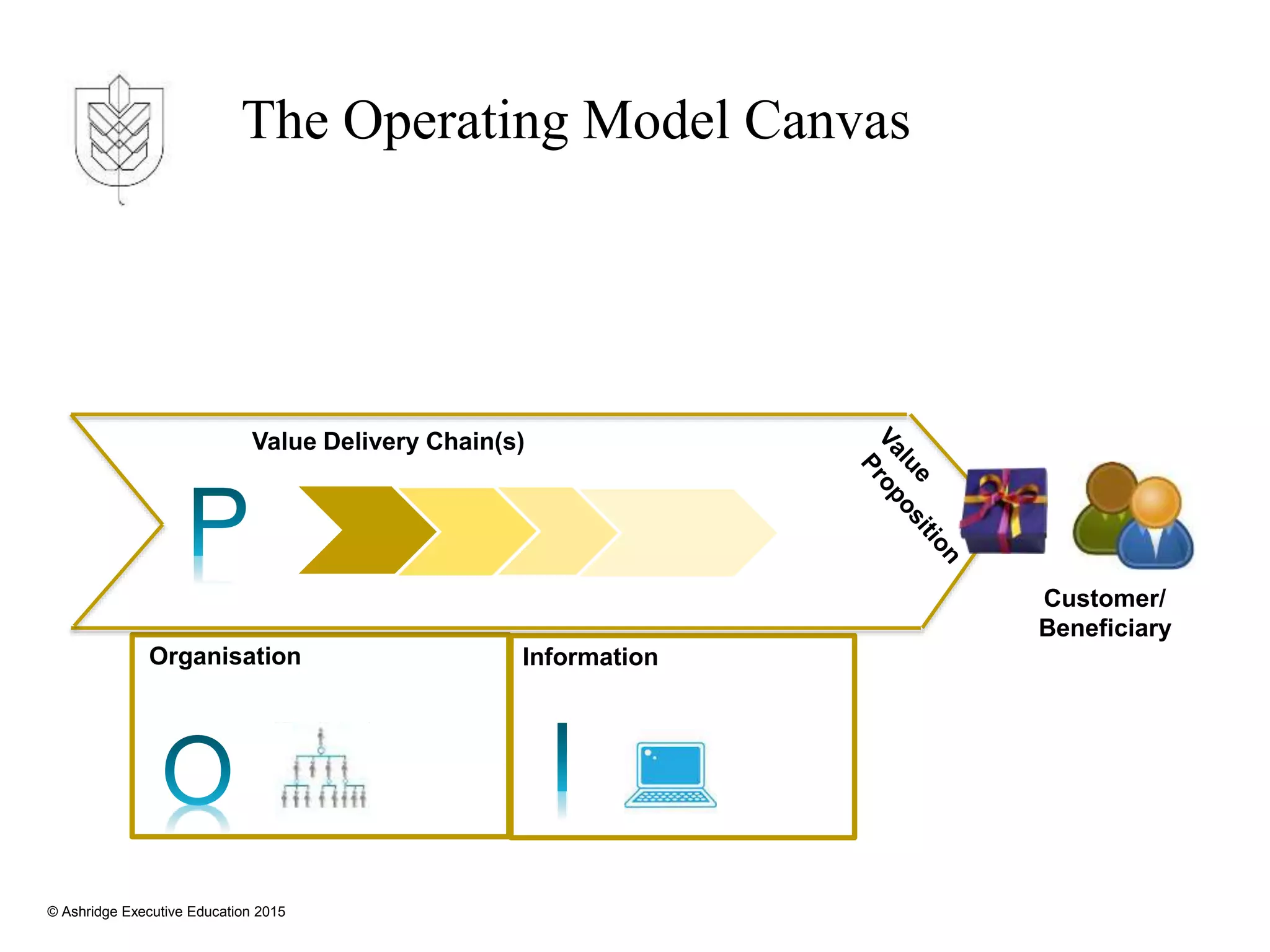
Information
© Ashridge Executive Education 2015
Customer/
Beneficiary
Value Delivery Chain(s)
The Operating Model Canvas
© Ashridge Executive Education 2015
Organisation
Customer/
Beneficiary
Value Delivery Chain(s)
The Operating Model Canvas
© Ashridge Executive Education 2015
Organisation
Customer/
Beneficiary
Value Delivery Chain(s)
The Operating Model Canvas
Information
© Ashridge Executive Education 2015
Suppliers
Organisation
Customer/
Beneficiary
Value Delivery Chain(s)
The Operating Model Canvas
Information
© Ashridge Executive Education 2015
Suppliers
Organisation
Customer/
Beneficiary
Value Delivery Chain(s)
The Operating Model Canvas
Locations
Information
© Ashridge Executive Education 2015
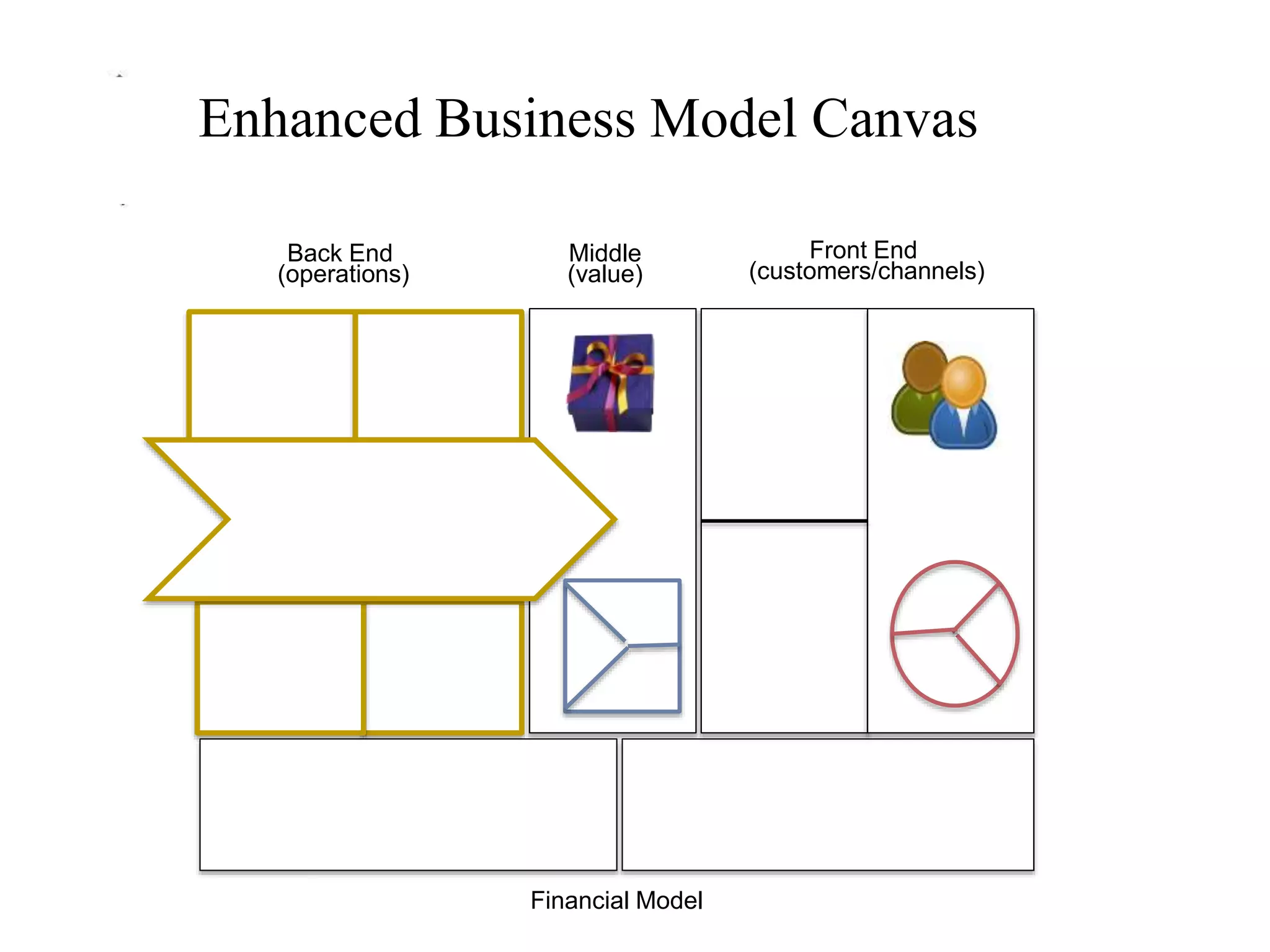
Enhanced Business Model Canvas
Back End
(operations)
Front End
(customers/channels)
Financial Model
Middle
(value)
© Ashridge Executive Education 2015
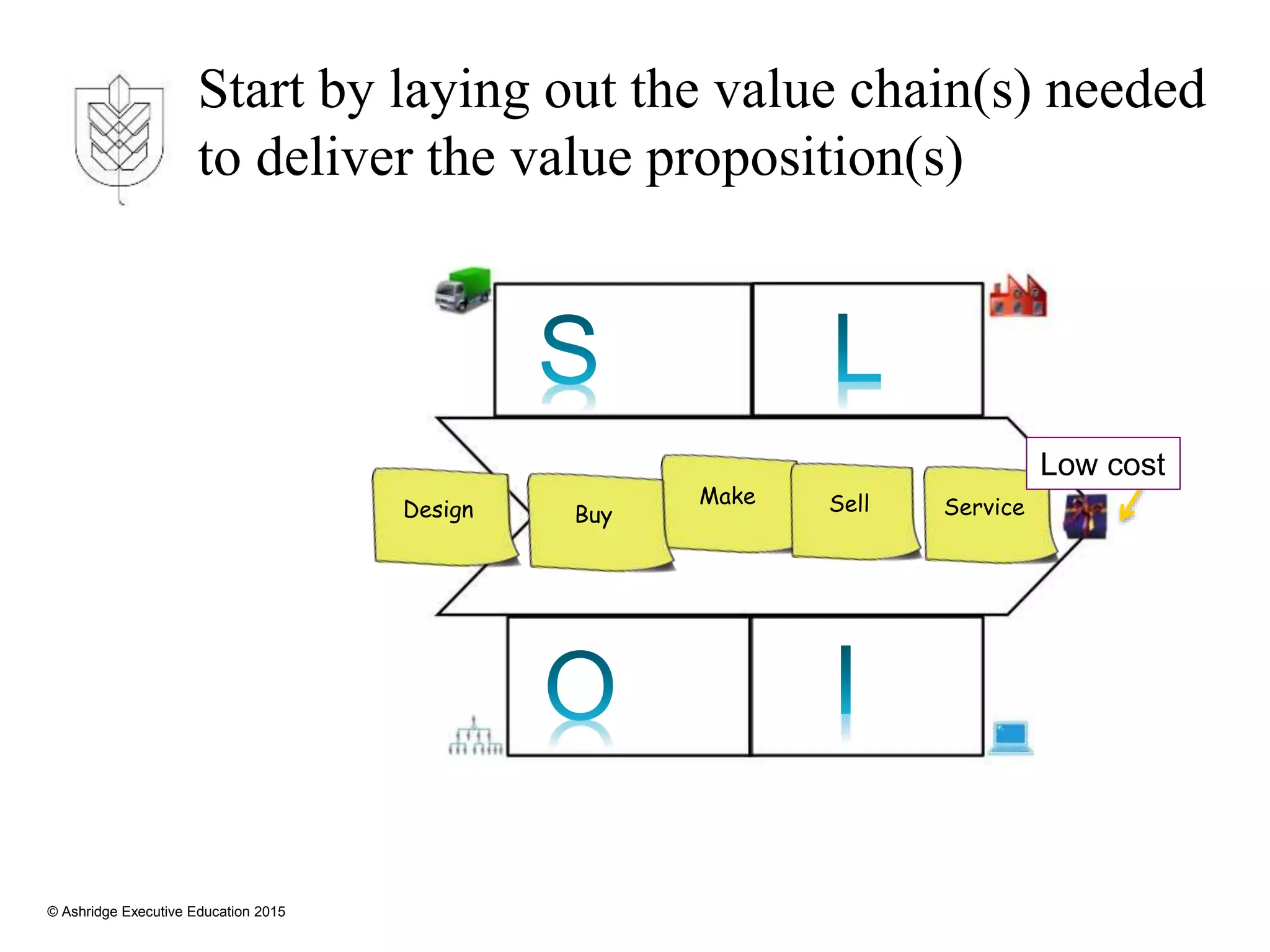
Start by laying out the value chain(s) needed
to deliver the value proposition(s)
Low cost
© Ashridge Executive Education 2015
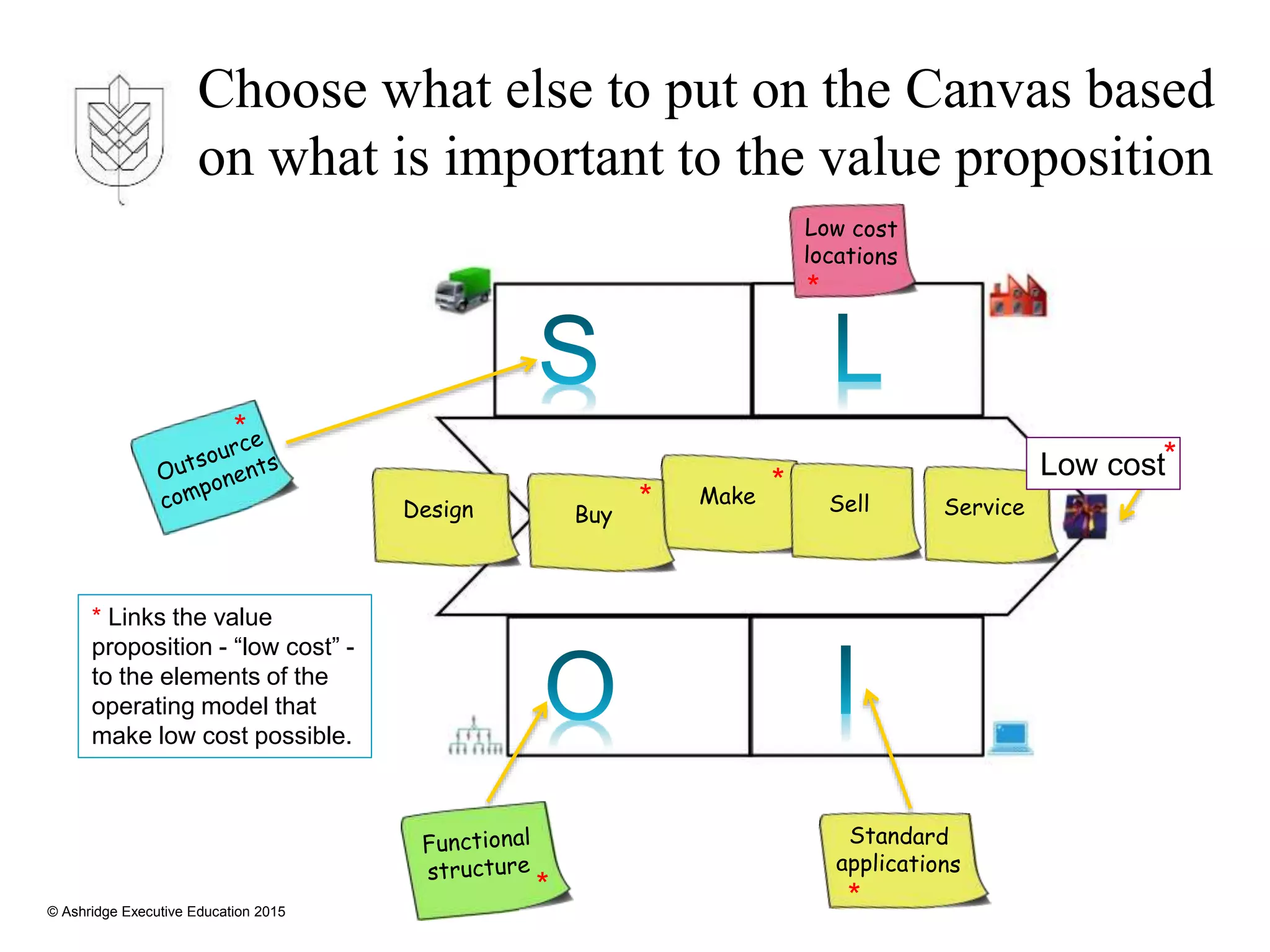
Choose what else to put on the Canvas based
on what is important to the value proposition
*
*
* Links the value
proposition - “low cost” -
to the elements of the
operating model that
make low cost possible.
* *
* *
Low cost*
© Ashridge Executive Education 2015
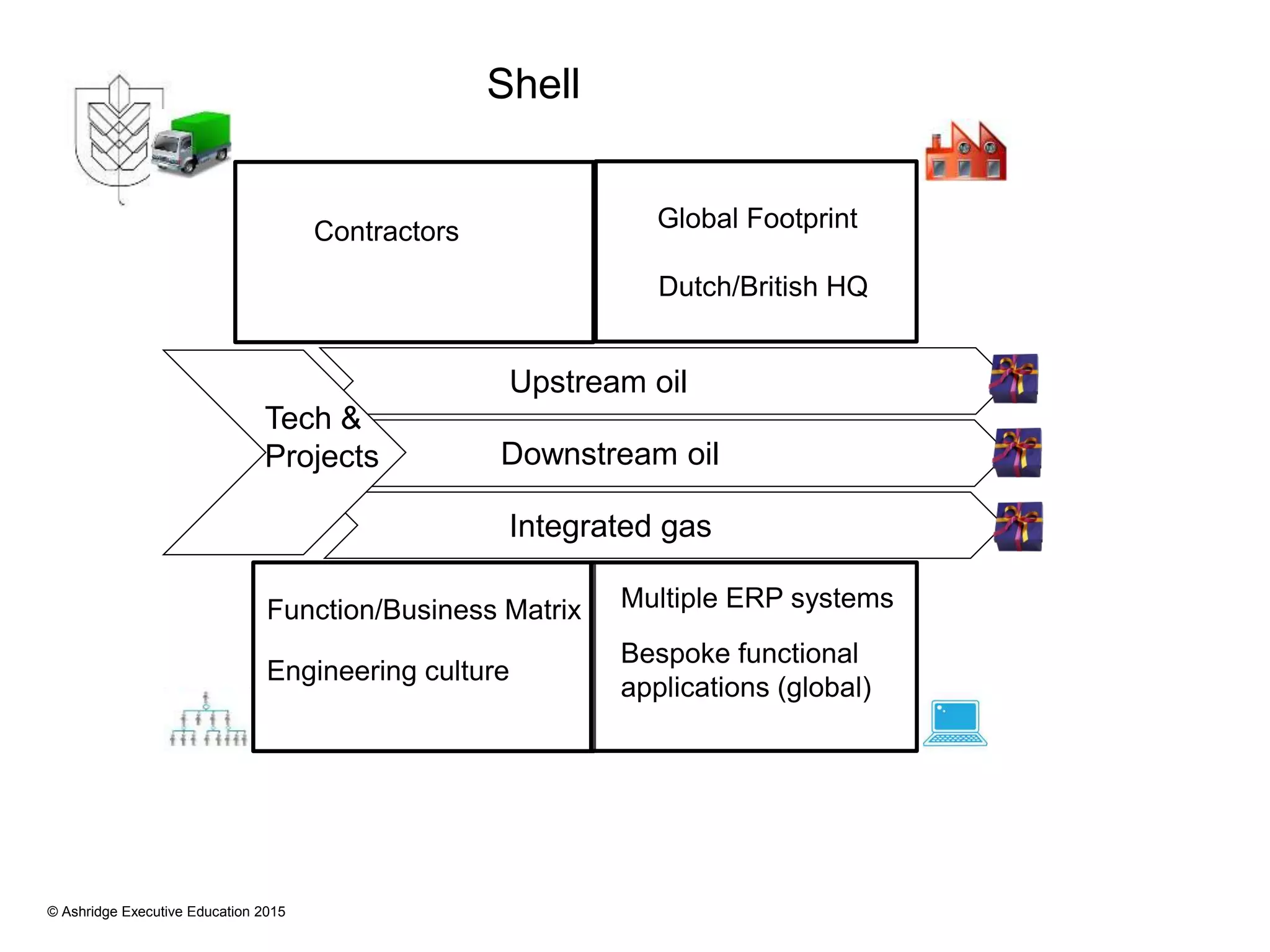
Upstream oil
Downstream oil
Integrated gas
Contractors Global Footprint
Function/Business Matrix
Engineering culture
Multiple ERP systems
Bespoke functional
applications (global)
Tech &
Projects
Dutch/British HQ
Shell
© Ashridge Executive Education 2015
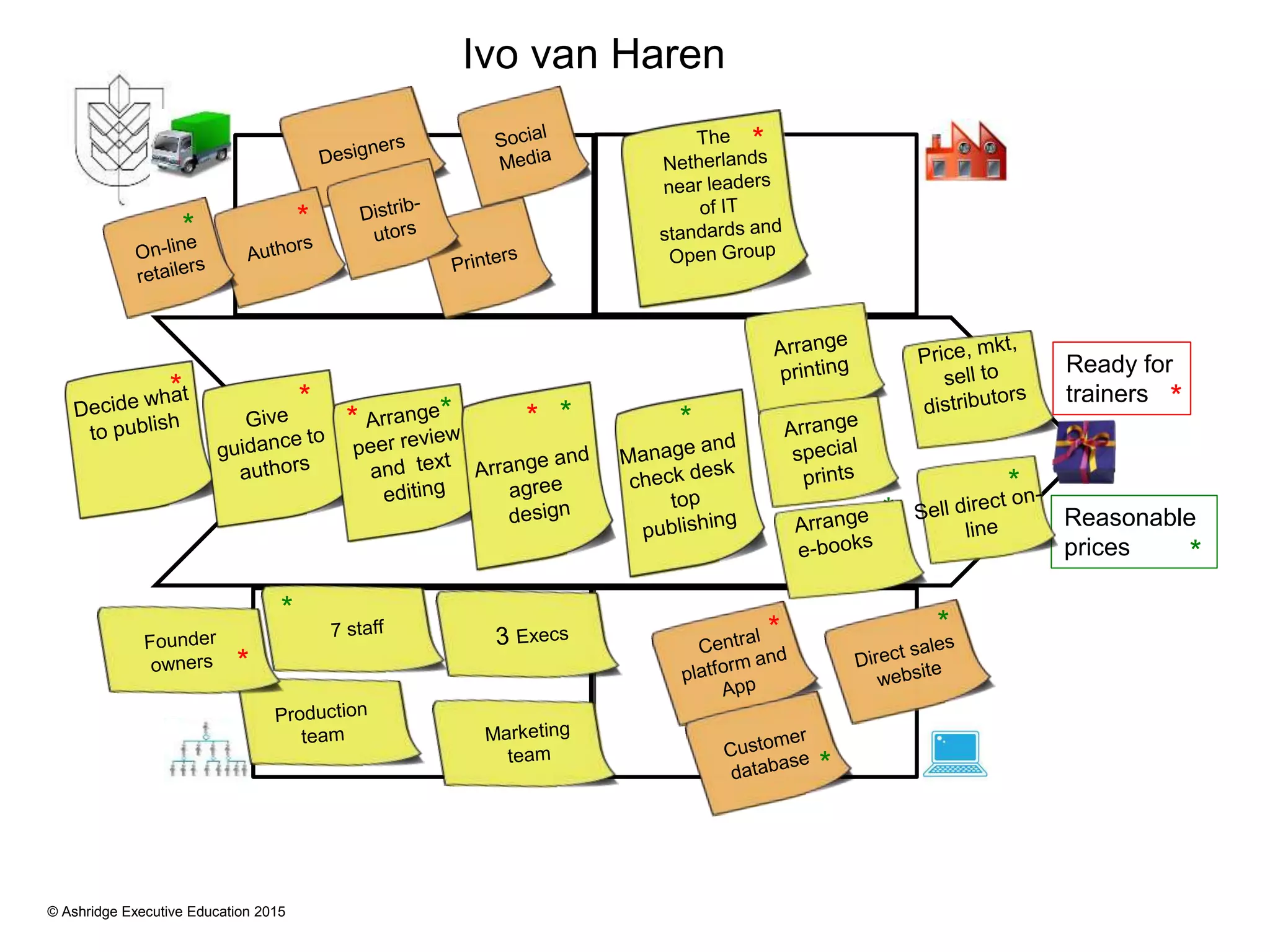
Ready for
trainers
Reasonable
prices
*
*
*
*
*
*
*
*
*
*
*
*
*
*
*
*
*
*
*
Ivo van Haren
© Ashridge Executive Education 2015
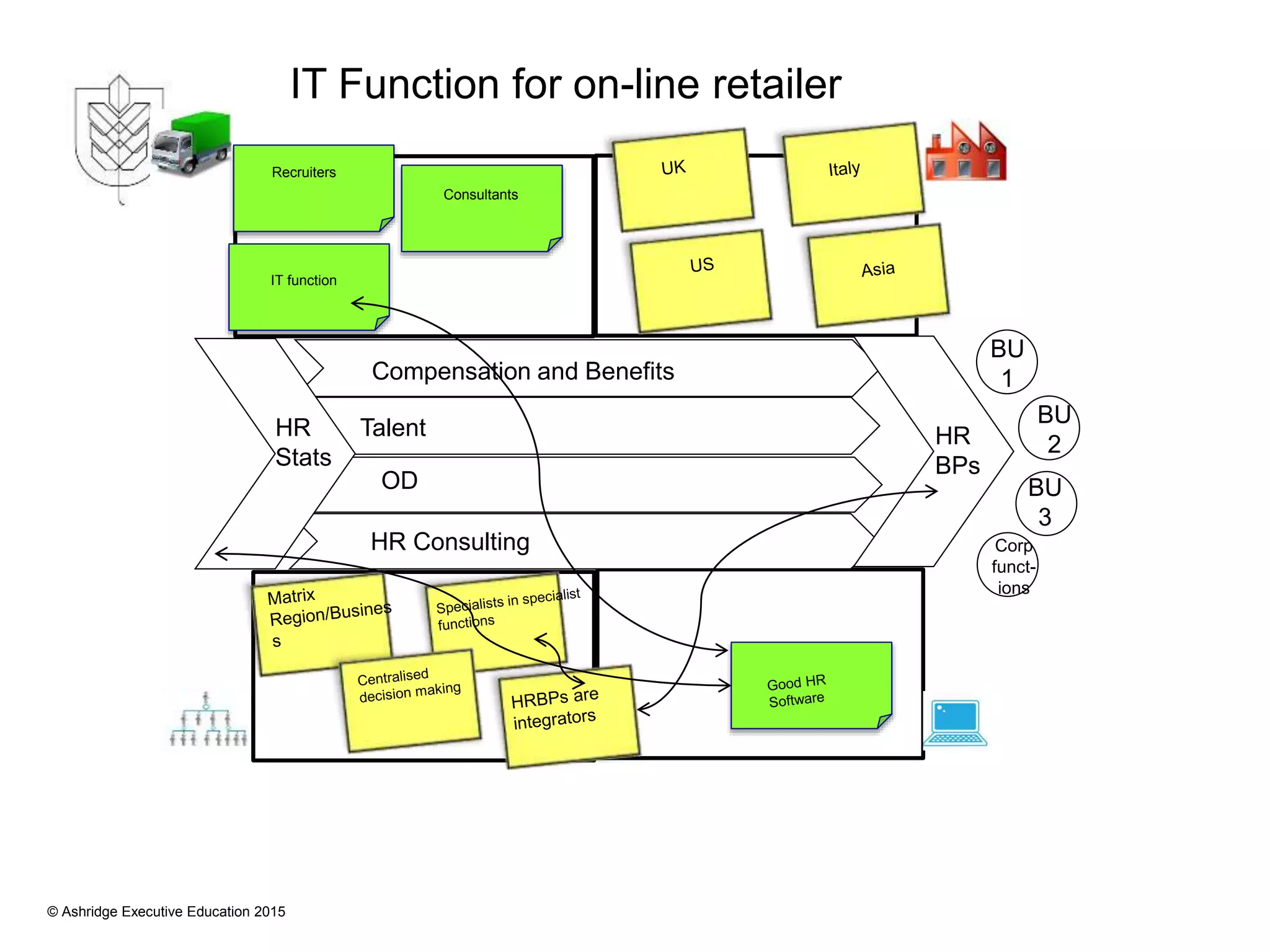
Compensation and Benefits
Talent
OD
HR Consulting
HR
Stats
HR
BPs
BU
1
BU
2
BU
3
Corp
funct-
ions
IT function
Consultants
Recruiters
IT Function for on-line retailer
© Ashridge Executive Education 2015
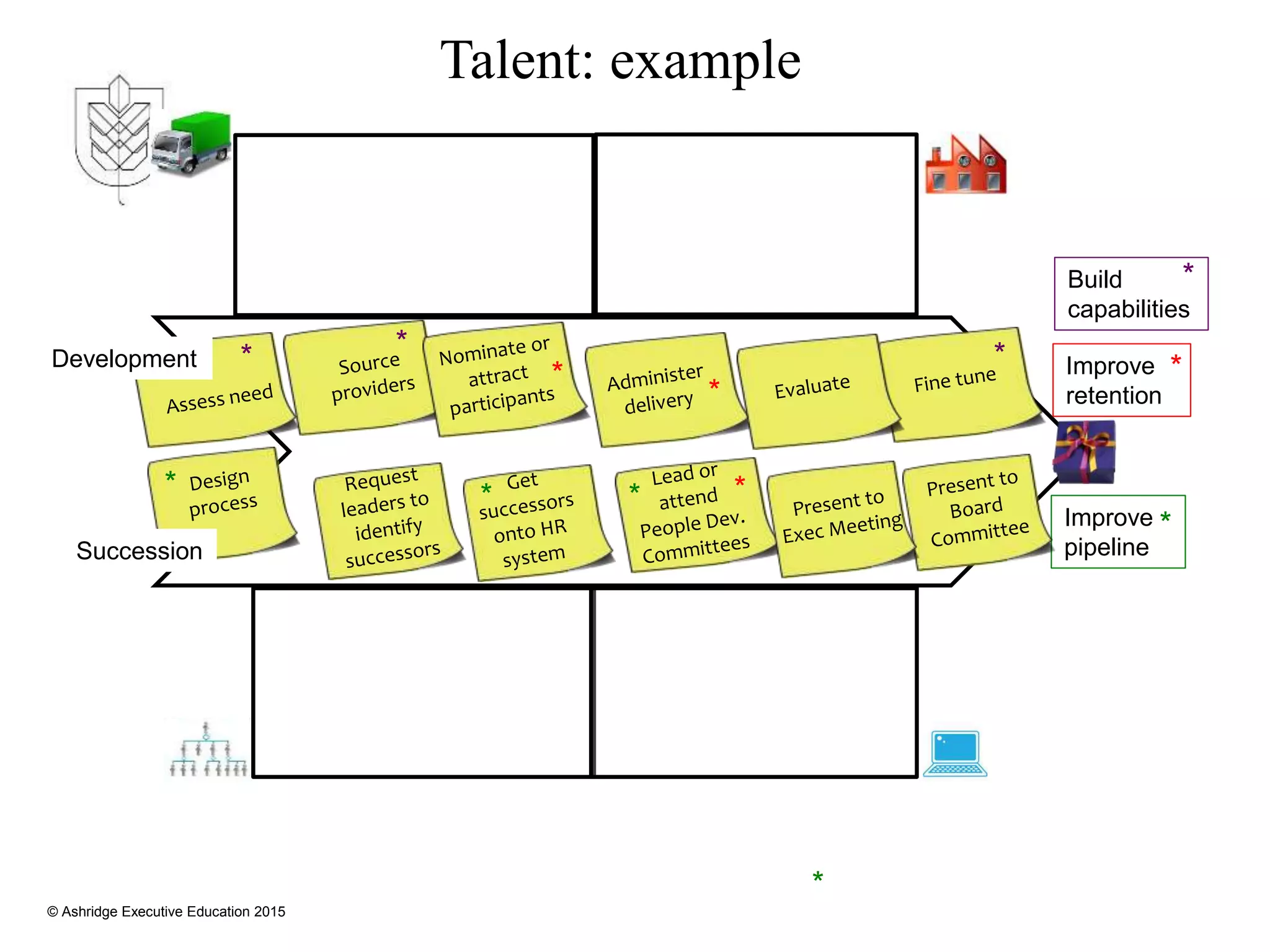
Improve
retention
Improve
pipeline
*
*
*
*
Development
Succession
Build
capabilities
*
* * *
* *
Talent: example
*
*
*
© Ashridge Executive Education 2015
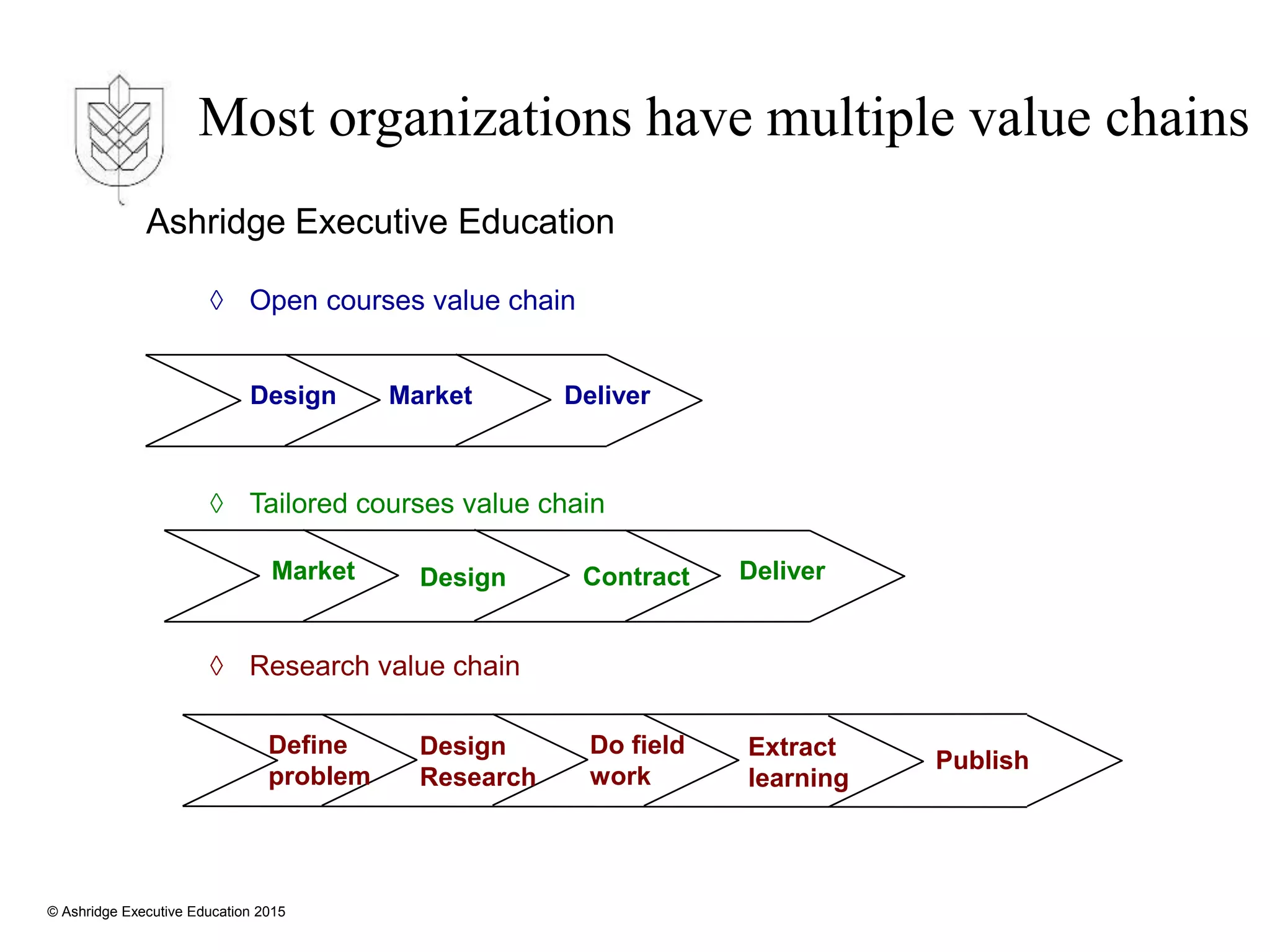
Most organizations have multiple value chains
Ashridge Executive Education
 Open courses value chain
 Tailored courses value chain
 Research value chain
Design Market Deliver
Market Design Deliver
Define
problem
Design
Research
Do field
work
Contract
Extract
learning
Publish
© Ashridge Executive Education 2015
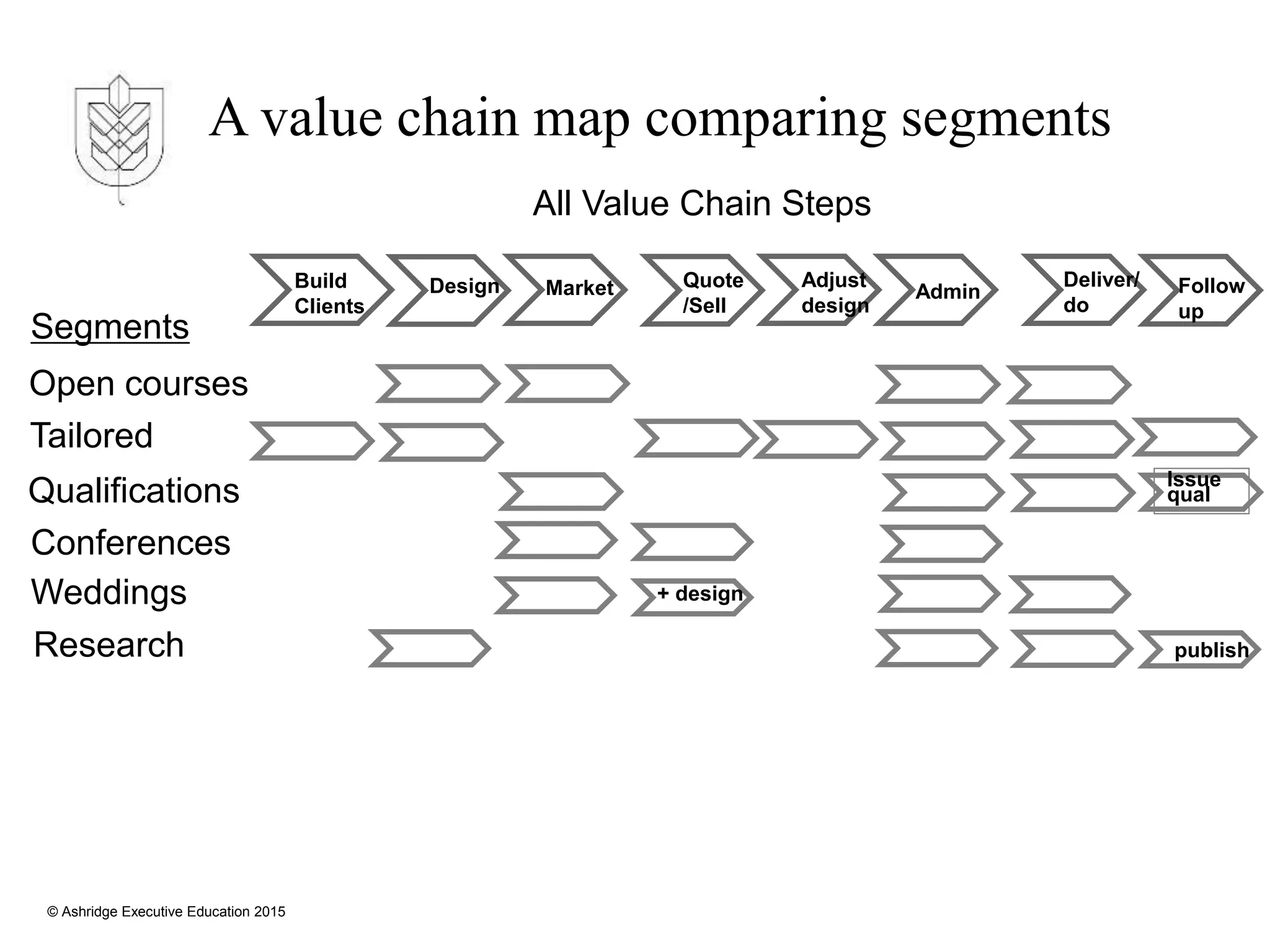
Open courses
Tailored
Qualifications
Conferences
Weddings
Research
All Value Chain Steps
Design
Build
Clients
Market Quote
/Sell
Adjust
design
Admin
Deliver/
do
Follow
up
Issue
qual
+ design
publish
Segments
A value chain map comparing segments
© Ashridge Executive Education 2015
Open courses
Tailored
Qualifications
Conferences
Weddings
Research
All Value Chain Steps
Design
Build
Client
s
Market Quote
/Sell
Adjust
design
Admin
Deliver/
do
Follow
up
Issue
qual
+ design
publish
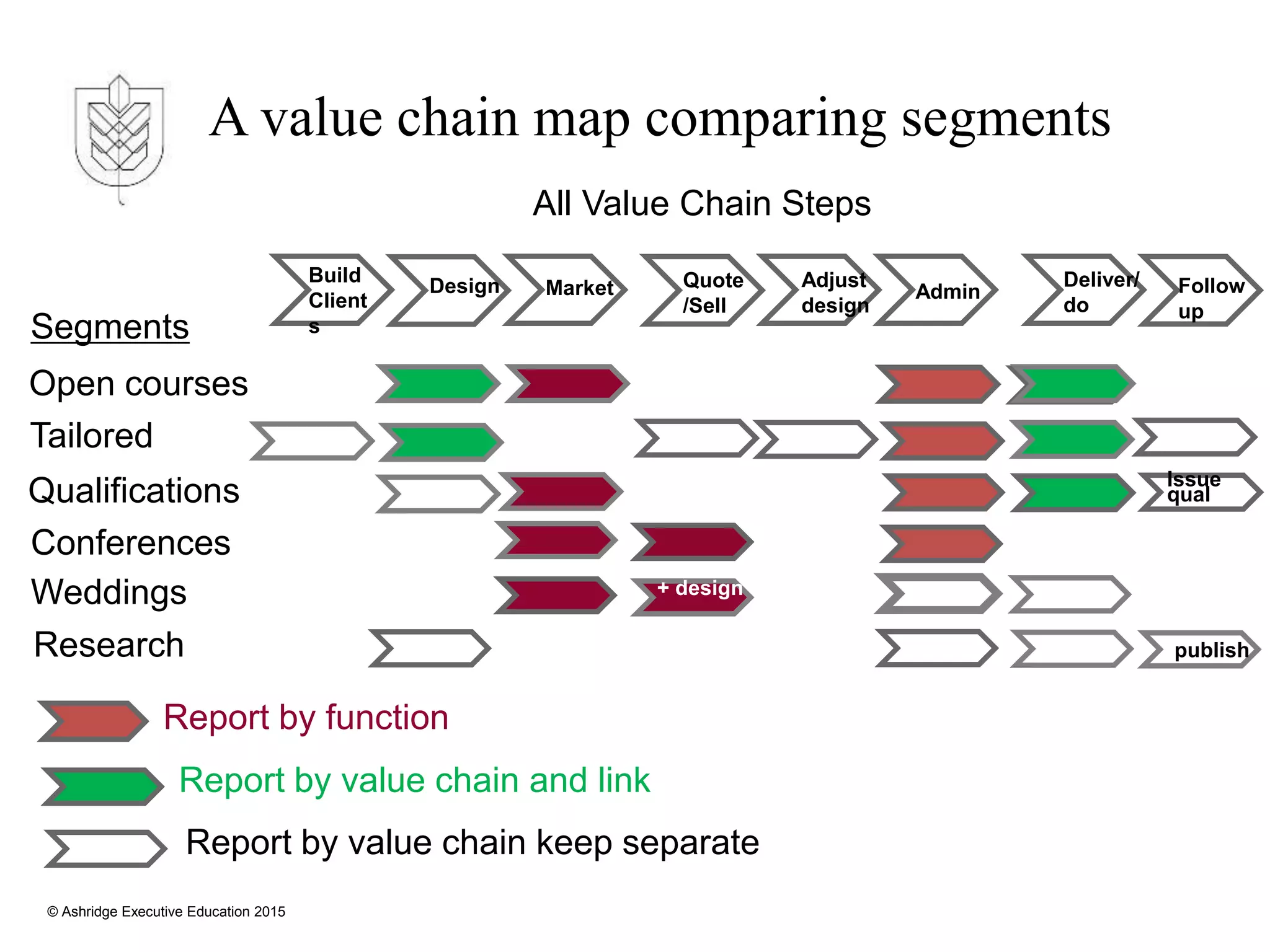
Report by function
Report by value chain and link
Report by value chain keep separate
Segments
A value chain map comparing segments
© Ashridge Executive Education 2015
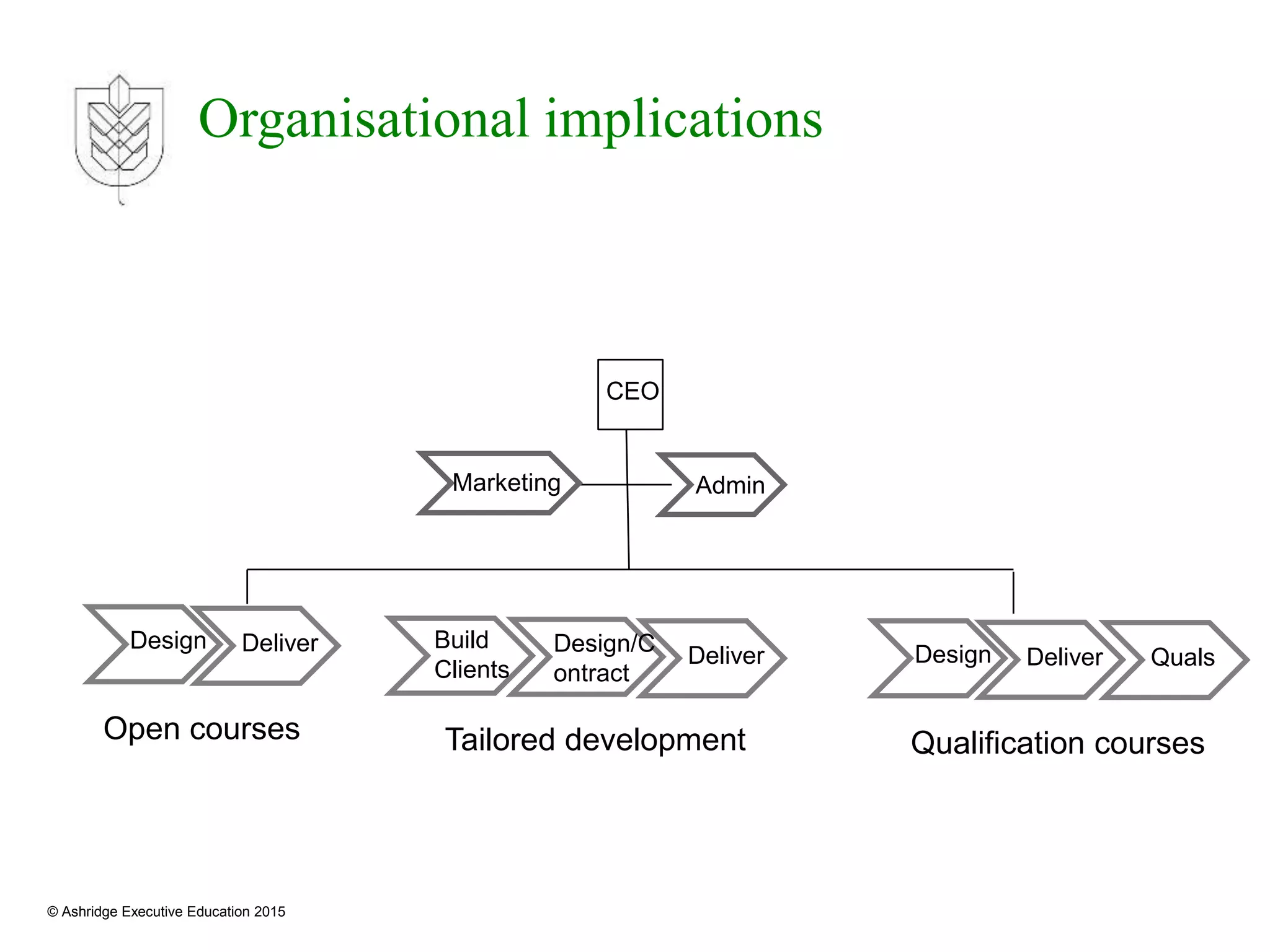
Organisational implications
Design Deliver
Open courses
Design/C
ontract
Deliver Design Deliver Quals
Build
Clients
Tailored development Qualification courses
Marketing Admin
CEO
© Ashridge Executive Education 2015
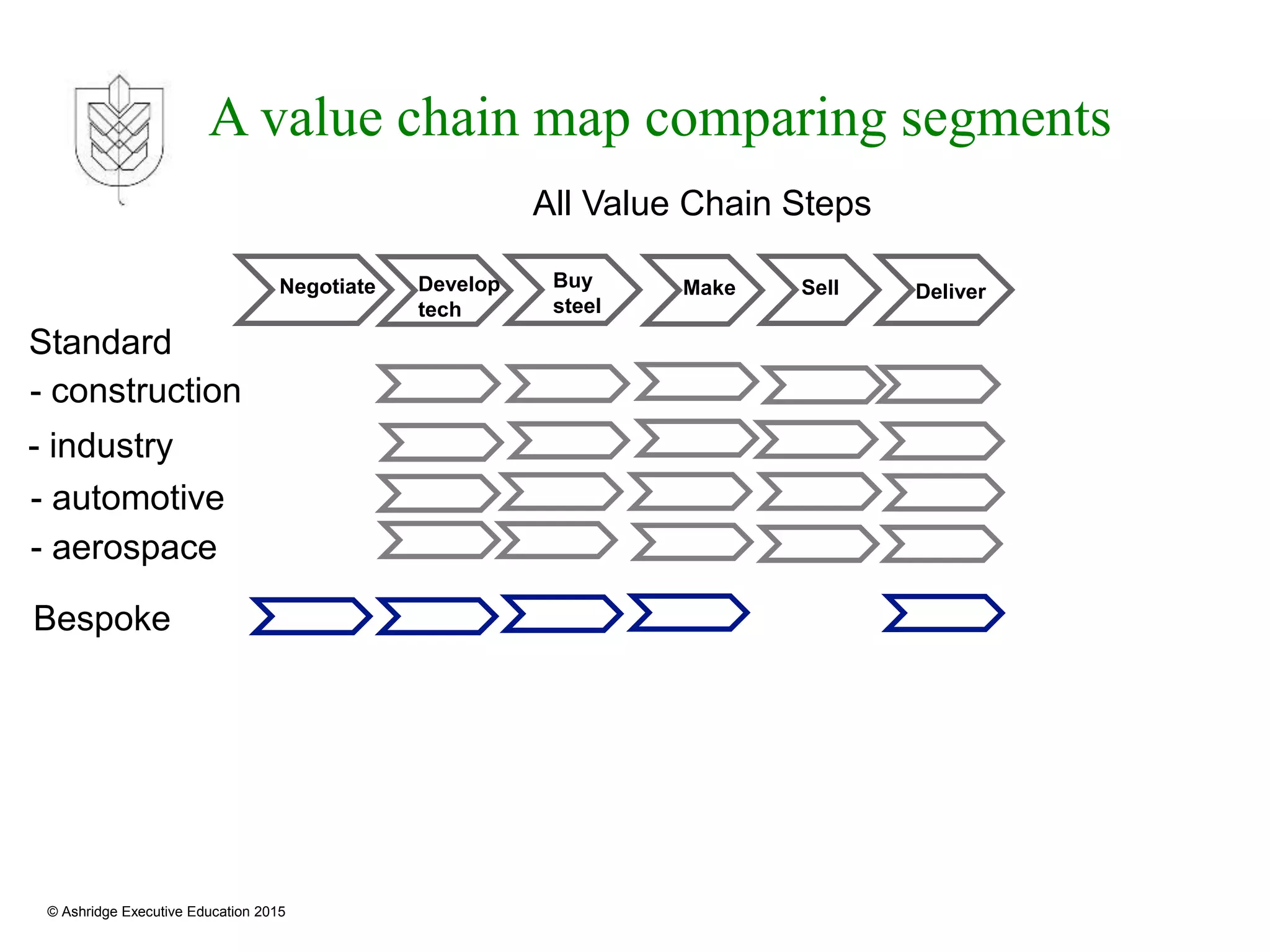
Standard
- construction
- industry
- automotive
- aerospace
Bespoke
All Value Chain Steps
Develop
tech
Negotiate Buy
steel
Make Sell Deliver
A value chain map comparing segments
© Ashridge Executive Education 2015
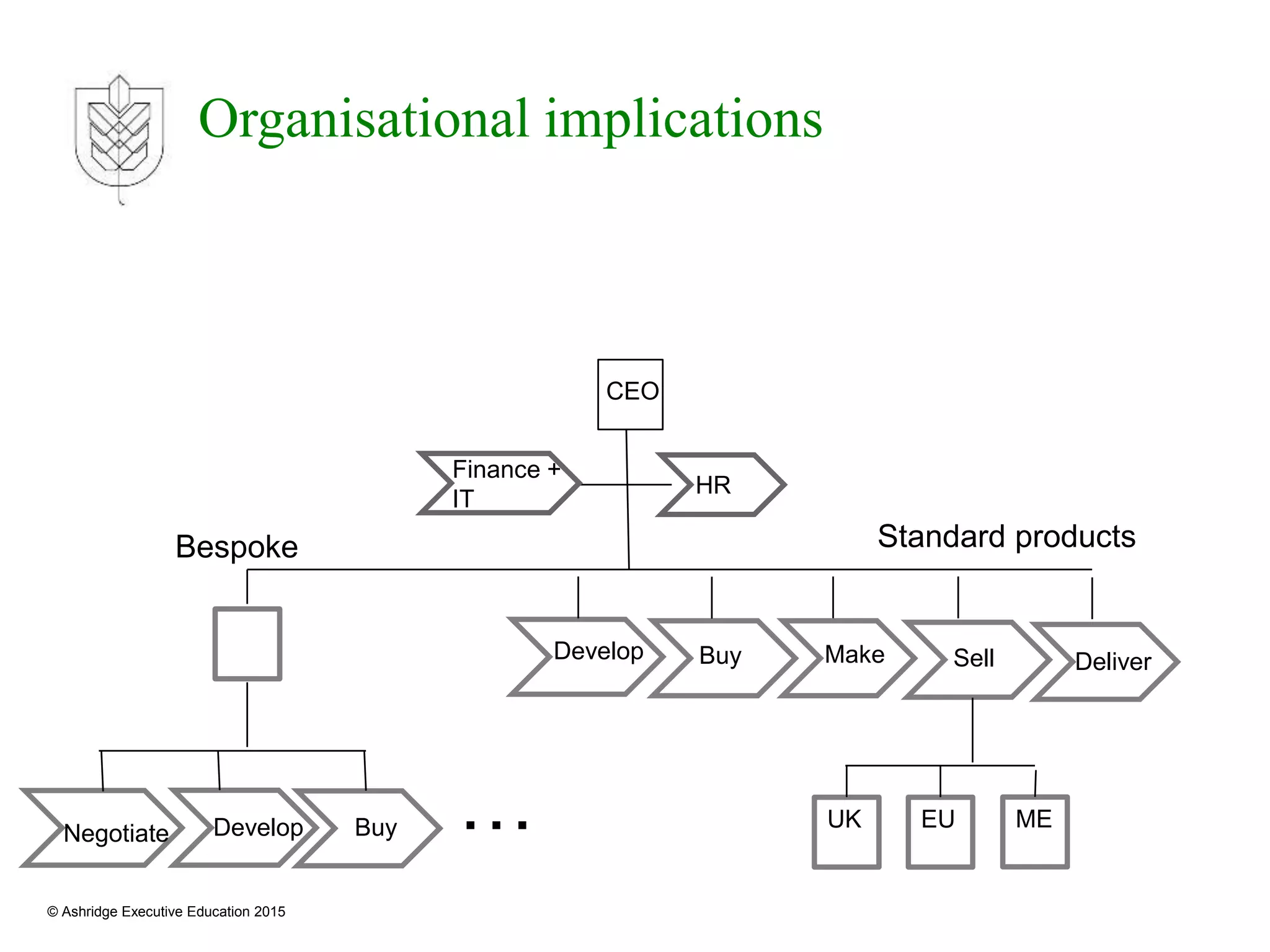
Organisational implications
Bespoke
Develop Buy Make Sell
Buy
Standard products
Finance +
IT
HR
Deliver
…
Develop
Negotiate
CEO
UK EU ME
© Ashridge Executive Education 2015
Organization
Design
People Test
Feasibility Test
Specialist Cultures
Test
Difficult Links Test
Redundant Hierarchy
Test
Accountability Test
Flexibility Test
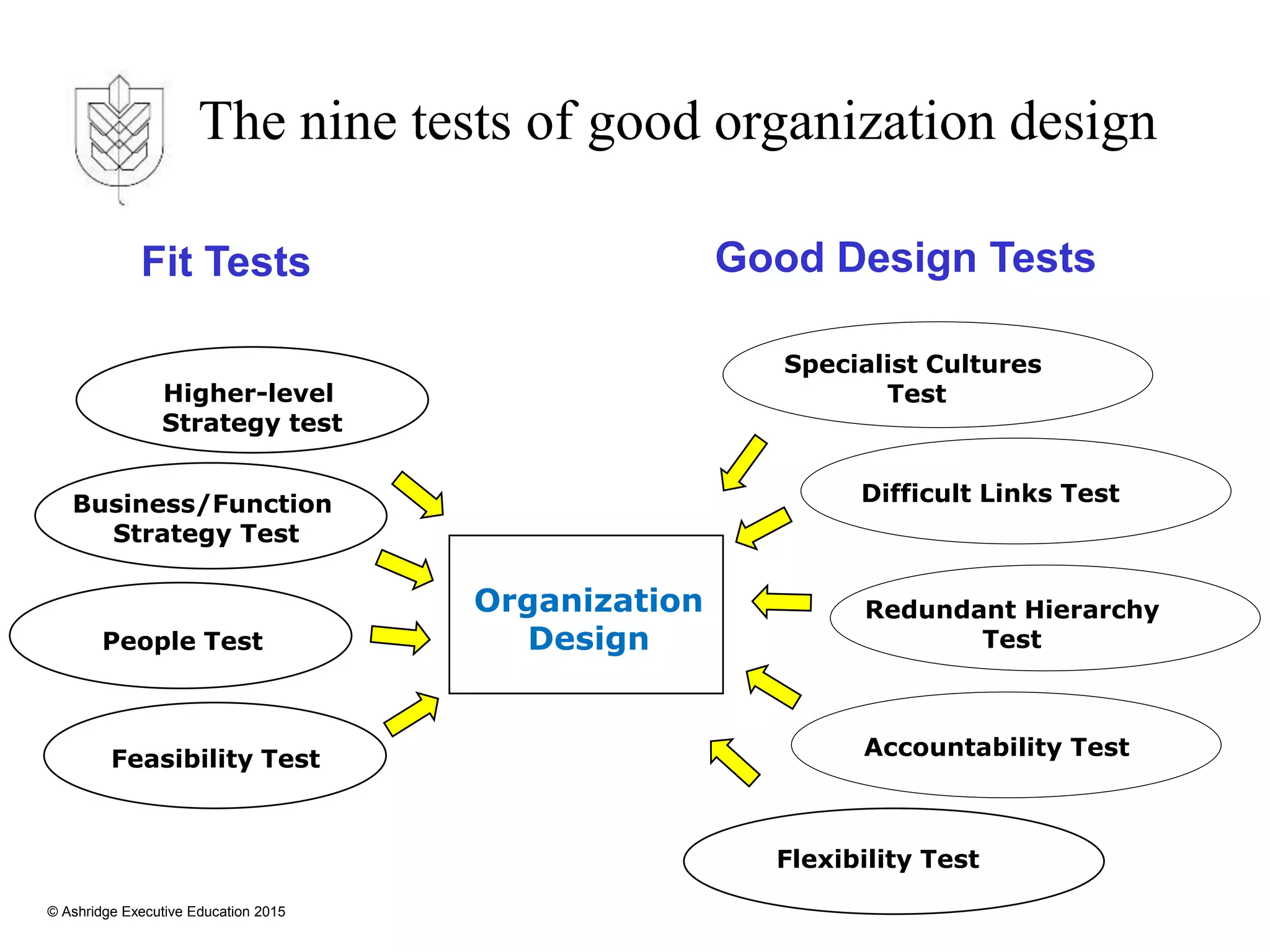
The nine tests of good organization design
Business/Function
Strategy Test
Higher-level
Strategy test
Good Design Tests
Fit Tests
© Ashridge Executive Education 2015
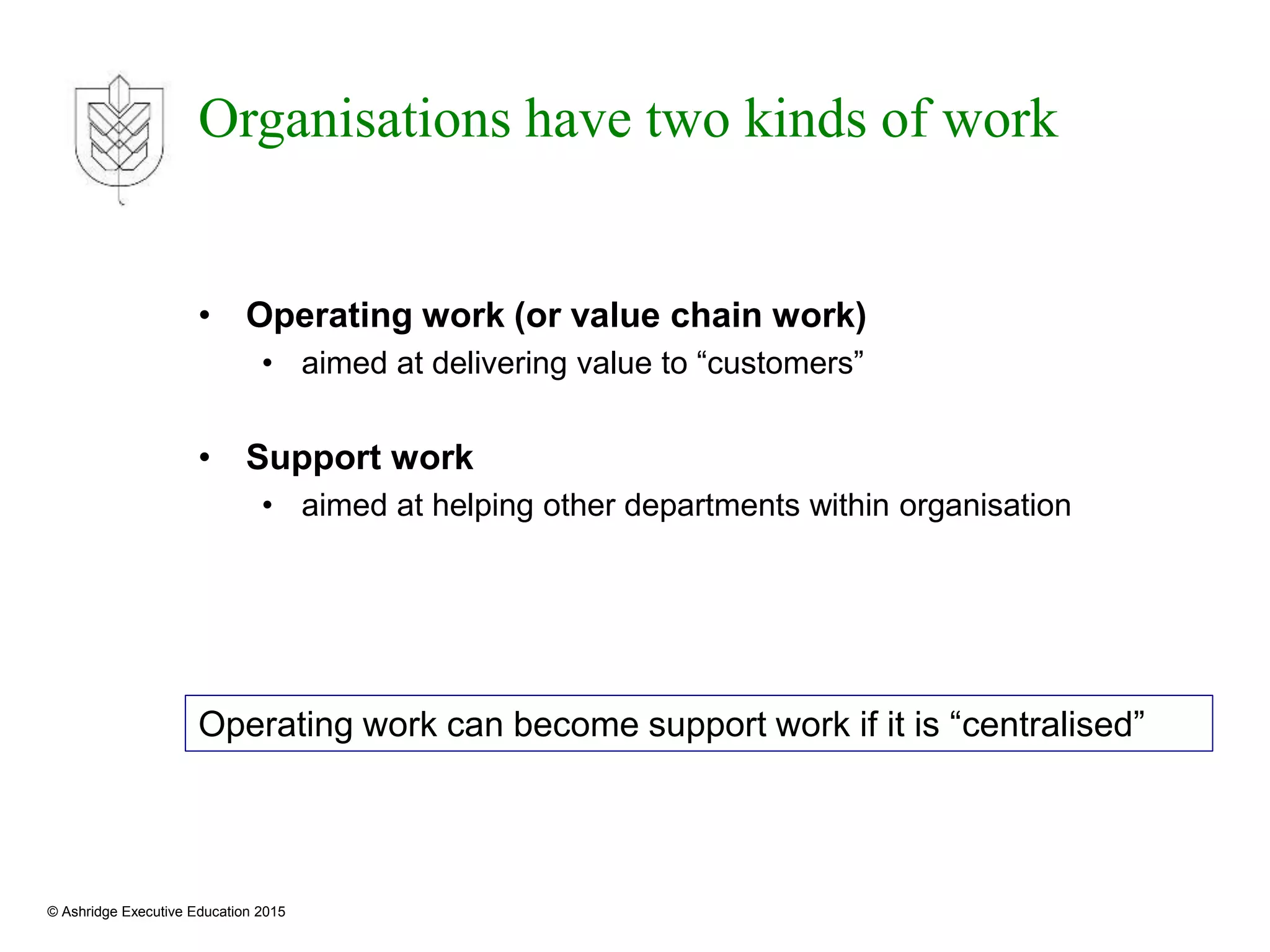
Organisations have two kinds of work
• Operating work (or value chain work)
• aimed at delivering value to “customers”
• Support work
• aimed at helping other departments within organisation
Operating work can become support work if it is “centralised”
© Ashridge Executive Education 2015
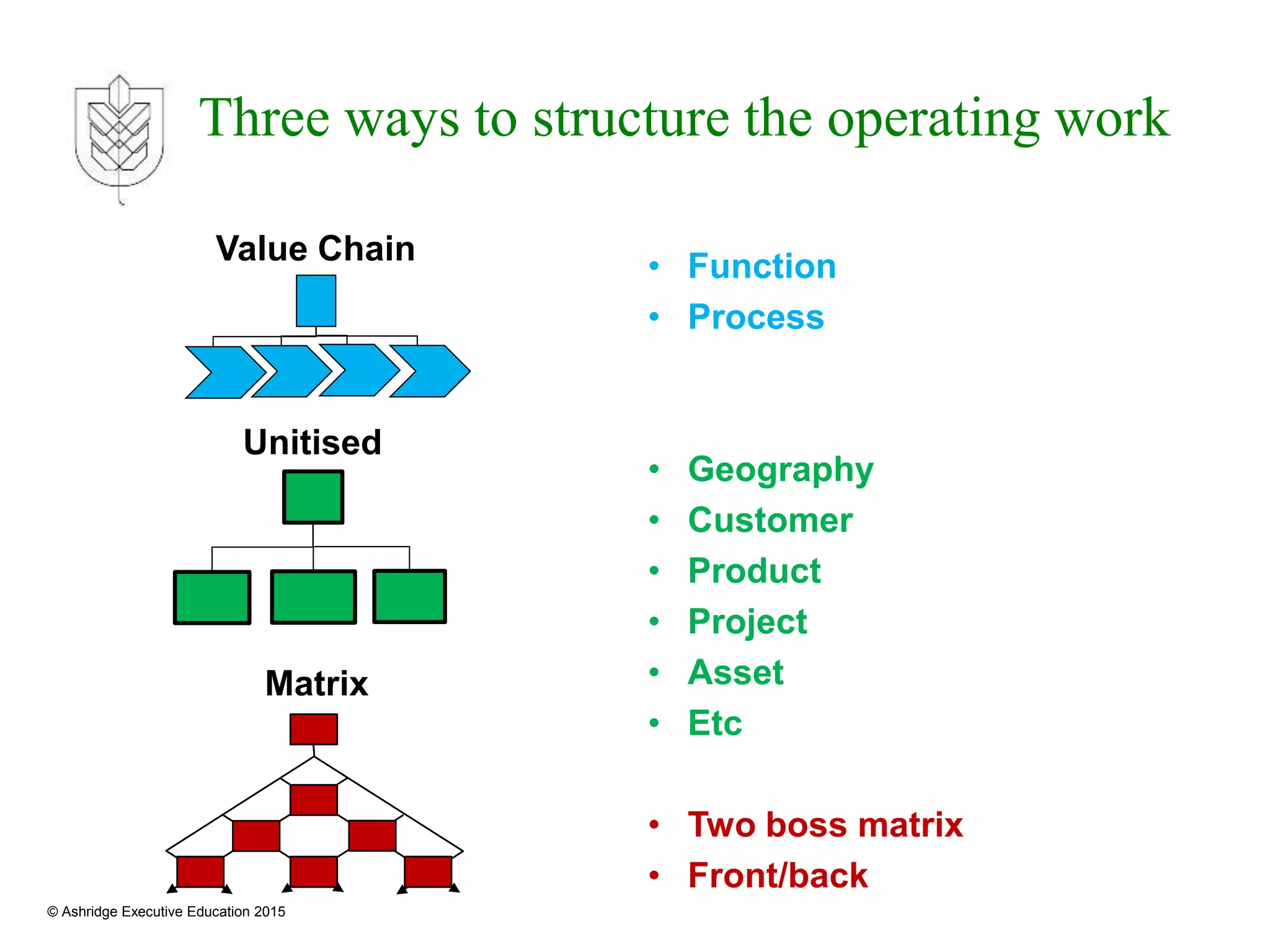
• Function
• Process
• Geography
• Customer
• Product
• Project
• Asset
• Etc
• Two boss matrix
• Front/back
Three ways to structure the operating work
Value Chain
Unitised
Matrix
© Ashridge Executive Education 2015
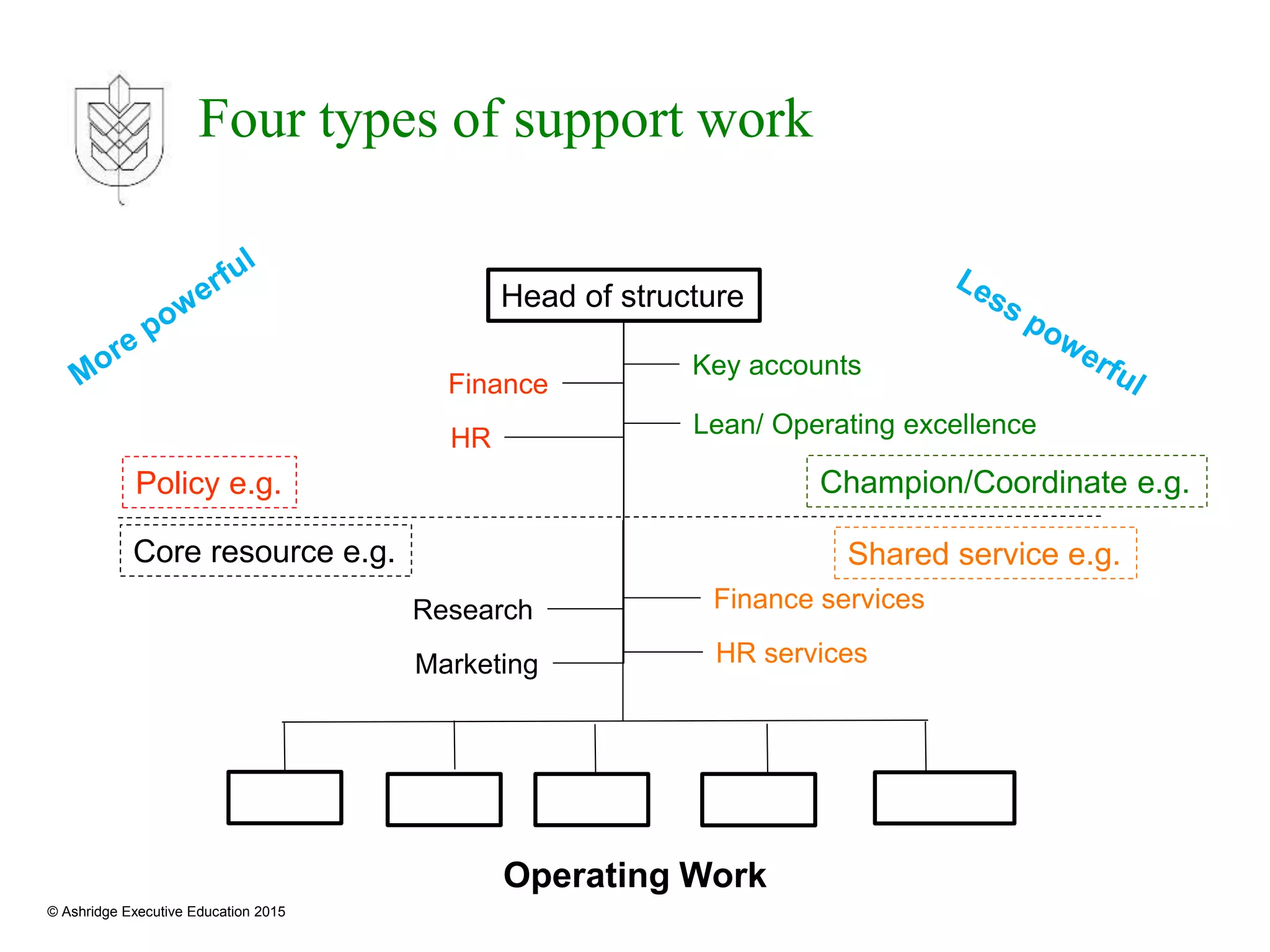
Four types of support work
Head of structure
Operating Work
Policy e.g.
Core resource e.g.
Champion/Coordinate e.g.
Shared service e.g.
Lean/ Operating excellence
Key accounts
Finance
HR
Research
Marketing
Finance services
HR services
© Ashridge Executive Education 2015
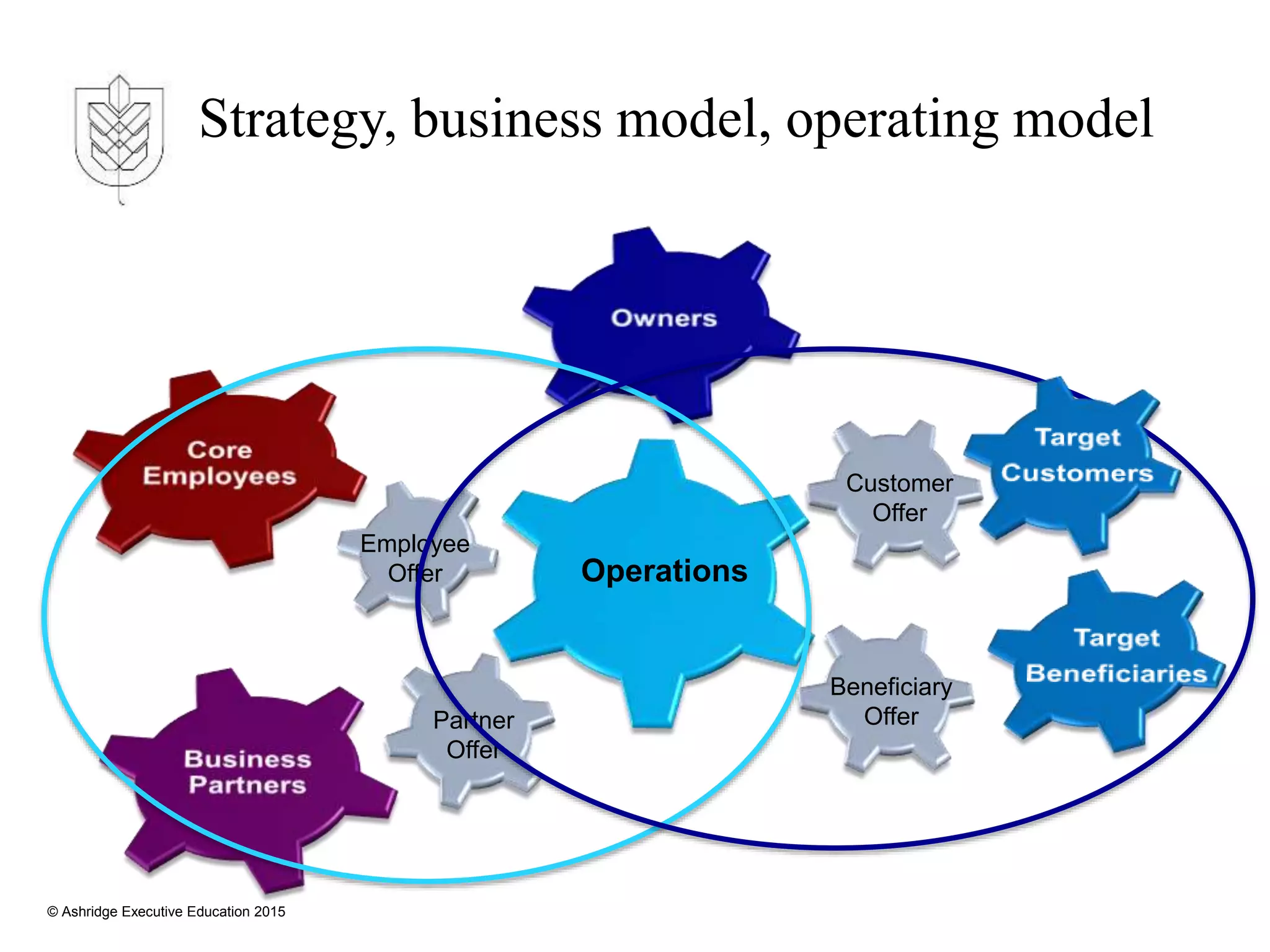
Strategy, business model, operating model
Operations
Customer
Offer
Employee
Offer
Partner
Offer
Beneficiary
Offer

Strategy to operating model to organization design

  • 1.
    © Ashridge ExecutiveEducation 2015 © Ashridge Executive Education 2015 Organisation Design: Going from strategy to operating model to organisation structure Andrew Campbell
  • 2.
    © Ashridge ExecutiveEducation 2015 Organization Design People Test Feasibility Test Specialist Cultures Test Difficult Links Test Redundant Hierarchy Test Accountability Test Flexibility Test The nine tests of good organization design Business/Function Strategy Test Higher-level Strategy test Good Design Tests Fit Tests
  • 3.
    © Ashridge ExecutiveEducation 2015 Organization Design Higher Level Strategy Test Business/Function Strategy Test Two strategy tests Is there a “box” or powerful mechanism for each priority?
  • 4.
    © Ashridge ExecutiveEducation 2015 Products Segments Countries Channels Sources of advantage or excellence Operating initiatives Implications Test Priorities
  • 5.
    © Ashridge ExecutiveEducation 2015 Products Segments Countries Channels Sources of advantage or excellence Operating initiatives Implications Test Priorities Standard Bespoke Yes Yes Construction Industrial Automotive Aerospace Yes No No No UK Germany Middle East Asia Yes ? Yes ? Yes ? Yes ? Do we need country managers? Do we need segment managers?
  • 6.
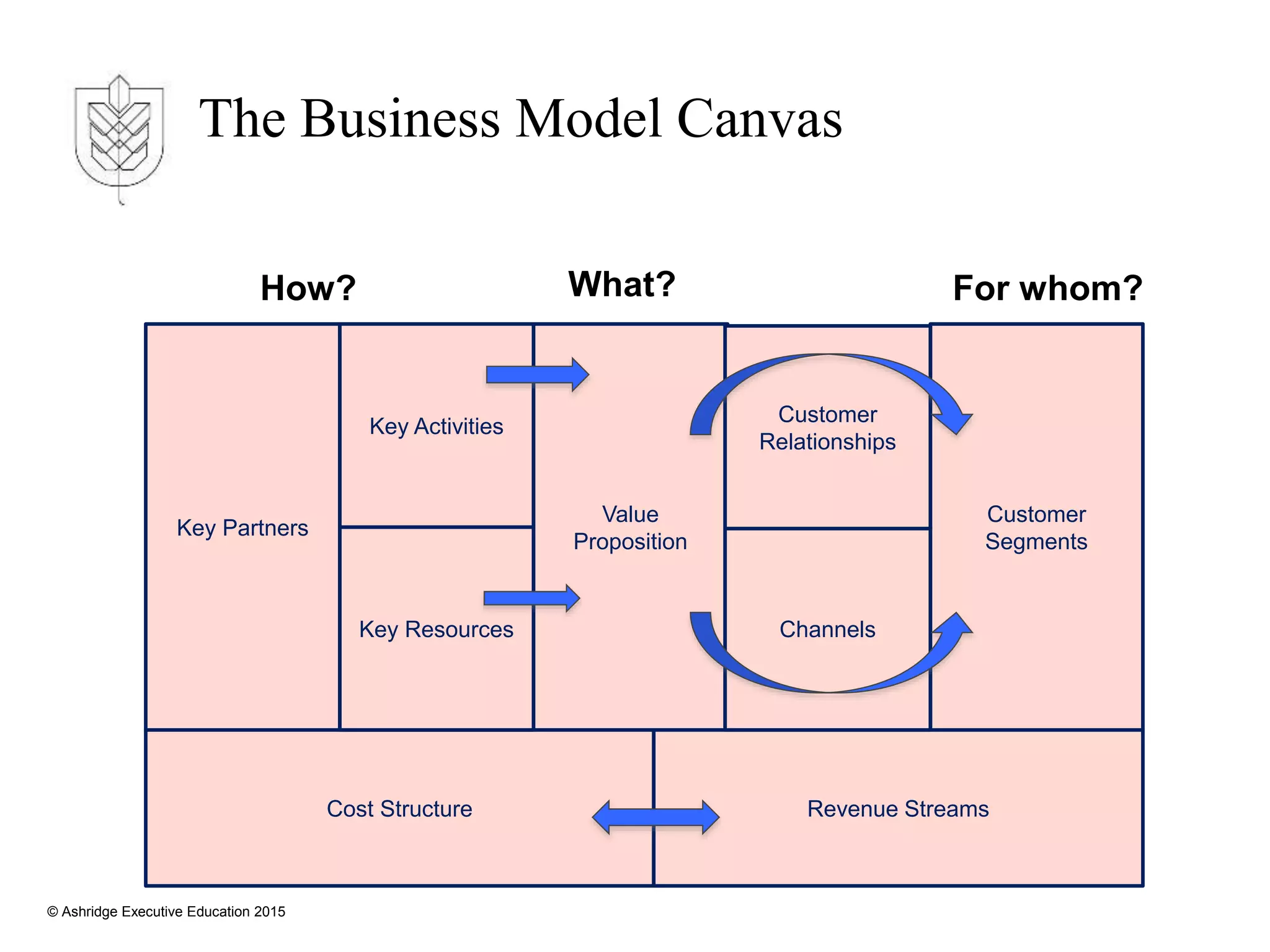
    © Ashridge ExecutiveEducation 2015 The Business Model Canvas Key Partners Customer Segments Value Proposition Cost Structure Revenue Streams Key Resources Channels Key Activities Customer Relationships For whom? What? How?
  • 7.
    © Ashridge ExecutiveEducation 2015
  • 8.
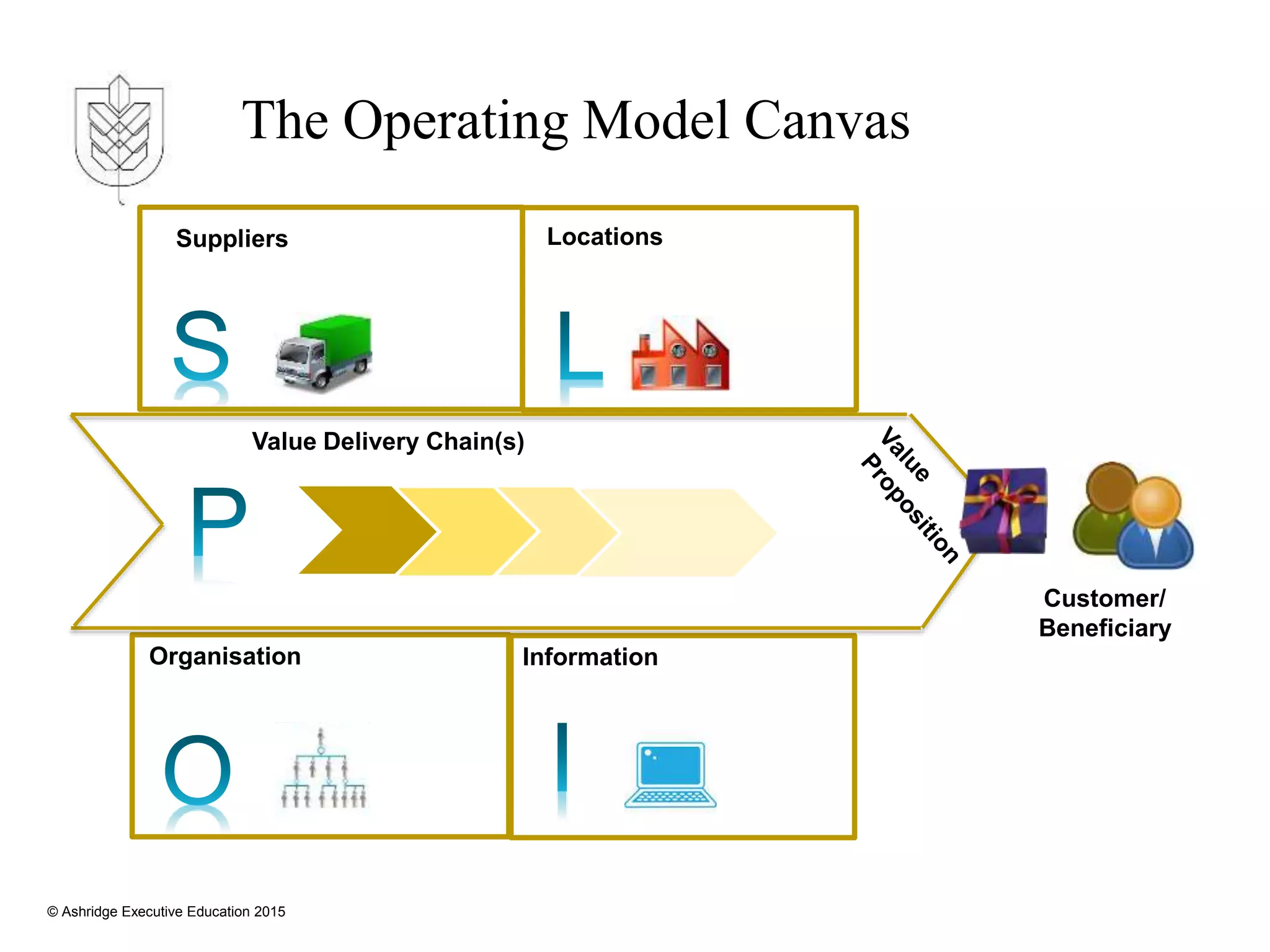
    © Ashridge ExecutiveEducation 2015 Suppliers Organisation Customer/ Beneficiary Value Delivery Chain(s) The Operating Model Canvas Locations Information
  • 9.
    © Ashridge ExecutiveEducation 2015 Customer/ Beneficiary Value Delivery Chain(s) The Operating Model Canvas
  • 10.
    © Ashridge ExecutiveEducation 2015 Organisation Customer/ Beneficiary Value Delivery Chain(s) The Operating Model Canvas
  • 11.
    © Ashridge ExecutiveEducation 2015 Organisation Customer/ Beneficiary Value Delivery Chain(s) The Operating Model Canvas Information
  • 12.
    © Ashridge ExecutiveEducation 2015 Suppliers Organisation Customer/ Beneficiary Value Delivery Chain(s) The Operating Model Canvas Information
  • 13.
    © Ashridge ExecutiveEducation 2015 Suppliers Organisation Customer/ Beneficiary Value Delivery Chain(s) The Operating Model Canvas Locations Information
  • 14.
    © Ashridge ExecutiveEducation 2015 Enhanced Business Model Canvas Back End (operations) Front End (customers/channels) Financial Model Middle (value)
  • 15.
    © Ashridge ExecutiveEducation 2015 Start by laying out the value chain(s) needed to deliver the value proposition(s) Low cost
  • 16.
    © Ashridge ExecutiveEducation 2015 Choose what else to put on the Canvas based on what is important to the value proposition * * * Links the value proposition - “low cost” - to the elements of the operating model that make low cost possible. * * * * Low cost*
  • 17.
    © Ashridge ExecutiveEducation 2015 Upstream oil Downstream oil Integrated gas Contractors Global Footprint Function/Business Matrix Engineering culture Multiple ERP systems Bespoke functional applications (global) Tech & Projects Dutch/British HQ Shell
  • 18.
    © Ashridge ExecutiveEducation 2015 Ready for trainers Reasonable prices * * * * * * * * * * * * * * * * * * * Ivo van Haren
  • 19.
    © Ashridge ExecutiveEducation 2015 Compensation and Benefits Talent OD HR Consulting HR Stats HR BPs BU 1 BU 2 BU 3 Corp funct- ions IT function Consultants Recruiters IT Function for on-line retailer
  • 20.
    © Ashridge ExecutiveEducation 2015 Improve retention Improve pipeline * * * * Development Succession Build capabilities * * * * * * Talent: example * * *
  • 21.
    © Ashridge ExecutiveEducation 2015 Most organizations have multiple value chains Ashridge Executive Education  Open courses value chain  Tailored courses value chain  Research value chain Design Market Deliver Market Design Deliver Define problem Design Research Do field work Contract Extract learning Publish
  • 22.
    © Ashridge ExecutiveEducation 2015 Open courses Tailored Qualifications Conferences Weddings Research All Value Chain Steps Design Build Clients Market Quote /Sell Adjust design Admin Deliver/ do Follow up Issue qual + design publish Segments A value chain map comparing segments
  • 23.
    © Ashridge ExecutiveEducation 2015 Open courses Tailored Qualifications Conferences Weddings Research All Value Chain Steps Design Build Client s Market Quote /Sell Adjust design Admin Deliver/ do Follow up Issue qual + design publish Report by function Report by value chain and link Report by value chain keep separate Segments A value chain map comparing segments
  • 24.
    © Ashridge ExecutiveEducation 2015 Organisational implications Design Deliver Open courses Design/C ontract Deliver Design Deliver Quals Build Clients Tailored development Qualification courses Marketing Admin CEO
  • 25.
    © Ashridge ExecutiveEducation 2015 Standard - construction - industry - automotive - aerospace Bespoke All Value Chain Steps Develop tech Negotiate Buy steel Make Sell Deliver A value chain map comparing segments
  • 26.
    © Ashridge ExecutiveEducation 2015 Organisational implications Bespoke Develop Buy Make Sell Buy Standard products Finance + IT HR Deliver … Develop Negotiate CEO UK EU ME
  • 27.
    © Ashridge ExecutiveEducation 2015 Organization Design People Test Feasibility Test Specialist Cultures Test Difficult Links Test Redundant Hierarchy Test Accountability Test Flexibility Test The nine tests of good organization design Business/Function Strategy Test Higher-level Strategy test Good Design Tests Fit Tests
  • 28.
    © Ashridge ExecutiveEducation 2015 Organisations have two kinds of work • Operating work (or value chain work) • aimed at delivering value to “customers” • Support work • aimed at helping other departments within organisation Operating work can become support work if it is “centralised”
  • 29.
    © Ashridge ExecutiveEducation 2015 • Function • Process • Geography • Customer • Product • Project • Asset • Etc • Two boss matrix • Front/back Three ways to structure the operating work Value Chain Unitised Matrix
  • 30.
    © Ashridge ExecutiveEducation 2015 Four types of support work Head of structure Operating Work Policy e.g. Core resource e.g. Champion/Coordinate e.g. Shared service e.g. Lean/ Operating excellence Key accounts Finance HR Research Marketing Finance services HR services
  • 31.
    © Ashridge ExecutiveEducation 2015 Strategy, business model, operating model Operations Customer Offer Employee Offer Partner Offer Beneficiary Offer

Editor's Notes

  • #22 Ask them how many value chains in Aijenka.
  • #32 While it is evident that organisations need strategies for each stakeholder, most strategy work in commercial organisations is focused on customers. This is because the competition for customers Is the most pressing “difficulty”. Executives often presume that, if they can attract a customer, they will be able to find money, people and business partners. Hence they focus on customer strategy and leave the interaction with the other stakeholders to those working on the “operating model”. But, maybe it would be better if strategists did a complete job of defining all the “core” stakeholders and all the “offers” to these stakeholders.