A learning journey for teachersAngêla Betancourt Balmaceda
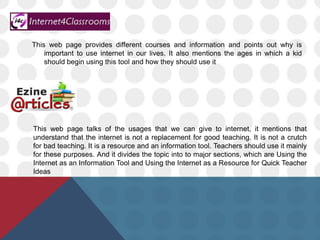
Now days, Internet skills are important and it can be very helpful for employment, quality of life, studies among othersYou can maximize the potential of search engines by learning how they work, and how to use them quickly and effectively.
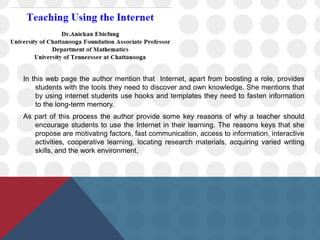
Motivational power: time on task, enjoyment and sense of satisfaction.
Resource-based learning: link many different types of resources and provide a guided path, also provide access to many primary sources, archival materials, databases.
Collaborative learning: ease of communication and collaboration even across distances.
Interactivity: potentiality in choosing how to synthesize information and providing self-assessment.
Publication: easy and inexpensive publication of student workWHY TO USE IT?
Be aware of what tools are available and of how others have employed these in teaching; the tools and examples
Find out what kinds of resources relevant to your discipline and course topic are already on the web.
Think about how these tools and resources would enable you and your students to do something new, or to do something old in a new and better way.
Make sure that your students understand how to use the tools that you are asking them to employ.Take into account

Strategies to use internet correctly

  • 1.
    A learning journeyfor teachersAngêla Betancourt Balmaceda
  • 2.
    Now days, Internetskills are important and it can be very helpful for employment, quality of life, studies among othersYou can maximize the potential of search engines by learning how they work, and how to use them quickly and effectively.
  • 3.
    Motivational power: timeon task, enjoyment and sense of satisfaction.
  • 4.
    Resource-based learning: linkmany different types of resources and provide a guided path, also provide access to many primary sources, archival materials, databases.
  • 5.
    Collaborative learning: easeof communication and collaboration even across distances.
  • 6.
    Interactivity: potentiality inchoosing how to synthesize information and providing self-assessment.
  • 7.
    Publication: easy andinexpensive publication of student workWHY TO USE IT?
  • 8.
    Be aware ofwhat tools are available and of how others have employed these in teaching; the tools and examples
  • 9.
    Find out whatkinds of resources relevant to your discipline and course topic are already on the web.
  • 10.
    Think about howthese tools and resources would enable you and your students to do something new, or to do something old in a new and better way.
  • 11.
    Make sure thatyour students understand how to use the tools that you are asking them to employ.Take into account