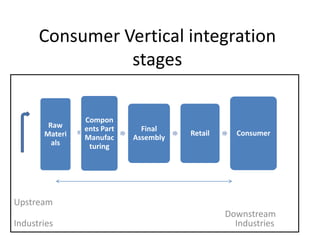
Consumer Vertical integration
stages

Raw
Materi
als

Compon
ents Part
Manufac
turing

Final
Assembly

Retail

Consumer

Upstream
Industries

Downstream
Industries
Industry vertical integration stage
Increasing Profitability Through
Vertical Integration
Building barriers to entry
Facilitating investments in specialized assets
Protecting product quality
Improved scheduling
Designing Vertical Relationships:
• such relationships may combine benefits
of both :

Market
transactions

Internalization
Designing Vertical Relationships
• Key issues in designing vertical
relationships:
How is risk allocated
between the parties?

Are the incentives
appropriate?
Recent Trends in Vertical
Relationships
From competitive contracting to supplier
partnerships, e.g. in autos
From vertical integration to outsourcing
(not just components, also
IT, distribution, and administrative
services).
Diffusion of franchising
Technology partnerships (e.g. IBM- Apple;
Canon- HP)
Inter-firm networks
High

Different Types of Vertical Relationship

Long-term
contracts

Joint
ventures

Agency
agreements
Spot sales/
purchases

Informal
supplier/
customer
relationships

Low

Formalization

Franchises

Low

Supplier/
customer
partnerships

Degree of Commitment

Vertical
integration

High
Arguments Against Vertical Integration
Cost disadvantages
• Company-owned suppliers that have higher costs than
external suppliers

Rapid technological change
• Tying a company to an obsolescent technology

Demand unpredictability
• Difficulty of achieving close coordination among
vertically integrated activities

Bureaucratic costs
Alternatives to Vertical Integration:
Cooperative Relationships
• Short-term contracts and competitive bidding
• Strategic alliances and long-term contracting
• Building long-term cooperative relationships
– Hostage taking
– Credible commitments
– Maintaining market discipline
• Parallel sourcing policy

Strategic management

  • 1.
    Consumer Vertical integration stages Raw Materi als Compon entsPart Manufac turing Final Assembly Retail Consumer Upstream Industries Downstream Industries
  • 2.
  • 3.
    Increasing Profitability Through VerticalIntegration Building barriers to entry Facilitating investments in specialized assets Protecting product quality Improved scheduling
  • 4.
    Designing Vertical Relationships: •such relationships may combine benefits of both : Market transactions Internalization
  • 5.
    Designing Vertical Relationships •Key issues in designing vertical relationships: How is risk allocated between the parties? Are the incentives appropriate?
  • 6.
    Recent Trends inVertical Relationships From competitive contracting to supplier partnerships, e.g. in autos From vertical integration to outsourcing (not just components, also IT, distribution, and administrative services). Diffusion of franchising Technology partnerships (e.g. IBM- Apple; Canon- HP) Inter-firm networks
  • 7.
    High Different Types ofVertical Relationship Long-term contracts Joint ventures Agency agreements Spot sales/ purchases Informal supplier/ customer relationships Low Formalization Franchises Low Supplier/ customer partnerships Degree of Commitment Vertical integration High
  • 8.
    Arguments Against VerticalIntegration Cost disadvantages • Company-owned suppliers that have higher costs than external suppliers Rapid technological change • Tying a company to an obsolescent technology Demand unpredictability • Difficulty of achieving close coordination among vertically integrated activities Bureaucratic costs
  • 9.
    Alternatives to VerticalIntegration: Cooperative Relationships • Short-term contracts and competitive bidding • Strategic alliances and long-term contracting • Building long-term cooperative relationships – Hostage taking – Credible commitments – Maintaining market discipline • Parallel sourcing policy