TELL ME A STORY
 How to Get Media
 To Write About Your Nonprofit

 Judy Crawford, President
 Crawford Communicates
What’s the story?
  Timing is everything
  Get outside your organization

  Find a unique angle

  Relate to your audience

  Use a memorable character or group

  Grab attention with the lead

  Raise visibility with high-profile

   spokesperson(s)
Generate ideas
  Start a file of favorite stories, columns, blogs,
   video, podcasts, etc. featuring nonprofits
  Ask questions within your organization to
   identify stories with a news or human interest
   “hook”
  Think of story ideas to piggyback on timely

   events already being covered
  Brainstorm, brainstorm, brainstorm with co-
   workers, family and friends
Success stories
  Stephen Colbert challenges Jimmy Fallon to
   raise $26,000 for DonorsChoose.org
  Harlem’s ‘Gospel for Teens’ grabs 60 Minutes
   spotlight
  Channel 3 finds prom magic in
   ‘The Cinderella Affair’ for Tempe girls
  ‘A Guy Like Jerry’ captures hearts in Laurie
   Roberts column
  Newspapers statewide follow Mongolian
   scientists on Arizona tour
Media nightmares
  60 Minutes exposes half-truths of Three Cups
   of Tea author and philanthropist Greg
   Mortenson
  National columnist reveals that Candie’s

   Foundation pays spokesperson Bristol Palin
   eight times what it donates to teen pregnancy
   charities
  The New York Times reports that Madonna
   ousts board of her Raising Malawi charity due
   to mismanagement
Crisis communications 101
  Anticipate negative media coverage
  Prepare a written statement immediately

  Alert your director and board members

  Respond to ALL media requests

  Don’t avoid the media – they will find you

  Develop talking points for your spokesperson

  Refer the media to authorities when

   appropriate
  NEVER lie to a reporter!
The News Release
  FOR IMMEDIATE RELEASE
  Contact information and Website URL

  Headline (sometimes with subhead)

  Dateline (location and date)

  Body of release

  “Boilerplate” information about organization

  ###

  How to access images and/or video (B-roll)
The 5 W’s (and an H)
  Put the who, what, when, where, why and how
   in your lead paragraph
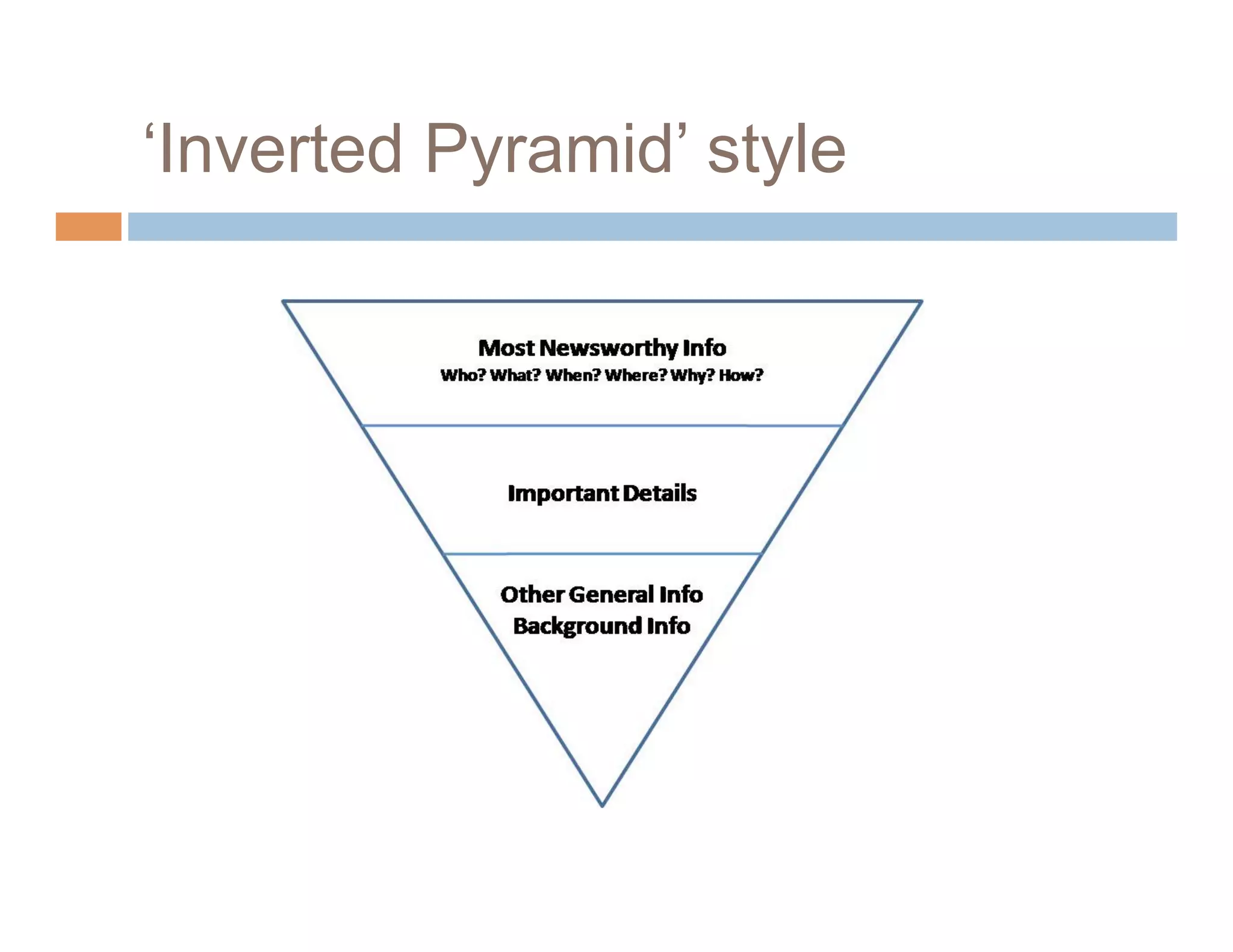
  Use the “inverted pyramid” writing style

  Study well-written articles and mimic their

   style:
       Associated Press & Reuters for news items
       Feature stories/columnists for human-interest
        stories
    Refer to the AP Stylebook for guidance
‘Inverted Pyramid’ style
Get their attention
  Start with short greeting that offers to arrange
   interviews and includes Website link
  Write a strong, captivating lead

  Embellish the story with images, charts, video

   (B-roll)
  Add a short, bulleted fact sheet

  Avoid e-blasts, address individually

  Consider paid wire distribution when a major
   story
Build relationships with media
    Get to know the media most likely to cover
     you
    Learn the names of reporters who cover
     beats most significant to you
    Read/watch/listen to their stories
    Arrange a short meeting to introduce yourself
    Find ways to meet again (with your director)
    Send your publications, invitations and other
     items of interest to reporters
Build relationships with media
  Follow personnel changes at media outlets
  Develop a “virtual” media kit on your Website

  Capitalize on breaking news to promote your
   organization
  Make yourself available to media 24/7

  Thank a reporter for his/her coverage (never

   nitpick over minor inaccuracies)
Pitch perfect – do’s
  Start with an e-mail and personal greeting
  Keep your pitch tight and focused on how the

   story might interest this particular reporter
  Make your first sentence count

  Limit your pitch to 3-4 sentences

  Offer to arrange an interview with a key source

  Get OK from source and find out his/her

   availability in advance
Pitch perfect – do’s
  Include cell number to “reach me anytime”
  Close by saying you will follow up by phone

  Know the facts of the story – be ready!

  Be confident you are providing news the

   media outlet will want
  Wait a couple of days and follow up by phone

  Refer to your e-mail as an opener
Pitch perfect – don’ts
  Call when a reporter is on deadline
  Simply ask if he/she received your e-mail

  Say the reporter will “miss out” by not covering
   your event
  Act like the journalist “owes you” for any

   reason
  Treat the journalist like a buddy – be

   professional!
Pitch perfect – don’ts
  Pitch several reporters at the same media
   outlet about the same story
  If your first choice isn’t interested, ask who
   else you might call
  Make a weak pitch because your director or

   board member has asked you to
Tell Me a Story


Thank you!

IABC Nonprofit Seminar – Media Relations

  • 1.
    TELL ME ASTORY How to Get Media To Write About Your Nonprofit Judy Crawford, President Crawford Communicates
  • 2.
    What’s the story?  Timing is everything   Get outside your organization   Find a unique angle   Relate to your audience   Use a memorable character or group   Grab attention with the lead   Raise visibility with high-profile spokesperson(s)
  • 3.
    Generate ideas   Starta file of favorite stories, columns, blogs, video, podcasts, etc. featuring nonprofits   Ask questions within your organization to identify stories with a news or human interest “hook”   Think of story ideas to piggyback on timely events already being covered   Brainstorm, brainstorm, brainstorm with co- workers, family and friends
  • 4.
    Success stories   StephenColbert challenges Jimmy Fallon to raise $26,000 for DonorsChoose.org   Harlem’s ‘Gospel for Teens’ grabs 60 Minutes spotlight   Channel 3 finds prom magic in ‘The Cinderella Affair’ for Tempe girls   ‘A Guy Like Jerry’ captures hearts in Laurie Roberts column   Newspapers statewide follow Mongolian scientists on Arizona tour
  • 5.
    Media nightmares   60Minutes exposes half-truths of Three Cups of Tea author and philanthropist Greg Mortenson   National columnist reveals that Candie’s Foundation pays spokesperson Bristol Palin eight times what it donates to teen pregnancy charities   The New York Times reports that Madonna ousts board of her Raising Malawi charity due to mismanagement
  • 6.
    Crisis communications 101  Anticipate negative media coverage   Prepare a written statement immediately   Alert your director and board members   Respond to ALL media requests   Don’t avoid the media – they will find you   Develop talking points for your spokesperson   Refer the media to authorities when appropriate   NEVER lie to a reporter!
  • 7.
    The News Release  FOR IMMEDIATE RELEASE   Contact information and Website URL   Headline (sometimes with subhead)   Dateline (location and date)   Body of release   “Boilerplate” information about organization   ###   How to access images and/or video (B-roll)
  • 8.
    The 5 W’s(and an H)   Put the who, what, when, where, why and how in your lead paragraph   Use the “inverted pyramid” writing style   Study well-written articles and mimic their style:   Associated Press & Reuters for news items   Feature stories/columnists for human-interest stories   Refer to the AP Stylebook for guidance
  • 9.
  • 10.
    Get their attention  Start with short greeting that offers to arrange interviews and includes Website link   Write a strong, captivating lead   Embellish the story with images, charts, video (B-roll)   Add a short, bulleted fact sheet   Avoid e-blasts, address individually   Consider paid wire distribution when a major story
  • 11.
    Build relationships withmedia   Get to know the media most likely to cover you   Learn the names of reporters who cover beats most significant to you   Read/watch/listen to their stories   Arrange a short meeting to introduce yourself   Find ways to meet again (with your director)   Send your publications, invitations and other items of interest to reporters
  • 12.
    Build relationships withmedia   Follow personnel changes at media outlets   Develop a “virtual” media kit on your Website   Capitalize on breaking news to promote your organization   Make yourself available to media 24/7   Thank a reporter for his/her coverage (never nitpick over minor inaccuracies)
  • 13.
    Pitch perfect –do’s   Start with an e-mail and personal greeting   Keep your pitch tight and focused on how the story might interest this particular reporter   Make your first sentence count   Limit your pitch to 3-4 sentences   Offer to arrange an interview with a key source   Get OK from source and find out his/her availability in advance
  • 14.
    Pitch perfect –do’s   Include cell number to “reach me anytime”   Close by saying you will follow up by phone   Know the facts of the story – be ready!   Be confident you are providing news the media outlet will want   Wait a couple of days and follow up by phone   Refer to your e-mail as an opener
  • 15.
    Pitch perfect –don’ts   Call when a reporter is on deadline   Simply ask if he/she received your e-mail   Say the reporter will “miss out” by not covering your event   Act like the journalist “owes you” for any reason   Treat the journalist like a buddy – be professional!
  • 16.
    Pitch perfect –don’ts   Pitch several reporters at the same media outlet about the same story   If your first choice isn’t interested, ask who else you might call   Make a weak pitch because your director or board member has asked you to
  • 17.
    Tell Me aStory Thank you!