Storage Practices
and Principles for
Waste Materials
Farm Waste Storage
A good storage for farm wastes should
comply with requirements prescribed by the
Good Agricultural Practices and in
accordance with the local Law (RA 9003)
Ecological Solid Waste Management
Program.
Good Agricultural Practices
(GAP)
Refers to the practices that address
environmental, economic and social
sustainability for/on farm processes, and which
result in safe and quality food and non-food
agricultural products (RA 10611). The said act
should be observed always by farmers as they
are the cultivator of the farm.
Farm Waste
All garbage and waste materials generated throughout the
operation, including cuttings and trims, twigs, plastic, plant
residues and others.
Storage
1. Choose a place where your storage should be built.
See to it that the area is flood-free or elevated,
distance from the residence house and does not easily
attract insect and pest.
2. Ensure farm waste storage areas and containers
are enough for the amount of waste generated from
the time it will be disposed or collected.
3. Maintain cleanliness of the waste storage areas
often enough to avoid contamination and diseases.
Sanitize and disinfect the area as required.
4. Always use containers with lid/cup. Label the
containers according to the nature of waste. Color
coding can be use also to determine the nature of
waste to be thrown.
Disposal
1. Remove farm waste often enough and in a
manner to prevent cross- contamination and avoid
attracting pests.
2. Dispose of all materials according to Local
Government Unit existing law.
3. Unless properly sanitized, vehicles used for
transporting farm waste should not be used to
transport food products and farm inputs.
Pesticide and Insecticide Wastes
Unwanted containers of pesticides and insecticides used during
operation
Storage
Rinse the container thrice following these steps:
1. Pour water to the containers to a minimum of one-eight of the
container size.
2. Rinse by shaking or rolling the container
Note: Recap the container before doing it to avoid spillage and
contamination.
3. Empty pesticide container contents into
sprayer tank.
4. Repeat steps 1 to 3 two times.
Note: Do not reuse pesticide/insecticide
containers for storage of other items.
Disposal
To dispose of unwanted pesticides/insecticides follow
these suggestions:
1. Take rinsed containers to a pesticide container
collection site for recycling.
2. Return unopened pesticide container to the dealer
if you do not need this anymore.
3. Apply pesticide to another crop specified on the
label.
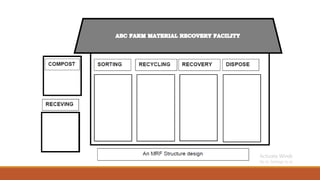
The Material Recovery Facility
(MRF)
A structure wherein wastes are being segregate, sort,
dispose, process (compost/recycle) and recover
some useful products for money
To facilitate the monitoring of the waste turn into MRF
a farmer should have a record. This record should be
kept for reporting purposes to the Local Government
Unit, barangay, municipal/city, and provincial task
force in charge in the waste management.
LET US REMEMBER
If farm wastes are not managed properly,
they can cause contamination and diseases
to both plants and man. The production of
waste can provide habitats and food for
insects and pests which are harmful.

STORAGE PRACTICE AND PRICIPLES FOR WASTE MATERIALS.pptx

  • 1.
  • 2.
    Farm Waste Storage Agood storage for farm wastes should comply with requirements prescribed by the Good Agricultural Practices and in accordance with the local Law (RA 9003) Ecological Solid Waste Management Program.
  • 3.
    Good Agricultural Practices (GAP) Refersto the practices that address environmental, economic and social sustainability for/on farm processes, and which result in safe and quality food and non-food agricultural products (RA 10611). The said act should be observed always by farmers as they are the cultivator of the farm.
  • 4.
    Farm Waste All garbageand waste materials generated throughout the operation, including cuttings and trims, twigs, plastic, plant residues and others. Storage 1. Choose a place where your storage should be built. See to it that the area is flood-free or elevated, distance from the residence house and does not easily attract insect and pest.
  • 5.
    2. Ensure farmwaste storage areas and containers are enough for the amount of waste generated from the time it will be disposed or collected. 3. Maintain cleanliness of the waste storage areas often enough to avoid contamination and diseases. Sanitize and disinfect the area as required. 4. Always use containers with lid/cup. Label the containers according to the nature of waste. Color coding can be use also to determine the nature of waste to be thrown.
  • 6.
    Disposal 1. Remove farmwaste often enough and in a manner to prevent cross- contamination and avoid attracting pests. 2. Dispose of all materials according to Local Government Unit existing law. 3. Unless properly sanitized, vehicles used for transporting farm waste should not be used to transport food products and farm inputs.
  • 7.
    Pesticide and InsecticideWastes Unwanted containers of pesticides and insecticides used during operation Storage Rinse the container thrice following these steps: 1. Pour water to the containers to a minimum of one-eight of the container size. 2. Rinse by shaking or rolling the container Note: Recap the container before doing it to avoid spillage and contamination.
  • 8.
    3. Empty pesticidecontainer contents into sprayer tank. 4. Repeat steps 1 to 3 two times. Note: Do not reuse pesticide/insecticide containers for storage of other items.
  • 9.
    Disposal To dispose ofunwanted pesticides/insecticides follow these suggestions: 1. Take rinsed containers to a pesticide container collection site for recycling. 2. Return unopened pesticide container to the dealer if you do not need this anymore. 3. Apply pesticide to another crop specified on the label.
  • 10.
    The Material RecoveryFacility (MRF) A structure wherein wastes are being segregate, sort, dispose, process (compost/recycle) and recover some useful products for money To facilitate the monitoring of the waste turn into MRF a farmer should have a record. This record should be kept for reporting purposes to the Local Government Unit, barangay, municipal/city, and provincial task force in charge in the waste management.
  • 12.
    LET US REMEMBER Iffarm wastes are not managed properly, they can cause contamination and diseases to both plants and man. The production of waste can provide habitats and food for insects and pests which are harmful.