WASTE MANAGEMENT
AGRICULTURE AND CROP PRODUCTION 9
WASTE IN
THE FARM
20XX
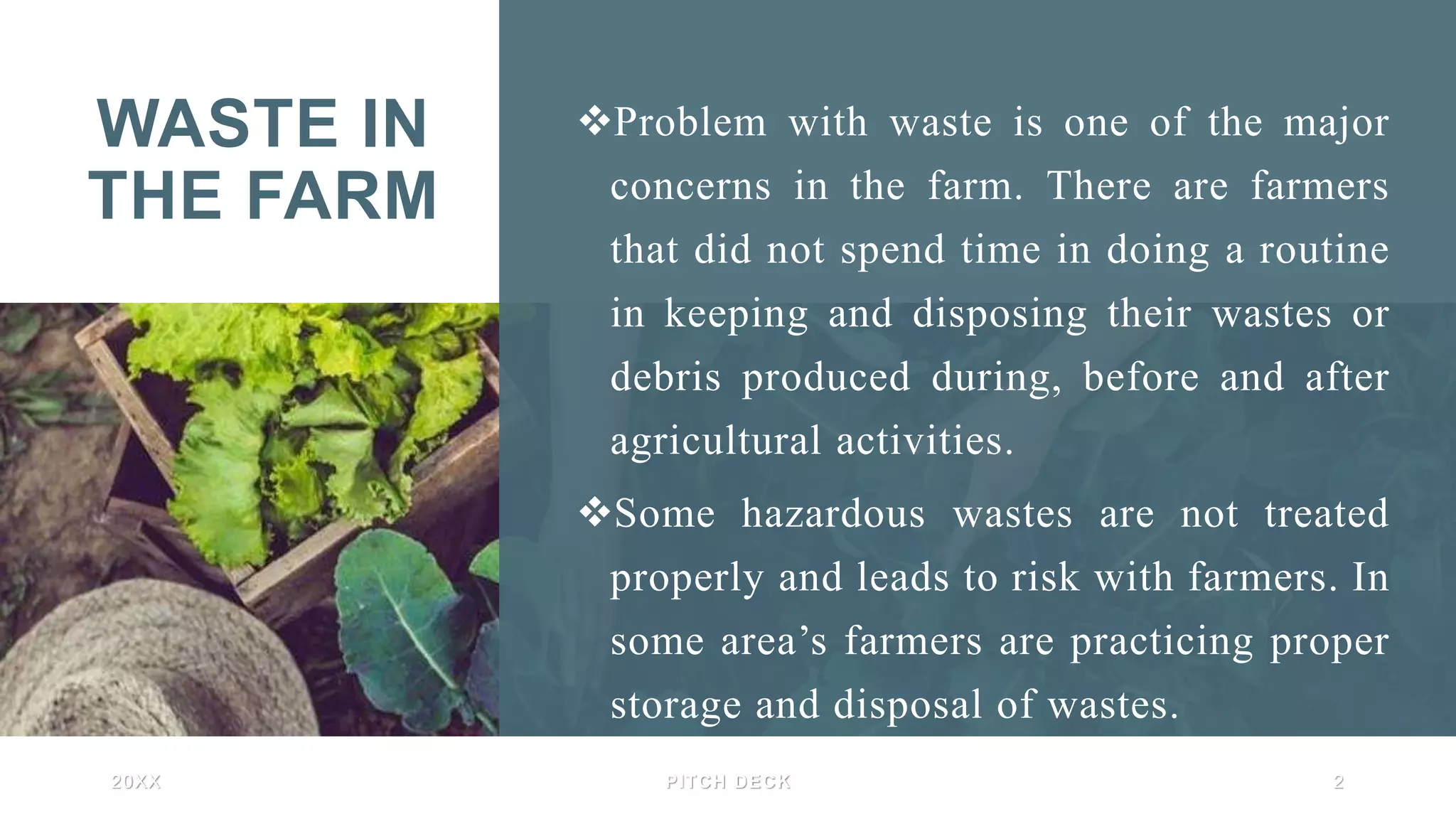
Problem with waste is one of the major
concerns in the farm. There are farmers
that did not spend time in doing a routine
in keeping and disposing their wastes or
debris produced during, before and after
agricultural activities.
Some hazardous wastes are not treated
properly and leads to risk with farmers. In
some area’s farmers are practicing proper
storage and disposal of wastes.
PITCH DECK 2
TYPES OF
AGRICULTUR
AL WASTE
1. BIODEGRADABLE
(ORGANIC)
PITCH DECK
 wastes that can be
decompose and use as soil
enhancer (fertilizers)
Examples are:
grass cuttings, dried leaves,
twigs and small branches, egg
shells, fruit and vegetable
peelings.
2. NON-BIODEGRADABLE
 wastes that can be turned into
landfill or can be used for
other purpose.
Examples are:
planting materials (which may
include empty plastic bags and
wrappers, containers and others),
glass, bottles, metals and wires,
Styrofoam, gallons.
3. HAZARDOUS WASTE
 these are wastes that are
dangerous to health for it may
cause injury, death and illness.
Examples are:
broken glasses, chemical waste
obtained from using chemicals such
as fertilizer, insecticides and others,
empty containers, galvanized iron
sheet, syringe
4. NON-HAZARDOUS WASTE
 these are wastes
that do not gives
threat on one’s
life.
Examples are:
kitchen wastes, dried
leaves, grass cuttings

Waste management.pptx

  • 1.
  • 2.
    WASTE IN THE FARM 20XX Problemwith waste is one of the major concerns in the farm. There are farmers that did not spend time in doing a routine in keeping and disposing their wastes or debris produced during, before and after agricultural activities. Some hazardous wastes are not treated properly and leads to risk with farmers. In some area’s farmers are practicing proper storage and disposal of wastes. PITCH DECK 2
  • 3.
  • 4.
    1. BIODEGRADABLE (ORGANIC) PITCH DECK wastes that can be decompose and use as soil enhancer (fertilizers) Examples are: grass cuttings, dried leaves, twigs and small branches, egg shells, fruit and vegetable peelings.
  • 5.
    2. NON-BIODEGRADABLE  wastesthat can be turned into landfill or can be used for other purpose. Examples are: planting materials (which may include empty plastic bags and wrappers, containers and others), glass, bottles, metals and wires, Styrofoam, gallons.
  • 6.
    3. HAZARDOUS WASTE these are wastes that are dangerous to health for it may cause injury, death and illness. Examples are: broken glasses, chemical waste obtained from using chemicals such as fertilizer, insecticides and others, empty containers, galvanized iron sheet, syringe
  • 7.
    4. NON-HAZARDOUS WASTE these are wastes that do not gives threat on one’s life. Examples are: kitchen wastes, dried leaves, grass cuttings