Team: 1 
5th A BVBCSE 
2012-2016
Introduction 
o Stop-and-wait ARQ is a method used 
in telecommunications to send 
information between two connected 
devices. 
o It ensures that information is not 
lost due to dropped packets and that 
packets are received in the correct 
order. 
o It is the simplest kind of automatic 
repeat-request (ARQ) method.
Description 
 A stop-and-wait ARQ sender sends 
one frame at a time. 
 It is a special case of the general sliding window 
protocol with both transmit and receive window 
sizes equal to 1. 
 After sending each frame, the sender doesn't 
send any further frames until it receives 
an acknowledgement (ACK) signal. 
 After receiving a good frame, the receiver 
sends an ACK. 
 If the ACK does not reach the sender before a 
certain time, known as the timeout, the sender 
sends the same frame again.
 Typically the transmitter adds 
a redundancy check number to the end of 
each frame. 
 The receiver uses the redundancy check 
number to check for possible damage. If 
the receiver sees that the frame is good, 
it sends an ACK. 
 If the receiver sees that the frame is 
damaged, the receiver discards it and does 
not send an ACK—pretending that the 
frame was completely lost, not merely 
damaged.
Need for sequence numbers 
o 1 bit sequence number in the header of the 
frame, alternating (from 0 to 1) in subsequent 
frames. 
o When the receiver sends an ACK, it includes the 
sequence number of the next packet it expects. 
This way, the receiver can detect duplicated 
frames by checking if the frame sequence 
numbers alternate. 
o If two subsequent frames have the same 
sequence number, they are duplicates, and the 
second frame is discarded. Similarly, if two 
subsequent ACKs reference the same sequence 
number, they are acknowledging the same frame.
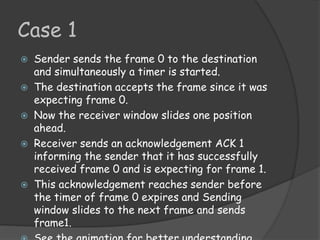
Case 1 
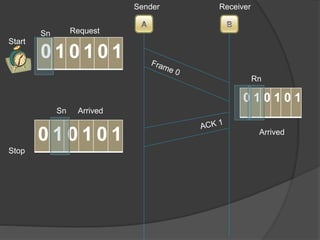
 Sender sends the frame 0 to the destination 
and simultaneously a timer is started. 
 The destination accepts the frame since it was 
expecting frame 0. 
 Now the receiver window slides one position 
ahead. 
 Receiver sends an acknowledgement ACK 1 
informing the sender that it has successfully 
received frame 0 and is expecting for frame 1. 
 This acknowledgement reaches sender before 
the timer of frame 0 expires and Sending 
window slides to the next frame and sends 
frame1. 
 See the animation for better understanding.
Request 
Sn 
0 1 0 1 0 1 
0 1 0 1 0 1 
Arrived 
Sn 
0 1 0 1 0 1 
Rn 
Sender Receiver 
Start 
Stop 
Arrived
Case 2 
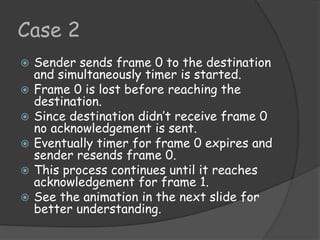
 Sender sends frame 0 to the destination 
and simultaneously timer is started. 
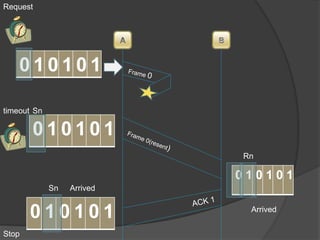
 Frame 0 is lost before reaching the 
destination. 
 Since destination didn’t receive frame 0 
no acknowledgement is sent. 
 Eventually timer for frame 0 expires and 
sender resends frame 0. 
 This process continues until it reaches 
acknowledgement for frame 1. 
 See the animation in the next slide for 
better understanding.
Request 
0 1 0 1 0 1 
0 1 0 1 0 1 
0 1 0 1 0 1 
0 1 0 1 0 1 
timeout 
Arrived 
Sn 
Sn 
Rn 
Arrived 
Stop
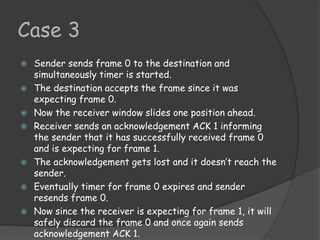
Case 3 
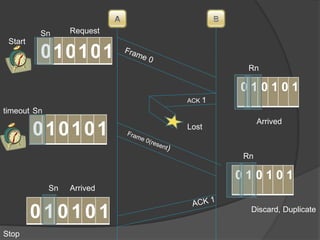
 Sender sends frame 0 to the destination and 
simultaneously timer is started. 
 The destination accepts the frame since it was 
expecting frame 0. 
 Now the receiver window slides one position ahead. 
 Receiver sends an acknowledgement ACK 1 informing 
the sender that it has successfully received frame 0 
and is expecting for frame 1. 
 The acknowledgement gets lost and it doesn’t reach the 
sender. 
 Eventually timer for frame 0 expires and sender 
resends frame 0. 
 Now since the receiver is expecting for frame 1, it will 
safely discard the frame 0 and once again sends 
acknowledgement ACK 1.
Sn Request 
010101 
Start 
Rn 
0 1 0 1 0 1 
Arrived 
ACK 1 
Sn 
010101 Lost 
0 1 0 1 0 1 
Arrived 
Sn 
0 1 0 1 0 1 
Rn 
Discard, Duplicate 
timeout 
Stop
Advantages of stop-and-wait 
ARQ over simple 
stop and wait protocols 
 It can be used for noisy channels. 
 It has both flow and error control 
mechanism. 
 It has timer implementation.
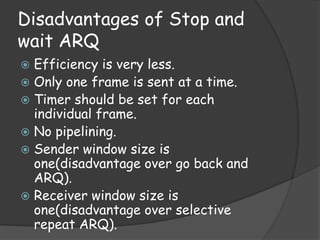
Disadvantages of Stop and 
wait ARQ 
 Efficiency is very less. 
 Only one frame is sent at a time. 
 Timer should be set for each 
individual frame. 
 No pipelining. 
 Sender window size is 
one(disadvantage over go back and 
ARQ). 
 Receiver window size is 
one(disadvantage over selective 
repeat ARQ).
 By- 
 Pushkar D 
 Praneeta Y 
 Amith A 
 Komal S 
 Pallavi D 
 Chaitra H 
 Ambaresh P 
 Ankit R 
Thank you

Stop-and-Wait ARQ Protocol

  • 1.
    Team: 1 5thA BVBCSE 2012-2016
  • 2.
    Introduction o Stop-and-waitARQ is a method used in telecommunications to send information between two connected devices. o It ensures that information is not lost due to dropped packets and that packets are received in the correct order. o It is the simplest kind of automatic repeat-request (ARQ) method.
  • 3.
    Description  Astop-and-wait ARQ sender sends one frame at a time.  It is a special case of the general sliding window protocol with both transmit and receive window sizes equal to 1.  After sending each frame, the sender doesn't send any further frames until it receives an acknowledgement (ACK) signal.  After receiving a good frame, the receiver sends an ACK.  If the ACK does not reach the sender before a certain time, known as the timeout, the sender sends the same frame again.
  • 4.
     Typically thetransmitter adds a redundancy check number to the end of each frame.  The receiver uses the redundancy check number to check for possible damage. If the receiver sees that the frame is good, it sends an ACK.  If the receiver sees that the frame is damaged, the receiver discards it and does not send an ACK—pretending that the frame was completely lost, not merely damaged.
  • 5.
    Need for sequencenumbers o 1 bit sequence number in the header of the frame, alternating (from 0 to 1) in subsequent frames. o When the receiver sends an ACK, it includes the sequence number of the next packet it expects. This way, the receiver can detect duplicated frames by checking if the frame sequence numbers alternate. o If two subsequent frames have the same sequence number, they are duplicates, and the second frame is discarded. Similarly, if two subsequent ACKs reference the same sequence number, they are acknowledging the same frame.
  • 6.
    Case 1 Sender sends the frame 0 to the destination and simultaneously a timer is started.  The destination accepts the frame since it was expecting frame 0.  Now the receiver window slides one position ahead.  Receiver sends an acknowledgement ACK 1 informing the sender that it has successfully received frame 0 and is expecting for frame 1.  This acknowledgement reaches sender before the timer of frame 0 expires and Sending window slides to the next frame and sends frame1.  See the animation for better understanding.
  • 7.
    Request Sn 01 0 1 0 1 0 1 0 1 0 1 Arrived Sn 0 1 0 1 0 1 Rn Sender Receiver Start Stop Arrived
  • 8.
    Case 2 Sender sends frame 0 to the destination and simultaneously timer is started.  Frame 0 is lost before reaching the destination.  Since destination didn’t receive frame 0 no acknowledgement is sent.  Eventually timer for frame 0 expires and sender resends frame 0.  This process continues until it reaches acknowledgement for frame 1.  See the animation in the next slide for better understanding.
  • 9.
    Request 0 10 1 0 1 0 1 0 1 0 1 0 1 0 1 0 1 0 1 0 1 0 1 timeout Arrived Sn Sn Rn Arrived Stop
  • 10.
    Case 3 Sender sends frame 0 to the destination and simultaneously timer is started.  The destination accepts the frame since it was expecting frame 0.  Now the receiver window slides one position ahead.  Receiver sends an acknowledgement ACK 1 informing the sender that it has successfully received frame 0 and is expecting for frame 1.  The acknowledgement gets lost and it doesn’t reach the sender.  Eventually timer for frame 0 expires and sender resends frame 0.  Now since the receiver is expecting for frame 1, it will safely discard the frame 0 and once again sends acknowledgement ACK 1.
  • 11.
    Sn Request 010101 Start Rn 0 1 0 1 0 1 Arrived ACK 1 Sn 010101 Lost 0 1 0 1 0 1 Arrived Sn 0 1 0 1 0 1 Rn Discard, Duplicate timeout Stop
  • 12.
    Advantages of stop-and-wait ARQ over simple stop and wait protocols  It can be used for noisy channels.  It has both flow and error control mechanism.  It has timer implementation.
  • 13.
    Disadvantages of Stopand wait ARQ  Efficiency is very less.  Only one frame is sent at a time.  Timer should be set for each individual frame.  No pipelining.  Sender window size is one(disadvantage over go back and ARQ).  Receiver window size is one(disadvantage over selective repeat ARQ).
  • 14.
     By- Pushkar D  Praneeta Y  Amith A  Komal S  Pallavi D  Chaitra H  Ambaresh P  Ankit R Thank you