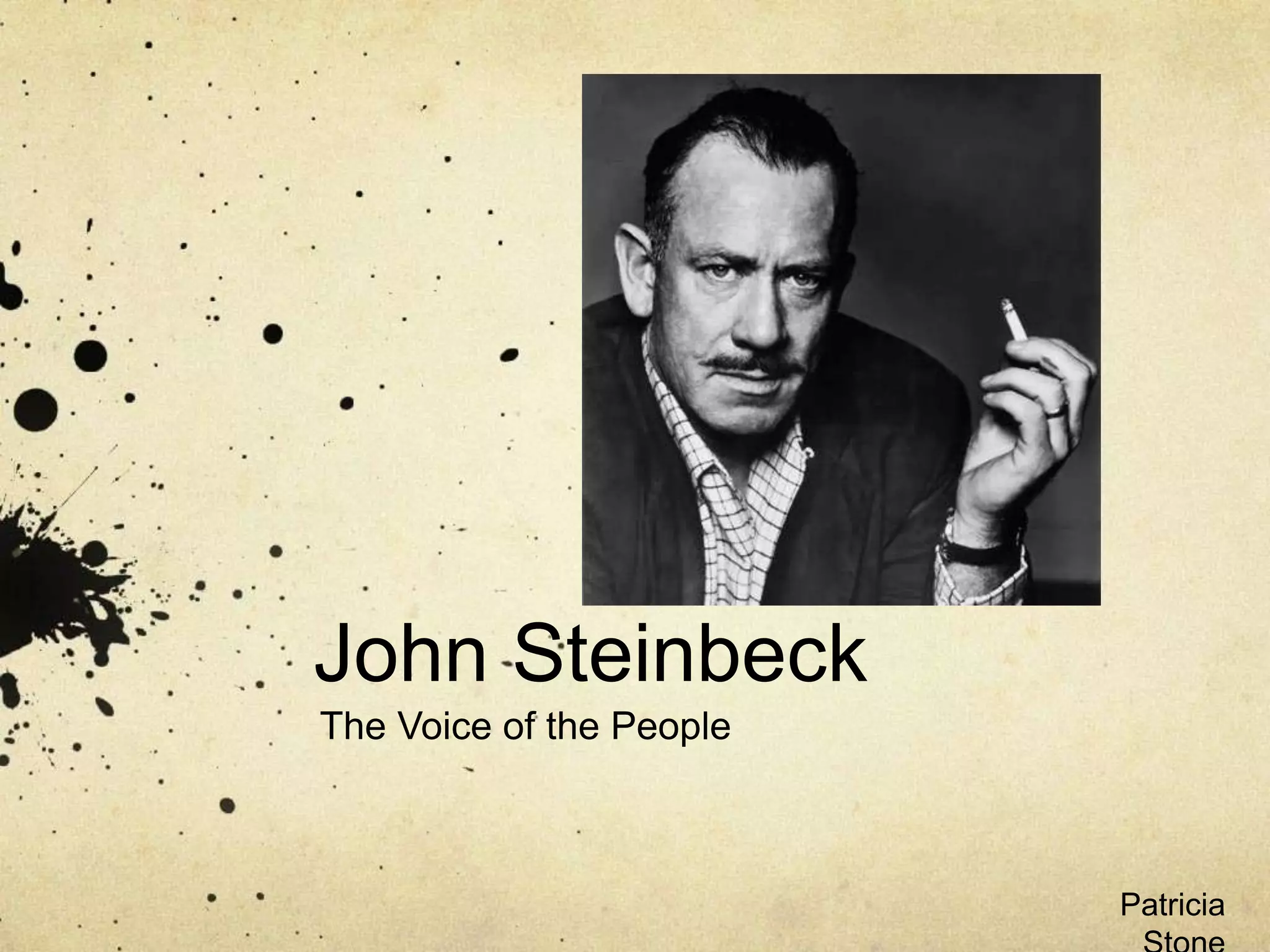
John Steinbeck
The Voice of the People

Patricia
Early Life
John Steinbeck was born on February 27, 1902 in
Salinas, California
Steinbeck was of German, English and Irish descent
Steinbeck’s father was the Treasurer of Monterey
County and his mother was a school teacher
Steinbeck grew up in the Episcopal Church, but
would later become agnostic
After graduating high school, Steinbeck went to
Stanford University, but never graduated
Early Life cont’d
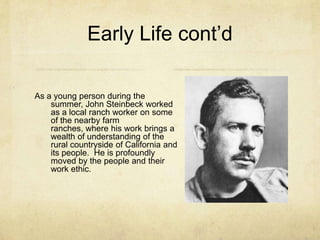
As a young person during the
summer, John Steinbeck worked
as a local ranch worker on some
of the nearby farm
ranches, where his work brings a
wealth of understanding of the
rural countryside of California and
its people. He is profoundly
moved by the people and their
work ethic.
Life and Early Career
After dropping out of Stanford
University, Steinbeck traveled to New York.
While in New York he did odd-end jobs to
supplement his income while he began to write.
For years he was unsuccessful at having any of
his writings published. In 1928 he moved back to
California where he worked at a fish
hatchery, where he would meet his future
wife, Carol Henning. Steinbeck married Henning
in January of 1930.
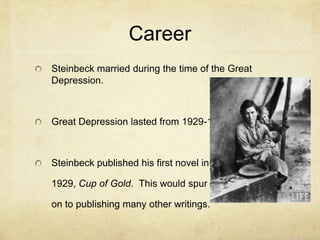
Career
Steinbeck married during the time of the Great
Depression.

Great Depression lasted from 1929-1939

Steinbeck published his first novel in
1929, Cup of Gold. This would spur him
on to publishing many other writings.
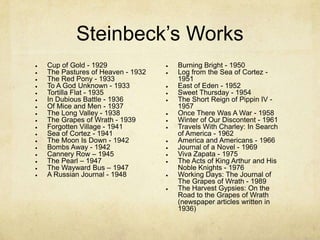
Steinbeck’s Works
Cup of Gold - 1929
The Pastures of Heaven - 1932
The Red Pony - 1933
To A God Unknown - 1933
Tortilla Flat - 1935
In Dubious Battle - 1936
Of Mice and Men - 1937
The Long Valley - 1938
The Grapes of Wrath - 1939
Forgotten Village - 1941
Sea of Cortez - 1941
The Moon Is Down - 1942
Bombs Away - 1942
Cannery Row – 1945
The Pearl – 1947
The Wayward Bus – 1947
A Russian Journal - 1948

Burning Bright - 1950
Log from the Sea of Cortez 1951
East of Eden - 1952
Sweet Thursday - 1954
The Short Reign of Pippin IV 1957
Once There Was A War - 1958
Winter of Our Discontent - 1961
Travels With Charley: In Search
of America - 1962
America and Americans - 1966
Journal of a Novel - 1969
Viva Zapata - 1975
The Acts of King Arthur and His
Noble Knights - 1976
Working Days: The Journal of
The Grapes of Wrath - 1989
The Harvest Gypsies: On the
Road to the Grapes of Wrath
(newspaper articles written in
1936)
The Voice of the People
•

The American Dream is deep-rooted in the equality of all
men in search of a better life. It includes
faith, family, friends, community and freedom, as well as
the opportunity to pursue prosperity, by owning a home and
land with the aim of success to be achieved through
persistence and hard work.

•

Steinbeck was often known through his writings as the
voice of the people, as one in support of the American
Dream and the defender for the common man both poor
and downtrodden. Some of Steinbeck’s best-known works
focus on the dilemmas of the dreadfully deprived and poor
California migrant ranch hands, which, in the face of
viciousness and violence of their situations, often achieve
victory.
The Voice of the People
cont’d
Steinbeck is best known for writing about the
common ordinary poor and oppressed people
entrapped in an unjust world during the Great
Depression. Steinbeck emphasizes in his
writings that dreams and goals are essential in
surviving the difficulties in this life.
Steinbeck’s
Accomplishments
Steinbeck’s most notable works are Of Mice and
Men (1937), The Grapes of Wrath (1939), and
East of Eden (1952)
Steinbeck was awarded the Pulitzer prize or
Fiction in 1940
In 1962 Steinbeck won a Nobel Prize (in
literature) for his "realistic and imaginative
writing, combining as it does sympathetic humor
and keen social perception."
Steinbeck’s Death
John Steinbeck died on December 20, 1968 in
New York City

Steinbeck’s cause of death was heart disease
and congestive heart failure
Steinbeck wished to be cremated upon his death.
His ashes were buried with his parents and
grandparents in Salinas, California. Steinbeck’s
third wife, Elaine, was buried beside him in 2004.

Stone multimediapresentation

  • 1.
    John Steinbeck The Voiceof the People Patricia
  • 2.
    Early Life John Steinbeckwas born on February 27, 1902 in Salinas, California Steinbeck was of German, English and Irish descent Steinbeck’s father was the Treasurer of Monterey County and his mother was a school teacher Steinbeck grew up in the Episcopal Church, but would later become agnostic After graduating high school, Steinbeck went to Stanford University, but never graduated
  • 3.
    Early Life cont’d Asa young person during the summer, John Steinbeck worked as a local ranch worker on some of the nearby farm ranches, where his work brings a wealth of understanding of the rural countryside of California and its people. He is profoundly moved by the people and their work ethic.
  • 4.
    Life and EarlyCareer After dropping out of Stanford University, Steinbeck traveled to New York. While in New York he did odd-end jobs to supplement his income while he began to write. For years he was unsuccessful at having any of his writings published. In 1928 he moved back to California where he worked at a fish hatchery, where he would meet his future wife, Carol Henning. Steinbeck married Henning in January of 1930.
  • 5.
    Career Steinbeck married duringthe time of the Great Depression. Great Depression lasted from 1929-1939 Steinbeck published his first novel in 1929, Cup of Gold. This would spur him on to publishing many other writings.
  • 6.
    Steinbeck’s Works Cup ofGold - 1929 The Pastures of Heaven - 1932 The Red Pony - 1933 To A God Unknown - 1933 Tortilla Flat - 1935 In Dubious Battle - 1936 Of Mice and Men - 1937 The Long Valley - 1938 The Grapes of Wrath - 1939 Forgotten Village - 1941 Sea of Cortez - 1941 The Moon Is Down - 1942 Bombs Away - 1942 Cannery Row – 1945 The Pearl – 1947 The Wayward Bus – 1947 A Russian Journal - 1948 Burning Bright - 1950 Log from the Sea of Cortez 1951 East of Eden - 1952 Sweet Thursday - 1954 The Short Reign of Pippin IV 1957 Once There Was A War - 1958 Winter of Our Discontent - 1961 Travels With Charley: In Search of America - 1962 America and Americans - 1966 Journal of a Novel - 1969 Viva Zapata - 1975 The Acts of King Arthur and His Noble Knights - 1976 Working Days: The Journal of The Grapes of Wrath - 1989 The Harvest Gypsies: On the Road to the Grapes of Wrath (newspaper articles written in 1936)
  • 7.
    The Voice ofthe People • The American Dream is deep-rooted in the equality of all men in search of a better life. It includes faith, family, friends, community and freedom, as well as the opportunity to pursue prosperity, by owning a home and land with the aim of success to be achieved through persistence and hard work. • Steinbeck was often known through his writings as the voice of the people, as one in support of the American Dream and the defender for the common man both poor and downtrodden. Some of Steinbeck’s best-known works focus on the dilemmas of the dreadfully deprived and poor California migrant ranch hands, which, in the face of viciousness and violence of their situations, often achieve victory.
  • 8.
    The Voice ofthe People cont’d Steinbeck is best known for writing about the common ordinary poor and oppressed people entrapped in an unjust world during the Great Depression. Steinbeck emphasizes in his writings that dreams and goals are essential in surviving the difficulties in this life.
  • 9.
    Steinbeck’s Accomplishments Steinbeck’s most notableworks are Of Mice and Men (1937), The Grapes of Wrath (1939), and East of Eden (1952) Steinbeck was awarded the Pulitzer prize or Fiction in 1940 In 1962 Steinbeck won a Nobel Prize (in literature) for his "realistic and imaginative writing, combining as it does sympathetic humor and keen social perception."
  • 10.
    Steinbeck’s Death John Steinbeckdied on December 20, 1968 in New York City Steinbeck’s cause of death was heart disease and congestive heart failure Steinbeck wished to be cremated upon his death. His ashes were buried with his parents and grandparents in Salinas, California. Steinbeck’s third wife, Elaine, was buried beside him in 2004.