Siemens STEM Academy Presents: “ Top Ten STEM Resources” By Patti Duncan February 17, 2010
Problem-solvers —  able to define questions and problems, design investigations to gather data, collect and organize data, draw conclusions, and then apply understandings to new and novel situations.  Innovators —  creatively use science, mathematics, and technology concepts and principles by applying them to the engineering design process.  Inventors —  recognize the needs of the world and creatively design, test, redesign, and then implement solutions (engineering process).
Self-reliant —  able to use initiative and self-motivation to set agendas, develop and gain self-confidence, and work within time specified time frames. Logical thinkers —  able to apply rational and logical thought processes of science, mathematics, and engineering design to innovation and invention.  Technologically literate —  understand and explain the nature of technology, develop the skills needed, and apply technology appropriately.  Lantz, Hayes Blaine ED D. “What Should Be the Function of a K-12 STEM Education?” 2009. Web. 20 November 2009. SEEN Magazine. www.seenmagazine.us  


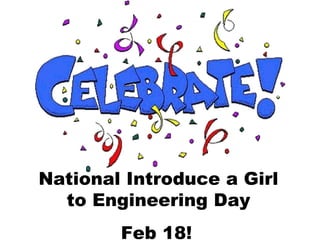
National Introduce a Girl  to Engineering Day  Feb 18!
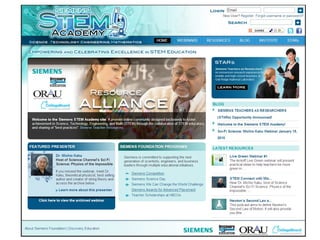
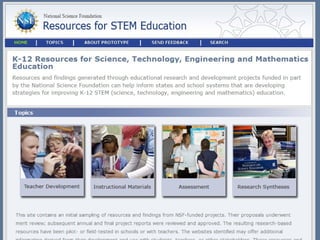
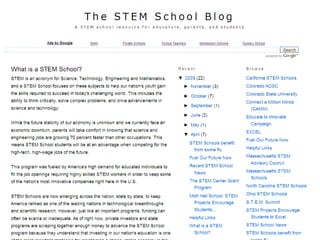
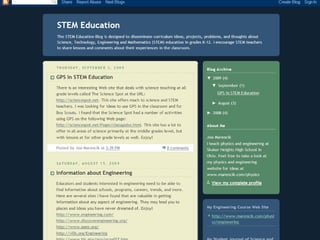
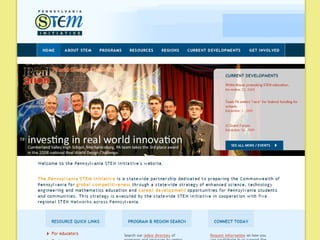
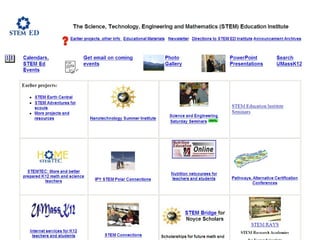
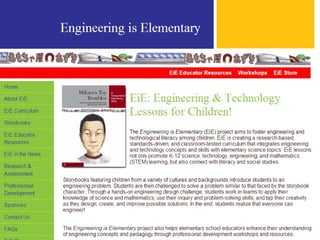
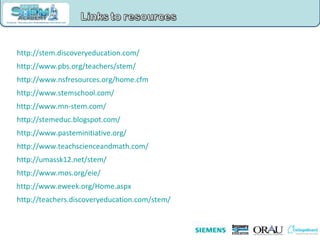
http:// www.nsfresources.org/home.cfm   http:// www.pbs.org /teachers/stem/   http:// stem.discoveryeducation.com /   http://www.mn-stem.com /   http:// www.stemschool.com /   http:// stemeduc.blogspot.com /   http:// www.mos.org/eie /   http:// www.pasteminitiative.org /   http:// www.teachscienceandmath.com /   http://umassk12.net/stem/   http:// teachers.discoveryeducation.com /stem/ http:// www.eweek.org/Home.aspx

Stemtop10

  • 1.
    Siemens STEM AcademyPresents: “ Top Ten STEM Resources” By Patti Duncan February 17, 2010
  • 2.
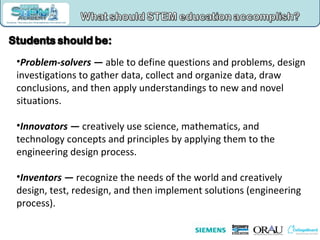
    Problem-solvers — able to define questions and problems, design investigations to gather data, collect and organize data, draw conclusions, and then apply understandings to new and novel situations. Innovators — creatively use science, mathematics, and technology concepts and principles by applying them to the engineering design process. Inventors — recognize the needs of the world and creatively design, test, redesign, and then implement solutions (engineering process).
  • 3.
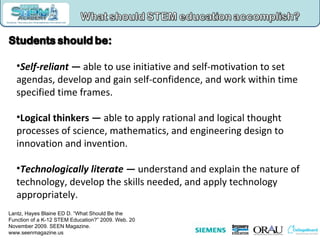
    Self-reliant — able to use initiative and self-motivation to set agendas, develop and gain self-confidence, and work within time specified time frames. Logical thinkers — able to apply rational and logical thought processes of science, mathematics, and engineering design to innovation and invention. Technologically literate — understand and explain the nature of technology, develop the skills needed, and apply technology appropriately. Lantz, Hayes Blaine ED D. “What Should Be the Function of a K-12 STEM Education?” 2009. Web. 20 November 2009. SEEN Magazine. www.seenmagazine.us  
  • 4.
  • 5.
  • 6.
  • 7.
  • 8.
  • 9.
  • 10.
  • 11.
  • 12.
  • 13.
  • 14.
  • 15.
    National Introduce aGirl to Engineering Day Feb 18!
  • 16.
    http:// www.nsfresources.org/home.cfm http:// www.pbs.org /teachers/stem/ http:// stem.discoveryeducation.com / http://www.mn-stem.com / http:// www.stemschool.com / http:// stemeduc.blogspot.com / http:// www.mos.org/eie / http:// www.pasteminitiative.org / http:// www.teachscienceandmath.com / http://umassk12.net/stem/ http:// teachers.discoveryeducation.com /stem/ http:// www.eweek.org/Home.aspx