Defining STEM
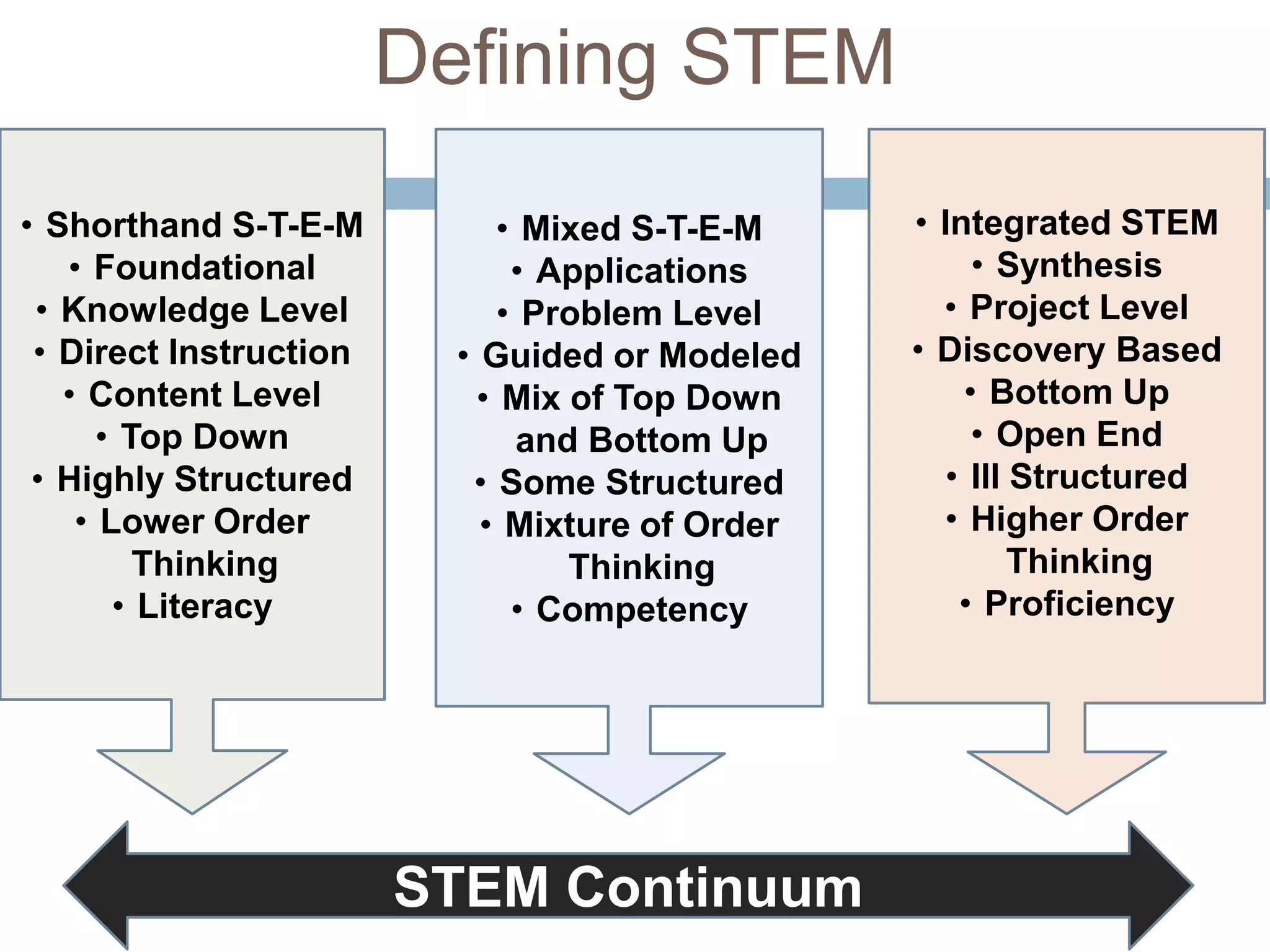
STEM Continuum
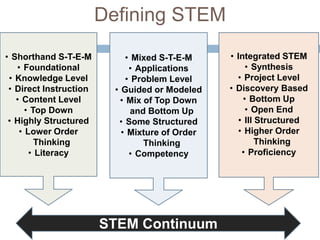
• Shorthand S-T-E-M
• Foundational
• Knowledge Level
• Direct Instruction
• Content Level
• Top Down
• Highly Structured
• Lower Order
Thinking
• Literacy
• Integrated STEM
• Synthesis
• Project Level
• Discovery Based
• Bottom Up
• Open End
• Ill Structured
• Higher Order
Thinking
• Proficiency
• Mixed S-T-E-M
• Applications
• Problem Level
• Guided or Modeled
• Mix of Top Down
and Bottom Up
• Some Structured
• Mixture of Order
Thinking
• Competency
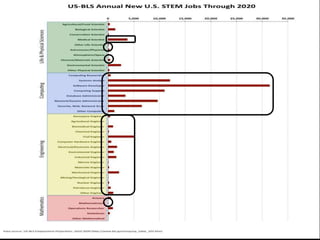
STEM Jobs
Bureau of Labor Statistics
An Integrated STEM Challenge –
small group
HOLE IN ONE!
 Design and modify your catapult to project the
ball into the cup with repeated success…
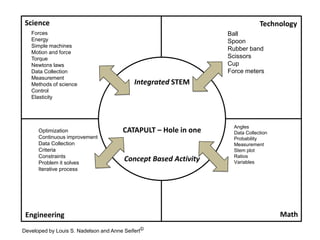
Science
Math
Technology
Engineering
Integrated STEM
CATAPULT – Hole in one
Concept Based Activity
Developed by Louis S. Nadelson and Anne Seifert©
Forces
Energy
Simple machines
Motion and force
Torque
Newtons laws
Data Collection
Measurement
Methods of science
Control
Elasticity
Optimization
Continuous improvement
Data Collection
Criteria
Constraints
Problem it solves
Iterative process
Ball
Spoon
Rubber band
Scissors
Cup
Force meters
Angles
Data Collection
Probability
Measurement
Stem plot
Ratios
Variables
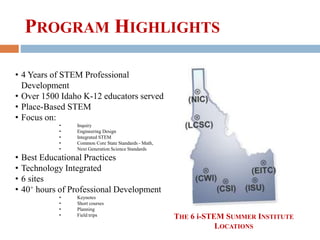
• 4 Years of STEM Professional
Development
• Over 1500 Idaho K-12 educators served
• Place-Based STEM
• Focus on:
• Inquiry
• Engineering Design
• Integrated STEM
• Common Core State Standards - Math,
• Next Generation Science Standards
• Best Educational Practices
• Technology Integrated
• 6 sites
• 40+ hours of Professional Development
• Keynotes
• Short courses
• Planning
• Field trips THE 6 i-STEM SUMMER INSTITUTE
LOCATIONS
PROGRAM HIGHLIGHTS
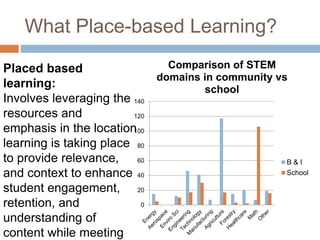
What Place-based Learning?
Placed based
learning:
Involves leveraging the
resources and
emphasis in the location
learning is taking place
to provide relevance,
and context to enhance
student engagement,
retention, and
understanding of
content while meeting
0
20
40
60
80
100
120
140
Comparison of STEM
domains in community vs
school
B & I
School
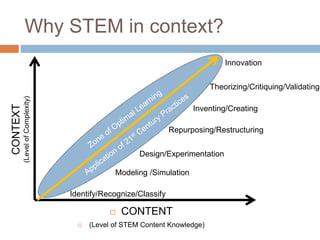
Why STEM in context?
 CONTENT
 (Level of STEM Content Knowledge)
CONTEXT
(LevelofComplexity)
Identify/Recognize/Classify
Modeling /Simulation
Design/Experimentation
Repurposing/Restructuring
Inventing/Creating
Theorizing/Critiquing/Validating
Innovation
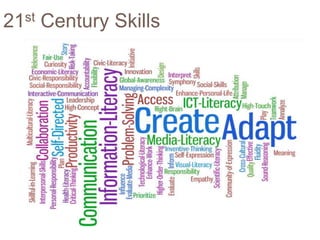
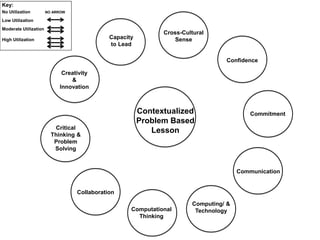
21st Century Skills
Contextualized
Problem Based
Lesson
Creativity
&
Innovation
Critical
Thinking &
Problem
Solving
Collaboration
Computational
Thinking
Computing/ &
Technology
Communication
Commitment
Confidence
Cross-Cultural
SenseCapacity
to Lead
Key:
No Utilization NO ARROW
Low Utilization
Moderate Utilization
High Utilization
`
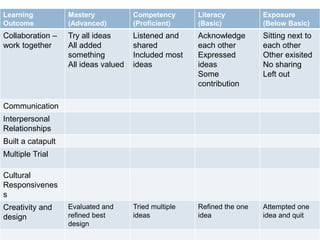
Learning
Outcome
Mastery
(Advanced)
Competency
(Proficient)
Literacy
(Basic)
Exposure
(Below Basic)
Collaboration –
work together
Try all ideas
All added
something
All ideas valued
Listened and
shared
Included most
ideas
Acknowledge
each other
Expressed
ideas
Some
contribution
Sitting next to
each other
Other exisited
No sharing
Left out
Communication
Interpersonal
Relationships
Built a catapult
Multiple Trial
Cultural
Responsivenes
s
Creativity and
design
Evaluated and
refined best
design
Tried multiple
ideas
Refined the one
idea
Attempted one
idea and quit
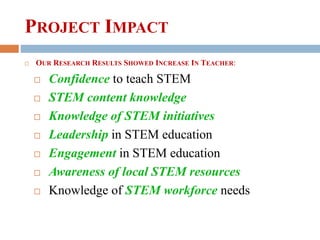
 OUR RESEARCH RESULTS SHOWED INCREASE IN TEACHER:
 Confidence to teach STEM
 STEM content knowledge
 Knowledge of STEM initiatives
 Leadership in STEM education
 Engagement in STEM education
 Awareness of local STEM resources
 Knowledge of STEM workforce needs
PROJECT IMPACT
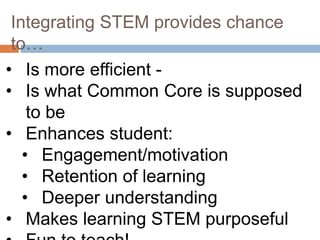
Integrating STEM provides chance
to…
• Is more efficient -
• Is what Common Core is supposed
to be
• Enhances student:
• Engagement/motivation
• Retention of learning
• Deeper understanding
• Makes learning STEM purposeful
Some Publications:
 Nadelson, L. S., Seifert, A. L. & Chang, C. (2013). The perceptions,
engagement, and practices of teachers seeking professional
development in place-based integrated STEM, Teacher Education
and Practice, 26(2), 242-265.
 Nadelson, L. S. Seifert, A. L., Hettinger, J. K. & Coats, B. (2012).
Where they go for help: Teachers’ pedagogical and content support
seeking practices and preferences. Teacher Education and
Practice, 26(1), 82-98.
 Nadelson, L. S., Seifert, A., Moll, A. & Coats, B. (2012). i-STEM
summer institute: An integrated approach to teacher professional
development in STEM. Journal of STEM Education: Innovation and
Outreach. 13(2), 69-83.
 Nadelson, L. S., Moll, A. J., & Seifert, A. (2011). Living in a materials
world: Materials science and engineering professional development
for K-12 educators. Proceedings of the American Society of
Engineering Education Annual Conference, Vancouver, BC
Questions or Comments
THANK YOU!
LouisNadelson@boisestate.edu
nadesand@isu.edu
Anne.Seifert@INL.GOV

Stem u integrated stem

  • 1.
    Defining STEM STEM Continuum •Shorthand S-T-E-M • Foundational • Knowledge Level • Direct Instruction • Content Level • Top Down • Highly Structured • Lower Order Thinking • Literacy • Integrated STEM • Synthesis • Project Level • Discovery Based • Bottom Up • Open End • Ill Structured • Higher Order Thinking • Proficiency • Mixed S-T-E-M • Applications • Problem Level • Guided or Modeled • Mix of Top Down and Bottom Up • Some Structured • Mixture of Order Thinking • Competency
  • 2.
    STEM Jobs Bureau ofLabor Statistics
  • 3.
    An Integrated STEMChallenge – small group HOLE IN ONE!  Design and modify your catapult to project the ball into the cup with repeated success…
  • 4.
    Science Math Technology Engineering Integrated STEM CATAPULT –Hole in one Concept Based Activity Developed by Louis S. Nadelson and Anne Seifert© Forces Energy Simple machines Motion and force Torque Newtons laws Data Collection Measurement Methods of science Control Elasticity Optimization Continuous improvement Data Collection Criteria Constraints Problem it solves Iterative process Ball Spoon Rubber band Scissors Cup Force meters Angles Data Collection Probability Measurement Stem plot Ratios Variables
  • 5.
    • 4 Yearsof STEM Professional Development • Over 1500 Idaho K-12 educators served • Place-Based STEM • Focus on: • Inquiry • Engineering Design • Integrated STEM • Common Core State Standards - Math, • Next Generation Science Standards • Best Educational Practices • Technology Integrated • 6 sites • 40+ hours of Professional Development • Keynotes • Short courses • Planning • Field trips THE 6 i-STEM SUMMER INSTITUTE LOCATIONS PROGRAM HIGHLIGHTS
  • 6.
    What Place-based Learning? Placedbased learning: Involves leveraging the resources and emphasis in the location learning is taking place to provide relevance, and context to enhance student engagement, retention, and understanding of content while meeting 0 20 40 60 80 100 120 140 Comparison of STEM domains in community vs school B & I School
  • 7.
    Why STEM incontext?  CONTENT  (Level of STEM Content Knowledge) CONTEXT (LevelofComplexity) Identify/Recognize/Classify Modeling /Simulation Design/Experimentation Repurposing/Restructuring Inventing/Creating Theorizing/Critiquing/Validating Innovation
  • 8.
  • 9.
    Contextualized Problem Based Lesson Creativity & Innovation Critical Thinking & Problem Solving Collaboration Computational Thinking Computing/& Technology Communication Commitment Confidence Cross-Cultural SenseCapacity to Lead Key: No Utilization NO ARROW Low Utilization Moderate Utilization High Utilization
  • 10.
    ` Learning Outcome Mastery (Advanced) Competency (Proficient) Literacy (Basic) Exposure (Below Basic) Collaboration – worktogether Try all ideas All added something All ideas valued Listened and shared Included most ideas Acknowledge each other Expressed ideas Some contribution Sitting next to each other Other exisited No sharing Left out Communication Interpersonal Relationships Built a catapult Multiple Trial Cultural Responsivenes s Creativity and design Evaluated and refined best design Tried multiple ideas Refined the one idea Attempted one idea and quit
  • 11.
     OUR RESEARCHRESULTS SHOWED INCREASE IN TEACHER:  Confidence to teach STEM  STEM content knowledge  Knowledge of STEM initiatives  Leadership in STEM education  Engagement in STEM education  Awareness of local STEM resources  Knowledge of STEM workforce needs PROJECT IMPACT
  • 12.
    Integrating STEM provideschance to… • Is more efficient - • Is what Common Core is supposed to be • Enhances student: • Engagement/motivation • Retention of learning • Deeper understanding • Makes learning STEM purposeful
  • 13.
    Some Publications:  Nadelson,L. S., Seifert, A. L. & Chang, C. (2013). The perceptions, engagement, and practices of teachers seeking professional development in place-based integrated STEM, Teacher Education and Practice, 26(2), 242-265.  Nadelson, L. S. Seifert, A. L., Hettinger, J. K. & Coats, B. (2012). Where they go for help: Teachers’ pedagogical and content support seeking practices and preferences. Teacher Education and Practice, 26(1), 82-98.  Nadelson, L. S., Seifert, A., Moll, A. & Coats, B. (2012). i-STEM summer institute: An integrated approach to teacher professional development in STEM. Journal of STEM Education: Innovation and Outreach. 13(2), 69-83.  Nadelson, L. S., Moll, A. J., & Seifert, A. (2011). Living in a materials world: Materials science and engineering professional development for K-12 educators. Proceedings of the American Society of Engineering Education Annual Conference, Vancouver, BC
  • 14.
  • 15.