Kalman Mannis, BS MA STEAM Education Specialist Navajo County Education Service Agency NEAZRC
Kalman Mannis   BS - Molecular Biology & Physics, Vanderbilt University MAED – Education, University of Phoenix PhD – Educational Technology (in process), Walden University Owner and product developer – Sacred Grove Apothecary (Renaissance Festivals) Certified Grant Writer, USDA Professional Coach and Educator mentor Navajo/Apache County Technology Cadre, Navajo County ESA International Teacher Liaison, Space Foundation Raytheon Math Hero Apache County Rural Teacher of the year Navajo County Education Service Agency & Northeast Arizona Regional Center – Science, Technology, Engineering, Art, and Math Education Specialist
3 Stars and a Wish 3 Goals you have for attending this  Presentation 1 Wish you have for the  information’s integration into your curriculum
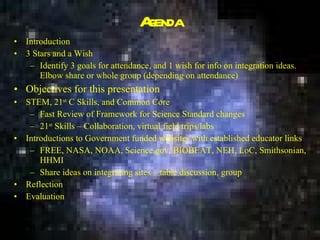
Agenda Introduction 3 Stars and a Wish Identify 3 goals for attendance, and 1 wish for info on integration ideas. Elbow share or whole group (depending on attendance) Objectives for this presentation STEM, 21 st  C Skills, and Common Core Fast Review of Framework for Science Standard changes 21 st  Skills – Collaboration, virtual field trips/labs Introductions to Government funded websites with established educator links FREE, NASA, NOAA, Science.gov, BIOBEAT, NEH, LoC, Smithsonian, HHMI Share ideas on integrating sites – table discussion, group Reflection Evaluation
Objectives Provide workable knowledge of .gov education offerings in STEM Have a vision on integration of the tools into current curriculum Lower affective barriers to the use of Cloud based teaching tools.
 
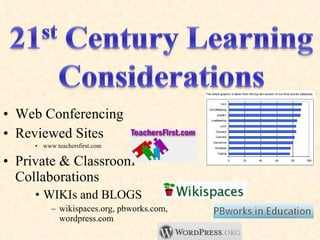
Web Conferencing Reviewed Sites  www.teachersfirst.com Private & Classroom Collaborations WIKIs and BLOGS wikispaces.org, pbworks.com, wordpress.com
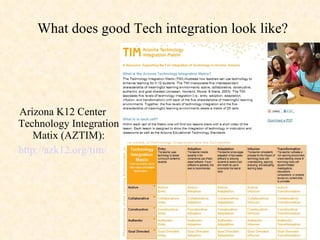
What does good Tech integration look like? Arizona K12 Center Technology Integration Matix (AZTIM): http://azk12.org/tim/
The Question is: Where do we get quality, variety, and interactivity That won’t break the bank?
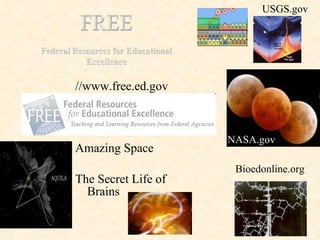
//www.free.ed.gov Amazing Space The Secret Life of Brains USGS.gov NASA.gov Bioedonline.org
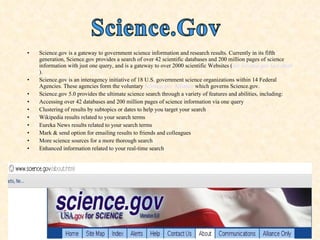
Science.gov is a gateway to government science information and research results. Currently in its fifth generation, Science.gov provides a search of over 42 scientific databases and 200 million pages of science information with just one query, and is a gateway to over 2000 scientific Websites ( see Science.gov fact sheet ). Science.gov is an interagency initiative of 18 U.S. government science organizations within 14 Federal Agencies. These agencies form the voluntary  Science.gov Alliance  which governs Science.gov. Science.gov 5.0 provides the ultimate science search through a variety of features and abilities, including: Accessing over 42 databases and 200 million pages of science information via one query Clustering of results by subtopics or dates to help you target your search Wikipedia results related to your search terms Eureka News results related to your search terms Mark & send option for emailing results to friends and colleagues More science sources for a more thorough search Enhanced information related to your real-time search
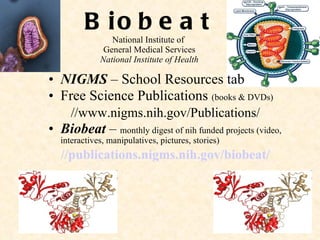
Biobeat National Institute of  General Medical Services National Institute of Health NIGMS  – School Resources tab Free Science Publications  (books & DVDs) //www.nigms.nih.gov/Publications/ Biobeat  –  monthly digest of nih funded projects (video, interactives, manipulatives, pictures, stories) //publications.nigms.nih.gov/biobeat /
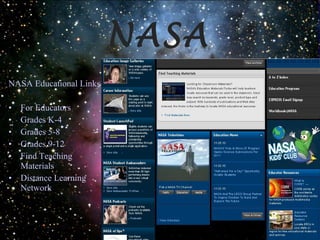
NASA   NASA Educational Links For Educators Grades K-4 Grades 5-8 Grades 9-12 Find Teaching Materials Distance Learning Network
NASA Explorer Schools program The NASA Explorer Schools Project is NASA's classroom-based gateway for middle and high school students (grades 4-12) that provides authentic learning experiences designed around NASA's unique missions while promoting student engagement in science, technology, engineering and mathematics based on NASA's resources NES uses a Virtual Campus website to provide professional development and support for educators and allows students to participate in NASA's missions of discovery and exploration. NES offers cross-cutting NASA STEM content modules for middle school and high school teachers to implement into their classrooms http://www.nasa.gov/offices/education/programs/national/nes2/home/index.html
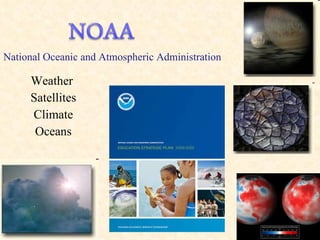
Weather  Satellites Climate Oceans National Oceanic and Atmospheric Administration
 
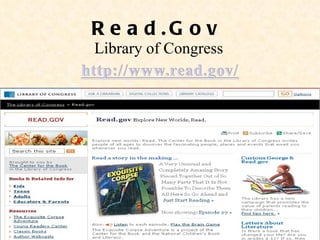
Read.Gov   Library of Congress
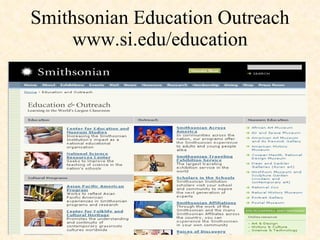
Smithsonian Education Outreach www.si.edu/education
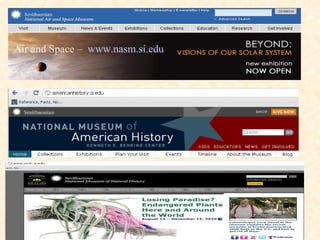
Air and Space –  www.nasm.si.edu
Additional STEM Resources Howard Hughes Medical Institution http://www.hhmi.org/ Genetics Interactives – Univ of Utah   Teach Genetics http://teach.genetics.utah.edu/ ASPIRE  –  astrophysics science project integrating research and education http://aspire.cosmic-ray.org/
 
For a copy of this slide show: www.slideshare.com keyword: Mannis

Stem + dot coms 2011

  • 1.
    Kalman Mannis, BSMA STEAM Education Specialist Navajo County Education Service Agency NEAZRC
  • 2.
    Kalman Mannis BS - Molecular Biology & Physics, Vanderbilt University MAED – Education, University of Phoenix PhD – Educational Technology (in process), Walden University Owner and product developer – Sacred Grove Apothecary (Renaissance Festivals) Certified Grant Writer, USDA Professional Coach and Educator mentor Navajo/Apache County Technology Cadre, Navajo County ESA International Teacher Liaison, Space Foundation Raytheon Math Hero Apache County Rural Teacher of the year Navajo County Education Service Agency & Northeast Arizona Regional Center – Science, Technology, Engineering, Art, and Math Education Specialist
  • 3.
    3 Stars anda Wish 3 Goals you have for attending this Presentation 1 Wish you have for the information’s integration into your curriculum
  • 4.
    Agenda Introduction 3Stars and a Wish Identify 3 goals for attendance, and 1 wish for info on integration ideas. Elbow share or whole group (depending on attendance) Objectives for this presentation STEM, 21 st C Skills, and Common Core Fast Review of Framework for Science Standard changes 21 st Skills – Collaboration, virtual field trips/labs Introductions to Government funded websites with established educator links FREE, NASA, NOAA, Science.gov, BIOBEAT, NEH, LoC, Smithsonian, HHMI Share ideas on integrating sites – table discussion, group Reflection Evaluation
  • 5.
    Objectives Provide workableknowledge of .gov education offerings in STEM Have a vision on integration of the tools into current curriculum Lower affective barriers to the use of Cloud based teaching tools.
  • 6.
  • 7.
    Web Conferencing ReviewedSites www.teachersfirst.com Private & Classroom Collaborations WIKIs and BLOGS wikispaces.org, pbworks.com, wordpress.com
  • 8.
    What does goodTech integration look like? Arizona K12 Center Technology Integration Matix (AZTIM): http://azk12.org/tim/
  • 9.
    The Question is:Where do we get quality, variety, and interactivity That won’t break the bank?
  • 10.
    //www.free.ed.gov Amazing SpaceThe Secret Life of Brains USGS.gov NASA.gov Bioedonline.org
  • 11.
    Science.gov is agateway to government science information and research results. Currently in its fifth generation, Science.gov provides a search of over 42 scientific databases and 200 million pages of science information with just one query, and is a gateway to over 2000 scientific Websites ( see Science.gov fact sheet ). Science.gov is an interagency initiative of 18 U.S. government science organizations within 14 Federal Agencies. These agencies form the voluntary  Science.gov Alliance  which governs Science.gov. Science.gov 5.0 provides the ultimate science search through a variety of features and abilities, including: Accessing over 42 databases and 200 million pages of science information via one query Clustering of results by subtopics or dates to help you target your search Wikipedia results related to your search terms Eureka News results related to your search terms Mark & send option for emailing results to friends and colleagues More science sources for a more thorough search Enhanced information related to your real-time search
  • 12.
    Biobeat National Instituteof General Medical Services National Institute of Health NIGMS – School Resources tab Free Science Publications (books & DVDs) //www.nigms.nih.gov/Publications/ Biobeat – monthly digest of nih funded projects (video, interactives, manipulatives, pictures, stories) //publications.nigms.nih.gov/biobeat /
  • 13.
    NASA NASA Educational Links For Educators Grades K-4 Grades 5-8 Grades 9-12 Find Teaching Materials Distance Learning Network
  • 14.
    NASA Explorer Schoolsprogram The NASA Explorer Schools Project is NASA's classroom-based gateway for middle and high school students (grades 4-12) that provides authentic learning experiences designed around NASA's unique missions while promoting student engagement in science, technology, engineering and mathematics based on NASA's resources NES uses a Virtual Campus website to provide professional development and support for educators and allows students to participate in NASA's missions of discovery and exploration. NES offers cross-cutting NASA STEM content modules for middle school and high school teachers to implement into their classrooms http://www.nasa.gov/offices/education/programs/national/nes2/home/index.html
  • 15.
    Weather SatellitesClimate Oceans National Oceanic and Atmospheric Administration
  • 16.
  • 17.
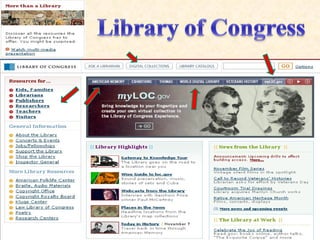
    Read.Gov Library of Congress
  • 18.
    Smithsonian Education Outreachwww.si.edu/education
  • 19.
    Air and Space– www.nasm.si.edu
  • 20.
    Additional STEM ResourcesHoward Hughes Medical Institution http://www.hhmi.org/ Genetics Interactives – Univ of Utah Teach Genetics http://teach.genetics.utah.edu/ ASPIRE – astrophysics science project integrating research and education http://aspire.cosmic-ray.org/
  • 21.
  • 22.
    For a copyof this slide show: www.slideshare.com keyword: Mannis

Editor's Notes

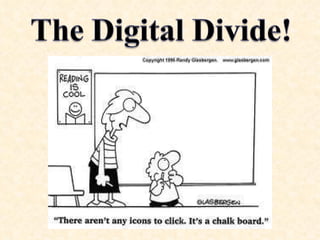
  • #8 Whether you like the idea or not our student’s learning styles are changing with the advent of new technology. There is a greater reliance of collaboration, as seen in texting, and an increased desire to work in a digital environment. This makes a teacher’s professional life challenging since few have workable backgrounds in digital collaboration, and Districts have limited fiscal resources to supply the training. This is why web conferencing is a tool that can help teacher, district and student be competitive. Used widely by government agencies providing educational outreach, web conferencing tools are also being used by museums for virtual fieldtrips, and between colleagues for professional development. If you are interested in a review of the largest web conferencing companies, please see me after this presentation and I will give you a link to a powerpoint I created on the subject. As for the other topic here – the greatest challenge to integrating technology is not the resources by their ease of use and the ability to do simple searches. Some of the government agencies have taken this to heart and provided easy to find resources – other, not so much. But for the curriculum director and teacher there is also another site that provides reviewed sites geared to education - http://www.teachersfirst.com/update.cfm The next step is Wikis and Blogs – social media is a factor that we can either be afraid of in the classroom or embrace. Its new, a bit scary for some, and time consuming to learn and consider for projects. But as a formative assessment outlet – these can not be best. Especially since the major players all have educational divisions which isolate students from the general population, giving a secure environment for classroom integration. If you are interested in this subject I have a powerpoint developed by a colleagues that may help provide insight into the tools.
  • #11 FREE makes it easier to find teaching and learning resources from the federal government. More than 1,500 federally supported teaching and learning resources are included from dozens of federal agencies. New sites are added regularly. FREE was conceived in 1997 by a federal working group in response to a  memo from the President . The site was launched a year later. It was redesigned and relaunched for the first time in November 2006. Use the pictures on this site as links to programs found on FREE.
  • #12 The content for Science.gov is contributed by  participating agencies  committed to serving the information needs of the science-attentive citizen, including science professionals, students and teachers, and the business community. Many of these agencies are members of CENDI , which provides administrative support and coordination for Science.gov. Science.gov and the Science.gov Alliance were formed in response to the April 2001  workshop , "Strengthening the Public Information Infrastructure for Science." The Web page search function is provided by the U.S. Geological Survey ( USGS ), and the "Explore Selected Science Websites by Topic" portion of the site is maintained by the CENDI Secretariat. The Science.gov Website is hosted by the  Department of Energy (DOE) Office of Scientific and Technical Information (OSTI) , located in Oak Ridge, Tennessee, which also supplies the site's " deep Web search " capability.
  • #14 NASA’s journeys into air and space have deepened humankind’s understanding of the universe, advanced technology breakthroughs, enhanced air travel safety and security, and expanded the frontiers of scientific research. These accomplishments share a common genesis: education. As the United States begins the second century of flight, the Nation must maintain its commitment to excellence in science, technology, engineering and mathematics education to ensure that the next generation of Americans can accept the full measure of their roles and responsibilities in shaping the future. NASA will continue the Agency’s tradition of investing in the Nation’s education programs and supporting the country’s educators who play a key role in preparing, inspiring, exciting, encouraging, and nurturing the young minds of today who will be the workforce of tomorrow.  In 2006 and beyond, NASA will continue to pursue three major education goals:  -- Strengthening NASA and the Nation's future workforce  -- Attracting and retaining students in science, technology, engineering and mathematics, or STEM, disciplines  -- Engaging Americans in NASA's mission
  • #16 The America COMPETES Act (P.L. 110-69) gives NOAA broad authority for educational activities. Stemming from this statute and other program-specific education mandates, the NOAA education community works collaboratively to advance the priorities outlined in NOAA's Education Strategic Plan and meet NOAA's Education Mission: "To advance environmental literacy and promote a diverse workforce in ocean, coastal, Great Lakes, weather, and climate sciences, encouraging stewardship and increasing informed decision making for the nation." This strategic direction is leveraged by the many cross-cutting education programs and initiatives (highlighted below) across NOAA.
  • #17 Welcome Message from the Librarian of Congress The Library of Congress is the nation's oldest federal cultural institution and serves as the research arm of Congress. It is also the largest library in the world, with millions of items in its collections. The Library's mission is to make its resources available and useful to the Congress and the American people and to sustain and preserve a universal collection of knowledge and creativity for future generations.