Introduc)on	
  
This	
  study	
  focused	
  on	
  the	
  impact	
  the	
  Russian	
  government’s	
  
“Megagrant”	
  program	
  has	
  had	
  on	
  the	
  recent	
  efforts	
  to	
  
revitalize	
  science	
  in	
  Russian	
  universi=es.	
  This	
  program	
  was	
  
created	
  to	
  strengthen	
  governmental	
  support	
  for	
  
developments	
  in	
  science	
  and	
  to	
  encourage	
  Russian	
  expat	
  
scien=sts	
  to	
  return	
  and	
  con=nue	
  research	
  in	
  Russia	
  through	
  
these	
  monetary	
  “megagrants”	
  worth	
  approx	
  $2Million.	
  
Applica=ons	
  are	
  also	
  open	
  to	
  other	
  foreigners	
  as	
  well.	
  
Applicants	
  can	
  only	
  par=cipate	
  in	
  one	
  research	
  project	
  and	
  
these	
  scien=sts	
  need	
  to	
  have	
  a	
  partnership	
  with	
  one	
  Russian	
  
ins=tu=on	
  of	
  higher	
  learning.	
  The	
  program	
  began	
  in	
  2010	
  
with	
  its	
  first	
  grant	
  compe==on	
  which	
  aIracted	
  507	
  
par=cipants	
  and	
  had	
  38	
  winners,	
  the	
  second	
  compe==on	
  in	
  
April	
  2011	
  aIracted	
  517	
  par=cipants	
  with	
  38	
  winners,	
  and	
  
the	
  third	
  in	
  2013	
  aIracted	
  720	
  par=cipants	
  with	
  42	
  winners.	
  
Winners	
  are	
  required	
  to	
  spend	
  4	
  months	
  a	
  year	
  at	
  Russian	
  
universi=es	
  to	
  carry	
  out	
  research.	
  This	
  study	
  focused	
  on	
  the	
  
2011	
  compe==on.	


Role	
  of	
  the	
  Research	
  Assistant	
  
My	
  role	
  in	
  this	
  project	
  was	
  to	
  research	
  the	
  background	
  
and	
  understand	
  the	
  “megagrant”	
  program	
  and	
  the	
  
process	
  and	
  applica=on	
  requirements	
  it	
  entailed.	
  I	
  
researched	
  the	
  number	
  of	
  applicants	
  who	
  entered	
  the	
  
compe==on	
  from	
  2010	
  to	
  2013.	
  I	
  found	
  the	
  universi=es	
  
that	
  corresponded	
  to	
  the	
  winners.	
  I	
  learned	
  how	
  to	
  
download	
  publica=on	
  data	
  through	
  Scopus	
  and	
  
impor=ng	
  this	
  data	
  into	
  STATA	
  in	
  order	
  to	
  make	
  a	
  graph.	
  
I	
  also	
  research	
  similar	
  programs	
  in	
  other	
  countries.	
  	
  
Research	
  Ques)on	
  
Was	
  there	
  an	
  increase	
  in	
  publica=ons	
  aUer	
  winners	
  from	
  
the	
  2011	
  “megagrant”	
  started	
  conduc=ng	
  research	
  in	
  
their	
  corresponding	
  Russian	
  universi=es	
  as	
  compared	
  to	
  
before	
  their	
  arrival,	
  and	
  compared	
  to	
  the	
  universi=es	
  
who	
  did	
  not	
  win	
  the	
  grant.	


Data	
  and	
  Methods	
  
The	
  first	
  step	
  was	
  to	
  create	
  a	
  list	
  of	
  universi=es	
  that	
  
had	
  “megagrant”	
  winners	
  and	
  finalists.	
  The	
  next	
  step	
  
was	
  to	
  go	
  through	
  these	
  universi=es	
  on	
  the	
  Scopus	
  
database	
  to	
  download	
  the	
  publica=on	
  data	
  of	
  the	
  total	
  
ar=cles	
  published	
  by	
  each	
  university.	
  This	
  publica=on	
  
data	
  was	
  then	
  exported	
  to	
  STATA	
  to	
  create	
  graphs	
  and	
  
es=mate	
  the	
  impact	
  about	
  whether	
  publica=ons	
  had	
  
increased	
  aUer	
  universi=es	
  had	
  “megagrant”	
  winners.	
  
This	
  approach	
  is	
  called	
  a	
  “difference-­‐indifference”	
  
analysis.	
  	
  
Results	


Discussion	
  
The	
  concept	
  of	
  brain	
  drain	
  is	
  the	
  process	
  where	
  countries	
  
lose	
  their	
  most	
  educated	
  and	
  talented	
  	
  researchers	
  
through	
  migra=on	
  to	
  other	
  countries	
  with	
  beIer	
  
research	
  benefits.	
  This	
  is	
  a	
  problem	
  because	
  when	
  these	
  
individuals	
  leave,	
  they	
  take	
  their	
  knowledge	
  and	
  
exper=se	
  and	
  contribute	
  to	
  knowledge	
  gain	
  for	
  other	
  
countries.	
  	
  Government	
  programs	
  around	
  the	
  world	
  have	
  
been	
  enacted	
  to	
  help	
  reduce	
  the	
  migra=on	
  of	
  scien=sts	
  
out	
  of	
  their	
  country	
  of	
  origin	
  and	
  bring	
  more	
  incen=ves	
  
for	
  migrants	
  to	
  return	
  to	
  their	
  home	
  countries	
  to	
  do	
  
research	


Conclusion	
  
Based	
  on	
  the	
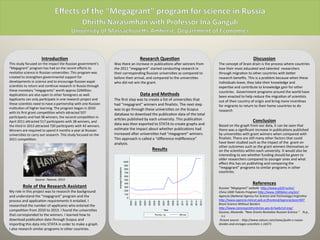
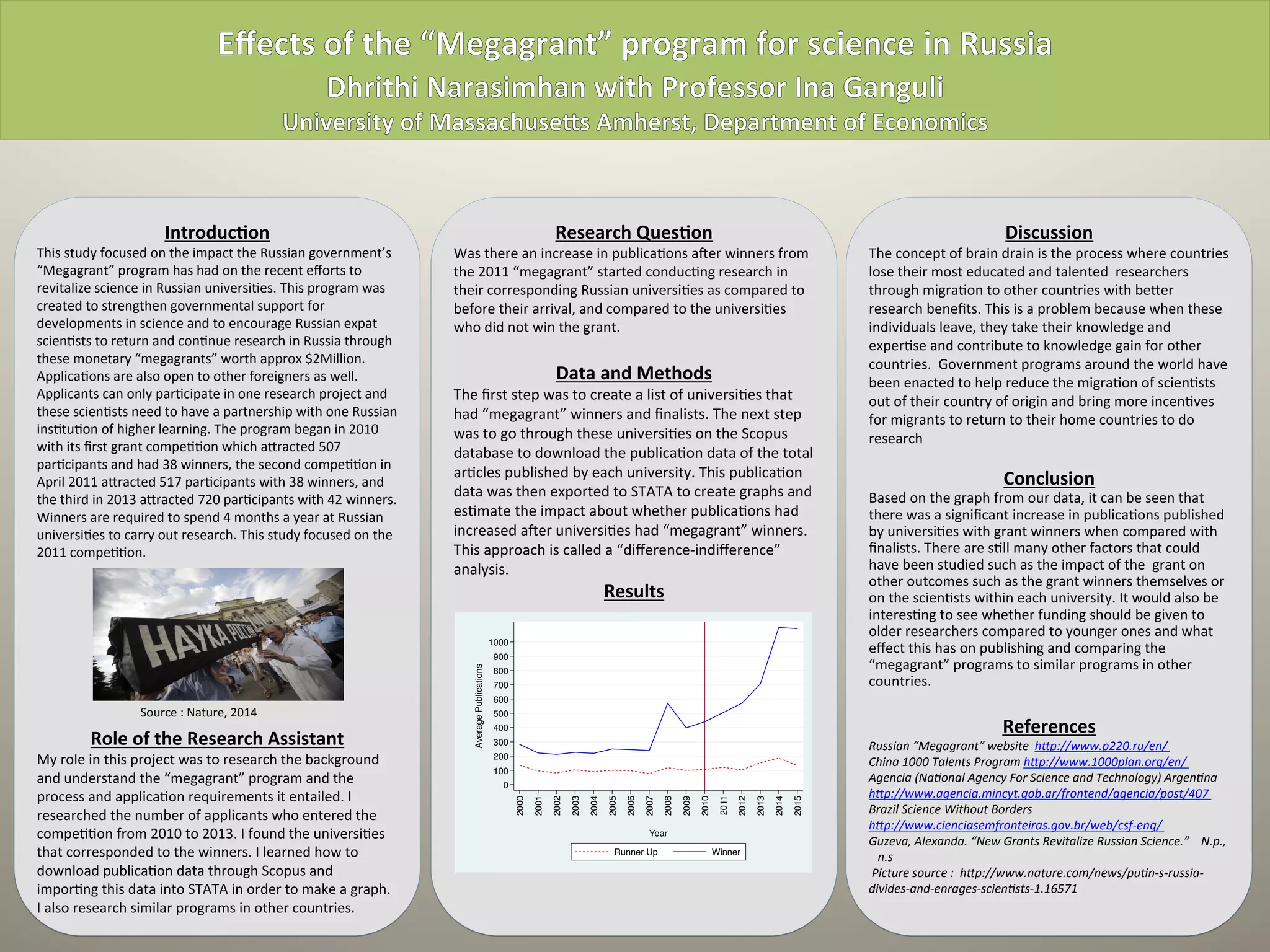
  graph	
  from	
  our	
  data,	
  it	
  can	
  be	
  seen	
  that	
  
there	
  was	
  a	
  significant	
  increase	
  in	
  publica=ons	
  published	
  
by	
  universi=es	
  with	
  grant	
  winners	
  when	
  compared	
  with	
  
finalists.	
  There	
  are	
  s=ll	
  many	
  other	
  factors	
  that	
  could	
  
have	
  been	
  studied	
  such	
  as	
  the	
  impact	
  of	
  the	
  	
  grant	
  on	
  
other	
  outcomes	
  such	
  as	
  the	
  grant	
  winners	
  themselves	
  or	
  
on	
  the	
  scien=sts	
  within	
  each	
  university.	
  It	
  would	
  also	
  be	
  
interes=ng	
  to	
  see	
  whether	
  funding	
  should	
  be	
  given	
  to	
  
older	
  researchers	
  compared	
  to	
  younger	
  ones	
  and	
  what	
  
effect	
  this	
  has	
  on	
  publishing	
  and	
  comparing	
  the	
  
“megagrant”	
  programs	
  to	
  similar	
  programs	
  in	
  other	
  
countries.	


References	
  	
  
Russian	
  “Megagrant”	
  website	
  	
  h2p://www.p220.ru/en/	
  
China	
  1000	
  Talents	
  Program	
  h2p://www.1000plan.org/en/	
  	
  
Agencia	
  (NaDonal	
  Agency	
  For	
  Science	
  and	
  Technology)	
  ArgenDna	


h2p://www.agencia.mincyt.gob.ar/frontend/agencia/post/407	
  
Brazil	
  Science	
  Without	
  Borders	
  
h2p://www.cienciasemfronteiras.gov.br/web/csf-­‐eng/	
  
Guzeva,	
  Alexanda.	
  “New	
  Grants	
  Revitalize	
  Russian	
  Science.”	


  N.p.,	


  n.s	
  
	
  Picture	
  source	
  :	
  	
  h2p://www.nature.com/news/puDn-­‐s-­‐russia-­‐
divides-­‐and-­‐enrages-­‐scienDsts-­‐1.16571	


0
100
200
300
400
500
600
700
800
900
1000
AveragePublications
2000
2001
2002
2003
2004
2005
2006
2007
2008
2009
2010
2011
2012
2013
2014
2015
Year
Runner Up Winner
Source	
  :	
  Nature,	
  2014	
  

Migration Research Project

  • 1.
    Introduc)on   This  study  focused  on  the  impact  the  Russian  government’s   “Megagrant”  program  has  had  on  the  recent  efforts  to   revitalize  science  in  Russian  universi=es.  This  program  was   created  to  strengthen  governmental  support  for   developments  in  science  and  to  encourage  Russian  expat   scien=sts  to  return  and  con=nue  research  in  Russia  through   these  monetary  “megagrants”  worth  approx  $2Million.   Applica=ons  are  also  open  to  other  foreigners  as  well.   Applicants  can  only  par=cipate  in  one  research  project  and   these  scien=sts  need  to  have  a  partnership  with  one  Russian   ins=tu=on  of  higher  learning.  The  program  began  in  2010   with  its  first  grant  compe==on  which  aIracted  507   par=cipants  and  had  38  winners,  the  second  compe==on  in   April  2011  aIracted  517  par=cipants  with  38  winners,  and   the  third  in  2013  aIracted  720  par=cipants  with  42  winners.   Winners  are  required  to  spend  4  months  a  year  at  Russian   universi=es  to  carry  out  research.  This  study  focused  on  the   2011  compe==on.                 Role  of  the  Research  Assistant   My  role  in  this  project  was  to  research  the  background   and  understand  the  “megagrant”  program  and  the   process  and  applica=on  requirements  it  entailed.  I   researched  the  number  of  applicants  who  entered  the   compe==on  from  2010  to  2013.  I  found  the  universi=es   that  corresponded  to  the  winners.  I  learned  how  to   download  publica=on  data  through  Scopus  and   impor=ng  this  data  into  STATA  in  order  to  make  a  graph.   I  also  research  similar  programs  in  other  countries.     Research  Ques)on   Was  there  an  increase  in  publica=ons  aUer  winners  from   the  2011  “megagrant”  started  conduc=ng  research  in   their  corresponding  Russian  universi=es  as  compared  to   before  their  arrival,  and  compared  to  the  universi=es   who  did  not  win  the  grant.       Data  and  Methods   The  first  step  was  to  create  a  list  of  universi=es  that   had  “megagrant”  winners  and  finalists.  The  next  step   was  to  go  through  these  universi=es  on  the  Scopus   database  to  download  the  publica=on  data  of  the  total   ar=cles  published  by  each  university.  This  publica=on   data  was  then  exported  to  STATA  to  create  graphs  and   es=mate  the  impact  about  whether  publica=ons  had   increased  aUer  universi=es  had  “megagrant”  winners.   This  approach  is  called  a  “difference-­‐indifference”   analysis.     Results                                 Discussion   The  concept  of  brain  drain  is  the  process  where  countries   lose  their  most  educated  and  talented    researchers   through  migra=on  to  other  countries  with  beIer   research  benefits.  This  is  a  problem  because  when  these   individuals  leave,  they  take  their  knowledge  and   exper=se  and  contribute  to  knowledge  gain  for  other   countries.    Government  programs  around  the  world  have   been  enacted  to  help  reduce  the  migra=on  of  scien=sts   out  of  their  country  of  origin  and  bring  more  incen=ves   for  migrants  to  return  to  their  home  countries  to  do   research         Conclusion   Based  on  the  graph  from  our  data,  it  can  be  seen  that   there  was  a  significant  increase  in  publica=ons  published   by  universi=es  with  grant  winners  when  compared  with   finalists.  There  are  s=ll  many  other  factors  that  could   have  been  studied  such  as  the  impact  of  the    grant  on   other  outcomes  such  as  the  grant  winners  themselves  or   on  the  scien=sts  within  each  university.  It  would  also  be   interes=ng  to  see  whether  funding  should  be  given  to   older  researchers  compared  to  younger  ones  and  what   effect  this  has  on  publishing  and  comparing  the   “megagrant”  programs  to  similar  programs  in  other   countries.       References     Russian  “Megagrant”  website    h2p://www.p220.ru/en/   China  1000  Talents  Program  h2p://www.1000plan.org/en/     Agencia  (NaDonal  Agency  For  Science  and  Technology)  ArgenDna       h2p://www.agencia.mincyt.gob.ar/frontend/agencia/post/407   Brazil  Science  Without  Borders   h2p://www.cienciasemfronteiras.gov.br/web/csf-­‐eng/   Guzeva,  Alexanda.  “New  Grants  Revitalize  Russian  Science.”        N.p.,              n.s    Picture  source  :    h2p://www.nature.com/news/puDn-­‐s-­‐russia-­‐ divides-­‐and-­‐enrages-­‐scienDsts-­‐1.16571           0 100 200 300 400 500 600 700 800 900 1000 AveragePublications 2000 2001 2002 2003 2004 2005 2006 2007 2008 2009 2010 2011 2012 2013 2014 2015 Year Runner Up Winner Source  :  Nature,  2014