•Ashwathi Govind
contents
 Introduction
 Kwashiorkor
 Causes
 Medical reasons
 Circumstantial causes
 The main causes of
starvation
 Sign and symptoms
 Changes in
carbohydrate
metabolism
 Changes in fat
metabolism
 Changes in protein
metabolism
 Changes in water and
mineral metabolisms
 Prevention
 Treatment
 Reference

Starvation is a severe
deficiency in
caloric energy intake,
below the level
needed to maintain an
organism's life

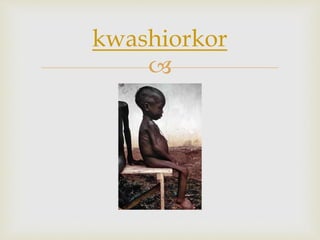
kwashiorkor

poverty.
imbalance between energy
intake and energy expenditure
Causes
 Anorexia nervosa
 Bulimia nervosa
 Eating disorder, not otherwise specified
 Celiac disease
 Coma
 Major depressive disorder
 Diabetes mellitus
 Digestive disease
 Constant vomiting
Medical reasons

 Child/ Elder/ Dependent Abuse
 Famine– for any reason, such as political strife and
war
 Excessive fasting
 Poverty
Circumstantial causes

 Economy
 Food scarcity in the society
 Diseases that can cause rapid weight loss
 The person may also be the host to a parasite such as
an intestinal worm
 Clinical conditions, such as recovering from surgery
or burns, etc
The main causes of starvation

 impulsivity
 Irritability
 Hyperactivity
 Atrophy (wasting away) of the stomach weakens the
perception of hunger.
 starvation lose substantial fat (adipose tissue) and muscle
mass as the body breaks down these tissues for energy
Sign and symptoms
 Catabolysis
 Fatigue
 interaction with the surrounding world diminishes
 In females, menstruation ceases when the body fat percentage
is too low to support a fetus.
 Victims of starvation are often too weak to sense thirst, and
therefore become dehydrated
 All movements become painful due to muscle atrophy and
dry, cracked skin that is caused by severe dehydration
 Fungi
 Vitamin deficiency - anemia, beriberi, pellagra,
and scurvy
 diarrhea, skin rashes, edema, and heart failure
 medical study estimates that in adults complete
starvation leads to death within 8 to 12 weeks
 individual has lost about 30% of their normal body
weight

Changes in carbohydrate metabolism
 An important function of liver is to act as a blood glucose
buffering organ
 A couple of days of fasting rapidly uses up tissue glycogen
 . Hypoglycemia depress insulin secretion but enhances secretion
of glucagon adrenaline and glucocorticoids
 key gluconeogenesis enzymes enhance gluconeogenesis and
glycogenolysis and maintain the liver and muscle glycogen and
the blood sugar, though at a subnormal level
Gluconeogenesis from proteins is considerable in
the liver and kidneys in the first few weeks, but
continues later at a reduced rate mainly in kidneys.
 Hepatic glycogenesis - consequence of
hypoglycemia
Lipogenesis - decline in insulin secretion
These factors save some blood sugar for supply to
the extrahepatic tissue.

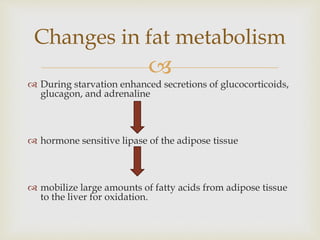
Changes in fat metabolism
 During starvation enhanced secretions of glucocorticoids,
glucagon, and adrenaline
 hormone sensitive lipase of the adipose tissue
 mobilize large amounts of fatty acids from adipose tissue
to the liver for oxidation.
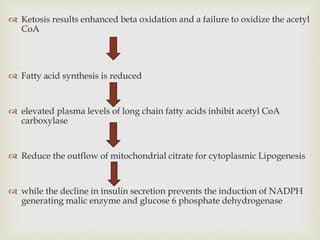
 Ketosis results enhanced beta oxidation and a failure to oxidize the acetyl
CoA
 Fatty acid synthesis is reduced
 elevated plasma levels of long chain fatty acids inhibit acetyl CoA
carboxylase
 Reduce the outflow of mitochondrial citrate for cytoplasmic Lipogenesis
 while the decline in insulin secretion prevents the induction of NADPH
generating malic enzyme and glucose 6 phosphate dehydrogenase
 Lipoprotein lipase activity declines in the adipose tissue, but
rises in cardiac and skeletal muscles.
 Muscles start using fatty acids as their principal energy
source
 has no stored glycogen so it uses significant amounts of
ketone bodies from about the 5th day of starvation
 Starvation ketosis is more pronounced in females than in
males, and in children than in adults.
 Ketosis and ketonuria produce acidosis and enhance urinary
ammonia pulmonary ventilation and CO2 elimination.

Changes in protein metabolism
 Negative N balance results from increased protein
catabolism for gluconeogesis and energy production
 Breakdown tissue proteins lowers the body protein
by more than 25% and the resulting decrease in the
cell mass reduces the intracellular fluid volume
 Intestine, liver, spleen, heart and muscles atrophy
considerably due to protein catabolism
 . Intestinal atrophy severely restricts digestion and
absorption
 Atrophic changes of the heart lower the cardiac output to
produce hypertension and circulatory failure.
 Increased protein catabolism lowers the secretion of insulin,
thyroxin and gonadotropins, and causes failures of
reproduction and lactation.
 Urinary NPN and urea are reduced while neutral sulfur and
uric acid are increased in urine

Changes in water and mineral
metabolisms
 On prolonged starvation, extensive cellular distengration
lowers the intracellular K+,total body K+ and the
intracellular fluid volume.
 Extracellular fluid (ECF) is reduced in the first few days due
to increased water loss,
 Low serum albumin contributes to the production of edema
 Glomerular filtration is reduced and metabolic water is
elevated
 prevention consists of ensuring they eat plenty of food,
varied enough to provide a nutritionally complete diet
 The Rome Declaration on World Food Security outlines
several policies aimed at increasing food security and,
consequently, preventing starvation.
 Poverty reduction
 Prevention of wars and political instability
 Food aid
 Agricultural sustainability
 Reduction of economic inequality
Prevention

 Rest and warmth must be provided and maintained
 Small sips of water mixed with glucose should be given in
regular intervals
 Fruit juices can also be given.
 food can be given gradually in small quantities
 Proteins may be administered intravenously to raise the
level of serum proteins
Treatment

 K Vijayakumaran Nair Andp I Paul, Functional
Zoology, Acadamica, Jawahar Nagar,
Thiruvananthapuram
 Patrica Truman, Nutritional Biochemistry.M,i.J
Publishers, Chennai.
 Debajyothi Das, Biochemistry, 13th Edition.
 B Sreelakshmi Dietetics, 7th Edition, New Age
International Publishers
Reference
Starvation .

Starvation .

  • 1.
  • 2.
    contents  Introduction  Kwashiorkor Causes  Medical reasons  Circumstantial causes  The main causes of starvation  Sign and symptoms  Changes in carbohydrate metabolism  Changes in fat metabolism  Changes in protein metabolism  Changes in water and mineral metabolisms  Prevention  Treatment  Reference
  • 3.
     Starvation is asevere deficiency in caloric energy intake, below the level needed to maintain an organism's life
  • 4.
  • 5.
     poverty. imbalance between energy intakeand energy expenditure Causes
  • 6.
     Anorexia nervosa Bulimia nervosa  Eating disorder, not otherwise specified  Celiac disease  Coma  Major depressive disorder  Diabetes mellitus  Digestive disease  Constant vomiting Medical reasons
  • 7.
      Child/ Elder/Dependent Abuse  Famine– for any reason, such as political strife and war  Excessive fasting  Poverty Circumstantial causes
  • 8.
      Economy  Foodscarcity in the society  Diseases that can cause rapid weight loss  The person may also be the host to a parasite such as an intestinal worm  Clinical conditions, such as recovering from surgery or burns, etc The main causes of starvation
  • 9.
      impulsivity  Irritability Hyperactivity  Atrophy (wasting away) of the stomach weakens the perception of hunger.  starvation lose substantial fat (adipose tissue) and muscle mass as the body breaks down these tissues for energy Sign and symptoms
  • 10.
     Catabolysis  Fatigue interaction with the surrounding world diminishes  In females, menstruation ceases when the body fat percentage is too low to support a fetus.  Victims of starvation are often too weak to sense thirst, and therefore become dehydrated  All movements become painful due to muscle atrophy and dry, cracked skin that is caused by severe dehydration
  • 11.
     Fungi  Vitamindeficiency - anemia, beriberi, pellagra, and scurvy  diarrhea, skin rashes, edema, and heart failure  medical study estimates that in adults complete starvation leads to death within 8 to 12 weeks  individual has lost about 30% of their normal body weight
  • 12.
     Changes in carbohydratemetabolism  An important function of liver is to act as a blood glucose buffering organ  A couple of days of fasting rapidly uses up tissue glycogen  . Hypoglycemia depress insulin secretion but enhances secretion of glucagon adrenaline and glucocorticoids  key gluconeogenesis enzymes enhance gluconeogenesis and glycogenolysis and maintain the liver and muscle glycogen and the blood sugar, though at a subnormal level
  • 13.
    Gluconeogenesis from proteinsis considerable in the liver and kidneys in the first few weeks, but continues later at a reduced rate mainly in kidneys.  Hepatic glycogenesis - consequence of hypoglycemia Lipogenesis - decline in insulin secretion These factors save some blood sugar for supply to the extrahepatic tissue.
  • 14.
     Changes in fatmetabolism  During starvation enhanced secretions of glucocorticoids, glucagon, and adrenaline  hormone sensitive lipase of the adipose tissue  mobilize large amounts of fatty acids from adipose tissue to the liver for oxidation.
  • 15.
     Ketosis resultsenhanced beta oxidation and a failure to oxidize the acetyl CoA  Fatty acid synthesis is reduced  elevated plasma levels of long chain fatty acids inhibit acetyl CoA carboxylase  Reduce the outflow of mitochondrial citrate for cytoplasmic Lipogenesis  while the decline in insulin secretion prevents the induction of NADPH generating malic enzyme and glucose 6 phosphate dehydrogenase
  • 16.
     Lipoprotein lipaseactivity declines in the adipose tissue, but rises in cardiac and skeletal muscles.  Muscles start using fatty acids as their principal energy source  has no stored glycogen so it uses significant amounts of ketone bodies from about the 5th day of starvation  Starvation ketosis is more pronounced in females than in males, and in children than in adults.  Ketosis and ketonuria produce acidosis and enhance urinary ammonia pulmonary ventilation and CO2 elimination.
  • 17.
     Changes in proteinmetabolism  Negative N balance results from increased protein catabolism for gluconeogesis and energy production  Breakdown tissue proteins lowers the body protein by more than 25% and the resulting decrease in the cell mass reduces the intracellular fluid volume  Intestine, liver, spleen, heart and muscles atrophy considerably due to protein catabolism
  • 18.
     . Intestinalatrophy severely restricts digestion and absorption  Atrophic changes of the heart lower the cardiac output to produce hypertension and circulatory failure.  Increased protein catabolism lowers the secretion of insulin, thyroxin and gonadotropins, and causes failures of reproduction and lactation.  Urinary NPN and urea are reduced while neutral sulfur and uric acid are increased in urine
  • 19.
     Changes in waterand mineral metabolisms  On prolonged starvation, extensive cellular distengration lowers the intracellular K+,total body K+ and the intracellular fluid volume.  Extracellular fluid (ECF) is reduced in the first few days due to increased water loss,  Low serum albumin contributes to the production of edema  Glomerular filtration is reduced and metabolic water is elevated
  • 20.
     prevention consistsof ensuring they eat plenty of food, varied enough to provide a nutritionally complete diet  The Rome Declaration on World Food Security outlines several policies aimed at increasing food security and, consequently, preventing starvation.  Poverty reduction  Prevention of wars and political instability  Food aid  Agricultural sustainability  Reduction of economic inequality Prevention
  • 21.
      Rest andwarmth must be provided and maintained  Small sips of water mixed with glucose should be given in regular intervals  Fruit juices can also be given.  food can be given gradually in small quantities  Proteins may be administered intravenously to raise the level of serum proteins Treatment
  • 22.
      K VijayakumaranNair Andp I Paul, Functional Zoology, Acadamica, Jawahar Nagar, Thiruvananthapuram  Patrica Truman, Nutritional Biochemistry.M,i.J Publishers, Chennai.  Debajyothi Das, Biochemistry, 13th Edition.  B Sreelakshmi Dietetics, 7th Edition, New Age International Publishers Reference