
WHATS’S THE KEY
      DIFFERENCE
       BETWEEN A
SCALEABLE START UP
    AND A LARGER
      ESTABLISHED
      COMPANY?

               PART FOUR
Unlike a large   Start up’s need
                 to keep a low
profitable       cash burn rate
company,         until
start ups are    the company
                 has validated its
constrained      business model
by their         by finding
available        paying
                 customers
cash
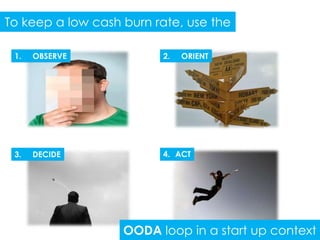
To keep a low cash burn rate, use the

 1.   OBSERVE            2.   ORIENT


 3.   DECIDE             4. ACT


                   OODA loop in a start up context
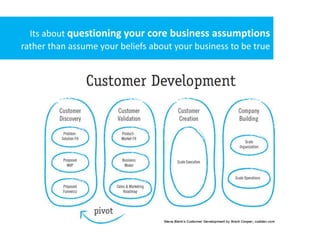
Its about questioning your core business assumptions
rather than assume your beliefs about your business to be true
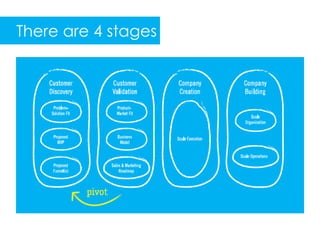
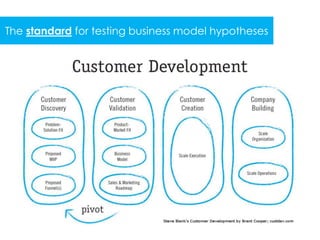
There are 4 stages
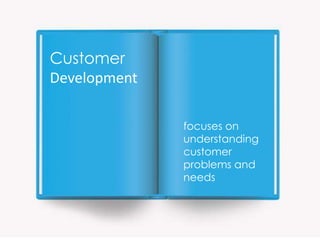
Customer
Development

              focuses on
              understanding
              customer
              problems and
              needs
Customer
Validation


             focuses on
             developing a
             sales model that
             can be
             replicated
Customer
Creation


           focuses on
           creating and
           driving end user
           demand
focuses on
Customer   transitioning the
Building   organisation
           from one
           designed for
           learning and
           discovery to a
           well-oiled
           machine
           engineered for
           execution
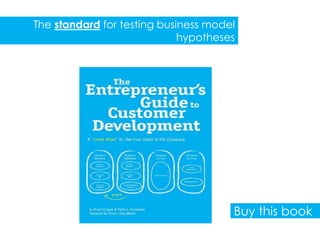
The standard for testing business model
                             hypotheses


                                      Buy this book
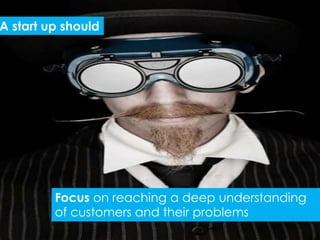
A start up should


         Focus on reaching a deep understanding
         of customers and their problems
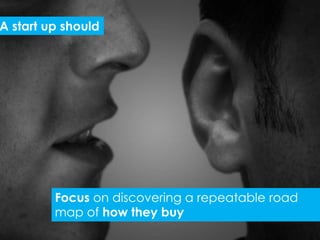
A start up should


         Focus on discovering a repeatable road
         map of how they buy
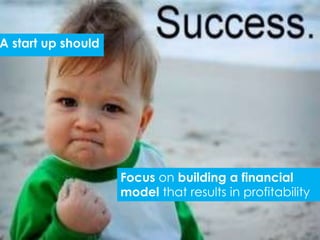
A start up should


                    Focus on building a financial
                    model that results in profitability
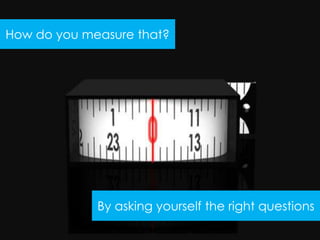
How do you measure that?


             By asking yourself the right questions
The appropriate milestones that
 measure a start up’s progress


                           answers these questions:
How well do we understand


                what problems customers have?
How much will they pay


                         to solve those problems?
Do our product features


                          solve these problems?
Do we understand


             our customers’ business?
Do we understand


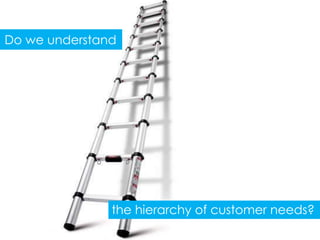
               the hierarchy of customer needs?
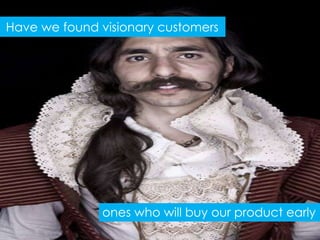
Have we found visionary customers


              ones who will buy our product early
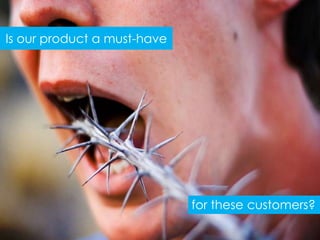
Is our product a must-have


                             for these customers?
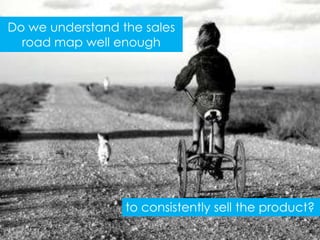
Do we understand the sales
  road map well enough


                  to consistently sell the product?
Do we understand


                   what we need to be profitable?
Are the sales and business plans


              realistic, scalable, and achievable?
What do we do


          if our model turns out to be wrong?
The standard for testing business model hypotheses
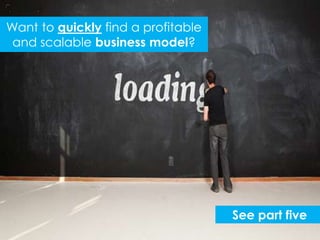
Want to quickly find a profitable
 and scalable business model?


                                    See part five

Startups are different pt4

  • 1.
    WHATS’S THE KEY DIFFERENCE BETWEEN A SCALEABLE START UP AND A LARGER ESTABLISHED COMPANY? PART FOUR
  • 2.
    Unlike a large Start up’s need to keep a low profitable cash burn rate company, until start ups are the company has validated its constrained business model by their by finding available paying customers cash
  • 3.
    To keep alow cash burn rate, use the 1. OBSERVE 2. ORIENT 3. DECIDE 4. ACT OODA loop in a start up context
  • 5.
    Its about questioningyour core business assumptions rather than assume your beliefs about your business to be true
  • 6.
  • 7.
    Customer Development focuses on understanding customer problems and needs
  • 8.
    Customer Validation focuses on developing a sales model that can be replicated
  • 9.
    Customer Creation focuses on creating and driving end user demand
  • 10.
    focuses on Customer transitioning the Building organisation from one designed for learning and discovery to a well-oiled machine engineered for execution
  • 11.
    The standard fortesting business model hypotheses Buy this book
  • 12.
    A start upshould Focus on reaching a deep understanding of customers and their problems
  • 13.
    A start upshould Focus on discovering a repeatable road map of how they buy
  • 14.
    A start upshould Focus on building a financial model that results in profitability
  • 15.
    How do youmeasure that? By asking yourself the right questions
  • 16.
    The appropriate milestonesthat measure a start up’s progress answers these questions:
  • 17.
    How well dowe understand what problems customers have?
  • 18.
    How much willthey pay to solve those problems?
  • 19.
    Do our productfeatures solve these problems?
  • 20.
    Do we understand our customers’ business?
  • 21.
    Do we understand the hierarchy of customer needs?
  • 22.
    Have we foundvisionary customers ones who will buy our product early
  • 23.
    Is our producta must-have for these customers?
  • 24.
    Do we understandthe sales road map well enough to consistently sell the product?
  • 25.
    Do we understand what we need to be profitable?
  • 26.
    Are the salesand business plans realistic, scalable, and achievable?
  • 27.
    What do wedo if our model turns out to be wrong?
  • 28.
    The standard fortesting business model hypotheses
  • 29.
    Want to quicklyfind a profitable and scalable business model? See part five