A PRESENTATION ON
STARS AND THE SOLAR
SYSTEM
TOPICS TO BE COVERED
▸ Stars
▸ Constellations
▸ Solar system
▸ Satellites
⭐
🦀
🌎
🛰
STARS
STARS
▸ Stars are luminous bodies that are regularly
seen as points of light in night sky
▸ Our sun is also a star
▸ The stars which we see are thousand of light
years away from us
▸ A light year is distance travelled by light in one
year
CONSTELLATIONS
URSA MAJOR
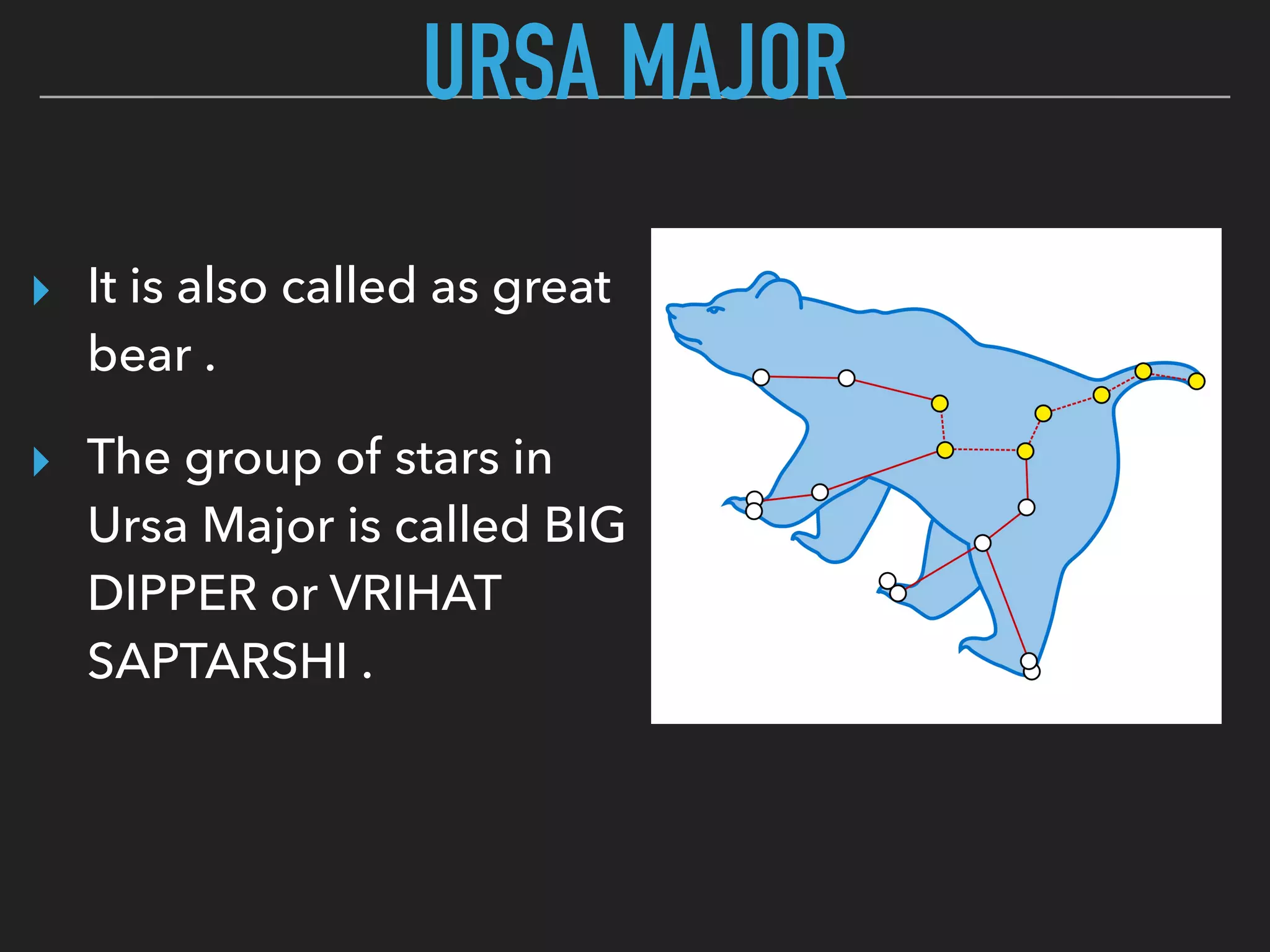
▸ It is also called as great
bear .
▸ The group of stars in
Ursa Major is called BIG
DIPPER or VRIHAT
SAPTARSHI .
URSA MINOR
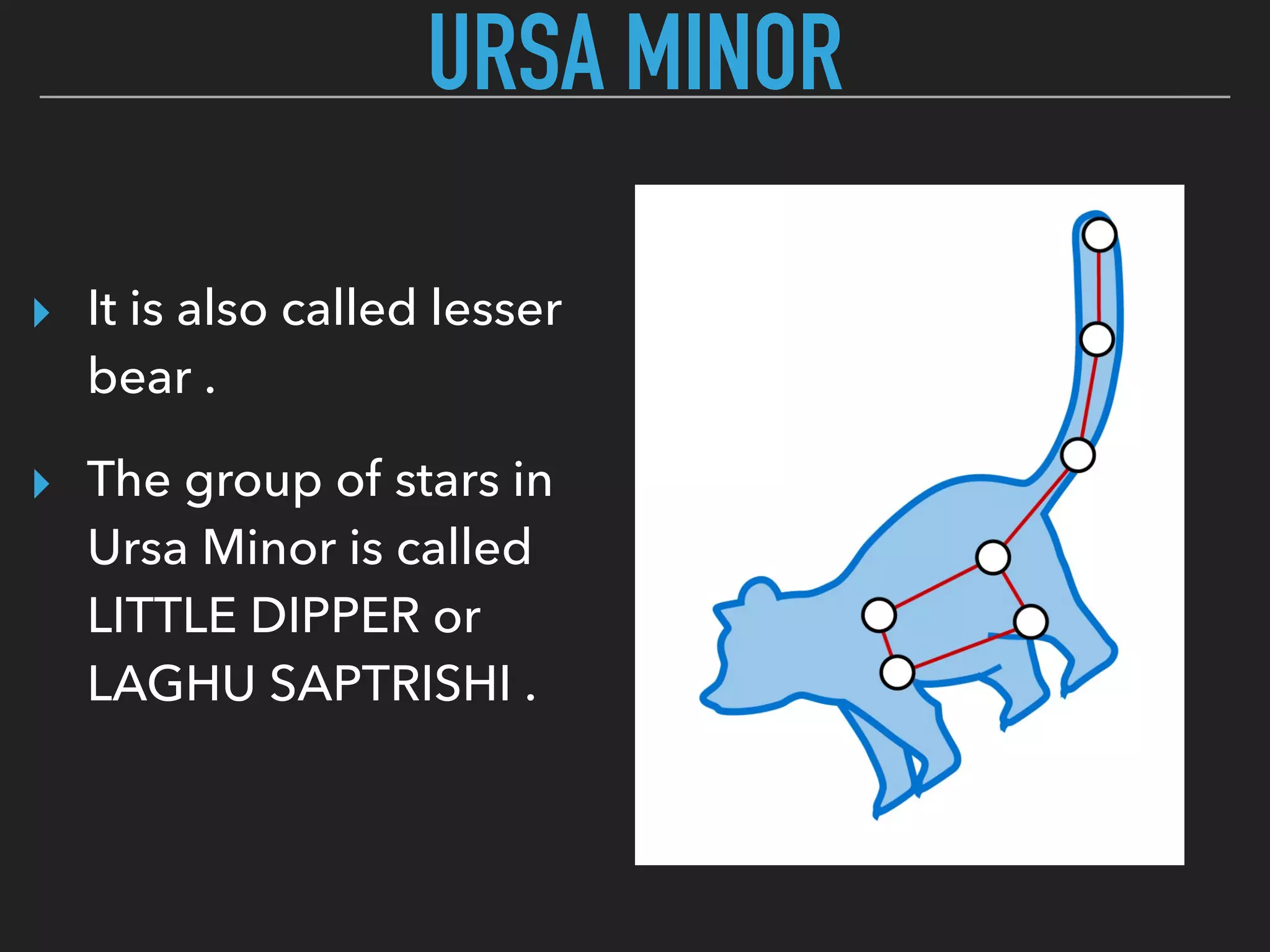
▸ It is also called lesser
bear .
▸ The group of stars in
Ursa Minor is called
LITTLE DIPPER or
LAGHU SAPTRISHI .
ORION
▸ It is most
prominent and is
easily identifiable.
▸ It looks like a
hunter with bow .
▸ This constellation is
visible from
northern
hemisphere.
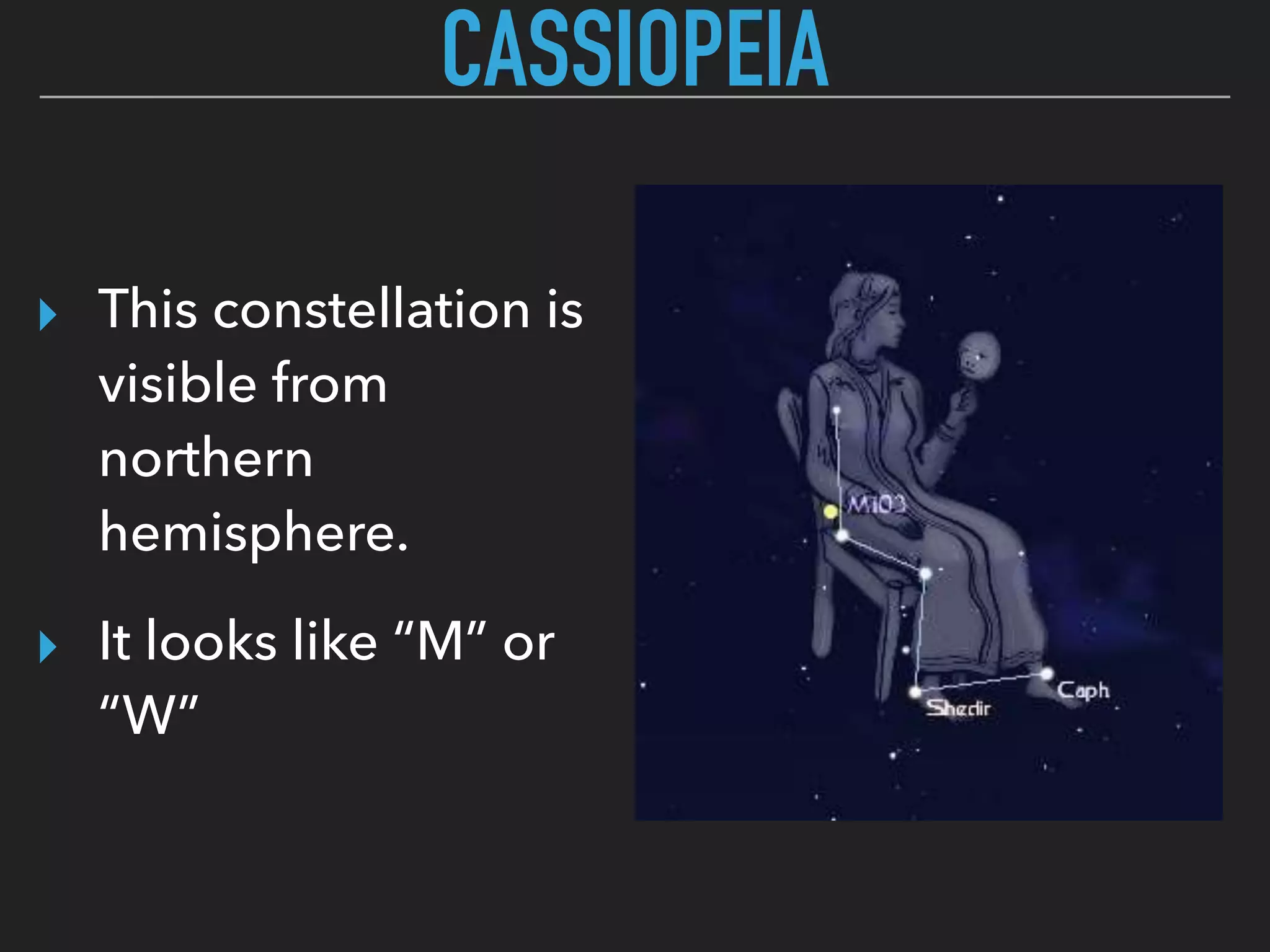
▸ It looks like “M” or
“W”
CASSIOPEIA
SOLAR SYSTEM
SUN
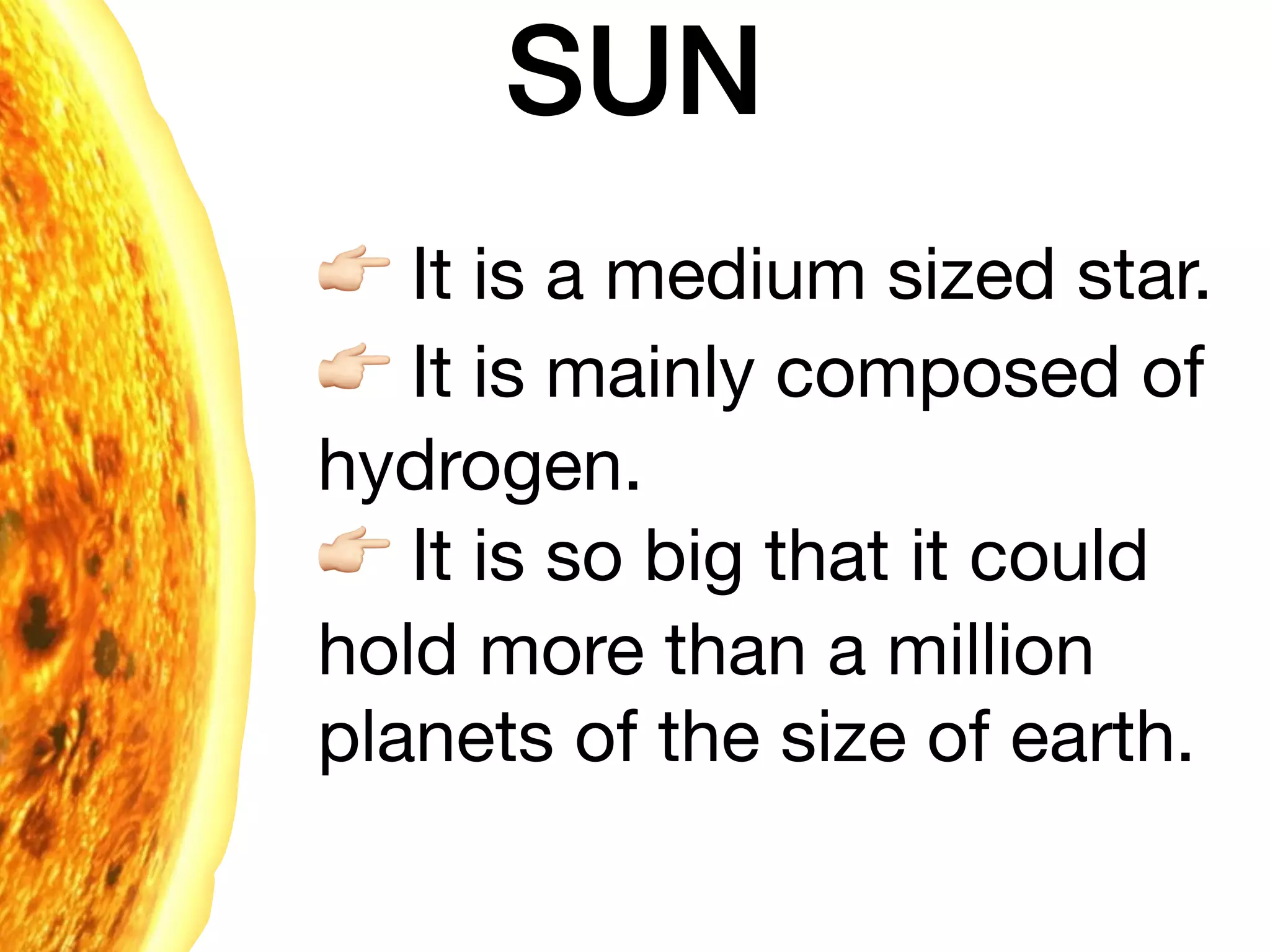
% It is a medium sized star.

% It is mainly composed of
hydrogen.

% It is so big that it could
hold more than a million
planets of the size of earth.
PLANETS
MERCURY
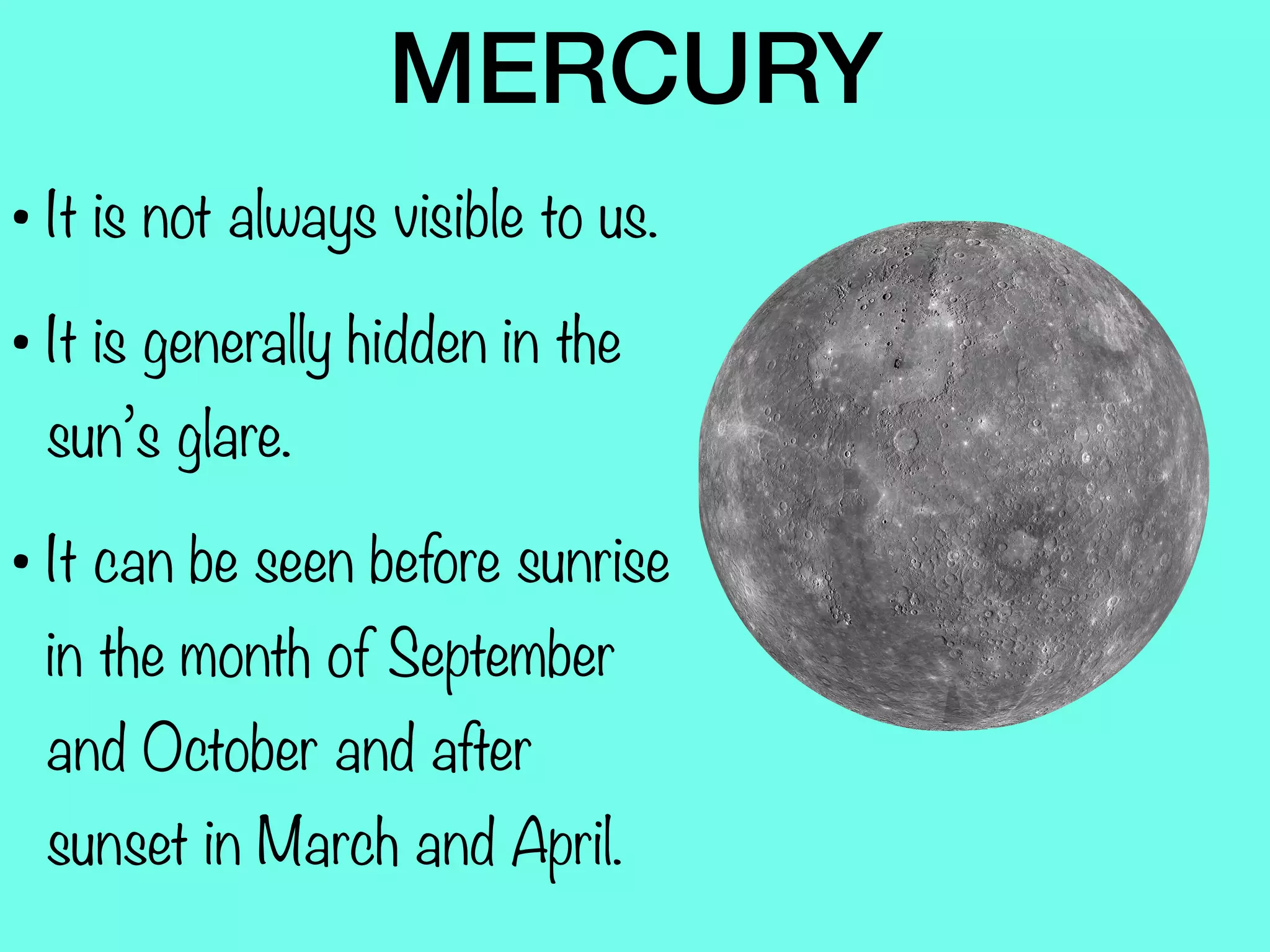
• It is not always visible to us.
• It is generally hidden in the
sun’s glare.
• It can be seen before sunrise
in the month of September
and October and after
sunset in March and April.
VENUS
• Brightest object in the
night sky after the
moon
•It rotates from east to
west.
•Venus has no satellites.
EARTH
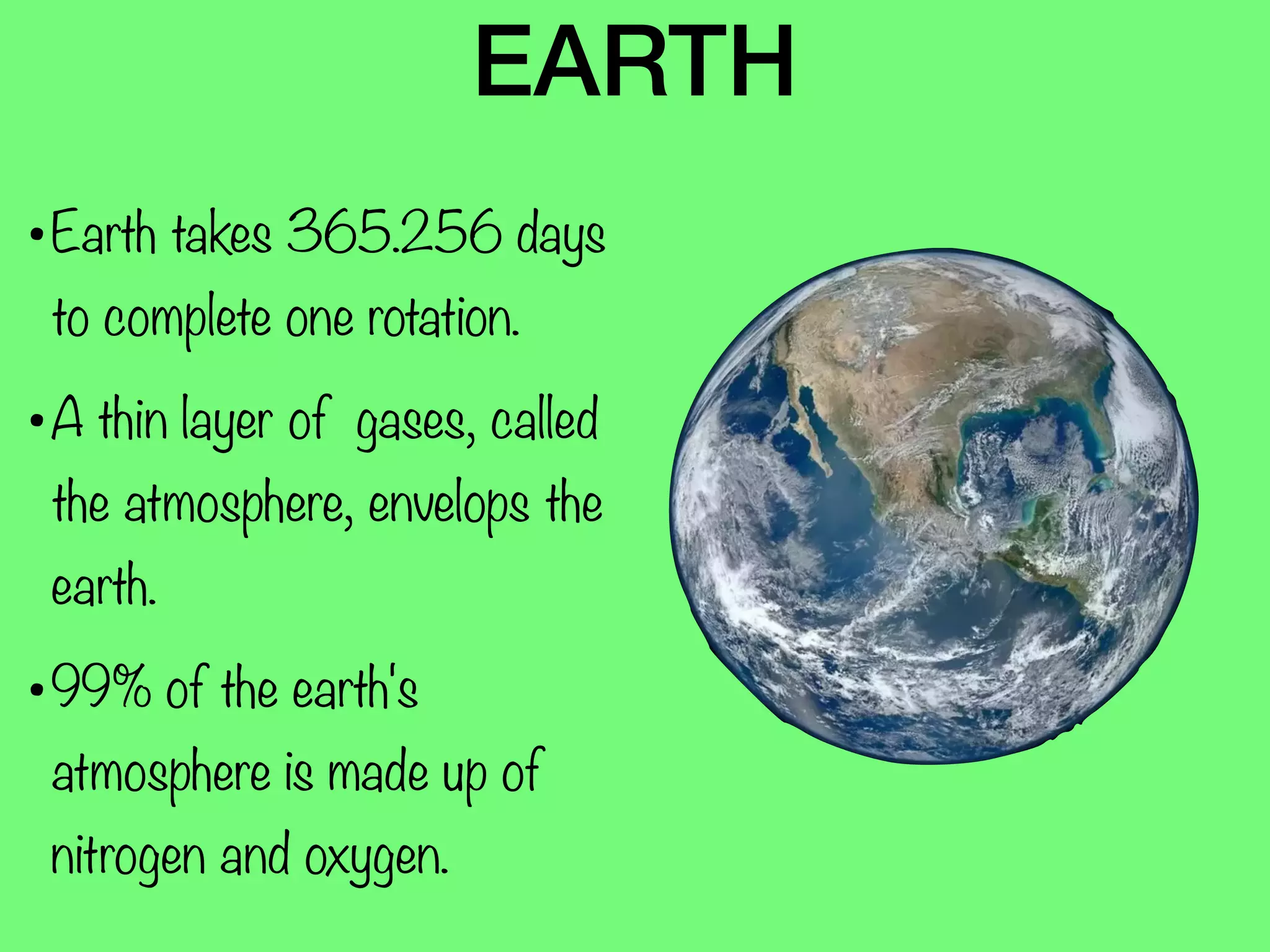
•Earth takes 365.256 days
to complete one rotation.
•A thin layer of gases, called
the atmosphere, envelops the
earth.
•99% of the earth's
atmosphere is made up of
nitrogen and oxygen.
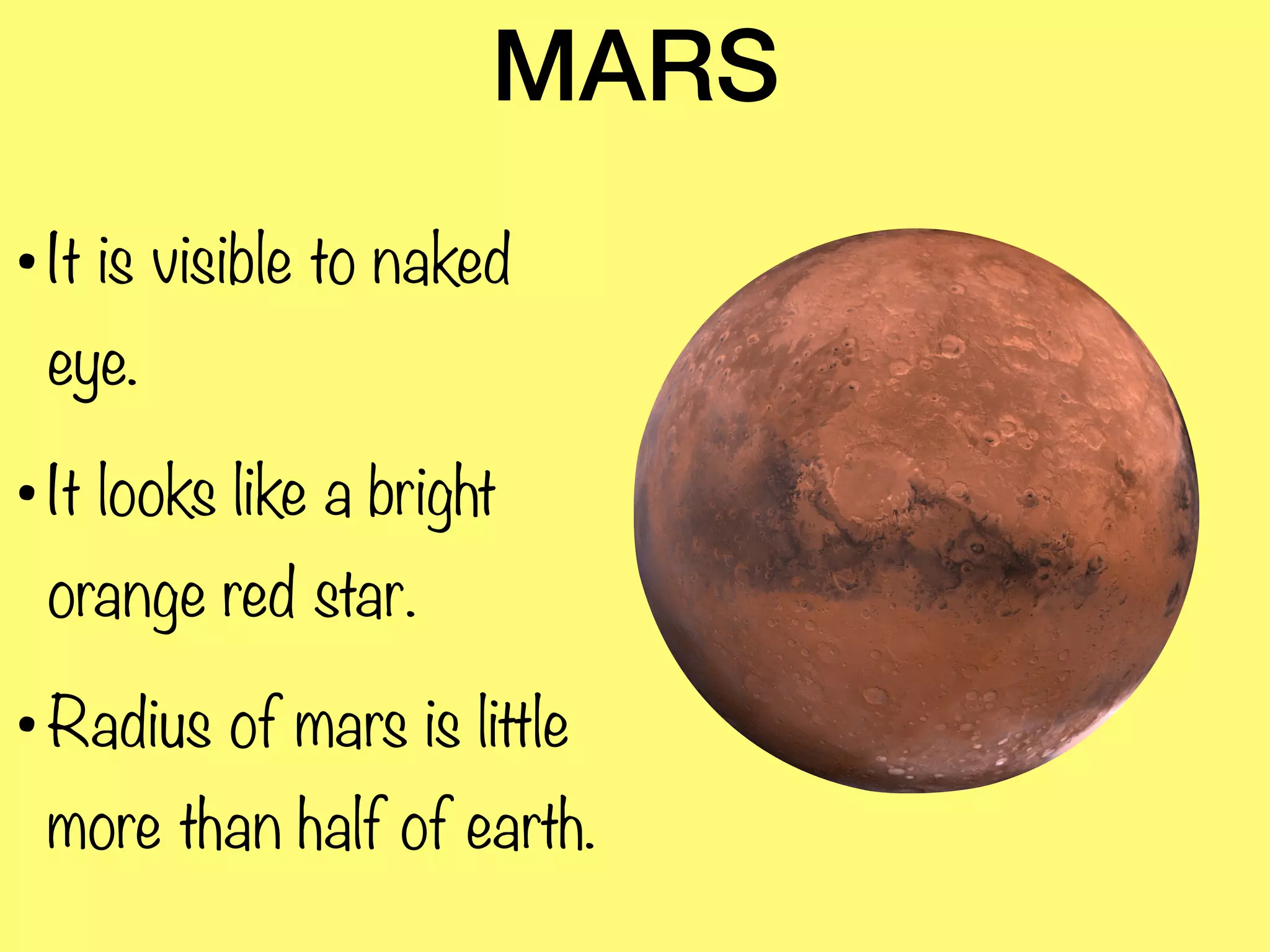
MARS
•It is visible to naked
eye.
•It looks like a bright
orange red star.
•Radius of mars is little
more than half of earth.
JUPITER
•Largest planet in the
solar system.
•Jupiter can be easily
seen with the naked eye.
•Jupiter has many
moons.
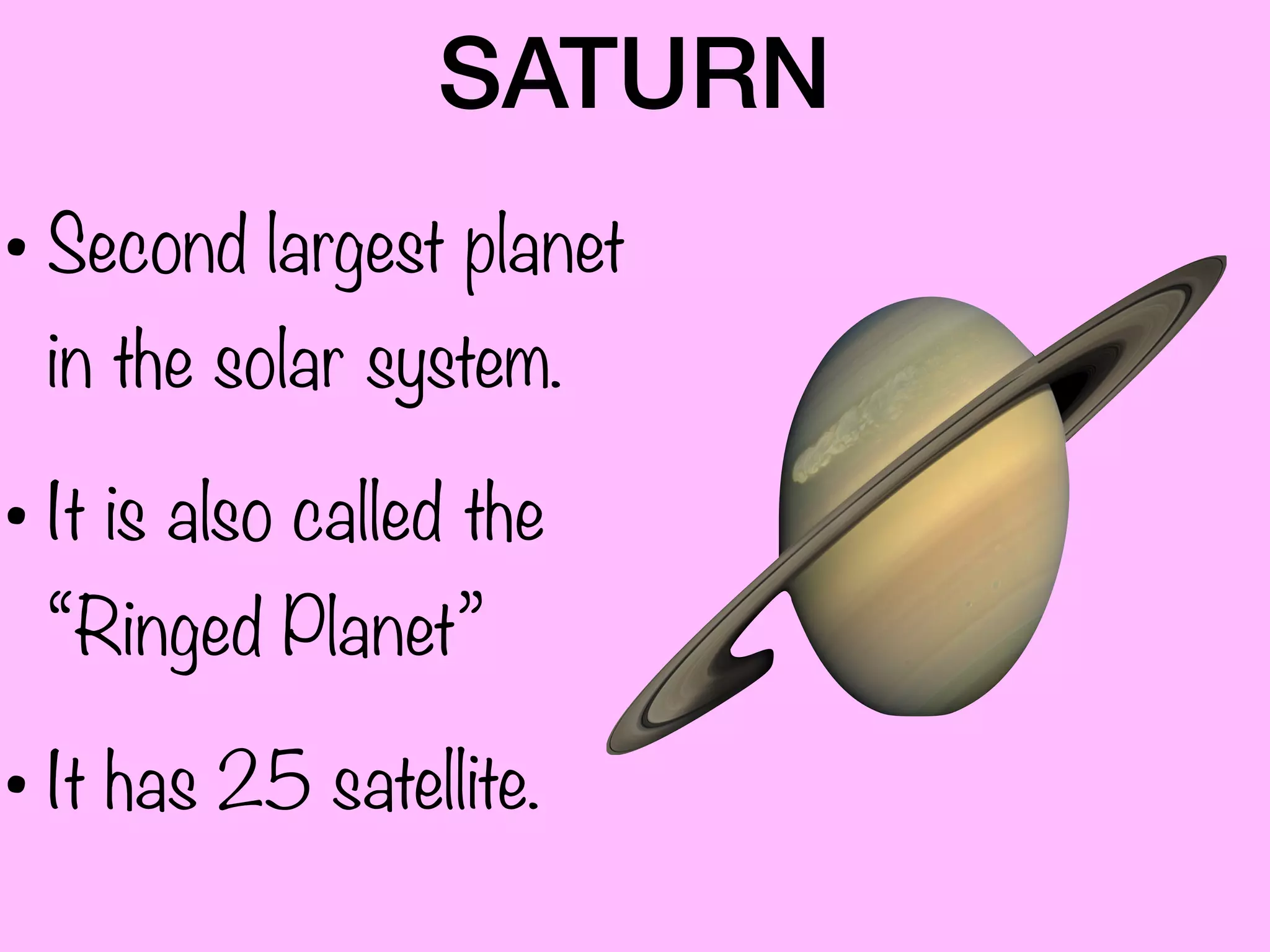
SATURN
• Second largest planet
in the solar system.
• It is also called the
“Ringed Planet”
• It has 25 satellite.
URANUS
•Identified by the British
astronomer William
Hershel.
•Uranus too has rings.
•Uranus spins on its side.
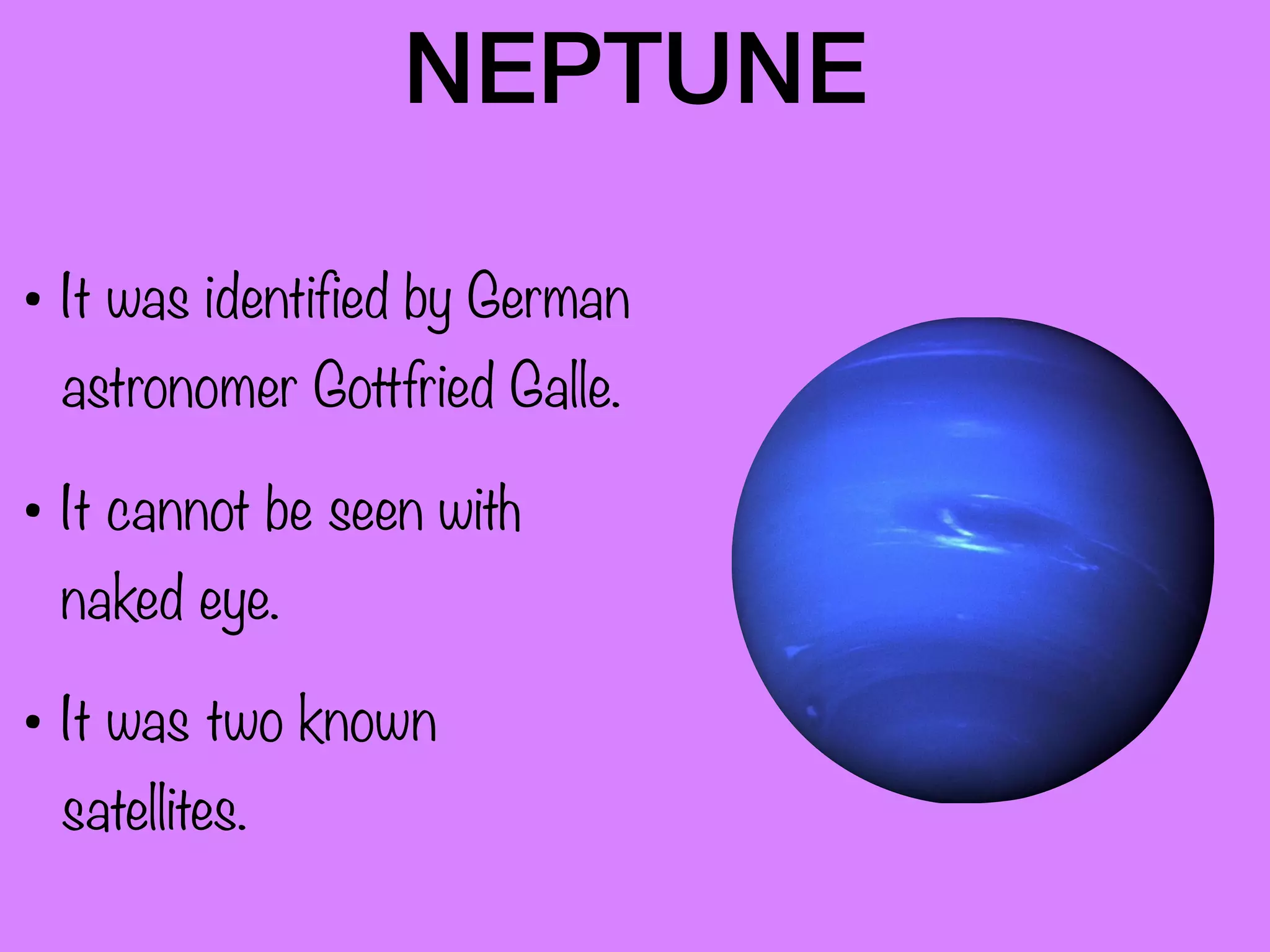
NEPTUNE
• It was identified by German
astronomer Gottfried Galle.
• It cannot be seen with
naked eye.
• It was two known
satellites.
PLUTO
• It is difficult to see Pluto
from earth.
• It was discovered by
American Clyde
Tombaugh.
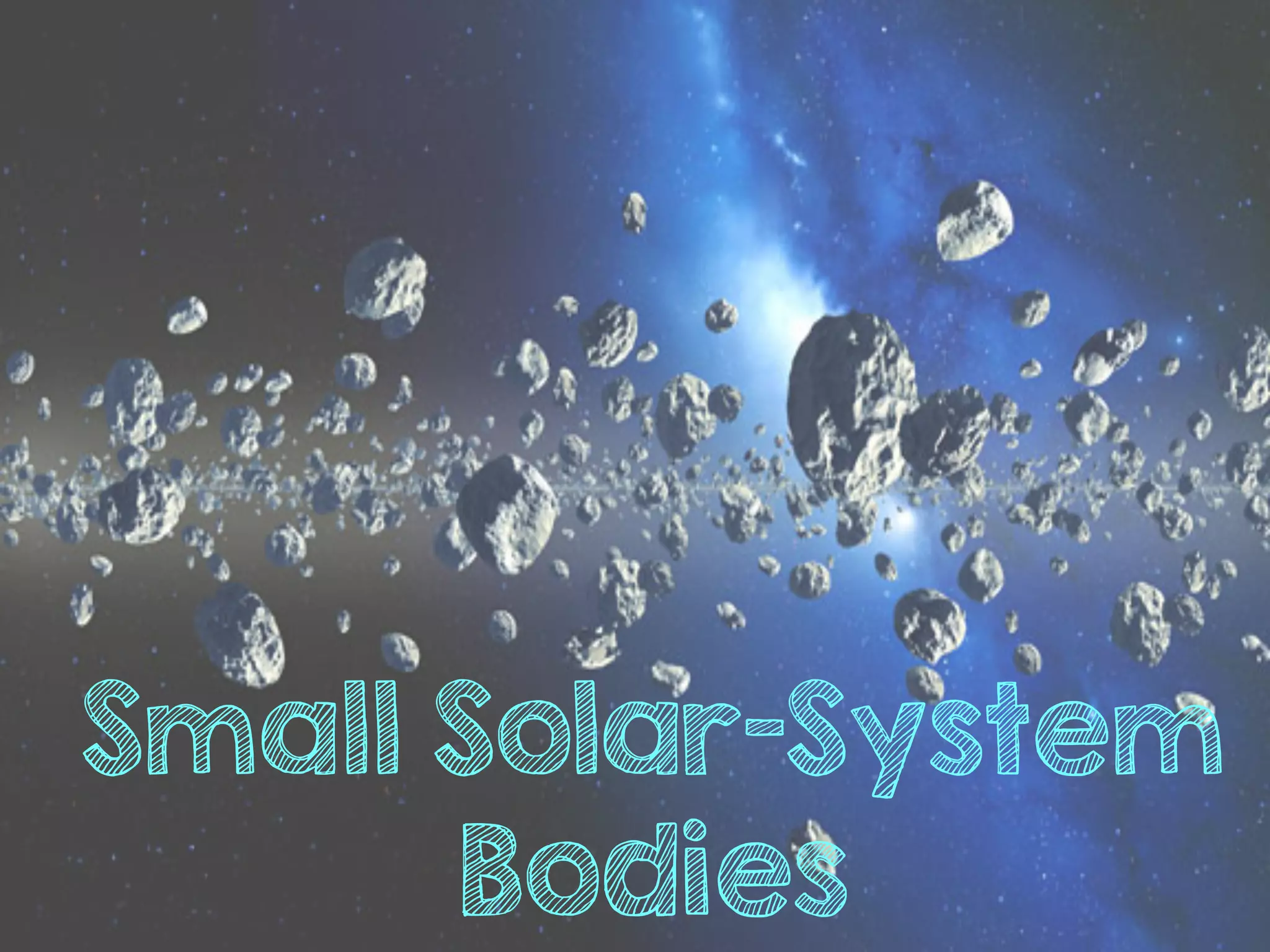
Small Solar-System
Bodies
ASTEROIDS
•These are large pieces
of rocks or metals.
•Most Asteroids are
found orbiting the sun
between Mars and
Jupiter.
COMETS
•These are small
chunks of ice and dust
that revolve around
the sun.
•One of the best comet
is Halley's Comet.
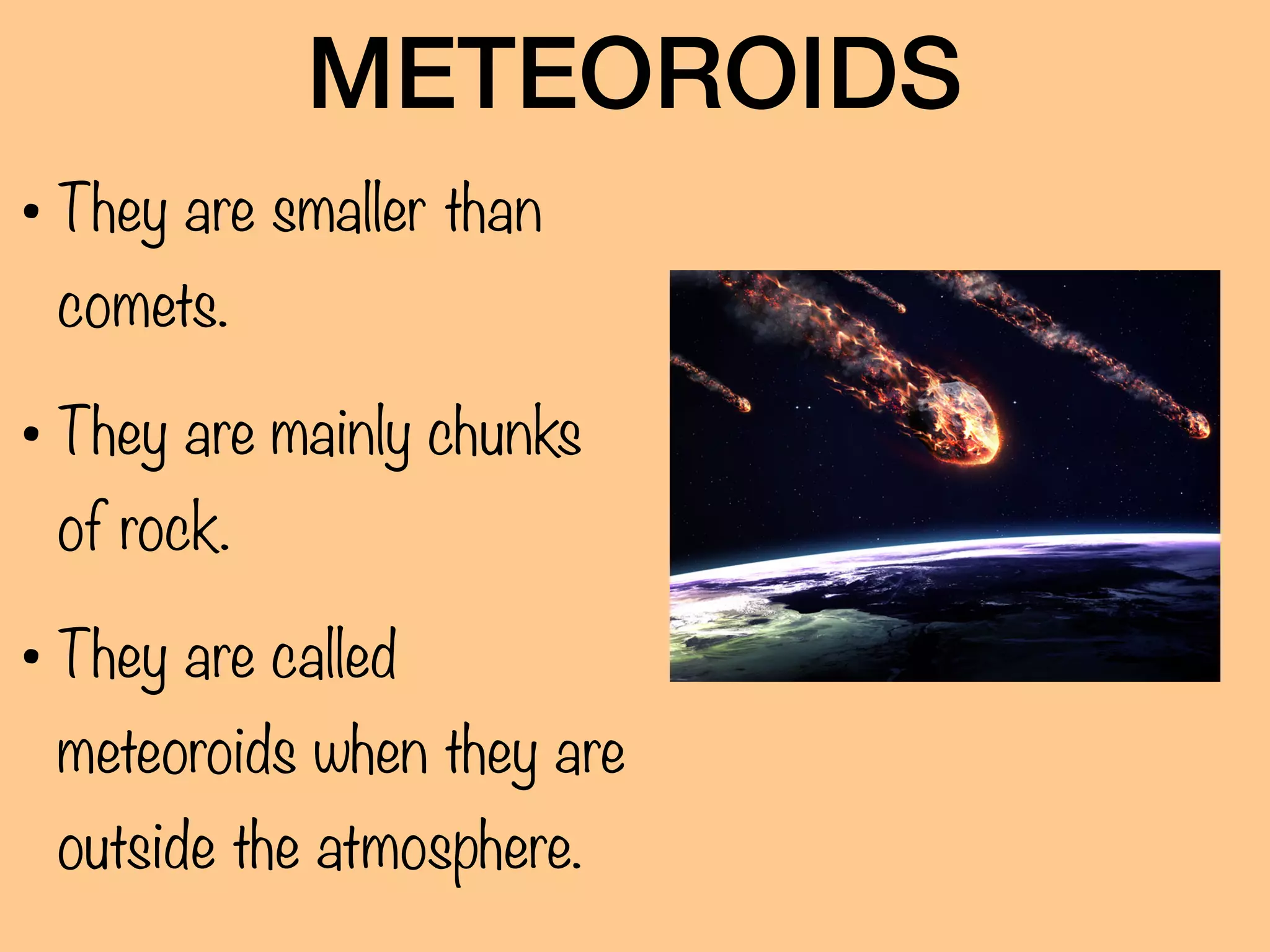
METEOROIDS
• They are smaller than
comets.
• They are mainly chunks
of rock.
• They are called
meteoroids when they are
outside the atmosphere.
SATELLITES
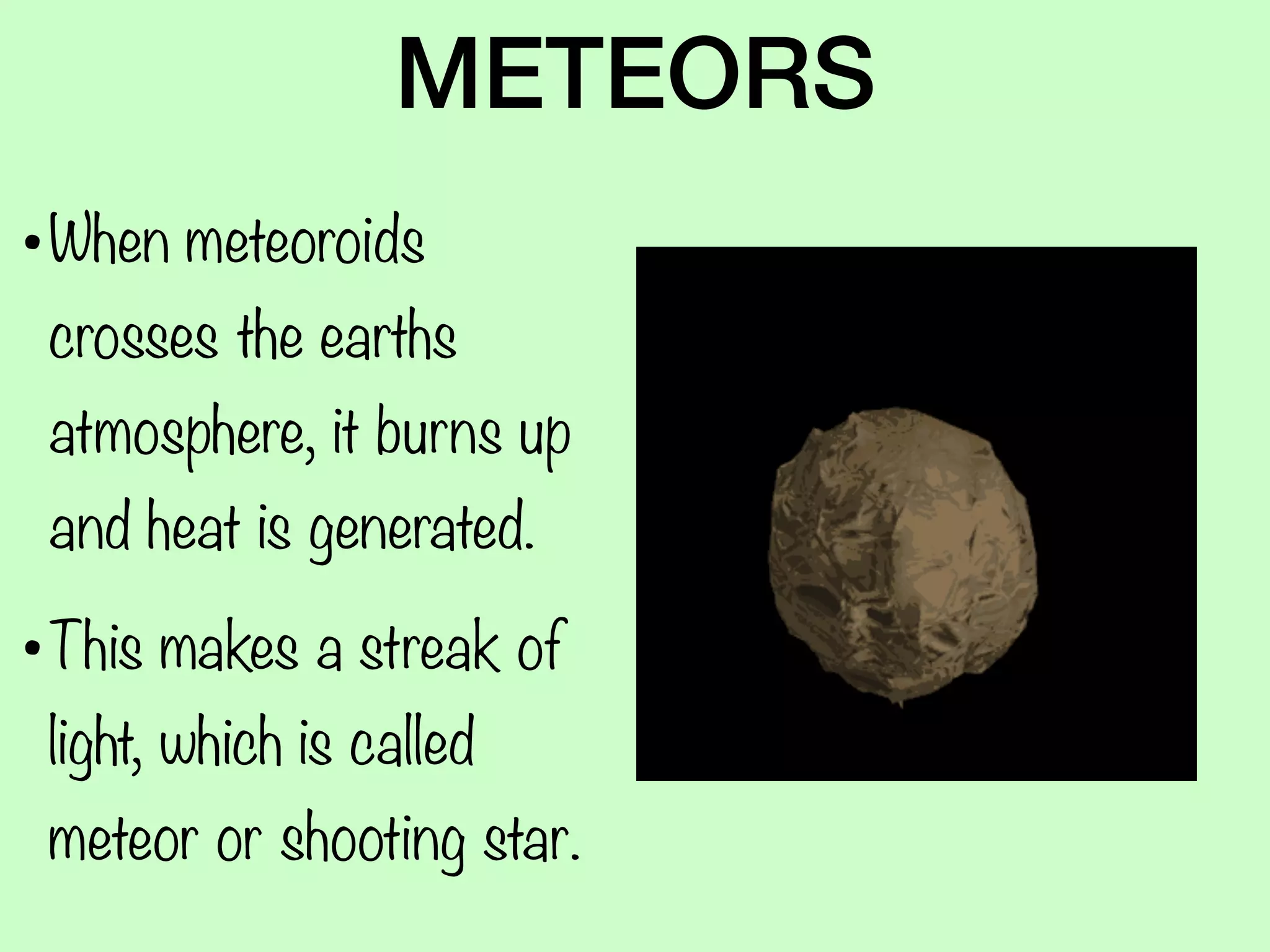
METEORS
•When meteoroids
crosses the earths
atmosphere, it burns up
and heat is generated.

•This makes a streak of
light, which is called
meteor or shooting star.
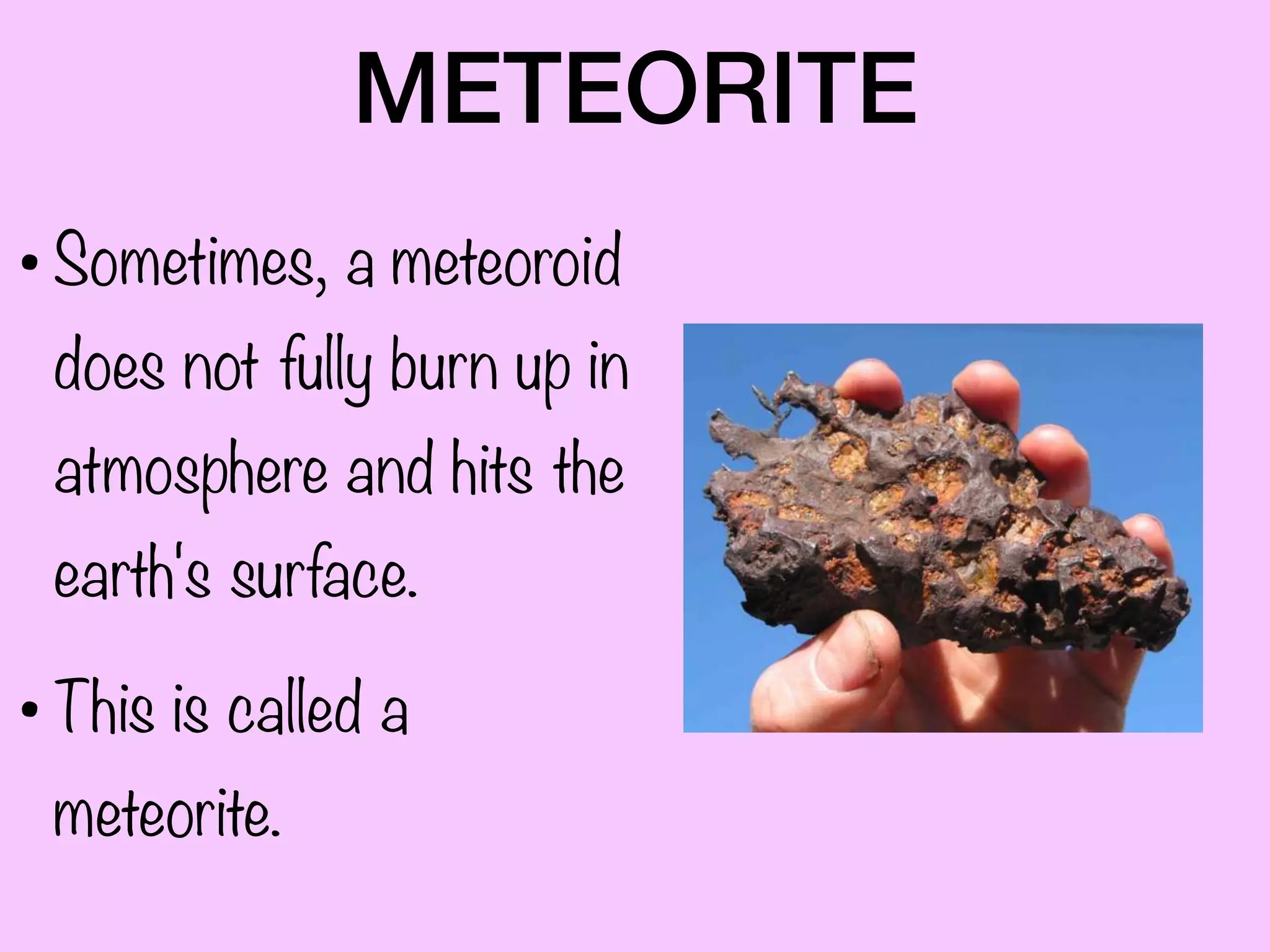
METEORITE
•Sometimes, a meteoroid
does not fully burn up in
atmosphere and hits the
earth's surface.
•This is called a
meteorite.
MOON
•Moon is about one-
fourth the size of
the Earth.
•Different shapes of
moon are called
phases of the moon.
Phases Of The Moon
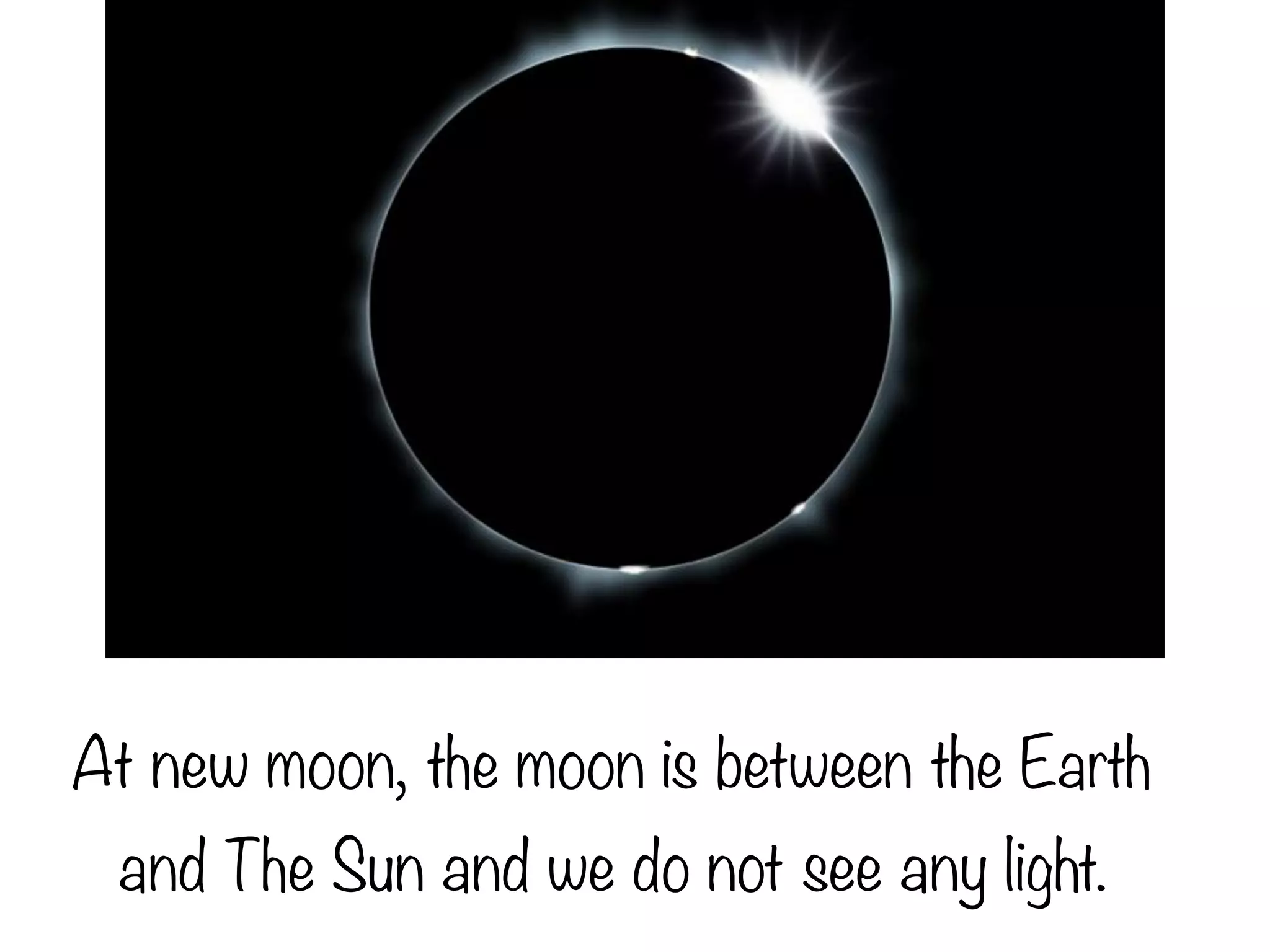
At new moon, the moon is between the Earth
and The Sun and we do not see any light.
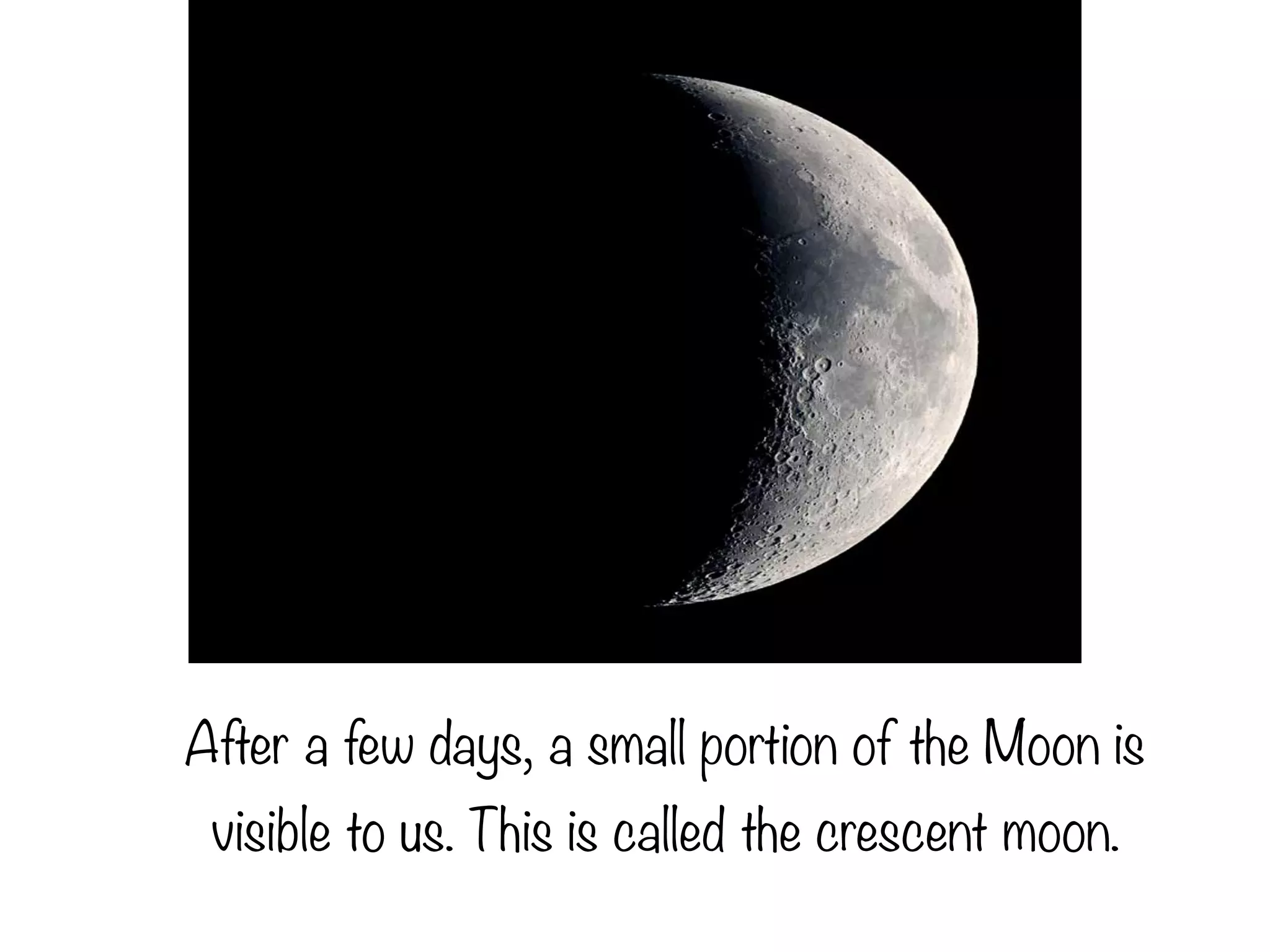
After a few days, a small portion of the Moon is
visible to us. This is called the crescent moon.
Then, the lit side of the moon becomes bigger every night and
when half the moon can be seen, it is called first quarter.
The lit portion of the moon keeps increasing
even further till it becomes a full moon.
Artificial Satellites
SATELLITES
• Man has sent many
satellites into space.
• The first artificial
satellite was Sputnik -1
Stars and the solar system

Stars and the solar system

  • 1.
    A PRESENTATION ON STARSAND THE SOLAR SYSTEM
  • 2.
    TOPICS TO BECOVERED ▸ Stars ▸ Constellations ▸ Solar system ▸ Satellites ⭐ 🦀 🌎 🛰
  • 3.
  • 4.
    STARS ▸ Stars areluminous bodies that are regularly seen as points of light in night sky ▸ Our sun is also a star ▸ The stars which we see are thousand of light years away from us ▸ A light year is distance travelled by light in one year
  • 5.
  • 6.
    URSA MAJOR ▸ Itis also called as great bear . ▸ The group of stars in Ursa Major is called BIG DIPPER or VRIHAT SAPTARSHI .
  • 7.
    URSA MINOR ▸ Itis also called lesser bear . ▸ The group of stars in Ursa Minor is called LITTLE DIPPER or LAGHU SAPTRISHI .
  • 8.
    ORION ▸ It ismost prominent and is easily identifiable. ▸ It looks like a hunter with bow .
  • 9.
    ▸ This constellationis visible from northern hemisphere. ▸ It looks like “M” or “W” CASSIOPEIA
  • 10.
  • 11.
    SUN % It isa medium sized star. % It is mainly composed of hydrogen. % It is so big that it could hold more than a million planets of the size of earth.
  • 12.
  • 13.
    MERCURY • It isnot always visible to us. • It is generally hidden in the sun’s glare. • It can be seen before sunrise in the month of September and October and after sunset in March and April.
  • 14.
    VENUS • Brightest objectin the night sky after the moon •It rotates from east to west. •Venus has no satellites.
  • 15.
    EARTH •Earth takes 365.256days to complete one rotation. •A thin layer of gases, called the atmosphere, envelops the earth. •99% of the earth's atmosphere is made up of nitrogen and oxygen.
  • 16.
    MARS •It is visibleto naked eye. •It looks like a bright orange red star. •Radius of mars is little more than half of earth.
  • 17.
    JUPITER •Largest planet inthe solar system. •Jupiter can be easily seen with the naked eye. •Jupiter has many moons.
  • 18.
    SATURN • Second largestplanet in the solar system. • It is also called the “Ringed Planet” • It has 25 satellite.
  • 19.
    URANUS •Identified by theBritish astronomer William Hershel. •Uranus too has rings. •Uranus spins on its side.
  • 20.
    NEPTUNE • It wasidentified by German astronomer Gottfried Galle. • It cannot be seen with naked eye. • It was two known satellites.
  • 21.
    PLUTO • It isdifficult to see Pluto from earth. • It was discovered by American Clyde Tombaugh.
  • 22.
  • 23.
    ASTEROIDS •These are largepieces of rocks or metals. •Most Asteroids are found orbiting the sun between Mars and Jupiter.
  • 24.
    COMETS •These are small chunksof ice and dust that revolve around the sun. •One of the best comet is Halley's Comet.
  • 25.
    METEOROIDS • They aresmaller than comets. • They are mainly chunks of rock. • They are called meteoroids when they are outside the atmosphere.
  • 26.
  • 27.
    METEORS •When meteoroids crosses theearths atmosphere, it burns up and heat is generated. •This makes a streak of light, which is called meteor or shooting star.
  • 28.
    METEORITE •Sometimes, a meteoroid doesnot fully burn up in atmosphere and hits the earth's surface. •This is called a meteorite.
  • 29.
    MOON •Moon is aboutone- fourth the size of the Earth. •Different shapes of moon are called phases of the moon.
  • 30.
  • 31.
    At new moon,the moon is between the Earth and The Sun and we do not see any light.
  • 32.
    After a fewdays, a small portion of the Moon is visible to us. This is called the crescent moon.
  • 33.
    Then, the litside of the moon becomes bigger every night and when half the moon can be seen, it is called first quarter.
  • 34.
    The lit portionof the moon keeps increasing even further till it becomes a full moon.
  • 35.
  • 36.
    SATELLITES • Man hassent many satellites into space. • The first artificial satellite was Sputnik -1