The CARE CERTIFICATE
1
Privacy and
Dignity
Standard
2
Learning outcomes
7.1 Understand the principles that underpin privacy and
dignity in care
7.2 Maintain the privacy and dignity of the individual(s) in
their care
7.3 Support an individual’s right to make choices
7.4 Support individuals in making choices
about their care
7.5 Understand how to support active
participation
7.6 Support the individual in active
participation in their own care
Standard
3
Privacy and dignity
Two important values when providing care and support are:
Privacy
▪ Giving someone space where and when they
need it
▪ Treating personal information confidentially
Dignity
▪ Focusing on the value of every individual
▪ Respecting an individuals views, choices
and decisions
▪ Not making assumptions
▪ Working with care and compassion
▪ Communicating directly with the individual
whenever possible.
4
Privacy and dignity in care and support
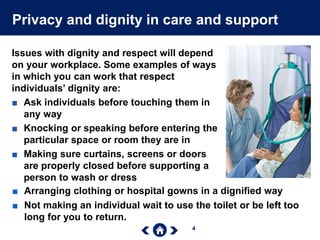
Issues with dignity and respect will depend
on your workplace. Some examples of ways
in which you can work that respect
individuals’ dignity are:
■ Ask individuals before touching them in
any way
■ Knocking or speaking before entering the
particular space or room they are in
■ Making sure curtains, screens or doors
are properly closed before supporting a
person to wash or dress
■ Arranging clothing or hospital gowns in a dignified way
■ Not making an individual wait to use the toilet or be left too
long for you to return.
5
Making choices
Choice and control are key defining aspects of dignity.
Involving individuals in decisions that affect them helps to
promote dignity.
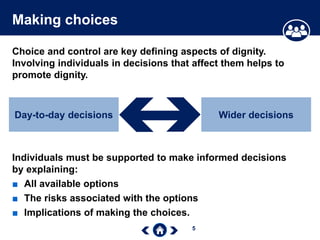
Day-to-day decisions Wider decisions
Individuals must be supported to make informed decisions
by explaining:
■ All available options
■ The risks associated with the options
■ Implications of making the choices.
6
Mental Capacity Act 2005
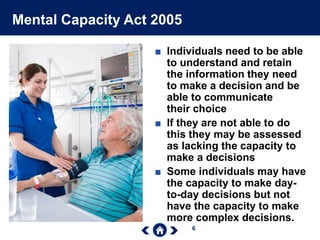
■ Individuals need to be able
to understand and retain
the information they need
to make a decision and be
able to communicate
their choice
■ If they are not able to do
this they may be assessed
as lacking the capacity to
make a decisions
■ Some individuals may have
the capacity to make day-
to-day decisions but not
have the capacity to make
more complex decisions.
7
Risk assessment
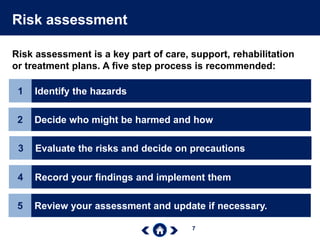
Risk assessment is a key part of care, support, rehabilitation
or treatment plans. A five step process is recommended:
1 Identify the hazards
2 Decide who might be harmed and how
3 Evaluate the risks and decide on precautions
4 Record your findings and implement them
5 Review your assessment and update if necessary.
8
Risk enablement
■ It is the individual’s right to make choices and take risks
once they understand the information available and are
aware of the risks
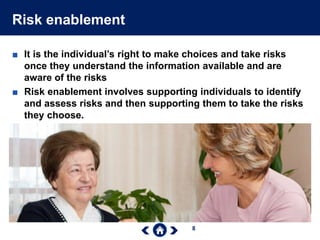
■ Risk enablement involves supporting individuals to identify
and assess risks and then supporting them to take the risks
they choose.
9
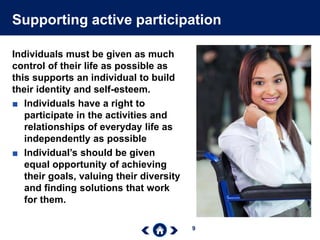
Supporting active participation
Individuals must be given as much
control of their life as possible as
this supports an individual to build
their identity and self-esteem.
■ Individuals have a right to
participate in the activities and
relationships of everyday life as
independently as possible
■ Individual’s should be given
equal opportunity of achieving
their goals, valuing their diversity
and finding solutions that work
for them.
10
Self-care
The ability to control and care for oneself contributes to
privacy and dignity. Individuals should be supported to develop
self-care skills to enable them to live more independently.
Self care skills include:
■ Finding information
■ Accessing appropriate training
■ Participating in support
groups and networks.

Standard 7

  • 1.
    The CARE CERTIFICATE 1 Privacyand Dignity Standard
  • 2.
    2 Learning outcomes 7.1 Understandthe principles that underpin privacy and dignity in care 7.2 Maintain the privacy and dignity of the individual(s) in their care 7.3 Support an individual’s right to make choices 7.4 Support individuals in making choices about their care 7.5 Understand how to support active participation 7.6 Support the individual in active participation in their own care Standard
  • 3.
    3 Privacy and dignity Twoimportant values when providing care and support are: Privacy ▪ Giving someone space where and when they need it ▪ Treating personal information confidentially Dignity ▪ Focusing on the value of every individual ▪ Respecting an individuals views, choices and decisions ▪ Not making assumptions ▪ Working with care and compassion ▪ Communicating directly with the individual whenever possible.
  • 4.
    4 Privacy and dignityin care and support Issues with dignity and respect will depend on your workplace. Some examples of ways in which you can work that respect individuals’ dignity are: ■ Ask individuals before touching them in any way ■ Knocking or speaking before entering the particular space or room they are in ■ Making sure curtains, screens or doors are properly closed before supporting a person to wash or dress ■ Arranging clothing or hospital gowns in a dignified way ■ Not making an individual wait to use the toilet or be left too long for you to return.
  • 5.
    5 Making choices Choice andcontrol are key defining aspects of dignity. Involving individuals in decisions that affect them helps to promote dignity. Day-to-day decisions Wider decisions Individuals must be supported to make informed decisions by explaining: ■ All available options ■ The risks associated with the options ■ Implications of making the choices.
  • 6.
    6 Mental Capacity Act2005 ■ Individuals need to be able to understand and retain the information they need to make a decision and be able to communicate their choice ■ If they are not able to do this they may be assessed as lacking the capacity to make a decisions ■ Some individuals may have the capacity to make day- to-day decisions but not have the capacity to make more complex decisions.
  • 7.
    7 Risk assessment Risk assessmentis a key part of care, support, rehabilitation or treatment plans. A five step process is recommended: 1 Identify the hazards 2 Decide who might be harmed and how 3 Evaluate the risks and decide on precautions 4 Record your findings and implement them 5 Review your assessment and update if necessary.
  • 8.
    8 Risk enablement ■ Itis the individual’s right to make choices and take risks once they understand the information available and are aware of the risks ■ Risk enablement involves supporting individuals to identify and assess risks and then supporting them to take the risks they choose.
  • 9.
    9 Supporting active participation Individualsmust be given as much control of their life as possible as this supports an individual to build their identity and self-esteem. ■ Individuals have a right to participate in the activities and relationships of everyday life as independently as possible ■ Individual’s should be given equal opportunity of achieving their goals, valuing their diversity and finding solutions that work for them.
  • 10.
    10 Self-care The ability tocontrol and care for oneself contributes to privacy and dignity. Individuals should be supported to develop self-care skills to enable them to live more independently. Self care skills include: ■ Finding information ■ Accessing appropriate training ■ Participating in support groups and networks.

Editor's Notes

  • #4 Activity Ask health and social care worker/s what is involved in providing care and support that promote privacy and dignity. Possible answers Privacy: Giving someone space where and when they need it Treating personal information confidentially Dignity: Focusing on the value of every individual Respecting their views, choices and decisions Not making assumptions about how they want to be treated Working with care and compassion Communicating directly with the individual whenever possible.
  • #6 Activity Ask health and social care worker/s to think of some examples of day to day choices and decisions that the individual could be involved in. Possible answers include: When they want to get up What they want to wear What they want to eat The activities they want to be involved in Activity Ask health and social care worker/s to think of some examples of wider decisions that the individual could be involved in. Possible answers include: Financial planning
  • #7 Additional information Every effort should be made to support an individual to understand information and to communicate their choices. Individuals can be supported to make decisions by involving other people they trust like friends or relatives. An advocate might be an additional option to help them to make a decision. Health and social care worker’s who are not entirely sure that an individual has the capacity to make decision should seek advice and support from their manager or supervisor. If individuals are assessed as lacking the capacity to make a decision, all decisions made on their behalf must be in their best interests.
  • #8 Additional information The 5 step risk assessment model is taken from The Health and Safety Executive (HSE): www.hse.gov.uk/risk/controlling-risks.htm If a new activity is going to be introduced, the five steps of risk assessment must be followed first.
  • #9 Additional information There might be times when someone is unhappy with decisions that have been made on their behalf or with the choices they are offered. If this is not within your power to change you should tell them about their right to complain and support them to follow the complaints procedure.