Title text here


                  Rodney Harrell, PhD
                  Senior Strategic Policy Advisor
                  AARP Public Policy Institute
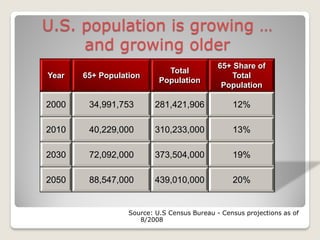
U.S. population is growing …
     and growing older
                                             65+ Share of
                             Total
Year   65+ Population                           Total
                           Population
                                              Population

2000    34,991,753        281,421,906            12%

2010    40,229,000        310,233,000            13%

2030    72,092,000        373,504,000            19%

2050    88,547,000        439,010,000            20%


                  Source: U.S Census Bureau - Census projections as of
                     8/2008
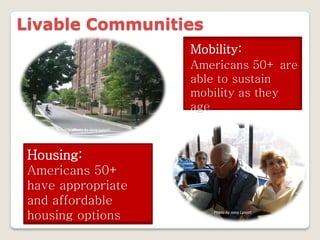
Livable Communities
                               Mobility:
                               Americans 50+ are
                               able to sustain
                               mobility as they
                               age
        Photo by Jana Lynott


 Housing:
 Americans 50+
 have appropriate
 and affordable
 housing options                   Photo by Jana Lynott
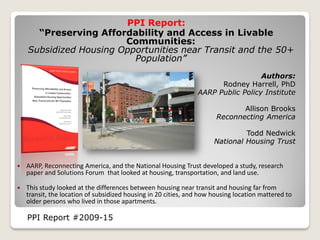
PPI Report:
      “Preserving Affordability and Access in Livable
                        Communities:
    Subsidized Housing Opportunities near Transit and the 50+
                          Population”
                                                                                  Authors:
                                                                      Rodney Harrell, PhD
                                                                AARP Public Policy Institute

                                                                              Allison Brooks
                                                                       Reconnecting America

                                                                               Todd Nedwick
                                                                      National Housing Trust


   AARP, Reconnecting America, and the National Housing Trust developed a study, research
    paper and Solutions Forum that looked at housing, transportation, and land use.

   This study looked at the differences between housing near transit and housing far from
    transit, the location of subsidized housing in 20 cities, and how housing location mattered to
    older persons who lived in those apartments.

    PPI Report #2009-15
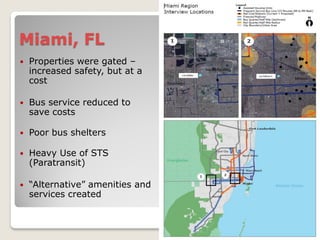
Miami, FL
   Properties were gated –
    increased safety, but at a
    cost

   Bus service reduced to
    save costs

   Poor bus shelters

   Heavy Use of STS
    (Paratransit)

   “Alternative” amenities and
    services created
© Google 2010


                © Google 2010


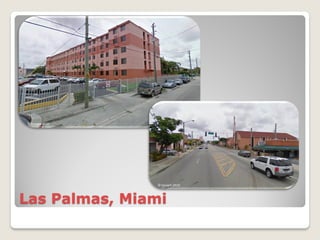
Las Palmas, Miami
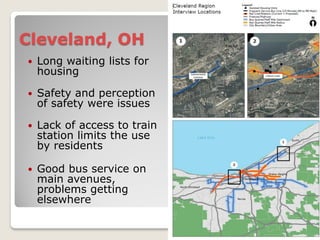
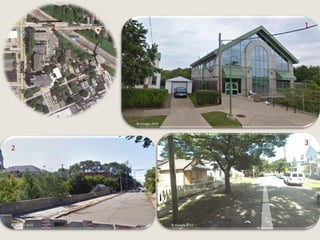
Cleveland, OH
   Long waiting lists for
    housing

   Safety and perception
    of safety were issues

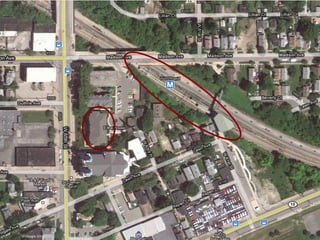
   Lack of access to train
    station limits the use
    by residents

   Good bus service on
    main avenues,
    problems getting
    elsewhere
© Google 2010
2                                                      1


                                    1
                                3


                © Google 2010

                                        © Google 2010


                                                                        3
2


© Google 2010                                           © Google 2010
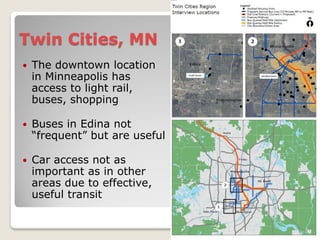
Twin Cities, MN
   The downtown location
    in Minneapolis has
    access to light rail,
    buses, shopping

   Buses in Edina not
    “frequent” but are useful

   Car access not as
    important as in other
    areas due to effective,
    useful transit
© Google 2010


© Google 2010                   © Google 2010


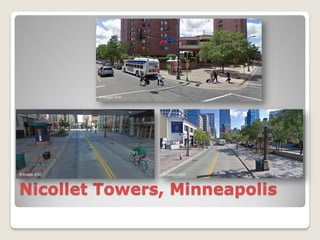
Nicollet Towers, Minneapolis
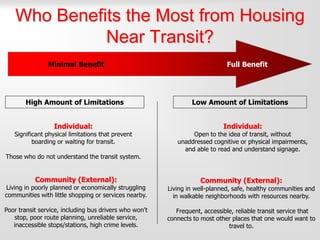
Who Benefits the Most from Housing
             Near Transit?
                Minimal Benefit                                              Full Benefit


       High Amount of Limitations                               Low Amount of Limitations


                  Individual:                                               Individual:
   Significant physical limitations that prevent                Open to the idea of transit, without
          boarding or waiting for transit.                 unaddressed cognitive or physical impairments,
                                                             and able to read and understand signage.
Those who do not understand the transit system.


           Community (External):                                    Community (External):
Living in poorly planned or economically struggling     Living in well-planned, safe, healthy communities and
communities with little shopping or services nearby.      in walkable neighborhoods with resources nearby.

Poor transit service, including bus drivers who won’t      Frequent, accessible, reliable transit service that
   stop, poor route planning, unreliable service,       connects to most other places that one would want to
   inaccessible stops/stations, high crime levels.                            travel to.
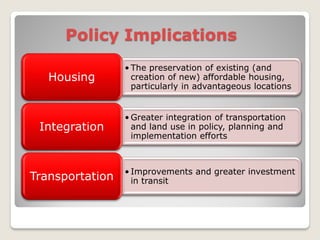
Policy Implications
                 • The preservation of existing (and
   Housing         creation of new) affordable housing,
                   particularly in advantageous locations


                 • Greater integration of transportation
 Integration       and land use in policy, planning and
                   implementation efforts


                 • Improvements and greater investment
Transportation     in transit
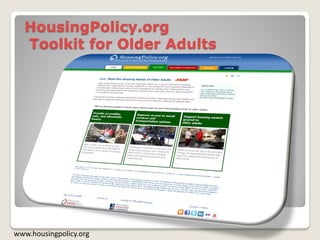
HousingPolicy.org
  Toolkit for Older Adults


www.housingpolicy.org
AARP Public Policy Institute


   Informs and stimulates public debate
    on the issues we face as we age.

   Provides objective research and
    analysis

   Promotes the development of sound,
    creative policies to address our            www.aarp.org/ppi/liv-com
    common need for economic security,
    health care, and quality of life.

                  For publications, send requests to: ppi@aarp.org

Denver 9/27 Rodney Harrell

  • 1.
    Title text here Rodney Harrell, PhD Senior Strategic Policy Advisor AARP Public Policy Institute
  • 2.
    U.S. population isgrowing … and growing older 65+ Share of Total Year 65+ Population Total Population Population 2000 34,991,753 281,421,906 12% 2010 40,229,000 310,233,000 13% 2030 72,092,000 373,504,000 19% 2050 88,547,000 439,010,000 20% Source: U.S Census Bureau - Census projections as of 8/2008
  • 3.
    Livable Communities Mobility: Americans 50+ are able to sustain mobility as they age Photo by Jana Lynott Housing: Americans 50+ have appropriate and affordable housing options Photo by Jana Lynott
  • 4.
    PPI Report: “Preserving Affordability and Access in Livable Communities: Subsidized Housing Opportunities near Transit and the 50+ Population” Authors: Rodney Harrell, PhD AARP Public Policy Institute Allison Brooks Reconnecting America Todd Nedwick National Housing Trust  AARP, Reconnecting America, and the National Housing Trust developed a study, research paper and Solutions Forum that looked at housing, transportation, and land use.  This study looked at the differences between housing near transit and housing far from transit, the location of subsidized housing in 20 cities, and how housing location mattered to older persons who lived in those apartments. PPI Report #2009-15
  • 5.
    Miami, FL  Properties were gated – increased safety, but at a cost  Bus service reduced to save costs  Poor bus shelters  Heavy Use of STS (Paratransit)  “Alternative” amenities and services created
  • 6.
    © Google 2010 © Google 2010 Las Palmas, Miami
  • 7.
    Cleveland, OH  Long waiting lists for housing  Safety and perception of safety were issues  Lack of access to train station limits the use by residents  Good bus service on main avenues, problems getting elsewhere
  • 8.
  • 9.
    2 1 1 3 © Google 2010 © Google 2010 3 2 © Google 2010 © Google 2010
  • 10.
    Twin Cities, MN  The downtown location in Minneapolis has access to light rail, buses, shopping  Buses in Edina not “frequent” but are useful  Car access not as important as in other areas due to effective, useful transit
  • 11.
    © Google 2010 ©Google 2010 © Google 2010 Nicollet Towers, Minneapolis
  • 12.
    Who Benefits theMost from Housing Near Transit? Minimal Benefit Full Benefit High Amount of Limitations Low Amount of Limitations Individual: Individual: Significant physical limitations that prevent Open to the idea of transit, without boarding or waiting for transit. unaddressed cognitive or physical impairments, and able to read and understand signage. Those who do not understand the transit system. Community (External): Community (External): Living in poorly planned or economically struggling Living in well-planned, safe, healthy communities and communities with little shopping or services nearby. in walkable neighborhoods with resources nearby. Poor transit service, including bus drivers who won’t Frequent, accessible, reliable transit service that stop, poor route planning, unreliable service, connects to most other places that one would want to inaccessible stops/stations, high crime levels. travel to.
  • 13.
    Policy Implications • The preservation of existing (and Housing creation of new) affordable housing, particularly in advantageous locations • Greater integration of transportation Integration and land use in policy, planning and implementation efforts • Improvements and greater investment Transportation in transit
  • 14.
    HousingPolicy.org Toolkitfor Older Adults www.housingpolicy.org
  • 15.
    AARP Public PolicyInstitute  Informs and stimulates public debate on the issues we face as we age.  Provides objective research and analysis  Promotes the development of sound, creative policies to address our www.aarp.org/ppi/liv-com common need for economic security, health care, and quality of life. For publications, send requests to: ppi@aarp.org