Summer Seminar 2014:
Best Practices
and the
Model Development Department
National Statistics, Survey Results and the API
Philanthropic Giving Model Presentation
National Statistics
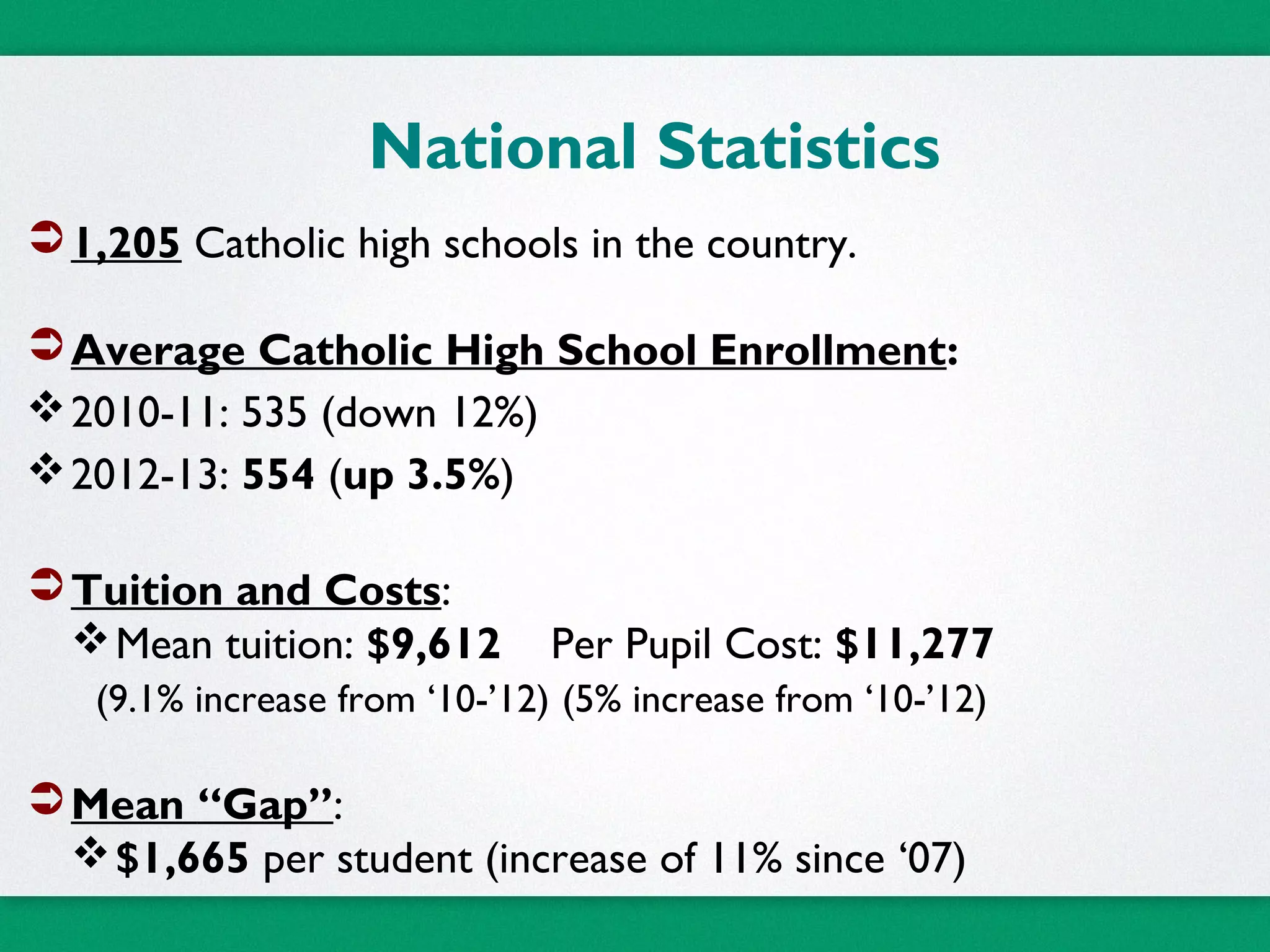
1,205 Catholic high schools in the country.
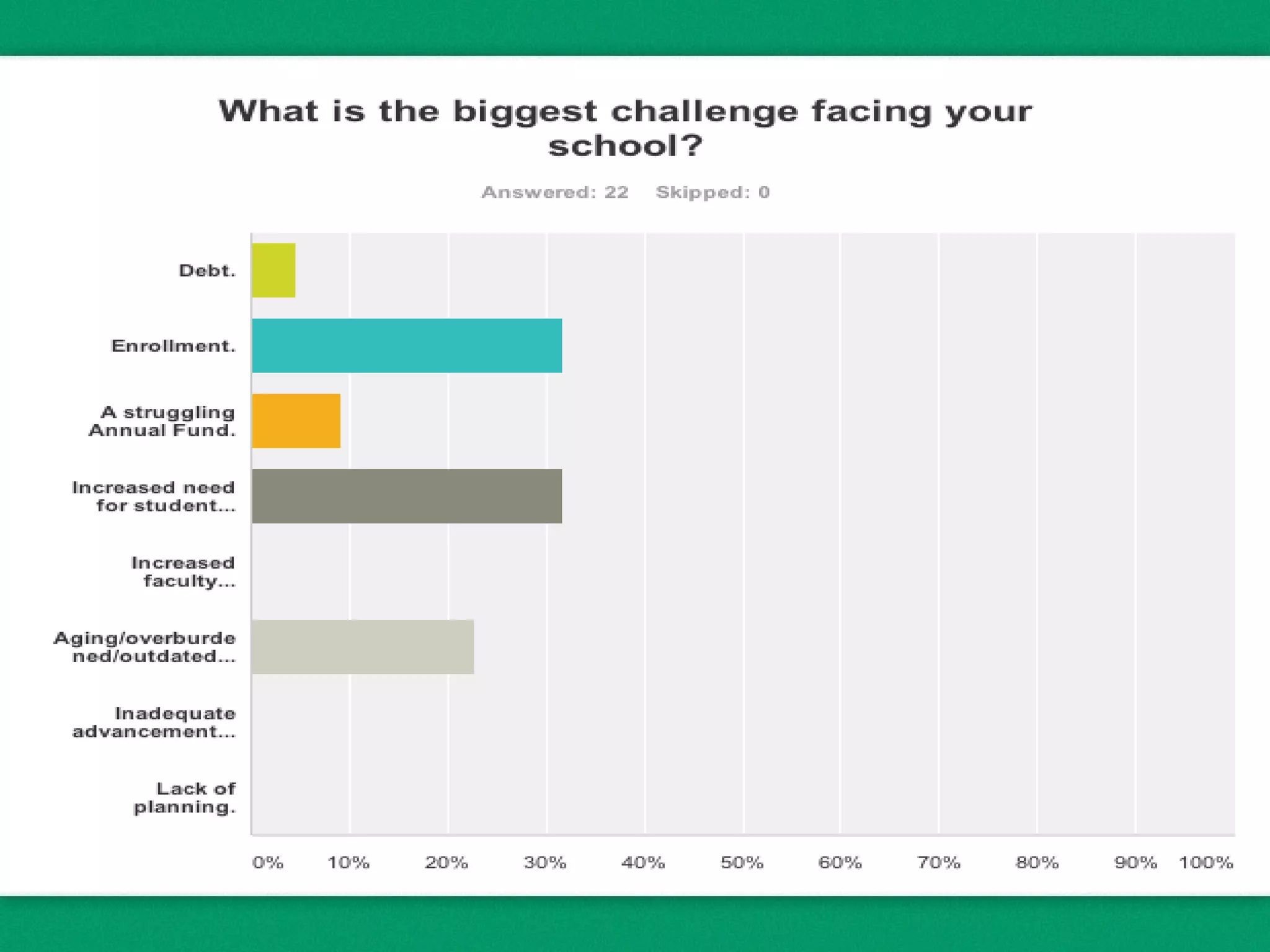
Average Catholic High School Enrollment:
2010-11: 535 (down 12%)
2012-13: 554 (up 3.5%)
Tuition and Costs:
Mean tuition: $9,612 Per Pupil Cost: $11,277
(9.1% increase from ‘10-’12) (5% increase from ‘10-’12)
Mean “Gap”:
$1,665 per student (increase of 11% since ‘07)
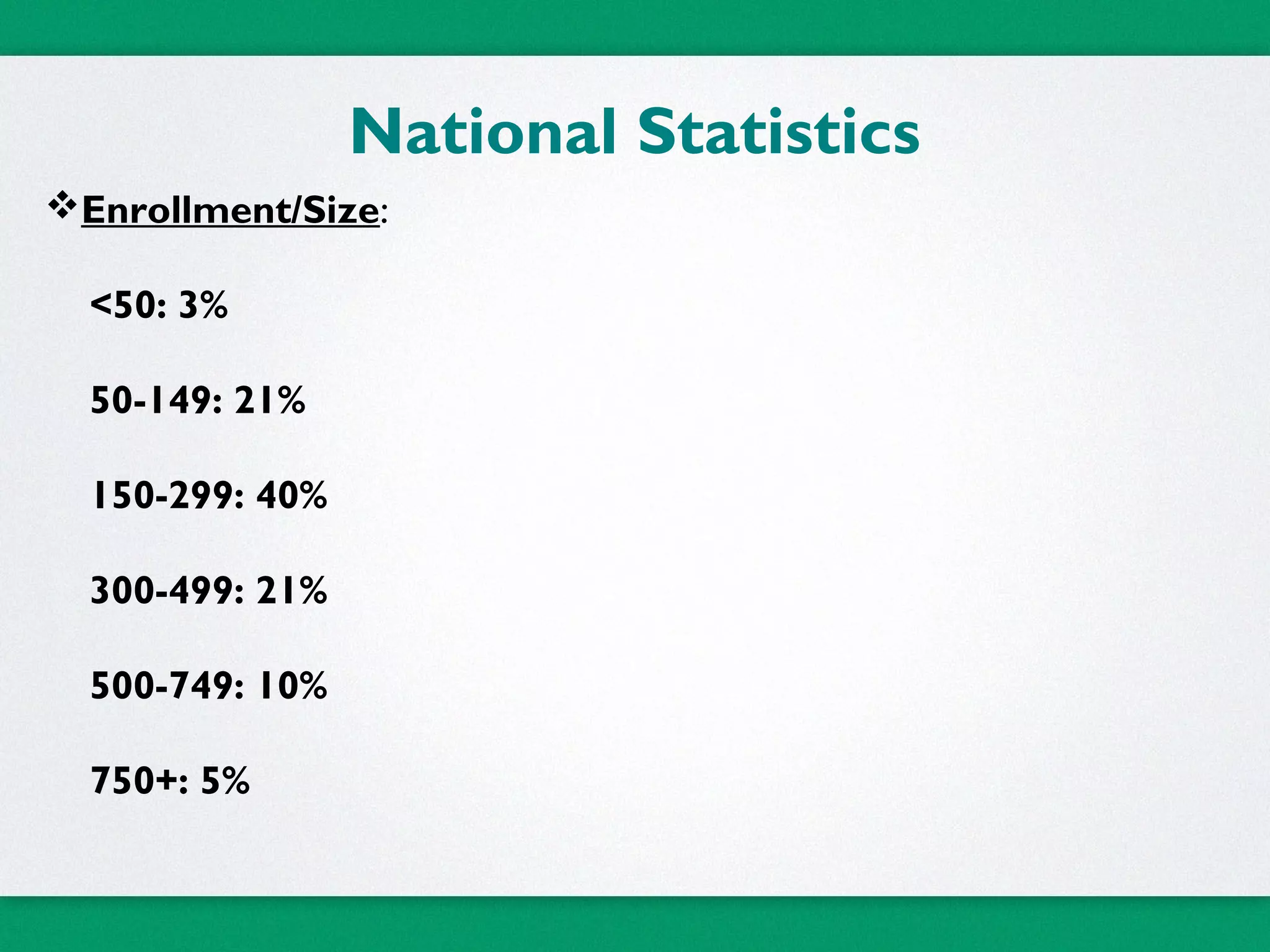
Enrollment/Size:
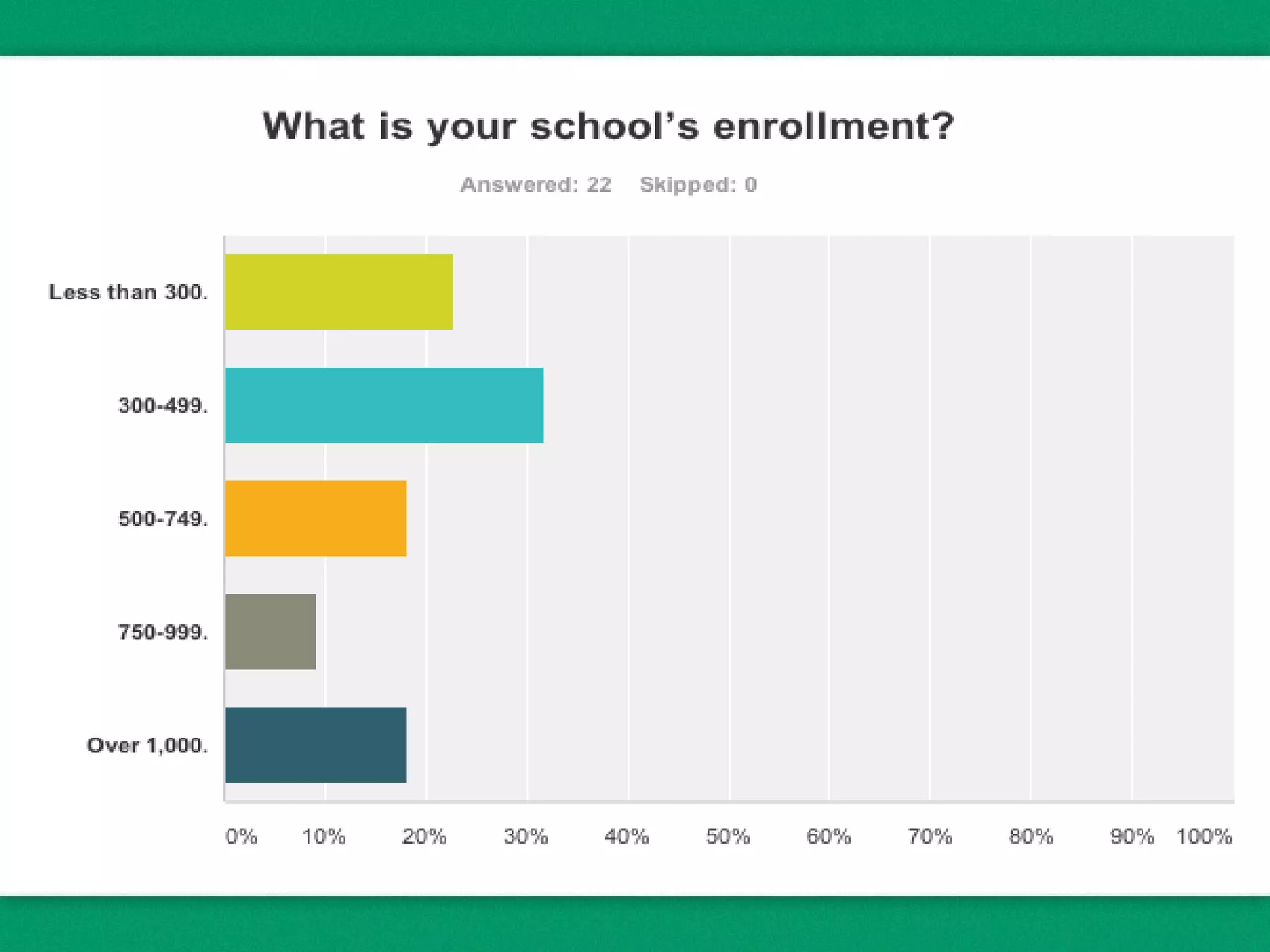
<50: 3%
50-149: 21%
150-299: 40%
300-499: 21%
500-749: 10%
750+: 5%
National Statistics
National Statistics
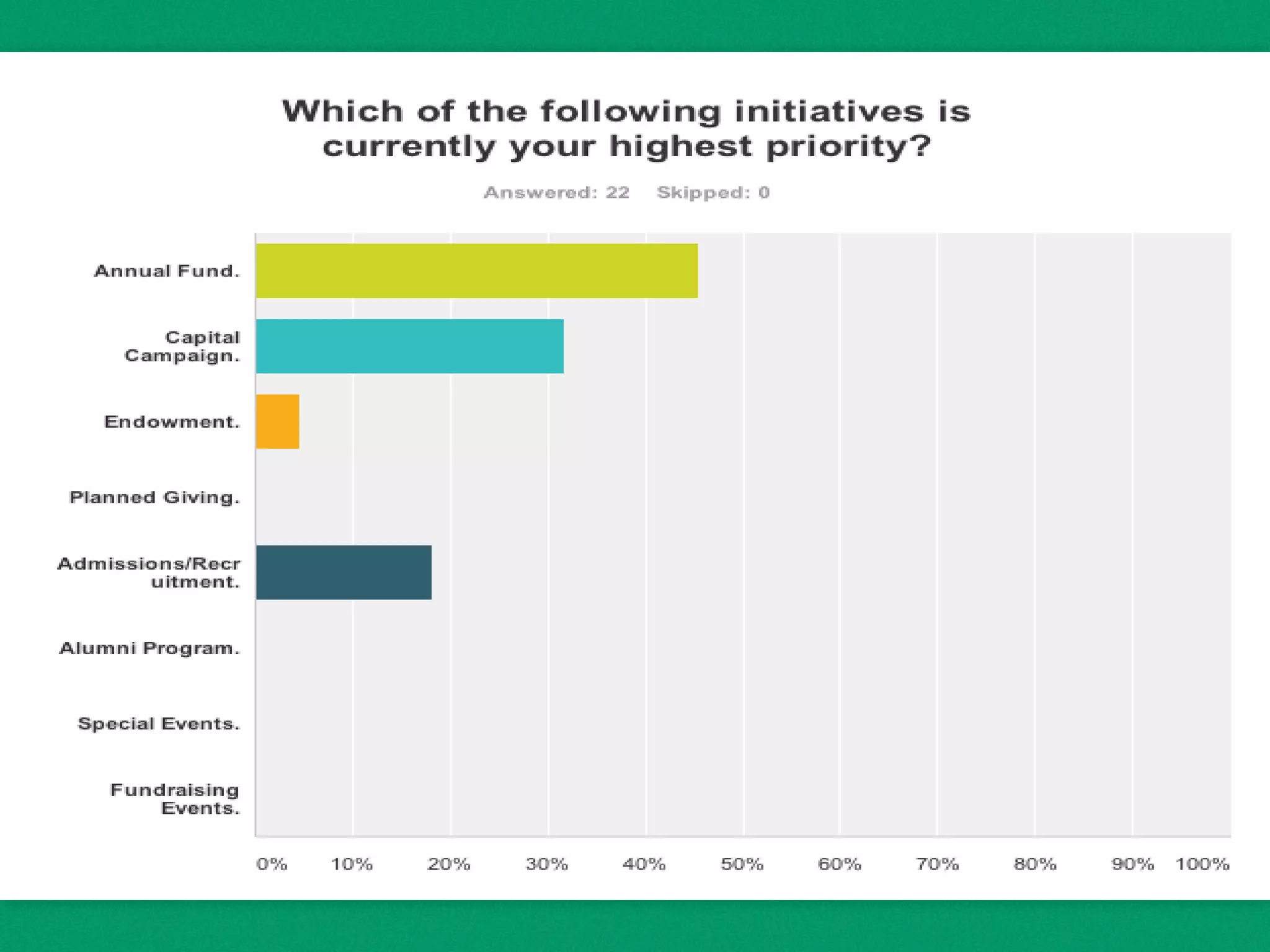
45% of schools were conducting capital campaigns.
Average endow: $4.6 mil. – half reported < $2.0 mil.
in endowment.
Average % of students requiring financial aid = 38%
Schools able to meet on average 57% of the defined
need.
Average tuition increase = 4%.
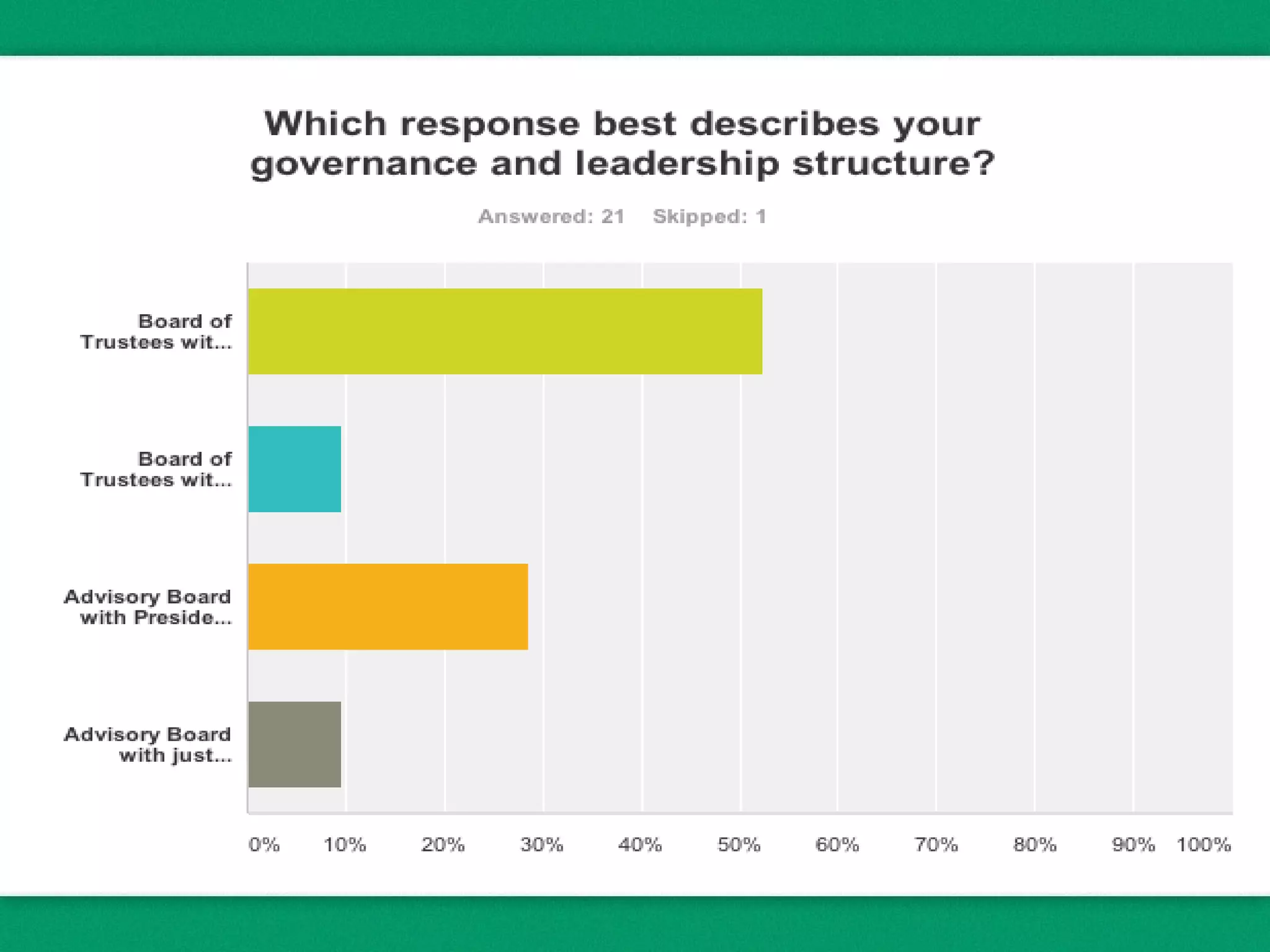
56% have President/Principal operating model.
Average enrollment 554.
Conclusions
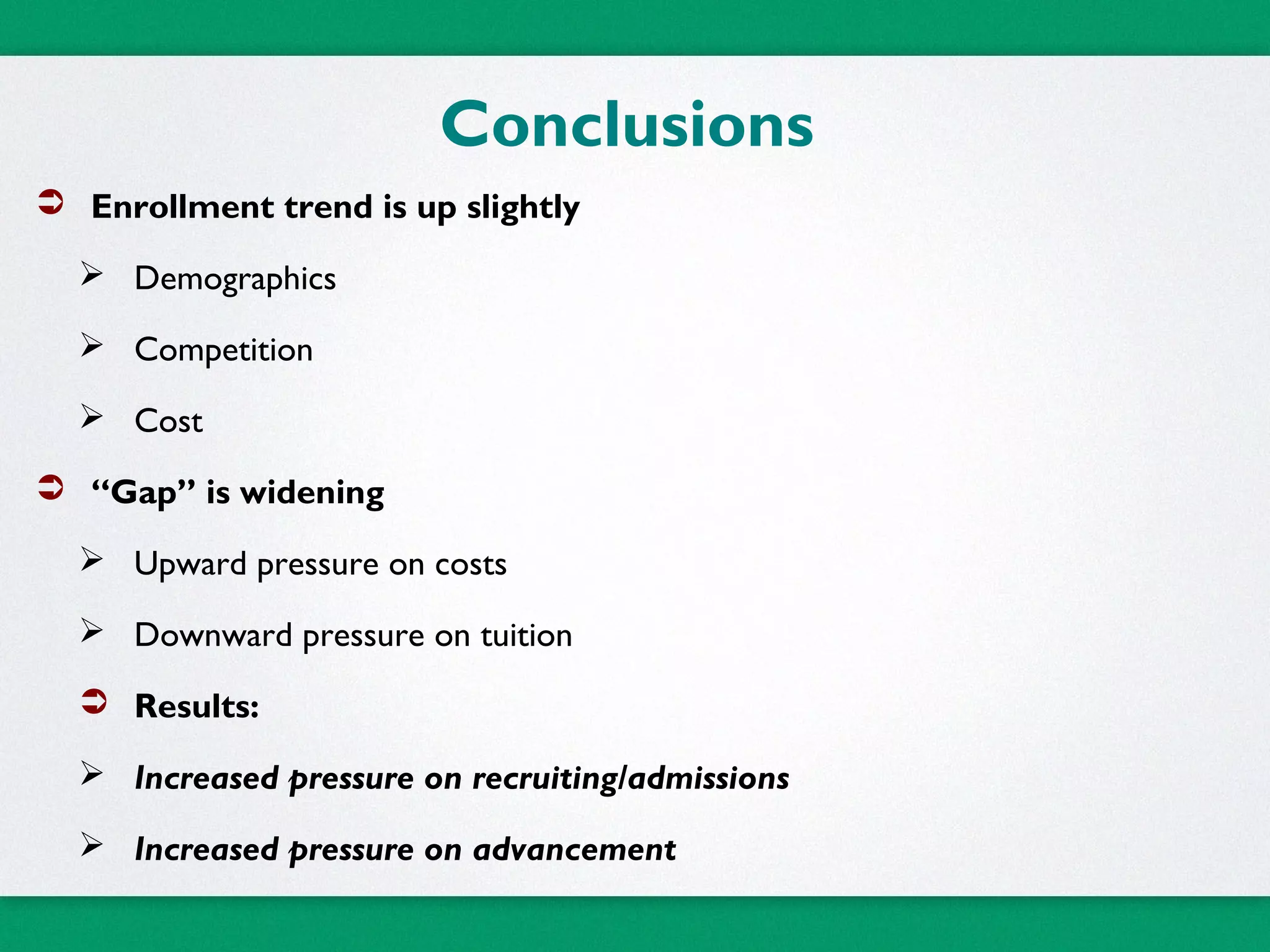
 Enrollment trend is up slightly
 Demographics
 Competition
 Cost
 “Gap” is widening
 Upward pressure on costs
 Downward pressure on tuition
 Results:
 Increased pressure on recruiting/admissions
 Increased pressure on advancement
Trends
Scope, sophistication and expectation of development
has increased dramatically.
Less emphasis on ‘periodic capital campaigns’.
More emphasis on perpetual funding initiative – fund
the strategic plan.
The need is to increase all funding form all FR
components – AG, MG,PG.
Advancement Trends
Comprehensive funding initiatives – some schools aren’t calling
it a ‘capital campaign’.
Emerging from the institutional strategic plan.
Emphasis on perpetual funding initiative – fund the strategic
plan.
Transition from ‘periodic capital campaign’ and periodic
focus on major gifts to:
‘Maximize philanthropic potential on a yearly basis’ from
each fundamental source: AG, MG, PG.
Where Investments Come From
 80% of all financial donations (nation wide) come from
individuals (5% from corps., 15% foundations).
 In a capital campaign/major gift initiative, 70% of the goal will
come from the top 10-15 commitments (or top 8-10% of
the giving pyramid).
 In education, alumni and parents are the primary prospects.
 Foundations are secondary prospects; corporations are seldom
prospects.
Fundraising & Advancement
Fundraising:
–Is ‘mass communication’ oriented.
–Makes few distinctions, considers all constituents equally.
–Same approach to all.
–Is activity oriented – events, premiums (raffles, golf tournaments)
–Is “transactional” in nature
–Tends to default to lower amounts
–Has a low marginal cost effectiveness rate.
–Is an effective method of raising some money.
Advancement:
–Is personal and relationship oriented.
–Distinguishes higher potential.
–Is strategic in nature: mission-centered and visionary.
–Requires a customized approach to all.
–Is “transformational” in nature.
–Is the most cost effective method; will raise exponentially more money.
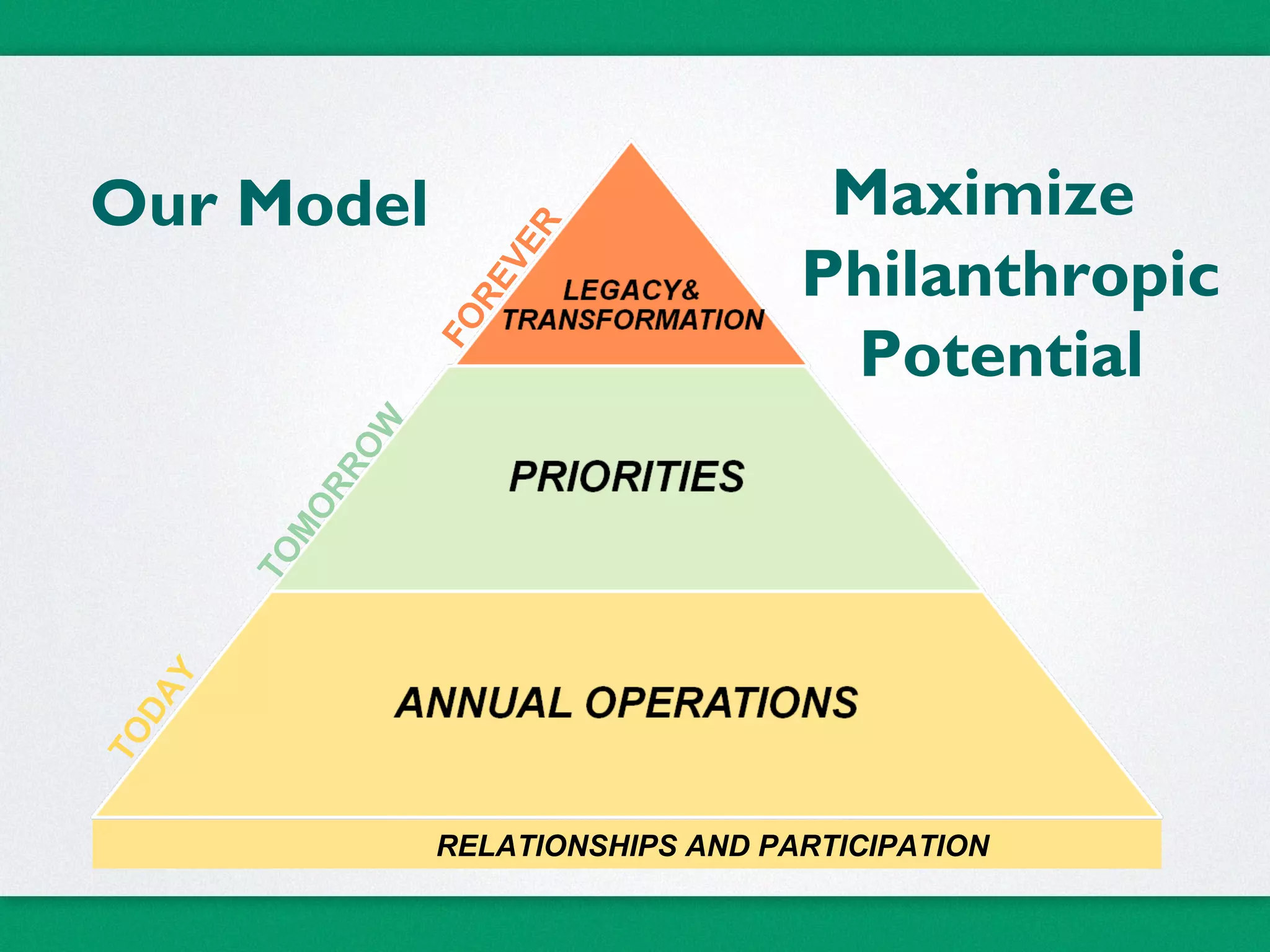
FOREVER
TOM
ORROW
TODAY
RELATIONSHIPS AND PARTICIPATION
Our Model Maximize
Philanthropic
Potential
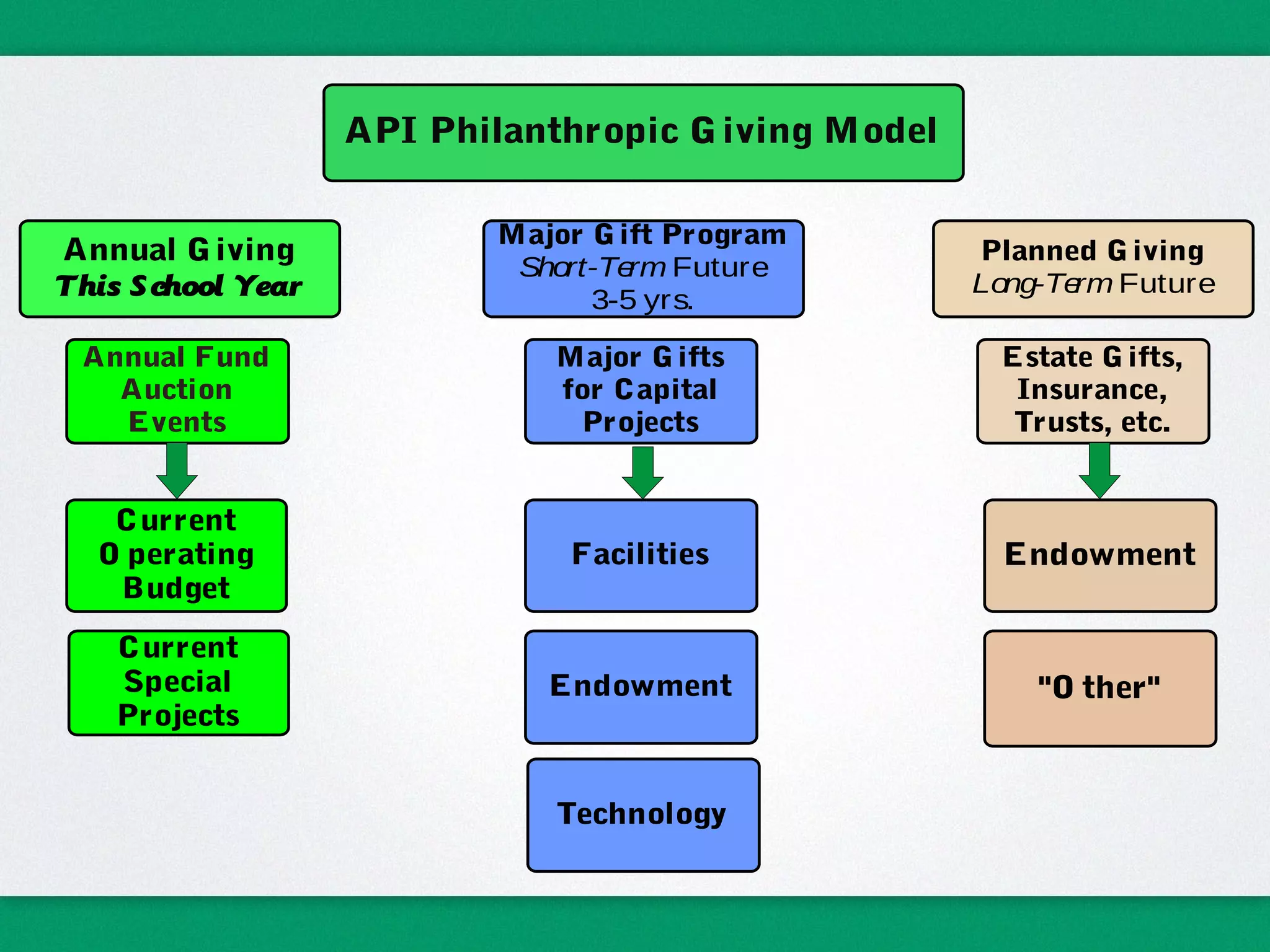
Annual Fund
Auction
Events
API Philanthropic Giving Model
Annual Giving
This School Year
Major G ift Program
Short-Term Future
3-5 yrs.
Planned G iving
Long-Term Future
Current
O perating
Budget
Major G ifts
for Capital
Projects
Estate G ifts,
Insurance,
Trusts, etc.
EndowmentFacilities
Endowment "O ther"
Current
Special
Projects
Technology
SS2014
SS2014
SS2014
SS2014
SS2014
SS2014
SS2014
SS2014
SS2014
SS2014
SS2014
SS2014
SS2014
SS2014
SS2014

SS2014

  • 1.
    Summer Seminar 2014: BestPractices and the Model Development Department National Statistics, Survey Results and the API Philanthropic Giving Model Presentation
  • 2.
    National Statistics 1,205 Catholichigh schools in the country. Average Catholic High School Enrollment: 2010-11: 535 (down 12%) 2012-13: 554 (up 3.5%) Tuition and Costs: Mean tuition: $9,612 Per Pupil Cost: $11,277 (9.1% increase from ‘10-’12) (5% increase from ‘10-’12) Mean “Gap”: $1,665 per student (increase of 11% since ‘07)
  • 3.
    Enrollment/Size: <50: 3% 50-149: 21% 150-299:40% 300-499: 21% 500-749: 10% 750+: 5% National Statistics
  • 4.
    National Statistics 45% ofschools were conducting capital campaigns. Average endow: $4.6 mil. – half reported < $2.0 mil. in endowment. Average % of students requiring financial aid = 38% Schools able to meet on average 57% of the defined need. Average tuition increase = 4%. 56% have President/Principal operating model. Average enrollment 554.
  • 5.
    Conclusions  Enrollment trendis up slightly  Demographics  Competition  Cost  “Gap” is widening  Upward pressure on costs  Downward pressure on tuition  Results:  Increased pressure on recruiting/admissions  Increased pressure on advancement
  • 6.
    Trends Scope, sophistication andexpectation of development has increased dramatically. Less emphasis on ‘periodic capital campaigns’. More emphasis on perpetual funding initiative – fund the strategic plan. The need is to increase all funding form all FR components – AG, MG,PG.
  • 7.
    Advancement Trends Comprehensive fundinginitiatives – some schools aren’t calling it a ‘capital campaign’. Emerging from the institutional strategic plan. Emphasis on perpetual funding initiative – fund the strategic plan. Transition from ‘periodic capital campaign’ and periodic focus on major gifts to: ‘Maximize philanthropic potential on a yearly basis’ from each fundamental source: AG, MG, PG.
  • 8.
    Where Investments ComeFrom  80% of all financial donations (nation wide) come from individuals (5% from corps., 15% foundations).  In a capital campaign/major gift initiative, 70% of the goal will come from the top 10-15 commitments (or top 8-10% of the giving pyramid).  In education, alumni and parents are the primary prospects.  Foundations are secondary prospects; corporations are seldom prospects.
  • 9.
    Fundraising & Advancement Fundraising: –Is‘mass communication’ oriented. –Makes few distinctions, considers all constituents equally. –Same approach to all. –Is activity oriented – events, premiums (raffles, golf tournaments) –Is “transactional” in nature –Tends to default to lower amounts –Has a low marginal cost effectiveness rate. –Is an effective method of raising some money. Advancement: –Is personal and relationship oriented. –Distinguishes higher potential. –Is strategic in nature: mission-centered and visionary. –Requires a customized approach to all. –Is “transformational” in nature. –Is the most cost effective method; will raise exponentially more money.
  • 10.
  • 11.
    Annual Fund Auction Events API PhilanthropicGiving Model Annual Giving This School Year Major G ift Program Short-Term Future 3-5 yrs. Planned G iving Long-Term Future Current O perating Budget Major G ifts for Capital Projects Estate G ifts, Insurance, Trusts, etc. EndowmentFacilities Endowment "O ther" Current Special Projects Technology