
Acquisition Stage
Skillfulness
Keeping Information Stage
generalization Stage
Discrimination Stage
‫م‬‫م‬‫م‬‫م‬‫م‬‫م‬‫م‬‫م‬‫م‬‫م‬‫م‬‫م‬‫م‬‫م‬‫م‬‫م‬‫م‬‫م‬‫م‬‫م‬‫م‬‫م‬
1-Maturation
2-Practice and Experience
3-Learning Laws
Love Gift and Smile.
Modeling Performance.
Imitation.
Trial and Regularity.
Shaping.
Prompts - Helping.
Divided Activity into Simple Steps.
‫م‬‫م‬‫م‬‫م‬‫م‬‫م‬‫م‬‫م‬‫م‬‫م‬‫م‬‫م‬‫م‬‫م‬‫م‬‫م‬‫م‬‫م‬
‫م‬‫م‬‫م‬‫م‬‫م‬‫م‬‫م‬‫م‬‫م‬‫م‬‫م‬‫م‬‫م‬‫م‬‫م‬‫م‬‫م‬‫م‬‫م‬‫م‬‫م‬‫م‬‫م‬
The Suitable Method in Learning.
Create Motivation for Learning.
Be Patient.
Attention and Concentration.
Reinforcement and Reward
Arrangement of the classroom.
Suitable Time.
Level of Perfection.
Behavior Modification.
.Right and Wrong
Variety of Sensational Channels.
Material.
Rate of Presentation and it’s Time.
Signs of Beginning.
Content and Steps.
The Therapist’s Mood.
Individualization of Intervention.
Learning in Groups.
Depending on Perceptible Material
Normalization.
Adaptation and Flexibility.
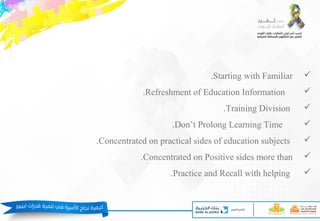
Starting with Familiar.
Refreshment of Education Information.
Training Division.
Don’t Prolong Learning Time.
Concentrated on practical sides of education subjects.
Concentrated on Positive sides more than.
Practice and Recall with helping.
Keeping Information and Generalization.
Analysis of Failure and Try again.
Mainstreaming with normal Children.
Co-operation between family and teacher.
Communication with Parents.
Parent Empowerment.
Assessment and Evaluation.
‫م‬‫م‬‫م‬‫م‬‫م‬‫م‬‫م‬‫م‬‫م‬‫م‬‫م‬
‫م‬‫م‬‫م‬‫م‬‫م‬‫م‬‫م‬‫م‬‫م‬‫م‬‫م‬‫م‬‫م‬‫م‬‫م‬‫م‬‫م‬‫م‬‫م‬‫م‬‫م‬‫م‬‫م‬‫م‬‫م‬‫م‬‫م‬‫م‬‫م‬‫م‬
Main principles in Learning
for children with Special Needs
‫م‬‫م‬‫م‬‫م‬‫م‬‫م‬‫م‬
‫م‬‫م‬‫م‬‫م‬‫م‬‫م‬‫م‬‫م‬‫م‬‫م‬‫م‬‫م‬‫م‬‫م‬‫م‬‫م‬‫م‬:‫م‬‫م‬‫م‬‫م‬‫م‬‫م‬‫م‬‫م‬‫م‬‫م‬‫م‬‫م‬‫م‬‫م‬‫م‬‫م‬‫م‬‫م‬‫م‬‫م‬‫م‬‫م‬‫م‬
a.Acquisition Stage:
Skillfulness Stage:
Keeping Information Stage:
generalization Stage:
Discrimination Stage:
‫م‬‫م‬‫م‬‫م‬‫م‬‫م‬‫م‬‫م‬‫م‬‫م‬‫م‬‫م‬‫م‬‫م‬‫م‬‫م‬‫م‬‫م‬‫م‬‫م‬‫م‬‫م‬‫م‬‫م‬‫م‬‫م‬‫م‬
‫م‬‫م‬‫م‬‫م‬‫م‬‫م‬‫م‬‫م‬‫م‬‫م‬‫م‬‫م‬‫م‬‫م‬‫م‬‫م‬‫م‬‫م‬‫م‬‫م‬‫م‬‫م‬‫م‬‫م‬‫م‬‫م‬‫م‬‫م‬‫م‬‫م‬‫م‬‫م‬‫م‬‫م‬‫م‬‫م‬‫م‬‫م‬‫م‬
1Love Gift and Smile:
2Modeling Performance:
‫ج‬‫ج‬‫ج‬‫ج‬‫ج‬‫ج‬‫ج‬‫ج‬‫ج‬‫ج‬‫ج‬‫ج‬‫ج‬‫ج‬‫ج‬‫ج‬‫ج‬‫ج‬‫ج‬‫ج‬‫ج‬‫ج‬‫ج‬‫ج‬
LIVE MODELING
FILMED MODLING
modeling
3Imitation:
4Trial and Regularity:
5Shaping:
6Prompts - Helping:
‫ج‬‫ج‬‫ج‬‫ج‬‫ج‬‫ج‬‫ج‬‫ج‬‫ج‬‫ج‬‫ج‬‫ج‬‫ج‬‫ج‬‫ج‬‫ج‬‫ج‬‫ج‬‫ج‬‫ج‬‫ج‬‫ج‬‫ج‬‫ج‬‫ج‬‫ج‬
‫ج‬‫ج‬‫ج‬‫ج‬‫ج‬‫ج‬‫ج‬‫ج‬‫ج‬‫ج‬‫ج‬‫ج‬
7Task Analysis
Divided Activity into Simple Steps:
8The Suitable Method in Learning:
9Create Motivation for Learning:
10Be Patient:
11Attention and Concentration:
12
Reinforcement and Reward:
-:‫ج‬‫ج‬‫ج‬‫ج‬‫ج‬‫ج‬‫ج‬‫ج‬‫ج‬‫ج‬‫ج‬‫ج‬‫ج‬‫ج‬‫ج‬‫ج‬‫ج‬




U
13Arrangement of the classroom:
14Suitable Time:
15-Level of Perfection:
16Modification Behavior:
17Right and Wrong:
18Variety of Sensational Channels:
19Material:
20Rate of Presentation and it’s Time:
21Content and Steps:
22Signs of Beginning:
23The Therapist’s Mood:
24Individualization of Intervention:
5–8
25Learning in Groups:
26Depending on Perceptible Material:
27Normalization:
28Adaptation and Flexibility:
29Starting with Familiar:
30
Refreshment of Education Information:
31Training Division:
32Don’t Prolong Learning Time:
33
Concentrated on practical sides of education subjects:
34
Concentrated on Positive sides more than weak sides:
35
Practice and Recall with helping:
36Keeping Information and Generalization:
37Analysis of Failure and Try again:
38Mainstreaming with normal Children:
39Co-operation between family and teacher:
40Communication with Parents:
41Parent Empowerment:
-
-
-
-
-
42Assessment and Evaluation:
‫ة‬‫ة‬‫ة‬‫ة‬‫ة‬‫ة‬‫ة‬‫ة‬‫ة‬‫ة‬‫ة‬‫ة‬‫ة‬‫ة‬‫ة‬‫ة‬
‫ة‬‫ة‬‫ة‬‫ة‬‫ة‬‫ة‬‫ة‬‫ة‬‫ة‬‫ة‬‫ة‬‫ة‬‫ة‬‫ة‬‫ة‬‫ة‬‫ة‬‫ة‬‫ة‬‫ة‬‫ة‬‫ة‬‫ة‬‫ة‬‫ة‬‫ة‬‫ة‬‫ة‬‫ة‬‫ة‬‫ة‬‫ة‬‫ة‬‫ة‬‫ة‬‫ة‬‫ة‬‫ة‬‫ة‬‫ة‬‫ة‬‫ة‬
كيفية نجاح الأسرة في تنمية قدرات ابنها

كيفية نجاح الأسرة في تنمية قدرات ابنها