Span-by-Span method
• In the span-by-span method, an entire span is
assembled, post-tensioned and erected so
that it is self-supporting before the next span
is erected.
• The method is appropriate for span lengths
up to about 150 feet
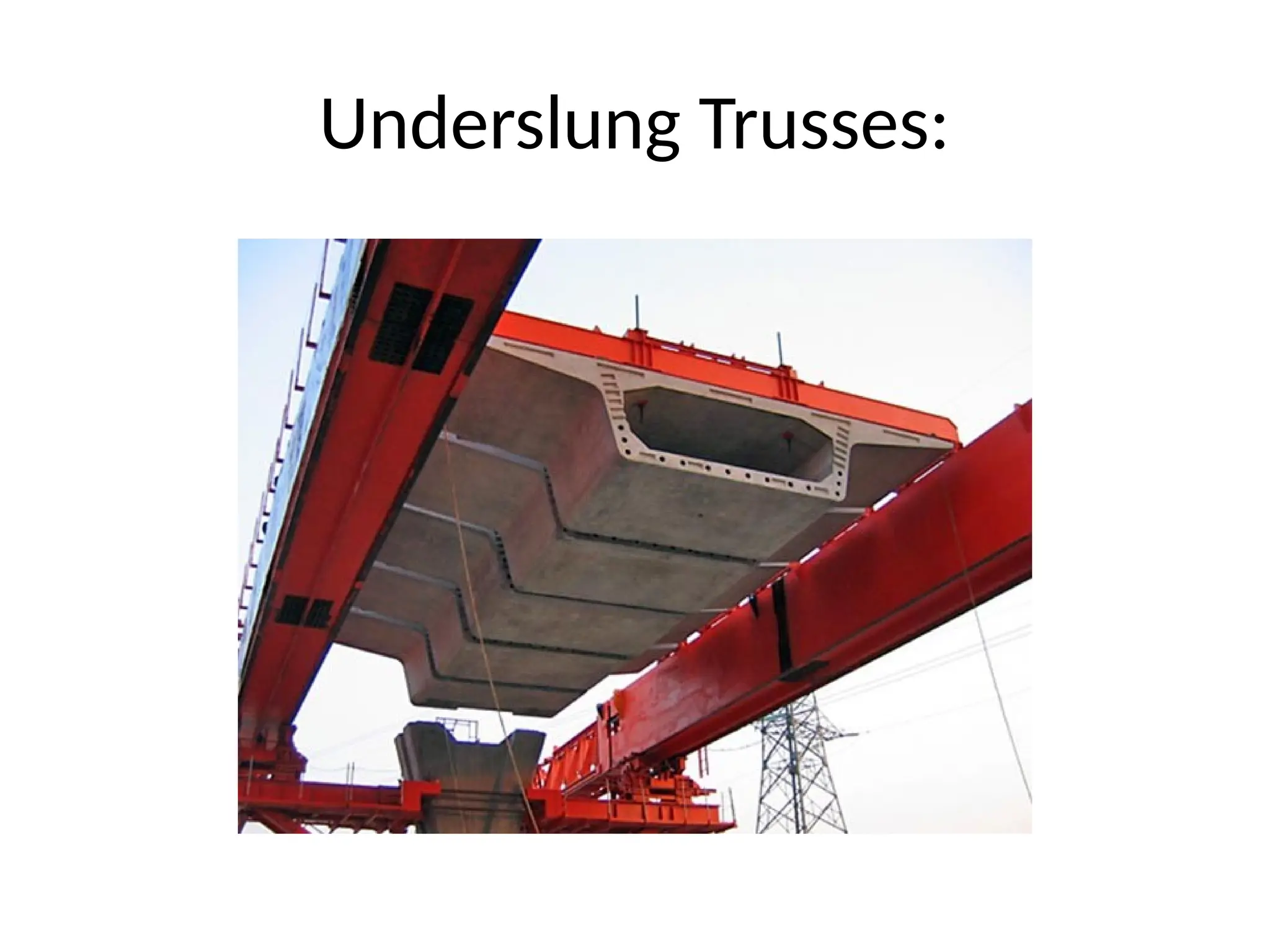
Underslung Trusses:
• Underslung trusses are a very stable and versatile choice for
temporary support.
• The truss frames are well suited for walkways and access
scaffolds. They can provide for lateral and longitudinal
movements of individual segments as well as the entire
span.
• They can be self-launching or picked and placed by cranes.
• Downfalls are they are harder to maneuver through curves
because the segments interfere with the truss chords, they
restrict clearance under the bridge, and underbridge
obstructions may interfere with their use.
Underslung Trusses:
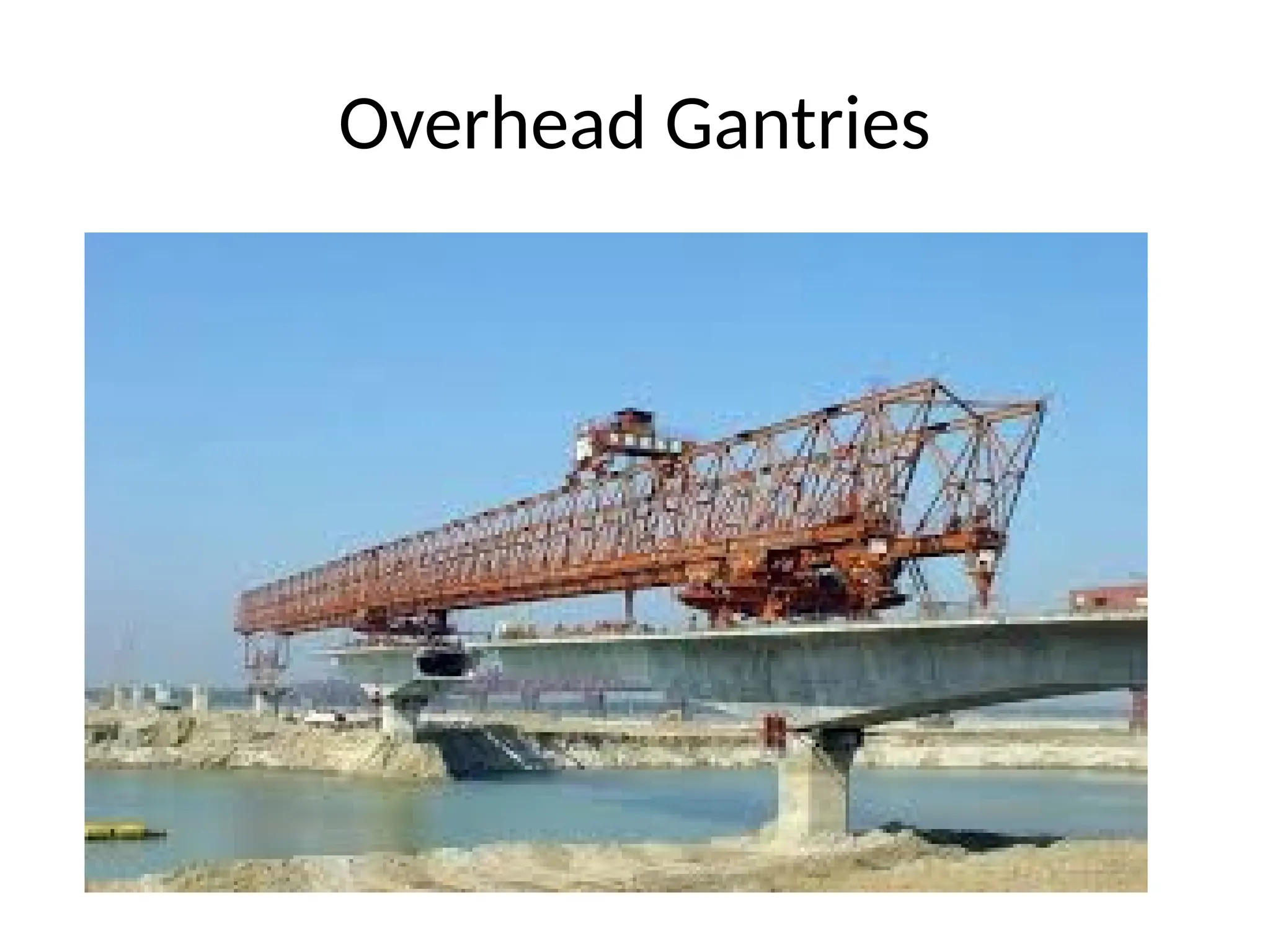
Overhead Gantries
• Overhead Gantries are less stable than underslung trusses
but provide more versatility.
• They are usually self-launching and since they set above
the construction and the terrain they can navigate through
curves and congestion better than underslung trusses.
• The gantries can be loaded by delivering the segment
from the previously constructed spans or lifted from
below.
• This system is the most expensive option of temporary
support.

Overhead Gantries

span by span construction of bridge.or an flyover

  • 2.
    Span-by-Span method • Inthe span-by-span method, an entire span is assembled, post-tensioned and erected so that it is self-supporting before the next span is erected. • The method is appropriate for span lengths up to about 150 feet
  • 3.
    Underslung Trusses: • Underslungtrusses are a very stable and versatile choice for temporary support. • The truss frames are well suited for walkways and access scaffolds. They can provide for lateral and longitudinal movements of individual segments as well as the entire span. • They can be self-launching or picked and placed by cranes. • Downfalls are they are harder to maneuver through curves because the segments interfere with the truss chords, they restrict clearance under the bridge, and underbridge obstructions may interfere with their use.
  • 4.
  • 5.
    Overhead Gantries • OverheadGantries are less stable than underslung trusses but provide more versatility. • They are usually self-launching and since they set above the construction and the terrain they can navigate through curves and congestion better than underslung trusses. • The gantries can be loaded by delivering the segment from the previously constructed spans or lifted from below. • This system is the most expensive option of temporary support.
  • 6.