Colegio San Juan Bautista
Comenius Project
2011-2013
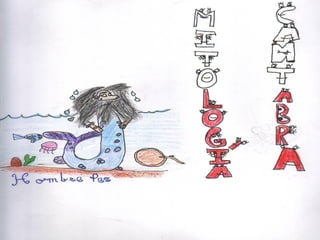
Mythology from Cantabria
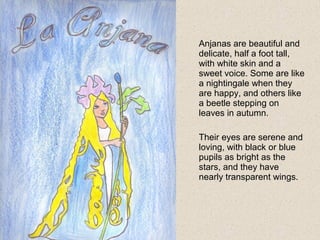
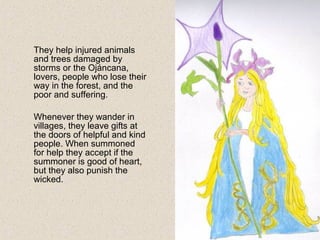
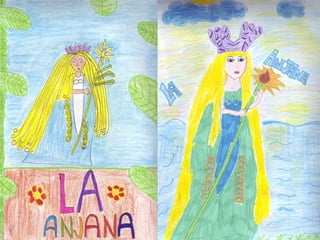
Anjanas are beautiful and
delicate, half a foot tall,
with white skin and a
sweet voice. Some are like
a nightingale when they
are happy, and others like
a beetle stepping on
leaves in autumn.
Their eyes are serene and
loving, with black or blue
pupils as bright as the
stars, and they have
nearly transparent wings.
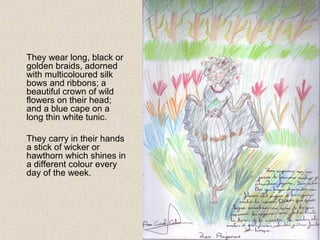
They wear long, black or
golden braids, adorned
with multicoloured silk
bows and ribbons; a
beautiful crown of wild
flowers on their head;
and a blue cape on a
long thin white tunic.
They carry in their hands
a stick of wicker or
hawthorn which shines in
a different colour every
day of the week.
They are seen walking
through the forest trails,
resting on the banks of
springs and on the margins
of streams which then
seem to come alive.
They are able to talk with
the water that flows from
the fountains and springs.
They help injured animals
and trees damaged by
storms or the Ojáncana,
lovers, people who lose their
way in the forest, and the
poor and suffering.
Whenever they wander in
villages, they leave gifts at
the doors of helpful and kind
people. When summoned
for help they accept if the
summoner is good of heart,
but they also punish the
wicked.
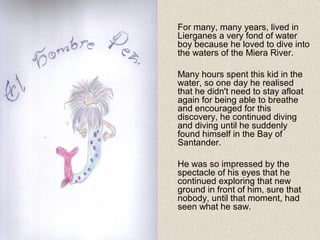
For many, many years, lived in
Lierganes a very fond of water
boy because he loved to dive into
the waters of the Miera River.
Many hours spent this kid in the
water, so one day he realised
that he didn't need to stay afloat
again for being able to breathe
and encouraged for this
discovery, he continued diving
and diving until he suddenly
found himself in the Bay of
Santander.
He was so impressed by the
spectacle of his eyes that he
continued exploring that new
ground in front of him, sure that
nobody, until that moment, had
seen what he saw.
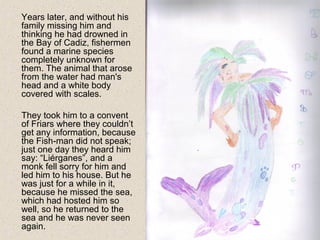
Years later, and without his
family missing him and
thinking he had drowned in
the Bay of Cadiz, fishermen
found a marine species
completely unknown for
them. The animal that arose
from the water had man's
head and a white body
covered with scales.
They took him to a convent
of Friars where they couldn’t
get any information, because
the Fish-man did not speak;
just one day they heard him
say: “Liérganes”, and a
monk fell sorry for him and
led him to his house. But he
was just for a while in it,
because he missed the sea,
which had hosted him so
well, so he returned to the
sea and he was never seen
again.
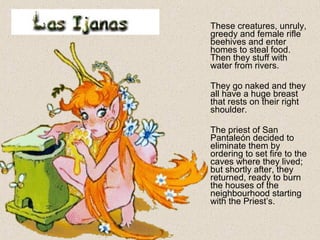
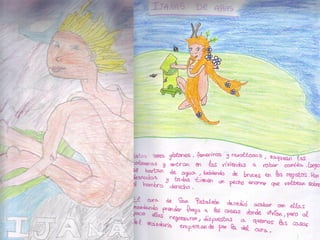
These creatures, unruly,
greedy and female rifle
beehives and enter
homes to steal food.
Then they stuff with
water from rivers.
They go naked and they
all have a huge breast
that rests on their right
shoulder.
The priest of San
Pantaleón decided to
eliminate them by
ordering to set fire to the
caves where they lived;
but shortly after, they
returned, ready to burn
the houses of the
neighbourhood starting
with the Priest’s.
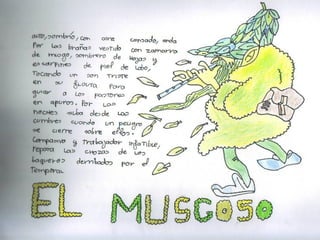
Nobody has heard him
ever, but in the mountains
of Cantabria everyone
respects and knows him.
Many shepherds owe him
their lives. The Mossy
lives only to do well in the
forest, to warn of the
dangers of nature, the
Ojancano and other evil
beings.
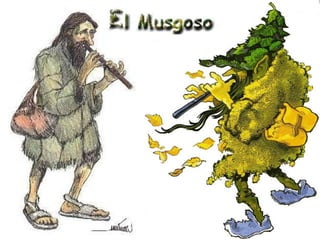
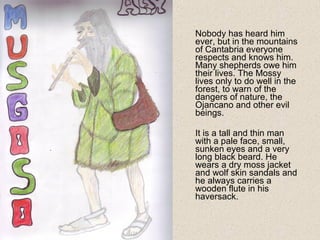
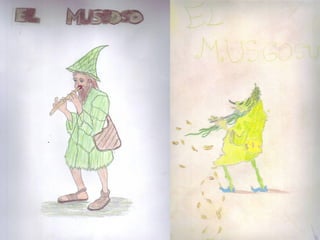
It is a tall and thin man
with a pale face, small,
sunken eyes and a very
long black beard. He
wears a dry moss jacket
and wolf skin sandals and
he always carries a
wooden flute in his
haversack.
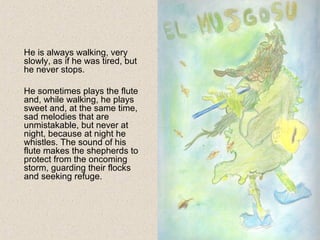
He is always walking, very
slowly, as if he was tired, but
he never stops.
He sometimes plays the flute
and, while walking, he plays
sweet and, at the same time,
sad melodies that are
unmistakable, but never at
night, because at night he
whistles. The sound of his
flute makes the shepherds to
protect from the oncoming
storm, guarding their flocks
and seeking refuge.
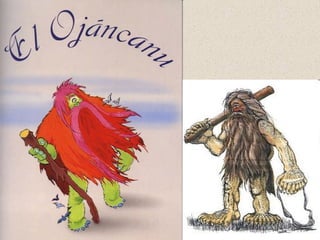
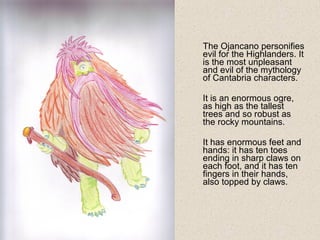
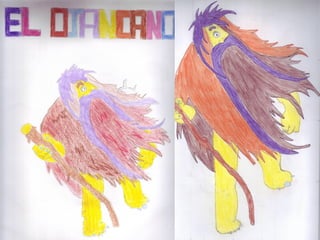
The Ojancano personifies
evil for the Highlanders. It
is the most unpleasant
and evil of the mythology
of Cantabria characters.
It is an enormous ogre,
as high as the tallest
trees and so robust as
the rocky mountains.
It has enormous feet and
hands: it has ten toes
ending in sharp claws on
each foot, and it has ten
fingers in their hands,
also topped by claws.
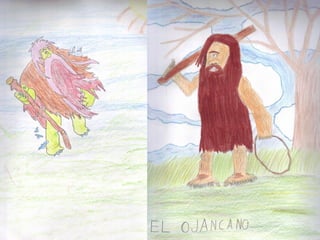
They usually carry a sling of
wolf skin, in one hand, and
in the other, a robust black
cane, which can transform
into Wolf, Viper or Raven,
three animals of the forest
which are their friends.
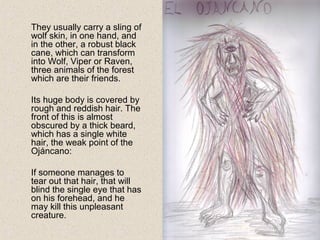
Its huge body is covered by
rough and reddish hair. The
front of this is almost
obscured by a thick beard,
which has a single white
hair, the weak point of the
Ojáncano:
If someone manages to
tear out that hair, that will
blind the single eye that has
on his forehead, and he
may kill this unpleasant
creature.
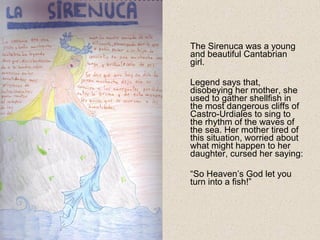
The Sirenuca was a young
and beautiful Cantabrian
girl.
Legend says that,
disobeying her mother, she
used to gather shellfish in
the most dangerous cliffs of
Castro-Urdiales to sing to
the rhythm of the waves of
the sea. Her mother tired of
this situation, worried about
what might happen to her
daughter, cursed her saying:
“So Heaven’s God let you
turn into a fish!”
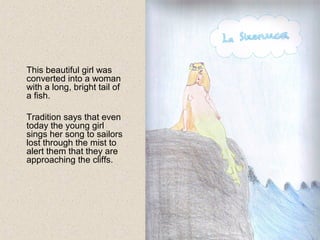
This beautiful girl was
converted into a woman
with a long, bright tail of
a fish.
Tradition says that even
today the young girl
sings her song to sailors
lost through the mist to
alert them that they are
approaching the cliffs.
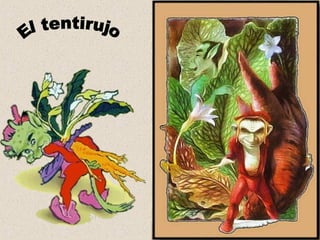
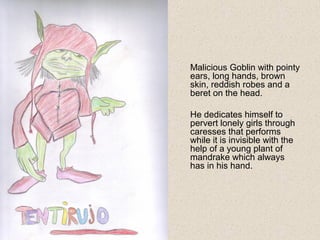
Malicious Goblin with pointy
ears, long hands, brown
skin, reddish robes and a
beret on the head.
He dedicates himself to
pervert lonely girls through
caresses that performs
while it is invisible with the
help of a young plant of
mandrake which always
has in his hand.
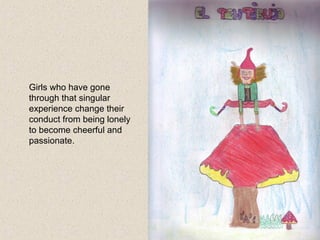
Girls who have gone
through that singular
experience change their
conduct from being lonely
to become cheerful and
passionate.
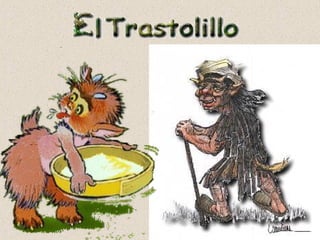
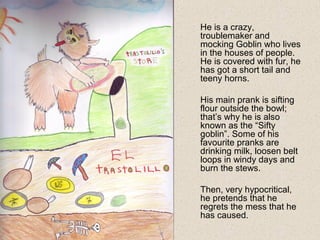
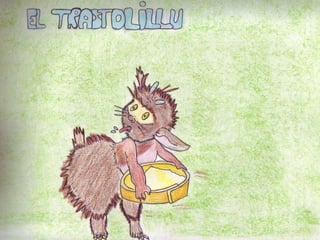
He is a crazy,
troublemaker and
mocking Goblin who lives
in the houses of people.
He is covered with fur, he
has got a short tail and
teeny horns.
His main prank is sifting
flour outside the bowl;
that’s why he is also
known as the “Sifty
goblin”. Some of his
favourite pranks are
drinking milk, loosen belt
loops in windy days and
burn the stews.
Then, very hypocritical,
he pretends that he
regrets the mess that he
has caused.
We hope you liked it!!
Thank you!!!

Spain mythology from cantabria (ppt)

  • 1.
    Colegio San JuanBautista Comenius Project 2011-2013 Mythology from Cantabria
  • 3.
    Anjanas are beautifuland delicate, half a foot tall, with white skin and a sweet voice. Some are like a nightingale when they are happy, and others like a beetle stepping on leaves in autumn. Their eyes are serene and loving, with black or blue pupils as bright as the stars, and they have nearly transparent wings.
  • 4.
    They wear long,black or golden braids, adorned with multicoloured silk bows and ribbons; a beautiful crown of wild flowers on their head; and a blue cape on a long thin white tunic. They carry in their hands a stick of wicker or hawthorn which shines in a different colour every day of the week.
  • 5.
    They are seenwalking through the forest trails, resting on the banks of springs and on the margins of streams which then seem to come alive. They are able to talk with the water that flows from the fountains and springs.
  • 6.
    They help injuredanimals and trees damaged by storms or the Ojáncana, lovers, people who lose their way in the forest, and the poor and suffering. Whenever they wander in villages, they leave gifts at the doors of helpful and kind people. When summoned for help they accept if the summoner is good of heart, but they also punish the wicked.
  • 10.
    For many, manyyears, lived in Lierganes a very fond of water boy because he loved to dive into the waters of the Miera River. Many hours spent this kid in the water, so one day he realised that he didn't need to stay afloat again for being able to breathe and encouraged for this discovery, he continued diving and diving until he suddenly found himself in the Bay of Santander. He was so impressed by the spectacle of his eyes that he continued exploring that new ground in front of him, sure that nobody, until that moment, had seen what he saw.
  • 11.
    Years later, andwithout his family missing him and thinking he had drowned in the Bay of Cadiz, fishermen found a marine species completely unknown for them. The animal that arose from the water had man's head and a white body covered with scales. They took him to a convent of Friars where they couldn’t get any information, because the Fish-man did not speak; just one day they heard him say: “Liérganes”, and a monk fell sorry for him and led him to his house. But he was just for a while in it, because he missed the sea, which had hosted him so well, so he returned to the sea and he was never seen again.
  • 12.
    These creatures, unruly, greedyand female rifle beehives and enter homes to steal food. Then they stuff with water from rivers. They go naked and they all have a huge breast that rests on their right shoulder. The priest of San Pantaleón decided to eliminate them by ordering to set fire to the caves where they lived; but shortly after, they returned, ready to burn the houses of the neighbourhood starting with the Priest’s.
  • 16.
    Nobody has heardhim ever, but in the mountains of Cantabria everyone respects and knows him. Many shepherds owe him their lives. The Mossy lives only to do well in the forest, to warn of the dangers of nature, the Ojancano and other evil beings. It is a tall and thin man with a pale face, small, sunken eyes and a very long black beard. He wears a dry moss jacket and wolf skin sandals and he always carries a wooden flute in his haversack.
  • 17.
    He is alwayswalking, very slowly, as if he was tired, but he never stops. He sometimes plays the flute and, while walking, he plays sweet and, at the same time, sad melodies that are unmistakable, but never at night, because at night he whistles. The sound of his flute makes the shepherds to protect from the oncoming storm, guarding their flocks and seeking refuge.
  • 20.
    The Ojancano personifies evilfor the Highlanders. It is the most unpleasant and evil of the mythology of Cantabria characters. It is an enormous ogre, as high as the tallest trees and so robust as the rocky mountains. It has enormous feet and hands: it has ten toes ending in sharp claws on each foot, and it has ten fingers in their hands, also topped by claws.
  • 21.
    They usually carrya sling of wolf skin, in one hand, and in the other, a robust black cane, which can transform into Wolf, Viper or Raven, three animals of the forest which are their friends. Its huge body is covered by rough and reddish hair. The front of this is almost obscured by a thick beard, which has a single white hair, the weak point of the Ojáncano: If someone manages to tear out that hair, that will blind the single eye that has on his forehead, and he may kill this unpleasant creature.
  • 25.
    The Sirenuca wasa young and beautiful Cantabrian girl. Legend says that, disobeying her mother, she used to gather shellfish in the most dangerous cliffs of Castro-Urdiales to sing to the rhythm of the waves of the sea. Her mother tired of this situation, worried about what might happen to her daughter, cursed her saying: “So Heaven’s God let you turn into a fish!”
  • 26.
    This beautiful girlwas converted into a woman with a long, bright tail of a fish. Tradition says that even today the young girl sings her song to sailors lost through the mist to alert them that they are approaching the cliffs.
  • 28.
    Malicious Goblin withpointy ears, long hands, brown skin, reddish robes and a beret on the head. He dedicates himself to pervert lonely girls through caresses that performs while it is invisible with the help of a young plant of mandrake which always has in his hand.
  • 29.
    Girls who havegone through that singular experience change their conduct from being lonely to become cheerful and passionate.
  • 31.
    He is acrazy, troublemaker and mocking Goblin who lives in the houses of people. He is covered with fur, he has got a short tail and teeny horns. His main prank is sifting flour outside the bowl; that’s why he is also known as the “Sifty goblin”. Some of his favourite pranks are drinking milk, loosen belt loops in windy days and burn the stews. Then, very hypocritical, he pretends that he regrets the mess that he has caused.
  • 33.
    We hope youliked it!! Thank you!!!