SEARCH ALGORITHMS FOR SPACE TUG RENDEZVOUS:
SIMULATION AND EXPERIMENT
Gergana A. Bounova
Timoth´ee de Mierry
Olivier L. de Weck
Department of Aeronautics and Astronautics
Massachusetts Institute of Technology
Cambridge, MA 02139
Abstract—The goal of this study is to evaluate the efficiency
of three possible two-dimensional search strategies in the
context of autonomous rendezvous in space. As part of a
broader undergoing Space Tug project, a number of model-
ing challenges were addressed to validate the experimental
results. A crucial problem was to reduce the complex space
problem involving at least four degrees of freedom to a simple
two-dimensional model and to run two-dimensional searches
for an inert target using LEGO robots. The data collected,
as well as results from simulations, showed strong trends in
the relationship between time and energy expended during
the search. The project provided a starting point for the ren-
dezvous control system to be implemented in a Space Tug ve-
hicle by showing which of the three strategies - random, semi-
autonomous and autonomous - is most efficient in the two-
dimensional case. It was found that the semi-autonomous al-
gorithm is the most energetically efficient approach, but the
most time-consuming. This finding disproved our initial be-
lief that the semi-autonomous strategy is the most efficient in
terms for both time and energy. Instead, the conclusion is that
an autonomous algorithm is more suitable for space applica-
tions. The results also suggest that, depending on knowledge
of the search space and the mission requirements, a hybrid
approach might be more efficient. With knowledge of orbital
dynamics, the meaning of these results can be extended to the
space problem.
TABLE OF CONTENTS
1 INTRODUCTION
2 PREVIOUS WORK
3 EXPERIMENTAL APPROACH
4 DATA ANALYSIS
5 SUMMARY AND CONCLUSIONS
6 ACKNOWLEDGEMENTS
REFERENCES
0-7803-8155-6/04$17.00/ c 2004 IEEE
IEEEAC paper # 1281
1. INTRODUCTION
Background and Motivation
During the past decade there has been an increasing need to
service vehicles in space. Satellites and entire missions have
been lost due to misalignments, wrong placements in orbit
and software errors. These problems have triggered efforts
to design a new type of vehicle called the Space Tug, also
known as the Orbital Express. The Space Tug is a satellite
that carries out rendezvous and docking with a target satel-
lite. Its functions are to capture targets, change their position
and orbital elements by a preset amount and release them at
destination safely. The Space Tug has to be capable of orbital
debris removal, satellite rescue missions and tactical opera-
tions. The control system of the tug is a major aspect of this
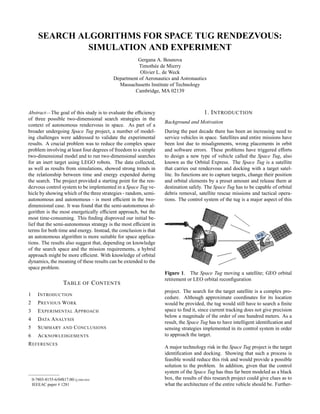
Figure 1. The Space Tug moving a satellite; GEO orbital
retirement or LEO orbital reconfiguration
project. The search for the target satellite is a complex pro-
cedure. Although approximate coordinates for its location
would be provided, the tug would still have to search a finite
space to find it, since current tracking does not give precision
below a magnitude of the order of one hundred meters. As a
result, the Space Tug has to have intelligent identification and
sensing strategies implemented in its control system in order
to approach the target.
A major technology risk in the Space Tug project is the target
identification and docking. Showing that such a process is
feasible would reduce this risk and would provide a possible
solution to the problem. In addition, given that the control
system of the Space Tug has thus far been modeled as a black
box, the results of this research project could give clues as to
what the architecture of the entire vehicle should be. Further-
more, successful search and rendezvous strategies could be
used in other aeronautical applications, such as autonomous
and formation flight.
Search strategies and algorithms for robots have been studied
extensively in the past years. As a result, the design part of
this project was influenced by previous work done on search
algorithms, notably by the MIT Department of Electrical En-
gineering and Computer Science. The basic strategies were
enhanced to fit the purpose of the Space Tug. Time and en-
ergy consumption, as well as the successful implementation
of three searching strategies, are the focus of this research en-
deavor. The search strategies tested are: (1) random sensor-
less search, (2) semi-autonomous with a human in the loop
search and (3) fully autonomous search with sensors. Those
were chosen to be general enough (representative of family
of algorithms), yet tailored to our purposes. At the onset, it
was expected that the semi-autonomous with a human in the
loop search will be the relatively most efficient approach.
Hypothesis
The use of a semi-autonomous search system with a human
in the loop is the algorithm that is the most effective for ren-
dezvous and docking strategies in terms of time and energy
consumption.
2. PREVIOUS WORK
We looked at several references devoted to Mars rovers due
to the similar autonomy and energy requirements and con-
straints of their missions.
Literature Review
Morrison and Nguyen [1] describe the software used to con-
trol the motion of the rover on Mars. The constraints, in terms
of communication and energy, on the control system of the
Mars rover are similar to what the tug will face in space. Due
to electrical and processing power limitations, the control sys-
tem of the rover is unable to communicate and move at the
same time. In addition, due the transmit delay from Mars to
Earth and back, the control system of the rover uses waypoint
navigation and autonomous collision avoidance algorithms.
In the absence of any obstacles, the rover proceeds directly
forward to the waypoint, including stops for proximity scan-
ning - for hazard detection. During proximity scanning pro-
cesses, the rover uses its on-board optical sensors to generate
an approximate map of the terrain map in front of the vehicle.
Based on height differences in the map, the navigation system
analyzes the possible locations of obstacles.
An alternate working mode of the control system is the ”rock
finding” option, which uses the terrain map to detect a rock.
The navigation system corrects the rover heading, centering it
between the rock edges. This feature together with an adapted
version of the collision-avoidance rover control system can be
used as a basis for the tug control architecture.
Search algorithms are thoroughly explored in computer sci-
ence. Gelenbe’s paper [2] provides an example of the ”com-
puter science” point of view. The author models the au-
tonomous process in which an agent, a robot or a software
algorithm searching for information in a computer database,
searches the space around its current location for desired in-
formation. The search area is divided in a set of locations
(x, y), defined in Cartesian coordinates. Associated with each
location is a probability q(x, y) representing the likelihood
of finding the information wanted at this location. Assuming
the environment is static, the space can thus be described as
a probability space. The agent, which in the context of this
project is the tug, always moves in the direction where the
probability q(x, y) is the greatest. Once the agent moves to
the new location - from (x0, y0) to (xnew, ynew) -, the prob-
ability q(xnew, ynew) of finding information at the new point
is updated depending on what was found.
The algorithm thus continuously updates the probability
space, until the agent finds the right information - the target
for the tug. The mathematical tools used in the greedy algo-
rithm were applied to the tug’s autonomous search strategy,
since the underlying probabilistic decision-making processes
are similar (e.g. the agent goes to the location with the great-
est probability in the space). The modeling process used by
Gelenbe in his experiment is also useful in developing the
model of the search space for the tug. In addition, the agent
is also able to build a map of the environment revealing the
exact location of the information with greater precision. Ge-
lenbe’s paper only discusses this simple strategy and does not
consider sensor range effects on the search efficiency.
Another important aspect of rendezvous is target identifica-
tion. Hillenbrand and Hirzinger [3] discuss object recognition
as a two-part process. First, a sequence of hypotheses about
the object - its location, geometric shape, and movements - is
generated, using exterior sensors. The second part of the pro-
cess evaluates these hypotheses based on the object model.
This paper describes a new technique for object recognition
in a specific scene in a probabilistic framework. It also intro-
duces a new statistical criterion - the truncated object proba-
bility - to produce optimal hypotheses about the object to be
evaluated for its match to the data collected by sensors. The
author further develops a mathematical model to fit the search
sequence in the experiment. The object recognition technique
developed by Hillenbrand and Hirzinger is beyond the scope
of the Space Tug project. However, some of their concepts
are useful for the autonomous search strategy model.
Another Mars Pathfinder mission deals with crater and rock
hazard modeling for Mars landing [4]. Measures for safe
landing on the rough and hazardous terrain of Mars are de-
scribed. The investigation examines simple models of crater
size-frequency distribution, rock size-frequency distribution
and scaling relationships to determine the hazard probabil-
ities and choose landing terrains. The approach to hazard
modeling and navigation generated a useful idea. A search of
satellite sizes and geometries was performed in order to scale
the search space for the experimental setup [7]. For example,
a 100-meter radius in space with a 2-meter long target trans-
lates to a 5-meter experimental radius with a 10-centimeter
robot target. This determines the grid size to search space
diameter ratio which impacts the choice of search strate-
gies. Thus, the Pathfinder rock-frequency distribution model
helped focus the search space domain while retaining the va-
lidity of the experiment.
The previous stidues analyzed above show that the field of
search algorithms is heavily explored. At the same time, the
lack of an exact match to the problem at hand demonstrates
that the Space Tug application has not been modeled thor-
oughly before but that one can gain by utilizing technologies
from other domains.
Applicable Theory
The application of this experiment depends on the extendabil-
ity of the obtained results. This demands proper reduction of
the three-dimensional space problem to the two-dimensional
grid search experiment. The main difference between reality
and the model experiment is the number of degrees of free-
dom. All results obtained in this Space Tug experiment are
valid only for target search in two dimensions. In order to
make a conclusion, it is necessary to either find a reasonable
reduction of the space problem to 2D or extend the meaning
of the experimental results to three dimensions. In this case
applicable knowledge of orbital dynamics makes the first ap-
proach feasible and more suitable. In particular, assuming the
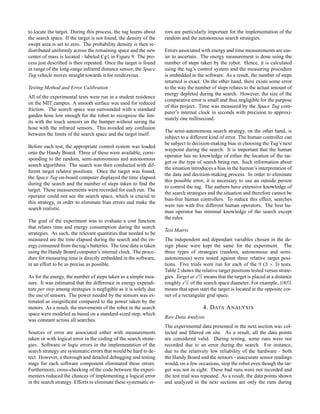
Figure 2. The Hill’s Orbit: Views from central body per-
spective and orbiting bodies frame.
tug spacecraft is within a short distance of the target satel-
lite, their relative dynamics can be described using the Hill’s
frame. This means that with some approximation it can be
assumed that the target is in circular orbit around the tug (or
vice versa).
Figure 2 illustrates the two spacecraft relative positions. The
left drawing in the figure depicts a service vehicle and its tar-
get satellite orbiting the Earth assuming that their orbits are
in the same plane but with different eccentricities1
. The right
drawing looks at the same three-body problem but from the
1Usually, it is assumed that the two bodies are on the same orbits, with
similar radii, eccentricities and inclinations, while only the true anomalies
differ.
point of view of the service vehicle (at the center of the el-
lipse). In its reference frame, the target appears to be in el-
liptic orbit around it while performing its motion around the
Earth.
This shows that the Hill’s relative frame allows the reduction
of the 3D model to two dimensions. To adapt the experiment
to this model, the target has to be designed such that it will
move in a circle at the edge of a circular search space, thus
making the strategies implemented in 2D valid for the space
problem.
3. EXPERIMENTAL APPROACH
Experimental Overview
The experiment’s main objective is to simulate the Space
Tug’s rendezvous with its target in a simplified two-
dimensional environment. The space in which the real Space
Tug contains several degrees of freedom and is too compli-
cated to reproduce in two dimensions. As a result, important
modeling assumptions were made. The simulation makes use
of the relative positions of the Space Tug and the target. The
satellites are assumed to be in the same orbital plane relative
to Earth. The target appears to be orbiting the service vehi-
cle on an elliptic orbit, but for modeling simplicity in 2D, the
experiment was performed with a stationary target.
The experiment makes use of floor space for the search area,
whose dimensions represent the appropriate ratio of search
area to tug/target sizes. This ratio was calculated using the
real sizes of these vehicles and the space around the target
created by position uncertainties. The experimental set up is
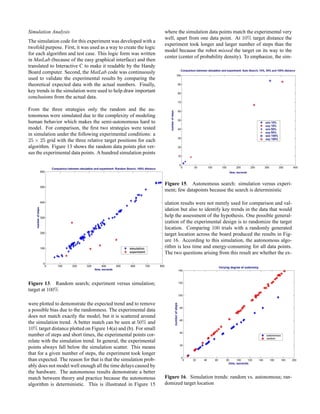
shown in Figure 3. The Space Tug computer has to search
Figure 3. Test-bed environment for Tug/Target rendezvous
simulation
through the space for the target, using its sensors. It is under-
stood that the sensors ranges are much smaller than the size of
the search space. Furthermore, in the case of the human-in-
the-loop search strategy, a computer is used to transmit com-
mands to the robot using a serial communication system, in
accordance with the sensor data that the Space Tug computer
sends to the human. For the other two search strategies, the
computer is used only to download the control system that
moves the robot and the decision-making software that tells it
where to go. The Space Tug is made with LEGO Mindstorms,
using an on-board computer, and the target is a 10 × 20-
centimeter box. While the target is non-cooperative and inert,
the Space Tug carries, as mentioned previously, a collection
of on-board sensors, including long and short-range infrared
distance sensors and touch sensors. The first two collect data
about the position of the target, while the last one stops the
vehicle from going out of the search space.
The independent measuring equipment shown in Figure 3 is
used to record the time it takes for the Space Tug to find its tar-
get and the energy consumed during the process. Using this
data, the trade-off (in the form of a cost function) between
time and energy can be evaluated, and the effectiveness of
each strategy can be compared in order to assess the hypoth-
esis of the experiment.
Design of Search Space
The size of the search space is an important aspect of the ex-
periment setup. It has to match the relative sizes of the satel-
lites in space. To calculate the size of the test search space,
some information such as global position system (GPS) ac-
curacy, satellite sizes and sensor ranges was collected. In the
US Army Corps of Engineers manual [6], GPS accuracy is re-
ported as approximately 100 meters. Once the target satellite
has been located, the space which the Space Tug has to search
was assumed to be of radius 100 meters, centered at the ex-
pected location of the target. A database of satellite sizes was
searched and compared to the 100-meter search radius [7].
It turns out that the average satellite geometry is 2x2x2 me-
ters which gives a 50:1 length scale with respect to the search
space radius. The space transformation process is shown in
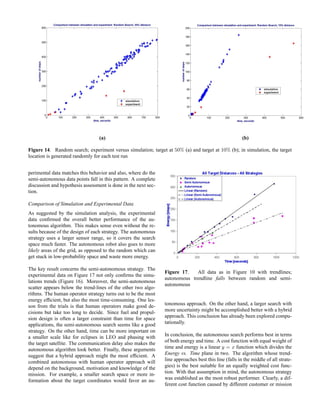
Figure 4. As can be seen in the figure, the actual spherical
Figure 4. Search space transformation: orbital geometry
reduced to 2D, 10-m grid
space that the real orbital servicer will have to search is three-
dimensional. However, since the target is not stationary, four
variables are needed to define its position, a length, two an-
gles and time. The space transformation involves going from
four dimensions to only two. As a result, the main modeling
assumption that has to be made is that the Space Tug is ca-
pable of insertion in the same orbit as the target. The space
is then modeled as a two-dimensional problem such that the
tug and the target are in the same orbital plane with respect to
Earth. From Figure 4, it can be seen that, for a target of size
0.1 meters, the size ratio is maintained if the search space is
of radius 5 meters. Since the space is designed to be a square,
the sides of the search space will be 10 meters.
Overview of Hardware
The robot simulating the orbital servicer is made of LEGO
Mindstorms parts. The on-board computer is a hand-held,
battery-powered microcontroller board, called the Handy
Board and developed by MIT. Shown in Figure 5(b), the
Handy Board is based on the Motorola 68HC11 micropro-
cessor and includes 32K of battery-backed static Random Ac-
cess Memory (RAM), outputs for four DC motors, inputs for
a wide range of sensors and a 16x2 character Liquid Crystal
Display (LCD) screen [8]. Originally, the experiment was de-
signed to use the LEGO RCX 2.0 on-board computer, shown
in Figure 5(a). However, due to memory constraints on this
computer, the on-board controller had to be changed to the
Handy Board, in order to be able to load the search map nec-
essary for the random and autonomous searches. The func-
tionalities of both computers are very similar, except in terms
of memory and communication. As mentioned earlier, the
Handy Board has more memory than the RCX and thus is
able to handle the search algorithms. While the RCX com-
municates with the command computer through an infrared
interface, the Handy Board uses a standard serial port. Hence,
the communication problem in the semi-autonomous search
tests was solved by tethering the robot to the command com-
puter, which also cut down on communication lags.
The Handy Board runs Interactive C. The latter is a cross-
platform, multi-tasking version of the C programming lan-
guage, which is perfectly adapted to make full use of the con-
troller’s resources. A more detailed description of the soft-
ware can be found in the Overview of Software section.
The Space Tug simulator carries an array of sensors in order
to carry out its search for the target. Added to the standard
touch sensors, the tug possesses two infrared distance sensors
with overlapping ranges, as can be seen in Table 1. The two
Table 1. Operating range for Space Tug sensors
Sensor Long Range Short Range
Upper bound [meters] 0.20 0.04
Lower bound [meters] 1.50 0.30
Resolution [meters] 0.01 0.005
infrared distance sensors are built by Sharp and are shown in
Figure 6. Even though they are essentially the same sensors,
their overlapping ranges provide an appropriate field of view,
so that the target can be detected. The long-range sensor is
used in the semi-autonomous and autonomous searches, but
not in the random search. On the other hand, the short-range
sensor is used in all three searches to detect whether the target
is found or not. Once a value high enough - corresponding to
approximately 10 centimeters - is returned by the short-range
sensor, the search stops and the target is said to be found. The
Sharp sensors are available off the shelf and are fairly reliable.
(a) (b)
(a) (b)
Figure 5. Space Tug robot (parts and picture courtesy of LEGO) (a) and on-board computer (Handyboard courtesy of MIT
course 6.270) (b)
Figure 6. Sharp Infrared Distance sensor, courtesy of
SHARP
They use an infrared beam, coupled with an optical triangle
measuring method which reduces the influence of the reading
on the colors of the reflected objects and their reflectivity [9].
In order to use these sensors with the Handy Board, the con-
troller had to be physically modified. The Sharp sensors do
not work with the Handy Board unless the pull-up resistors
connected to the analog sensor ports are taken out of the loop.
Hence, the Handy Board needs to be rewired. The leads to
the pull-up resistors were cut on analog ports 5, 6 and 7, and
a wire was soldered to close the loop behind these three ports.
The latter modification allows for the use of the analog ports
8 through 16. A disadvantage caused by these hardware mod-
ifications is that it makes the readings from the sensors less
accurate. Furthermore, if the leads to the pull-up resistors
are not cut completely, current spikes in the analog port can
cause flawed sensor readings that can be misinterpreted by
the robot’s control system software.
The third type of sensor used on the tug robot is the touch sen-
sor. There are two touch sensors used on a dynamic bumper
built on the vehicle. These sensors detect any pressure ap-
plied on the bumper arms. When no pressure is applied the
sensor reading is the passive reading on the analog port (255).
Once the robot bumps into an object, the current through the
analog port changes and and the sensor reading decreases
from the rest value of 255.
Overview of Software
The software for this project is developed in two steps. First,
the random and autonomous strategies are coded as Matlab
simulations. The semi-autonomous search cannot be simu-
lated due to the involvement of a human operator. The first
purpose of the simulation is to validate the soundness and
logic of the algorithms. Second, the algorithms are converted
to the C language to be uploaded on the Handy Board com-
puter. The compiler used is Interactive C, developed by New-
ton Labs, and is specially adapted to load programs on the
Handy Board. Interactive C compiles the C code, customized
with special sensor and motor functions to use the computer’s
resources, and loads it onto the board. The Handy Board con-
tains firmware, called the PCode, which then serves as an in-
terpreter for the compiled C code.
The three search strategies are random sensor-less search,
semi-autonomous with a human decision maker search and
fully autonomous with sensors search. The algorithms were
designed to be general enough, so that they span the space of
all different strategies that could be used to find the target.
The random search algorithm is inspired by the ”Greedy Al-
gorithm” described by Gelenbe [2]. It is a probabilistic search
where the agent - the tug in the experiment - is able to learn
as it moves in the space. Each displacement in the space pro-
vides information to the robot. In other words, when the robot
moves to a point and does not find the target, it then knows
that the target is not located at that point. Its knowledge about
the search space has increased. The search space is trans-
formed into a grid that contains a certain number of locations,
as shown in Figure 7. The distance between each point de-
pends on the size of the Space Tug and the size of the target.
Figure 7. Grid for random search: probability as a function
of visited squares
An appropriate separation between two points given that the
tug and target sizes are approximately 20 centimeters would
be of the order of two times the size of the objects, or 40
centimeters. The Space Tug at its starting location has eight
possibilities for its next move. As can be seen in Figure 7, the
probability of going to any of the eight next locations is 1/8.
Once the tug has moved, the probability associated with the
location that the vehicle just left is set to zero. As a result, the
tug has now only seven possibilities for its next move. The
Space Tug computer thus learns about the space as it moves
from point to point. The search ends when the target is found,
which is detected by the short-range infrared distance sensor -
due to its relatively short range, this infrared sensor will only
detect the target once the Space Tug is on the same grid.
The basic concept for the semi-autonomous search is that the
decision-maker is a human controller. Using the on-board
sensors, the human operator moves the Space Tug to find the
target. Figure 8 shows a simplified flowchart for the proce-
dure to be followed during the semi-autonomous search with
human-in-the-loop. At any time, the tug can perform a 360-
degree sweep of the surroundings using the long-range in-
frared distance sensor. If the sensor does not report any pres-
ence of an object, then the human operator has to make a
decision about where to move next. The operator sends a
command to the tug on-board computer, which then moves
the vehicle to the next desired location. All sensor data at
each step is sent back to the human operator, in order to de-
cide the next move in the search. Another decision is made
Figure 8. Flow chart for semi-autonomous search; green -
autonomous decision; red - input by operator
based on the new data, and so on until the target is found. In
order to transmit information, the tug is tethered and waits for
the new command through its serial port. As a result, there is
a lag between the command transmission and the tug’s move.
Although the transmission could be time-consuming, it is a
good simulation of what happens with space transmission.
For instance, as Morrison and Nguyen [1] describe, the Mars
Pathfinder also uses waypoint navigation and delayed trans-
mission to communicate with the Earth operator.
An important consideration for this strategy is human bias. A
human operator has to have no prior knowledge of the initial
conditions on the search space, so that decisions will not be
influenced by that knowledge. Therefore, the operator cannot
see the experiment, but will only read sensor data on the com-
puter. Another part of human bias is the employment of a con-
sistent strategy by a single person. A variety of people should
be invited to conduct the semi-autonomous search in order to
ensure unbiased data. These logistics require prior organiza-
tion, communication with people external to the project and
maybe an additional expense.
The fully autonomous search makes use of the long-range ul-
trasonic sensor to find the target in the test space. The au-
tonomous strategy is based on a probabilistic model, in which
the algorithm develops a probability density function to de-
scribe the search area. Since the Space Tug initially has no
information about the location of the target, the probability
density has to be uniform across the space. As can be seen in
Figure 9. Autonomous search strategy; probability density
is redistributed
Figure 9, the symmetry and the uniformity of the distribution
places the center of mass - labeled ”Cg0” - in the middle of
the two-dimensional search area. At the start of the search se-
quence, the tug travels toward the center of mass of the prob-
ability density distribution to its first waypoint. This location
has to be a point in the search space close enough to the cen-
ter of mass so that the latter is in range of the tug’s long-range
infrared distance sensor. Once at its new location, the vehicle
performs a 360-degree sweep of the surroundings in an effort
to locate the target. During this process, the tug learns about
the search space. If the target is not found, the density of the
swept area is set to zero. The probability density is then re-
distributed uniformly across the remaining space and the new
center of mass is located - labeled Cg1 in Figure 9. The pro-
cess just described is then repeated. Once the target is found
in range of the long-range infrared distance sensor, the Space
Tug vehicle moves straight towards it for rendezvous.
Testing Method and Error Calibration
All of the experimental tests were run in a student residence
on the MIT campus. A smooth surface was used for reduced
friction. The search space was surrounded with a standard
garden hose low enough for the robot to recognize the lim-
its with the touch sensors on the bumper without seeing the
hose with the infrared sensors. This avoided any confusion
between the limits of the search space and the target itself.
Before each test, the appropriate control system was loaded
onto the Handy Board. Three of these were available, corre-
sponding to the random, semi-autonomous and autonomous
search algorithms. The search was then conducted with dif-
ferent target relative positions. Once the target was found,
the Space Tug on-board computer displayed the time elapsed
during the search and the number of steps taken to find the
target. These measurements were recorded for each run. The
operator could not see the search space, which is crucial to
this strategy, in order to eliminate bias errors and make the
search realistic.
The goal of the experiment was to evaluate a cost function
that relates time and energy consumption during the search
strategies. As such, the relevant quantities that needed to be
measured are the time elapsed during the search and the en-
ergy consumed from the tug’s batteries. The time data is taken
using the Handy Board computer’s internal clock. The proce-
dure for measuring time is directly embedded in the software,
in an effort to be as precise as possible.
As for the energy, the number of steps taken as a simple mea-
sure. It was estimated that the difference in energy expendi-
ture per step among strategies is negligible as it is solely due
the use of sensors. The power needed by the sensors was es-
timated as insignificant compared to the power taken by the
motors. As a result, the movements of the robot in the search
space were modeled as based on a standard-sized step, which
was constant across all searches.
Sources of error are associated either with measurements
taken or with logical error in the coding of the search strate-
gies. Software or logic errors in the implementation of the
search strategy are systematic errors that would be hard to de-
tect. However, a thorough and detailed debugging and testing
stage for each software component eliminated these errors.
Furthermore, cross-checking of the code between the experi-
menters reduced the chances of implementing a logical error
in the search strategy. Efforts to eliminate these systematic er-
rors are particularly important for the implementation of the
random and the autonomous search strategies.
Errors associated with energy and time measurements are eas-
ier to ascertain. The energy measurement is done using the
number of steps taken by the robot. Hence, it is calculated
using the tug’s control system and the measuring procedure
is embedded in the software. As a result, the number of steps
returned is exact. On the other hand, there exists some error
to the way the number of steps relates to the actual amount of
energy depleted during the search. However, the size of the
comparative error is small and thus negligible for the purpose
of this project. Time was measured by the Space Tug com-
puter’s internal clock in seconds with precision to approxi-
mately one millisecond.
The semi-autonomous search strategy, on the other hand, is
subject to a different kind of error. The human controller can
be subject to decision-making bias in choosing the Tug’s next
waypoint during the search. It is important that the human
operator has no knowledge of either the location of the tar-
get or the type of search being run. Such information about
the situation introduces a bias in the human’s interpretation of
the data and decision-making process. In order to eliminate
this possible error, it is necessary to use an outside person
to control the tug. The authors have extensive knowledge of
the search strategies and the situation and therefore cannot be
bias-free human controllers. To reduce this effect, searches
were run with five different human operators. The best hu-
man operator has minimal knowledge of the search except
the rules.
Test Matrix
The independent and dependant variables chosen in the de-
sign phase were kept the same for the experiment. The
three types of strategies (random, autonomous and semi-
autonomous) were tested against three relative target posi-
tions. Five trials were run for each of the 9 (3 × 3) tests.
Table 2 shows the relative target positions tested versus strate-
gies. Target at x% means that the target is placed at a distance
roughly x% of the search space diameter. For example, 100%
means that upon start the target is located at the opposite cor-
ner of a rectangular grid space.
4. DATA ANALYSIS
Raw Data Analysis
The experimental data presented in the next section was col-
lected and filtered on site. As a result, all the data points
are considered valid. During testing, some runs were not
recorded due to an error during the search. For instance,
due to the relatively low reliability of the hardware - both
the Handy Board and the sensors - inaccurate sensor readings
would, on a few occasions, stop the robot even though the tar-
get was not in sight. These bad runs were not recorded and
the test trial was repeated. As a result, the data points shown
and analyzed in the next sections are only the runs during
Table 2. Test matrix: Target position vs. strategy and
number of trials
Pos-Strategy Random Autonomous Semi-
autonomous
Target at 100% I II III
Target at 50% IV V VI
Target at 10% VII VIII IX
which the robot found the target successfully and without any
sensor errors. Table 3 shows the time and energy for the five
trials of the random search runs and Table 4 shows the data
points for the semi-autonomous search. In the latter, each trial
represents a different human operator. Finally, the results of
the deterministic run for the autonomous search is shown in
Table 5. It is difficult to see any trends in the data in ta-
ble form. The data was processed and graphed in order to
observe what is the relationship between time and energy for
each search algorithm. Figure 10 shows all the experimental
data points in the time-energy space. It is already possible to
observe some linear trends, especially with the measurements
from the random search runs.
Figure 10. All search strategies, all experimental data points
Table 3. Random search data
10% Relative Distance
Trial Time [seconds] Energy [steps]
1 429.36 134
2 12.06 3
3 58.11 19
4 25.98 7
5 558.08 165
50% Relative Distance
Trial Time [seconds] Energy [steps]
1 101.56 35
2 47.19 13
3 275.10 96
4 229.31 75
5 981.20 315
100% Relative Distance
Trial Time [seconds] Energy [steps]
1 485.56 156
2 782.17 267
3 143.37 52
4 373.70 119
5 308.31 97
Figure 11. All search strategies: target is at maximum dis-
tance, 100%
An important aspect of the results is to look at the distance
factor in the data. Figures 11, 12(a) and (b) show the re-
sults for all strategies for the 100%, 50% and 10% relative
distance test cases, respectively. In Figure 11, the general
trend of the trade-off between time and energy for each strat-
egy can be seen well. On average, the random search algo-
rithm is the strategy that expands the most energy, while the
semi-autonomous search algorithm is the slowest strategy. It
can also be observed that the autonomous search is more ef-
ficient in terms of both time and energy than the other two
strategies. The same phenomenon can be observed in Fig-
ure 12(a), where the autonomous search algorithm is the most
efficient of all three strategies for the 50% relative distance
(a) (b)
(a) (b)
Figure 12. All search strategies; experimental data: target at 50% (a) and target at 10% (b); not clear if closer target takes less
time and energy to find on average
Table 4. Semi-autonomous search data
10% Relative Distance
Trial Time [seconds] Energy [steps]
1 352.36 81
2 70.55 23
3 49.86 7
4 245.65 75
5 51.13 7
50% Relative Distance
Trial Time [seconds] Energy [steps]
1 245.84 30
2 211.54 28
3 53.88 16
4 150.25 46
5 366.01 45
100% Relative Distance
Trial Time [seconds] Energy [steps]
1 775.52 158
2 1066.1 168
3 776.79 139
4 256.17 43
5 323.99 48
test case. The fact that the efficiency difference between the
autonomous and semi-autonomous searches for this test case
is so flagrant can be explained by the way the autonomous
search works. The autonomous strategy favors the center of
probability space. Since the search space is initially overlayed
with a uniform probability distribution, the center of mass of
the distribution is right where the target has to be in the 50%
relative distance case. The autonomous search always goes
to the center of mass, and hence finds the target extremely
quickly in this test case.
Table 5. Autonomous search data
10% Relative Distance
Trial Time [seconds] Energy [steps]
1 254.90 67
50% Relative Distance
Trial Time [seconds] Energy [steps]
1 33.05 9
100% Relative Distance
Trial Time [seconds] Energy [steps]
1 354.35 93
The experimental results for the 10% relative distance test
case show a slightly different trend. Unlike the other two
cases, as can be seen in Figure 12(b), the semi-autonomous
search is the most efficient strategy, with regards to both time
and energy. The autonomous search in this case does not
perform as well. Again, as mentioned earlier, the reason for
this phenomenon is the way the autonomous search was pro-
grammed. The robot goes very close to the center of the
search space as its first move. Hence, after that first move,
the Space Tug finds itself further away from the target than it
originally was.
Overall, it can be seen that the random search is not efficient
at all compared to the other two strategies. The autonomous
search seems to be most efficient in terms of time and as ef-
ficient as the semi-autonomous strategy in terms of energy
needed. Looking at only experimental data, the hypothesis
is disproved, as the semi-autonomous search algorithm is not
the most efficient. The following section presents the simula-
tion analysis which was used to verify and explain the exper-
imental results.
Simulation Analysis
The simulation code for this experiment was developed with a
twofold purpose. First, it was used as a way to create the logic
for each algorithm and test case. This logic form was written
in MatLab (because of the easy graphical interface) and then
translated to Interactive C to make it readable by the Handy
Board computer. Second, the MatLab code was continuously
used to validate the experimental results by comparing the
theoretical expected data with the actual numbers. Finally,
key trends in the simulation were used to help draw important
conclusions from the actual data.
From the three strategies only the random and the au-
tonomous were simulated due to the complexity of modeling
human behavior which makes the semi-autonomous hard to
model. For comparison, the first two strategies were tested
in simulation under the following experimental conditions: a
25 × 25 grid with the three relative target positions for each
algorithm. Figure 13 shows the random data points plot ver-
sus the experimental data points. A hundred simulation points
Figure 13. Random search; experiment versus simulation;
target at 100%
were plotted to demonstrate the expected trend and to remove
a possible bias due to the randomness. The experimental data
does not match exactly the model, but it is scattered around
the simulation trend. A better match can be seen at 50% and
10% target distance plotted on Figure 14(a) and (b). For small
number of steps and short times, the experimental points cor-
relate with the simulation trend. In general, the experimental
points always fall below the simulation scatter. This means
that for a given number of steps, the experiment took longer
than expected. The reason for that is that the simulation prob-
ably does not model well enough all the time delays caused by
the hardware. The autonomous results demonstrate a better
match between theory and practice because the autonomous
algorithm is deterministic. This is illustrated in Figure 15
where the simulation data points match the experimental very
well, apart from one data point. At 10% target distance the
experiment took longer and larger number of steps than the
model because the robot missed the target on its way to the
center (center of probability density). To emphasize, the sim-
Figure 15. Autonomous search: simulation versus experi-
ment; few datapoints because the search is deterministic
ulation results were not merely used for comparison and val-
idation but also to identify key trends in the data that would
help the assessment of the hypothesis. One possible general-
ization of the experimental design is to randomize the target
location. Comparing 100 trials with a randomly generated
target location across the board produced the results in Fig-
ure 16. According to this simulation, the autonomous algo-
rithm is less time and energy-consuming for all data points.
The two questions arising from this result are whether the ex-
Figure 16. Simulation trends: random vs. autonomous; ran-
domized target location
(a) (b)
(a) (b)
Figure 14. Random search; experiment versus simulation; target at 50% (a) and target at 10% (b); in simulation, the target
location is generated randomly for each test run
perimental data matches this behavior and also, where do the
semi-autonomous data points fall in this pattern. A complete
discussion and hypothesis assessment is done in the next sec-
tion.
Comparison of Simulation and Experimental Data
As suggested by the simulation analysis, the experimental
data confirmed the overall better performance of the au-
tonomous algorithm. This makes sense even without the re-
sults because of the design of each strategy. The autonomous
strategy uses a larger sensor range, so it covers the search
space much faster. The autonomous robot also goes to more
likely areas of the grid, as opposed to the random which can
get stuck in low-probability space and waste more energy.
The key result concerns the semi-autonomous strategy. The
experimental data on Figure 17 not only confirms the simu-
lations trends (Figure 16). Moreover, the semi-autonomous
scatter appears below the trend-lines of the other two algo-
rithms. The human operator strategy turns out to be the most
energy efficient, but also the most time-consuming. One les-
son from the trials is that human operators make good de-
cisions but take too long to decide. Since fuel and propul-
sion design is often a larger constraint than time for space
applications, the semi-autonomous search seems like a good
strategy. On the other hand, time can be more important on
a smaller scale like for eclipses in LEO and phasing with
the target satellite. The communication delay also makes the
autonomous algorithm look better. Finally, these arguments
suggest that a hybrid approach might the most efficient. A
combined autonomous with human operator approach will
depend on the background, motivation and knowledge of the
mission. For example, a smaller search space or more in-
formation about the target coordinates would favor an au-
Figure 17. All data as in Figure 10 with trendlines;
autonomous trendline falls between random and semi-
autonomous
tonomous approach. On the other hand, a larger search with
more uncertainty might be accomplished better with a hybrid
approach. This conclusion has already been explored compu-
tationally.
In conclusion, the autonomous search performs best in terms
of both energy and time. A cost function with equal weight of
time and energy is a linear y = x function which divides the
Energy vs. Time plane in two. The algorithm whose trend-
line approaches best this line (falls in the middle of all strate-
gies) is the best suitable for an equally weighted cost func-
tion. With that assumption in mind, the autonomous strategy
was established as the most robust performer. Clearly, a dif-
ferent cost function caused by different customer or mission
requirements might incite a different conclusion.
Experiment Validation and Future Work
The primary goal for designing this two-dimensional target
search experiment was to solve a subset of the general Space
Tug problem. The results from this project support one of
the key themes in the servicing vehicle concept - autonomy.
Depending on the mission, the tug can have different degrees
of autonomy which corresponds to the hybrid search concept.
A higher-fidelity experiment can be designed with a greater
level of detail, mission and customer requirements to assess
the same hypothesis for a larger design trade space.
In summary, this project successfully models an important
aspect of the general Space Tug problem by assessing uncer-
tainty and autonomy with a simple scheme. Future work in
this area might involve modifications in both the model and
the experiment design. There are a number of possible ways
to improve the experiment as designed. For example, obtain-
ing more data might give more insight into important trends
and possibly point towards better versions of the strategies
used. Also, randomizing the target location (as done in simu-
lation) will remove some of the bias in the algorithms relative
performance. Furthermore, for higher precision of the data,
metrology on the robot can be implemented to close the con-
trol loop and thus approach better the situation in space.
The experiment design can also be modified in a variety of
ways. For instance, the Hill’s frame scheme can be imple-
mented by designing a target which moves on the edge of a
circular search space. Thus the robot will have to find, track
and phase with the target satellite, which is much closer to
the real scenario in orbit. Another potential arising from the
semi-autonomous data is to develop a separate human factors
experiment which would model decision-making and human
behavior in comparison with automated logic. Together with
all the above, a higher-fidelity simulation will be needed to
precede the spacecraft software and testing programs devel-
opment for the real Space Tug. This would involve not only
modeling the orbital dynamics, but also all hardware effects.
5. SUMMARY AND CONCLUSIONS
In view of the results presented above, the designed experi-
ment was implemented successfully to assess the starting hy-
pothesis. The theory based in simulation was confirmed by
the tests. As expected, the autonomous strategy outperforms
the random, which is the most time and energy inefficient
overall. Moreover, it was found that the semi-autonomous al-
gorithm is the most energetically efficient approach, but the
most time-consuming. This finding disproved our hypoth-
esis which stated that the semi-autonomous strategy is the
most efficient in terms for both time and energy. Instead, we
conclude that an autonomous algorithm is more suitable for
space applications. The results also suggest that, depending
on knowledge of the search space and the mission require-
ments, a hybrid approach might be more efficient.
The successful hypothesis assessment together with our con-
clusions about autonomy make this experiment an important
asset for the general Space Tug project. The analysis of the
results demonstrates a lot of potential for a new phase of mod-
eling and experimentation.
6. ACKNOWLEDGEMENTS
This project would not have seen the light without the sup-
port of the MIT Aero/Astro staff and faculty. The many sug-
gestions made by the technical staff during the oral presen-
tation and team meetings have provided the necessary infor-
mation to make this project report complete. Moreover, the
feedback from the faculty, Professors Edward Greitzer, John
Deyst, Earll Murman and Jennifer Pixley, has been of great
importance in the shaping of this experiment. The authors
would also like to acknowledge Danny Craig and Greg Mark
for their comments and support throughout the project.
The authors also thank the human operators - Victoria Davis,
Carlos Pinedo, Devjit Chakravarti, Danny Craig and Jennifer
Shih - who took time out of their busy schedules to help
us collect the necessary data. Furthermore, the experiment
would not have been possible without a few friends and class-
mates who were there to support and help this team through
its worst times. Their assistance is more than greatly appreci-
ated.
REFERENCES
[1] Morrison, J., Nguyen, T. On-board Software for the
Mars Pathfinder Microrover Proceedings of the Sec-
ond IAA International Conference on Low-Cost Plan-
etary Missions, John Hopkins University Applied
Physics Laboratory, Laurel, Maryland, April 1996,
http://mars.jpl.nasa.gov/MPF/roverctrlnav/publications.
html, NASA public site, Date accessed: 10/5/2002.
[2] Gelenbe, E. Autonomous Search for Information in an
Unknown Environment, M. Klusch, O.M. Shehory, and
G. Weiss (Eds): CIA’99, LNAI 1652, pp. 47−60, 1999,
http://link.springer.de/link/service/series/0558/bibs/165
2/16520047.htm, Lecture Notes in Computer Science
Journal site, Date accessed: 10/4/2002.
[3] Hillenbrand, U., Hirzinger, G., Probabilistic
Search for Object Segmentation and Recog-
nition, Proceedings European Conference on
Computer Vision 2002, Lecture Notes in Com-
puter Science vol. 2352, pp. 791-806, 2002.
http://cogprints.ecs.soton.ac.uk/archive/00002393/,
Cogprints site, Date accessed: 10/6/2002.
[4] Bernard, D., Golombek, M. Crater and Rock Hazard
Modeling for Mars Landing, AIAA Space 2001 Con-
ference and Exposition, Albuquerque, NM Aug. 28 −
30, 2001 AIAA − 2001 − 4697
[5] Diop, Julie Claire, Robotic Vision, Premium
Content Upstream Article, October 2002,
https://www.technologyreview.com/articles/upstream
1002.asp, Technology Review site, Date Accessed:
10/5/2002
[6] ”Chapter 5 - GPS Absolute Positioning Deter-
mination Concepts, Errors, and Accuracies” En-
gineering and Design - NAVSTAR Global Posi-
tioning System Surveying, US Army Corps of
Engineers Engineering Manuals, August 1, 1996,
EM 1110-1-1003. http://www.usace.army.mil/usace-
docs/eng-manuals/em1110-1-1003/, US Army Corps of
Engineers site, Date accessed: 09/30/2002.
[7] Galabova,K., ”Satellite Database”, Space Tug Project
Progress Presentation, summer 2002, source: aero-
astroPublicShareKalina’s DatabaseSatDatabase.ppt,
MIT AeroAstro public domain
[8] The Handyboard Page. http://www.handyboard.com,
Date accessed: 03/02/2003.
[9] Sharp SMA Optoelectron-
ics Distance Measuring sensors.
http://www.sharpsma.com/sma/products/opto/OSD/
distance measuring sensors.htm, Date accessed:
03/06/2003.
Gergana A. Bounova is a Graduate Stu-
dent at the Massachusetts Institute of
Technology, Cambridge, MA. She has a
B.S. degree in Aeronautics and Astro-
nautics and a B.S. degree in Mathemat-
ics also from MIT. Her research interests
are in applied mathematics for appli-
cations in engineering systems design;
complex systems, their robust design and
evolution. Her previous research involves algorithms for ren-
dezvous in space and spacecraft autonomy. She is a student
member of AIAA.
Timoth´ee de Mierry is an Undergradu-
ate Student at the Massachusetts Insti-
tute of Technology, Cambridge, MA. He
is currently completing his fourth year of
a B.S. degree in Aeronautics and Astro-
nautics. His research interests include
control systems, unmanned aerial vehi-
cle supervision, control, trajectory plan-
ning and obstacle avoidance, as well as
the design of complex space systems. He is a student mem-
ber of AIAA and a member and current president of Sigma
Gamma Tau at MIT.
Olivier L. de Weck is a Robert N. Noyce
Assistant Professor of Aeronautics and
Astronautics and Engineering Systems
at the Massachusetts Institute of Tech-
nology, Cambridge, MA. His research
interests include Multidisciplinary De-
sign Optimization (MDO), engineering
systems architecture and aerospace and
automotive product development. He is
the author of many articles in the areas indicated above. Dr.
de Weck obtained an M.S. degree in Aeronautics and Astro-
nautics from MIT in 1999, and a Ph.D. in Aeronautics and
Astronautics also from MIT in 2001. He is a member of
AIAA, SPIE, IEEE, IASTED and the Sigma Xi research soci-
ety. Since 2002 he has been a member of the AIAA Multidis-
ciplinary Design Optimization (MDO) Technical Committee
(TC).

Space Tug Rendezvous

  • 1.
    SEARCH ALGORITHMS FORSPACE TUG RENDEZVOUS: SIMULATION AND EXPERIMENT Gergana A. Bounova Timoth´ee de Mierry Olivier L. de Weck Department of Aeronautics and Astronautics Massachusetts Institute of Technology Cambridge, MA 02139 Abstract—The goal of this study is to evaluate the efficiency of three possible two-dimensional search strategies in the context of autonomous rendezvous in space. As part of a broader undergoing Space Tug project, a number of model- ing challenges were addressed to validate the experimental results. A crucial problem was to reduce the complex space problem involving at least four degrees of freedom to a simple two-dimensional model and to run two-dimensional searches for an inert target using LEGO robots. The data collected, as well as results from simulations, showed strong trends in the relationship between time and energy expended during the search. The project provided a starting point for the ren- dezvous control system to be implemented in a Space Tug ve- hicle by showing which of the three strategies - random, semi- autonomous and autonomous - is most efficient in the two- dimensional case. It was found that the semi-autonomous al- gorithm is the most energetically efficient approach, but the most time-consuming. This finding disproved our initial be- lief that the semi-autonomous strategy is the most efficient in terms for both time and energy. Instead, the conclusion is that an autonomous algorithm is more suitable for space applica- tions. The results also suggest that, depending on knowledge of the search space and the mission requirements, a hybrid approach might be more efficient. With knowledge of orbital dynamics, the meaning of these results can be extended to the space problem. TABLE OF CONTENTS 1 INTRODUCTION 2 PREVIOUS WORK 3 EXPERIMENTAL APPROACH 4 DATA ANALYSIS 5 SUMMARY AND CONCLUSIONS 6 ACKNOWLEDGEMENTS REFERENCES 0-7803-8155-6/04$17.00/ c 2004 IEEE IEEEAC paper # 1281 1. INTRODUCTION Background and Motivation During the past decade there has been an increasing need to service vehicles in space. Satellites and entire missions have been lost due to misalignments, wrong placements in orbit and software errors. These problems have triggered efforts to design a new type of vehicle called the Space Tug, also known as the Orbital Express. The Space Tug is a satellite that carries out rendezvous and docking with a target satel- lite. Its functions are to capture targets, change their position and orbital elements by a preset amount and release them at destination safely. The Space Tug has to be capable of orbital debris removal, satellite rescue missions and tactical opera- tions. The control system of the tug is a major aspect of this Figure 1. The Space Tug moving a satellite; GEO orbital retirement or LEO orbital reconfiguration project. The search for the target satellite is a complex pro- cedure. Although approximate coordinates for its location would be provided, the tug would still have to search a finite space to find it, since current tracking does not give precision below a magnitude of the order of one hundred meters. As a result, the Space Tug has to have intelligent identification and sensing strategies implemented in its control system in order to approach the target. A major technology risk in the Space Tug project is the target identification and docking. Showing that such a process is feasible would reduce this risk and would provide a possible solution to the problem. In addition, given that the control system of the Space Tug has thus far been modeled as a black box, the results of this research project could give clues as to what the architecture of the entire vehicle should be. Further-
  • 2.
    more, successful searchand rendezvous strategies could be used in other aeronautical applications, such as autonomous and formation flight. Search strategies and algorithms for robots have been studied extensively in the past years. As a result, the design part of this project was influenced by previous work done on search algorithms, notably by the MIT Department of Electrical En- gineering and Computer Science. The basic strategies were enhanced to fit the purpose of the Space Tug. Time and en- ergy consumption, as well as the successful implementation of three searching strategies, are the focus of this research en- deavor. The search strategies tested are: (1) random sensor- less search, (2) semi-autonomous with a human in the loop search and (3) fully autonomous search with sensors. Those were chosen to be general enough (representative of family of algorithms), yet tailored to our purposes. At the onset, it was expected that the semi-autonomous with a human in the loop search will be the relatively most efficient approach. Hypothesis The use of a semi-autonomous search system with a human in the loop is the algorithm that is the most effective for ren- dezvous and docking strategies in terms of time and energy consumption. 2. PREVIOUS WORK We looked at several references devoted to Mars rovers due to the similar autonomy and energy requirements and con- straints of their missions. Literature Review Morrison and Nguyen [1] describe the software used to con- trol the motion of the rover on Mars. The constraints, in terms of communication and energy, on the control system of the Mars rover are similar to what the tug will face in space. Due to electrical and processing power limitations, the control sys- tem of the rover is unable to communicate and move at the same time. In addition, due the transmit delay from Mars to Earth and back, the control system of the rover uses waypoint navigation and autonomous collision avoidance algorithms. In the absence of any obstacles, the rover proceeds directly forward to the waypoint, including stops for proximity scan- ning - for hazard detection. During proximity scanning pro- cesses, the rover uses its on-board optical sensors to generate an approximate map of the terrain map in front of the vehicle. Based on height differences in the map, the navigation system analyzes the possible locations of obstacles. An alternate working mode of the control system is the ”rock finding” option, which uses the terrain map to detect a rock. The navigation system corrects the rover heading, centering it between the rock edges. This feature together with an adapted version of the collision-avoidance rover control system can be used as a basis for the tug control architecture. Search algorithms are thoroughly explored in computer sci- ence. Gelenbe’s paper [2] provides an example of the ”com- puter science” point of view. The author models the au- tonomous process in which an agent, a robot or a software algorithm searching for information in a computer database, searches the space around its current location for desired in- formation. The search area is divided in a set of locations (x, y), defined in Cartesian coordinates. Associated with each location is a probability q(x, y) representing the likelihood of finding the information wanted at this location. Assuming the environment is static, the space can thus be described as a probability space. The agent, which in the context of this project is the tug, always moves in the direction where the probability q(x, y) is the greatest. Once the agent moves to the new location - from (x0, y0) to (xnew, ynew) -, the prob- ability q(xnew, ynew) of finding information at the new point is updated depending on what was found. The algorithm thus continuously updates the probability space, until the agent finds the right information - the target for the tug. The mathematical tools used in the greedy algo- rithm were applied to the tug’s autonomous search strategy, since the underlying probabilistic decision-making processes are similar (e.g. the agent goes to the location with the great- est probability in the space). The modeling process used by Gelenbe in his experiment is also useful in developing the model of the search space for the tug. In addition, the agent is also able to build a map of the environment revealing the exact location of the information with greater precision. Ge- lenbe’s paper only discusses this simple strategy and does not consider sensor range effects on the search efficiency. Another important aspect of rendezvous is target identifica- tion. Hillenbrand and Hirzinger [3] discuss object recognition as a two-part process. First, a sequence of hypotheses about the object - its location, geometric shape, and movements - is generated, using exterior sensors. The second part of the pro- cess evaluates these hypotheses based on the object model. This paper describes a new technique for object recognition in a specific scene in a probabilistic framework. It also intro- duces a new statistical criterion - the truncated object proba- bility - to produce optimal hypotheses about the object to be evaluated for its match to the data collected by sensors. The author further develops a mathematical model to fit the search sequence in the experiment. The object recognition technique developed by Hillenbrand and Hirzinger is beyond the scope of the Space Tug project. However, some of their concepts are useful for the autonomous search strategy model. Another Mars Pathfinder mission deals with crater and rock hazard modeling for Mars landing [4]. Measures for safe landing on the rough and hazardous terrain of Mars are de- scribed. The investigation examines simple models of crater size-frequency distribution, rock size-frequency distribution and scaling relationships to determine the hazard probabil- ities and choose landing terrains. The approach to hazard modeling and navigation generated a useful idea. A search of satellite sizes and geometries was performed in order to scale
  • 3.
    the search spacefor the experimental setup [7]. For example, a 100-meter radius in space with a 2-meter long target trans- lates to a 5-meter experimental radius with a 10-centimeter robot target. This determines the grid size to search space diameter ratio which impacts the choice of search strate- gies. Thus, the Pathfinder rock-frequency distribution model helped focus the search space domain while retaining the va- lidity of the experiment. The previous stidues analyzed above show that the field of search algorithms is heavily explored. At the same time, the lack of an exact match to the problem at hand demonstrates that the Space Tug application has not been modeled thor- oughly before but that one can gain by utilizing technologies from other domains. Applicable Theory The application of this experiment depends on the extendabil- ity of the obtained results. This demands proper reduction of the three-dimensional space problem to the two-dimensional grid search experiment. The main difference between reality and the model experiment is the number of degrees of free- dom. All results obtained in this Space Tug experiment are valid only for target search in two dimensions. In order to make a conclusion, it is necessary to either find a reasonable reduction of the space problem to 2D or extend the meaning of the experimental results to three dimensions. In this case applicable knowledge of orbital dynamics makes the first ap- proach feasible and more suitable. In particular, assuming the Figure 2. The Hill’s Orbit: Views from central body per- spective and orbiting bodies frame. tug spacecraft is within a short distance of the target satel- lite, their relative dynamics can be described using the Hill’s frame. This means that with some approximation it can be assumed that the target is in circular orbit around the tug (or vice versa). Figure 2 illustrates the two spacecraft relative positions. The left drawing in the figure depicts a service vehicle and its tar- get satellite orbiting the Earth assuming that their orbits are in the same plane but with different eccentricities1 . The right drawing looks at the same three-body problem but from the 1Usually, it is assumed that the two bodies are on the same orbits, with similar radii, eccentricities and inclinations, while only the true anomalies differ. point of view of the service vehicle (at the center of the el- lipse). In its reference frame, the target appears to be in el- liptic orbit around it while performing its motion around the Earth. This shows that the Hill’s relative frame allows the reduction of the 3D model to two dimensions. To adapt the experiment to this model, the target has to be designed such that it will move in a circle at the edge of a circular search space, thus making the strategies implemented in 2D valid for the space problem. 3. EXPERIMENTAL APPROACH Experimental Overview The experiment’s main objective is to simulate the Space Tug’s rendezvous with its target in a simplified two- dimensional environment. The space in which the real Space Tug contains several degrees of freedom and is too compli- cated to reproduce in two dimensions. As a result, important modeling assumptions were made. The simulation makes use of the relative positions of the Space Tug and the target. The satellites are assumed to be in the same orbital plane relative to Earth. The target appears to be orbiting the service vehi- cle on an elliptic orbit, but for modeling simplicity in 2D, the experiment was performed with a stationary target. The experiment makes use of floor space for the search area, whose dimensions represent the appropriate ratio of search area to tug/target sizes. This ratio was calculated using the real sizes of these vehicles and the space around the target created by position uncertainties. The experimental set up is shown in Figure 3. The Space Tug computer has to search Figure 3. Test-bed environment for Tug/Target rendezvous simulation through the space for the target, using its sensors. It is under- stood that the sensors ranges are much smaller than the size of the search space. Furthermore, in the case of the human-in- the-loop search strategy, a computer is used to transmit com- mands to the robot using a serial communication system, in accordance with the sensor data that the Space Tug computer
  • 4.
    sends to thehuman. For the other two search strategies, the computer is used only to download the control system that moves the robot and the decision-making software that tells it where to go. The Space Tug is made with LEGO Mindstorms, using an on-board computer, and the target is a 10 × 20- centimeter box. While the target is non-cooperative and inert, the Space Tug carries, as mentioned previously, a collection of on-board sensors, including long and short-range infrared distance sensors and touch sensors. The first two collect data about the position of the target, while the last one stops the vehicle from going out of the search space. The independent measuring equipment shown in Figure 3 is used to record the time it takes for the Space Tug to find its tar- get and the energy consumed during the process. Using this data, the trade-off (in the form of a cost function) between time and energy can be evaluated, and the effectiveness of each strategy can be compared in order to assess the hypoth- esis of the experiment. Design of Search Space The size of the search space is an important aspect of the ex- periment setup. It has to match the relative sizes of the satel- lites in space. To calculate the size of the test search space, some information such as global position system (GPS) ac- curacy, satellite sizes and sensor ranges was collected. In the US Army Corps of Engineers manual [6], GPS accuracy is re- ported as approximately 100 meters. Once the target satellite has been located, the space which the Space Tug has to search was assumed to be of radius 100 meters, centered at the ex- pected location of the target. A database of satellite sizes was searched and compared to the 100-meter search radius [7]. It turns out that the average satellite geometry is 2x2x2 me- ters which gives a 50:1 length scale with respect to the search space radius. The space transformation process is shown in Figure 4. As can be seen in the figure, the actual spherical Figure 4. Search space transformation: orbital geometry reduced to 2D, 10-m grid space that the real orbital servicer will have to search is three- dimensional. However, since the target is not stationary, four variables are needed to define its position, a length, two an- gles and time. The space transformation involves going from four dimensions to only two. As a result, the main modeling assumption that has to be made is that the Space Tug is ca- pable of insertion in the same orbit as the target. The space is then modeled as a two-dimensional problem such that the tug and the target are in the same orbital plane with respect to Earth. From Figure 4, it can be seen that, for a target of size 0.1 meters, the size ratio is maintained if the search space is of radius 5 meters. Since the space is designed to be a square, the sides of the search space will be 10 meters. Overview of Hardware The robot simulating the orbital servicer is made of LEGO Mindstorms parts. The on-board computer is a hand-held, battery-powered microcontroller board, called the Handy Board and developed by MIT. Shown in Figure 5(b), the Handy Board is based on the Motorola 68HC11 micropro- cessor and includes 32K of battery-backed static Random Ac- cess Memory (RAM), outputs for four DC motors, inputs for a wide range of sensors and a 16x2 character Liquid Crystal Display (LCD) screen [8]. Originally, the experiment was de- signed to use the LEGO RCX 2.0 on-board computer, shown in Figure 5(a). However, due to memory constraints on this computer, the on-board controller had to be changed to the Handy Board, in order to be able to load the search map nec- essary for the random and autonomous searches. The func- tionalities of both computers are very similar, except in terms of memory and communication. As mentioned earlier, the Handy Board has more memory than the RCX and thus is able to handle the search algorithms. While the RCX com- municates with the command computer through an infrared interface, the Handy Board uses a standard serial port. Hence, the communication problem in the semi-autonomous search tests was solved by tethering the robot to the command com- puter, which also cut down on communication lags. The Handy Board runs Interactive C. The latter is a cross- platform, multi-tasking version of the C programming lan- guage, which is perfectly adapted to make full use of the con- troller’s resources. A more detailed description of the soft- ware can be found in the Overview of Software section. The Space Tug simulator carries an array of sensors in order to carry out its search for the target. Added to the standard touch sensors, the tug possesses two infrared distance sensors with overlapping ranges, as can be seen in Table 1. The two Table 1. Operating range for Space Tug sensors Sensor Long Range Short Range Upper bound [meters] 0.20 0.04 Lower bound [meters] 1.50 0.30 Resolution [meters] 0.01 0.005 infrared distance sensors are built by Sharp and are shown in Figure 6. Even though they are essentially the same sensors, their overlapping ranges provide an appropriate field of view, so that the target can be detected. The long-range sensor is used in the semi-autonomous and autonomous searches, but not in the random search. On the other hand, the short-range sensor is used in all three searches to detect whether the target is found or not. Once a value high enough - corresponding to approximately 10 centimeters - is returned by the short-range sensor, the search stops and the target is said to be found. The Sharp sensors are available off the shelf and are fairly reliable.
  • 5.
    (a) (b) (a) (b) Figure5. Space Tug robot (parts and picture courtesy of LEGO) (a) and on-board computer (Handyboard courtesy of MIT course 6.270) (b) Figure 6. Sharp Infrared Distance sensor, courtesy of SHARP They use an infrared beam, coupled with an optical triangle measuring method which reduces the influence of the reading on the colors of the reflected objects and their reflectivity [9]. In order to use these sensors with the Handy Board, the con- troller had to be physically modified. The Sharp sensors do not work with the Handy Board unless the pull-up resistors connected to the analog sensor ports are taken out of the loop. Hence, the Handy Board needs to be rewired. The leads to the pull-up resistors were cut on analog ports 5, 6 and 7, and a wire was soldered to close the loop behind these three ports. The latter modification allows for the use of the analog ports 8 through 16. A disadvantage caused by these hardware mod- ifications is that it makes the readings from the sensors less accurate. Furthermore, if the leads to the pull-up resistors are not cut completely, current spikes in the analog port can cause flawed sensor readings that can be misinterpreted by the robot’s control system software. The third type of sensor used on the tug robot is the touch sen- sor. There are two touch sensors used on a dynamic bumper built on the vehicle. These sensors detect any pressure ap- plied on the bumper arms. When no pressure is applied the sensor reading is the passive reading on the analog port (255). Once the robot bumps into an object, the current through the analog port changes and and the sensor reading decreases from the rest value of 255. Overview of Software The software for this project is developed in two steps. First, the random and autonomous strategies are coded as Matlab simulations. The semi-autonomous search cannot be simu- lated due to the involvement of a human operator. The first purpose of the simulation is to validate the soundness and logic of the algorithms. Second, the algorithms are converted to the C language to be uploaded on the Handy Board com- puter. The compiler used is Interactive C, developed by New- ton Labs, and is specially adapted to load programs on the Handy Board. Interactive C compiles the C code, customized with special sensor and motor functions to use the computer’s resources, and loads it onto the board. The Handy Board con- tains firmware, called the PCode, which then serves as an in- terpreter for the compiled C code. The three search strategies are random sensor-less search, semi-autonomous with a human decision maker search and fully autonomous with sensors search. The algorithms were designed to be general enough, so that they span the space of all different strategies that could be used to find the target. The random search algorithm is inspired by the ”Greedy Al- gorithm” described by Gelenbe [2]. It is a probabilistic search where the agent - the tug in the experiment - is able to learn as it moves in the space. Each displacement in the space pro- vides information to the robot. In other words, when the robot moves to a point and does not find the target, it then knows that the target is not located at that point. Its knowledge about the search space has increased. The search space is trans- formed into a grid that contains a certain number of locations, as shown in Figure 7. The distance between each point de- pends on the size of the Space Tug and the size of the target.
  • 6.
    Figure 7. Gridfor random search: probability as a function of visited squares An appropriate separation between two points given that the tug and target sizes are approximately 20 centimeters would be of the order of two times the size of the objects, or 40 centimeters. The Space Tug at its starting location has eight possibilities for its next move. As can be seen in Figure 7, the probability of going to any of the eight next locations is 1/8. Once the tug has moved, the probability associated with the location that the vehicle just left is set to zero. As a result, the tug has now only seven possibilities for its next move. The Space Tug computer thus learns about the space as it moves from point to point. The search ends when the target is found, which is detected by the short-range infrared distance sensor - due to its relatively short range, this infrared sensor will only detect the target once the Space Tug is on the same grid. The basic concept for the semi-autonomous search is that the decision-maker is a human controller. Using the on-board sensors, the human operator moves the Space Tug to find the target. Figure 8 shows a simplified flowchart for the proce- dure to be followed during the semi-autonomous search with human-in-the-loop. At any time, the tug can perform a 360- degree sweep of the surroundings using the long-range in- frared distance sensor. If the sensor does not report any pres- ence of an object, then the human operator has to make a decision about where to move next. The operator sends a command to the tug on-board computer, which then moves the vehicle to the next desired location. All sensor data at each step is sent back to the human operator, in order to de- cide the next move in the search. Another decision is made Figure 8. Flow chart for semi-autonomous search; green - autonomous decision; red - input by operator based on the new data, and so on until the target is found. In order to transmit information, the tug is tethered and waits for the new command through its serial port. As a result, there is a lag between the command transmission and the tug’s move. Although the transmission could be time-consuming, it is a good simulation of what happens with space transmission. For instance, as Morrison and Nguyen [1] describe, the Mars Pathfinder also uses waypoint navigation and delayed trans- mission to communicate with the Earth operator. An important consideration for this strategy is human bias. A human operator has to have no prior knowledge of the initial conditions on the search space, so that decisions will not be influenced by that knowledge. Therefore, the operator cannot see the experiment, but will only read sensor data on the com- puter. Another part of human bias is the employment of a con- sistent strategy by a single person. A variety of people should be invited to conduct the semi-autonomous search in order to ensure unbiased data. These logistics require prior organiza- tion, communication with people external to the project and maybe an additional expense. The fully autonomous search makes use of the long-range ul- trasonic sensor to find the target in the test space. The au- tonomous strategy is based on a probabilistic model, in which the algorithm develops a probability density function to de- scribe the search area. Since the Space Tug initially has no information about the location of the target, the probability density has to be uniform across the space. As can be seen in Figure 9. Autonomous search strategy; probability density is redistributed Figure 9, the symmetry and the uniformity of the distribution places the center of mass - labeled ”Cg0” - in the middle of the two-dimensional search area. At the start of the search se- quence, the tug travels toward the center of mass of the prob- ability density distribution to its first waypoint. This location has to be a point in the search space close enough to the cen- ter of mass so that the latter is in range of the tug’s long-range infrared distance sensor. Once at its new location, the vehicle performs a 360-degree sweep of the surroundings in an effort
  • 7.
    to locate thetarget. During this process, the tug learns about the search space. If the target is not found, the density of the swept area is set to zero. The probability density is then re- distributed uniformly across the remaining space and the new center of mass is located - labeled Cg1 in Figure 9. The pro- cess just described is then repeated. Once the target is found in range of the long-range infrared distance sensor, the Space Tug vehicle moves straight towards it for rendezvous. Testing Method and Error Calibration All of the experimental tests were run in a student residence on the MIT campus. A smooth surface was used for reduced friction. The search space was surrounded with a standard garden hose low enough for the robot to recognize the lim- its with the touch sensors on the bumper without seeing the hose with the infrared sensors. This avoided any confusion between the limits of the search space and the target itself. Before each test, the appropriate control system was loaded onto the Handy Board. Three of these were available, corre- sponding to the random, semi-autonomous and autonomous search algorithms. The search was then conducted with dif- ferent target relative positions. Once the target was found, the Space Tug on-board computer displayed the time elapsed during the search and the number of steps taken to find the target. These measurements were recorded for each run. The operator could not see the search space, which is crucial to this strategy, in order to eliminate bias errors and make the search realistic. The goal of the experiment was to evaluate a cost function that relates time and energy consumption during the search strategies. As such, the relevant quantities that needed to be measured are the time elapsed during the search and the en- ergy consumed from the tug’s batteries. The time data is taken using the Handy Board computer’s internal clock. The proce- dure for measuring time is directly embedded in the software, in an effort to be as precise as possible. As for the energy, the number of steps taken as a simple mea- sure. It was estimated that the difference in energy expendi- ture per step among strategies is negligible as it is solely due the use of sensors. The power needed by the sensors was es- timated as insignificant compared to the power taken by the motors. As a result, the movements of the robot in the search space were modeled as based on a standard-sized step, which was constant across all searches. Sources of error are associated either with measurements taken or with logical error in the coding of the search strate- gies. Software or logic errors in the implementation of the search strategy are systematic errors that would be hard to de- tect. However, a thorough and detailed debugging and testing stage for each software component eliminated these errors. Furthermore, cross-checking of the code between the experi- menters reduced the chances of implementing a logical error in the search strategy. Efforts to eliminate these systematic er- rors are particularly important for the implementation of the random and the autonomous search strategies. Errors associated with energy and time measurements are eas- ier to ascertain. The energy measurement is done using the number of steps taken by the robot. Hence, it is calculated using the tug’s control system and the measuring procedure is embedded in the software. As a result, the number of steps returned is exact. On the other hand, there exists some error to the way the number of steps relates to the actual amount of energy depleted during the search. However, the size of the comparative error is small and thus negligible for the purpose of this project. Time was measured by the Space Tug com- puter’s internal clock in seconds with precision to approxi- mately one millisecond. The semi-autonomous search strategy, on the other hand, is subject to a different kind of error. The human controller can be subject to decision-making bias in choosing the Tug’s next waypoint during the search. It is important that the human operator has no knowledge of either the location of the tar- get or the type of search being run. Such information about the situation introduces a bias in the human’s interpretation of the data and decision-making process. In order to eliminate this possible error, it is necessary to use an outside person to control the tug. The authors have extensive knowledge of the search strategies and the situation and therefore cannot be bias-free human controllers. To reduce this effect, searches were run with five different human operators. The best hu- man operator has minimal knowledge of the search except the rules. Test Matrix The independent and dependant variables chosen in the de- sign phase were kept the same for the experiment. The three types of strategies (random, autonomous and semi- autonomous) were tested against three relative target posi- tions. Five trials were run for each of the 9 (3 × 3) tests. Table 2 shows the relative target positions tested versus strate- gies. Target at x% means that the target is placed at a distance roughly x% of the search space diameter. For example, 100% means that upon start the target is located at the opposite cor- ner of a rectangular grid space. 4. DATA ANALYSIS Raw Data Analysis The experimental data presented in the next section was col- lected and filtered on site. As a result, all the data points are considered valid. During testing, some runs were not recorded due to an error during the search. For instance, due to the relatively low reliability of the hardware - both the Handy Board and the sensors - inaccurate sensor readings would, on a few occasions, stop the robot even though the tar- get was not in sight. These bad runs were not recorded and the test trial was repeated. As a result, the data points shown and analyzed in the next sections are only the runs during
  • 8.
    Table 2. Testmatrix: Target position vs. strategy and number of trials Pos-Strategy Random Autonomous Semi- autonomous Target at 100% I II III Target at 50% IV V VI Target at 10% VII VIII IX which the robot found the target successfully and without any sensor errors. Table 3 shows the time and energy for the five trials of the random search runs and Table 4 shows the data points for the semi-autonomous search. In the latter, each trial represents a different human operator. Finally, the results of the deterministic run for the autonomous search is shown in Table 5. It is difficult to see any trends in the data in ta- ble form. The data was processed and graphed in order to observe what is the relationship between time and energy for each search algorithm. Figure 10 shows all the experimental data points in the time-energy space. It is already possible to observe some linear trends, especially with the measurements from the random search runs. Figure 10. All search strategies, all experimental data points Table 3. Random search data 10% Relative Distance Trial Time [seconds] Energy [steps] 1 429.36 134 2 12.06 3 3 58.11 19 4 25.98 7 5 558.08 165 50% Relative Distance Trial Time [seconds] Energy [steps] 1 101.56 35 2 47.19 13 3 275.10 96 4 229.31 75 5 981.20 315 100% Relative Distance Trial Time [seconds] Energy [steps] 1 485.56 156 2 782.17 267 3 143.37 52 4 373.70 119 5 308.31 97 Figure 11. All search strategies: target is at maximum dis- tance, 100% An important aspect of the results is to look at the distance factor in the data. Figures 11, 12(a) and (b) show the re- sults for all strategies for the 100%, 50% and 10% relative distance test cases, respectively. In Figure 11, the general trend of the trade-off between time and energy for each strat- egy can be seen well. On average, the random search algo- rithm is the strategy that expands the most energy, while the semi-autonomous search algorithm is the slowest strategy. It can also be observed that the autonomous search is more ef- ficient in terms of both time and energy than the other two strategies. The same phenomenon can be observed in Fig- ure 12(a), where the autonomous search algorithm is the most efficient of all three strategies for the 50% relative distance
  • 9.
    (a) (b) (a) (b) Figure12. All search strategies; experimental data: target at 50% (a) and target at 10% (b); not clear if closer target takes less time and energy to find on average Table 4. Semi-autonomous search data 10% Relative Distance Trial Time [seconds] Energy [steps] 1 352.36 81 2 70.55 23 3 49.86 7 4 245.65 75 5 51.13 7 50% Relative Distance Trial Time [seconds] Energy [steps] 1 245.84 30 2 211.54 28 3 53.88 16 4 150.25 46 5 366.01 45 100% Relative Distance Trial Time [seconds] Energy [steps] 1 775.52 158 2 1066.1 168 3 776.79 139 4 256.17 43 5 323.99 48 test case. The fact that the efficiency difference between the autonomous and semi-autonomous searches for this test case is so flagrant can be explained by the way the autonomous search works. The autonomous strategy favors the center of probability space. Since the search space is initially overlayed with a uniform probability distribution, the center of mass of the distribution is right where the target has to be in the 50% relative distance case. The autonomous search always goes to the center of mass, and hence finds the target extremely quickly in this test case. Table 5. Autonomous search data 10% Relative Distance Trial Time [seconds] Energy [steps] 1 254.90 67 50% Relative Distance Trial Time [seconds] Energy [steps] 1 33.05 9 100% Relative Distance Trial Time [seconds] Energy [steps] 1 354.35 93 The experimental results for the 10% relative distance test case show a slightly different trend. Unlike the other two cases, as can be seen in Figure 12(b), the semi-autonomous search is the most efficient strategy, with regards to both time and energy. The autonomous search in this case does not perform as well. Again, as mentioned earlier, the reason for this phenomenon is the way the autonomous search was pro- grammed. The robot goes very close to the center of the search space as its first move. Hence, after that first move, the Space Tug finds itself further away from the target than it originally was. Overall, it can be seen that the random search is not efficient at all compared to the other two strategies. The autonomous search seems to be most efficient in terms of time and as ef- ficient as the semi-autonomous strategy in terms of energy needed. Looking at only experimental data, the hypothesis is disproved, as the semi-autonomous search algorithm is not the most efficient. The following section presents the simula- tion analysis which was used to verify and explain the exper- imental results.
  • 10.
    Simulation Analysis The simulationcode for this experiment was developed with a twofold purpose. First, it was used as a way to create the logic for each algorithm and test case. This logic form was written in MatLab (because of the easy graphical interface) and then translated to Interactive C to make it readable by the Handy Board computer. Second, the MatLab code was continuously used to validate the experimental results by comparing the theoretical expected data with the actual numbers. Finally, key trends in the simulation were used to help draw important conclusions from the actual data. From the three strategies only the random and the au- tonomous were simulated due to the complexity of modeling human behavior which makes the semi-autonomous hard to model. For comparison, the first two strategies were tested in simulation under the following experimental conditions: a 25 × 25 grid with the three relative target positions for each algorithm. Figure 13 shows the random data points plot ver- sus the experimental data points. A hundred simulation points Figure 13. Random search; experiment versus simulation; target at 100% were plotted to demonstrate the expected trend and to remove a possible bias due to the randomness. The experimental data does not match exactly the model, but it is scattered around the simulation trend. A better match can be seen at 50% and 10% target distance plotted on Figure 14(a) and (b). For small number of steps and short times, the experimental points cor- relate with the simulation trend. In general, the experimental points always fall below the simulation scatter. This means that for a given number of steps, the experiment took longer than expected. The reason for that is that the simulation prob- ably does not model well enough all the time delays caused by the hardware. The autonomous results demonstrate a better match between theory and practice because the autonomous algorithm is deterministic. This is illustrated in Figure 15 where the simulation data points match the experimental very well, apart from one data point. At 10% target distance the experiment took longer and larger number of steps than the model because the robot missed the target on its way to the center (center of probability density). To emphasize, the sim- Figure 15. Autonomous search: simulation versus experi- ment; few datapoints because the search is deterministic ulation results were not merely used for comparison and val- idation but also to identify key trends in the data that would help the assessment of the hypothesis. One possible general- ization of the experimental design is to randomize the target location. Comparing 100 trials with a randomly generated target location across the board produced the results in Fig- ure 16. According to this simulation, the autonomous algo- rithm is less time and energy-consuming for all data points. The two questions arising from this result are whether the ex- Figure 16. Simulation trends: random vs. autonomous; ran- domized target location
  • 11.
    (a) (b) (a) (b) Figure14. Random search; experiment versus simulation; target at 50% (a) and target at 10% (b); in simulation, the target location is generated randomly for each test run perimental data matches this behavior and also, where do the semi-autonomous data points fall in this pattern. A complete discussion and hypothesis assessment is done in the next sec- tion. Comparison of Simulation and Experimental Data As suggested by the simulation analysis, the experimental data confirmed the overall better performance of the au- tonomous algorithm. This makes sense even without the re- sults because of the design of each strategy. The autonomous strategy uses a larger sensor range, so it covers the search space much faster. The autonomous robot also goes to more likely areas of the grid, as opposed to the random which can get stuck in low-probability space and waste more energy. The key result concerns the semi-autonomous strategy. The experimental data on Figure 17 not only confirms the simu- lations trends (Figure 16). Moreover, the semi-autonomous scatter appears below the trend-lines of the other two algo- rithms. The human operator strategy turns out to be the most energy efficient, but also the most time-consuming. One les- son from the trials is that human operators make good de- cisions but take too long to decide. Since fuel and propul- sion design is often a larger constraint than time for space applications, the semi-autonomous search seems like a good strategy. On the other hand, time can be more important on a smaller scale like for eclipses in LEO and phasing with the target satellite. The communication delay also makes the autonomous algorithm look better. Finally, these arguments suggest that a hybrid approach might the most efficient. A combined autonomous with human operator approach will depend on the background, motivation and knowledge of the mission. For example, a smaller search space or more in- formation about the target coordinates would favor an au- Figure 17. All data as in Figure 10 with trendlines; autonomous trendline falls between random and semi- autonomous tonomous approach. On the other hand, a larger search with more uncertainty might be accomplished better with a hybrid approach. This conclusion has already been explored compu- tationally. In conclusion, the autonomous search performs best in terms of both energy and time. A cost function with equal weight of time and energy is a linear y = x function which divides the Energy vs. Time plane in two. The algorithm whose trend- line approaches best this line (falls in the middle of all strate- gies) is the best suitable for an equally weighted cost func- tion. With that assumption in mind, the autonomous strategy was established as the most robust performer. Clearly, a dif- ferent cost function caused by different customer or mission
  • 12.
    requirements might incitea different conclusion. Experiment Validation and Future Work The primary goal for designing this two-dimensional target search experiment was to solve a subset of the general Space Tug problem. The results from this project support one of the key themes in the servicing vehicle concept - autonomy. Depending on the mission, the tug can have different degrees of autonomy which corresponds to the hybrid search concept. A higher-fidelity experiment can be designed with a greater level of detail, mission and customer requirements to assess the same hypothesis for a larger design trade space. In summary, this project successfully models an important aspect of the general Space Tug problem by assessing uncer- tainty and autonomy with a simple scheme. Future work in this area might involve modifications in both the model and the experiment design. There are a number of possible ways to improve the experiment as designed. For example, obtain- ing more data might give more insight into important trends and possibly point towards better versions of the strategies used. Also, randomizing the target location (as done in simu- lation) will remove some of the bias in the algorithms relative performance. Furthermore, for higher precision of the data, metrology on the robot can be implemented to close the con- trol loop and thus approach better the situation in space. The experiment design can also be modified in a variety of ways. For instance, the Hill’s frame scheme can be imple- mented by designing a target which moves on the edge of a circular search space. Thus the robot will have to find, track and phase with the target satellite, which is much closer to the real scenario in orbit. Another potential arising from the semi-autonomous data is to develop a separate human factors experiment which would model decision-making and human behavior in comparison with automated logic. Together with all the above, a higher-fidelity simulation will be needed to precede the spacecraft software and testing programs devel- opment for the real Space Tug. This would involve not only modeling the orbital dynamics, but also all hardware effects. 5. SUMMARY AND CONCLUSIONS In view of the results presented above, the designed experi- ment was implemented successfully to assess the starting hy- pothesis. The theory based in simulation was confirmed by the tests. As expected, the autonomous strategy outperforms the random, which is the most time and energy inefficient overall. Moreover, it was found that the semi-autonomous al- gorithm is the most energetically efficient approach, but the most time-consuming. This finding disproved our hypoth- esis which stated that the semi-autonomous strategy is the most efficient in terms for both time and energy. Instead, we conclude that an autonomous algorithm is more suitable for space applications. The results also suggest that, depending on knowledge of the search space and the mission require- ments, a hybrid approach might be more efficient. The successful hypothesis assessment together with our con- clusions about autonomy make this experiment an important asset for the general Space Tug project. The analysis of the results demonstrates a lot of potential for a new phase of mod- eling and experimentation. 6. ACKNOWLEDGEMENTS This project would not have seen the light without the sup- port of the MIT Aero/Astro staff and faculty. The many sug- gestions made by the technical staff during the oral presen- tation and team meetings have provided the necessary infor- mation to make this project report complete. Moreover, the feedback from the faculty, Professors Edward Greitzer, John Deyst, Earll Murman and Jennifer Pixley, has been of great importance in the shaping of this experiment. The authors would also like to acknowledge Danny Craig and Greg Mark for their comments and support throughout the project. The authors also thank the human operators - Victoria Davis, Carlos Pinedo, Devjit Chakravarti, Danny Craig and Jennifer Shih - who took time out of their busy schedules to help us collect the necessary data. Furthermore, the experiment would not have been possible without a few friends and class- mates who were there to support and help this team through its worst times. Their assistance is more than greatly appreci- ated. REFERENCES [1] Morrison, J., Nguyen, T. On-board Software for the Mars Pathfinder Microrover Proceedings of the Sec- ond IAA International Conference on Low-Cost Plan- etary Missions, John Hopkins University Applied Physics Laboratory, Laurel, Maryland, April 1996, http://mars.jpl.nasa.gov/MPF/roverctrlnav/publications. html, NASA public site, Date accessed: 10/5/2002. [2] Gelenbe, E. Autonomous Search for Information in an Unknown Environment, M. Klusch, O.M. Shehory, and G. Weiss (Eds): CIA’99, LNAI 1652, pp. 47−60, 1999, http://link.springer.de/link/service/series/0558/bibs/165 2/16520047.htm, Lecture Notes in Computer Science Journal site, Date accessed: 10/4/2002. [3] Hillenbrand, U., Hirzinger, G., Probabilistic Search for Object Segmentation and Recog- nition, Proceedings European Conference on Computer Vision 2002, Lecture Notes in Com- puter Science vol. 2352, pp. 791-806, 2002. http://cogprints.ecs.soton.ac.uk/archive/00002393/, Cogprints site, Date accessed: 10/6/2002. [4] Bernard, D., Golombek, M. Crater and Rock Hazard Modeling for Mars Landing, AIAA Space 2001 Con- ference and Exposition, Albuquerque, NM Aug. 28 − 30, 2001 AIAA − 2001 − 4697 [5] Diop, Julie Claire, Robotic Vision, Premium Content Upstream Article, October 2002,
  • 13.
    https://www.technologyreview.com/articles/upstream 1002.asp, Technology Reviewsite, Date Accessed: 10/5/2002 [6] ”Chapter 5 - GPS Absolute Positioning Deter- mination Concepts, Errors, and Accuracies” En- gineering and Design - NAVSTAR Global Posi- tioning System Surveying, US Army Corps of Engineers Engineering Manuals, August 1, 1996, EM 1110-1-1003. http://www.usace.army.mil/usace- docs/eng-manuals/em1110-1-1003/, US Army Corps of Engineers site, Date accessed: 09/30/2002. [7] Galabova,K., ”Satellite Database”, Space Tug Project Progress Presentation, summer 2002, source: aero- astroPublicShareKalina’s DatabaseSatDatabase.ppt, MIT AeroAstro public domain [8] The Handyboard Page. http://www.handyboard.com, Date accessed: 03/02/2003. [9] Sharp SMA Optoelectron- ics Distance Measuring sensors. http://www.sharpsma.com/sma/products/opto/OSD/ distance measuring sensors.htm, Date accessed: 03/06/2003. Gergana A. Bounova is a Graduate Stu- dent at the Massachusetts Institute of Technology, Cambridge, MA. She has a B.S. degree in Aeronautics and Astro- nautics and a B.S. degree in Mathemat- ics also from MIT. Her research interests are in applied mathematics for appli- cations in engineering systems design; complex systems, their robust design and evolution. Her previous research involves algorithms for ren- dezvous in space and spacecraft autonomy. She is a student member of AIAA. Timoth´ee de Mierry is an Undergradu- ate Student at the Massachusetts Insti- tute of Technology, Cambridge, MA. He is currently completing his fourth year of a B.S. degree in Aeronautics and Astro- nautics. His research interests include control systems, unmanned aerial vehi- cle supervision, control, trajectory plan- ning and obstacle avoidance, as well as the design of complex space systems. He is a student mem- ber of AIAA and a member and current president of Sigma Gamma Tau at MIT. Olivier L. de Weck is a Robert N. Noyce Assistant Professor of Aeronautics and Astronautics and Engineering Systems at the Massachusetts Institute of Tech- nology, Cambridge, MA. His research interests include Multidisciplinary De- sign Optimization (MDO), engineering systems architecture and aerospace and automotive product development. He is the author of many articles in the areas indicated above. Dr. de Weck obtained an M.S. degree in Aeronautics and Astro- nautics from MIT in 1999, and a Ph.D. in Aeronautics and Astronautics also from MIT in 2001. He is a member of AIAA, SPIE, IEEE, IASTED and the Sigma Xi research soci- ety. Since 2002 he has been a member of the AIAA Multidis- ciplinary Design Optimization (MDO) Technical Committee (TC).