By: Ashan Fernando
   Introduction
   Technology Stack
   Project Structure
   High Level Architecture
   Frontend Architecture MVC
       View

       Collection

       Model

       Routes

   Backend Architecture MVC overview
       View/ Controller/ Model/ Route
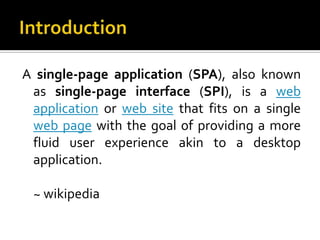
A single-page application (SPA), also known
 as single-page interface (SPI), is a web
 application or web site that fits on a single
 web page with the goal of providing a more
 fluid user experience akin to a desktop
 application.

 ~ wikipedia
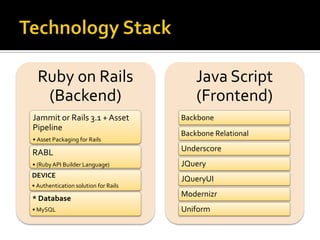
Ruby on Rails                           Java Script
   (Backend)                              (Frontend)
Jammit or Rails 3.1 + Asset           Backbone
Pipeline
                                      Backbone Relational
• Asset Packaging for Rails

RABL                                  Underscore
• (Ruby API Builder Language)         JQuery
DEVICE
                                      JQueryUI
• Authentication solution for Rails
                                      Modernizr
* Database
• MySQL                               Uniform
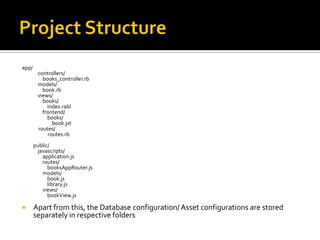
app/
        controllers/
          books_controller.rb
        models/
          book.rb
        views/
          books/
            index.rabl
          frontend/
            books/
              book.jst
        routes/
            routes.rb
       public/
         javascripts/
           application.js
           routes/
             booksAppRouter.js
           models/
             book.js
             library.js
           views/
             bookView.js​​

      Apart from this, the Database configuration/ Asset configurations are stored
       separately in respective folders
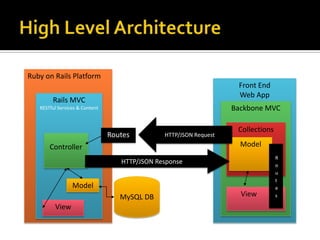
Ruby on Rails Platform
                                                                    Front End
                                                                    Web App
        Rails MVC
   RESTful Services & Content                                      Backbone MVC

                                                                    Collections
                                Routes         HTTP/JSON Request

       Controller                                                    Model
                                                                                  R
                                   HTTP/JSON Response                             o
                                                                                  u
                                                                                  t
                 Model                                                            e
                                   MySQL DB                          View         s

         View
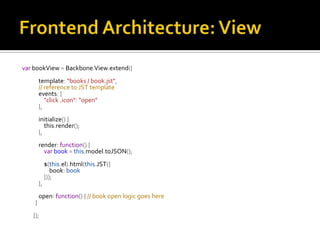
var bookView = Backbone.View.extend({
        template: “books / book.jst",
        // reference to JST template
        events: {
           "click .icon": "open"
        },
        initialize() {
           this.render();
        },
        render: function() {
          var book = this.model.toJSON();
             $(this.el).html(this.JST({
                book: book
             }));
        },
        open: function() { // book open logic goes here
    }
   });
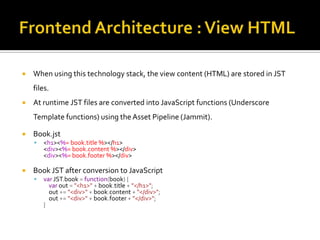
   When using this technology stack, the view content (HTML) are stored in JST
    files.
   At runtime JST files are converted into JavaScript functions (Underscore
    Template functions) using the Asset Pipeline (Jammit).

   Book.jst
       <h1><%= book.title %></h1>
        <div><%= book.content %></div>
        <div><%= book.footer %></div>

   Book JST after conversion to JavaScript
       var JST.book = function(book) {
           var out = "<h1>" + book.title + "</h1>";
           out += "<div>" + book.content + "</div>";
           out += "<div>" + book.footer + "</div>";
        }​
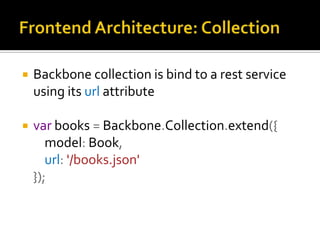
   Backbone collection is bind to a rest service
    using its url attribute

   var books = Backbone.Collection.extend({
       model: Book,
       url: '/books.json'
    });
   var book = Backbone.Model.extend({
    });
   A plug-in called backbone relational also can be used to add
    several models in relationship with eachother.
   var library = Backbone.RelationalModel.extend({
       relations: [{
         type: Backbone.HasMany,
         key: 'books',
         relatedModel: 'Book',
         reverseRelation: {
            key: 'storedAt',
            type: Backbone.HasOne
         }}]
    });
   Routes maps the request to the respective controller (request
    URL/operation mapping to controller)

   Controllers fetch a instance of a model and render the particular model
    using the respective view

   The instance of the model queried in the controller is readily available for
    the view and it renders the content using the respective model instance
    data. (HTML or JSON based on view template)

   Model reflects the instance of a database table in language structure

   All the assets (JavaScript/ Images/ CSS & etc.) are stored in Asset.yml and
    added to the respective resources using the asset pipeline (Jammit)

SPA using Rails & Backbone

  • 1.
  • 2.
    Introduction  Technology Stack  Project Structure  High Level Architecture  Frontend Architecture MVC  View  Collection  Model  Routes  Backend Architecture MVC overview  View/ Controller/ Model/ Route
  • 3.
    A single-page application(SPA), also known as single-page interface (SPI), is a web application or web site that fits on a single web page with the goal of providing a more fluid user experience akin to a desktop application. ~ wikipedia
  • 4.
    Ruby on Rails Java Script (Backend) (Frontend) Jammit or Rails 3.1 + Asset Backbone Pipeline Backbone Relational • Asset Packaging for Rails RABL Underscore • (Ruby API Builder Language) JQuery DEVICE JQueryUI • Authentication solution for Rails Modernizr * Database • MySQL Uniform
  • 5.
    app/ controllers/ books_controller.rb models/ book.rb views/ books/ index.rabl frontend/ books/ book.jst routes/ routes.rb public/ javascripts/ application.js routes/ booksAppRouter.js models/ book.js library.js views/ bookView.js​​  Apart from this, the Database configuration/ Asset configurations are stored separately in respective folders
  • 6.
    Ruby on RailsPlatform Front End Web App Rails MVC RESTful Services & Content Backbone MVC Collections Routes HTTP/JSON Request Controller Model R HTTP/JSON Response o u t Model e MySQL DB View s View
  • 7.
    var bookView =Backbone.View.extend({ template: “books / book.jst", // reference to JST template events: { "click .icon": "open" }, initialize() { this.render(); }, render: function() { var book = this.model.toJSON(); $(this.el).html(this.JST({ book: book })); }, open: function() { // book open logic goes here } });
  • 8.
    When using this technology stack, the view content (HTML) are stored in JST files.  At runtime JST files are converted into JavaScript functions (Underscore Template functions) using the Asset Pipeline (Jammit).  Book.jst  <h1><%= book.title %></h1> <div><%= book.content %></div> <div><%= book.footer %></div>  Book JST after conversion to JavaScript  var JST.book = function(book) { var out = "<h1>" + book.title + "</h1>"; out += "<div>" + book.content + "</div>"; out += "<div>" + book.footer + "</div>"; }​
  • 9.
    Backbone collection is bind to a rest service using its url attribute  var books = Backbone.Collection.extend({ model: Book, url: '/books.json' });
  • 10.
    var book = Backbone.Model.extend({ });  A plug-in called backbone relational also can be used to add several models in relationship with eachother.  var library = Backbone.RelationalModel.extend({ relations: [{ type: Backbone.HasMany, key: 'books', relatedModel: 'Book', reverseRelation: { key: 'storedAt', type: Backbone.HasOne }}] });
  • 11.
    Routes maps the request to the respective controller (request URL/operation mapping to controller)  Controllers fetch a instance of a model and render the particular model using the respective view  The instance of the model queried in the controller is readily available for the view and it renders the content using the respective model instance data. (HTML or JSON based on view template)  Model reflects the instance of a database table in language structure  All the assets (JavaScript/ Images/ CSS & etc.) are stored in Asset.yml and added to the respective resources using the asset pipeline (Jammit)

Editor's Notes

  • #4 A single-page application (SPA), also known as single-page interface (SPI), is a web application or web site that fits on a single web page with the goal of providing a more fluid user experience akin to a desktop application.The way traditional web applications work causes disruption in the user experience and workflow.SPAs address these issues by requiring no page reload by the browser during an application session. All user interaction and changes of the application state are handled in the context of a single Web document.