SOME
CURRENT
THOUGHTS
ON WAGES
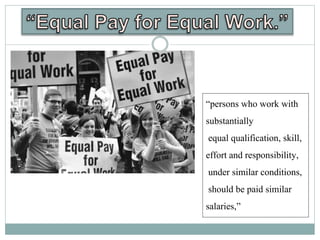
“persons who work with
substantially
equal qualification, skill,
effort and responsibility,
under similar conditions,
should be paid similar
salaries,”
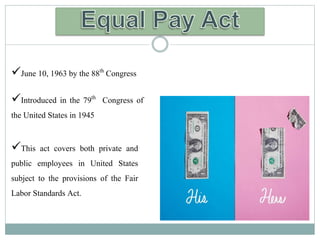
June 10, 1963 by the 88th Congress
Introduced in the 79th Congress of
the United States in 1945
This act covers both private and
public employees in United States
subject to the provisions of the Fair
Labor Standards Act.
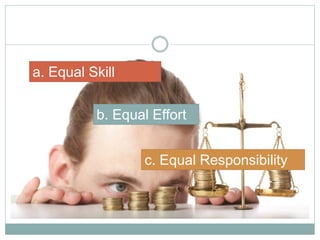
a. Equal Skill
b. Equal Effort
c. Equal Responsibility
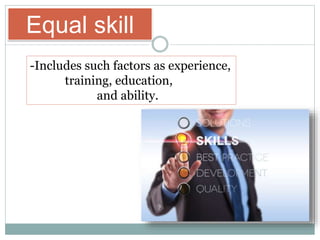
Equal skill
-Includes such factors as experience,
training, education,
and ability.
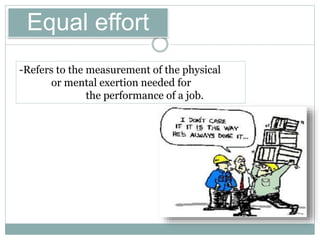
Equal effort
-Refers to the measurement of the physical
or mental exertion needed for
the performance of a job.
Equal responsibility
-Deals with the extent to which an employer depends
on the employee to perform the job as
expected, with emphasis on the
importance of the job obligation.
Similar Working Conditions
Holds the assumption that employees performing jobs
in an establishment that require equal skill, effort and responsibility
under similar working conditions.
•The fact that jobs are in different departments of a company do not
in any way establish dissimilarities of working conditions.
•It must be noted that an employer may not reduce the wage of
an employee.
•It is illegal for a labor organization or as agents or representatives
to cause or attempt to cause an employer to pay lower wages
to an employee on account of sex.
“fair day’s pay for fair day’s work.”
It is a term used to define a “fair and
decent” level of income that would
enable workers to meet their “basic
needs.”
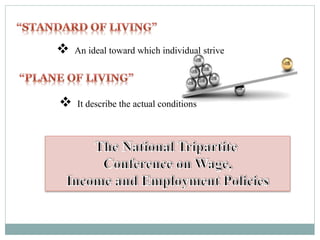
 An ideal toward which individual strive
 It describe the actual conditions

Some Current Thoughts on Wages

  • 1.
  • 2.
    “persons who workwith substantially equal qualification, skill, effort and responsibility, under similar conditions, should be paid similar salaries,”
  • 4.
    June 10, 1963by the 88th Congress Introduced in the 79th Congress of the United States in 1945 This act covers both private and public employees in United States subject to the provisions of the Fair Labor Standards Act.
  • 5.
    a. Equal Skill b.Equal Effort c. Equal Responsibility
  • 6.
    Equal skill -Includes suchfactors as experience, training, education, and ability.
  • 7.
    Equal effort -Refers tothe measurement of the physical or mental exertion needed for the performance of a job.
  • 8.
    Equal responsibility -Deals withthe extent to which an employer depends on the employee to perform the job as expected, with emphasis on the importance of the job obligation.
  • 9.
    Similar Working Conditions Holdsthe assumption that employees performing jobs in an establishment that require equal skill, effort and responsibility under similar working conditions. •The fact that jobs are in different departments of a company do not in any way establish dissimilarities of working conditions. •It must be noted that an employer may not reduce the wage of an employee. •It is illegal for a labor organization or as agents or representatives to cause or attempt to cause an employer to pay lower wages to an employee on account of sex.
  • 10.
    “fair day’s payfor fair day’s work.”
  • 11.
    It is aterm used to define a “fair and decent” level of income that would enable workers to meet their “basic needs.”
  • 12.
     An idealtoward which individual strive  It describe the actual conditions