Solution Manual for C++ How to Program 10th by Deitel
Solution Manual for C++ How to Program 10th by Deitel
Solution Manual for C++ How to Program 10th by Deitel
Solution Manual for C++ How to Program 10th by Deitel
Solution Manual for C++ How to Program 10th by Deitel
1.
Visit https://testbankmall.com todownload the full version and
explore more testbank or solutions manual
Solution Manual for C++ How to Program 10th by
Deitel
_____ Click the link below to download _____
https://testbankmall.com/product/solution-manual-for-c-how-
to-program-10th-by-deitel/
Explore and download more testbank or solutions manual at testbankmall.com
2.
Here are somerecommended products that we believe you will be
interested in. You can click the link to download.
C++ How to Program 10th Edition Deitel Solutions Manual
https://testbankmall.com/product/c-how-to-program-10th-edition-deitel-
solutions-manual/
Solution Manual for C How to Program, 8th Edition, Paul J.
Deitel, Harvey Deitel
https://testbankmall.com/product/solution-manual-for-c-how-to-
program-8th-edition-paul-j-deitel-harvey-deitel/
Solution Manual for C How to Program, 7/E 7th Edition Paul
Deitel, Harvey Deitel
https://testbankmall.com/product/solution-manual-for-c-how-to-
program-7-e-7th-edition-paul-deitel-harvey-deitel/
Solution Manual for Visual C# How to Program (6th Edition)
(Deitel Series) 6th Edition
https://testbankmall.com/product/solution-manual-for-visual-c-how-to-
program-6th-edition-deitel-series-6th-edition/
3.
Test Bank forC How to Program, 8th Edition, Paul J.
Deitel, Harvey Deitel
https://testbankmall.com/product/test-bank-for-c-how-to-program-8th-
edition-paul-j-deitel-harvey-deitel-2/
Solution Manual for Java How to Program, Early Objects
(11th Edition) (Deitel: How to Program) 11th Edition
https://testbankmall.com/product/solution-manual-for-java-how-to-
program-early-objects-11th-edition-deitel-how-to-program-11th-edition/
Solution Manual for C++ How to Program: Late Objects
Version, 7/E 7th Edition Paul Deitel, Harvey Deitel
https://testbankmall.com/product/solution-manual-for-c-how-to-program-
late-objects-version-7-e-7th-edition-paul-deitel-harvey-deitel/
Test Bank for Java How To Program (early objects), 9th
Edition: Paul Deitel
https://testbankmall.com/product/test-bank-for-java-how-to-program-
early-objects-9th-edition-paul-deitel/
Test Bank for Visual C# 2012 How to Program, 5/E 5th
Edition : 0133379337
https://testbankmall.com/product/test-bank-for-visual-c-2012-how-to-
program-5-e-5th-edition-0133379337/
5.
2 Chapter 1Introduction to Computers and C++ Exercises 3
Self-Review Exercises
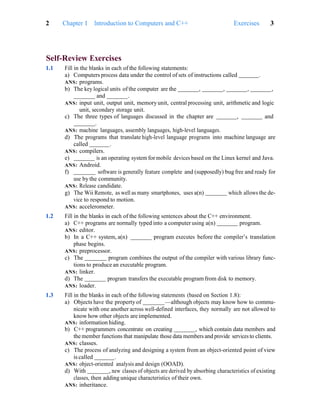
1.1 Fill in the blanks in each of the following statements:
a) Computers process data under the control of sets of instructions called .
ANS: programs.
b) The key logical units of the computer are the , , , ,
and .
ANS: input unit, output unit, memoryunit, central processing unit, arithmetic and logic
unit, secondary storage unit.
c) The three types of languages discussed in the chapter are , and
.
ANS: machine languages, assembly languages, high-level languages.
d) The programs that translate high-level language programs into machine language are
called .
ANS: compilers.
e) is an operating system for mobile devices based on the Linux kernel and Java.
ANS: Android.
f) software is generally feature complete and (supposedly) bug free and ready for
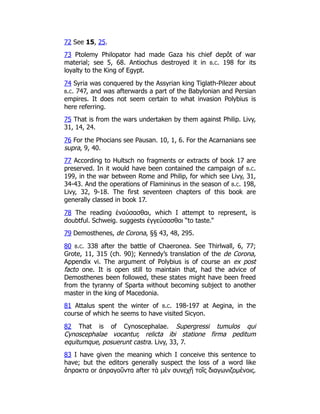
use by the community.
ANS: Release candidate.
g) The Wii Remote, as well as many smartphones, uses a(n) which allows the de-
vice to respond to motion.
ANS: accelerometer.
1.2 Fill in the blanks in each of the following sentences about the C++ environment.
a) C++ programs are normally typed into a computer using a(n) program.
ANS: editor.
b) In a C++ system, a(n) program executes before the compiler’s translation
phase begins.
ANS: preprocessor.
c) The program combines the output of the compiler with various library func-
tions to produce an executable program.
ANS: linker.
d) The program transfers the executable programfrom disk to memory.
ANS: loader.
1.3 Fill in the blanks in each of the following statements (based on Section 1.8):
a) Objects have the property of —although objects may know how to commu-
nicate with one another across well-defined interfaces, they normally are not allowed to
know how other objects are implemented.
ANS: information hiding.
b) C++ programmers concentrate on creating , which contain data members and
the member functions that manipulate those data members and provide services to clients.
ANS: classes.
c) The process of analyzing and designing a system from an object-oriented point of view
is called .
ANS: object-oriented analysis and design (OOAD).
d) With , new classes of objects are derived by absorbing characteristics of existing
classes, then adding unique characteristics of their own.
ANS: inheritance.
6.
3 Chapter 1Introduction to Computers and C++ Exercises 3
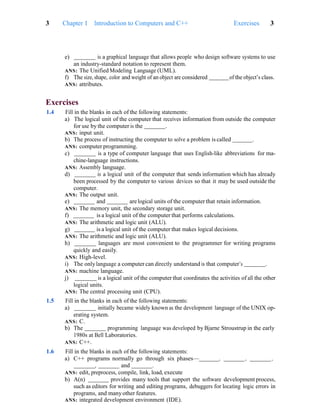
e) is a graphical language that allows people who design software systems to use
an industry-standard notation to represent them.
ANS: The Unified Modeling Language (UML).
f) The size, shape, color and weight of an object are considered of the object’s class.
ANS: attributes.
Exercises
1.4 Fill in the blanks in each of the following statements:
a) The logical unit of the computer that receives information from outside the computer
for use by the computer is the .
ANS: input unit.
b) The process of instructing the computer to solve a problem is called .
ANS: computer programming.
c) is a type of computer language that uses English-like abbreviations for ma-
chine-language instructions.
ANS: Assembly language.
d) is a logical unit of the computer that sends information which has already
been processed by the computer to various devices so that it may be used outside the
computer.
ANS: The output unit.
e) and are logical units of the computer that retain information.
ANS: The memory unit, the secondary storage unit.
f) is a logical unit of the computer that performs calculations.
ANS: The arithmetic and logic unit (ALU).
g) is a logical unit of the computer that makes logical decisions.
ANS: The arithmetic and logic unit (ALU).
h) languages are most convenient to the programmer for writing programs
quickly and easily.
ANS: High-level.
i) The onlylanguage a computer can directly understand is that computer’s .
ANS: machine language.
j) is a logical unit of the computer that coordinates the activities of all the other
logical units.
ANS: The central processing unit (CPU).
1.5 Fill in the blanks in each of the following statements:
a) initially became widely known as the development language of the UNIX op-
erating system.
ANS: C.
b) The programming language was developed by Bjarne Stroustrup in the early
1980s at Bell Laboratories.
ANS: C++.
1.6 Fill in the blanks in each of the following statements:
a) C++ programs normally go through six phases— , , ,
, and .
ANS: edit, preprocess, compile, link, load, execute
b) A(n) provides many tools that support the software development process,
such as editors for writing and editing programs, debuggers for locating logic errors in
programs, and manyother features.
ANS: integrated development environment (IDE).
7.
4 Chapter 1Introduction to Computers and C++ Exercises 3
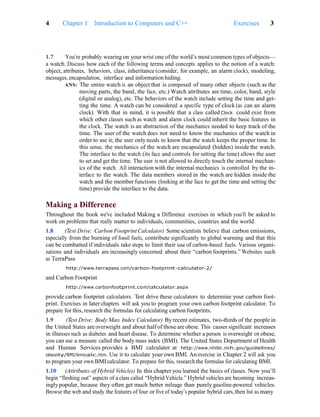
1.7 You’re probably wearing on your wrist one of the world’s most common types of objects—
a watch. Discuss how each of the following terms and concepts applies to the notion of a watch:
object, attributes, behaviors, class, inheritance (consider, for example, an alarm clock), modeling,
messages, encapsulation, interface and information hiding.
ANS: The entire watch is an object that is composed of many other objects (such as the
moving parts, the band, the face, etc.) Watch attributes are time, color, band, style
(digital or analog), etc. The behaviors of the watch include setting the time and get-
ting the time. A watch can be considered a specific type of clock (as can an alarm
clock). With that in mind, it is possible that a class called Clock could exist from
which other classes such as watch and alarm clock could inherit the basic features in
the clock. The watch is an abstraction of the mechanics needed to keep track of the
time. The user of the watch does not need to know the mechanics of the watch in
order to use it; the user only needs to know that the watch keeps the proper time. In
this sense, the mechanics of the watch are encapsulated (hidden) inside the watch.
The interface to the watch (its face and controls for setting the time) allows the user
to set and get the time. The user is not allowed to directly touch the internal mechan-
ics of the watch. All interaction with the internal mechanics is controlled by the in-
terface to the watch. The data members stored in the watch are hidden inside the
watch and the member functions (looking at the face to get the time and setting the
time) provide the interface to the data.
Making a Difference
Throughout the book we’ve included Making a Difference exercises in which you’ll be asked to
work on problems that really matter to individuals, communities, countries and the world.
1.8 (Test Drive: Carbon Footprint Calculator) Some scientists believe that carbon emissions,
especially from the burning of fossil fuels, contribute significantly to global warming and that this
can be combatted if individuals take steps to limit their use of carbon-based fuels. Various organi-
zations and individuals are increasingly concerned about their “carbon footprints.” Websites such
as TerraPass
http://www.terrapass.com/carbon-footprint-calculator-2/
and Carbon Footprint
http://www.carbonfootprint.com/calculator.aspx
provide carbon footprint calculators. Test drive these calculators to determine your carbon foot-
print. Exercises in later chapters will ask you to program your own carbon footprint calculator. To
prepare for this, research the formulas for calculating carbon footprints.
1.9 (Test Drive: Body Mass Index Calculator) By recent estimates, two-thirds of the people in
the United States are overweight and about halfof those are obese. This causes significant increases
in illnesses such as diabetes and heart disease. To determine whether a person is overweight or obese,
you can use a measure called the body mass index (BMI). The United States Department of Health
and Human Services provides a BMI calculator at http://www.nhlbi.nih.gov/guidelines/
obesity/BMI/bmicalc.htm. Use it to calculate your own BMI. An exercise in Chapter 2 will ask you
to program your own BMIcalculator. To prepare for this, research the formulas for calculating BMI.
1.10 (Attributes of Hybrid Vehicles) In this chapter you learned the basics of classes. Now you’ll
begin “fleshing out” aspects of a class called “Hybrid Vehicle.” Hybrid vehicles are becoming increas-
inglypopular, because they often get much better mileage than purely gasoline-powered vehicles.
Browse the web and study the features of four or five of today’s popular hybrid cars, then list as many
8.
Making a Difference5
5 Chapter 1 Introduction to Computers and C++
of their hybrid-related attributes as you can. For example, common attributes include city-miles-per-
gallon and highway-miles-per-gallon. Also list the attributes of the batteries (type, weight, etc.).
• Manufacturer
• Type of Hybrid—Battery hybrid (Hybrid Electric Vehicles), Plug-in hybrid, Fuel cell etc.
• Driver feedback system—so the driver can monitor fuel efficiency based on their driving
• Energy recovery—for example, regenerative breaking
• Carbon footprint—tons of CO2 per year
• Fuel capacity
• City-miles-per-gallon
• Highway-miles-per-gallon
• Two-mode hybrid propulsion system
• Engine size—V6, V8, etc.
• Vehicle type—SUV, crossover, compact, mid-size, etc.
• Seating capacity
• Horse power
• Drive train (front wheel drive, all wheel drive)
• Top speed
• Torque
• Price
1.11 (Gender Neutrality) Some people want to eliminate sexism in all forms of communication.
You’ve been asked to create a program that can process a paragraph of text and replace gender-spe-
cific words with gender-neutral ones. Assuming that you’ve been given a list of gender-specific
words and their gender-neutral replacements (e.g., replace “wife” with “spouse,” “man” with “per-
son,” “daughter” with “child” and so on), explain the procedure you’d use to read through a para-
graph of text and manually perform these replacements. How might your procedure generate a
strange term like “woperchild,” which is actually listed in the Urban Dictionary (www.urbandic-
tionary.com)? In Chapter 4, you’ll learn that a more formal term for “procedure” is “algorithm,”
and that an algorithm specifies the steps to be performed and the order in which to perform them.
ANS: Search through the entire paragraph for a word such as “wife” and replace every oc-
currence with “spouse.” Repeat this searching process for every gender specific word
in the list. You could accidentally get a word like “woperchild” if you are not careful
about how you perform replacements. For example, the word “man” can be part of
a larger word, like “woman.” So, replacing every occurrence of “man” can yield
strange results. Consider the process of replacing “man” with “person” then replacing
“son” with “child.” If you encounter the word “woman,” which contains the word
“man,” you’d replace “man” with “person” resulting in the word “woperson.” In a
subsequent pass you’d encounter “woperson” and replace “son” with “child” result-
ing in the “woperchild.”
1.12 (Privacy) Some online e-mail services save all e-mail correspondence for some period of
time. Suppose a disgruntled employee of one of these online e-mail services were to post all of the
e-mail correspondences for millions of people, including yours, on the Internet. Discuss the issues.
1.13 (Programmer Responsibility and Liability) As a programmer in industry, you may develop
software that could affect people’s health or even their lives. Suppose a software bug in one of your
programs were to cause a cancer patient to receive an excessive dose during radiation therapy and
that the person either was severely injured or died. Discuss the issues.
9.
Making a Difference5
6 Chapter 1 Introduction to Computers and C++
1.14 (2010 “Flash Crash”) An example of the consequences of our dependency on computers
was the so-called “flash crash” which occurred on May 6, 2010, when the U.S. stock market fell pre-
cipitously in a matter of minutes, wiping out trillions of dollars of investments, and then recovered
within minutes. Use the Internet to investigate the causes of this crash and discuss the issues it raises.
XL (27)
Being utterlyat a loss, at last he rested his chance of escape from
the difficulty which was upon him on some such hope as this.
XLI (30)
None of the citizens being aware of what was taking place owing to
the distance, for the city was a large one.
XLII (32)
But trusting to them he undertook the war against Ariarathes.
XLIII (34)
Harpyia is a city in Illyria near Encheleae, to which Baton, charioteer
of Amphiaraus, removed after the latter’s disappearance.
XLIV (35)
And he waited for the coming of Hasdrubal.
XLV (36)
Hearing all this through the curtain the king laughed.
XLVI (39)
Foreseeing and fearing the fierce temper and obstinacy of the men.
XLVII (40)
At that time, persuaded that he was enduring a fiery test, he was
released from the suspicion.
12.
XLVIII (43)
He thoughttherefore that it was dangerous to have shared in their
enterprise when their plan had failed and come to an end.
XLIX (44)
Having urged the soldiers to make haste, and exhorted the tribunes
to engage.
L (46)
Thinking it better and safer not to be present at the hour of the
enemy’s opportunity, nor when they were under the influence of
popular excitement and fury.
LI (47)
Whenever it is possible to obtain satisfaction from those who have
wronged us either by law or by any other settled forms of justice.
LII (54)
Having drawn his army from the pass he encamped.
LII (55)
And then they took up some sort of order, as though by mutual
consent, and fought the battle in regular formation.
LIII (56)
That which causes the most pain at the time involves also the most
signal revulsion of joy.
LIV (57)
13.
Having ordered thepilots to steer the ships as fast as they could to
Elaea.
LV (61)
They not only drove themselves off the stage, but ruined also all
Greece.
LV (62)
But he, from his long experience of war, did not all lose his presence
of mind.
LVI (67)
He persuades them by reckoning all the wealth he considered they
would gain in the battle.
LVII (68)
The Romans had been inspired by some divine influence, and having
fortified their courage with irresistible might....
LVII (69)
To signalise some by favours, and others by punishments, that they
might be a warning to the rest.
LVIII (72)
And they, being persuaded, and throwing themselves in the way of
the enemy’s charge, died gallantly.
LIX (73)
14.
He tried totake the city by an intrigue, having long secured a party
of traitors within it.
LX (74)
He brought up the transports, by lading which with rocks and sinking
them at the mouth of the harbour he planned to shut out the enemy
entirely from the sea.
LXI (80)
Though I have much more to say, I fear lest some of you may think
that I am unnecessarily diffuse.
LXII (81)
They are reserving themselves for an opportunity, and are quite
ready to meet them again.
LXIII (85)
To be eager for life and to cling to it is a sign of the greatest
baseness and weakness.
LXIV (86)
He was feeling something like starters in horse races, which are
started by the raising of torches.
LXV (88)
Their boldness transgresses the bounds of propriety, and their
actions are a violation of duty.
LXV (91)
15.
Seeing that theCarthaginians had obeyed all injunctions in the most
honourable spirit.
LXVI (92)
To have fifty ships built entirely new, and to launch fifty of those
already existing from the docks.
LXVII (100)
Lucius being appointed to go on a mission to the Lapateni and speak
to them in favour of an unconditional surrender, was unprepared for
the task before him.
LXVIII (101)
Of all the determining forces in war the most decisive of failure or
success is the spirit of the combatants.
LXIX (104)
Having mentioned summarily the defeats they had sustained, and
putting before them the successes of the Macedonians.
LXX (105)
For he perceived that the Macedonian kingdom would become
contemptible, if the rebels succeeded in their first attempt.
LXXI (109)
Therefore it was intolerable that the Romans even then should make
their way into Macedonia unobserved.
LXXII (110)
16.
He, if anyone of our time has done so, has examined all that has
been said scientifically on tactics.
LXXIII (111)
Metrodorus and his colleagues, frightened at the threatening aspect
of Philip, departed.
LXXIV (112)
The Romans made no show of bearing a grudge for what had taken
place.
LXXV (113)
But putting both spurs to his horse he rode on as hard as he could.
LXXVI (114)
Being annoyed at the treaty, Nabis paid no attention to its
provisions.
LXXVII (120)
It was neither possible to examine the man closely in his state of
physical weakness, nor to put a question to him for fear of worrying
him.
LXXVIII (122)
The Pannonians having seized the fort at the beginning of the war,
had taken it as a base of operations, and had fitted it up for the
reception of booty.
LXXIX (124)
17.
But wishing topoint the contrast between his policy to those who
trusted and those who disobeyed him, he commenced the siege.
LXXX (126)
So that those in the assembly were thunderstruck and unable to
collect their thoughts, sympathising with the poignant sorrow of
those thus dispossessed of their all.
LXXXI (131)
They immediately sent a courier to Perseus to tell him what had
happened. (132) It was Perseus’s design to keep it close, but he
could not hide the truth.
LXXXII (133)
In other respects he was well equipped for service, but his spear
was limp.
LXXXIII (134)
Publius was anxious to engage and avail himself of the enthusiasm
of the barbarians. (135) He put in at Naupactus in Aetolia. (136) He
escorted Publius out with great respect. (137) Having received
Publius and Gaius with kindness and honour.
LXXXIV (140)
It was the deliberate intention of the Romans to fight at sea.
LXXXV (141)
While they were still together and were fighting at close quarters
with their swords, taking his stand behind them he stabbed him
under the armpit.
18.
LXXXVI (151)
This manpresented Prusias with many silver and gold cups during
the banquet.
LXXXVII (153)
Taking a wise view of the future, he came to the conclusion to get
rid of the garrison sent by Ptolemy.
LXXXVIII (158)
On that occasion both Romans and Carthaginians bivouacked on the
embankment.
LXXXIX (159)
Not being able to persuade him again, owing to that king’s cautious
and inactive character, he was forced to offer five hundred talents.
And so Seleucus agreed to give the aid.
XC (161)
Chance and Fortune, so to speak, enhanced the achievements of
Scipio, so that they always appeared more illustrious than was
expected.
XCI (162)
One must not pass over even a minor work of his, as in the case of a
famous artist.
XCII (163)
Scipio counselled him either not to try, or to do so in such a manner
as to succeed at all risks. For to make an attempt on the same man
19.
twice was dangerousin itself, and was apt to make a man altogether
contemptible.
XCIII (164)
But being jealous of Scipio they tried to decry his achievements.
XCIV (168)
Fixing the stocks upright in the ground in a semicircle touching each
other.
XCV (170)
The important point of their resolution was that they would not
admit a garrison or governor, and would not give up their
constitution as established by law.
XCV (177-179)
He said that we should not let the enemy escape, or encourage their
boldness by shirking a battle....
Conceiving a slight hope from the besieged garrison, he made the
most of it....
Pretending warm friendship, he tried every manœuvre whereby he
might promote the enemy’s interests, and surround us by the
gravest perils....
XCVI (182)
As the rock caused them difficulty because they were obliged to bore
a hole in it, they completed the mine which they were making by
using wooden bolts.
20.
XCVII (183)
He didnot think it right to leave the war in Etruria, and give his
attention to the cities in that part of the country. He feared that he
should waste all the time, which was not very long to begin with, in
less important details.
XCVIII (185)
And having got his boats and hemioliae dragged across the Isthmus
he put to sea, being anxious to be in time for the Achaean congress.
XCIX (191)
Philip was annoyed at the request of the Corcyreans.
C (192)
Since circumstances debar Philip, the king wishes to give that man
the credit of the achievement, making the proposal to him in the
light of a favour.
CI (193)
Philip, having given out that he was about to serve out rations, made
a proclamation that a return should be made to him of all who had
not provisions for more than thirty days.
CII (195)
After two days from starting for the seat of war Philip passed the
order to make two rations three, whenever he wanted an additional
day, and sometimes to make two four. (? Cp. Livy, 35, 28.)
CIII (195)
21.
A swipe (φρεατοτόπανον)is one of the implements mentioned by
Polybius. (See 9, 43, Hultsch.)
CIV (199)
It was impossible to convey the equipments and provisions for the
legions by sea or upon beasts of burden; they must carry ten days’
provisions in their wallets.
22.
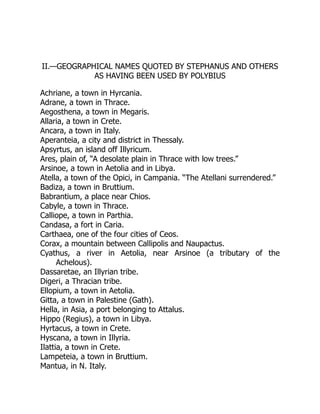
II.—GEOGRAPHICAL NAMES QUOTEDBY STEPHANUS AND OTHERS
AS HAVING BEEN USED BY POLYBIUS
Achriane, a town in Hyrcania.
Adrane, a town in Thrace.
Aegosthena, a town in Megaris.
Allaria, a town in Crete.
Ancara, a town in Italy.
Aperanteia, a city and district in Thessaly.
Apsyrtus, an island off Illyricum.
Ares, plain of, “A desolate plain in Thrace with low trees.”
Arsinoe, a town in Aetolia and in Libya.
Atella, a town of the Opici, in Campania. “The Atellani surrendered.”
Badiza, a town in Bruttium.
Babrantium, a place near Chios.
Cabyle, a town in Thrace.
Calliope, a town in Parthia.
Candasa, a fort in Caria.
Carthaea, one of the four cities of Ceos.
Corax, a mountain between Callipolis and Naupactus.
Cyathus, a river in Aetolia, near Arsinoe (a tributary of the
Achelous).
Dassaretae, an Illyrian tribe.
Digeri, a Thracian tribe.
Ellopium, a town in Aetolia.
Gitta, a town in Palestine (Gath).
Hella, in Asia, a port belonging to Attalus.
Hippo (Regius), a town in Libya.
Hyrtacus, a town in Crete.
Hyscana, a town in Illyria.
Ilattia, a town in Crete.
Lampeteia, a town in Bruttium.
Mantua, in N. Italy.
23.
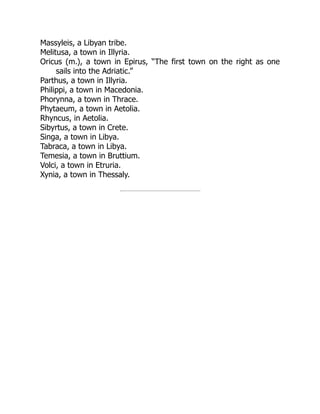
Massyleis, a Libyantribe.
Melitusa, a town in Illyria.
Oricus (m.), a town in Epirus, “The first town on the right as one
sails into the Adriatic.”
Parthus, a town in Illyria.
Philippi, a town in Macedonia.
Phorynna, a town in Thrace.
Phytaeum, a town in Aetolia.
Rhyncus, in Aetolia.
Sibyrtus, a town in Crete.
Singa, a town in Libya.
Tabraca, a town in Libya.
Temesia, a town in Bruttium.
Volci, a town in Etruria.
Xynia, a town in Thessaly.
24.
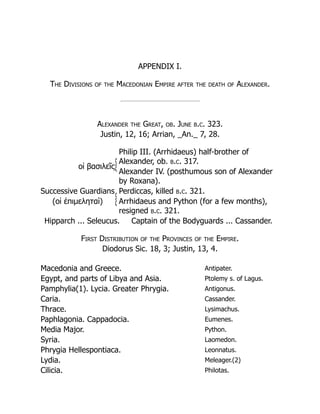
APPENDIX I.
The Divisionsof the Macedonian Empire after the death of Alexander.
Alexander the Great, ob. June b.c. 323.
Justin, 12, 16; Arrian, _An._ 7, 28.
οἱ βασιλεῖς
Philip III. (Arrhidaeus) half-brother of
Alexander, ob. b.c. 317.
Alexander IV. (posthumous son of Alexander
by Roxana).
Successive Guardians Perdiccas, killed b.c. 321.
(οἱ ἐπιμεληταί) Arrhidaeus and Python (for a few months),
resigned b.c. 321.
Hipparch ... Seleucus. Captain of the Bodyguards ... Cassander.
First Distribution of the Provinces of the Empire.
Diodorus Sic. 18, 3; Justin, 13, 4.
Macedonia and Greece. Antipater.
Egypt, and parts of Libya and Asia. Ptolemy s. of Lagus.
Pamphylia(1). Lycia. Greater Phrygia. Antigonus.
Caria. Cassander.
Thrace. Lysimachus.
Paphlagonia. Cappadocia. Eumenes.
Media Major. Python.
Syria. Laomedon.
Phrygia Hellespontiaca. Leonnatus.
Lydia. Meleager.(2)
Cilicia. Philotas.
25.
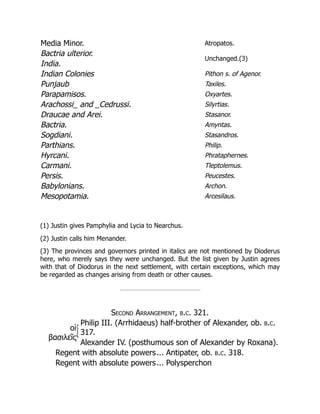
Media Minor. Atropatos.
Bactriaulterior.
Unchanged.(3)
India.
Indian Colonies Pithon s. of Agenor.
Punjaub Taxiles.
Parapamisos. Oxyartes.
Arachossi_ and _Cedrussi. Silyrtias.
Draucae and Arei. Stasanor.
Bactria. Amyntas.
Sogdiani. Stasandros.
Parthians. Philip.
Hyrcani. Phrataphernes.
Carmani. Tleptolemus.
Persis. Peucestes.
Babylonians. Archon.
Mesopotamia. Arcesilaus.
(1) Justin gives Pamphylia and Lycia to Nearchus.
(2) Justin calls him Menander.
(3) The provinces and governors printed in italics are not mentioned by Dioderus
here, who merely says they were unchanged. But the list given by Justin agrees
with that of Diodorus in the next settlement, with certain exceptions, which may
be regarded as changes arising from death or other causes.
Second Arrangement, b.c. 321.
οἱ
βασιλεῖς
Philip III. (Arrhidaeus) half-brother of Alexander, ob. b.c.
317.
Alexander IV. (posthumous son of Alexander by Roxana).
Regent with absolute powers... Antipater, ob. b.c. 318.
Regent with absolute powers... Polysperchon
26.
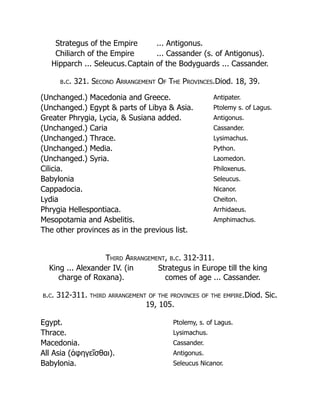
Strategus of theEmpire ... Antigonus.
Chiliarch of the Empire ... Cassander (s. of Antigonus).
Hipparch ... Seleucus.Captain of the Bodyguards ... Cassander.
b.c. 321. Second Arrangement Of The Provinces.Diod. 18, 39.
(Unchanged.) Macedonia and Greece. Antipater.
(Unchanged.) Egypt & parts of Libya & Asia. Ptolemy s. of Lagus.
Greater Phrygia, Lycia, & Susiana added. Antigonus.
(Unchanged.) Caria Cassander.
(Unchanged.) Thrace. Lysimachus.
(Unchanged.) Media. Python.
(Unchanged.) Syria. Laomedon.
Cilicia. Philoxenus.
Babylonia Seleucus.
Cappadocia. Nicanor.
Lydia Cheiton.
Phrygia Hellespontiaca. Arrhidaeus.
Mesopotamia and Asbelitis. Amphimachus.
The other provinces as in the previous list.
Third Arrangement, b.c. 312-311.
King ... Alexander IV. (in
charge of Roxana).
Strategus in Europe till the king
comes of age ... Cassander.
b.c. 312-311. third arrangement of the provinces of the empire.Diod. Sic.
19, 105.
Egypt. Ptolemy, s. of Lagus.
Thrace. Lysimachus.
Macedonia. Cassander.
All Asia (ἀφηγεῖσθαι). Antigonus.
Babylonia. Seleucus Nicanor.
27.
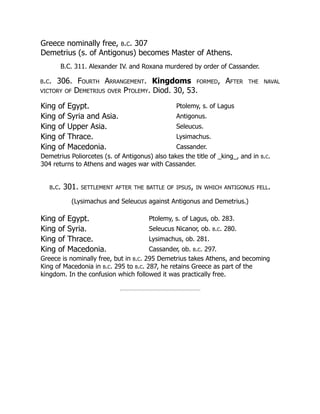
Greece nominally free,b.c. 307
Demetrius (s. of Antigonus) becomes Master of Athens.
B.C. 311. Alexander IV. and Roxana murdered by order of Cassander.
b.c. 306. Fourth Arrangement. Kingdoms formed, After the naval
victory of Demetrius over Ptolemy. Diod. 30, 53.
King of Egypt. Ptolemy, s. of Lagus
King of Syria and Asia. Antigonus.
King of Upper Asia. Seleucus.
King of Thrace. Lysimachus.
King of Macedonia. Cassander.
Demetrius Poliorcetes (s. of Antigonus) also takes the title of _king_, and in b.c.
304 returns to Athens and wages war with Cassander.
b.c. 301. settlement after the battle of ipsus, in which antigonus fell.
(Lysimachus and Seleucus against Antigonus and Demetrius.)
King of Egypt. Ptolemy, s. of Lagus, ob. 283.
King of Syria. Seleucus Nicanor, ob. b.c. 280.
King of Thrace. Lysimachus, ob. 281.
King of Macedonia. Cassander, ob. b.c. 297.
Greece is nominally free, but in b.c. 295 Demetrius takes Athens, and becoming
King of Macedonia in b.c. 295 to b.c. 287, he retains Greece as part of the
kingdom. In the confusion which followed it was practically free.
28.
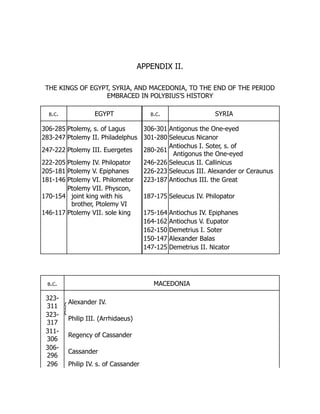
APPENDIX II.
THE KINGSOF EGYPT, SYRIA, AND MACEDONIA, TO THE END OF THE PERIOD
EMBRACED IN POLYBIUS’S HISTORY
b.c. EGYPT b.c. SYRIA
306-285 Ptolemy, s. of Lagus 306-301 Antigonus the One-eyed
283-247 Ptolemy II. Philadelphus 301-280 Seleucus Nicanor
247-222 Ptolemy III. Euergetes 280-261
Antiochus I. Soter, s. of
Antigonus the One-eyed
222-205 Ptolemy IV. Philopator 246-226 Seleucus II. Callinicus
205-181 Ptolemy V. Epiphanes 226-223 Seleucus III. Alexander or Ceraunus
181-146 Ptolemy VI. Philometor 223-187 Antiochus III. the Great
170-154
Ptolemy VII. Physcon,
joint king with his
brother, Ptolemy VI
187-175 Seleucus IV. Philopator
146-117 Ptolemy VII. sole king 175-164 Antiochus IV. Epiphanes
164-162 Antiochus V. Eupator
162-150 Demetrius I. Soter
150-147 Alexander Balas
147-125 Demetrius II. Nicator
b.c. MACEDONIA
323-
311
Alexander IV.
323-
317
Philip III. (Arrhidaeus)
311-
306
Regency of Cassander
306-
296
Cassander
296 Philip IV. s. of Cassander
29.
296-
294
Antipater
sons of Cassander
Alexander
294-
287
DemetriusI. Poliercetes, ob. 283
287-
281
Divided between Lysimachus and Pyrrhus
281-
280
Seleucus, Nicanor
Ptolemy Ceraunus, s. of Ptolemy of Egypt
280-
277
[Various claimants]
277-
239
Antigonus Gonatas, s. of Demetrius I.
239-
229
Demetrius II. s. of Gonatas.
229-
179
Philip V. s. of Demetrius II.
[Antigonus Doson, nominally his guardian assumes the crown b.c. 229-
220]
179-
168
Perseus [Macedonia a Roman province]
30.
APPENDIX III
1, 21.The capture of Cornelius Asina is ascribed by Livy (Ep. 17) to
an act of treachery, per fraudem velut in colloquium evocatus captus
est. He is copied by Florus (2, 2) and Eutropius (2, 10). See also
Valerius Max. 6, 6, 2. This is perhaps not incompatible with the
narrative of Polybius, which, however, does not suggest it. He must
have been released at the time of the entrance of Regulus into
Africa, for being captured in b.c. 260, we find him Consul for b.c.
254, without any account of his release being preserved.
1, 32-36.—XANTHIPPUS THE LACEDAEMONIAN
The fate of Xanthippus has been variously reported. Polybius
represents him as going away voluntarily, and Mommsen supposes
him to have taken service in the Egyptian army. Appian, however,
asserts that he and his men were drowned on their way home to
Sparta by the Carthaginian captains who were conveying them, and
who were acting on secret orders from home (8, 4). Mommsen also
regards the account of Polybius of the reforms introduced in the
Carthaginian tactics by Xanthippus as exaggerated: “The officers of
Carthage can hardly have waited for foreigners to teach them that
the light African cavalry can be more appropriately employed on the
plain than among hills and forests.” The doubt had apparently
occurred to others [Diodor. Sic. fr. bk. 23.] The mistake, however,
was not an unnatural one. For other references to Xanthippus see
Cicero de Off. 3, 26, 7; Valerius Max. 1, 1, 14; Dio Cassius, fr. 43, 24.
1, 34.—M. ATILIUS REGULUS
No more is told us of the fate of Regulus, and Mommsen says
“nothing more is known with certainty.” Arnold, following Niebuhr,
declared the story of his cruel death to be a fabrication. The
31.
tradition, however, ofhis mission home to propose peace, his
subsequent return after advising against it, and his death under
torture, was received undoubtingly by the Roman writers of the time
of Cicero and afterwards. See Cicero, Off. 3, § 99; ad Att. 16, 11; de
Sen. § 74; Paradox. 2, 16; Tusc. 5, § 14. Horace, Od. 3, 5; Livy, Ep.
18; Valerius Max. 1, 1, 14; Dio Cassius, fr. 43, 28. To Appian (8, 4) is
due the additional particular of the barrel full of nails, καὶ αὐτὸν οἱ
Καρχηδόνιοι καθείρξαντες ἐν γαλεάγρᾳ κέντρα πάντοθεν ἐχούσῃ
διέφθειραν. Against this uniformity of tradition is to be set the
silence of Polybius. But on the other hand, in this introductory part
of his history, Polybius does not profess to give full particulars (see
note to 1, 21); and in the case of Regulus, he has not stated what
we learn from Livy (Ep. 18) and Valerius Max. 4, 4, 6, that his stay in
Africa for the second year was against his own express wish, his
private business requiring, as he thought, his presence in Italy.
1, 60.—LUTATIUS
Lutatius is represented by Polybius as directing the operations at the
battle of Aegusa; but it appears that he had received some hurt a
few days before, and was confined to his lectica during the action
(lectica claudum jucuisse). The chief direction therefore devolved
upon the praetor, Q. Valerius Falto, who accordingly claimed to share
his triumph, but was refused on the technical ground that the victory
had not been won under his auspicia. Valerius Max. 2, 8, 2.
1, 76.—HAMILCAR
(Vol. i. p. 85.) Dr. Warre writes on the manœuvre of Hamilcar as
follows: “Hamilcar’s army is in column of route; elephants leading,
then cavalry, then light-armed infantry, and heavy-armed infantry in
the rear. He observes the enemy bearing down hastily; gives orders
to his whole force to turn about, and then forms line (ἐξέτασις) by
successive wheels of his heavy-armed troops. He would thus have
changed his heavy-armed from column of route into line by wheeling
them while retiring to the right (or left) about. The light-armed
32.
apparently passed throughthe intervals; the cavalry halted when
they came to the line now formed up, and at once turned to their
front and faced the enemy, and the remainder marched forward to
meet them. Polybius does not tell us with what front Hamilcar was
marching; but I think it is clear that he was in column of route and
not in battle array (ἐκ παρατάξεως). Thus the deployment of his
columns, while retiring, by right (or left) about wheel into line by
successive συντάγματα, or battalions, would be a very pretty
manœuvre, and only such as an able tactician would resort to.”
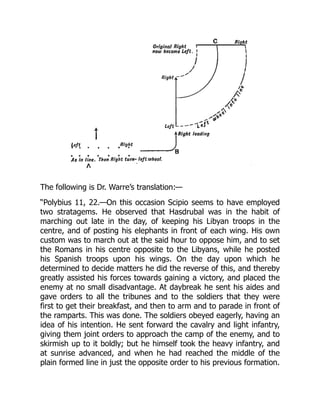
11, 22-23.—SCIPIO AND HASDRUBAL SON OF GESCO
(Vol. ii. p. 67.) Of this passage Dr. Warre has again favoured me with
a note and a translation which I append: “The passage in Polybius is
very interesting. It is a good tactical example of an attack on both
flanks, refusing the centre, the effect being to keep the enemy from
moving the troops in his centre to the assistance of his wings. The
inversion of order, by which the right became the left in the case of
those troops who had first orders ‘right turn, left wheel from line into
column,’ and then ‘left wheel into line,’ is an ordinary instance of
doing what might be called ‘clubbing’ a battalion or brigade. It is of
course on parade a clumsy mistake to make; but Scipio rightly took
no notice of it in battle, as Polybius, who sees the matter with a
soldier’s eye, observes. Scipio’s army was inferior in numbers, and so
he first moved his Romans outwards while still in line, and then
formed for attack with the cavalry, light infantry, and three battalions
(cohorts) on each flank.”
33.
The following isDr. Warre’s translation:—
“Polybius 11, 22.—On this occasion Scipio seems to have employed
two stratagems. He observed that Hasdrubal was in the habit of
marching out late in the day, of keeping his Libyan troops in the
centre, and of posting his elephants in front of each wing. His own
custom was to march out at the said hour to oppose him, and to set
the Romans in his centre opposite to the Libyans, while he posted
his Spanish troops upon his wings. On the day upon which he
determined to decide matters he did the reverse of this, and thereby
greatly assisted his forces towards gaining a victory, and placed the
enemy at no small disadvantage. At daybreak he sent his aides and
gave orders to all the tribunes and to the soldiers that they were
first to get their breakfast, and then to arm and to parade in front of
the ramparts. This was done. The soldiers obeyed eagerly, having an
idea of his intention. He sent forward the cavalry and light infantry,
giving them joint orders to approach the camp of the enemy, and to
skirmish up to it boldly; but he himself took the heavy infantry, and
at sunrise advanced, and when he had reached the middle of the
plain formed line in just the opposite order to his previous formation.
34.
For he proceededto deploy the Iberians on the centre and the
Romans on the flanks.”
“For a while the Romans remained as usual silent, but after the day
had worn, and the light infantry engagement was indecisive and on
equal terms, since those who were hard pressed retired on their own
heavy infantry and (ἐκ μεταβολῆς κινδυνεύειν), after retreating
formed again for attack, then it was that Scipio withdrew his
skirmishers through the intervals of the troops under the standards,
and divided them on either wing in rear of his line, first the velites,
and in succession to them his cavalry, and at first made his advance
in line direct. But when distant (? five) furlongs from the enemy he
directed the Iberians to advance in the same formation, but gave
orders to the wings to turn outwards (to the right wing for the
infantry to turn to their right, and to their left to the left). Then he
himself took from the right and Lucius Marcius and Marcus Junius
from the left the three leading squadrons of cavalry, and in front of
these the usual number of velites, and three cohorts (for this is the
Roman term), but the one body wheeled to the left and the other to
the right, were led in column against the enemy, advancing at full
speed, the troops in succession forming and following as they
wheeled....
(They were in line, and the cavalry and velites got the word turn, left
wheel, and the infantry right wheel and forward, i.e. the light troops
and cavalry wheeled from their outer flank, and the heavy infantry
from their inner flank.)
“And when these troops were not far off the enemy, and the Iberians
in the line direct were still a considerable distance behind, as they
were advancing slowly, they came in contact with either wing of the
enemy, the Roman forces being in column according to his original
intention.
“The subsequent movements by which the troops in rear of these
columns came into line with those leading were exactly the reverse,
35.
generally, in thecase of the right and the left wings, and particularly,
in case of the light troops and cavalry and the heavy infantry. For the
cavalry and velites on the right wing forming to the right into line
were trying to outflank the enemy, but the infantry formed on the
contrary to the left. On the left wing the cavalry and light infantry
left formed into line, and the heavy infantry right formed into line.
And so it came to pass that on both wings the cavalry and light
troops were in inverted order, i.e. their proper right had become
their left. The general took little heed of this, but cared only for that
which was of greater importance, the outflanking of the enemy; and
rightly so, for while a general ought to know what has happened, he
should use the movements that are suitable to the circumstances.”
34, 5, 10.—PYTHEAS
The date of these voyages of Pytheas is uncertain beyond the fact
that they were somewhere in the 4th century b.c. His Periplus, or
notes of his voyage, was extant until the 5th century A.D. The
fragments remaining have been published by Arvedson, Upsala,
1824. The objection raised by Polybius to the impossibility of a poor
man making such voyages is sometimes answered by the
supposition that he was sent officially by the Massilian merchants to
survey the north of Europe and look out for places suitable for
commerce. The northern sea, which he describes as “like a jellyfish
through which one can neither walk nor sail,” is referred “to the
rotten and spongy ice which sometimes fills those waters.” This is
assuming Thule to be Iceland. Tacitus supposed it to be Shetland
(Agr. 10), and described the waters there as sluggish, and not
subject to the influence of the wind. See Elton (Origins of English
History, pp. 73-74). Elton quotes Wallace (Concerning Thule, 31),
who comments on Tacitus by saying, “This agrees with the sea in
the north-east of Scotland, not for the reason given by Tacitus, but
because of the contrary tides, which drive several ways, and stop
not only boats with oars but ships under sail.”
36.
34, 10.—THE SUBTERRANEANFISH
Schweighaeuser in his note on this passage quotes Aristotle de
Anim. 6, 15, who states that gudgeon thus hide themselves in the
earth; and Seneca, Nat. Q., 3, 17 and 19, who refers to the fact
piscem posse vivere sub terra et effodi, and quotes an instance as
occurring in Caria. See also Livy, 42, 2, who, among other prodigies
occurring in b.c. 173, says, in Gallico agro qua induceretur aratrum
sub existentibus glebis pisces emersisse dicebantur. Eels and other
fish have been found in the mud of ponds long after the ponds have
been dried up. The truer account is given in Strabo (4, 1, 6): “There
was a lake near Ruscino, and a swampy place a little above the sea,
full of salt, and containing mullets (κεστρεῖς), which are dug out; for
if a man dig down two or three feet, and drive a trident into the
muddy water, he may spear fish which is of considerable size, and
which feeds on the mud like the eels.”
37.
FOOTNOTES:
1 The portof Brundisium was known long before. See Herod. 4,
99. The Romans colonised the town in b.c. 244. See Livy, epit. 19.
2 See on 3, 66.
3 Dr. Arnold declares it “all but an impossibility that an army
should have marched the distance (not less than 325 Roman
miles) in a week.” Livy (26, 42) accepts the statement without
question.
4 Mr. Strachan-Davidson explains this to mean from the sea to the
lake, as Scipio’s lines would not have extended right round the
lake to the other sea.
5 Escombrera (Σκομβραρία). I must refer my readers to Mr.
Strachan-Davidson’s appendix on The Site of the Spanish
Carthage for a discussion of these details. See above 2, 13; Livy,
26, 42.
6 This seems to be the distinction between the words γερουσία
and σύγκλητος. Cp. 36, 4. The latter is the word used by Polybius
for the Roman Senate: for the nature of the first see Bosworth
Smith, Carthage and the Carthaginians, p. 27. It was usually
called “The Hundred.” Mommsen (Hist. of Rome, vol. ii. p. 15)
seems to doubt the existence of the larger council: its authority at
any rate had been superseded by the oligarchical gerusia.
7 This and the following chapter were formerly assigned to the
description of Scipio’s proceedings in Spain and followed, ch. 20.
Hultsch, however, seems right in placing them thus, and assigning
them to the account of the tactics of Philopoemen.
8 On the margin of one MS. the following is written, which may
be a sentence from the same speech, or a comment of the
Epitomator: “A confederacy with democratic institutions always
stands in need of external support, owing to the fickleness of the
multitude.”
9 See 5, 44.
38.
10 This goddessis variously called Anaitis (Plut. Artax. 27) and
Nanea (2 Macc. 1, 13). And is identified by Plutarch with Artemis,
and by others with Aphrodite.
11 This proverb perhaps arose from the frequent employment of
the non-Hellenic Carians as mercenaries. Cp. Plato, Laches, 187
B; Euthydemus, 285 B; Euripides, Cyclops, 654.
12 See 9, 11.
13 This passage does not occur in the extant treatise of Aeneas;
but is apparently referred to (ch. 7, § 4) as being contained in a
preparatory treatise (παρασκευαστικὴ βίβλος).
14 The grouping of these letters will be as follows:—
1 2 3 4 5
1 α ζ λ π φ
2 β η μ ρ χ
3 γ θ ν σ ψ
4 δ ι ξ τ ω
5 ε κ ο υ
15 Polybius confuses the Tanais (Don) with another Tanais or
Iaxartes flowing into the south-east part of the Caspian.
16 King of Bactria, see 11, 34.
17 See Livy, 27, 39.
18 Livy, 27, 44.
19 There is nothing to show positively that a Rhodian is the
speaker: but Livy mentions envoys from Rhodes and Ptolemy this
year. For the special attempts of the Rhodians to bring about a
peace between Philip and the Aetolians, see 5, 24, 100.
20 The “Tarentines” were horsemen armed with light skirmishing
javelins. See 4, 77; 16, 18; and cp. Arrian, Tact. 4, § 5; 18, § 2.
Livy, 35, 28; 37, 40.
21 See on 37, 4.
22 The text is certainly corrupt here, and it is not clear what the
general sense of the passage is beyond this,—that Philopoemen
calculated on defeating the enemy, as he did, while struggling
39.
through the dyke:or on their exposing themselves to attack if
they retreated from the dyke without crossing it.
23 Or, according to another reading “five stades.” Livy, 28, 14,
says quingentos passus.
24 The text is imperfect.
25 Handing it over to L. Lentulus and L. Manlius Acidinus, Livy,
28, 38.
26 That is the Caucasus Indicus or Paropamisus: mod. Hindú
Kúsh.
27 Cp. a similar custom of the Lycians, Herod. 1, 173.
28 He may have been referring to pre-homeric times, cp. Herod.
6, 137, οὐ γὰρ εἶναι τοῦτον τὸν χρόνον σφίσι κω οὐδὲ τοῖσι
ἄλλοισι Ἕλλησι οἰκέτας.
29 The text is very imperfect here.
30 For this title see on 22, 19. It is found in inscriptions in Thasos,
Crete, and Cibyra. C.I.G. 2163, c; 2583; 4380, b.
31 Both Curtius and Arrian seem to have found in their authorities
that Darius crossed the Pinarus. Curt. 3, 8; Arrian, 2, 8.
32 Reckoning the stade at 600 feet (Greek).
33 See note to previous chapter.
34 The Cilician gates.
35 That is, sixteen or thirty-two deep.
36 The text here is in hopeless confusion.
37 Homer, who is generally spoken of as “the poet.” We may
remember Horace (Ep. 1, 19, 6) Laudibus arguitur vini vinosus
Homerus.
38 See 3, 37. The point seems to be that the remark was too
commonplace to put into the mouth of a hero.
39 The text is again hopeless.
40 The text is uncertain, and I am not at all sure of the meaning
of ἐπ’ ὀνόματος, cp. 25 k, 27. These public harangues of doctors
40.
to attract patientsare noticed in Xenophon, Memorab. 4, 2, 5.
41 Tyrant of Salamis in Cyprus, b.c. 404-374. See Isocrates, Orat.
x.
42 For this proverb see Plutarch, Nicias, ch. 9, ἡδέως μεμνημένοι
τοῦ εἰπόντος ὅτι τοὺς ἐν εἰρήνῃ καθεύδοντας οὐ σάλπιγγες ἀλλ’
ἀλεκτρυόνες ἀφυπνίζουσι.
43 Ib. ch. 25.
44 Homer, Il. 5, 890.
45 Homer, Il. 9, 63.
46 Euripides, fr.
47 Battle of the Crimesus. See Plutarch, Timol. ch. 27.
48 He refers to the habit of Eastern nations thrusting their hands
into long sleeves in the presence of their rulers. See Xenophon,
Hellen. 2, 1, 8.
49 Homer, Odyss. 1, 1-4; 8, 183.
50 Republic, v. 473 C. vi. 499 B.
51 The Rhodians had proclaimed war against the Cretan pirates.
Philip had secretly commissioned one of his agents, the Aetolian
Dicaearchus, to aid the Cretans. Diodor. fr. xxviii.
52 Heracleides having gained credence at Rhodes by pretending
to betray Philip’s intrigue with the Cretans, waited for an
opportunity, and, setting fire to their arsenal, escaped in a boat.
Polyaen. 5, 17, 2.
53 The text of these last sentences is so corrupt that it is
impossible to be sure of having rightly represented the meaning
of Polybius.
54 These raids on the territory of Megalopolis, however, did not
lead to open war till b.c. 202. See 16, 16.
55 Caepio was commanding in Bruttium, Servilius in Etruria and
Liguria. Livy, 30, 1.
56 Sophanisba, the daughter of Hasdrubal son of Gesco. Livy, 29,
23; 30, 12, 15.
41.
57 Some wordsare lost from the text.
58 παρενέβαλλε, which Schweig. translates castra locavit: but
though the word does sometimes bear that meaning, I cannot
think that it does so here. Scipio seems to have retained his camp
on the hill, only two and a half miles’ distant, and to have come
down into the plain to offer battle each of the three days. Hence
the imperfect.
59 The war with Antiochus, b.c. 218-217. See 5, 40, 58-71, 79-87.
60 A civil war, apparently in a rebellion caused by his own feeble
and vicious character. It seems to be that referred to in 5, 107.
61 Homer, Iliad, 4, 437.
62 Homer, Iliad, 4, 300.
63 A line of which the author is unknown; perhaps it was
Theognis.
64 See Livy, 31, 31; Strabo, 12, c. 4. Philip handed over Cius to
Prusias.
65 That is, from Rhodes and other states.
66 That is the treaty between Philip and Antiochus.
67 The word βίαχα in the text is unknown, and certainly corrupt.
The most obvious remedy is ὑπόβρυχα or ὑποβρύχια. But we
cannot be sure.
68 Jam cum Rhodiis et Attalo navalibus certaminibus, neutro
feliciter, vires expertus. Livy, 31, 14.
69 An inscription found at Iassus [C.I.G. 2683] has confirmed this
name which is found in one MS. instead of Hestias. Whether the
meaning of the title is Artemis of the City, or some local
designation, is uncertain.
70 Called Panion or Paneion. See Josephus B. Jud. 3, 10, 7,
Ἰορδάνου πήγη τὸ Πάνειον. The town near it was called Paneas,
and afterwards Paneas Caesarea, and later still Caesarea Philippi.
Scopas, the Aetolian, was now serving Ptolemy Epiphanes; see
13, 2; 18, 53.
71 See on 4, 77; 13, 1.
42.
72 See 15,25.
73 Ptolemy Philopator had made Gaza his chief depôt of war
material; see 5, 68. Antiochus destroyed it in b.c. 198 for its
loyalty to the King of Egypt.
74 Syria was conquered by the Assyrian king Tiglath-Pilezer about
b.c. 747, and was afterwards a part of the Babylonian and Persian
empires. It does not seem certain to what invasion Polybius is
here referring.
75 That is from the wars undertaken by them against Philip. Livy,
31, 14, 24.
76 For the Phocians see Pausan. 10, 1, 6. For the Acarnanians see
supra, 9, 40.
77 According to Hultsch no fragments or extracts of book 17 are
preserved. In it would have been contained the campaign of b.c.
199, in the war between Rome and Philip, for which see Livy, 31,
34-43. And the operations of Flamininus in the season of b.c. 198,
Livy, 32, 9-18. The first seventeen chapters of this book are
generally classed in book 17.
78 The reading ἐναύσασθαι, which I attempt to represent, is
doubtful. Schweig. suggests ἐγγεύσασθαι “to taste.”
79 Demosthenes, de Corona, §§ 43, 48, 295.
80 b.c. 338 after the battle of Chaeronea. See Thirlwall, 6, 77;
Grote, 11, 315 (ch. 90); Kennedy’s translation of the de Corona,
Appendix vi. The argument of Polybius is of course an ex post
facto one. It is open still to maintain that, had the advice of
Demosthenes been followed, these states might have been freed
from the tyranny of Sparta without becoming subject to another
master in the king of Macedonia.
81 Attalus spent the winter of b.c. 198-197 at Aegina, in the
course of which he seems to have visited Sicyon.
82 That is of Cynoscephalae. Supergressi tumulos qui
Cynoscephalae vocantur, relicta ibi statione firma peditum
equitumque, posuerunt castra. Livy, 33, 7.
83 I have given the meaning which I conceive this sentence to
have; but the editors generally suspect the loss of a word like
ἄπρακτα or ἀπραγοῦντα after τὰ μὲν συνεχῆ τοῖς διαγωνιζομένοις.







![296-
294
Antipater
sons of Cassander
Alexander
294-
287
Demetrius I. Poliercetes, ob. 283
287-
281
Divided between Lysimachus and Pyrrhus
281-
280
Seleucus, Nicanor
Ptolemy Ceraunus, s. of Ptolemy of Egypt
280-
277
[Various claimants]
277-
239
Antigonus Gonatas, s. of Demetrius I.
239-
229
Demetrius II. s. of Gonatas.
229-
179
Philip V. s. of Demetrius II.
[Antigonus Doson, nominally his guardian assumes the crown b.c. 229-
220]
179-
168
Perseus [Macedonia a Roman province]](https://image.slidesharecdn.com/40195-250226051104-c2e8c437/85/Solution-Manual-for-C-How-to-Program-10th-by-Deitel-29-320.jpg)
![APPENDIX III
1, 21. The capture of Cornelius Asina is ascribed by Livy (Ep. 17) to
an act of treachery, per fraudem velut in colloquium evocatus captus
est. He is copied by Florus (2, 2) and Eutropius (2, 10). See also
Valerius Max. 6, 6, 2. This is perhaps not incompatible with the
narrative of Polybius, which, however, does not suggest it. He must
have been released at the time of the entrance of Regulus into
Africa, for being captured in b.c. 260, we find him Consul for b.c.
254, without any account of his release being preserved.
1, 32-36.—XANTHIPPUS THE LACEDAEMONIAN
The fate of Xanthippus has been variously reported. Polybius
represents him as going away voluntarily, and Mommsen supposes
him to have taken service in the Egyptian army. Appian, however,
asserts that he and his men were drowned on their way home to
Sparta by the Carthaginian captains who were conveying them, and
who were acting on secret orders from home (8, 4). Mommsen also
regards the account of Polybius of the reforms introduced in the
Carthaginian tactics by Xanthippus as exaggerated: “The officers of
Carthage can hardly have waited for foreigners to teach them that
the light African cavalry can be more appropriately employed on the
plain than among hills and forests.” The doubt had apparently
occurred to others [Diodor. Sic. fr. bk. 23.] The mistake, however,
was not an unnatural one. For other references to Xanthippus see
Cicero de Off. 3, 26, 7; Valerius Max. 1, 1, 14; Dio Cassius, fr. 43, 24.
1, 34.—M. ATILIUS REGULUS
No more is told us of the fate of Regulus, and Mommsen says
“nothing more is known with certainty.” Arnold, following Niebuhr,
declared the story of his cruel death to be a fabrication. The](https://image.slidesharecdn.com/40195-250226051104-c2e8c437/85/Solution-Manual-for-C-How-to-Program-10th-by-Deitel-30-320.jpg)
![57 Some words are lost from the text.
58 παρενέβαλλε, which Schweig. translates castra locavit: but
though the word does sometimes bear that meaning, I cannot
think that it does so here. Scipio seems to have retained his camp
on the hill, only two and a half miles’ distant, and to have come
down into the plain to offer battle each of the three days. Hence
the imperfect.
59 The war with Antiochus, b.c. 218-217. See 5, 40, 58-71, 79-87.
60 A civil war, apparently in a rebellion caused by his own feeble
and vicious character. It seems to be that referred to in 5, 107.
61 Homer, Iliad, 4, 437.
62 Homer, Iliad, 4, 300.
63 A line of which the author is unknown; perhaps it was
Theognis.
64 See Livy, 31, 31; Strabo, 12, c. 4. Philip handed over Cius to
Prusias.
65 That is, from Rhodes and other states.
66 That is the treaty between Philip and Antiochus.
67 The word βίαχα in the text is unknown, and certainly corrupt.
The most obvious remedy is ὑπόβρυχα or ὑποβρύχια. But we
cannot be sure.
68 Jam cum Rhodiis et Attalo navalibus certaminibus, neutro
feliciter, vires expertus. Livy, 31, 14.
69 An inscription found at Iassus [C.I.G. 2683] has confirmed this
name which is found in one MS. instead of Hestias. Whether the
meaning of the title is Artemis of the City, or some local
designation, is uncertain.
70 Called Panion or Paneion. See Josephus B. Jud. 3, 10, 7,
Ἰορδάνου πήγη τὸ Πάνειον. The town near it was called Paneas,
and afterwards Paneas Caesarea, and later still Caesarea Philippi.
Scopas, the Aetolian, was now serving Ptolemy Epiphanes; see
13, 2; 18, 53.
71 See on 4, 77; 13, 1.](https://image.slidesharecdn.com/40195-250226051104-c2e8c437/85/Solution-Manual-for-C-How-to-Program-10th-by-Deitel-41-320.jpg)