Solar Panel Installation: A
Comprehensive Guide
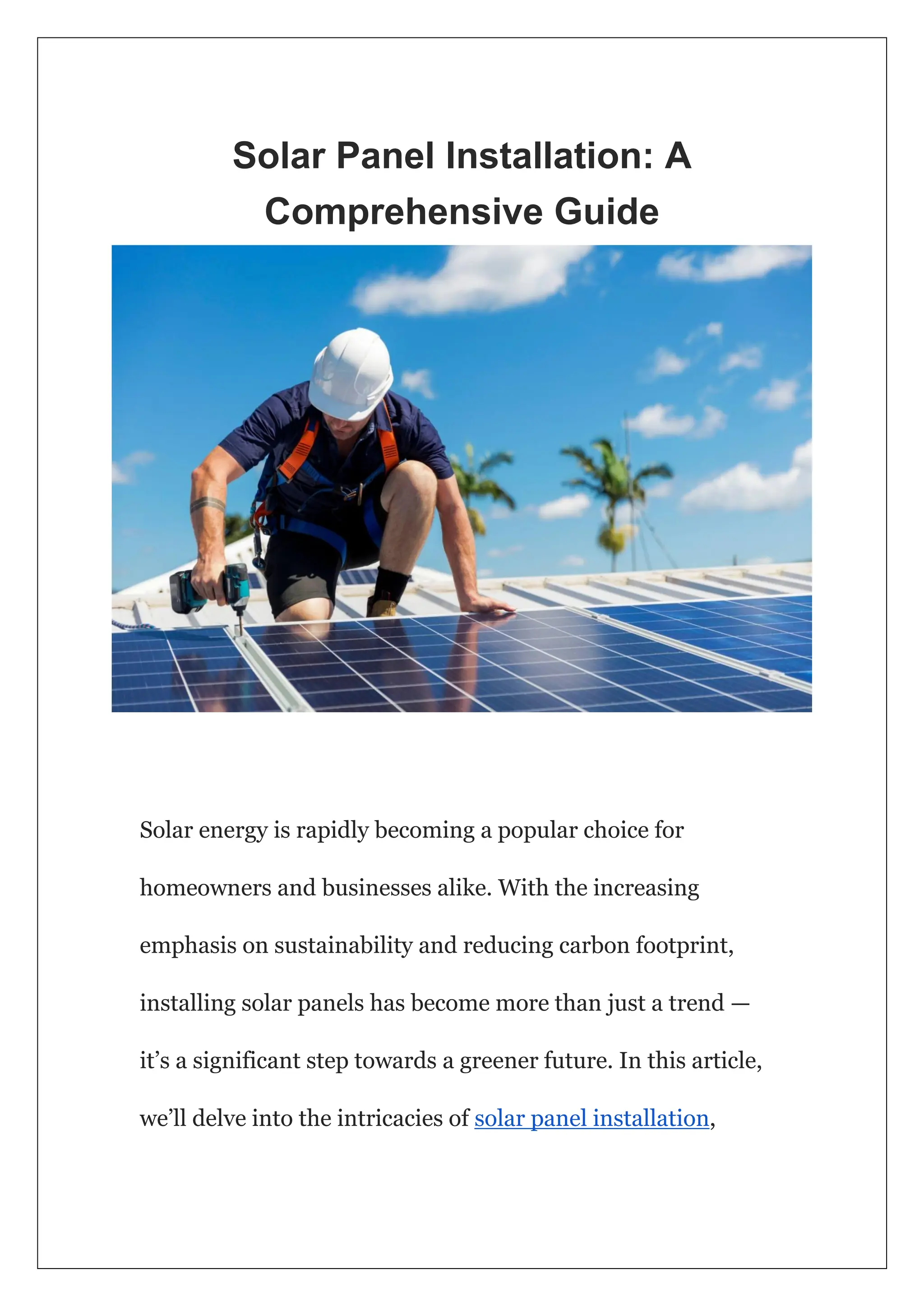
Solar energy is rapidly becoming a popular choice for
homeowners and businesses alike. With the increasing

emphasis on sustainability and reducing carbon footprint,

installing solar panels has become more than just a trend —
it’s a significant step towards a greener future. In this article,
we’ll delve into the intricacies of solar panel installation,
exploring its benefits, factors to consider, the installation
process itself, maintenance requirements, and more.
1. Introduction
In recent years, there has been a remarkable shift towards
renewable energy sources, and solar energy stands out as one
of the most promising alternatives to traditional power
sources. Solar panel installation is not only environmentally
friendly but also offers numerous benefits to both individuals
and communities at large.
2. Benefits of Solar Panel Installation
I. Environmental Impact
One of the primary reasons for opting for solar panels is their
positive impact on the environment. Unlike fossil fuels, solar
energy production does not emit harmful greenhouse gases,
making it a cleaner and more sustainable energy source. By
harnessing the power of the sun, we can significantly reduce
our carbon footprint and contribute to combating climate
change.
II. Cost Savings
Another compelling reason to invest in solar system
installation is the potential for long-term cost savings. While
the initial investment may seem substantial, solar panels can
significantly lower electricity bills over time. With solar
energy, homeowners can generate their electricity, reducing
reliance on utility companies and shielding themselves from
rising energy costs.
III. Energy Independence
Solar panel installation offers a degree of energy independence
that is appealing to many homeowners. By generating their
electricity, individuals can mitigate the impact of power
outages and fluctuations in energy prices. Additionally, solar
energy allows for greater control over energy consumption,
empowering individuals to make environmentally conscious
choices.
3. Factors to Consider Before Installation
Before embarking on a solar panel installation project, several
factors need to be taken into account to ensure its success.
I. Roof Suitability
The orientation and condition of your roof play a crucial role
in determining the feasibility of solar panel installation.
Ideally, your roof should receive ample sunlight throughout
the day and be structurally sound enough to support the
weight of solar panels.
II. Local Regulations and Permits
Before installing solar panels, it’s essential to familiarise
yourself with local regulations and obtain the necessary
permits. Building codes, zoning laws, and homeowner
association restrictions may impose specific requirements on
solar panel installation.
III. Energy Needs Assessment
Conducting an energy needs assessment is vital to determining
the size and type of solar panel system required for your
property. Factors such as energy consumption patterns,
available sunlight, and future growth should be taken into
consideration during this process.
4. Steps in Solar Panel Installation
I. Site Assessment
The first step in solar panel installation is a thorough site
assessment to evaluate the suitability of your property for
solar energy production. This involves analysing factors such
as sunlight exposure, shading, roof condition, and available
space for solar panels.
II. Designing the System
Once the site assessment is complete, the next step is
designing the solar panel system. This involves determining
the optimal placement of solar panels, selecting the
appropriate equipment, and calculating the system’s energy
production capacity.
III. Permitting and Approvals
Before installing solar panels, you’ll need to obtain the
necessary permits and approvals from local authorities. This
may include building permits, electrical permits, and approval
from homeowner associations or architectural review boards.
IV. Installation Process
The installation process begins with mounting the solar panels
on your roof or property. This is followed by wiring the panels
together and connecting them to an inverter, which converts
the solar energy into usable electricity. Finally, the system is
connected to your home’s electrical grid or battery storage
system.
V. Connection to the Grid
Once the solar panel system is installed and operational, it will
need to be connected to the electrical grid. This typically
involves working with your utility company to ensure seamless
integration and compliance with regulatory requirements.
5. Maintenance and Care
While solar panels require minimal maintenance, regular
upkeep is essential to ensure optimal performance and
longevity.
I. Regular Cleaning
Periodic cleaning of solar panels is necessary to remove dirt,
dust, and debris that can accumulate on the surface and
reduce efficiency. This can be done using a soft brush or
sponge and mild detergent, avoiding abrasive materials that
could scratch the panels.
II. Monitoring System Performance
Monitoring the performance of your solar panel system is
critical to identifying any issues or inefficiencies early on. This
can be done through software applications or monitoring
systems provided by your installer, allowing you to track
energy production and detect any abnormalities.
III. Addressing Issues Promptly
If you notice any issues with your solar panel system, such as
reduced energy production or damage to the panels, it’s
essential to address them promptly. Contact your solar
installation services provider or a qualified technician to
diagnose and repair the problem to prevent further damage or
loss of energy production.
Conclusion
Solar panel installation offers a myriad of benefits, ranging
from environmental sustainability to long-term cost savings
and energy independence. By harnessing the power of the sun,
individuals and communities can take a significant step
towards reducing their carbon footprint and embracing
renewable energy sources.
Contact Us
Call Us: 07 5475 4152
Mail Us: info@dyfaelectrical.com.au
Website: https://dyfaelectrical.com.au/
Solar Panel Installation A Comprehensive Guide.pdf

Solar Panel Installation A Comprehensive Guide.pdf

  • 1.
    Solar Panel Installation:A Comprehensive Guide Solar energy is rapidly becoming a popular choice for homeowners and businesses alike. With the increasing emphasis on sustainability and reducing carbon footprint, installing solar panels has become more than just a trend — it’s a significant step towards a greener future. In this article, we’ll delve into the intricacies of solar panel installation,
  • 2.
    exploring its benefits,factors to consider, the installation process itself, maintenance requirements, and more. 1. Introduction In recent years, there has been a remarkable shift towards renewable energy sources, and solar energy stands out as one of the most promising alternatives to traditional power sources. Solar panel installation is not only environmentally friendly but also offers numerous benefits to both individuals and communities at large. 2. Benefits of Solar Panel Installation I. Environmental Impact One of the primary reasons for opting for solar panels is their positive impact on the environment. Unlike fossil fuels, solar
  • 3.
    energy production doesnot emit harmful greenhouse gases, making it a cleaner and more sustainable energy source. By harnessing the power of the sun, we can significantly reduce our carbon footprint and contribute to combating climate change. II. Cost Savings Another compelling reason to invest in solar system installation is the potential for long-term cost savings. While the initial investment may seem substantial, solar panels can significantly lower electricity bills over time. With solar energy, homeowners can generate their electricity, reducing reliance on utility companies and shielding themselves from rising energy costs. III. Energy Independence
  • 4.
    Solar panel installationoffers a degree of energy independence that is appealing to many homeowners. By generating their electricity, individuals can mitigate the impact of power outages and fluctuations in energy prices. Additionally, solar energy allows for greater control over energy consumption, empowering individuals to make environmentally conscious choices. 3. Factors to Consider Before Installation Before embarking on a solar panel installation project, several factors need to be taken into account to ensure its success. I. Roof Suitability The orientation and condition of your roof play a crucial role in determining the feasibility of solar panel installation. Ideally, your roof should receive ample sunlight throughout
  • 5.
    the day andbe structurally sound enough to support the weight of solar panels. II. Local Regulations and Permits Before installing solar panels, it’s essential to familiarise yourself with local regulations and obtain the necessary permits. Building codes, zoning laws, and homeowner association restrictions may impose specific requirements on solar panel installation. III. Energy Needs Assessment Conducting an energy needs assessment is vital to determining the size and type of solar panel system required for your property. Factors such as energy consumption patterns,
  • 6.
    available sunlight, andfuture growth should be taken into consideration during this process. 4. Steps in Solar Panel Installation I. Site Assessment The first step in solar panel installation is a thorough site assessment to evaluate the suitability of your property for solar energy production. This involves analysing factors such as sunlight exposure, shading, roof condition, and available space for solar panels. II. Designing the System Once the site assessment is complete, the next step is designing the solar panel system. This involves determining
  • 7.
    the optimal placementof solar panels, selecting the appropriate equipment, and calculating the system’s energy production capacity. III. Permitting and Approvals Before installing solar panels, you’ll need to obtain the necessary permits and approvals from local authorities. This may include building permits, electrical permits, and approval from homeowner associations or architectural review boards. IV. Installation Process The installation process begins with mounting the solar panels on your roof or property. This is followed by wiring the panels together and connecting them to an inverter, which converts the solar energy into usable electricity. Finally, the system is
  • 8.
    connected to yourhome’s electrical grid or battery storage system. V. Connection to the Grid Once the solar panel system is installed and operational, it will need to be connected to the electrical grid. This typically involves working with your utility company to ensure seamless integration and compliance with regulatory requirements. 5. Maintenance and Care While solar panels require minimal maintenance, regular upkeep is essential to ensure optimal performance and longevity. I. Regular Cleaning
  • 9.
    Periodic cleaning ofsolar panels is necessary to remove dirt, dust, and debris that can accumulate on the surface and reduce efficiency. This can be done using a soft brush or sponge and mild detergent, avoiding abrasive materials that could scratch the panels. II. Monitoring System Performance Monitoring the performance of your solar panel system is critical to identifying any issues or inefficiencies early on. This can be done through software applications or monitoring systems provided by your installer, allowing you to track energy production and detect any abnormalities. III. Addressing Issues Promptly
  • 10.
    If you noticeany issues with your solar panel system, such as reduced energy production or damage to the panels, it’s essential to address them promptly. Contact your solar installation services provider or a qualified technician to diagnose and repair the problem to prevent further damage or loss of energy production. Conclusion Solar panel installation offers a myriad of benefits, ranging from environmental sustainability to long-term cost savings and energy independence. By harnessing the power of the sun, individuals and communities can take a significant step towards reducing their carbon footprint and embracing renewable energy sources. Contact Us
  • 11.
    Call Us: 075475 4152 Mail Us: info@dyfaelectrical.com.au Website: https://dyfaelectrical.com.au/