Software Engineering Tutorial
Ahmed Elshal
Kafr El-Sheikh University
Faculty of Computers and Information
Software Engineering Tutorial
SoftwareEngineer Ahmed Elshal
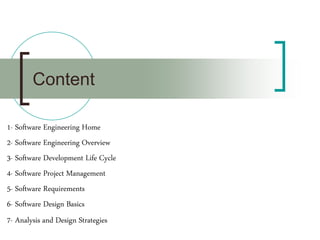
1- Software Engineering Home
2- Software Engineering Overview
3- Software Development Life Cycle
4- Software Project Management
5- Software Requirements
6- Software Design Basics
7- Analysis and Design Strategies
Content
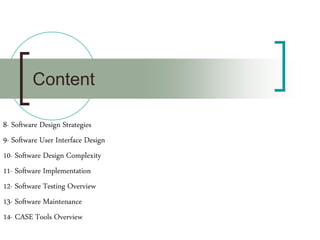
8- Software Design Strategies
9- Software User Interface Design
10- Software Design Complexity
11- Software Implementation
12- Software Testing Overview
13- Software Maintenance
14- CASE Tools Overview
Content
Software engineering is an engineering branch associated with development of software product using
well-defined scientific principles, methods and procedures. The outcome of software engineering is an
efficient and reliable software product.
Software project management has wider scope than software engineering process as it involves
communication, pre and post delivery support etc.
Software Engineering Home
Let us first understand what software engineering stands for. The term is made of two words,
software and engineering.
Software is more than just a program code. A program is an executable code, which serves some
computational purpose. Software is considered to be collection of executable programming code,
associated libraries and documentations. Software, when made for a specific requirement is called
software product.
Engineering on the other hand, is all about developing products, using well-defined, scientific
principles and methods.
Software Engineering Overview
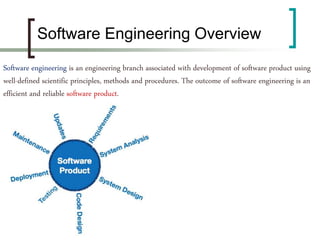
Software engineering is an engineering branch associated with development of software product using
well-defined scientific principles, methods and procedures. The outcome of software engineering is an
efficient and reliable software product.
Software Engineering Overview
(IEEE (Institute of Electrical and Electronics Engineer
(1) The application of a systematic, disciplined, quantifiable approach to the development , operation
and maintenance of software; that is, the application of engineering to software.
(2) The study of approaches as in the above statement.
Fritz Bauer, a German computer scientist, defines software engineering as:
Software engineering is the establishment and use of sound engineering principles in order to obtain
economically software that is reliable and work efficiently on real machines.
Software Evolution
This includes the initial development of software and its maintenance and updates, till desired software
product is developed, which satisfies the expected requirements.
IEEE defines software engineering as
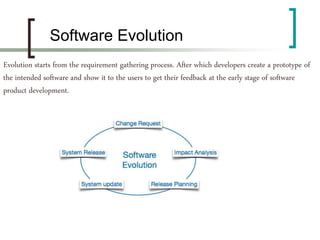
Evolution starts from the requirement gathering process. After which developers create a prototype of
the intended software and show it to the users to get their feedback at the early stage of software
product development.
Software Evolution
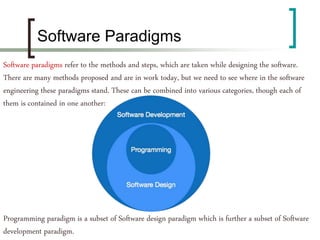
Software paradigms refer to the methods and steps, which are taken while designing the software.
There are many methods proposed and are in work today, but we need to see where in the software
engineering these paradigms stand. These can be combined into various categories, though each of
them is contained in one another:
Programming paradigm is a subset of Software design paradigm which is further a subset of Software
development paradigm.
Software Paradigms
This Paradigm is known as software engineering paradigms where all the engineering concepts
pertaining to the development of software are applied. It includes various researches and requirement
gathering which helps the software product to build. It consists of –
Requirement gathering
Software design
Programming
Software Development Paradigm
Software Design Paradigm
This paradigm is a part of Software Development and includes –
Design
Maintenance
Programming
Programing Paradigm
This paradigm is related closely to programming aspect of software development. This includes –
Coding
Testing
Integration
Software Design Paradigm & Programming Paradigm
A software product can be judged by what it offers and how well it can be used. This software must
satisfy on the following grounds:
Operational
Transitional
Maintenance
Operational This tells us how well software works in operations. It can be measured on:
Budget
Usability
Efficiency
Correctness
Functionality
Dependability
Security
Safety
Characteristics of good software
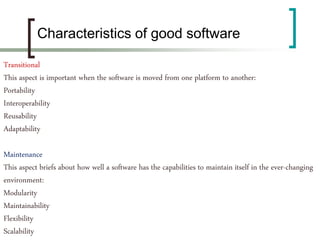
Transitional
This aspect is important when the software is moved from one platform to another:
Portability
Interoperability
Reusability
Adaptability
Maintenance
This aspect briefs about how well a software has the capabilities to maintain itself in the ever-changing
environment:
Modularity
Maintainability
Flexibility
Scalability
Characteristics of good software
Thank For Reading This Presentation

Software engineering tutorial

  • 1.
  • 2.
    Kafr El-Sheikh University Facultyof Computers and Information Software Engineering Tutorial SoftwareEngineer Ahmed Elshal
  • 3.
    1- Software EngineeringHome 2- Software Engineering Overview 3- Software Development Life Cycle 4- Software Project Management 5- Software Requirements 6- Software Design Basics 7- Analysis and Design Strategies Content
  • 4.
    8- Software DesignStrategies 9- Software User Interface Design 10- Software Design Complexity 11- Software Implementation 12- Software Testing Overview 13- Software Maintenance 14- CASE Tools Overview Content
  • 5.
    Software engineering isan engineering branch associated with development of software product using well-defined scientific principles, methods and procedures. The outcome of software engineering is an efficient and reliable software product. Software project management has wider scope than software engineering process as it involves communication, pre and post delivery support etc. Software Engineering Home
  • 6.
    Let us firstunderstand what software engineering stands for. The term is made of two words, software and engineering. Software is more than just a program code. A program is an executable code, which serves some computational purpose. Software is considered to be collection of executable programming code, associated libraries and documentations. Software, when made for a specific requirement is called software product. Engineering on the other hand, is all about developing products, using well-defined, scientific principles and methods. Software Engineering Overview
  • 7.
    Software engineering isan engineering branch associated with development of software product using well-defined scientific principles, methods and procedures. The outcome of software engineering is an efficient and reliable software product. Software Engineering Overview
  • 8.
    (IEEE (Institute ofElectrical and Electronics Engineer (1) The application of a systematic, disciplined, quantifiable approach to the development , operation and maintenance of software; that is, the application of engineering to software. (2) The study of approaches as in the above statement. Fritz Bauer, a German computer scientist, defines software engineering as: Software engineering is the establishment and use of sound engineering principles in order to obtain economically software that is reliable and work efficiently on real machines. Software Evolution This includes the initial development of software and its maintenance and updates, till desired software product is developed, which satisfies the expected requirements. IEEE defines software engineering as
  • 9.
    Evolution starts fromthe requirement gathering process. After which developers create a prototype of the intended software and show it to the users to get their feedback at the early stage of software product development. Software Evolution
  • 10.
    Software paradigms referto the methods and steps, which are taken while designing the software. There are many methods proposed and are in work today, but we need to see where in the software engineering these paradigms stand. These can be combined into various categories, though each of them is contained in one another: Programming paradigm is a subset of Software design paradigm which is further a subset of Software development paradigm. Software Paradigms
  • 11.
    This Paradigm isknown as software engineering paradigms where all the engineering concepts pertaining to the development of software are applied. It includes various researches and requirement gathering which helps the software product to build. It consists of – Requirement gathering Software design Programming Software Development Paradigm
  • 12.
    Software Design Paradigm Thisparadigm is a part of Software Development and includes – Design Maintenance Programming Programing Paradigm This paradigm is related closely to programming aspect of software development. This includes – Coding Testing Integration Software Design Paradigm & Programming Paradigm
  • 13.
    A software productcan be judged by what it offers and how well it can be used. This software must satisfy on the following grounds: Operational Transitional Maintenance Operational This tells us how well software works in operations. It can be measured on: Budget Usability Efficiency Correctness Functionality Dependability Security Safety Characteristics of good software
  • 14.
    Transitional This aspect isimportant when the software is moved from one platform to another: Portability Interoperability Reusability Adaptability Maintenance This aspect briefs about how well a software has the capabilities to maintain itself in the ever-changing environment: Modularity Maintainability Flexibility Scalability Characteristics of good software
  • 15.
    Thank For ReadingThis Presentation