AIM: TO UNDERSTAND THAT CHILDHOOD IS A SOCIAL CONSTRUCTIONKey Question:Using historical evidence/examples, explain the idea that “childhood is socially constructed”
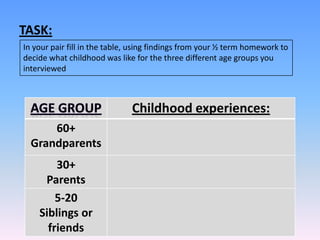
TASK:In your pair fill in the table, using findings from your ½ term homework to decide what childhood was like for the three different age groups you interviewed
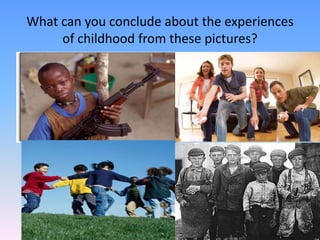
What can you conclude about the experiences of childhood from these pictures?
Childhood is a SOCIAL CONSTRUCTION- created and defined by society, rather than simply a biological state
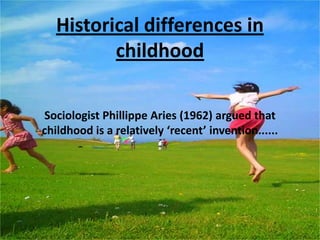
Ideas about childhood vary between different cultures, societies and different historical periodsHistorical differences in childhoodSociologist Phillippe Aries (1962) argued that childhood is a relatively ‘recent’ invention......
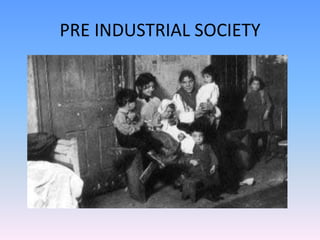
PRE INDUSTRIAL SOCIETY
Pre- industrial societyChildhood as we know it did not existChildren were ‘little adults’ who took part in the same work and play activities as adults. Toys and games specifically for children did not exist.Children seen as an economic asset, rather than something to be cared forChildren were punished for crimes in the same way that adults were (In Tudor times a 7 year old could be hung for stealing)
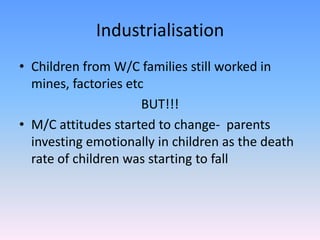
Industrial family
IndustrialisationChildren from W/C families still worked in mines, factories etcBUT!!!M/C attitudes started to change-  parents investing emotionally in children as the death rate of children was starting to fall
Mid 19th Century:Adult started to become concerned with children who were begging on the streets and child prostitution. children were banned from working in the factories and mines where many had been killed. BUT some W/C parents resisted changes as they depended on children wages and many children continued to be badly treated
20th Century:Emergence of child- centred society- ‘children are valued, loved and protected!’As a result of improved standards of living= major decline in infant mortality ratesIncreased availability of contraception meant couples could choose to have fewer children= invest more time in them in terms of love, socialisation and protection
Give examples of how society has allowed children to become valued, loved and protected?
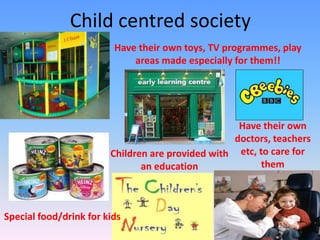
Child centred societyHave their own toys, TV programmes, play areas made especially for them!!Have their own doctors, teachers  etc, to care for themChildren are provided with an educationSpecial food/drink for kids
Changes in the position of children “ how did the position of children change from being the invisible mini adults to being the centre of our society?” Read page 76 in blue book or page 31 in orange book to answer the question
Watch this video...http://www.youtube.com/watch?v=fI40wizRNc4
Task Read the following statements and decide which period of time it fits into.... Write on your whiteboard PI= pre industrialIS= industrial societyTS- today’s society
What period of time am I?Children and adults both work Children’s toys and games do not exist Lots of laws to protect children Childhood seen as separate from adulthood Many middle class children stop working  increased contraception Aries argued that children were regarded as an economic asset
What period am I?High infant mortality rateChild centred societyNo laws to stop children being over-workedAdults start to become concerned about child prostitution children work in mines, factories etcInfant mortality rate starting to fallChildren are like small adults, taking part in the same work and play activities
Homework:	Remember...your exam will consist of 3 short questions worth 12 marks, followed by two 24 mark essay questionsExplain what is meant by the term child centred society (2 marks)Suggest 2 reasons why childhood can be argued to be a social construction (4 marks)Identify three changes linked to industrialisation that have led to changes in the position of children (6 marks)

SociologyExchange.co.uk Shared Resource

  • 1.
    AIM: TO UNDERSTANDTHAT CHILDHOOD IS A SOCIAL CONSTRUCTIONKey Question:Using historical evidence/examples, explain the idea that “childhood is socially constructed”
  • 2.
    TASK:In your pairfill in the table, using findings from your ½ term homework to decide what childhood was like for the three different age groups you interviewed
  • 3.
    What can youconclude about the experiences of childhood from these pictures?
  • 4.
    Childhood is aSOCIAL CONSTRUCTION- created and defined by society, rather than simply a biological state
  • 5.
    Ideas about childhoodvary between different cultures, societies and different historical periodsHistorical differences in childhoodSociologist Phillippe Aries (1962) argued that childhood is a relatively ‘recent’ invention......
  • 6.
  • 7.
    Pre- industrial societyChildhoodas we know it did not existChildren were ‘little adults’ who took part in the same work and play activities as adults. Toys and games specifically for children did not exist.Children seen as an economic asset, rather than something to be cared forChildren were punished for crimes in the same way that adults were (In Tudor times a 7 year old could be hung for stealing)
  • 8.
  • 9.
    IndustrialisationChildren from W/Cfamilies still worked in mines, factories etcBUT!!!M/C attitudes started to change- parents investing emotionally in children as the death rate of children was starting to fall
  • 10.
    Mid 19th Century:Adultstarted to become concerned with children who were begging on the streets and child prostitution. children were banned from working in the factories and mines where many had been killed. BUT some W/C parents resisted changes as they depended on children wages and many children continued to be badly treated
  • 11.
    20th Century:Emergence ofchild- centred society- ‘children are valued, loved and protected!’As a result of improved standards of living= major decline in infant mortality ratesIncreased availability of contraception meant couples could choose to have fewer children= invest more time in them in terms of love, socialisation and protection
  • 12.
    Give examples ofhow society has allowed children to become valued, loved and protected?
  • 13.
    Child centred societyHavetheir own toys, TV programmes, play areas made especially for them!!Have their own doctors, teachers etc, to care for themChildren are provided with an educationSpecial food/drink for kids
  • 14.
    Changes in theposition of children “ how did the position of children change from being the invisible mini adults to being the centre of our society?” Read page 76 in blue book or page 31 in orange book to answer the question
  • 15.
  • 16.
    Task Read thefollowing statements and decide which period of time it fits into.... Write on your whiteboard PI= pre industrialIS= industrial societyTS- today’s society
  • 17.
    What period oftime am I?Children and adults both work Children’s toys and games do not exist Lots of laws to protect children Childhood seen as separate from adulthood Many middle class children stop working increased contraception Aries argued that children were regarded as an economic asset
  • 18.
    What period amI?High infant mortality rateChild centred societyNo laws to stop children being over-workedAdults start to become concerned about child prostitution children work in mines, factories etcInfant mortality rate starting to fallChildren are like small adults, taking part in the same work and play activities
  • 19.
    Homework: Remember...your exam willconsist of 3 short questions worth 12 marks, followed by two 24 mark essay questionsExplain what is meant by the term child centred society (2 marks)Suggest 2 reasons why childhood can be argued to be a social construction (4 marks)Identify three changes linked to industrialisation that have led to changes in the position of children (6 marks)