Qafqaz Universiteti
Fakültə: Pedaqoji
Bölüm: Fizika Müəllimliyi (eng)
Kurs: IV
Dərsin adı: Təlim sosiologiyası
Mövzu: Məcburi iş
Müəllim: Elm. Dr. Rəfail Həsənov
Tələbə: Səid Paşayev
Education From The
Functionalist,Conflict and
Interactionist Points of View
The role of education
 Education plays very important role in
the life.Education is teaching ,learning
skills and knowledge.
 Education encourage people to solve
easily problems in their life.
 By being educated,they will motivated
and make many chace.
The Functionalist Prespective on Education
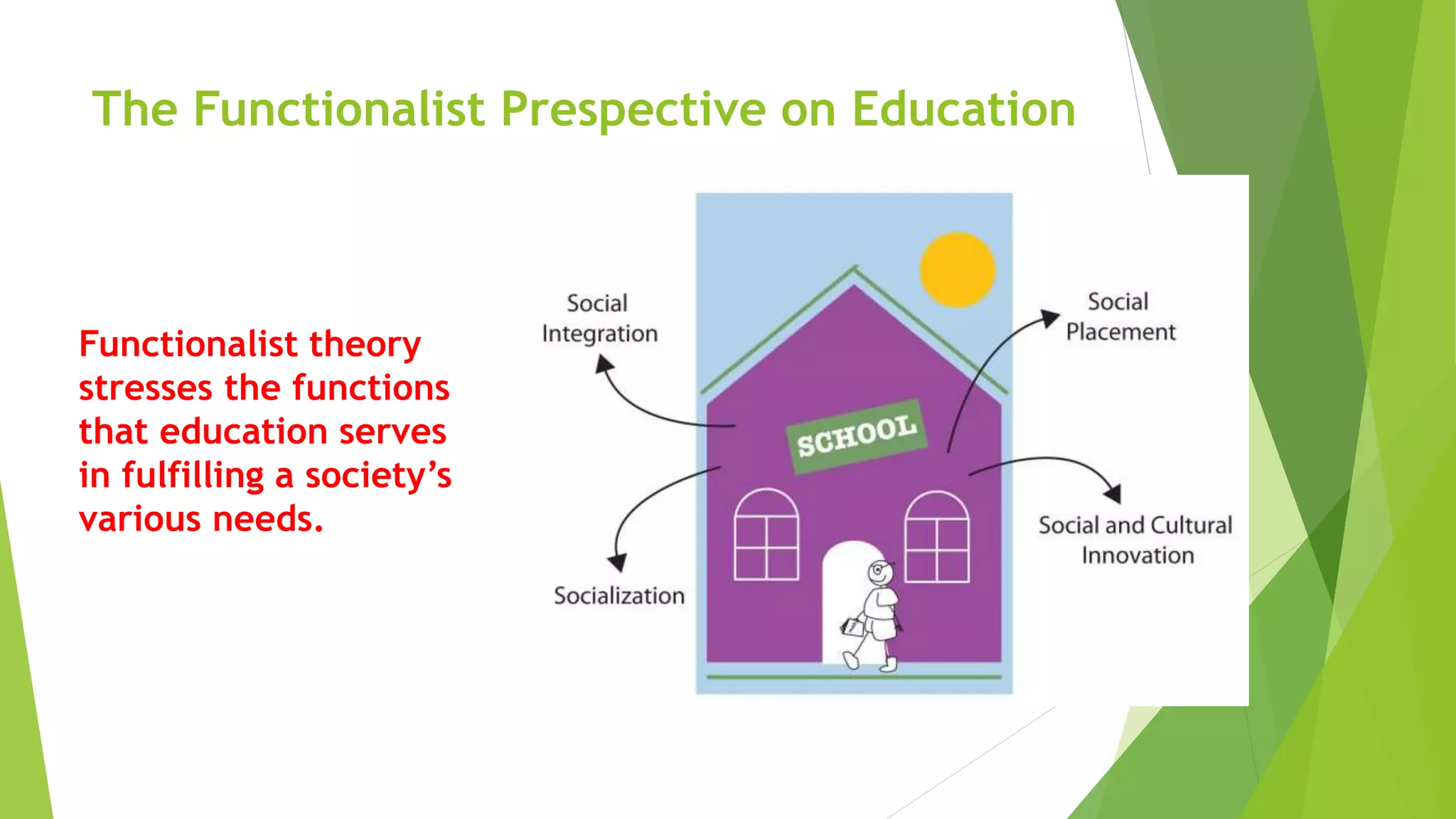
Functionalist theory
stresses the functions
that education serves
in fulfilling a society’s
various needs.
Socialization
 If children are to learn the
norms, values, and skills
they need to function in
society, then education is a
primary vehicle for such
learning.
Social integration
 For a society to work,
functionalists say, people
must subscribe to a
common set of beliefs and
values.
Social placement
 Beginning in grade school,
students are identified by
teachers and other school
officials either as bright and
motivated or as less bright and
even educationally challenged.
Talent ability
Social and cultural innovation
 Our scientists cannot make
important scientific
discoveries and our artists and
thinkers cannot come up with
great works of art, poetry, and
prose unless they have first
been educated in the many
subjects they need to know
for their chosen path.

Conflict points of view
 Conflict theory does not dispute the functions just
described. However, it does give some of them a different
slant by emphasizing how education also perpetuates social
inequality .
Social inequality at education
 1.Inequality between
cities’ schools and villages’
schools(resources,conditio
n and others)
 2.Student going to
suicide.Education
program’s is very hard and
adopt to university stress
them.
The Interactionist point of view
 Symbolic interactionist studies of education examine social
interaction in the classroom, on the playground, and in other school
venues. These studies help us understand what happens in the schools
themselves, but they also help us understand how what occurs in
school is relevant for the larger society.
Teachers’ views about students
 How much the students learn. When
teachers think students are smart, they
tend to spend more time with these
students, to call on them, and to praise
them when they give the right answer.
 Not surprisingly, these students learn
more because of their teachers’ behavior.
But when teachers think students are less
bright, they tend to spend less time with
these students and to act in a way that
leads them to learn less.
Research guided by the symbolic
interactionist perspective
suggests that teachers’
expectations may influence how
much their students learn. When
teachers expect little of their
students, their students tend to
learn less.
Conclusion:
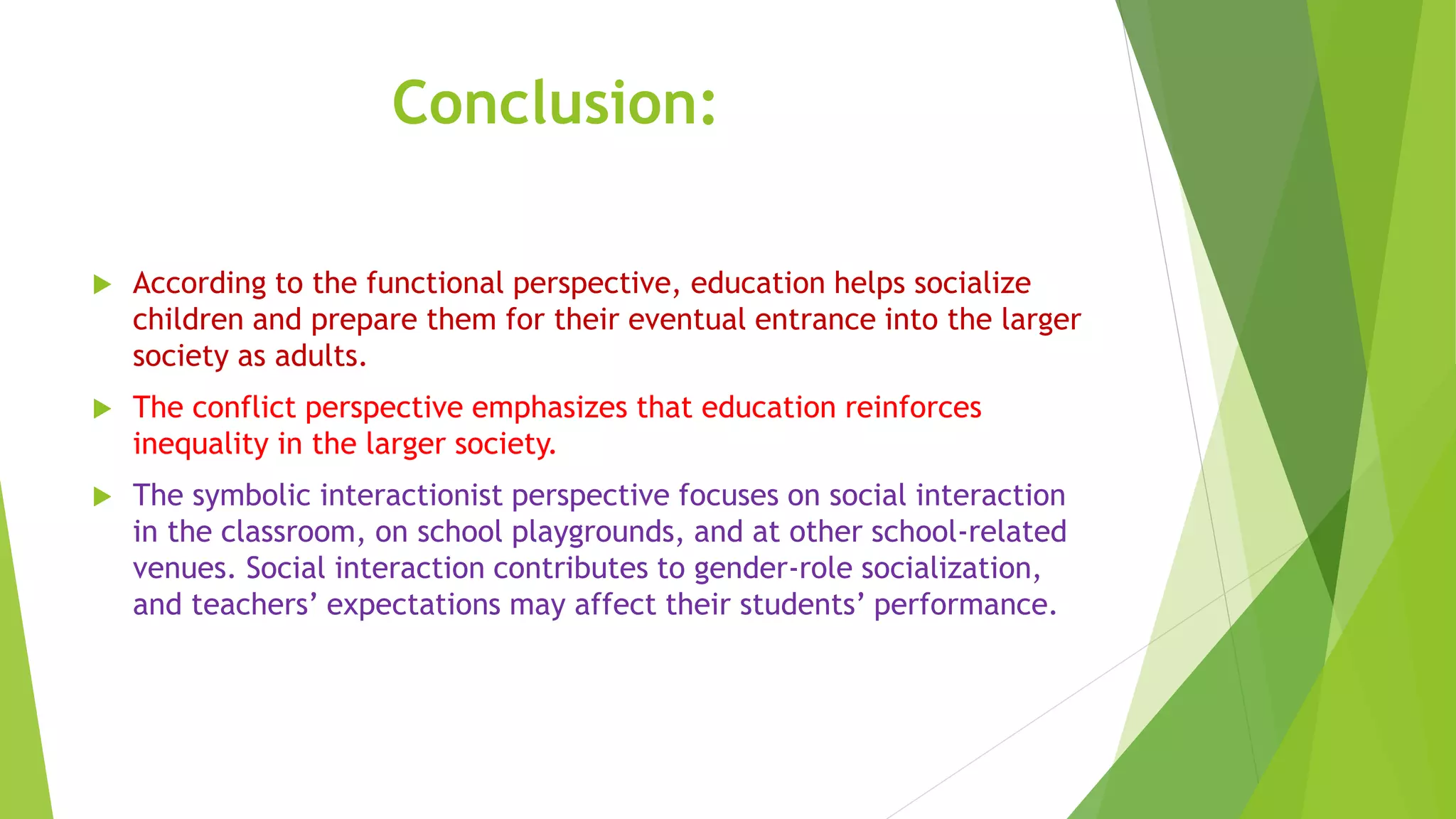
 According to the functional perspective, education helps socialize
children and prepare them for their eventual entrance into the larger
society as adults.
 The conflict perspective emphasizes that education reinforces
inequality in the larger society.
 The symbolic interactionist perspective focuses on social interaction
in the classroom, on school playgrounds, and at other school-related
venues. Social interaction contributes to gender-role socialization,
and teachers’ expectations may affect their students’ performance.

Sociological perspectives on education

  • 1.
    Qafqaz Universiteti Fakültə: Pedaqoji Bölüm:Fizika Müəllimliyi (eng) Kurs: IV Dərsin adı: Təlim sosiologiyası Mövzu: Məcburi iş Müəllim: Elm. Dr. Rəfail Həsənov Tələbə: Səid Paşayev
  • 2.
    Education From The Functionalist,Conflictand Interactionist Points of View
  • 3.
    The role ofeducation  Education plays very important role in the life.Education is teaching ,learning skills and knowledge.  Education encourage people to solve easily problems in their life.  By being educated,they will motivated and make many chace.
  • 4.
    The Functionalist Prespectiveon Education Functionalist theory stresses the functions that education serves in fulfilling a society’s various needs.
  • 5.
    Socialization  If childrenare to learn the norms, values, and skills they need to function in society, then education is a primary vehicle for such learning.
  • 6.
    Social integration  Fora society to work, functionalists say, people must subscribe to a common set of beliefs and values.
  • 7.
    Social placement  Beginningin grade school, students are identified by teachers and other school officials either as bright and motivated or as less bright and even educationally challenged. Talent ability
  • 8.
    Social and culturalinnovation  Our scientists cannot make important scientific discoveries and our artists and thinkers cannot come up with great works of art, poetry, and prose unless they have first been educated in the many subjects they need to know for their chosen path. 
  • 9.
    Conflict points ofview  Conflict theory does not dispute the functions just described. However, it does give some of them a different slant by emphasizing how education also perpetuates social inequality .
  • 10.
    Social inequality ateducation  1.Inequality between cities’ schools and villages’ schools(resources,conditio n and others)  2.Student going to suicide.Education program’s is very hard and adopt to university stress them.
  • 11.
    The Interactionist pointof view  Symbolic interactionist studies of education examine social interaction in the classroom, on the playground, and in other school venues. These studies help us understand what happens in the schools themselves, but they also help us understand how what occurs in school is relevant for the larger society.
  • 12.
    Teachers’ views aboutstudents  How much the students learn. When teachers think students are smart, they tend to spend more time with these students, to call on them, and to praise them when they give the right answer.  Not surprisingly, these students learn more because of their teachers’ behavior. But when teachers think students are less bright, they tend to spend less time with these students and to act in a way that leads them to learn less.
  • 13.
    Research guided bythe symbolic interactionist perspective suggests that teachers’ expectations may influence how much their students learn. When teachers expect little of their students, their students tend to learn less.
  • 14.
    Conclusion:  According tothe functional perspective, education helps socialize children and prepare them for their eventual entrance into the larger society as adults.  The conflict perspective emphasizes that education reinforces inequality in the larger society.  The symbolic interactionist perspective focuses on social interaction in the classroom, on school playgrounds, and at other school-related venues. Social interaction contributes to gender-role socialization, and teachers’ expectations may affect their students’ performance.