SOCIAL STRATIFICATION
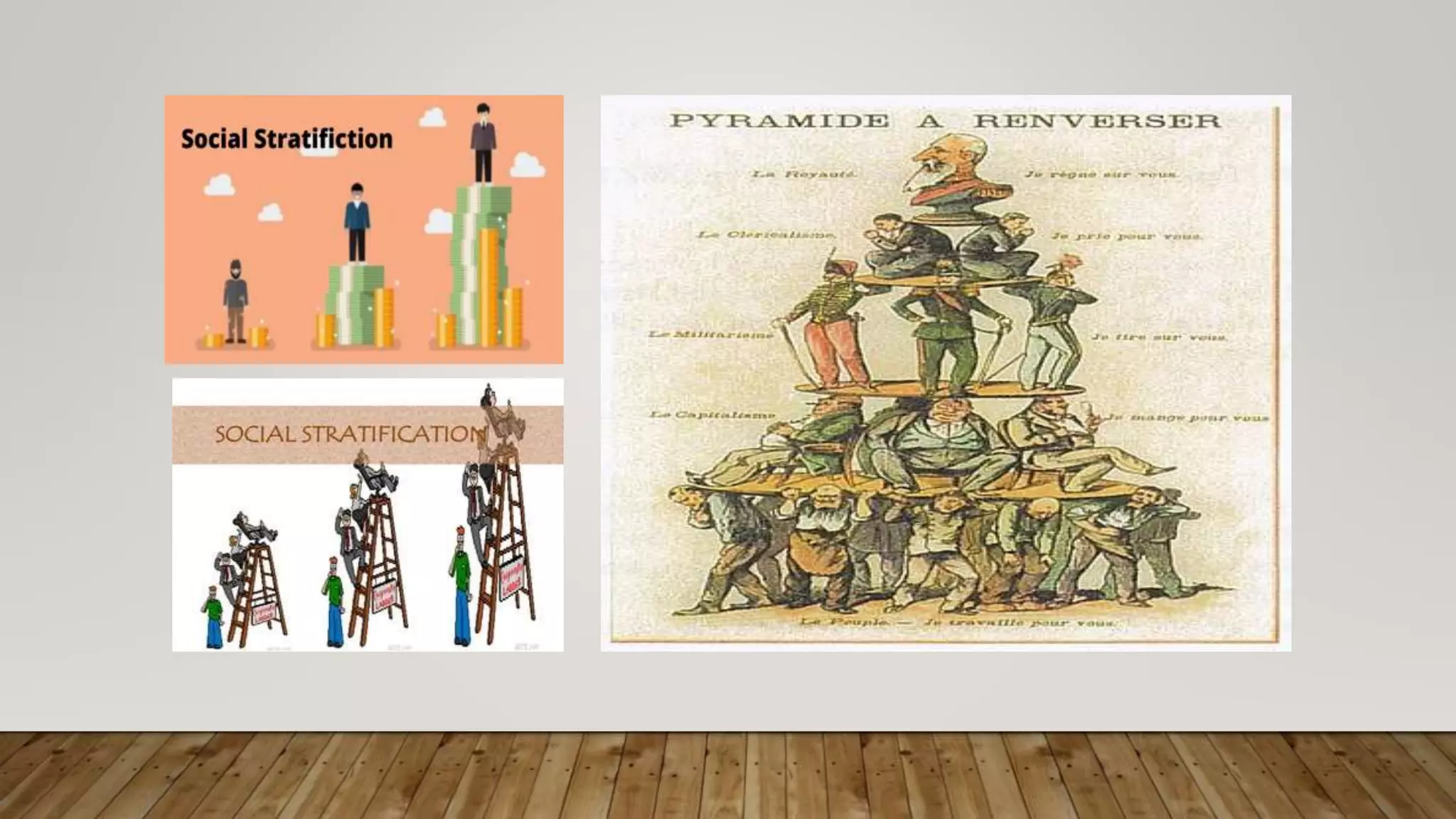
• is used to describe the system of social standing. It is used to
describe society into different categories, ranks or classes during
the early times hence, this division led to social inequality and
opportunity. Now a day’s stratified society is all about classification
of persons into groups based on shared socio-economic
conditions. It describes the way in which different groups of
people are placed within society.
MAX WEBER:
•A person’s status, or position within a
stratified system, is determined by
his or her relative power, prestige
and wealth.
FEUDAL SYTEM
•Wealth is primarily measured by
ownership of agricultural land.
TYPES OF SOCIAL
STRATIFICATION
CASTE
•is a hereditary endogamous social group in
which a person’s rank and its accompanying
rights and obligations are ascribed on the
basis of his birth into a particular group.
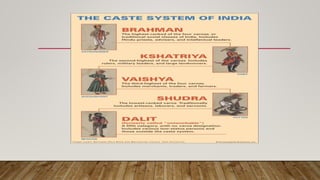
• For example: Brahmin, Kshatriya, Vaishya and Sudra, Dalit (Out Caste or
Untouchables)
CLASS-STRATIFICATION
•the basis of class is dominant in modern society. In
this, a person’s position depends to a very great
extent upon achievement and his ability to use to
advantage the inborn characteristics and wealth
that he may possess.
ESTATE SYSTEM
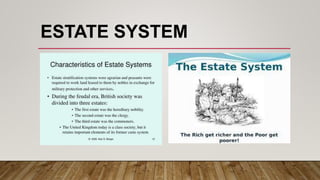
• An ancient stratification system that no longer exists today
was estate system, a three-tiered system composed of
the nobility, the clergy, and commoners.
• During the middle ages, much of Europe was organized
under this system.
ESTATE SYSTEM
ESTATE SYSTEM
SLAVERY
•had economic basis. In slavery, every
slave had his master to whom he was
subjected. The master’s power over the
slave was unlimited.
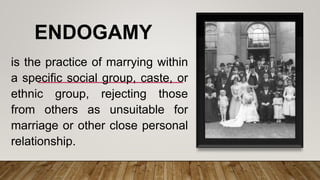
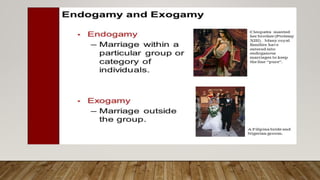
ENDOGAMY
is the practice of marrying within
a specific social group, caste, or
ethnic group, rejecting those
from others as unsuitable for
marriage or other close personal
relationship.
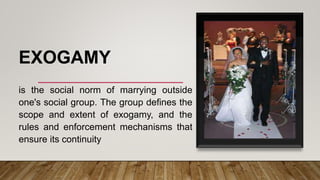
EXOGAMY
is the social norm of marrying outside
one's social group. The group defines the
scope and extent of exogamy, and the
rules and enforcement mechanisms that
ensure its continuity
MERITOCRACY
•is a political system in which economic
goods and/or political power are vested
in individual people on the basis of
talent, effort, and achievement, rather
than wealth or social class.
MERITOCRACY
• Is the idea that rewards should go to the best performers.
In a mericroratic system, desirable or leading positions in
society are distributed on the basis of merit alone.
Everyone should have the same chance to compete for
social rewards (oppurtunities, power, wealth, status)
under the same rules.
SOCIAL MOBILITY
•is the movement of individuals, families,
households, or other categories of people
within or between social strata in a society. It
is a change in social status relative to one's
current social location within a given society.

Social stratification.pptx

  • 2.
    SOCIAL STRATIFICATION • isused to describe the system of social standing. It is used to describe society into different categories, ranks or classes during the early times hence, this division led to social inequality and opportunity. Now a day’s stratified society is all about classification of persons into groups based on shared socio-economic conditions. It describes the way in which different groups of people are placed within society.
  • 3.
    MAX WEBER: •A person’sstatus, or position within a stratified system, is determined by his or her relative power, prestige and wealth.
  • 4.
    FEUDAL SYTEM •Wealth isprimarily measured by ownership of agricultural land.
  • 5.
  • 6.
    CASTE •is a hereditaryendogamous social group in which a person’s rank and its accompanying rights and obligations are ascribed on the basis of his birth into a particular group. • For example: Brahmin, Kshatriya, Vaishya and Sudra, Dalit (Out Caste or Untouchables)
  • 8.
    CLASS-STRATIFICATION •the basis ofclass is dominant in modern society. In this, a person’s position depends to a very great extent upon achievement and his ability to use to advantage the inborn characteristics and wealth that he may possess.
  • 9.
    ESTATE SYSTEM • Anancient stratification system that no longer exists today was estate system, a three-tiered system composed of the nobility, the clergy, and commoners. • During the middle ages, much of Europe was organized under this system.
  • 10.
  • 11.
  • 12.
    SLAVERY •had economic basis.In slavery, every slave had his master to whom he was subjected. The master’s power over the slave was unlimited.
  • 13.
    ENDOGAMY is the practiceof marrying within a specific social group, caste, or ethnic group, rejecting those from others as unsuitable for marriage or other close personal relationship.
  • 14.
    EXOGAMY is the socialnorm of marrying outside one's social group. The group defines the scope and extent of exogamy, and the rules and enforcement mechanisms that ensure its continuity
  • 16.
    MERITOCRACY •is a politicalsystem in which economic goods and/or political power are vested in individual people on the basis of talent, effort, and achievement, rather than wealth or social class.
  • 17.
    MERITOCRACY • Is theidea that rewards should go to the best performers. In a mericroratic system, desirable or leading positions in society are distributed on the basis of merit alone. Everyone should have the same chance to compete for social rewards (oppurtunities, power, wealth, status) under the same rules.
  • 18.
    SOCIAL MOBILITY •is themovement of individuals, families, households, or other categories of people within or between social strata in a society. It is a change in social status relative to one's current social location within a given society.