Definition Of Social Media

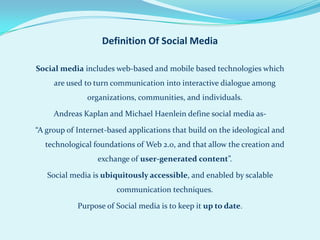
Social media includes web-based and mobile based technologies which
     are used to turn communication into interactive dialogue among
               organizations, communities, and individuals.

     Andreas Kaplan and Michael Haenlein define social media as-

“A group of Internet-based applications that build on the ideological and
  technological foundations of Web 2.0, and that allow the creation and
                  exchange of user-generated content”.

   Social media is ubiquitously accessible, and enabled by scalable
                       communication techniques.

            Purpose of Social media is to keep it up to date.
Classification of Social media


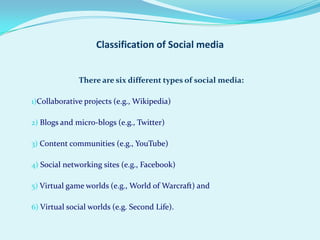
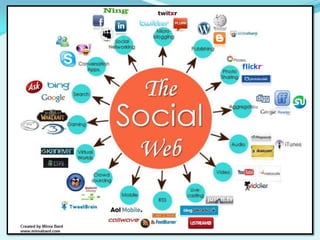
              There are six different types of social media:

1)Collaborative projects (e.g., Wikipedia)

2) Blogs and micro-blogs (e.g., Twitter)

3) Content communities (e.g., YouTube)

4) Social networking sites (e.g., Facebook)

5) Virtual game worlds (e.g., World of Warcraft) and

6) Virtual social worlds (e.g. Second Life).
Classification of Social media continued.


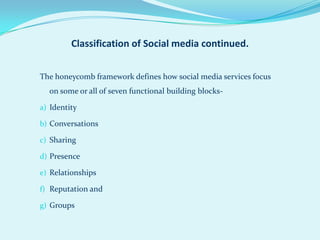
The honeycomb framework defines how social media services focus
  on some or all of seven functional building blocks-

a) Identity

b) Conversations

c) Sharing

d) Presence

e) Relationships

f) Reputation and

g) Groups
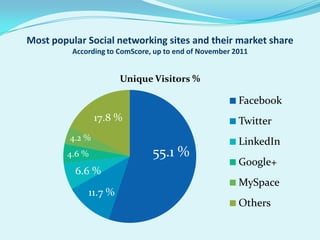
Most popular Social networking sites and their market share
          According to ComScore, up to end of November 2011


                       Unique Visitors %

                                                        Facebook
                 17.8 %                                 Twitter
         4.2 %                                          LinkedIn
        4.6 %                   55.1 %
                                                        Google+
          6.6 %
                                                        MySpace
              11.7 %
                                                        Others
Facebook


 Set-up a Brand page

 Acquire fans

 Engage them

 Sponsored Stories
Social Media Trends
Companies have found that social networking sites like Facebook and Twitter are great
   ways to build their brand image. The major uses for businesses in social media are:

a) To create brand awareness

b) As an online reputation management tool

c) Engagement and Word of Mouth publicity

d) As a lead generation tool to intercept potential prospects

e) Research and CRM

f) Complaint redressal and Feedback

g) For recruiting

h) To learn about new technologies and competitors

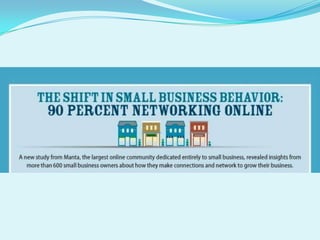
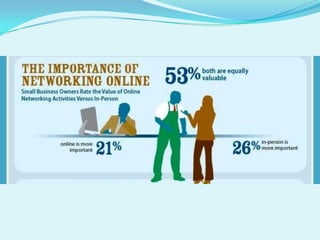
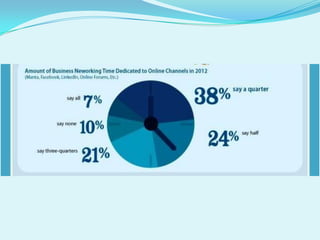
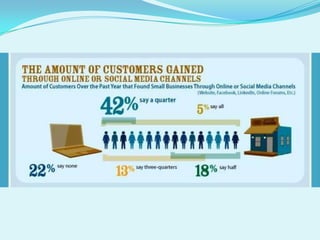
i) Small businesses use extensively to promote & sell their products
Case Study 1- By Sanjiv Choudhary
                            Scope of case study-
                          To create brand awareness
                  As an online reputation management tool
                  Engagement and Word of Mouth publicity
          As a lead generation tool to intercept potential prospects.
                           Kraft Foods Ltd.
       An application developed for smart phone users- Covers:
                              Brick an mortar
                              Click an mortar
                               Social media
                              Mobile Internet
                                 Analytics
                              Cloud Services
Based on the principles that govern the Social media marketing today i.e.
                                Co-creation
                                  Sharing
                                 Monetize
Case Study 2- By Sanjay D’Souza


      Scope of case study-

         For recruiting
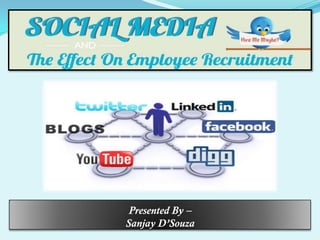
Presented By –
Sanjay D’Souza
Social media has become the focus of not only our private lives, but our
 careers as well. Websites like Face book, Twitter, YouTube and LinkedIn
         have pretty much become a reflection of our daily lives.
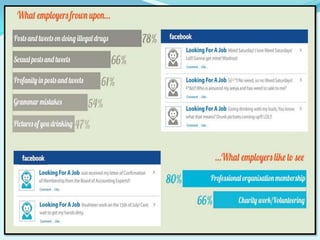
 Employers have noticed this too. Social media has become the number 1
 source of potential employees and talents for employers and recruiting
companies to hire. It is cheap, fast, convenient and one of the best ways to
                        judge a person’s character.
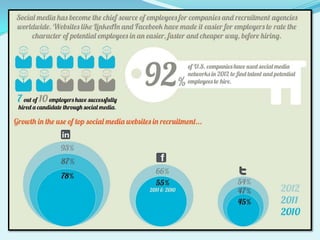
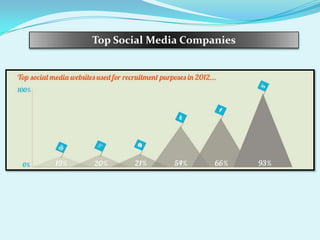
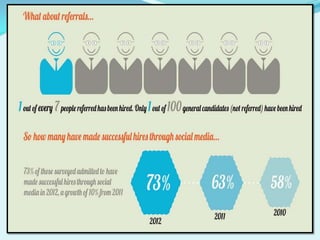
In a survey carried out by Jobvite earlier this year, it was seen that 92% of
 U.S. companies hire through social media websites, more so in websites
                      such as LinkedIn and Facebook.
Top Social Media Companies
Case Study 2- By Sanjay Prajapati


     Scope of case study-

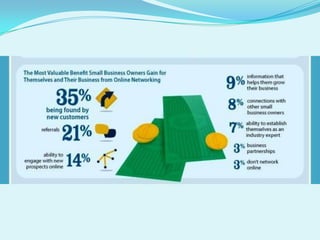
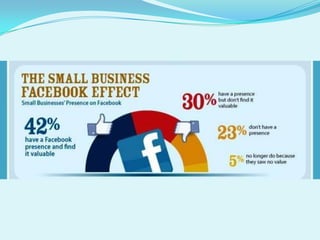
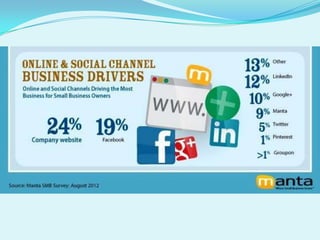
Small businesses use extensively

to promote & sell their products
Conclusion


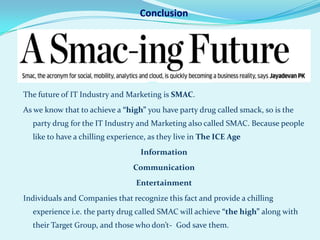
The future of IT Industry and Marketing is SMAC.
As we know that to achieve a “high” you have party drug called smack, so is the
  party drug for the IT Industry and Marketing also called SMAC. Because people
  like to have a chilling experience, as they live in The ICE Age
                                  Information
                                Communication
                                 Entertainment
Individuals and Companies that recognize this fact and provide a chilling
  experience i.e. the party drug called SMAC will achieve “the high” along with
  their Target Group, and those who don’t- God save them.
Thank You. Please enjoy.

Social media mrktg presentation

  • 1.
    Definition Of SocialMedia Social media includes web-based and mobile based technologies which are used to turn communication into interactive dialogue among organizations, communities, and individuals. Andreas Kaplan and Michael Haenlein define social media as- “A group of Internet-based applications that build on the ideological and technological foundations of Web 2.0, and that allow the creation and exchange of user-generated content”. Social media is ubiquitously accessible, and enabled by scalable communication techniques. Purpose of Social media is to keep it up to date.
  • 2.
    Classification of Socialmedia There are six different types of social media: 1)Collaborative projects (e.g., Wikipedia) 2) Blogs and micro-blogs (e.g., Twitter) 3) Content communities (e.g., YouTube) 4) Social networking sites (e.g., Facebook) 5) Virtual game worlds (e.g., World of Warcraft) and 6) Virtual social worlds (e.g. Second Life).
  • 3.
    Classification of Socialmedia continued. The honeycomb framework defines how social media services focus on some or all of seven functional building blocks- a) Identity b) Conversations c) Sharing d) Presence e) Relationships f) Reputation and g) Groups
  • 4.
    Most popular Socialnetworking sites and their market share According to ComScore, up to end of November 2011 Unique Visitors % Facebook 17.8 % Twitter 4.2 % LinkedIn 4.6 % 55.1 % Google+ 6.6 % MySpace 11.7 % Others
  • 5.
    Facebook  Set-up aBrand page  Acquire fans  Engage them  Sponsored Stories
  • 6.
    Social Media Trends Companieshave found that social networking sites like Facebook and Twitter are great ways to build their brand image. The major uses for businesses in social media are: a) To create brand awareness b) As an online reputation management tool c) Engagement and Word of Mouth publicity d) As a lead generation tool to intercept potential prospects e) Research and CRM f) Complaint redressal and Feedback g) For recruiting h) To learn about new technologies and competitors i) Small businesses use extensively to promote & sell their products
  • 7.
    Case Study 1-By Sanjiv Choudhary Scope of case study- To create brand awareness As an online reputation management tool Engagement and Word of Mouth publicity As a lead generation tool to intercept potential prospects. Kraft Foods Ltd. An application developed for smart phone users- Covers: Brick an mortar Click an mortar Social media Mobile Internet Analytics Cloud Services Based on the principles that govern the Social media marketing today i.e. Co-creation Sharing Monetize
  • 8.
    Case Study 2-By Sanjay D’Souza Scope of case study- For recruiting
  • 9.
  • 10.
    Social media hasbecome the focus of not only our private lives, but our careers as well. Websites like Face book, Twitter, YouTube and LinkedIn have pretty much become a reflection of our daily lives. Employers have noticed this too. Social media has become the number 1 source of potential employees and talents for employers and recruiting companies to hire. It is cheap, fast, convenient and one of the best ways to judge a person’s character. In a survey carried out by Jobvite earlier this year, it was seen that 92% of U.S. companies hire through social media websites, more so in websites such as LinkedIn and Facebook.
  • 14.
  • 17.
    Case Study 2-By Sanjay Prajapati Scope of case study- Small businesses use extensively to promote & sell their products
  • 25.
    Conclusion The future ofIT Industry and Marketing is SMAC. As we know that to achieve a “high” you have party drug called smack, so is the party drug for the IT Industry and Marketing also called SMAC. Because people like to have a chilling experience, as they live in The ICE Age Information Communication Entertainment Individuals and Companies that recognize this fact and provide a chilling experience i.e. the party drug called SMAC will achieve “the high” along with their Target Group, and those who don’t- God save them.
  • 27.