Europeana and LOD: Enhancing Jewish and
Israeli Heritage Digital Contents
EVA/Minerva Conference at Harvard University
April, 13-14 2015 Judaica Division , Harvard University Library, Cambridge, Massachusetts
Dov Winer
Scientific Manager, Judaica Europeana
Coordinator, MINERVA Israel Cultural Heritage Digitisation Forum
Abstract:
Digitisation initiatives began due to long term preservation concerns.
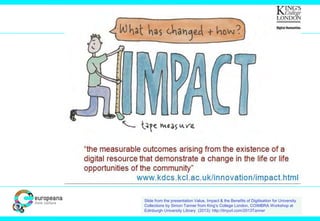
Questions concerning their impact have now come to the fore: “The
measurable outcomes arising from the existence of a digital resource that
demonstrate a change in the life or life opportunities of the community for
which the resource is intended.” Jewish and Israeli digital resources can now
be enhanced with relevant encyclopedias and controlled vocabularies through
a LOD approach. The resulting knowledge grid can help bridge the gap
between the digital resources and the knowledge of the intended communities
of users. It will expand their application in narratives, scholarly research,
higher education, K12, cultural tourism, genealogy and more.
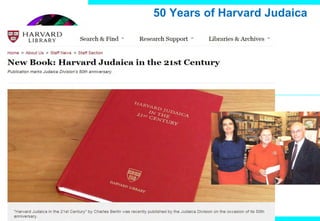
50 Years of Harvard Judaica
 Digital Contents: Israeli and Jewish
 The Impact of digitised contents
 Some examples of high impact initiatives
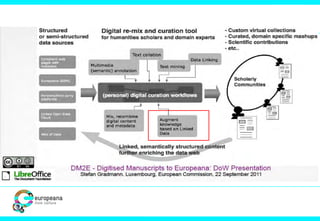
 Common Data Model for Content Description
 Judaica Linked Data: providing context to Jewish Digitised
Contents a possible Jewish Knowledge Grid.
Outline
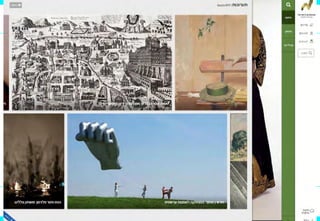
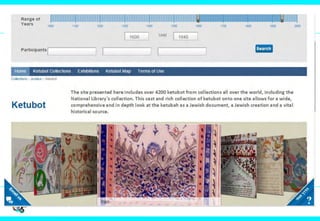
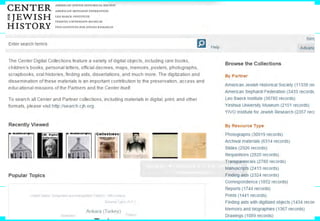
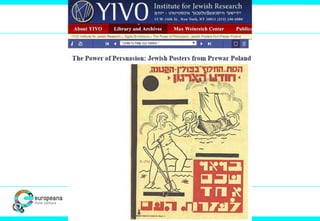
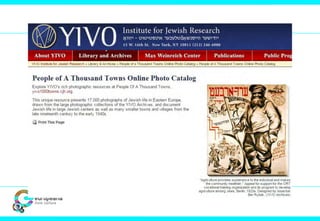
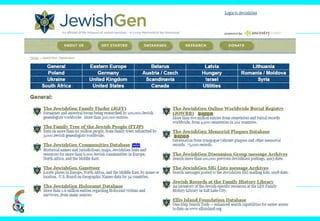
Digitised Contents
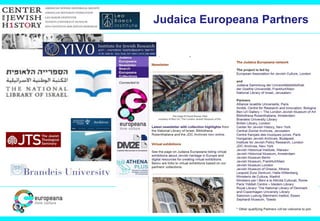
Judaica Europeana Partners
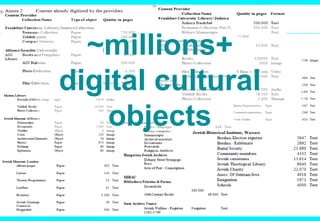
~millions+
digital cultural
objects
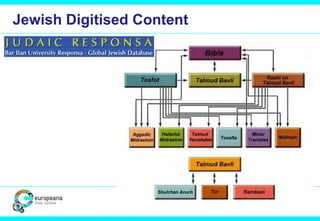
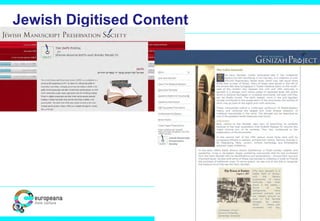
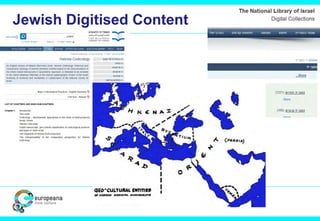
Jewish Digitised Content
Impact
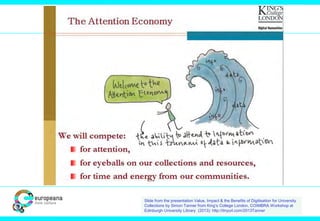
Slide from the presentation Value, Impact & the Benefits of Digitisation for University
Collections by Simon Tanner from King’s College London, COIMBRA Workshop at
Edinburgh University Library (2013): http://tinyurl.com/2013Tanner
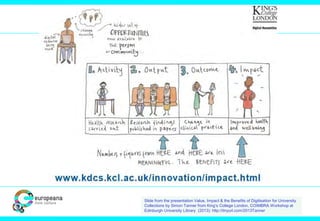
Slide from the presentation Value, Impact & the Benefits of Digitisation for University
Collections by Simon Tanner from King’s College London, COIMBRA Workshop at
Edinburgh University Library (2013): http://tinyurl.com/2013Tanner
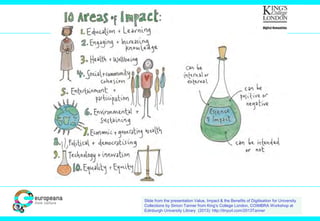
Slide from the presentation Value, Impact & the Benefits of Digitisation for University
Collections by Simon Tanner from King’s College London, COIMBRA Workshop at
Edinburgh University Library (2013): http://tinyurl.com/2013Tanner
Slide from the presentation Value, Impact & the Benefits of Digitisation for University
Collections by Simon Tanner from King’s College London, COIMBRA Workshop at
Edinburgh University Library (2013): http://tinyurl.com/2013Tanner
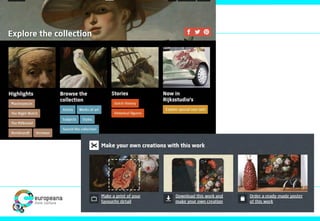
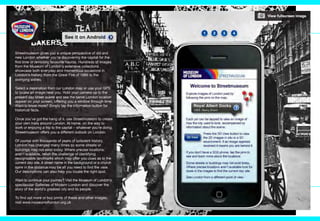
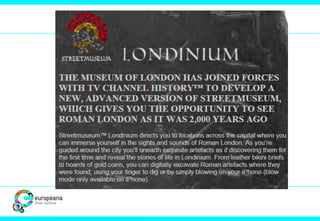
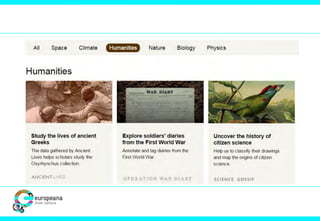
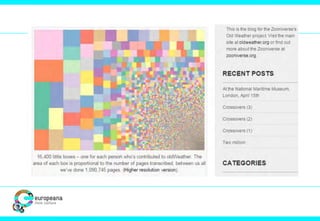
Examples of Digital Impact
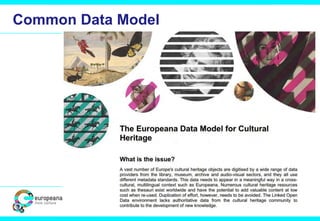
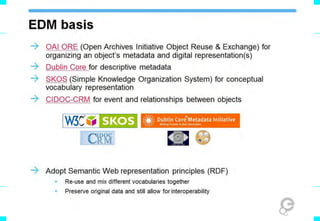
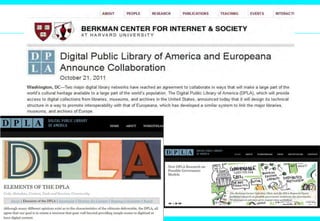
Common Data Model for
Content Description
Common Data Model
Outline
”
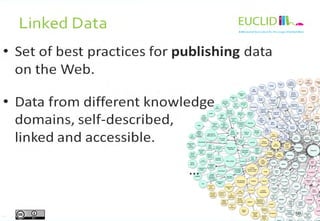
Judaica Linked Data
Who? What? When? Where?
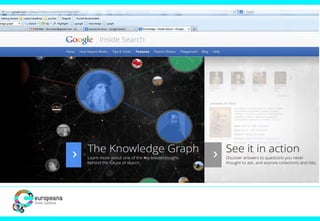
Controlled vocabularies: hubs of
Jewish Knowledge in the
Structured Web
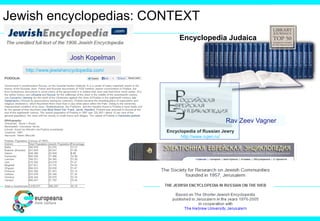
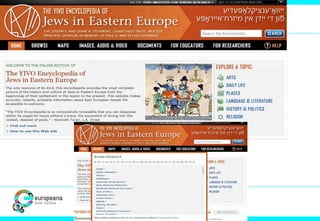
Jewish encyclopedias: CONTEXT
Encyclopedia Judaica
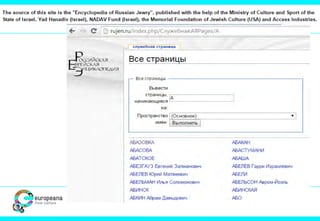
Encyclopedia of Russian Jewry
http://www.rujen.ru/
http://www.jewishencyclopedia.com/
Rav Zeev Vagner
Josh Kopelman
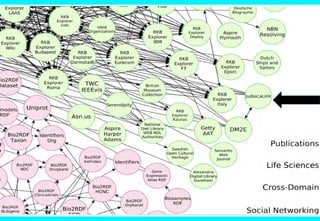
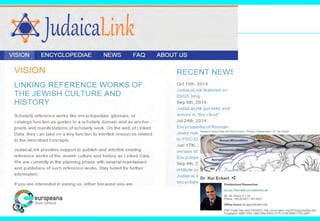
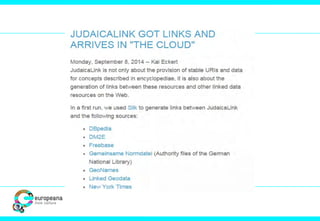
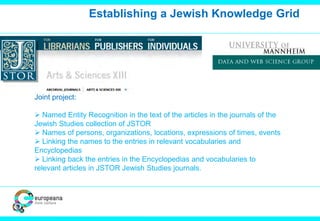
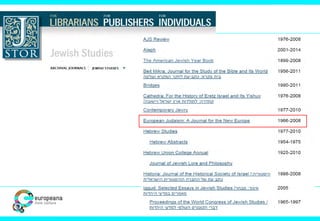
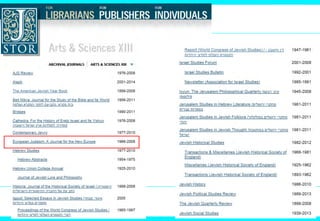
Establishing a Jewish Knowledge Grid
Joint project:
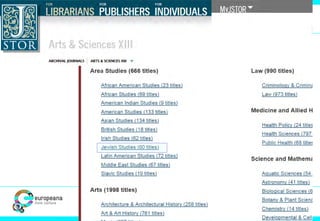
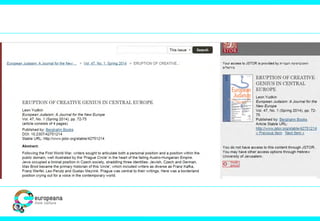
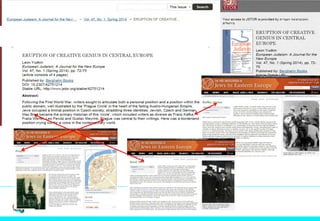
 Named Entity Recognition in the text of the articles in the journals of the
Jewish Studies collection of JSTOR
 Names of persons, organizations, locations, expressions of times, events
 Linking the names to the entries in relevant vocabularies and
Encyclopedias
 Linking back the entries in the Encyclopedias and vocabularies to
relevant articles in JSTOR Jewish Studies journals.
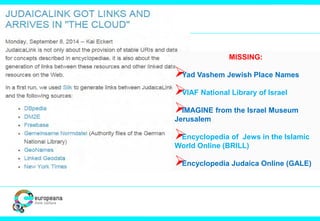
MISSING:
Yad Vashem Jewish Place Names
VIAF National Library of Israel
IMAGINE from the Israel Museum
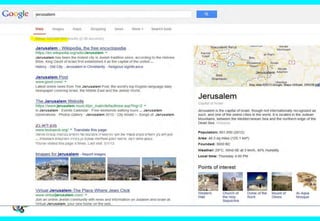
Jerusalem
Encyclopedia of Jews in the Islamic
World Online (BRILL)
Encyclopedia Judaica Online (GALE)
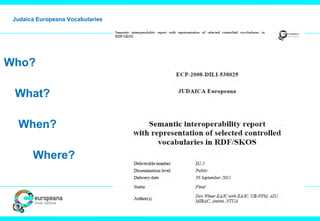
Judaica Europeana Vocabularies
Who?
What?
When?
Where?
Thank you!
dov.winer@gmail.com

harvardjudaicawiner20150413

  • 1.
    Europeana and LOD:Enhancing Jewish and Israeli Heritage Digital Contents EVA/Minerva Conference at Harvard University April, 13-14 2015 Judaica Division , Harvard University Library, Cambridge, Massachusetts Dov Winer Scientific Manager, Judaica Europeana Coordinator, MINERVA Israel Cultural Heritage Digitisation Forum
  • 2.
    Abstract: Digitisation initiatives begandue to long term preservation concerns. Questions concerning their impact have now come to the fore: “The measurable outcomes arising from the existence of a digital resource that demonstrate a change in the life or life opportunities of the community for which the resource is intended.” Jewish and Israeli digital resources can now be enhanced with relevant encyclopedias and controlled vocabularies through a LOD approach. The resulting knowledge grid can help bridge the gap between the digital resources and the knowledge of the intended communities of users. It will expand their application in narratives, scholarly research, higher education, K12, cultural tourism, genealogy and more.
  • 3.
    50 Years ofHarvard Judaica
  • 4.
     Digital Contents:Israeli and Jewish  The Impact of digitised contents  Some examples of high impact initiatives  Common Data Model for Content Description  Judaica Linked Data: providing context to Jewish Digitised Contents a possible Jewish Knowledge Grid. Outline
  • 5.
  • 6.
  • 7.
  • 8.
  • 9.
  • 10.
  • 20.
  • 21.
    Slide from thepresentation Value, Impact & the Benefits of Digitisation for University Collections by Simon Tanner from King’s College London, COIMBRA Workshop at Edinburgh University Library (2013): http://tinyurl.com/2013Tanner
  • 22.
    Slide from thepresentation Value, Impact & the Benefits of Digitisation for University Collections by Simon Tanner from King’s College London, COIMBRA Workshop at Edinburgh University Library (2013): http://tinyurl.com/2013Tanner
  • 23.
    Slide from thepresentation Value, Impact & the Benefits of Digitisation for University Collections by Simon Tanner from King’s College London, COIMBRA Workshop at Edinburgh University Library (2013): http://tinyurl.com/2013Tanner
  • 24.
    Slide from thepresentation Value, Impact & the Benefits of Digitisation for University Collections by Simon Tanner from King’s College London, COIMBRA Workshop at Edinburgh University Library (2013): http://tinyurl.com/2013Tanner
  • 25.
  • 33.
    Common Data Modelfor Content Description
  • 34.
  • 35.
  • 41.
  • 43.
  • 44.
    Who? What? When?Where? Controlled vocabularies: hubs of Jewish Knowledge in the Structured Web
  • 46.
    Jewish encyclopedias: CONTEXT EncyclopediaJudaica Encyclopedia of Russian Jewry http://www.rujen.ru/ http://www.jewishencyclopedia.com/ Rav Zeev Vagner Josh Kopelman
  • 51.
    Establishing a JewishKnowledge Grid Joint project:  Named Entity Recognition in the text of the articles in the journals of the Jewish Studies collection of JSTOR  Names of persons, organizations, locations, expressions of times, events  Linking the names to the entries in relevant vocabularies and Encyclopedias  Linking back the entries in the Encyclopedias and vocabularies to relevant articles in JSTOR Jewish Studies journals.
  • 56.
    MISSING: Yad Vashem JewishPlace Names VIAF National Library of Israel IMAGINE from the Israel Museum Jerusalem Encyclopedia of Jews in the Islamic World Online (BRILL) Encyclopedia Judaica Online (GALE)
  • 57.
  • 58.