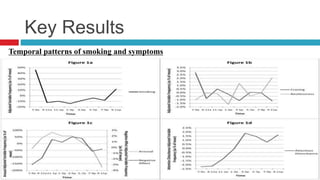
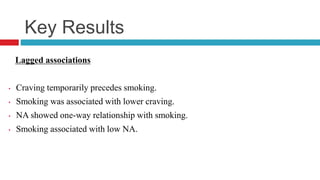
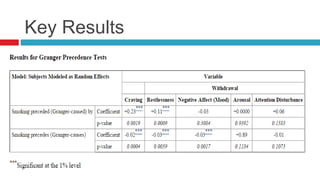
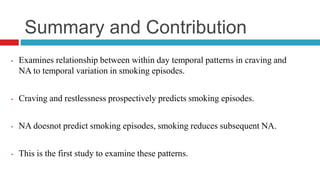
This study examined the within-day temporal relationships between smoking frequency, craving, and withdrawal symptoms using data from 351 participants over 16 days. Lagged regression analyses showed that increases in craving temporarily preceded smoking episodes, and that smoking was associated with subsequent decreases in craving. Negative affect was also found to have a one-way relationship with smoking, such that smoking was associated with lower negative affect, but negative affect did not predict smoking episodes. This was the first study to examine these within-day temporal patterns between smoking and withdrawal symptoms.