Smoking
Kills
Neena Reddy
Statistics
 40% of men and 27% of women are
smokers
 Average 18 cigarettes a day –
addiction /chain smokers.
 Smoking causes 80% of all drug
related deaths
The Facts
Smoking:
 Is addictive – more than heroine or cocaine
 Makes your clothes, hair and breath smell
 Turns your teeth and fingers yellow
 Increases risk of stroke and heart attack
 Increases risk of developing diabetes
 Is the most common cause of lung, throat and
mouth cancer
Why Do Young People
Start Smoking?
Think of Some
Reasons
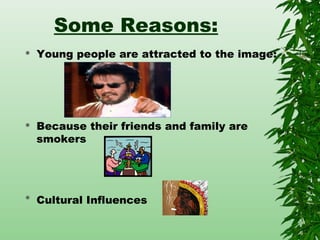
Some Reasons:
 Young people are attracted to the image:
 Because their friends and family are
smokers

Cultural Influences
What are in Cigarettes?
Do YOU know?
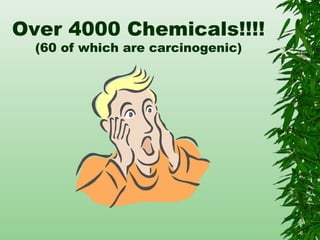
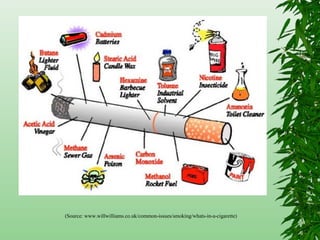
Over 4000 Chemicals!!!!
(60 of which are carcinogenic)
(Source: www.willwilliams.co.uk/common-issues/smoking/whats-in-a-cigarette)
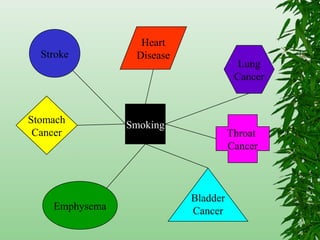
What are some of the
consequences of
smoking?
Smoking
Stroke
Lung
Cancer
Stomach
Cancer Throat
Cancer
Emphysema
Heart
Disease
Bladder
Cancer
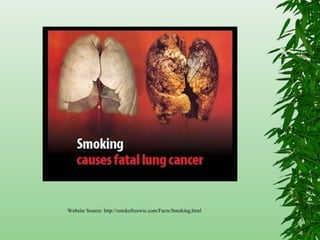
But what does these
things really look like?
How do these images
make you feel?
Website Source: http://smokefreewic.com/Facts/Smoking.html
By Survey - Top excuses by
smokers
Top excuses for not quitting smoking“
1) Quitting smoking would be detrimental to my health by halting my
exercise program...I WALK to the store to buy my cigarettes
2) Any wimp can quit smoking, but it takes a man to face cancer.
3) The car CAME with ashtrays for a REASON!!
4) I smoke to help digest dinner and if I didn't smoke, I would keep
eating until I EXPLODE!!
5) It's a family tradition.
6) Who likes white teeth??
7) It's a great people repellent.
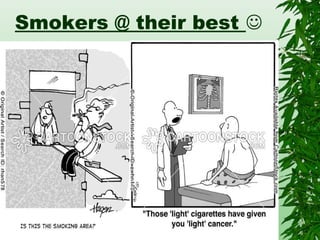
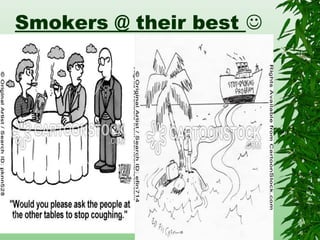
Smokers @ their best 
But wait……Think
20 minutes after quitting:
Your heart rate drops
12 hours after quitting:
Carbon monoxide levels in your blood drop to
normal
Ready to quit – follow these steps
1. Get ready
2. Get support
3. Learn new skills and behaviors
4. Get medication – if recommended by your
doctor – and use it correctly
5. Be prepared for cravings and withdrawal
symptoms
Steps to quitting
Step 1: Get Ready
 Set a quit date
 Get rid of all cigarettes and ashtrays at home,
work, and in your car
 Keep a diary of when and why you smoke
 Tell friends and family you’re going to stop
Steps to Quitting
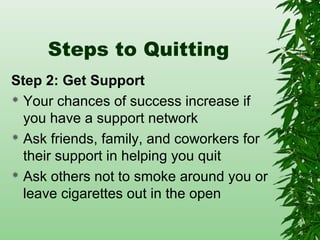
Step 2: Get Support
 Your chances of success increase if
you have a support network
 Ask friends, family, and coworkers for
their support in helping you quit
 Ask others not to smoke around you or
leave cigarettes out in the open
Steps to quitting
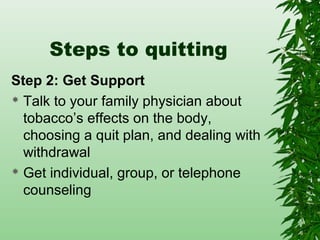
Step 2: Get Support
 Talk to your family physician about
tobacco’s effects on the body,
choosing a quit plan, and dealing with
withdrawal
 Get individual, group, or telephone
counseling
Steps to quitting
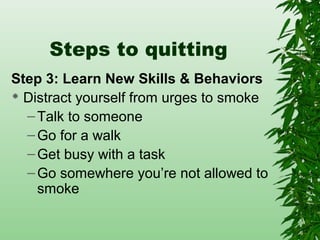
Step 3: Learn New Skills & Behaviors
 Distract yourself from urges to smoke
–Talk to someone
–Go for a walk
–Get busy with a task
–Go somewhere you’re not allowed to
smoke
Steps to quitting
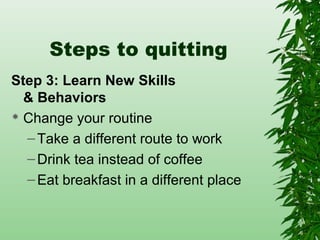
Step 3: Learn New Skills
& Behaviors
 Change your routine
–Take a different route to work
–Drink tea instead of coffee
–Eat breakfast in a different place
Steps to quitting
Step 3: Learn New Skills
& Behaviors
 Reduce stress – take a hot bath,
exercise, or read a book
 Plan something enjoyable to do every
day
 Drink a lot of water and other fluids
Steps to quitting
Step 4: Get Medication
 Your family physician may recommend one
of these to help you quit:
– Bupropion SR
– Nicotine gum
– Nicotine inhaler
– Nicotine nasal spray
– Nicotine patch
– Varenicline
Steps to quitting
Step 5: Avoid Relapse
 Most relapses occur within the first
three months
 Avoid drinking alcohol – drinking
lowers your chances of success
 Avoid being around other smokers –
can make you want to smoke
Steps to quitting
Step 5: Avoid Relapse
 Expect a small weight gain
(usually less than 10 pounds)
 Eat a healthy diet
 Stay active
 Look for ways to improve your mood
other than smoking
Will it work?
Successful quitters are
 Ready to change
 Motivated to quit
Managing withdrawal
Symptoms
 Most intense during the first three to
seven days
 May continue for several weeks but
will get less severe
 Triggers or cues associated with
smoking can cause cravings
Managing withdrawal
 Exercise
 Reduce or avoid caffeine or other stimulants
 Relax before going to bed
 Make your bedroom quiet
 Keep a bedtime routine
 Drink plenty of water
 Use cough drops to relieve
throat irritation
Managing withdrawal
If you’re having trouble concentrating
 Adjust your schedule to a lighter
workload
 Lower your expectations on the
amount of work you can do
 Understand the amount of energy and
time it takes to stop smoking
Managing withdrawal
If your appetite has increased
 Eat healthy snacks
 Don’t delay regular meals
 Drink more water
 Exercise regularly
Managing withdrawal
If you crave a cigarette
 Wait out the craving (usually less than
five minutes)
 Try deep breathing
 Use distractions
 Call someone in your support network
 Chew gum
 Brush your teeth
Renew your dedication
 Reward yourself for resisting urges to
smoke
 Review your reasons for stopping
 Remind yourself often how well you’re
doing
You can do it!
 Tobacco addiction is a chronic disease –
seek advice, support, and care from your
family physician to increase your chance of
success
 Quitting smoking can reduce illness, prevent
death, and increase your quality
of life
 Quitting can be difficult – remember to ask
for help
 You can do it!
There’s hope……
Thanks for your time to go through the
PPT
As you may be active or passive
smoker.

Smoking kills................

  • 1.
  • 2.
    Statistics  40% ofmen and 27% of women are smokers  Average 18 cigarettes a day – addiction /chain smokers.  Smoking causes 80% of all drug related deaths
  • 3.
    The Facts Smoking:  Isaddictive – more than heroine or cocaine  Makes your clothes, hair and breath smell  Turns your teeth and fingers yellow  Increases risk of stroke and heart attack  Increases risk of developing diabetes  Is the most common cause of lung, throat and mouth cancer
  • 4.
    Why Do YoungPeople Start Smoking? Think of Some Reasons
  • 5.
    Some Reasons:  Youngpeople are attracted to the image:  Because their friends and family are smokers  Cultural Influences
  • 6.
    What are inCigarettes? Do YOU know?
  • 7.
    Over 4000 Chemicals!!!! (60of which are carcinogenic)
  • 8.
  • 9.
    What are someof the consequences of smoking?
  • 10.
  • 11.
    But what doesthese things really look like? How do these images make you feel?
  • 12.
  • 13.
    By Survey -Top excuses by smokers Top excuses for not quitting smoking“ 1) Quitting smoking would be detrimental to my health by halting my exercise program...I WALK to the store to buy my cigarettes 2) Any wimp can quit smoking, but it takes a man to face cancer. 3) The car CAME with ashtrays for a REASON!! 4) I smoke to help digest dinner and if I didn't smoke, I would keep eating until I EXPLODE!! 5) It's a family tradition. 6) Who likes white teeth?? 7) It's a great people repellent.
  • 14.
  • 15.
  • 16.
    But wait……Think 20 minutesafter quitting: Your heart rate drops 12 hours after quitting: Carbon monoxide levels in your blood drop to normal Ready to quit – follow these steps 1. Get ready 2. Get support 3. Learn new skills and behaviors 4. Get medication – if recommended by your doctor – and use it correctly 5. Be prepared for cravings and withdrawal symptoms
  • 17.
    Steps to quitting Step1: Get Ready  Set a quit date  Get rid of all cigarettes and ashtrays at home, work, and in your car  Keep a diary of when and why you smoke  Tell friends and family you’re going to stop
  • 18.
    Steps to Quitting Step2: Get Support  Your chances of success increase if you have a support network  Ask friends, family, and coworkers for their support in helping you quit  Ask others not to smoke around you or leave cigarettes out in the open
  • 19.
    Steps to quitting Step2: Get Support  Talk to your family physician about tobacco’s effects on the body, choosing a quit plan, and dealing with withdrawal  Get individual, group, or telephone counseling
  • 20.
    Steps to quitting Step3: Learn New Skills & Behaviors  Distract yourself from urges to smoke –Talk to someone –Go for a walk –Get busy with a task –Go somewhere you’re not allowed to smoke
  • 21.
    Steps to quitting Step3: Learn New Skills & Behaviors  Change your routine –Take a different route to work –Drink tea instead of coffee –Eat breakfast in a different place
  • 22.
    Steps to quitting Step3: Learn New Skills & Behaviors  Reduce stress – take a hot bath, exercise, or read a book  Plan something enjoyable to do every day  Drink a lot of water and other fluids
  • 23.
    Steps to quitting Step4: Get Medication  Your family physician may recommend one of these to help you quit: – Bupropion SR – Nicotine gum – Nicotine inhaler – Nicotine nasal spray – Nicotine patch – Varenicline
  • 24.
    Steps to quitting Step5: Avoid Relapse  Most relapses occur within the first three months  Avoid drinking alcohol – drinking lowers your chances of success  Avoid being around other smokers – can make you want to smoke
  • 25.
    Steps to quitting Step5: Avoid Relapse  Expect a small weight gain (usually less than 10 pounds)  Eat a healthy diet  Stay active  Look for ways to improve your mood other than smoking
  • 26.
    Will it work? Successfulquitters are  Ready to change  Motivated to quit
  • 27.
    Managing withdrawal Symptoms  Mostintense during the first three to seven days  May continue for several weeks but will get less severe  Triggers or cues associated with smoking can cause cravings
  • 28.
    Managing withdrawal  Exercise Reduce or avoid caffeine or other stimulants  Relax before going to bed  Make your bedroom quiet  Keep a bedtime routine  Drink plenty of water  Use cough drops to relieve throat irritation
  • 29.
    Managing withdrawal If you’rehaving trouble concentrating  Adjust your schedule to a lighter workload  Lower your expectations on the amount of work you can do  Understand the amount of energy and time it takes to stop smoking
  • 30.
    Managing withdrawal If yourappetite has increased  Eat healthy snacks  Don’t delay regular meals  Drink more water  Exercise regularly
  • 31.
    Managing withdrawal If youcrave a cigarette  Wait out the craving (usually less than five minutes)  Try deep breathing  Use distractions  Call someone in your support network  Chew gum  Brush your teeth
  • 32.
    Renew your dedication Reward yourself for resisting urges to smoke  Review your reasons for stopping  Remind yourself often how well you’re doing
  • 33.
    You can doit!  Tobacco addiction is a chronic disease – seek advice, support, and care from your family physician to increase your chance of success  Quitting smoking can reduce illness, prevent death, and increase your quality of life  Quitting can be difficult – remember to ask for help  You can do it!
  • 34.
    There’s hope…… Thanks foryour time to go through the PPT As you may be active or passive smoker.