WORKFORCE COMPETENCY SHAPING 
FOR 2020- 2050 
NEENA REDDY
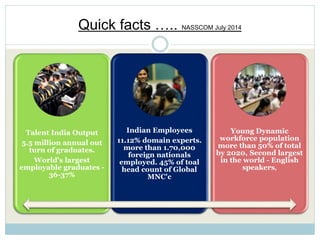
Quick facts ….. NASSCOM July 2014 
Talent India Output 
5.5 million annual out 
turn of graduates. 
World's largest 
employable graduates - 
36-37% 
India 
Indian Employees 
11.12% domain experts. 
more than 1.70,000 
foreign nationals 
employed. 45% of toal 
head count of Global 
MNC'c 
Young Dynamic 
workforce population 
more than 50% of total 
by 2020, Second largest 
in the world - English 
speakers,
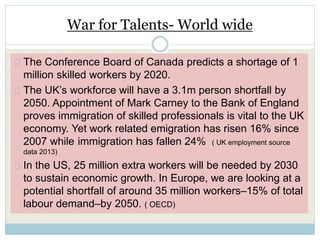
War for Talents- World wide 
The Conference Board of Canada predicts a shortage of 1 
million skilled workers by 2020. 
The UK’s workforce will have a 3.1m person shortfall by 
2050. Appointment of Mark Carney to the Bank of England 
proves immigration of skilled professionals is vital to the UK 
economy. Yet work related emigration has risen 16% since 
2007 while immigration has fallen 24% ( UK employment source 
data 2013) 
In the US, 25 million extra workers will be needed by 2030 
to sustain economic growth. In Europe, we are looking at a 
potential shortfall of around 35 million workers–15% of total 
labour demand–by 2050. ( OECD)
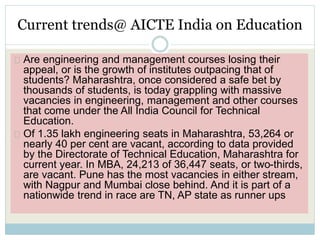
Current trends@ AICTE India on Education 
Are engineering and management courses losing their 
appeal, or is the growth of institutes outpacing that of 
students? Maharashtra, once considered a safe bet by 
thousands of students, is today grappling with massive 
vacancies in engineering, management and other courses 
that come under the All India Council for Technical 
Education. 
Of 1.35 lakh engineering seats in Maharashtra, 53,264 or 
nearly 40 per cent are vacant, according to data provided 
by the Directorate of Technical Education, Maharashtra for 
current year. In MBA, 24,213 of 36,447 seats, or two-thirds, 
are vacant. Pune has the most vacancies in either stream, 
with Nagpur and Mumbai close behind. And it is part of a 
nationwide trend in race are TN, AP state as runner ups
SKILL 
Skill Gaps 
Almost 200 million people around the world (40 million of 
which are in the advanced economies alone) are 
unemployed. Yet global businesses are struggling with 
jobs that remain vacant. Seventy five million of these 
unemployed are youth. 
The inability to fill jobs despite massive unemployment is 
not only due to geographic imbalances in demand and 
supply, but also due to large skill gaps between the 
needs of the industry and the output of the education 
systems. 
(G20 magazine by Ana C. Rold.)
Get ready to face the war of Talent.. 
Future to be shaped on continuous basis……………………….. 
Breakthrough social media technologies— people born between 
1977 and 1997. –The actual workforce to be developed for war of 
Talents by 2020- 2050. Top organizations are moving beyond the 
vanilla “employer of choice” concept to a more rigorous strategy of 
attracting and retaining the right employees through branding 
Most of the Public sector or base Industries worldwide has 
employees working for them till retirement or for more than 15 to 20 
years as loyal workforce. This attitude or sense of belonging to the 
company needs to be inbuilt in current workforce. Companies are 
ready to invest in training and development of these workforce on 
emerging technology. 
Well life balance needs to be maintained.. instead we have burned 
out employees working at a stretch … with proper Project planning 
and Sales force presenting realistic data to the client.
Continue….. 
Instead of inducting specialized skilled employee, the 
planning should be for multi skilled/tasked workforce. 
Retrenchment/ lay-offs/ right sizing workforce can be changed 
to recycling or reskilling the employees for next pipeline, as 
the cost of rehire is more than the cost of firing. 
Selection criteria – Can they do the job? (Competencies) Will 
they do the job? Motivation) Can we offer them what they are 
looking for? (Cultural Fit) recruitment to be ongoing process, 
tapping the raw talent in advance.
If There’s a Shortage for Talent, Why are Companies Still 
Downsizing? 
Downsizing or rightsizing to be precise is not happening now in great 
numbers, but can hit back. 
All they do is re-churn or rehire the same numbers perhaps, as per the 
business needs. 
Many companies compete for the same skills or talent- rat race. 
Skill shortage are high in the following domain ( Health care, IT, customer 
service etc) 
Will industry be open for double employment of employee or getting them 
contractual… 
Will the Company stick to work timings of 8 hours, and pay overtime as per 
company Act of 1947 in Information technology sector also instead of 
having burned out employee 
Why not go for Adoption of Govt. colleges by IT firms and fix a section of 
curriculum on the skills required well ahead in second year… raw 
resources will form 40% of your workforce Pyramid… cost of training them 
after induction will be Zero.
If There’s a Shortage for Talent, Why are Companies Still 
Downsizing? 
Developing leaders : 
We cannot develop the leaders merely through courses or sponsoring their 
certification. We need to spot the talent amongst the employees at any level 
or grade and nurture it. 
If the Leaders are people- person friendly ,transparent, empowering their team 
members the culture or climate of the organization is matured. 
Safe, Healthy And Happy Workplace, Performance Linked Bonuses, 360-Degree 
Performance Management Feedback System, Gallup study, Knowledge 
management, Potential Highlight Performers program, Open House Discussions And 
Feedback Mechanisms, rewards and recognition programs, Participative committees 
by the employees . diversity program, CSR, etc keep the employees grounded. 
Leaders have do focus on branding in order to retain the core people, focus more on 
reskilling.then layoffs

Workforce competency @2050

  • 1.
    WORKFORCE COMPETENCY SHAPING FOR 2020- 2050 NEENA REDDY
  • 2.
    Quick facts …..NASSCOM July 2014 Talent India Output 5.5 million annual out turn of graduates. World's largest employable graduates - 36-37% India Indian Employees 11.12% domain experts. more than 1.70,000 foreign nationals employed. 45% of toal head count of Global MNC'c Young Dynamic workforce population more than 50% of total by 2020, Second largest in the world - English speakers,
  • 3.
    War for Talents-World wide The Conference Board of Canada predicts a shortage of 1 million skilled workers by 2020. The UK’s workforce will have a 3.1m person shortfall by 2050. Appointment of Mark Carney to the Bank of England proves immigration of skilled professionals is vital to the UK economy. Yet work related emigration has risen 16% since 2007 while immigration has fallen 24% ( UK employment source data 2013) In the US, 25 million extra workers will be needed by 2030 to sustain economic growth. In Europe, we are looking at a potential shortfall of around 35 million workers–15% of total labour demand–by 2050. ( OECD)
  • 4.
    Current trends@ AICTEIndia on Education Are engineering and management courses losing their appeal, or is the growth of institutes outpacing that of students? Maharashtra, once considered a safe bet by thousands of students, is today grappling with massive vacancies in engineering, management and other courses that come under the All India Council for Technical Education. Of 1.35 lakh engineering seats in Maharashtra, 53,264 or nearly 40 per cent are vacant, according to data provided by the Directorate of Technical Education, Maharashtra for current year. In MBA, 24,213 of 36,447 seats, or two-thirds, are vacant. Pune has the most vacancies in either stream, with Nagpur and Mumbai close behind. And it is part of a nationwide trend in race are TN, AP state as runner ups
  • 5.
    SKILL Skill Gaps Almost 200 million people around the world (40 million of which are in the advanced economies alone) are unemployed. Yet global businesses are struggling with jobs that remain vacant. Seventy five million of these unemployed are youth. The inability to fill jobs despite massive unemployment is not only due to geographic imbalances in demand and supply, but also due to large skill gaps between the needs of the industry and the output of the education systems. (G20 magazine by Ana C. Rold.)
  • 6.
    Get ready toface the war of Talent.. Future to be shaped on continuous basis……………………….. Breakthrough social media technologies— people born between 1977 and 1997. –The actual workforce to be developed for war of Talents by 2020- 2050. Top organizations are moving beyond the vanilla “employer of choice” concept to a more rigorous strategy of attracting and retaining the right employees through branding Most of the Public sector or base Industries worldwide has employees working for them till retirement or for more than 15 to 20 years as loyal workforce. This attitude or sense of belonging to the company needs to be inbuilt in current workforce. Companies are ready to invest in training and development of these workforce on emerging technology. Well life balance needs to be maintained.. instead we have burned out employees working at a stretch … with proper Project planning and Sales force presenting realistic data to the client.
  • 7.
    Continue….. Instead ofinducting specialized skilled employee, the planning should be for multi skilled/tasked workforce. Retrenchment/ lay-offs/ right sizing workforce can be changed to recycling or reskilling the employees for next pipeline, as the cost of rehire is more than the cost of firing. Selection criteria – Can they do the job? (Competencies) Will they do the job? Motivation) Can we offer them what they are looking for? (Cultural Fit) recruitment to be ongoing process, tapping the raw talent in advance.
  • 8.
    If There’s aShortage for Talent, Why are Companies Still Downsizing? Downsizing or rightsizing to be precise is not happening now in great numbers, but can hit back. All they do is re-churn or rehire the same numbers perhaps, as per the business needs. Many companies compete for the same skills or talent- rat race. Skill shortage are high in the following domain ( Health care, IT, customer service etc) Will industry be open for double employment of employee or getting them contractual… Will the Company stick to work timings of 8 hours, and pay overtime as per company Act of 1947 in Information technology sector also instead of having burned out employee Why not go for Adoption of Govt. colleges by IT firms and fix a section of curriculum on the skills required well ahead in second year… raw resources will form 40% of your workforce Pyramid… cost of training them after induction will be Zero.
  • 9.
    If There’s aShortage for Talent, Why are Companies Still Downsizing? Developing leaders : We cannot develop the leaders merely through courses or sponsoring their certification. We need to spot the talent amongst the employees at any level or grade and nurture it. If the Leaders are people- person friendly ,transparent, empowering their team members the culture or climate of the organization is matured. Safe, Healthy And Happy Workplace, Performance Linked Bonuses, 360-Degree Performance Management Feedback System, Gallup study, Knowledge management, Potential Highlight Performers program, Open House Discussions And Feedback Mechanisms, rewards and recognition programs, Participative committees by the employees . diversity program, CSR, etc keep the employees grounded. Leaders have do focus on branding in order to retain the core people, focus more on reskilling.then layoffs