Chapter 18
T he Rise of
Smokestack
America

The American People, 6th ed.
I.

The Texture of
Industrial Progress
Technological
Innovations
 Advances in technology allowed

Advances in technology allowed
production to be more efficient which in
turn generated new needs and newer
innovations
 New power sources were at the heart of
America’s shift to mass production;
electricity was the key to a new
worldview for most Americans
Railroads
 Railroads were the first gigantic
corporations in America
 The government expedited the building of
the railroads with generous land grants
and business-friendly regulations
 The high cost of running a railroad
necessitated cut-throat business practices
 The logistical tangles of the industry
prompted development of professional
management techniques
Integration
 Vertical Integration: adding operations
before or after the production process
such as distribution; desires all stages of
production
 Horizontal Integration: the combination
of multiple similar business ventures
under one “umbrella”; desires a
monopoly of a particular market
II.

Urban Expansion in the
Industrial Age
The Cities
 The central cause of the phenomenal
growth of cities in this era was their
ability to attract newcomers from rural
areas and abroad
 Work and increased pay rates was the
prime attraction
 Rural life was often dull
The New Immigration,
1880-1900
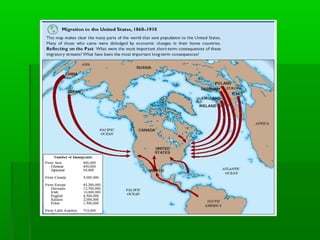
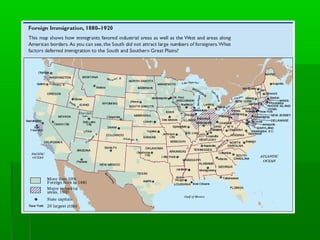
 Over the course of the century, the
sources of immigrants for the United
States changed
 “New immigrants” came from southern
and eastern Europe
 New agricultural techniques in these
European regions removed the need for
thousands of farm laborers
III. The Industrial City
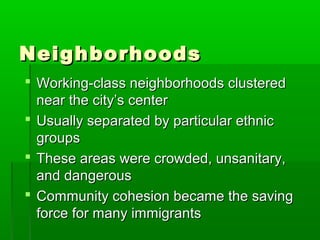
Neighborhoods
 Working-class neighborhoods clustered
near the city’s center
 Usually separated by particular ethnic
groups
 These areas were crowded, unsanitary,
and dangerous
 Community cohesion became the saving
force for many immigrants
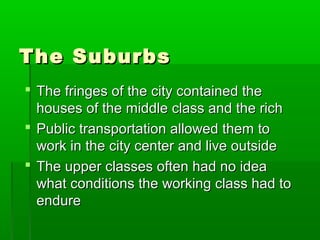
The Suburbs
 The fringes of the city contained the
houses of the middle class and the rich
 Public transportation allowed them to
work in the city center and live outside
 The upper classes often had no idea
what conditions the working class had to
endure
IV. Industrial Work and the
Laboring Class
Ethnic Diversity
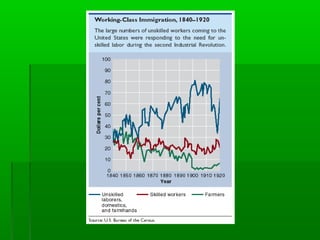
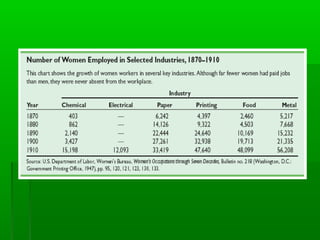
 Immigrants made up a large portion of the
working class in the late nineteenth century
 The occupational patterns of the workplace are a
direct result of the ethnic diversity of the times
 Whites occupied the top tier, next came northern
Europeans, next came the “new immigrants”,
and finally came African Americans
The Nature of Work

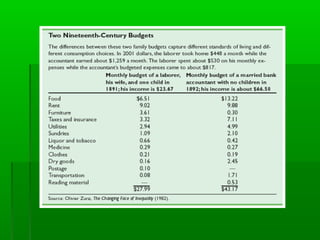
 A majority of Americans now labored in a
factory setting or small sweatshop
 Workdays were very long: ten hours a
day, six days a week
 Work was uncomfortable, dangerous,
and usually repetitively boring; accident
rates were high
 Sending children into the work forces
was a fact of survival for many
Americans
V. Capital Versus
Labor
Protests
 Workers and employers constantly
struggled for control of the workplace
 Workers felt the right to control the pace
of production in factories and developed
strong-arm tactics to encourage solidarity
within the shop
 Protest came in the guise of
absenteeism, drunkenness, general
inefficiency, and quitting work altogether
Strikes
 The most direct methodology to adjust
conditions in the workplace was the strike
 Strikes in the nineteenth century usually
happened at the workplace, replacing
neighborhood riots
 As collective action spread, unions began to play
a more active role in arbitration of grievances
 Coordination between workplaces performing
the same work led to uniform wages and hours
Smokestacks in America

Smokestacks in America

  • 1.
    Chapter 18 T heRise of Smokestack America The American People, 6th ed.
  • 2.
  • 3.
    Technological Innovations  Advances intechnology allowed Advances in technology allowed production to be more efficient which in turn generated new needs and newer innovations  New power sources were at the heart of America’s shift to mass production; electricity was the key to a new worldview for most Americans
  • 5.
    Railroads  Railroads werethe first gigantic corporations in America  The government expedited the building of the railroads with generous land grants and business-friendly regulations  The high cost of running a railroad necessitated cut-throat business practices  The logistical tangles of the industry prompted development of professional management techniques
  • 6.
    Integration  Vertical Integration:adding operations before or after the production process such as distribution; desires all stages of production  Horizontal Integration: the combination of multiple similar business ventures under one “umbrella”; desires a monopoly of a particular market
  • 7.
    II. Urban Expansion inthe Industrial Age
  • 8.
    The Cities  Thecentral cause of the phenomenal growth of cities in this era was their ability to attract newcomers from rural areas and abroad  Work and increased pay rates was the prime attraction  Rural life was often dull
  • 10.
    The New Immigration, 1880-1900 Over the course of the century, the sources of immigrants for the United States changed  “New immigrants” came from southern and eastern Europe  New agricultural techniques in these European regions removed the need for thousands of farm laborers
  • 12.
  • 15.
    Neighborhoods  Working-class neighborhoodsclustered near the city’s center  Usually separated by particular ethnic groups  These areas were crowded, unsanitary, and dangerous  Community cohesion became the saving force for many immigrants
  • 16.
    The Suburbs  Thefringes of the city contained the houses of the middle class and the rich  Public transportation allowed them to work in the city center and live outside  The upper classes often had no idea what conditions the working class had to endure
  • 18.
    IV. Industrial Workand the Laboring Class
  • 19.
    Ethnic Diversity  Immigrantsmade up a large portion of the working class in the late nineteenth century  The occupational patterns of the workplace are a direct result of the ethnic diversity of the times  Whites occupied the top tier, next came northern Europeans, next came the “new immigrants”, and finally came African Americans
  • 24.
    The Nature ofWork  A majority of Americans now labored in a factory setting or small sweatshop  Workdays were very long: ten hours a day, six days a week  Work was uncomfortable, dangerous, and usually repetitively boring; accident rates were high  Sending children into the work forces was a fact of survival for many Americans
  • 27.
  • 28.
    Protests  Workers andemployers constantly struggled for control of the workplace  Workers felt the right to control the pace of production in factories and developed strong-arm tactics to encourage solidarity within the shop  Protest came in the guise of absenteeism, drunkenness, general inefficiency, and quitting work altogether
  • 29.
    Strikes  The mostdirect methodology to adjust conditions in the workplace was the strike  Strikes in the nineteenth century usually happened at the workplace, replacing neighborhood riots  As collective action spread, unions began to play a more active role in arbitration of grievances  Coordination between workplaces performing the same work led to uniform wages and hours