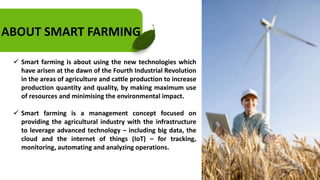
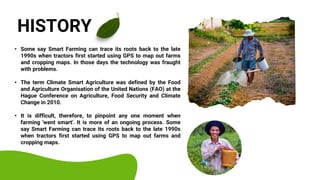
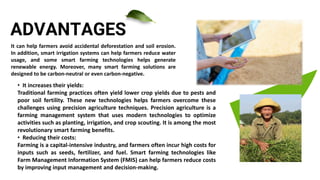
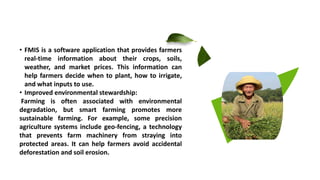
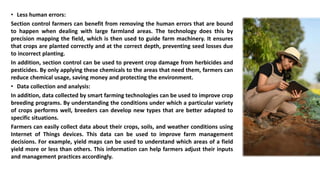
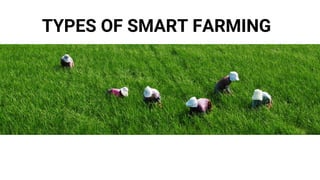
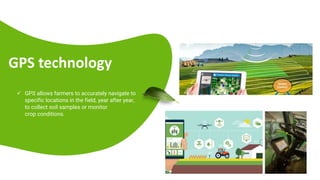
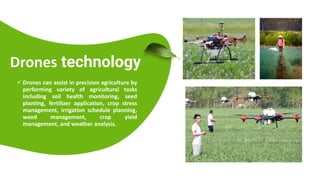
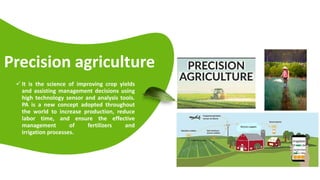
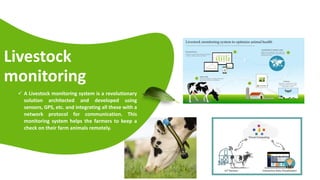
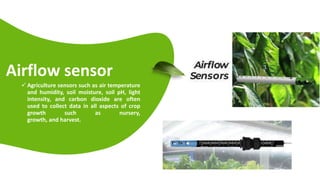
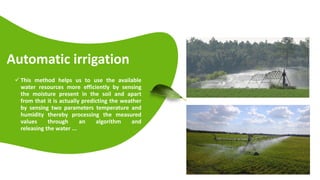
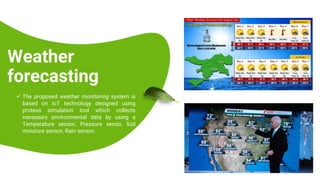
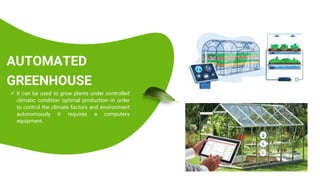
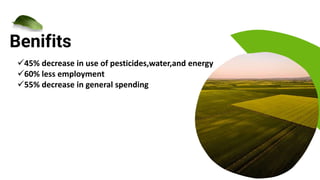
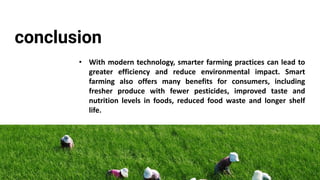
Farming techniques are becoming smarter with the use of new technologies. Smart farming uses tools like GPS, drones, sensors, and weather forecasting to increase yields, reduce costs and environmental impact, and minimize human errors. It provides benefits such as higher crop production through precision agriculture, lowered expenses via improved resource management, and better environmental stewardship. However, the effects on climate change are unclear as pesticide and fertilizer use may rise, and large-scale factory farming may still present social issues. Smart farming incorporates various digital technologies tailored to different agricultural operations and livestock monitoring.