Javed Mohammed
Sep 27, 2015
Javed_mohammed@hotmail.com
A K2 Vista LLC Production
People congestion
Traffic congestion
Space congestion
Resource limitations and managementGlobal warming
Limited city revenues and budgets
19th century infrastructure
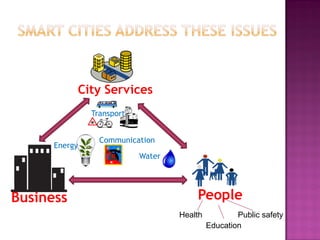
PeopleBusiness
Transport
City Services
Water
Energy
Communication
Health
Education
Public safety
 A smart city uses digital technologies or
information and communication technologies
to enhance quality and performance of urban
services, to reduce costs and resource
consumption, and to engage more effectively
and actively with its citizens. (Wikipedia)
“A Smart city implements technology
including sensor networks which collect big
data and make it available as open data to
address issues faced by citizens relating to
infrastructure that creates intelligent
systems that encourage civic engagement
and improves the quality of life through
better city services.”
Javed Mohammed
Author of “The Alchemy of Innovation”
New ideas
leading to
better
Quality of
Life
Operational
Efficiency
Improve
User
Experience
Reduce
Cost
Research
(universities)
Private
(business)
Public
(municipal
governments)
 Smart Parking: Reducing congestion by making parking spots
easy to find via sensors & apps
 Smart waste collection: Detect trash levels to identify best
collection routes
 Smart health: Remote monitoring of vulnerable patients
 Smart buildings: Monitoring vibrations and potential points of
failure in building and bridges
 Smart jobs: Mentor programs for low-income and highly
educated immigrants.
 Smart lighting: LED lighting that uses less energy and can be
controlled based on weather and other variables
 Smart phone detection: Introduce connectivity and new
applications that enhance community
 Smart roads: Highways that warn in advance best routes based
on traffic conditions and patterns
 Smart cars: Zero emission cars that are easily rentable and
accessible by city dwellers.
Source: The Guardian 5 September 2013 and
“50 Sensor Applications for a Smarter World” Libelium.

Smart cities

  • 1.
    Javed Mohammed Sep 27,2015 Javed_mohammed@hotmail.com A K2 Vista LLC Production
  • 3.
    People congestion Traffic congestion Spacecongestion Resource limitations and managementGlobal warming Limited city revenues and budgets 19th century infrastructure
  • 4.
  • 5.
     A smartcity uses digital technologies or information and communication technologies to enhance quality and performance of urban services, to reduce costs and resource consumption, and to engage more effectively and actively with its citizens. (Wikipedia)
  • 6.
    “A Smart cityimplements technology including sensor networks which collect big data and make it available as open data to address issues faced by citizens relating to infrastructure that creates intelligent systems that encourage civic engagement and improves the quality of life through better city services.” Javed Mohammed Author of “The Alchemy of Innovation”
  • 9.
    New ideas leading to better Qualityof Life Operational Efficiency Improve User Experience Reduce Cost Research (universities) Private (business) Public (municipal governments)
  • 10.
     Smart Parking:Reducing congestion by making parking spots easy to find via sensors & apps  Smart waste collection: Detect trash levels to identify best collection routes  Smart health: Remote monitoring of vulnerable patients  Smart buildings: Monitoring vibrations and potential points of failure in building and bridges  Smart jobs: Mentor programs for low-income and highly educated immigrants.  Smart lighting: LED lighting that uses less energy and can be controlled based on weather and other variables  Smart phone detection: Introduce connectivity and new applications that enhance community  Smart roads: Highways that warn in advance best routes based on traffic conditions and patterns  Smart cars: Zero emission cars that are easily rentable and accessible by city dwellers. Source: The Guardian 5 September 2013 and “50 Sensor Applications for a Smarter World” Libelium.