Pennsylvania’s
Student Learning Objective
Process
Modules 1 – SLO Overview – June 2014
I. Teacher Effectiveness
System
Building Level
Data, 15%
Teacher Specific
Data, 15%
Elective Data,
20%
Observation/
Practice, 50%
Teacher Observation & Practice
Effective 2013-2014 SY
Danielson Framework Domains
1. Planning and Preparation
2. Classroom Environment
3. Instruction
4. Professional Responsibilities
Building Level Data/School Performance Profile
Effective 2013-2014 SY
Indicators of Academic Achievement
Indicators of Closing the Achievement Gap, All Students
Indicators of Closing the Achievement Gap, Subgroups
Academic Growth PVAAS
Other Academic Indicators
Credit for Advanced Achievement
Teacher Specific Data
PVAAS / Growth 3 Year Rolling Average
1. 2013-2014 SY
2. 2014-2015 SY
3. 2015-2016 SY
Other data as provided in Act 82
Elective Data/
Optional 2013-2014 SY
Effective 2014-2015 SY
District Designed Measures and Examinations
Nationally Recognized Standardized Tests
Industry Certification Examinations
Student Projects Pursuant to Local Requirements
Student Portfolios Pursuant to Local Requirements
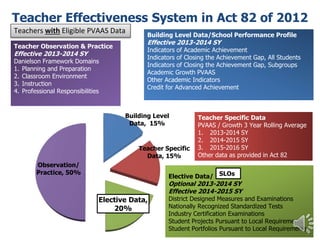
Teacher Effectiveness System in Act 82 of 2012
Teachers with Eligible PVAAS Data
SLOs
3
Building Level
Data, 15%
Observation/
Evidence,
50%
Observation/Evidence
Effective 2013-2014
Danielson Framework Domains
1. Planning and Preparation
2. Classroom Environment
3. Instruction
4. Professional Responsibilities
Building Level Data
Effective 2013-2014 SY
Indicators of Academic Achievement
Indicators of Closing the Achievement Gap, All Students
Indicators of Closing the Achievement Gap, Subgroups
Academic Growth PVAAS
Other Academic Indicators
Credit for Advanced Achievement
Elective Data/
Piloting 2013-2014 SY
Effective 2014-2015 SY
District Designed Measures and Examinations
Nationally Recognized Standardized Tests
Industry Certification Examinations
Student Projects Pursuant to Local Requirements
Student Portfolios Pursuant to Local Requirements
Elective Data,
35%
Teacher Observation Student Achievement
SLO
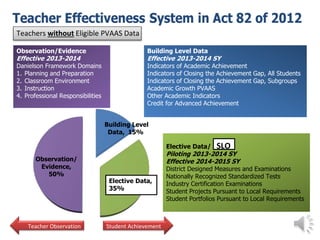
Teachers without Eligible PVAAS Data
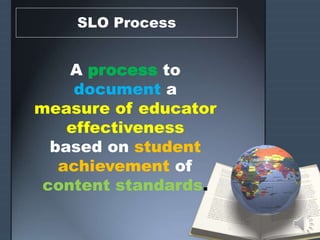
SLO Process
A process to
document a
measure of educator
effectiveness
based on student
achievement of
content standards.
SLO Concepts
• Student achievement can be measured in ways
that reflect authentic learning of content
standards.
• Educator effectiveness can be measured
through use of student achievement measures.
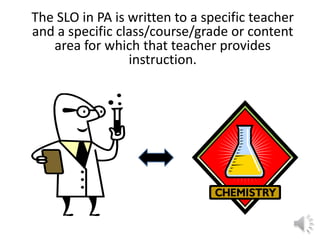
The SLO in PA is written to a specific teacher
and a specific class/course/grade or content
area for which that teacher provides
instruction.
8
Every teacher designs an SLO
Math Physics
Physical
Education
History
Chemistry
Kindergarten
Special
Ed Journalism
9
Collaborative development of an SLO is
encouraged (e.g., similar content area or
grade level teachers, interdisciplinary groups
of educators)
Working Together to Create an SLO
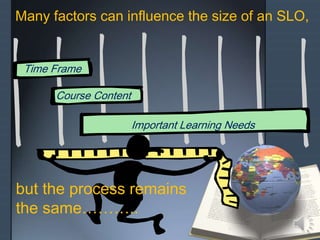
Many factors can influence the size of an SLO,
but the process remains
the same………..
Time Frame
Course Content
Important Learning Needs
SLOs should:
1. Represent the diversity of students
and courses/content areas taught.
2. Align to a set of approved
indicators/targets related to selected
academic content standards.
3. As appropriate, provide opportunity
to describe student achievement
based on “growth” and/or “mastery.”
4. Be supported by verifiable data that
can be collected and scored in a
consistent manner.
5. Include a set of independent
performance measures.
SLO Process Criteria
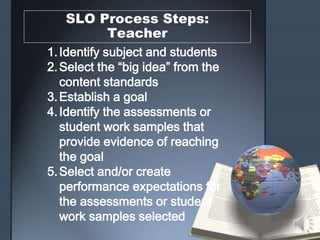
SLO Process Steps:
Teacher
1.Identify subject and students
2.Select the “big idea” from the
content standards
3.Establish a goal
4.Identify the assessments or
student work samples that
provide evidence of reaching
the goal
5.Select and/or create
performance expectations for
the assessments or student
work samples selected
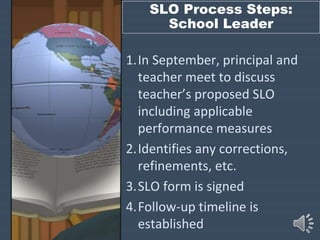
SLO Process Steps:
School Leader
1.In September, principal and
teacher meet to discuss
teacher’s proposed SLO
including applicable
performance measures
2.Identifies any corrections,
refinements, etc.
3.SLO form is signed
4.Follow-up timeline is
established
Key Process Point
The SLO process
facilitates a conversation
about expectation
between educators
(principals and teachers)

Slo module1

  • 1.
  • 2.
  • 3.
    Building Level Data, 15% TeacherSpecific Data, 15% Elective Data, 20% Observation/ Practice, 50% Teacher Observation & Practice Effective 2013-2014 SY Danielson Framework Domains 1. Planning and Preparation 2. Classroom Environment 3. Instruction 4. Professional Responsibilities Building Level Data/School Performance Profile Effective 2013-2014 SY Indicators of Academic Achievement Indicators of Closing the Achievement Gap, All Students Indicators of Closing the Achievement Gap, Subgroups Academic Growth PVAAS Other Academic Indicators Credit for Advanced Achievement Teacher Specific Data PVAAS / Growth 3 Year Rolling Average 1. 2013-2014 SY 2. 2014-2015 SY 3. 2015-2016 SY Other data as provided in Act 82 Elective Data/ Optional 2013-2014 SY Effective 2014-2015 SY District Designed Measures and Examinations Nationally Recognized Standardized Tests Industry Certification Examinations Student Projects Pursuant to Local Requirements Student Portfolios Pursuant to Local Requirements Teacher Effectiveness System in Act 82 of 2012 Teachers with Eligible PVAAS Data SLOs 3
  • 4.
    Building Level Data, 15% Observation/ Evidence, 50% Observation/Evidence Effective2013-2014 Danielson Framework Domains 1. Planning and Preparation 2. Classroom Environment 3. Instruction 4. Professional Responsibilities Building Level Data Effective 2013-2014 SY Indicators of Academic Achievement Indicators of Closing the Achievement Gap, All Students Indicators of Closing the Achievement Gap, Subgroups Academic Growth PVAAS Other Academic Indicators Credit for Advanced Achievement Elective Data/ Piloting 2013-2014 SY Effective 2014-2015 SY District Designed Measures and Examinations Nationally Recognized Standardized Tests Industry Certification Examinations Student Projects Pursuant to Local Requirements Student Portfolios Pursuant to Local Requirements Elective Data, 35% Teacher Observation Student Achievement SLO Teachers without Eligible PVAAS Data
  • 5.
    SLO Process A processto document a measure of educator effectiveness based on student achievement of content standards.
  • 6.
    SLO Concepts • Studentachievement can be measured in ways that reflect authentic learning of content standards. • Educator effectiveness can be measured through use of student achievement measures.
  • 7.
    The SLO inPA is written to a specific teacher and a specific class/course/grade or content area for which that teacher provides instruction.
  • 8.
    8 Every teacher designsan SLO Math Physics Physical Education History Chemistry Kindergarten Special Ed Journalism
  • 9.
    9 Collaborative development ofan SLO is encouraged (e.g., similar content area or grade level teachers, interdisciplinary groups of educators) Working Together to Create an SLO
  • 10.
    Many factors caninfluence the size of an SLO, but the process remains the same……….. Time Frame Course Content Important Learning Needs
  • 11.
    SLOs should: 1. Representthe diversity of students and courses/content areas taught. 2. Align to a set of approved indicators/targets related to selected academic content standards. 3. As appropriate, provide opportunity to describe student achievement based on “growth” and/or “mastery.” 4. Be supported by verifiable data that can be collected and scored in a consistent manner. 5. Include a set of independent performance measures. SLO Process Criteria
  • 12.
    SLO Process Steps: Teacher 1.Identifysubject and students 2.Select the “big idea” from the content standards 3.Establish a goal 4.Identify the assessments or student work samples that provide evidence of reaching the goal 5.Select and/or create performance expectations for the assessments or student work samples selected
  • 13.
    SLO Process Steps: SchoolLeader 1.In September, principal and teacher meet to discuss teacher’s proposed SLO including applicable performance measures 2.Identifies any corrections, refinements, etc. 3.SLO form is signed 4.Follow-up timeline is established
  • 14.
    Key Process Point TheSLO process facilitates a conversation about expectation between educators (principals and teachers)