
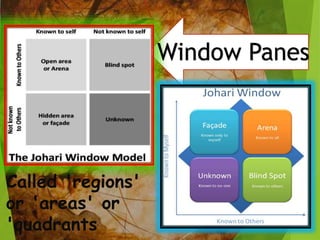
Window Panes
Called 'regions'
or 'areas' or
'quadrants'
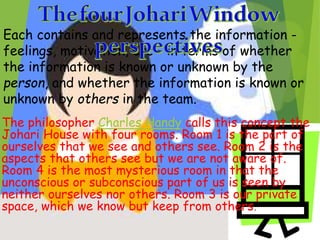
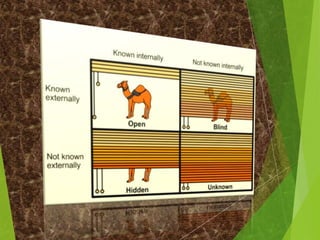
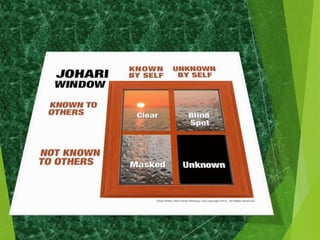
Each contains and represents the information -
feelings, motivation, etc – in terms of whether
the information is known or unknown by the
person, and whether the information is known or
unknown by others in the team.
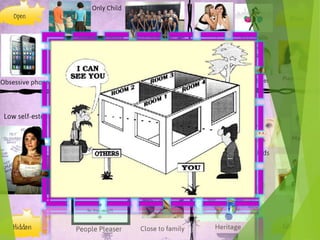
The philosopher Charles Handy calls this concept the
Johari House with four rooms. Room 1 is the part of
ourselves that we see and others see. Room 2 is the
aspects that others see but we are not aware of.
Room 4 is the most mysterious room in that the
unconscious or subconscious part of us is seen by
neither ourselves nor others. Room 3 is our private
space, which we know but keep from others.
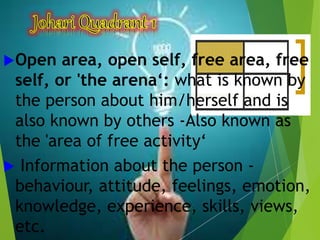
Open area, open self, free area, free
self, or 'the arena‘: what is known by
the person about him/herself and is
also known by others -Also known as
the 'area of free activity‘
 Information about the person -
behaviour, attitude, feelings, emotion,
knowledge, experience, skills, views,
etc.
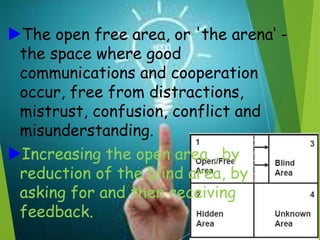
The open free area, or 'the arena‘ -
the space where good
communications and cooperation
occur, free from distractions,
mistrust, confusion, conflict and
misunderstanding.
Increasing the open area , by
reduction of the blind area, by
asking for and then receiving
feedback.
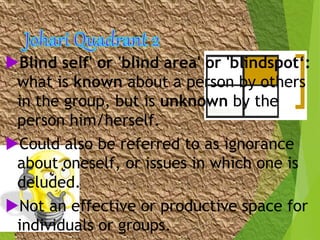
Blind self' or 'blind area' or 'blindspot‘:
what is known about a person by others
in the group, but is unknown by the
person him/herself.
Could also be referred to as ignorance
about oneself, or issues in which one is
deluded.
Not an effective or productive space for
individuals or groups.
So, for example, we could be eating at a
restaurant, and I may have unknowingly gotten
some food on my face. This information is in my
blind quadrant because you can see it, but I
cannot.
Discovery through sensitive communications, active
listening and experience, will reduce the unknown
area, transferring in part to the blind, hidden
areas, depending on who knows what, or better
still if known by the person and others, to the open
free area
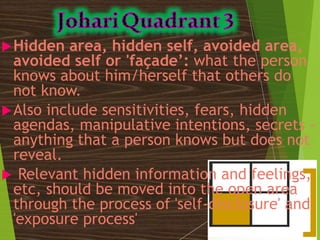
Hidden area, hidden self, avoided area,
avoided self or 'façade’: what the person
knows about him/herself that others do
not know.
Also include sensitivities, fears, hidden
agendas, manipulative intentions, secrets -
anything that a person knows but does not
reveal.
 Relevant hidden information and feelings,
etc, should be moved into the open area
through the process of 'self-disclosure' and
'exposure process'
hence the Johari Window terminology
'self-disclosure' and 'exposure process',
thereby increasing the open area. By
telling others how we feel and other
information about ourselves we reduce the
hidden area, and increase the open area,
which enables better understanding,
cooperation, trust, team-working
effectiveness and productivity. Reducing
hidden areas also reduces the potential
for confusion, misunderstanding, poor
communication, etc, which all distract from
and undermine team effectiveness.
 ‘
A new way to understand and assess
people's behaviours,management styles,
attitudes, interpersonal skills, and
potential.
An important consideration in human
resources planning, job profiling,
recruitment interviewing and selection,
management development, customer
relations and customer service, and more.
Slideshare nava
Slideshare nava
Slideshare nava

Slideshare nava

  • 3.
  • 6.
    Window Panes Called 'regions' or'areas' or 'quadrants'
  • 7.
    Each contains andrepresents the information - feelings, motivation, etc – in terms of whether the information is known or unknown by the person, and whether the information is known or unknown by others in the team. The philosopher Charles Handy calls this concept the Johari House with four rooms. Room 1 is the part of ourselves that we see and others see. Room 2 is the aspects that others see but we are not aware of. Room 4 is the most mysterious room in that the unconscious or subconscious part of us is seen by neither ourselves nor others. Room 3 is our private space, which we know but keep from others.
  • 9.
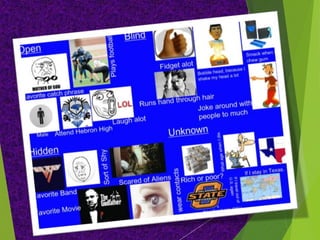
    Open area, openself, free area, free self, or 'the arena‘: what is known by the person about him/herself and is also known by others -Also known as the 'area of free activity‘  Information about the person - behaviour, attitude, feelings, emotion, knowledge, experience, skills, views, etc.
  • 10.
    The open freearea, or 'the arena‘ - the space where good communications and cooperation occur, free from distractions, mistrust, confusion, conflict and misunderstanding. Increasing the open area , by reduction of the blind area, by asking for and then receiving feedback.
  • 11.
    Blind self' or'blind area' or 'blindspot‘: what is known about a person by others in the group, but is unknown by the person him/herself. Could also be referred to as ignorance about oneself, or issues in which one is deluded. Not an effective or productive space for individuals or groups.
  • 12.
    So, for example,we could be eating at a restaurant, and I may have unknowingly gotten some food on my face. This information is in my blind quadrant because you can see it, but I cannot. Discovery through sensitive communications, active listening and experience, will reduce the unknown area, transferring in part to the blind, hidden areas, depending on who knows what, or better still if known by the person and others, to the open free area
  • 13.
    Hidden area, hiddenself, avoided area, avoided self or 'façade’: what the person knows about him/herself that others do not know. Also include sensitivities, fears, hidden agendas, manipulative intentions, secrets - anything that a person knows but does not reveal.  Relevant hidden information and feelings, etc, should be moved into the open area through the process of 'self-disclosure' and 'exposure process'
  • 14.
    hence the JohariWindow terminology 'self-disclosure' and 'exposure process', thereby increasing the open area. By telling others how we feel and other information about ourselves we reduce the hidden area, and increase the open area, which enables better understanding, cooperation, trust, team-working effectiveness and productivity. Reducing hidden areas also reduces the potential for confusion, misunderstanding, poor communication, etc, which all distract from and undermine team effectiveness.
  • 15.
  • 20.
    A new wayto understand and assess people's behaviours,management styles, attitudes, interpersonal skills, and potential. An important consideration in human resources planning, job profiling, recruitment interviewing and selection, management development, customer relations and customer service, and more.