Download as PDF, PPTX




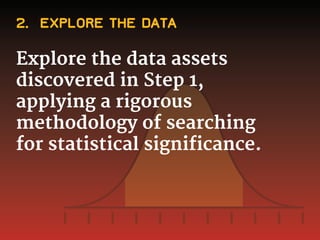







The document outlines a seven step method for applying big data patterns to decision making: 1) Understand existing data assets, 2) Explore the data to find patterns, 3) Design new decisions or business models based on patterns, 4) Design a data-driven business model if useful, 5) Transform business processes to leverage new insights, 6) Consider governance and security implications, and 7) Develop metrics and incentives to encourage fact-based decision making. The method involves building on each step with the goal of better decisions, new business models, or optimized processes.


![[Slides] Content Marketing Vendor Landscape: Marketer Needs & Vendor Solution...](https://cdn.slidesharecdn.com/ss_thumbnails/slidescontentmarketingvendorlandscape-marketerneedsvendorsolutionsbyrebeccalieb-140604153309-phpapp01-thumbnail.jpg?width=640&height=640&fit=bounds)


![[IoT] MAKE with Open H/W + Node.JS - 4th](https://cdn.slidesharecdn.com/ss_thumbnails/iotoshwnodejslesson4-150419161845-conversion-gate02-thumbnail.jpg?width=640&height=640&fit=bounds)


