Developed in partnership with the Heart Failure Society of
America
2022 AHA/ACC/HFSA Guideline for the
Management of Heart Failure
This slide set is adapted from the 2022 AHA/ACC/HFSA Guideline for the
Management of Heart Failure. Published online ahead of print April 1, 2022,
available at: Circulation.
https://www.ahajournals.org/doi/10.1161/CIR.0000000000001063 And Journal of the
American College of Cardiology published online ahead of print April 1, 2022. J Am
Coll Cardiol. https://www.jacc.org/doi/10.1016/j.jacc.2021.12.012
Citation
© 2022 the American Heart Association, Inc., the American College of Cardiology Foundation, and Heart Failure
Society of America. All rights reserved. This article has been published in Circulation, the Journal of the
American College of Cardiology, and the Journal of Cardiac Failure.
Paul A. Heidenreich, MD, MS, FACC, FAHA, FHFSA, Chair†
Biykem Bozkurt, MD, PhD, FACC, FAHA, FHFSA, Vice
Chair†
2022 Writing Committee Members*
David Aguilar, MD, MSc, FAHA†
Larry A. Allen, MD, MHS, FACC, FAHA,
FHFSA†
Joni J. Byun†
Monica M. Colvin, MD, MS, FAHA†
Anita Deswal, MD, MPH, FACC, FAHA,
FHFSA‡
Shannon M. Dunlay, MD, MS, FAHA,
FHFSA†
Linda R. Evers, JD†
James C. Fang, MD, FACC, FAHA, FHFSA†
Savitri E. Fedson, MD, MA†
Gregg C. Fonarow, MD, FACC, FAHA,
FHFSA§
Salim S. Hayek, MD, FACC†
Adrian F. Hernandez, MD, MHS‡
Prateeti Khazanie, MD, MPH, FHFSA†
Michelle M. Kittleson, MD, PhD†
Christopher S. Lee, PhD, RN, FAHA, FHFSA†
Mark S. Link, MD†
Carmelo A. Milano, MD†
Lorraine C. Nnacheta, DrPH, MPH†
Alexander T. Sandhu, MD, MS†
Lynne Warner Stevenson, MD, FACC, FAHA,
FHFSA†
Orly Vardeny, PharmD, MS, FAHA, FHFSA║
Amanda R. Vest, MBBS, MPH, FHFSA║
Clyde W. Yancy, MD, MSc, MACC, FAHA,
FHFSA†
*Writing committee members are required to recuse themselves from voting on sections to which their specific relationships with industry may apply; see Appendix 1
for detailed information. † ACC/AHA Representative. ‡ ACC/AHA Joint Committee on Clinical Practice Guidelines Liaison. §Task Force Performance Measures. ║HFSA
Representative. #Former Joint Committee member; current member during the writing effort.
2022 Guideline for the Management of Heart Failure
Top 10 Take-Home
Messages
1. Guideline-directed medical therapy (GDMT) for heart failure (HF)
with reduced ejection fraction (HFrEF) now includes 4 medication
classes which include sodium-glucose cotransporter-2 inhibitors
(SGLT2i).
Top 10 Take Home Messages
5
Top 10 Take Home
Messages
6
2. SGLT2 inhibitors have a 2a recommendation in heart failure
with mildly reduced ejection fraction (HFmrEF). Weaker
recommendations (2b) are made for ARNi, ACEi, ARB, MRA and
beta blockers in this population.
3. New recommendations for HFpEF are made for SGLT2 inhibitors
(2a) , MRAs (2b) and ARNi (2b). Several prior recommendations have
been renewed including treatment of hypertension (1), treatment of
atrial fibrillation (2a), use of ARBs (2b) avoidance of routine use of
nitrates or phosphodiesterase-5 inhibitors (3-no Benefit).
Top 10 Take Home Messages
7
Top 10 Take Home
Messages
8
4. Improved LVEF is used to refer to those patients with a
previous HFrEF who now have an LVEF > 40%. These patients
should continue their HFrEF treatment.
5. Value statements were created for select recommendations where
high-quality cost-effectiveness studies of the intervention have been
published.
Top 10 Take Home Messages
9
Top 10 Take Home Messages
10
6. Amyloid heart disease has new recommendations for
treatment including screening for serum and urine monoclonal
light chains, bone scintigraphy, genetic sequencing, tetramer
stabilizer therapy, and anticoagulation.
7. Evidence supporting increased filling pressures is important for
the diagnosis of HF if the LVEF is >40%. Evidence for increased filling
pressures can be obtained from non-invasive (e.g., natriuretic
peptide, diastolic function on imaging) or invasive testing (e.g.,
hemodynamic measurement).
Top 10 Take Home Messages
11
Top 10 Take Home Messages
12
8. Patients with advanced HF who wish to prolong survival
should be referred to a team specializing in HF. A heart failure
specialty team reviews HF management, assesses suitability for
advanced HF therapies and uses palliative care including
palliative inotropes where consistent with the patient’s goals of
care.
9. Primary prevention is important for those at risk for HF (Stage A)
or pre-HF (Stage B). Stages of HF were revised to emphasize the new
terminologies of “at risk” for HF for Stage A and Pre-HF for Stage B.
Top 10 Take Home Messages
13
Top 10 Take Home Messages
14
10. Recommendations are provided for select patients with HF
and iron deficiency, anemia, hypertension, sleep disorders, type
2 diabetes, atrial fibrillation, coronary artery disease and
malignancy.
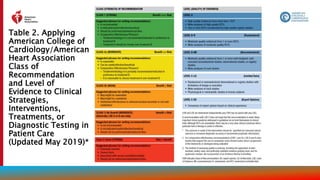
Table 2. Applying
American College of
Cardiology/American
Heart Association
Class of
Recommendation
and Level of
Evidence to Clinical
Strategies,
Interventions,
Treatments, or
Diagnostic Testing in
Patient Care
(Updated May 2019)*
15
16
Definition of HF
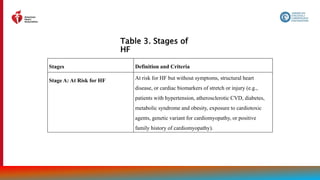
Table 3. Stages of
HF
17
Stages Definition and Criteria
Stage A: At Risk for HF At risk for HF but without symptoms, structural heart
disease, or cardiac biomarkers of stretch or injury (e.g.,
patients with hypertension, atherosclerotic CVD, diabetes,
metabolic syndrome and obesity, exposure to cardiotoxic
agents, genetic variant for cardiomyopathy, or positive
family history of cardiomyopathy).
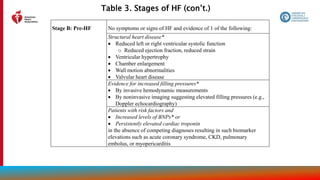
Table 3. Stages of HF (con’t.)
18
Stage B: Pre-HF No symptoms or signs of HF and evidence of 1 of the following:
Structural heart disease*
 Reduced left or right ventricular systolic function
o Reduced ejection fraction, reduced strain
 Ventricular hypertrophy
 Chamber enlargement
 Wall motion abnormalities
 Valvular heart disease
Evidence for increased filling pressures*
 By invasive hemodynamic measurements
 By noninvasive imaging suggesting elevated filling pressures (e.g.,
Doppler echocardiography)
Patients with risk factors and
 Increased levels of BNPs* or
 Persistently elevated cardiac troponin
in the absence of competing diagnoses resulting in such biomarker
elevations such as acute coronary syndrome, CKD, pulmonary
embolus, or myopericarditis
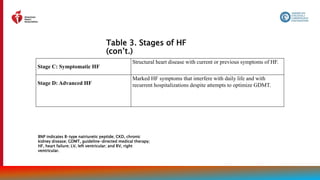
Table 3. Stages of HF
(con’t.)
19
Stage C: Symptomatic HF
Structural heart disease with current or previous symptoms of HF.
Stage D: Advanced HF
Marked HF symptoms that interfere with daily life and with
recurrent hospitalizations despite attempts to optimize GDMT.
BNP indicates B-type natriuretic peptide; CKD, chronic
kidney disease; GDMT, guideline-directed medical therapy;
HF, heart failure; LV, left ventricular; and RV, right
ventricular.
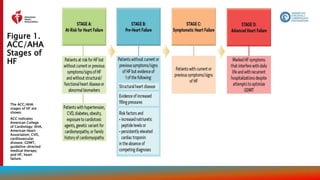
Figure 1.
ACC/AHA
Stages of
HF
20
The ACC/AHA
stages of HF are
shown.
ACC indicates
American College
of Cardiology; AHA,
American Heart
Association; CVD,
cardiovascular
disease; GDMT,
guideline-directed
medical therapy;
and HF, heart
failure.
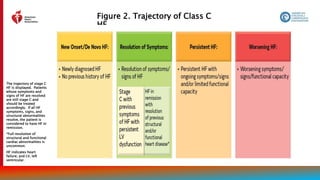
Figure 2. Trajectory of Class C
HF
21
The trajectory of stage C
HF is displayed. Patients
whose symptoms and
signs of HF are resolved
are still stage C and
should be treated
accordingly. If all HF
symptoms, signs, and
structural abnormalities
resolve, the patient is
considered to have HF in
remission.
*Full resolution of
structural and functional
cardiac abnormalities is
uncommon.
HF indicates heart
failure; and LV, left
ventricular.
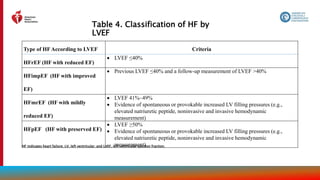
Table 4. Classification of HF by
LVEF
22
Type of HF According to LVEF Criteria
HFrEF (HF with reduced EF)
 LVEF ≤40%
HFimpEF (HF with improved
EF)
 Previous LVEF ≤40% and a follow-up measurement of LVEF >40%
HFmrEF (HF with mildly
reduced EF)
 LVEF 41%–49%
 Evidence of spontaneous or provokable increased LV filling pressures (e.g.,
elevated natriuretic peptide, noninvasive and invasive hemodynamic
measurement)
HFpEF (HF with preserved EF)
 LVEF ≥50%
 Evidence of spontaneous or provokable increased LV filling pressures (e.g.,
elevated natriuretic peptide, noninvasive and invasive hemodynamic
measurement)
HF indicates heart failure; LV, left ventricular; and LVEF, left ventricular ejection fraction.
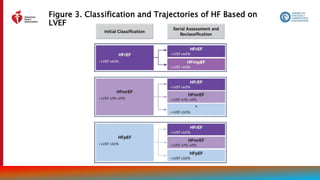
Figure 3. Classification and Trajectories of HF Based on
LVEF
23
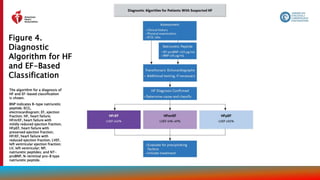
Figure 4.
Diagnostic
Algorithm for HF
and EF-Based
Classification
24
The algorithm for a diagnosis of
HF and EF-based classification
is shown.
BNP indicates B-type natriuretic
peptide; ECG,
electrocardiogram; EF, ejection
fraction; HF, heart failure;
HFmrEF, heart failure with
mildly reduced ejection fraction;
HFpEF, heart failure with
preserved ejection fraction;
HFrEF, heart failure with
reduced ejection fraction; LVEF,
left ventricular ejection fraction;
LV, left ventricular; NP,
natriuretic peptides; and NT-
proBNP, N-terminal pro-B type
natriuretic peptide.
25
Initial and Serial Evaluation
Clinical Assessment: History and Physical
Examination
26
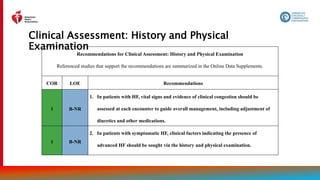
Recommendations for Clinical Assessment: History and Physical Examination
Referenced studies that support the recommendations are summarized in the Online Data Supplements.
COR LOE Recommendations
1 B-NR
1. In patients with HF, vital signs and evidence of clinical congestion should be
assessed at each encounter to guide overall management, including adjustment of
diuretics and other medications.
1 B-NR
2. In patients with symptomatic HF, clinical factors indicating the presence of
advanced HF should be sought via the history and physical examination.
27
Clinical Assessment: History and Physical
Examination (con’t.)
1 B-NR
3. In patients with cardiomyopathy, a 3-generation family history should be obtained or
updated when assessing the cause of the cardiomyopathy to identify possible
inherited disease.
1 B-NR
4. In patients presenting with HF, a thorough history and physical examination should
direct diagnostic strategies to uncover specific causes that may warrant disease-
specific management.
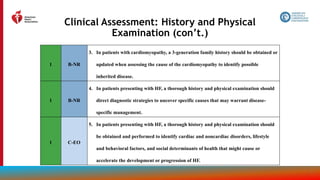
1 C-EO
5. In patients presenting with HF, a thorough history and physical examination should
be obtained and performed to identify cardiac and noncardiac disorders, lifestyle
and behavioral factors, and social determinants of health that might cause or
accelerate the development or progression of HF.
28
Table 5. Other Potential Nonischemic Causes of HF
Cause Reference
Chemotherapy and other cardiotoxic medications
(23-25)
Rheumatologic or autoimmune
(26)
Endocrine or metabolic (thyroid, acromegaly, pheochromocytoma, diabetes, obesity)
(27-31)
Familial cardiomyopathy or inherited and genetic heart disease
(32)
Heart rhythm–related (e.g., tachycardia-mediated, PVCs, RV pacing)
(33)
Hypertension
(34)
Infiltrative cardiac disease (e.g., amyloid, sarcoid, hemochromatosis)
(21, 35, 36)
Myocarditis (infectious, toxin or medication, immunological, hypersensitivity)
(37, 38)
Peripartum cardiomyopathy
(39)
Stress cardiomyopathy (Takotsubo)
(40, 41)
Substance abuse (e.g., alcohol, cocaine, methamphetamine)
HF indicates heart
failure; PVC, premature
ventricular contraction;
and RV, right ventricular.
29
Initial Laboratory and
Electrocardiographic Testing
Recommendations for Initial Laboratory and Electrocardiographic Testing
Referenced studies that support the recommendations are summarized in the Online Data Supplements.
COR LOE Recommendations
1 B-NR
1. For patients presenting with HF, the specific cause of HF should be explored using
additional laboratory testing for appropriate management.
1 C-EO
2. For patients who are diagnosed with HF, laboratory evaluation should include
complete blood count, urinalysis, serum electrolytes, blood urea nitrogen, serum
creatinine, glucose, lipid profile, liver function tests, iron studies, and thyroid-
stimulating hormone to optimize management.
1 C-EO
3. For all patients presenting with HF, a 12-lead ECG should be performed at the initial
encounter to optimize management.
30
Use of Biomarkers for Prevention, Initial
Diagnosis, and Risk Stratification
4.2. Recommendations for Use of Biomarkers for Prevention, Initial Diagnosis, and Risk Stratification
Referenced studies that support the recommendations are summarized in the Online Data Supplements.
COR LOE Recommendations
1 A
1. In patients presenting with dyspnea, measurement of B-type natriuretic peptide
(BNP) or N-terminal prohormone of B-type natriuretic peptide (NT-proBNP) is
useful to support a diagnosis or exclusion of HF.
1 A
2. In patients with chronic HF, measurements of BNP or NT-proBNP levels are
recommended for risk stratification.
31
Use of Biomarkers for Prevention, Initial
Diagnosis, and Risk Stratification (con’t.)
1 A
3. In patients hospitalized for HF, measurement of BNP or NT-proBNP levels at
admission is recommended to establish prognosis.
2a B-R
4. In patients at risk of developing HF, BNP or NT-proBNP–based screening followed by
team-based care, including a cardiovascular specialist, can be useful to prevent the
development of LV dysfunction or new-onset HF.
2a B-NR
5. In patients hospitalized for HF, a predischarge BNP or NT-proBNP level can be useful
to inform the trajectory of the patient and establish a postdischarge prognosis
32
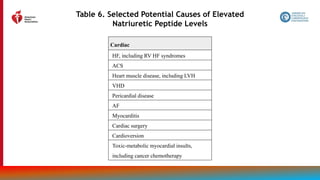
Table 6. Selected Potential Causes of Elevated
Natriuretic Peptide Levels
Cardiac
HF, including RV HF syndromes
ACS
Heart muscle disease, including LVH
VHD
Pericardial disease
AF
Myocarditis
Cardiac surgery
Cardioversion
Toxic-metabolic myocardial insults,
including cancer chemotherapy
33
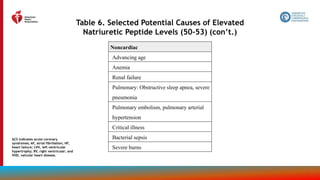
Table 6. Selected Potential Causes of Elevated
Natriuretic Peptide Levels (50-53) (con’t.)
Noncardiac
Advancing age
Anemia
Renal failure
Pulmonary: Obstructive sleep apnea, severe
pneumonia
Pulmonary embolism, pulmonary arterial
hypertension
Critical illness
Bacterial sepsis
Severe burns
ACS indicates acute coronary
syndromes; AF, atrial fibrillation; HF,
heart failure; LVH, left ventricular
hypertrophy; RV, right ventricular; and
VHD, valvular heart disease.
34
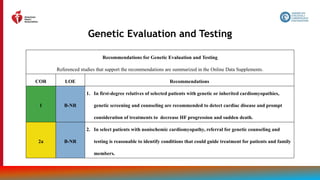
Genetic Evaluation and Testing
Recommendations for Genetic Evaluation and Testing
Referenced studies that support the recommendations are summarized in the Online Data Supplements.
COR LOE Recommendations
1 B-NR
1. In first-degree relatives of selected patients with genetic or inherited cardiomyopathies,
genetic screening and counseling are recommended to detect cardiac disease and prompt
consideration of treatments to decrease HF progression and sudden death.
2a B-NR
2. In select patients with nonischemic cardiomyopathy, referral for genetic counseling and
testing is reasonable to identify conditions that could guide treatment for patients and family
members.
35
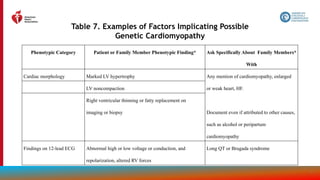
Table 7. Examples of Factors Implicating Possible
Genetic Cardiomyopathy
Phenotypic Category Patient or Family Member Phenotypic Finding* Ask Specifically About Family Members*
With
Cardiac morphology Marked LV hypertrophy Any mention of cardiomyopathy, enlarged
or weak heart, HF.
Document even if attributed to other causes,
such as alcohol or peripartum
cardiomyopathy
LV noncompaction
Right ventricular thinning or fatty replacement on
imaging or biopsy
Findings on 12-lead ECG Abnormal high or low voltage or conduction, and
repolarization, altered RV forces
Long QT or Brugada syndrome
36
Table 7. Examples of Factors Implicating Possible
Genetic Cardiomyopathy (con’t.)
Dysrhythmias Frequent NSVT or very frequent PVCs
ICD
Recurrent syncope
Sudden death attributed to “massive
heart attack” without known CAD
Unexplained fatal event such as
drowning or single-vehicle crash
Sustained ventricular tachycardia or fibrillation
Early onset AF “Lone” AF before age 65 years
Early onset conduction disease Pacemaker before age 65 years
Extracardiac features • Skeletal myopathy
• Neuropathy
• Cutaneous stigmata
• Other possible manifestations of systemic
syndromes
Any known skeletal muscle disease,
including mention of Duchenne and
Becker’s, Emory-Dreifuss limb-girdle
dystrophy
Systemic syndromes:
 Dysmorphic features
 Mental retardation
 Congenital deafness
 Neurofibromatosis
 Renal failure with neuropathy
AF indicates atrial
fibrillation; CAD,
coronary artery
disease; LV, left
ventricular; NSVT,
nonsustained
ventricular
tachycardia; PVC,
premature
ventricular
contraction; and
RV, right
ventricular.
37
Evaluation With Cardiac Imaging
Recommendations for Evaluation With Cardiac Imaging
Referenced studies that support the recommendations are summarized in the Online Data Supplements.
COR LOE Recommendations
1 C-LD
1. In patients with suspected or new-onset HF, or those presenting with acute
decompensated HF, a chest x-ray should be performed to assess heart size and
pulmonary congestion and to detect alternative cardiac, pulmonary, and other
diseases that may cause or contribute to the patient’s symptoms.
1 C-LD
2. In patients with suspected or newly diagnosed HF, transthoracic
echocardiography (TTE) should be performed during initial evaluation to
assess cardiac structure and function.
38
Evaluation With Cardiac Imaging (con’t.)
1 C-LD
3. In patients with HF who have had a significant clinical change, or who have received
GDMT and are being considered for invasive procedures or device therapy, repeat
measurement of EF, degree of structural remodeling, and valvular function are useful
to inform therapeutic interventions.
1 C-LD
4. In patients for whom echocardiography is inadequate, alternative imaging (e.g.,
cardiac magnetic resonance [CMR], cardiac computed tomography [CT], radionuclide
imaging) is recommended for assessment of LVEF.
2a B-NR
5. In patients with HF or cardiomyopathy, CMR can be useful for diagnosis or
management.
39
Evaluation With Cardiac Imaging (con’t.)
2a B-NR
6. In patients with HF, an evaluation for possible ischemic heart disease can be useful to identify
the cause and guide management.
2b B-NR
7. In patients with HF and CAD who are candidates for coronary revascularization, noninvasive
stress imaging (stress echocardiography, single-photon emission CT [SPECT], CMR, or
positron emission tomography [PET]) may be considered for detection of myocardial ischemia
to help guide coronary revascularization.
3: No Benefit C-EO
8. In patients with HF in the absence of: 1) clinical status change, 2) treatment interventions that
might have had a significant effect on cardiac function, or 3) candidacy for invasive
procedures or device therapy, routine repeat assessment of LV function is not indicated.
40
Invasive Evaluation
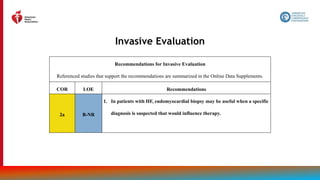
Recommendations for Invasive Evaluation
Referenced studies that support the recommendations are summarized in the Online Data Supplements.
COR LOE Recommendations
2a B-NR
1. In patients with HF, endomyocardial biopsy may be useful when a specific
diagnosis is suspected that would influence therapy.
41
Invasive Evaluation (con’t.)
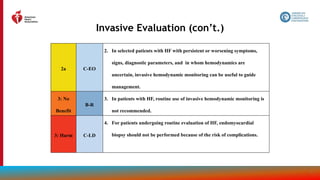
2a C-EO
2. In selected patients with HF with persistent or worsening symptoms,
signs, diagnostic parameters, and in whom hemodynamics are
uncertain, invasive hemodynamic monitoring can be useful to guide
management.
3: No
Benefit
B-R
3. In patients with HF, routine use of invasive hemodynamic monitoring is
not recommended.
3: Harm C-LD
4. For patients undergoing routine evaluation of HF, endomyocardial
biopsy should not be performed because of the risk of complications.
42
Wearables and Remote Monitoring (Including
Telemonitoring and Device Monitoring)
Recommendation for Wearables and Remote Monitoring (Including Telemonitoring and Device Monitoring)
Referenced studies that support the recommendation are summarized in the Online Data Supplements.
COR LOE Recommendation
2b B-R
1. In selected adult patients with NYHA class III HF and history of a HF hospitalization in the past
year or elevated natriuretic peptide levels, on maximally tolerated stable doses of GDMT with
optimal device therapy, the usefulness of wireless monitoring of PA pressure by an implanted
hemodynamic monitor to reduce the risk of subsequent HF hospitalizations is uncertain.
Value Statement:
Uncertain Value (B-NR)
2. In patients with NYHA class III HF with a HF hospitalization within the previous year, wireless
monitoring of the PA pressure by an implanted hemodynamic monitor provides uncertain value .
43
Exercise and Functional Capacity Testing
Recommendations for Exercise and Functional Capacity Testing
Referenced studies that support the recommendations are summarized in the Online Data Supplements.
COR LOE Recommendations
1 C-LD
1. In patients with HF, assessment and documentation of NYHA functional classification are
recommended to determine eligibility for treatments.
1 C-LD
2. In selected ambulatory patients with HF, cardiopulmonary exercise testing (CPET) is
recommended to determine appropriateness of advanced treatments (e.g., LVAD, heart
transplant).
2a C-LD
3. In ambulatory patients with HF, performing a CPET or 6- minute walk test is reasonable to
assess functional capacity.
2a C-LD
4. In ambulatory patients with unexplained dyspnea, CPET is reasonable to evaluate the cause
of dyspnea.
44
Initial and Serial Evaluation: Clinical
Assessment: HF Risk Scoring
Recommendation for Initial and Serial Evaluation: Clinical Assessment: HF Risk Scoring
Referenced studies that support the recommendation are summarized in the Online Data Supplements.
COR LOE Recommendation
2a B-NR
1. In ambulatory or hospitalized patients with HF, validated multivariable risk
scores can be useful to estimate subsequent risk of mortality.
45
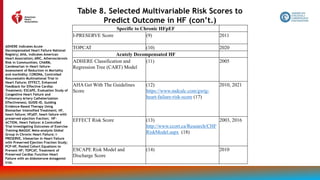
Table 8. Selected Multivariable Risk Scores to
Predict Outcome in HF
Risk Score Year Published
Chronic HF
All Patients With Chronic HF
Seattle Heart Failure Model
https://depts.washington.edu/shfm/?width=1440&h
eight=900
2006
Heart Failure Survival Score 1997
MAGGIC
http://www.heartfailurerisk.org/
2013
CHARM Risk Score 2006
CORONA Risk Score 2009
Specific to Chronic HFrEF
PARADIGM-HF 2020
HF-ACTION 2012
GUIDE-IT 2019
46
Specific to Chronic HFpEF
I-PRESERVE Score (9) 2011
TOPCAT (10) 2020
Acutely Decompensated HF
ADHERE Classification and
Regression Tree (CART) Model
(11) 2005
AHA Get With The Guidelines
Score
(12)
https://www.mdcalc.com/gwtg-
heart-failure-risk-score (17)
2010, 2021
EFFECT Risk Score (13)
http://www.ccort.ca/Research/CHF
RiskModel.aspx (18)
2003, 2016
ESCAPE Risk Model and
Discharge Score
(14) 2010
Table 8. Selected Multivariable Risk Scores to
Predict Outcome in HF (con’t.)
ADHERE indicates Acute
Decompensated Heart Failure National
Registry; AHA, indicates American
Heart Association; ARIC, Atherosclerosis
Risk in Communities; CHARM,
Candesartan in Heart failure-
Assessment of Reduction in Mortality
and morbidity; CORONA, Controlled
Rosuvastatin Multinational Trial in
Heart Failure; EFFECT, Enhanced
Feedback for Effective Cardiac
Treatment; ESCAPE, Evaluation Study of
Congestive Heart Failure and
Pulmonary Artery Catheterization
Effectiveness; GUIDE-ID, Guiding
Evidence-Based Therapy Using
Biomarker Intensified Treatment; HF,
heart failure; HFpEF, heart failure with
preserved ejection fraction; HF-
ACTION, Heart Failure: A Controlled
Trial Investigating Outcomes of Exercise
Training MAGGIC Meta-analysis Global
Group in Chronic Heart Failure; I-
PRESERVE, Irbesartan in Heart Failure
with Preserved Ejection Fraction Study;
PCP-HF, Pooled Cohort Equations to
Prevent HF; TOPCAT, Treatment of
Preserved Cardiac Function Heart
Failure with an Aldosterone Antagonist
trial.
47
Stage A (Patients at Risk for HF)
48
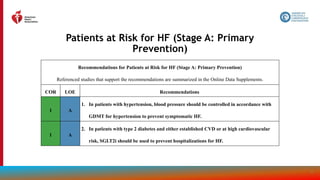
Patients at Risk for HF (Stage A: Primary
Prevention)
Recommendations for Patients at Risk for HF (Stage A: Primary Prevention)
Referenced studies that support the recommendations are summarized in the Online Data Supplements.
COR LOE Recommendations
1 A
1. In patients with hypertension, blood pressure should be controlled in accordance with
GDMT for hypertension to prevent symptomatic HF.
1 A
2. In patients with type 2 diabetes and either established CVD or at high cardiovascular
risk, SGLT2i should be used to prevent hospitalizations for HF.
49
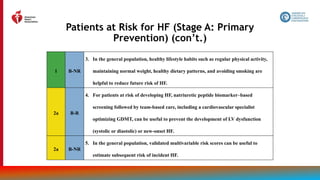
Patients at Risk for HF (Stage A: Primary
Prevention) (con’t.)
1 B-NR
3. In the general population, healthy lifestyle habits such as regular physical activity,
maintaining normal weight, healthy dietary patterns, and avoiding smoking are
helpful to reduce future risk of HF.
2a B-R
4. For patients at risk of developing HF, natriuretic peptide biomarker–based
screening followed by team-based care, including a cardiovascular specialist
optimizing GDMT, can be useful to prevent the development of LV dysfunction
(systolic or diastolic) or new-onset HF.
2a B-NR
5. In the general population, validated multivariable risk scores can be useful to
estimate subsequent risk of incident HF.
50
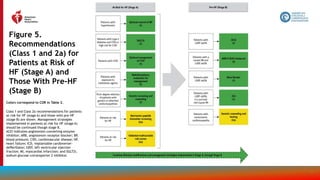
Figure 5.
Recommendations
(Class 1 and 2a) for
Patients at Risk of
HF (Stage A) and
Those With Pre-HF
(Stage B)
Colors correspond to COR in Table 2.
Class 1 and Class 2a recommendations for patients
at risk for HF (stage A) and those with pre-HF
(stage B) are shown. Management strategies
implemented in patients at risk for HF (stage A)
should be continued though stage B.
ACEi indicates angiotensin-converting enzyme
inhibitor; ARB, angiotensin receptor blocker; BP,
blood pressure; CVD, cardiovascular disease; HF,
heart failure; ICD, implantable cardioverter-
defibrillator; LVEF, left ventricular ejection
fraction; MI, myocardial infarction; and SGLT2i,
sodium glucose cotransporter 2 inhibitor.
51
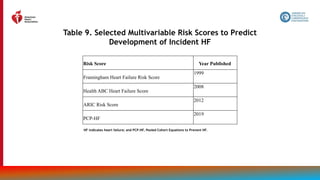
Table 9. Selected Multivariable Risk Scores to Predict
Development of Incident HF
Risk Score Year Published
Framingham Heart Failure Risk Score
1999
Health ABC Heart Failure Score
2008
ARIC Risk Score
2012
PCP-HF
2019
HF indicates heart failure; and PCP-HF, Pooled Cohort Equations to Prevent HF.
52
Stage B (Patients With Pre-HF)
53
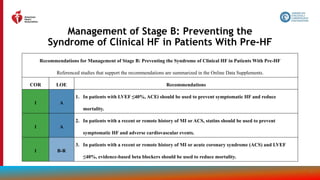
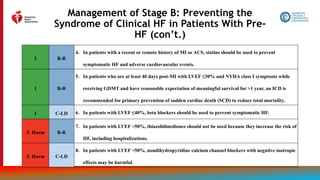
Management of Stage B: Preventing the
Syndrome of Clinical HF in Patients With Pre-HF
Recommendations for Management of Stage B: Preventing the Syndrome of Clinical HF in Patients With Pre-HF
Referenced studies that support the recommendations are summarized in the Online Data Supplements.
COR LOE Recommendations
1 A
1. In patients with LVEF ≤40%, ACEi should be used to prevent symptomatic HF and reduce
mortality.
1 A
2. In patients with a recent or remote history of MI or ACS, statins should be used to prevent
symptomatic HF and adverse cardiovascular events.
1 B-R
3. In patients with a recent or remote history of MI or acute coronary syndrome (ACS) and LVEF
≤40%, evidence-based beta blockers should be used to reduce mortality.
54
Management of Stage B: Preventing the
Syndrome of Clinical HF in Patients With Pre-
HF (con’t.)
1 B-R
4. In patients with a recent or remote history of MI or ACS, statins should be used to prevent
symptomatic HF and adverse cardiovascular events.
1 B-R
5. In patients who are at least 40 days post-MI with LVEF ≤30% and NYHA class I symptoms while
receiving GDMT and have reasonable expectation of meaningful survival for >1 year, an ICD is
recommended for primary prevention of sudden cardiac death (SCD) to reduce total mortality.
1 C-LD 6. In patients with LVEF ≤40%, beta blockers should be used to prevent symptomatic HF.
3: Harm B-R
7. In patients with LVEF <50%, thiazolidinediones should not be used because they increase the risk of
HF, including hospitalizations.
3: Harm C-LD
8. In patients with LVEF <50%, nondihydropyridine calcium channel blockers with negative inotropic
effects may be harmful.
55
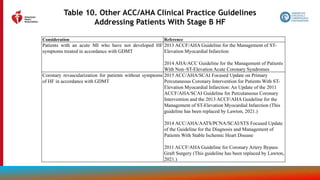
Table 10. Other ACC/AHA Clinical Practice Guidelines
Addressing Patients With Stage B HF
Consideration Reference
Patients with an acute MI who have not developed HF
symptoms treated in accordance with GDMT
2013 ACCF/AHA Guideline for the Management of ST-
Elevation Myocardial Infarction
2014 AHA/ACC Guideline for the Management of Patients
With Non–ST-Elevation Acute Coronary Syndromes
Coronary revascularization for patients without symptoms
of HF in accordance with GDMT
2015 ACC/AHA/SCAI Focused Update on Primary
Percutaneous Coronary Intervention for Patients With ST-
Elevation Myocardial Infarction: An Update of the 2011
ACCF/AHA/SCAI Guideline for Percutaneous Coronary
Intervention and the 2013 ACCF/AHA Guideline for the
Management of ST-Elevation Myocardial Infarction (This
guideline has been replaced by Lawton, 2021.)
2014 ACC/AHA/AATS/PCNA/SCAI/STS Focused Update
of the Guideline for the Diagnosis and Management of
Patients With Stable Ischemic Heart Disease
2011 ACCF/AHA Guideline for Coronary Artery Bypass
Graft Surgery (This guideline has been replaced by Lawton,
2021.)
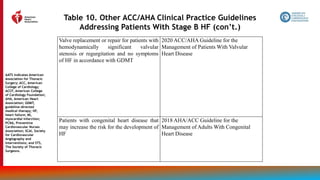
56
Valve replacement or repair for patients with
hemodynamically significant valvular
stenosis or regurgitation and no symptoms
of HF in accordance with GDMT
2020 ACC/AHA Guideline for the
Management of Patients With Valvular
Heart Disease
Patients with congenital heart disease that
may increase the risk for the development of
HF
2018 AHA/ACC Guideline for the
Management of Adults With Congenital
Heart Disease
Table 10. Other ACC/AHA Clinical Practice Guidelines
Addressing Patients With Stage B HF (con’t.)
AATS indicates American
Association for Thoracic
Surgery; ACC, American
College of Cardiology;
ACCF, American College
of Cardiology Foundation;
AHA, American Heart
Association; GDMT,
guideline-directed
medical therapy; HF,
heart failure; MI,
myocardial infarction;
PCNA, Preventive
Cardiovascular Nurses
Association; SCAI, Society
for Cardiovascular
Angiography and
Interventions; and STS,
The Society of Thoracic
Surgeons.
57
Stage “C” HF
58
Nonpharmacological Interventions: Self-Care
Support in HF
Recommendations for Nonpharmacological Interventions: Self-Care Support in HF
Referenced studies that support the recommendations are summarized in the Online Data Supplements.
COR LOE Recommendations
1 A
1. Patients with HF should receive care from multidisciplinary teams to
facilitate the implementation of GDMT, address potential barriers to
self-care, reduce the risk of subsequent rehospitalization for HF, and
improve survival.
59
Nonpharmacological Interventions: Self-Care
Support in HF (con’t.)
1 B-R
2. Patients with HF should receive specific education and support to facilitate
HF self-care in a multidisciplinary manner.
2a B-NR
3. In patients with HF, vaccinating against respiratory illnesses is reasonable to
reduce mortality.
2a B-NR
4. In adults with HF, screening for depression, social isolation, frailty, and low
health literacy as risk factors for poor self-care is reasonable to improve
management.
60
Table 11. Potential Barriers to Effective HF Self-Care
and Example Interventions
Potential Barrier Example Screening Tools Example Interventions
Medical Barriers
Cognitive impairment Mini-Cog
Mini-Mental State Examination (MMSE)
Montreal Cognitive Assessment (MoCA)
Home health aide
Home meal deliveries
Adult day care
Geriatric psychiatry referral
Memory care support groups
Depression Hamilton Depression Rating Scale (HAM-D)
Beck Depression Inventory-II (BDI-II)
Patient Health Questionnaire-9 (PHQ-9)
Psychotherapy
Selective serotonin reuptake inhibitors
Nurse-led support
61
Table 11. Potential Barriers to Effective HF Self-Care
and Example Interventions (con’t.)
Substance use disorders Tobacco, Alcohol, Prescription medication, and
other Substance use (TAPS)
Referral to social work services and
community support partners
Referral for addiction psychiatry consultation
Frailty Fried frailty phenotype Cardiac rehabilitation
Registered dietitian nutritionist evaluation for
malnutrition
Social Barriers
Financial burden of HF treatments COmprehensive Score for financial Toxicity–
Functional Assessment of Chronic Illness
Therapy (COST-FACIT)
PharmD referral to review prescription
assistance eligibilities
62
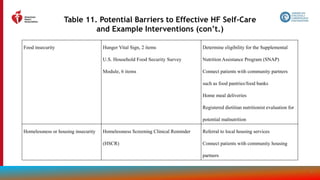
Table 11. Potential Barriers to Effective HF Self-Care
and Example Interventions (con’t.)
Food insecurity Hunger Vital Sign, 2 items
U.S. Household Food Security Survey
Module, 6 items
Determine eligibility for the Supplemental
Nutrition Assistance Program (SNAP)
Connect patients with community partners
such as food pantries/food banks
Home meal deliveries
Registered dietitian nutritionist evaluation for
potential malnutrition
Homelessness or housing insecurity Homelessness Screening Clinical Reminder
(HSCR)
Referral to local housing services
Connect patients with community housing
partners
63
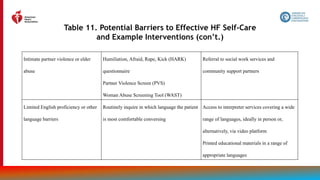
Table 11. Potential Barriers to Effective HF Self-Care
and Example Interventions (con’t.)
Intimate partner violence or elder
abuse
Humiliation, Afraid, Rape, Kick (HARK)
questionnaire
Partner Violence Screen (PVS)
Woman Abuse Screening Tool (WAST)
Referral to social work services and
community support partners
Limited English proficiency or other
language barriers
Routinely inquire in which language the patient
is most comfortable conversing
Access to interpreter services covering a wide
range of languages, ideally in person or,
alternatively, via video platform
Printed educational materials in a range of
appropriate languages
64
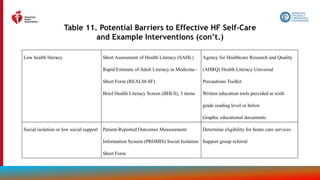
Table 11. Potential Barriers to Effective HF Self-Care
and Example Interventions (con’t.)
Low health literacy Short Assessment of Health Literacy (SAHL)
Rapid Estimate of Adult Literacy in Medicine–
Short Form (REALM-SF)
Brief Health Literacy Screen (BHLS), 3 items
Agency for Healthcare Research and Quality
(AHRQ) Health Literacy Universal
Precautions Toolkit
Written education tools provided at sixth
grade reading level or below
Graphic educational documents
Social isolation or low social support Patient-Reported Outcomes Measurement
Information System (PROMIS) Social Isolation
Short Form
Determine eligibility for home care services
Support group referral
65
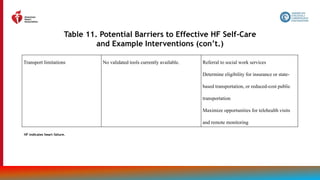
Table 11. Potential Barriers to Effective HF Self-Care
and Example Interventions (con’t.)
Transport limitations No validated tools currently available. Referral to social work services
Determine eligibility for insurance or state-
based transportation, or reduced-cost public
transportation
Maximize opportunities for telehealth visits
and remote monitoring
HF indicates heart failure.
66
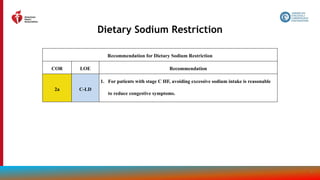
Dietary Sodium Restriction
Recommendation for Dietary Sodium Restriction
COR LOE Recommendation
2a C-LD
1. For patients with stage C HF, avoiding excessive sodium intake is reasonable
to reduce congestive symptoms.
67
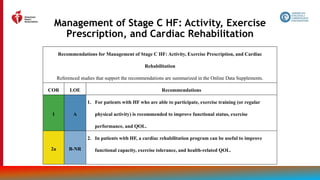
Management of Stage C HF: Activity, Exercise
Prescription, and Cardiac Rehabilitation
Recommendations for Management of Stage C HF: Activity, Exercise Prescription, and Cardiac
Rehabilitation
Referenced studies that support the recommendations are summarized in the Online Data Supplements.
COR LOE Recommendations
1 A
1. For patients with HF who are able to participate, exercise training (or regular
physical activity) is recommended to improve functional status, exercise
performance, and QOL.
2a B-NR
2. In patients with HF, a cardiac rehabilitation program can be useful to improve
functional capacity, exercise tolerance, and health-related QOL.
68
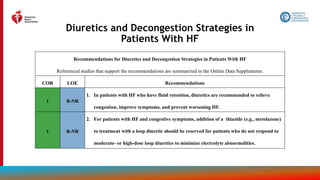
Diuretics and Decongestion Strategies in
Patients With HF
Recommendations for Diuretics and Decongestion Strategies in Patients With HF
Referenced studies that support the recommendations are summarized in the Online Data Supplements.
COR LOE Recommendations
1 B-NR
1. In patients with HF who have fluid retention, diuretics are recommended to relieve
congestion, improve symptoms, and prevent worsening HF.
1 B-NR
2. For patients with HF and congestive symptoms, addition of a thiazide (e.g., metolazone)
to treatment with a loop diuretic should be reserved for patients who do not respond to
moderate- or high-dose loop diuretics to minimize electrolyte abnormalities.
69
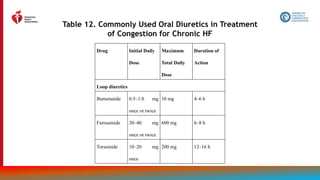
Table 12. Commonly Used Oral Diuretics in Treatment
of Congestion for Chronic HF
Drug Initial Daily
Dose
Maximum
Total Daily
Dose
Duration of
Action
Loop diuretics
Bumetanide 0.5–1.0 mg
once or twice
10 mg 4–6 h
Furosemide 20–40 mg
once or twice
600 mg 6–8 h
Torsemide 10–20 mg
once
200 mg 12–16 h
70
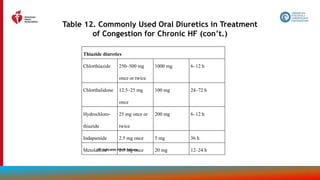
Table 12. Commonly Used Oral Diuretics in Treatment
of Congestion for Chronic HF (con’t.)
Thiazide diuretics
Chlorthiazide 250–500 mg
once or twice
1000 mg 6–12 h
Chlorthalidone 12.5–25 mg
once
100 mg 24–72 h
Hydrochloro-
thiazide
25 mg once or
twice
200 mg 6–12 h
Indapamide 2.5 mg once 5 mg 36 h
Metolazone 2.5 mg once 20 mg 12–24 h
HF indicates heart failure.
71
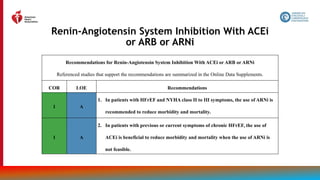
Renin-Angiotensin System Inhibition With ACEi
or ARB or ARNi
Recommendations for Renin-Angiotensin System Inhibition With ACEi or ARB or ARNi
Referenced studies that support the recommendations are summarized in the Online Data Supplements.
COR LOE Recommendations
1 A
1. In patients with HFrEF and NYHA class II to III symptoms, the use of ARNi is
recommended to reduce morbidity and mortality.
1 A
2. In patients with previous or current symptoms of chronic HFrEF, the use of
ACEi is beneficial to reduce morbidity and mortality when the use of ARNi is
not feasible.
72
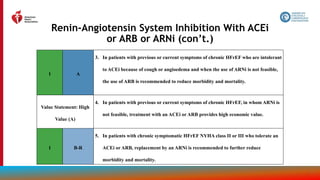
Renin-Angiotensin System Inhibition With ACEi
or ARB or ARNi (con’t.)
1 A
3. In patients with previous or current symptoms of chronic HFrEF who are intolerant
to ACEi because of cough or angioedema and when the use of ARNi is not feasible,
the use of ARB is recommended to reduce morbidity and mortality.
Value Statement: High
Value (A)
4. In patients with previous or current symptoms of chronic HFrEF, in whom ARNi is
not feasible, treatment with an ACEi or ARB provides high economic value.
1 B-R
5. In patients with chronic symptomatic HFrEF NYHA class II or III who tolerate an
ACEi or ARB, replacement by an ARNi is recommended to further reduce
morbidity and mortality.
73
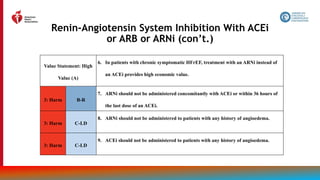
Renin-Angiotensin System Inhibition With ACEi
or ARB or ARNi (con’t.)
Value Statement: High
Value (A)
6. In patients with chronic symptomatic HFrEF, treatment with an ARNi instead of
an ACEi provides high economic value.
3: Harm B-R
7. ARNi should not be administered concomitantly with ACEi or within 36 hours of
the last dose of an ACEi.
3: Harm C-LD
8. ARNi should not be administered to patients with any history of angioedema.
3: Harm C-LD
9. ACEi should not be administered to patients with any history of angioedema.
74
Beta Blockers
Recommendation for Beta Blockers
Referenced studies that support the recommendation are summarized in the Online Data Supplements.
COR LOE Recommendation
1 A
1. In patients with HFrEF, with current or previous symptoms, use of 1 of the 3 beta
blockers proven to reduce mortality (e.g., bisoprolol, carvedilol, sustained-release
metoprolol succinate) is recommended to reduce mortality and hospitalizations.
Value Statement:
High Value (A)
2. In patients with HFrEF, with current or previous symptoms, beta-blocker therapy
provides high economic value.
75
Mineralocorticoid Receptor Antagonists (MRAs)
Recommendations for Mineralocorticoid Receptor Antagonists (MRAs)
Referenced studies that support the recommendations are summarized in the Online Data Supplements.
COR LOE Recommendations
A
1. In patients with HFrEF and NYHA class II-IV symptoms, an
MRA (spironolactone or eplerenone) is recommended to reduce morbidity and
mortality, if eGFR is >30 mL/min/1.73 m2 and serum potassium is <5.0 mEq/L. Careful
monitoring of potassium, renal function, and diuretic dosing should be performed at initiation
and closely monitored thereafter to minimize risk of hyperkalemia and renal insufficiency.
Value Statement: High
Value (A)
2. In patients with HFrEF and NYHA class II-IV symptoms, MRA therapy provides high
economic value.
3: Harm B-NR
3. In patients taking MRA whose serum potassium cannot be maintained at <5.5 mEq/L, MRA
should be discontinued to avoid life-threatening hyperkalemia.
1
76
Sodium-Glucose Cotransporter 2 Inhibitors
Recommendation for SGLT2i
Referenced studies that support the recommendation are summarized in the Online Data Supplements.
COR LOE Recommendation
1 A
1. In patients with symptomatic chronic HFrEF, SGLT2i are recommended to
reduce hospitalization for HF and cardiovascular mortality, irrespective of the
presence of type 2 diabetes.
Value Statement:
Intermediate Value
(A)
2. In patients with symptomatic chronic HFrEF, SGLT2i therapy provides
intermediate economic value.
77
Hydralazine and Isosorbide Dinitrate
Recommendations for Hydralazine and Isosorbide Dinitrate
Referenced studies that support the recommendations are summarized in the Online Data Supplements.
COR LOE Recommendations
1 A
1. For patients self-identified as African American with NYHA class III-IV HFrEF
who are receiving optimal medical therapy, the combination of hydralazine and
isosorbide dinitrate is recommended to improve symptoms and reduce morbidity
and mortality.
78
Hydralazine and Isosorbide Dinitrate
(con’t.)
Value Statement:
High Value (B-NR)
2. For patients self-identified as African American with NYHA class III-IV HFrEF who are
receiving optimal medical therapy with ACEi or ARB, beta blockers, and MRA, the
combination of hydralazine and isosorbide dinitrate provides high economic value.
2b C-LD
3. In patients with current or previous symptomatic HFrEF who cannot be given first-line
agents, such as ARNi, ACEi, or ARB, because of drug intolerance or renal insufficiency, a
combination of hydralazine and isosorbide dinitrate might be considered to reduce
morbidity and mortality.
79
Figure 6.
Treatment of
HFrEF Stages
C and D
Colors correspond to COR in Table 2.
Treatment recommendations for
patients with HFrEF are displayed.
Step 1 medications may be started
simultaneously at initial (low) doses
recommended for HFrEF.
Alternatively, these medications may
be started sequentially, with
sequence guided by clinical or other
factors, without need to achieve
target dosing before initiating next
medication. Medication doses should
be increased to target as tolerated.
80
Other Drug Treatment
Recommendations for Other Drug Treatment
Referenced studies that support the recommendations are summarized in the Online Data Supplements.
COR LOE Recommendations
2b B-R
1. In patients with HF class II to IV symptoms, omega-3 polyunsaturated fatty
acid (PUFA) supplementation may be reasonable to use as adjunctive therapy
to reduce mortality and cardiovascular hospitalizations.
81
Other Drug Treatment (con’t.)
2b B-R
2. In patients with HF who experience hyperkalemia (serum potassium level ≥5.5 mEq/L)
while taking a renin-angiotensin-aldosterone system inhibitor (RAASi), the effectiveness
of potassium binders (patiromer, sodium zirconium cyclosilicate) to improve outcomes
by facilitating continuation of RAASi therapy is uncertain.
3: No
Benefit
B-R
3. In patients with chronic HFrEF without a specific indication (e.g., venous
thromboembolism [VTE], AF, a previous thromboembolic event, or a cardioembolic
source), anticoagulation is not recommended.
82
Drugs of Unproven Value or That May Worsen
HF
Recommendations for Drugs of Unproven Value or Drugs That May Worsen HF
Referenced studies that support the recommendations are summarized in the Online Data Supplements.
COR LOE Recommendations
3: No
Benefit
A
1. In patients with HFrEF, dihydropyridine calcium channel-blocking drugs are not
recommended treatment for HF.
3: No
Benefit
B-R
2. In patients with HFrEF, vitamins, nutritional supplements, and hormonal therapy are
not recommended other than to correct specific deficiencies.
3: Harm A
3. In patients with HFrEF, nondihydropyridine calcium channel-blocking drugs are not
recommended.
83
Drugs of Unproven Value or That May Worsen
HF (con’t.)
3: Harm A
4. In patients with HFrEF, class IC antiarrhythmic medications and dronedarone may
increase the risk of mortality.
3: Harm A
5. In patients with HFrEF, thiazolidinediones increase the risk of worsening HF
symptoms and hospitalizations.
3: Harm B-R
6. In patients with type 2 diabetes and high cardiovascular risk, the dipeptidyl
peptidase-4 (DPP-4) inhibitors saxagliptin and alogliptin increase the risk of HF
hospitalization and should be avoided in patients with HF.
3: Harm B-NR
7. In patients with HFrEF, NSAIDs worsen HF symptoms and should be avoided or
withdrawn whenever possible.
84
Table 13. Selected Prescription Medications That May
Cause or Exacerbate HF
Drug or Therapeutic
Class Associated With HF
Magnitude of
HF Induction or
Precipitation
Level of
Evidence for HF
Induction or
Precipitation
Possible
Mechanism(s)
Onset
Causes Direct
Myocardial
Toxicity
Exacerbates
Underlying
Myocardial
Dysfunction
COX, nonselective
inhibitors (NSAIDs)
X Major B Prostaglandin
inhibition leading
to sodium and
water retention,
increased systemic
vascular
resistance, and
blunted response
to diuretics
Immediate
COX, selective inhibitors
(COX-2 inhibitors)
X Major B
Thiazolidinediones X Major A Possible calcium
channel blockade
Intermediate
85
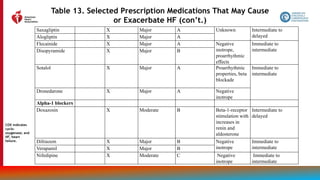
Table 13. Selected Prescription Medications That May Cause
or Exacerbate HF (con’t.)
Saxagliptin X Major A Unknown Intermediate to
delayed
Alogliptin X Major A
Flecainide X Major A Negative
inotrope,
proarrhythmic
effects
Immediate to
intermediate
Disopyramide X Major B
Sotalol X Major A Proarrhythmic
properties, beta
blockade
Immediate to
intermediate
Dronedarone X Major A Negative
inotrope
Alpha-1 blockers
Doxazosin X Moderate B Beta-1-receptor
stimulation with
increases in
renin and
aldosterone
Intermediate to
delayed
Diltiazem X Major B Negative
inotrope
Immediate to
intermediate
Verapamil X Major B
Nifedipine X Moderate C Negative
inotrope
Immediate to
intermediate
COX indicates
cyclo-
oxygenase; and
HF, heart
failure.
86
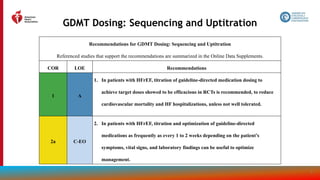
GDMT Dosing: Sequencing and Uptitration
Recommendations for GDMT Dosing: Sequencing and Uptitration
Referenced studies that support the recommendations are summarized in the Online Data Supplements.
COR LOE Recommendations
1 A
1. In patients with HFrEF, titration of guideline-directed medication dosing to
achieve target doses showed to be efficacious in RCTs is recommended, to reduce
cardiovascular mortality and HF hospitalizations, unless not well tolerated.
2a C-EO
2. In patients with HFrEF, titration and optimization of guideline-directed
medications as frequently as every 1 to 2 weeks depending on the patient’s
symptoms, vital signs, and laboratory findings can be useful to optimize
management.
87
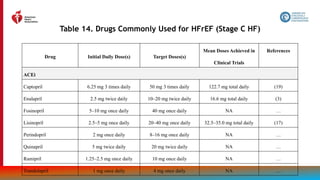
Table 14. Drugs Commonly Used for HFrEF (Stage C HF)
Drug Initial Daily Dose(s) Target Doses(s)
Mean Doses Achieved in
Clinical Trials
References
ACEi
Captopril 6.25 mg 3 times daily 50 mg 3 times daily 122.7 mg total daily (19)
Enalapril 2.5 mg twice daily 10–20 mg twice daily 16.6 mg total daily (3)
Fosinopril 5–10 mg once daily 40 mg once daily NA …
Lisinopril 2.5–5 mg once daily 20–40 mg once daily 32.5–35.0 mg total daily (17)
Perindopril 2 mg once daily 8–16 mg once daily NA …
Quinapril 5 mg twice daily 20 mg twice daily NA …
Ramipril 1.25–2.5 mg once daily 10 mg once daily NA …
Trandolapril 1 mg once daily 4 mg once daily NA …
88
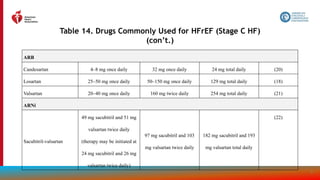
Table 14. Drugs Commonly Used for HFrEF (Stage C HF)
(con’t.)
ARB
Candesartan 4–8 mg once daily 32 mg once daily 24 mg total daily (20)
Losartan 25–50 mg once daily 50–150 mg once daily 129 mg total daily (18)
Valsartan 20–40 mg once daily 160 mg twice daily 254 mg total daily (21)
ARNi
Sacubitril-valsartan
49 mg sacubitril and 51 mg
valsartan twice daily
(therapy may be initiated at
24 mg sacubitril and 26 mg
valsartan twice daily)
97 mg sacubitril and 103
mg valsartan twice daily
182 mg sacubitril and 193
mg valsartan total daily
(22)
89
Table 14. Drugs Commonly Used for HFrEF (Stage C HF)
(con’t.)
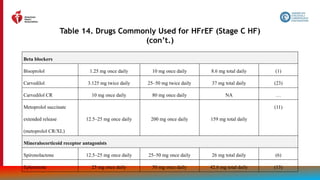
Beta blockers
Bisoprolol 1.25 mg once daily 10 mg once daily 8.6 mg total daily (1)
Carvedilol 3.125 mg twice daily 25–50 mg twice daily 37 mg total daily (23)
Carvedilol CR 10 mg once daily 80 mg once daily NA …
Metoprolol succinate
extended release
(metoprolol CR/XL)
12.5–25 mg once daily 200 mg once daily 159 mg total daily
(11)
Mineralocorticoid receptor antagonists
Spironolactone 12.5–25 mg once daily 25–50 mg once daily 26 mg total daily (6)
Eplerenone 25 mg once daily 50 mg once daily 42.6 mg total daily (13)
90
Table 14. Drugs Commonly Used for HFrEF (Stage C HF)
(con’t.)
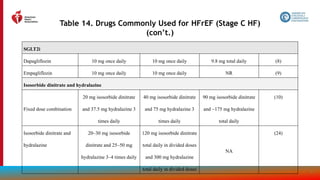
SGLT2i
Dapagliflozin 10 mg once daily 10 mg once daily 9.8 mg total daily (8)
Empagliflozin 10 mg once daily 10 mg once daily NR (9)
Isosorbide dinitrate and hydralazine
Fixed dose combination
20 mg isosorbide dinitrate
and 37.5 mg hydralazine 3
times daily
40 mg isosorbide dinitrate
and 75 mg hydralazine 3
times daily
90 mg isosorbide dinitrate
and ~175 mg hydralazine
total daily
(10)
Isosorbide dinitrate and
hydralazine
20–30 mg isosorbide
dinitrate and 25–50 mg
hydralazine 3–4 times daily
120 mg isosorbide dinitrate
total daily in divided doses
and 300 mg hydralazine
total daily in divided doses
NA
(24)
91
Table 14. Drugs Commonly Used for HFrEF (Stage C HF)
(con’t.)
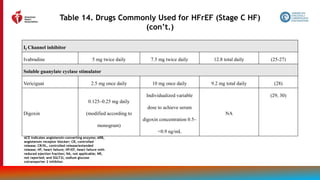
If Channel inhibitor
Ivabradine 5 mg twice daily 7.5 mg twice daily 12.8 total daily (25-27)
Soluble guanylate cyclase stimulator
Vericiguat 2.5 mg once daily 10 mg once daily 9.2 mg total daily (28)
Digoxin
0.125–0.25 mg daily
(modified according to
monogram)
Individualized variable
dose to achieve serum
digoxin concentration 0.5–
<0.9 ng/mL
NA
(29, 30)
ACE indicates angiotensin-converting enzyme; ARB,
angiotensin receptor blocker; CR, controlled
release; CR/XL, controlled release/extended
release; HF, heart failure; HFrEF, heart failure with
reduced ejection fraction; NA, not applicable; NR,
not reported; and SGLT2i, sodium glucose
cotransporter 2 inhibitor.
92
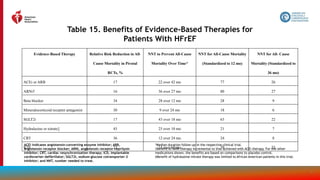
Table 15. Benefits of Evidence-Based Therapies for
Patients With HFrEF
Evidence-Based Therapy Relative Risk Reduction in All-
Cause Mortality in Pivotal
RCTs, %
NNT to Prevent All-Cause
Mortality Over Time*
NNT for All-Cause Mortality
(Standardized to 12 mo)
NNT for All- Cause
Mortality (Standardized to
36 mo)
ACEi or ARB 17 22 over 42 mo 77 26
ARNi† 16 36 over 27 mo 80 27
Beta blocker 34 28 over 12 mo 28 9
Mineralocorticoid receptor antagonist 30 9 over 24 mo 18 6
SGLT2i 17 43 over 18 mo 63 22
Hydralazine or nitrate‡ 43 25 over 10 mo 21 7
CRT 36 12 over 24 mo 24 8
ICD 23 14 over 60 mo 70 23
ACEi indicates angiotensin-converting enzyme inhibitor; ARB,
angiotensin receptor blocker; ARNi, angiotensin receptor neprilysin
inhibitor; CRT, cardiac resynchronization therapy; ICD, implantable
cardioverter-defibrillator; SGLT2i, sodium-glucose cotransporter-2
inhibitor; and NNT, number needed to treat.
*Median duration follow-up in the respective clinical trial.
†Benefit of ARNi therapy incremental to that achieved with ACEi therapy. For the other
medications shown, the benefits are based on comparisons to placebo control.
‡Benefit of hydralazine-nitrate therapy was limited to African American patients in this trial.
93
Management of Stage C HF: Ivabradine
Recommendation for the Management of Stage C HF: Ivabradine
Referenced studies that support the recommendation are summarized in the Online Data Supplements.
COR LOE Recommendation
2a B-R
1. For patients with symptomatic (NYHA class II to III) stable chronic HFrEF
(LVEF ≤35%) who are receiving GDMT, including a beta blocker at
maximum tolerated dose, and who are in sinus rhythm with a heart rate of
≥70 bpm at rest, ivabradine can be beneficial to reduce HF hospitalizations
and cardiovascular death.
94
Pharmacological Treatment for Stage C
HFrEF (Digoxin)
Recommendation for the Pharmacological Treatment for Stage C HFrEF (Digoxin)
Referenced studies that support the recommendation are summarized in the Online Data Supplements.
COR LOE Recommendation
2b B-R
1. In patients with symptomatic HFrEF despite GDMT (or who are unable to tolerate
GDMT), digoxin might be considered to decrease hospitalizations for HF.
95
Pharmacological Treatment for Stage C HFrEF:
Soluble Guanylyl Cyclase Stimulators
Recommendation for Pharmacological Treatment for Stage C HFrEF: Soluble Guanylyl Cyclase
Stimulators
Referenced studies that support the recommendation are summarized in the Online Data Supplements.
COR LOE Recommendation
2b B-R
1. In selected high-risk patients with HFrEF and recent worsening of HF already
on GDMT, an oral soluble guanylate cyclase stimulator (vericiguat) may be
considered to reduce HF hospitalization and cardiovascular death.
96
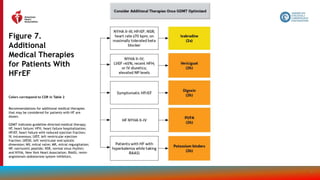
Figure 7.
Additional
Medical Therapies
for Patients With
HFrEF
Colors correspond to COR in Table 2
Recommendations for additional medical therapies
that may be considered for patients with HF are
shown.
GDMT indicates guideline-directed medical therapy;
HF, heart failure; HFH, heart failure hospitalization;
HFrEF, heart failure with reduced ejection fraction;
IV, intravenous; LVEF, left ventricular ejection
fraction; LVESD, left ventricular end systolic
dimension; MV, mitral valve; MR, mitral regurgitation;
NP, natriuretic peptide; NSR, normal sinus rhythm;
and NYHA, New York Heart Association; RAASi, renin-
angiotensin-aldosterone system inhibitors.
97
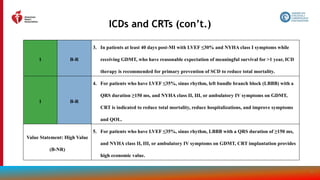
ICDs and CRTs
Recommendations for ICDs and CRTs
Referenced studies that support the recommendations are summarized in the Online Data Supplements.
COR LOE Recommendations
1 A
1. In patients with nonischemic DCM or ischemic heart disease at least 40 days post-MI with
LVEF ≤35% and NYHA class II or III symptoms on chronic GDMT, who have reasonable
expectation of meaningful survival for >1 year, ICD therapy is recommended for primary
prevention of SCD to reduce total mortality.
Value Statement: High Value
(A)
2. A transvenous ICD provides high economic value in the primary prevention of SCD
particularly when the patient’s risk of death caused by ventricular arrythmia is deemed high
and the risk of nonarrhythmic death (either cardiac or noncardiac) is deemed low based on
the patient’s burden of comorbidities and functional status.
98
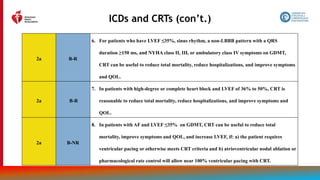
ICDs and CRTs (con’t.)
1 B-R
3. In patients at least 40 days post-MI with LVEF ≤30% and NYHA class I symptoms while
receiving GDMT, who have reasonable expectation of meaningful survival for >1 year, ICD
therapy is recommended for primary prevention of SCD to reduce total mortality.
1 B-R
4. For patients who have LVEF ≤35%, sinus rhythm, left bundle branch block (LBBB) with a
QRS duration ≥150 ms, and NYHA class II, III, or ambulatory IV symptoms on GDMT,
CRT is indicated to reduce total mortality, reduce hospitalizations, and improve symptoms
and QOL.
Value Statement: High Value
(B-NR)
5. For patients who have LVEF ≤35%, sinus rhythm, LBBB with a QRS duration of ≥150 ms,
and NYHA class II, III, or ambulatory IV symptoms on GDMT, CRT implantation provides
high economic value.
99
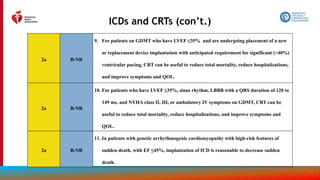
ICDs and CRTs (con’t.)
2a B-R
6. For patients who have LVEF ≤35%, sinus rhythm, a non-LBBB pattern with a QRS
duration ≥150 ms, and NYHA class II, III, or ambulatory class IV symptoms on GDMT,
CRT can be useful to reduce total mortality, reduce hospitalizations, and improve symptoms
and QOL.
2a B-R
7. In patients with high-degree or complete heart block and LVEF of 36% to 50%, CRT is
reasonable to reduce total mortality, reduce hospitalizations, and improve symptoms and
QOL.
2a B-NR
8. In patients with AF and LVEF ≤35% on GDMT, CRT can be useful to reduce total
mortality, improve symptoms and QOL, and increase LVEF, if: a) the patient requires
ventricular pacing or otherwise meets CRT criteria and b) atrioventricular nodal ablation or
pharmacological rate control will allow near 100% ventricular pacing with CRT.
100
ICDs and CRTs (con’t.)
2a B-NR
9. For patients on GDMT who have LVEF ≤35% and are undergoing placement of a new
or replacement device implantation with anticipated requirement for significant (>40%)
ventricular pacing, CRT can be useful to reduce total mortality, reduce hospitalizations,
and improve symptoms and QOL.
2a B-NR
10. For patients who have LVEF ≤35%, sinus rhythm, LBBB with a QRS duration of 120 to
149 ms, and NYHA class II, III, or ambulatory IV symptoms on GDMT, CRT can be
useful to reduce total mortality, reduce hospitalizations, and improve symptoms and
QOL.
2a B-NR
11. In patients with genetic arrhythmogenic cardiomyopathy with high-risk features of
sudden death, with EF ≤45%, implantation of ICD is reasonable to decrease sudden
death.
101
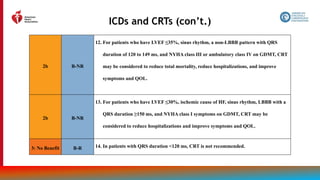
ICDs and CRTs (con’t.)
2b B-NR
12. For patients who have LVEF ≤35%, sinus rhythm, a non-LBBB pattern with QRS
duration of 120 to 149 ms, and NYHA class III or ambulatory class IV on GDMT, CRT
may be considered to reduce total mortality, reduce hospitalizations, and improve
symptoms and QOL.
2b B-NR
13. For patients who have LVEF ≤30%, ischemic cause of HF, sinus rhythm, LBBB with a
QRS duration ≥150 ms, and NYHA class I symptoms on GDMT, CRT may be
considered to reduce hospitalizations and improve symptoms and QOL.
3: No Benefit B-R 14. In patients with QRS duration <120 ms, CRT is not recommended.
102
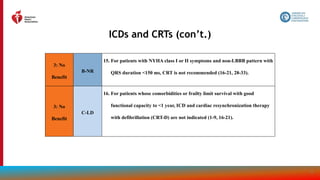
3: No
Benefit
B-NR
15. For patients with NYHA class I or II symptoms and non-LBBB pattern with
QRS duration <150 ms, CRT is not recommended (16-21, 28-33).
3: No
Benefit
C-LD
16. For patients whose comorbidities or frailty limit survival with good
functional capacity to <1 year, ICD and cardiac resynchronization therapy
with defibrillation (CRT-D) are not indicated (1-9, 16-21).
ICDs and CRTs (con’t.)
103
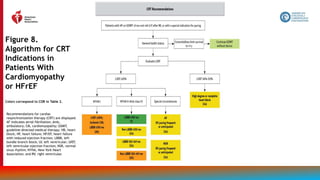
Figure 8.
Algorithm for CRT
Indications in
Patients With
Cardiomyopathy
or HFrEF
Colors correspond to COR in Table 2.
Recommendations for cardiac
resynchronization therapy (CRT) are displayed.
AF indicates atrial fibrillation; Amb,
ambulatory; CM, cardiomyopathy; GDMT,
guideline-directed medical therapy; HB, heart
block; HF, heart failure; HFrEF, heart failure
with reduced ejection fraction; LBBB, left
bundle branch block; LV, left ventricular; LVEF,
left ventricular ejection fraction; NSR, normal
sinus rhythm; NYHA, New York Heart
Association; and RV, right ventricular.
104
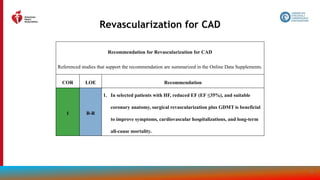
Revascularization for CAD
Recommendation for Revascularization for CAD
Referenced studies that support the recommendation are summarized in the Online Data Supplements.
COR LOE Recommendation
1 B-R
1. In selected patients with HF, reduced EF (EF ≤35%), and suitable
coronary anatomy, surgical revascularization plus GDMT is beneficial
to improve symptoms, cardiovascular hospitalizations, and long-term
all-cause mortality.
105
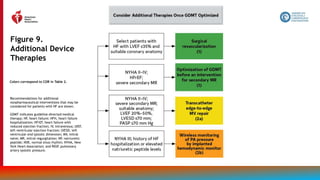
Figure 9.
Additional Device
Therapies
Colors correspond to COR in Table 2.
Recommendations for additional
nonpharmaceutical interventions that may be
considered for patients with HF are shown.
GDMT indicates guideline-directed medical
therapy; HF, heart failure; HFH, heart failure
hospitalization; HFrEF, heart failure with
reduced ejection fraction; IV, intravenous; LVEF,
left ventricular ejection fraction; LVESD, left
ventricular end systolic dimension; MV, mitral
valve; MR, mitral regurgitation; NP, natriuretic
peptide; NSR, normal sinus rhythm; NYHA, New
York Heart Association; and PASP, pulmonary
artery systolic pressure.
106
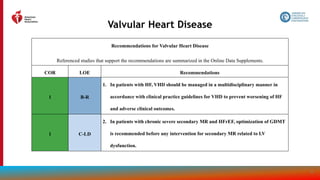
Valvular Heart Disease
Recommendations for Valvular Heart Disease
Referenced studies that support the recommendations are summarized in the Online Data Supplements.
COR LOE Recommendations
1 B-R
1. In patients with HF, VHD should be managed in a multidisciplinary manner in
accordance with clinical practice guidelines for VHD to prevent worsening of HF
and adverse clinical outcomes.
1 C-LD
2. In patients with chronic severe secondary MR and HFrEF, optimization of GDMT
is recommended before any intervention for secondary MR related to LV
dysfunction.
107
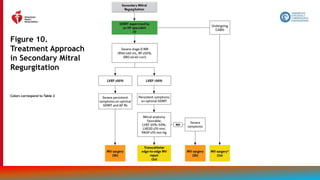
Figure 10.
Treatment Approach
in Secondary Mitral
Regurgitation
Colors correspond to Table 2
108
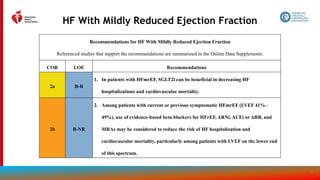
HF With Mildly Reduced Ejection Fraction
Recommendations for HF With Mildly Reduced Ejection Fraction
Referenced studies that support the recommendations are summarized in the Online Data Supplements.
COR LOE Recommendations
2a B-R
1. In patients with HFmrEF, SGLT2i can be beneficial in decreasing HF
hospitalizations and cardiovascular mortality.
2b B-NR
2. Among patients with current or previous symptomatic HFmrEF (LVEF 41%–
49%), use of evidence-based beta blockers for HFrEF, ARNi, ACEi or ARB, and
MRAs may be considered to reduce the risk of HF hospitalization and
cardiovascular mortality, particularly among patients with LVEF on the lower end
of this spectrum.
109
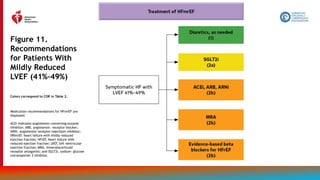
Figure 11.
Recommendations
for Patients With
Mildly Reduced
LVEF (41%–49%)
Medication recommendations for HFmrEF are
displayed.
ACEi indicates angiotensin-converting enzyme
inhibitor; ARB, angiotensin receptor blocker;
ARNi, angiotensin receptor-neprilysin inhibitor;
HRmrEF, heart failure with mildly reduced
ejection fraction; HFrEF, heart failure with
reduced ejection fraction; LVEF, left ventricular
ejection fraction; MRA, mineralocorticoid
receptor antagonist; and SGLT2i, sodium- glucose
cotransporter 2 inhibitor.
Colors correspond to COR in Table 2.
110
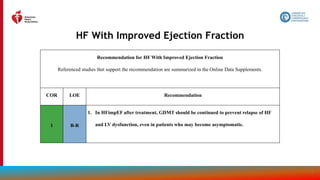
HF With Improved Ejection Fraction
Recommendation for HF With Improved Ejection Fraction
Referenced studies that support the recommendation are summarized in the Online Data Supplements.
COR LOE Recommendation
1 B-R
1. In HFimpEF after treatment, GDMT should be continued to prevent relapse of HF
and LV dysfunction, even in patients who may become asymptomatic.
111
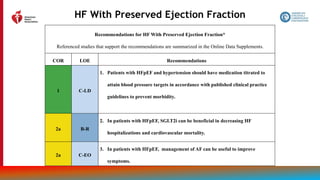
HF With Preserved Ejection Fraction
Recommendations for HF With Preserved Ejection Fraction*
Referenced studies that support the recommendations are summarized in the Online Data Supplements.
COR LOE Recommendations
1 C-LD
1. Patients with HFpEF and hypertension should have medication titrated to
attain blood pressure targets in accordance with published clinical practice
guidelines to prevent morbidity.
2a B-R
2. In patients with HFpEF, SGLT2i can be beneficial in decreasing HF
hospitalizations and cardiovascular mortality.
2a C-EO
3. In patients with HFpEF, management of AF can be useful to improve
symptoms.
112
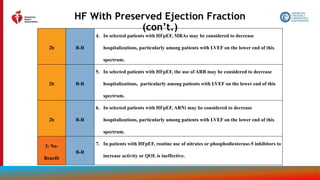
HF With Preserved Ejection Fraction
(con’t.)
2b B-R
4. In selected patients with HFpEF, MRAs may be considered to decrease
hospitalizations, particularly among patients with LVEF on the lower end of this
spectrum.
2b B-R
5. In selected patients with HFpEF, the use of ARB may be considered to decrease
hospitalizations, particularly among patients with LVEF on the lower end of this
spectrum.
2b B-R
6. In selected patients with HFpEF, ARNi may be considered to decrease
hospitalizations, particularly among patients with LVEF on the lower end of this
spectrum.
3: No-
Benefit
B-R
7. In patients with HFpEF, routine use of nitrates or phosphodiesterase-5 inhibitors to
increase activity or QOL is ineffective.
113
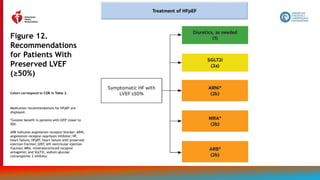
Figure 12.
Recommendations
for Patients With
Preserved LVEF
(≥50%)
Colors correspond to COR in Table 2.
Medication recommendations for HFpEF are
displayed.
*Greater benefit in patients with LVEF closer to
50%.
ARB indicates angiotensin receptor blocker; ARNi,
angiotensin receptor-neprilysin inhibitor; HF,
heart failure; HFpEF, heart failure with preserved
ejection fraction; LVEF, left ventricular ejection
fraction; MRA, mineralocorticoid receptor
antagonist; and SGLT2i, sodium-glucose
cotransporter 2 inhibitor.
114
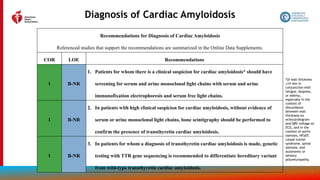
Diagnosis of Cardiac Amyloidosis
Recommendations for Diagnosis of Cardiac Amyloidosis
Referenced studies that support the recommendations are summarized in the Online Data Supplements.
COR LOE Recommendations
1 B-NR
1. Patients for whom there is a clinical suspicion for cardiac amyloidosis* should have
screening for serum and urine monoclonal light chains with serum and urine
immunofixation electrophoresis and serum free light chains.
1 B-NR
2. In patients with high clinical suspicion for cardiac amyloidosis, without evidence of
serum or urine monoclonal light chains, bone scintigraphy should be performed to
confirm the presence of transthyretin cardiac amyloidosis.
1 B-NR
3. In patients for whom a diagnosis of transthyretin cardiac amyloidosis is made, genetic
testing with TTR gene sequencing is recommended to differentiate hereditary variant
from wild-type transthyretin cardiac amyloidosis.
*LV wall thickness
≥14 mm in
conjunction with
fatigue, dyspnea,
or edema,
especially in the
context of
discordance
between wall
thickness on
echocardiogram
and QRS voltage on
ECG, and in the
context of aortic
stenosis, HFpEF,
carpal tunnel
syndrome, spinal
stenosis, and
autonomic or
sensory
polyneuropathy.
115
Treatment of Cardiac Amyloidosis
Recommendations for Treatment of Cardiac Amyloidosis
Referenced studies that support the recommendations are summarized in the Online Data Supplements.
COR LOE Recommendations
1 B-R
1. In select patients with wild-type or variant transthyretin cardiac amyloidosis and NYHA class I
to III HF symptoms, transthyretin tetramer stabilizer therapy (tafamidis) is indicated to reduce
cardiovascular morbidity and mortality.
Value Statement: Low
Value (B-NR)
2. At 2020 list prices, tafamidis provides low economic value (>$180,000 per QALY gained) in
patients with HF with wild-type or variant transthyretin cardiac amyloidosis.
2a C-LD
3. In patients with cardiac amyloidosis and AF, anticoagulation is reasonable to reduce the risk of
stroke regardless of the CHA2DS2-VASc (congestive heart failure, hypertension, age ≥75 years,
diabetes mellitus, stroke or transient ischemic attack [TIA], vascular disease, age 65 to 74 years,
sex category) score .
116
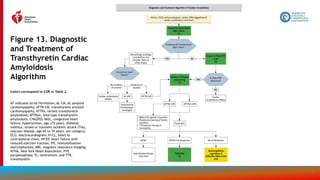
Figure 13. Diagnostic
and Treatment of
Transthyretin Cardiac
Amyloidosis
Algorithm
Colors correspond to COR in Table 2.
AF indicates atrial fibrillation; AL-CM, AL amyloid
cardiomyopathy; ATTR-CM, transthyretin amyloid
cardiomyopathy; ATTRv, variant transthyretin
amyloidosis; ATTRwt, wild-type transthyretin
amyloidosis; CHA2DS2-VASc, congestive heart
failure, hypertension, age ≥75 years, diabetes
mellitus, stroke or transient ischemic attack (TIA),
vascular disease, age 65 to 74 years, sex category;
ECG, electrocardiogram; H/CL, heart to
contralateral chest; HFrEF, heart failure with
reduced ejection fraction; IFE, immunofixation
electrophoresis; MRI, magnetic resonance imaging;
NYHA, New York Heart Association; PYP,
pyrophosphate; Tc, technetium; and TTR,
transthyretin.
117
Stage D (Advanced) HF
118
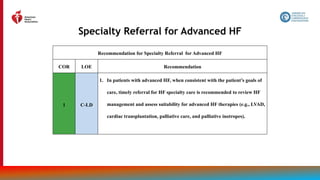
Specialty Referral for Advanced HF
Recommendation for Specialty Referral for Advanced HF
COR LOE Recommendation
1 C-LD
1. In patients with advanced HF, when consistent with the patient’s goals of
care, timely referral for HF specialty care is recommended to review HF
management and assess suitability for advanced HF therapies (e.g., LVAD,
cardiac transplantation, palliative care, and palliative inotropes).
119
Table 16. ESC Definition of Advanced HF
All of these criteria must be present despite optimal guideline-
directed treatment:
1. Severe and persistent symptoms of HF (NYHA class III
[advanced] or IV)
2. Severe cardiac dysfunction defined by ≥1 of these:
 LVEF ≤30%
 Isolated RV failure
 Nonoperable severe valve abnormalities
 Nonoperable severe congenital heart disease
 EF ≥40%, elevated natriuretic peptide levels
and evidence of significant diastolic
dysfunction
120
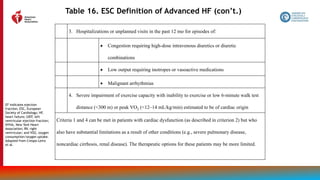
Table 16. ESC Definition of Advanced HF (con’t.)
3. Hospitalizations or unplanned visits in the past 12 mo for episodes of:
 Congestion requiring high-dose intravenous diuretics or diuretic
combinations
 Low output requiring inotropes or vasoactive medications
 Malignant arrhythmias
4. Severe impairment of exercise capacity with inability to exercise or low 6-minute walk test
distance (<300 m) or peak VO2 (<12–14 mL/kg/min) estimated to be of cardiac origin
Criteria 1 and 4 can be met in patients with cardiac dysfunction (as described in criterion 2) but who
also have substantial limitations as a result of other conditions (e.g., severe pulmonary disease,
noncardiac cirrhosis, renal disease). The therapeutic options for these patients may be more limited.
EF indicates ejection
fraction; ESC, European
Society of Cardiology; HF,
heart failure; LVEF, left
ventricular ejection fraction;
NYHA, New York Heart
Association; RV, right
ventricular; and VO2, oxygen
consumption/oxygen uptake.
Adapted from Crespo-Leiro
et al.
121
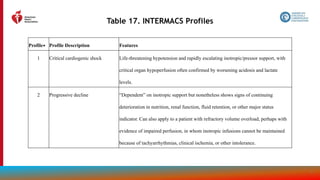
Table 17. INTERMACS Profiles
Profile∗ Profile Description Features
1 Critical cardiogenic shock Life-threatening hypotension and rapidly escalating inotropic/pressor support, with
critical organ hypoperfusion often confirmed by worsening acidosis and lactate
levels.
2 Progressive decline “Dependent” on inotropic support but nonetheless shows signs of continuing
deterioration in nutrition, renal function, fluid retention, or other major status
indicator. Can also apply to a patient with refractory volume overload, perhaps with
evidence of impaired perfusion, in whom inotropic infusions cannot be maintained
because of tachyarrhythmias, clinical ischemia, or other intolerance.
122
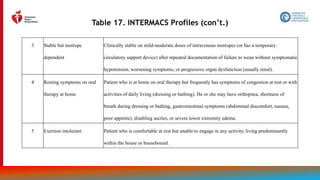
3 Stable but inotrope
dependent
Clinically stable on mild-moderate doses of intravenous inotropes (or has a temporary
circulatory support device) after repeated documentation of failure to wean without symptomatic
hypotension, worsening symptoms, or progressive organ dysfunction (usually renal).
4 Resting symptoms on oral
therapy at home
Patient who is at home on oral therapy but frequently has symptoms of congestion at rest or with
activities of daily living (dressing or bathing). He or she may have orthopnea, shortness of
breath during dressing or bathing, gastrointestinal symptoms (abdominal discomfort, nausea,
poor appetite), disabling ascites, or severe lower extremity edema.
5 Exertion intolerant Patient who is comfortable at rest but unable to engage in any activity, living predominantly
within the house or housebound.
Table 17. INTERMACS Profiles (con’t.)
123
Table 17. INTERMACS Profiles (con’t.)
6 Exertion limited Patient who is comfortable at rest without evidence of fluid overload but who is able to do some
mild activity. Activities of daily living are comfortable, and minor activities outside the home
such as visiting friends or going to a restaurant can be performed, but fatigue results within a
few minutes or with any meaningful physical exertion.
7 Advanced NYHA class III Patient who is clinically stable with a reasonable level of comfortable activity, despite a history
of previous decompensation that is not recent. This patient is usually able to walk more than a
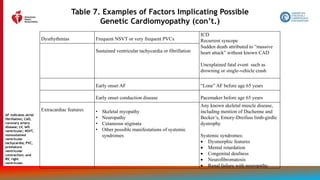
block. Any decompensation requiring intravenous diuretics or hospitalization within the
previous month should make this person a Patient Profile 6 or lower.
124
Table 17. INTERMACS Profiles (con’t.)
ICD indicates implantable cardioverter-defibrillator;
INTERMACS, Interagency Registry for Mechanically Assisted
Circulatory Support; and NYHA, New York Heart Association.
125
Table 18. Clinical Indicators of Advanced HF
Repeated hospitalizations or emergency department visits for HF in the past 12 mo.
Need for intravenous inotropic therapy.
Persistent NYHA functional class III to IV symptoms despite therapy.
Severely reduced exercise capacity (peak VO2, <14 mL/kg/min or <50% predicted, 6-minute walk test distance
<300 m, or inability to walk 1 block on level ground because of dyspnea or fatigue).
Intolerance to RAAS inhibitors because of hypotension or worsening renal function.
Intolerance to beta blockers as a result of worsening HF or hypotension.
Recent need to escalate diuretics to maintain volume status, often reaching daily furosemide equivalent dose >160
mg/d or use of supplemental metolazone therapy.
126
Table 18. Clinical Indicators of Advanced HF
(con’t.)
Refractory clinical congestion.
Progressive deterioration in renal or hepatic function.
Worsening right HF or secondary pulmonary hypertension.
Frequent SBP ≤90 mm Hg.
Cardiac cachexia.
Persistent hyponatremia (serum sodium, <134 mEq/L).
Refractory or recurrent ventricular arrhythmias; frequent ICD shocks.
Increased predicted 1-year mortality (e.g., >20%) according to HF survival models (e.g., MAGGIC,
SHFM).
HF indicates heart failure;
ICD, implantable
cardioverter-defibrillator;
MAGGIC, Meta-analysis
Global Group in Chronic
Heart Failure; NYHA, New
York Heart Association;
RAAS, renin-angiotensin-
aldosterone system; SBP,
systolic blood pressure;
SHFM, Seattle Heart
Failure model; and VO2,
oxygen
consumption/oxygen
uptake.
127
Table 19. Indications and Contraindications
to Durable Mechanical Support
Indications (combination of these):
 Frequent hospitalizations for HF
 NYHA class IIIb to IV functional limitations despite maximal therapy
 Intolerance of neurohormonal antagonists
 Increasing diuretic requirement
 Symptomatic despite CRT
 Inotrope dependence
 Low peak VO2 (<14–16)
 End-organ dysfunction attributable to low cardiac output
128
Table 19. Indications and Contraindications
to Durable Mechanical Support (con’t.)
Contraindications:
Absolute
 Irreversible hepatic disease
 Irreversible renal disease
 Irreversible neurological disease
 Medical nonadherence
 Severe psychosocial limitations
129
Table 19.
Indications and
Contraindications
to Durable
Mechanical Support
(con’t.)
Relative
 Age >80 y for destination therapy
 Obesity or malnutrition
 Musculoskeletal disease that impairs rehabilitation
 Active systemic infection or prolonged intubation
 Untreated malignancy
 Severe PVD
 Active substance abuse
 Impaired cognitive function
 Unmanaged psychiatric disorder
 Lack of social support
CRT indicates cardiac
resynchronization therapy; HF,
heart failure; NYHA, New York
Heart Association; VO2, oxygen
consumption; and PVD,
peripheral vascular disease.
130
Nonpharmacological Management:
Advanced HF
Recommendation for Nonpharmacological Management: Advanced HF
COR LOE Recommendation
2b C-LD
1. For patients with advanced HF and hyponatremia, the benefit of fluid
restriction to reduce congestive symptoms is uncertain.
131
Inotropic Support
Recommendations for Inotropic Support
Referenced studies that support the recommendations are summarized in the Online Data Supplements.
COR LOE Recommendations
2a B-NR
1. In patients with advanced (stage D) HF refractory to GDMT and device
therapy who are eligible for and awaiting MCS or cardiac transplantation,
continuous intravenous inotropic support is reasonable as “bridge therapy”.
2b B-NR
2. In select patients with stage D HF, despite optimal GDMT and device
therapy who are ineligible for either MCS or cardiac transplantation,
continuous intravenous inotropic support may be considered as palliative
therapy for symptom control and improvement in functional status.
3: Harm B-R
3. In patients with HF, long-term use of either continuous or intermittent
intravenous inotropic agents, for reasons other than palliative care or as a
bridge to advanced therapies, is potentially harmful.
132
Table 20. Intravenous Inotropic Agents Used
in the Management of HF
Inotropic Agent Dose (mcg/kg) Drug Kinetics
and
Metabolism
Effects Adverse Effects Special
Considerations
Bolus Infusion
(/min)
CO HR SVR PVR
Adrenergic agonists
Dopamine NA 5–10 t1/2: 2–20 min
R, H, P
↑ ↑ ↔ ↔ T, HA, N, tissue
necrosis
Caution: MAO-I
NA 10–15 ↑ ↑ ↑ ↔
Dobutamine NA 2.5–20 t1/2: 2–3 min H
↑ ↑ ↔ ↔
↑/↓BP, HA, T, N, F,
hypersensitivity
Caution: MAO-I;
CI: sulfite allergy
133
Table 20. Intravenous Inotropic Agents Used
in the Management of HF (con’t.)
PDE 3 inhibitor
Milrinone NR 0.125–0.75 t1/2: 2.5 h
H
↑ ↑ ↓ ↓ T, ↓BP Accumulation may
occur in setting of renal
failure; monitor kidney
function and LFTs
134
Table 20. Intravenous Inotropic Agents Used
in the Management of HF (con’t.)
Vasopressors
Epinephrine NR 5–15 mcg/min t1/2: 2–3 min ↑ ↑ ↑ (↓) ↔ HA, T Caution: MAO-I
15–20 mcg/min t1/2: 2–3 min ↑ ↑↑ ↑↑ ↔ HA, T, Caution: MAO-I
Norepinephrine NR 0.5–30 mcg/min t1/2: 2.5 min ↔ ↑ ↑↑ ↔ ↓ HR, tissue necrosis Caution: MAO-I
BP indicates blood pressure; CI, contraindication; CO, cardiac output; F, fever; H, hepatic; HA, headache; HF,
heart failure; HR, heart rate; LFT, liver function test; MAO-I, monoamine oxidase inhibitor; N, nausea; NA, not
applicable; NR, not recommended; P, plasma; PDE, phosphodiesterase; PVR, pulmonary vascular resistance; R,
renal; SVR, systemic vascular resistance; T, tachyarrhythmias; and t1/2, elimination half-life.
Up arrow means increase.
Side arrow means no change.
Down arrow means decrease.
Up/down arrow means either increase or decrease.
135
Mechanical Circulatory Support
Recommendations for Mechanical Circulatory Support
Referenced studies that support the recommendations are summarized in the Online Data Supplements.
COR LOE Recommendations
1 A
1. In select patients with advanced HFrEF with NYHA class IV symptoms
who are deemed to be dependent on continuous intravenous inotropes or
temporary MCS, durable LVAD implantation is effective to improve
functional status, QOL, and survival.
2a B-R
2. In select patients with advanced HFrEF who have NYHA class IV
symptoms despite GDMT, durable MCS can be beneficial to improve
symptoms, improve functional class, and reduce mortality.
136
Mechanical Circulatory Support
Value Statement:
Uncertain Value (B-
NR)
3. In patients with advanced HFrEF who have NYHA class IV symptoms
despite GDMT, durable MCS devices provide low to intermediate economic
value based on current costs and outcomes.
2a B-NR
4. In patients with advanced HFrEF and hemodynamic compromise and
shock, temporary MCS, including percutaneous and extracorporeal
ventricular assist devices, are reasonable as a “bridge to recovery” or
“bridge to decision”.
137
Cardiac Transplantation
Recommendation for Cardiac Transplantation
COR LOE Recommendation
1 C-LD
1. For selected patients with advanced HF despite GDMT, cardiac transplantation is
indicated to improve survival and QOL (1-3).
Value Statement:
Intermediate Value
(C-LD)
2. In patients with stage D (advanced) HF despite GDMT, cardiac transplantation
provides intermediate economic value (4).
138
Patients Hospitalized With
Acute Decompensated HF
139
Assessment of Patients Hospitalized
With Decompensated HF
Recommendations for Assessment of Patients Hospitalized With Decompensated HF
1 C-LD
1. In patients hospitalized with HF, severity of congestion and adequacy of
perfusion should be assessed to guide triage and initial therapy.
1 C-LD
2. In patients hospitalized with HF, the common precipitating factors and the
overall patient trajectory should be assessed to guide appropriate therapy.
Goals for Optimization and Continuation of GDMT
1 C-LD
3. For patients admitted with HF, treatment should address reversible factors,
establish optimal volume status, and advance GDMT toward targets for
outpatient therapy.
140
Table 21.
Common Factors
Precipitating HF
Hospitalization
With Acute
Decompensated
HF
ACS
Uncontrolled hypertension
AF and other arrhythmias
Additional cardiac disease (e.g., endocarditis)
Acute infections (e.g., pneumonia, urinary tract)
Nonadherence with medication regimen or dietary intake
Anemia
Hyper- or hypothyroidism
Medications that increase sodium retention (e.g., NSAID)
Medications with negative inotropic effect (e.g., verapamil)
ACS indicates acute coronary
syndrome; AF, atrial fibrillation;
and NSAID, nonsteroidal anti-
inflammatory drug.
141
Maintenance or Optimization of GDMT
During Hospitalization
Recommendations for Maintenance or Optimization of GDMT During Hospitalization
Referenced studies that support the recommendations are summarized in the Online Data Supplements.
COR LOE Recommendations
1 B-NR
1. In patients with HFrEF requiring hospitalization, preexisting GDMT should be
continued and optimized to improve outcomes, unless contraindicated.
1 B-NR
2. In patients experiencing mild decrease of renal function or asymptomatic reduction of
blood pressure during HF hospitalization, diuresis and other GDMT should not
routinely be discontinued.
1 B-NR
3. In patients with HFrEF, GDMT should be initiated during hospitalization after
clinical stability is achieved.
1 B-NR
4. In patients with HFrEF, if discontinuation of GDMT is necessary during
hospitalization, it should be reinitiated and further optimized as soon as possible.
142
Diuretics in Hospitalized Patients:
Decongestion Strategy
Recommendations for Diuretics in Hospitalized Patients: Decongestion Strategy
Referenced studies that support the recommendations are summarized in the Online Data Supplements.
COR LOE Recommendations
1 B-NR
1. Patients with HF admitted with evidence of significant fluid overload should be
promptly treated with intravenous loop diuretics to improve symptoms and reduce
morbidity.
1 B-NR
2. For patients hospitalized with HF, therapy with diuretics and other guideline-
directed medications should be titrated with a goal to resolve clinical evidence of
congestion to reduce symptoms and rehospitalizations.
143
Diuretics in Hospitalized Patients:
Decongestion Strategy (con’t.)
1 B-NR
3. For patients requiring diuretic treatment during hospitalization for HF, the
discharge regimen should include a plan for adjustment of diuretics to decrease
rehospitalizations.
2a B-NR
4. In patients hospitalized with HF when diuresis is inadequate to relieve
symptoms and signs of congestion, it is reasonable to intensify the diuretic
regimen using either:
a. higher doses of intravenous loop diuretics; or
b. addition of a second diuretic.
144
Parenteral Vasodilation Therapy in
Patients Hospitalized With HF
Recommendation for Parenteral Vasodilation Therapy in Patients Hospitalized With HF
Referenced studies that support the recommendation are summarized in the Online Data Supplements.
COR LOE Recommendation
2b B-NR
1. In patients who are admitted with decompensated HF, in the absence of systemic
hypotension, intravenous nitroglycerin or nitroprusside may be considered as an
adjuvant to diuretic therapy for relief of dyspnea.
145
VTE Prophylaxis in Hospitalized
Patients
Recommendation for VTE Prophylaxis in Hospitalized Patients
Referenced studies that support the recommendation are summarized in the Online Data Supplements.
COR LOE
Recommendation
1 B-R
1. In patients hospitalized with HF, prophylaxis for VTE is recommended to
prevent venous thromboembolic disease.
146
Evaluation and Management of
Cardiogenic Shock
Recommendations for Evaluation and Management of Cardiogenic Shock
Referenced studies that support the recommendations are summarized in the Online Data Supplements.
COR LOE Recommendations
1 B-NR
1. In patients with cardiogenic shock, intravenous inotropic support should
be used to maintain systemic perfusion and preserve end-organ
performance.
2a B-NR
2. In patients with cardiogenic shock, temporary MCS is reasonable when
end-organ function cannot be maintained by pharmacologic means to
support cardiac function.
147
Evaluation and Management of
Cardiogenic Shock (con’t.)
2a B-NR
3. In patients with cardiogenic shock, management by a multidisciplinary team
experienced in shock in reasonable.
2b B-NR
4. In patients presenting with cardiogenic shock, placement of a PA line may be
considered to define hemodynamic subsets and appropriate management
strategies.
2b C-LD
5. For patients who are not rapidly responding to initial shock measures, triage
to centers that can provide temporary MCS may be considered to optimize
management.
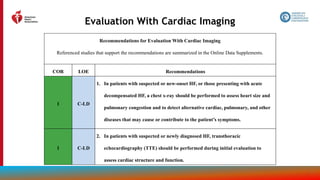
148
Table 22. Suggested Shock Clinical Criteria*
SBP <90 mm Hg for >30 min:
a. Or mean BP <60 mm Hg for >30 min
b. Or requirement of vasopressors to maintain systolic BP
≥90 mm Hg or mean BP ≥60 mm Hg
Hypoperfusion defined by:
c. Decreased mentation
d. Cold extremities, livedo reticularis
e. Urine output <30 mL/h
f. Lactate >2 mmol/L
BP indicates blood pressure; and SBP, systolic blood pressure.
*Systolic BP and hypoperfusion criteria need to be met for the
shock diagnosis.
149
Table 23. Suggested Shock Hemodynamic Criteria*
1. SBP <90 mm Hg or mean BP <60 mm Hg
2. Cardiac index <2.2 L/min/m2
3. Pulmonary capillary wedge pressure >15 mm Hg
4. Other hemodynamic considerations
a. Cardiac power output ([CO x MAP]/451) <0.6 W
b. Shock index (HR/systolic BP) >1.0
c. RV shock
i. Pulmonary artery pulse index [(PASP-
PADP)/CVP] <1.0
i. CVP >15 mm Hg
i. CVP-PCW >0.6
BP indicates blood pressure; CO, cardiac output;
CVP, central venous pressure; HR, heart rate; MAP,
mean arterial pressure; PADP
, pulmonary artery
diastolic pressure; PASP, pulmonary artery systolic
pressure; PCW, pulmonary capillary wedge; RV, right
ventricular; and SBP, systolic blood pressure.
*Diagnosis of shock requires ≥1 criteria to be present
along with cardiac index <2.0 L/min/m2 and SBP <90
mm Hg.
150
Table 24. Society for Cardiovascular Angiography and
Interventions (SCAI) Cardiogenic Shock Criteria
Stage Bedside Findings Selected Laboratory
Markers
Hemodynamics
A: At risk
--Normotensive
--Normal perfusion
--Cause for risk for
shock such as large
myocardial infarction
or HF
--Normal venous pressure
--Clear lungs
--Warm extremities
--Strong palpable pulses
--Normal mentation
--Normal renal function
--Normal lactate
--SBP >100 mm Hg
--Hemodynamics: Normal
151
Table 24. Society for Cardiovascular Angiography and
Interventions (SCAI) Cardiogenic Shock Criteria (con’t.)
B: Beginning
shock (“pre-
shock”)
--Hypotension
--Normal
perfusion
--Elevated venous
pressure
--Rales present
--Warm extremities
--Strong pulses
--Normal mentation
--Preserved renal
function
--Normal lactate
--Elevated BNP
a) SBP <90 mm Hg
b) MAP <60 mm Hg or
c) >30 mm Hg decrease
from baseline SBP
--HR >100 bpm
--Hemodynamics: CI ≥2.2
L/min/m2
152
Table 24. Society for Cardiovascular Angiography and
Interventions (SCAI) Cardiogenic Shock Criteria (con’t.)
C: Classic
cardiogenic
shock
--Hypotension
--Hypoperfusion
--Elevated venous
pressure
--Rales present
--Cold, ashen, livedo
--Weak or nonpalpable
pulses
--Altered mentation
--Decreased urine
output
--Respiratory distress
--Impaired renal
function
--Increased lactate
--Elevated BNP
--Increased LFTs
--Acidosis
--SBP <90 mm Hg; MAP
<60 mm Hg; >30 mm Hg
from baseline SBP despite
drugs and temporary
MCS
--HR >100 bpm
--Hemodynamics: CI ≤2.2
L/min/m2; PCW >15 mm
Hg; CPO <0.6 W; PAPi
<2.0; CVP-PCW >1.0
153
Table 24. Society for Cardiovascular Angiography and
Interventions (SCAI) Cardiogenic Shock Criteria (con’t.)
D: Deteriorating
--Worsening
hypotension
--Worsening
hypoperfusion
Same as stage C --Persistent or
worsening values of
stage C
Escalating use of pressors or
MCS to maintain SBP and
end-organ perfusion in
setting of stage C
hemodynamics
E: Extremis
--Refractory
hypotension
--Refractory
hypoperfusion
--Cardiac arrest
--CPR
--Worsening values of
stage C laboratories
--SBP only with resuscitation
--PEA
--Recurrent VT/VF
BNP indicates brain
natriuretic peptide; CI,
cardiac index; CPO,
cardiac power output;
CPR, cardiopulmonary
resuscitation; CVP,
central venous pressure;
HR, heart rate; LFT, liver
function test; MAP, mean
arterial blood pressure;
MCS, mechanical
circulatory support; PAPi,
pulmonary artery
pulsatility index; PCW,
pulmonary capillary
wedge pressures; PEA,
pulseless electrical
activity; SBP, systolic
blood pressure; VF,
ventricular fibrillation;
and VT, ventricular
tachycardia.
154
Integration of Care: Transitions and
Team-Based Approaches
Recommendations for Integration of Care: Transitions and Team-Based Approaches
Referenced studies that support the recommendations are summarized in the Online Data Supplements.
COR LOE Recommendations
1 B-R
1. In patients with high-risk HF, particularly those with recurrent hospitalizations for
HFrEF, referral to multidisciplinary HF disease management programs is
recommended to reduce the risk of hospitalization.
155
1 B-NR
2. In patients hospitalized with worsening HF, patient-centered discharge
instructions with a clear plan for transitional care should be provided before
hospital discharge.
2a B-NR
3. In patients hospitalized with worsening HF, participation in systems that allow
benchmarking to performance measures is reasonable to increase use of
evidence-based therapy, and to improve quality of care.
2a B-NR
4. In patients being discharged after hospitalization for worsening HF, an early
follow-up, generally within 7 days of hospital discharge, is reasonable to
optimize care and reduce rehospitalization.
Integration of Care: Transitions and
Team-Based Approaches (con’t.)
156
Table 25.
Important
Components
of a
Transitional
Care Plan
A transitional care plan, communicated with the patient and their outpatient clinicians before
hospital discharge, should clearly outline plans for:
 Addressing any precipitating causes of worsening HF identified in the hospital;
 Adjusting diuretics based on volume status (including weight) and electrolytes;
 Coordination of safety laboratory checks (e.g., electrolytes after initiation or intensification of
GDMT);
 Further changes to optimize GDMT, including:
a. Plans for resuming medications held in the hospital;
b. Plans for initiating new medications;
c. Plans for titration of GDMT to goal doses as tolerated;
 Reinforcing HF education and assessing compliance with medical therapy and lifestyle
modifications, including dietary restrictions and physical activity;
 Addressing high-risk characteristics that may be associated with poor postdischarge clinical
outcomes, such as:
a. Comorbid conditions (e.g., renal dysfunction, pulmonary disease, diabetes, mental health,
and substance use disorders);
b. Limitations in psychosocial support;
c. Impaired health literacy, cognitive impairment;
 Additional surgical or device therapy, referral to cardiac rehabilitation in the future, where
appropriate;
 Referral to palliative care specialists and/or enrollment in hospice in selected patients.
GDMT indicates
guideline-directed
medical therapy; and
HF, heart failure.
157
Comorbidities in Patients With HF
158
Management of Comorbidities in
Patients With HF
Recommendations for the Management of Comorbidities in Patients With HF
Referenced studies that support the recommendations are summarized in the Online Data Supplements.
COR LOE Recommendations
Management of Anemia or Iron Deficiency
2a B-R
1. In patients with HFrEF and iron deficiency with or without anemia,
intravenous iron replacement is reasonable to improve functional status
and QOL.
3: Harm B-R
2. In patients with HF and anemia, erythropoietin-stimulating agents should
not be used to improve morbidity and mortality.
159
Management of Comorbidities in
Patients With HF (con’t.)
Management of Hypertension
1 C-LD
3. In patients with HFrEF and hypertension, uptitration of GDMT to the
maximally tolerated target dose is recommended.
Management of Sleep Disorders
2a C-LD
4. In patients with HF and suspicion of sleep-disordered breathing, a formal sleep
assessment is reasonable to confirm the diagnosis and differentiate between
obstructive and central sleep apnea.
160
Management of Comorbidities in
Patients With HF (con’t.)
2a B-R
5. In patients with HF and obstructive sleep apnea, continuous positive
airway pressure may be reasonable to improve sleep quality and decrease
daytime sleepiness.
3: Harm B-R
6. In patients with NYHA class II to IV HFrEF and central sleep apnea,
adaptive servo-ventilation causes harm.
Management of Diabetes
1 A
7. In patients with HF and type 2 diabetes, the use of SGLT2i is
recommended for the management of hyperglycemia and to reduce HF-
related morbidity and mortality.
161
Figure 14.
Recommendations
for Treatment of
Patients With HF
and Selected
Comorbidities
Colors correspond to COR in Table 2.
Recommendations for treatment of
patients with HF and select
comorbidities are displayed.
*Patients with chronic HF with
permanent-persistent-paroxysmal AF
and a CHA2DS2-VASc score of ≥2 (for
men) and ≥3 (for women).
ACEi indicates angiotensin-
converting enzyme
inhibitor; AF, atrial
fibrillation; ARB,
angiotensin receptor
blocker; AV,
atrioventricular; CHA2DS2-
VASc, congestive heart
failure, hypertension, age
≥75 years, diabetes
mellitus, stroke or transient
ischemic attack [TIA],
vascular disease, age 65 to
74 years, sex category;
CPAP, continuous positive
airway pressure; CRT,
cardiac resynchronization
therapy; EF, ejection
fraction; GDMT, guideline-
directed medical therapy;
HF, heart failure; HFrEF,
heart failure with reduced
ejection fraction; IV,
intravenous; LVEF, left
ventricular ejection
fraction; NYHA, New York
Heart Association; SGLT2i,
sodium-glucose
cotransporter 2 inhibitor;
and VHD, valvular heart
disease.
162
Beneficiaries Age ≥65 y (n=4,376,150)∗ Beneficiaries Age <65 y (n=571,768)†
n % n %
Hypertension 3,685,373 84.2
Hypertensio
n
461,235 80.7
Ischemic heart
disease
3,145,718 71.9
Ischemic
heart disease
365,889 64.0
Hyperlipidemia 2,623,601 60.0 Diabetes 338,687 59.2
Anemia 2,200,674 50.3
Hyperlipide
mia
325,498 56.9
Table 26. Most Common Co-Occurring Chronic Conditions
Among Medicare Beneficiaries With HF (N=4,947,918),
2011
163
Table 26. Most Common Co-Occurring Chronic Conditions
Among Medicare Beneficiaries With HF (N=4,947,918),
2011
(con’t.)
Diabetes 2,027,875 46.3 Anemia 284,102 49.7
Arthritis 1,901,447 43.5 CKD 257,015 45.0
CKD 1,851,812 42.3 Depression 207,082 36.2
COPD 1,311,118 30.0 Arthritis 201,964 35.3
AF 1,247,748 28.5 COPD 191,016 33.4
Alzheimer’s disease or dementia 1,207,704 27.6 Asthma 88,816 15.5
AF indicates
atrial fibrillation;
CKD, chronic
kidney disease;
COPD, chronic
obstructive
pulmonary
disease; and HF,
heart failure.
∗Mean No. of
conditions is 6.1;
median is 6.
†Mean No. of
conditions is 5.5;
median is 5.
164
Management of AF in HF
Recommendations for Management of AF in HF
Referenced studies that support the recommendations are summarized in the Online Data Supplements.
COR LOE Recommendations
1 A
1. Patients with chronic HF with permanent-persistent-paroxysmal AF and a
CHA2DS2-VASc score of ≥2 (for men) and ≥3 (for women) should receive chronic
anticoagulant therapy.
1 A
2. For patients with chronic HF with permanent-persistent-paroxysmal AF, DOAC
is recommended over warfarin in eligible patients.
165
Management of AF in HF (con’t.)
2a B-R
3. For patients with HF and symptoms caused by AF, AF ablation is reasonable to
improve symptoms and QOL.
2a B-R
4. For patients with AF and LVEF ≤50%, if a rhythm control strategy fails or is not
desired, and ventricular rates remain rapid despite medical therapy,
atrioventricular nodal ablation with implantation of a CRT device is reasonable .
2a B-NR
5. For patients with chronic HF and permanent/persistent/paroxysmal AF, chronic
anticoagulant therapy is reasonable for men and women without additional risk
factors.
166
Special Populations
167
Disparities and Vulnerable Populations*
Recommendations for Disparities and Vulnerable Populations
Referenced studies that support the recommendations are summarized in the Online Data Supplements.
COR LOE Recommendations
1 C-LD
1. In vulnerable patient populations at risk for health disparities, HF risk
assessments and multidisciplinary management strategies should target both
known risks for CVD and social determinants of health, as a means toward
elimination of disparate HF outcomes.
1 C-LD
2. Evidence of health disparities should be monitored and addressed at the clinical
practice and the health care system levels.
168
Table 27. Risk of HF and Outcomes in Special Populations
Vulnerable Population Risk of HF HF Outcomes
Women
The lifetime risk of HF is equivalent
between sexes, but HFpEF risk is higher in
women—in FHS participants with new-
onset HF, odds of HFpEF (EF >45%) are
2.8-fold higher in women than in men.
Sex-specific differences in the predictive
value of cardiac biomarkers for incident HF.
Nontraditional cardiovascular risk factors,
including anxiety, depression, caregiver
stress, and low household income may
contribute more toward incident heart
disease in women than men.
Overall, more favorable survival with HF than
men. In the OPTIMIZE-HF registry, women
with acute HF had a lower 1-y mortality (HR,
0.93; 95% CI, 0.89–0.97), although women are
more likely not to receive optimal GDMT.
Lower patient-reported quality of life for
women with HFrEF, compared with men.
Greater transplant waitlist mortality for women
but equivalent survival after heart
transplantation or LVAD implantation.
169
Table 27. Risk of HF and Outcomes in Special Populations
(con’t.)
Older adults Per FHS, at 40 y of age, the lifetime risk
of incident HF is 20% for both sexes; at
80 y of age, the risk remains 20% for men
and women despite the shorter life
expectancy.
LVEF is preserved in at least two-thirds of
older adults with the diagnosis of HF.
Among 1233 patients with HF aged ≥80 y,
40% mortality during mean 27-mo follow-up;
survival associated with prescription of
GDMT.
Lower socioeconomic status
populations
Among 27,078 White and Black adults of
low income (70% earned <$15,000/y)
participating from 2002–2009 in the
Southern Community Cohort Study, a 1
interquartile increase in neighborhood
deprivation index was associated with a
12% increase in risk of HF (adjusted HR,
1.12; 95% CI, 1.07–1.18).
Age-adjusted 1999–2018 HF mortality
(deaths/100,000; mean and 95% CI) was
higher with increasing quartiles of ADI,
which is based on 17 indicators of
employment, poverty, and education:
Quartile 1, 20.0 (19.4–20.5);
Quartile 2, 23.3 (22.6–24.0);
Quartile 3, 26.4 (25.5–27.3);
Quartile 4, 33.1 (31.8–34.4) .
170
Table 27. Risk of HF and Outcomes in Special Populations
(con’t.)
Black populations
In MESA, patients of Black race had
highest risk of incident HF (4.6/1000
person-years) and highest proportion of
nonischemic incident HF.
Higher prevalence of HF risk factors
including hypertension, obesity, and
diabetes, compared with White
populations.
CDC data show race-based differences in HF
mortality over time: Black men had a 1.16-
fold versus 1.43-fold higher age-adjusted HF-
related CVD death rate compared with White
men in 1999 versus 2017; Black women had a
1.35-fold versus 1.54-fold higher age-
adjusted HF-related CVD death rate
compared with White women in 1999 versus
2017.
Gap in outcomes is more pronounced among
younger adults (35–64 y of age) versus older
adults (65–84 y of age); age-adjusted HF-
related CVD death rates were 2.60-fold and
2.97-fold higher in young Black versus White
men and women, respectively.
Higher rates of hospitalization and mortality
among patients with HFpEF.
Lower 5-year survival after heart transplant.
171
Table 27. Risk of HF and Outcomes in Special Populations
(con’t.)
Hispanic populations MESA study showed higher HF incidence in
Hispanic compared with non-Hispanic
White groups (3.5 versus 2.4 per 1000
person-years) but lower than for African
Americans (4.6/1000 person-years).
Despite higher rates of hospitalization for HF
compared with non-Hispanic Whites, Hispanic
patients with HF have shown lower short-term
mortality rates.
In GWTG, Hispanic patients with HFpEF had
lower mortality (OR, 0.50; 95% CI, 0.31–0.81)
than non-Hispanic Whites, but this was not the
case for Hispanic patients with HFrEF (OR,
0.94; 95% CI, 0.62–1.43).
Lower risk of developing AF in the setting of
HF, compared with White patients.
172
Table 27. Risk of HF and Outcomes in Special Populations
(con’t.)
Asian and Pacific Islander
populations
Limited population-specific data for Asian
and pacific Islander subgroups in the United
States.
High rates of preventable HF hospitalization
observed in some Asian and Pacific Islander
populations.
Lower mortality rates from HF for Asian
subgroups when listed as the primary cause of
death, compared with non-Hispanic White
groups.
Native American and Alaskan Native
populations
Limited population-specific data, with
cardiovascular risk factor trends best
characterized by the Strong Heart Study and
Strong Heart Family Study, demonstrating
high rates of hypertension and diabetes.
Limited data suggest HF mortality rates in
American Indians and Alaska Natives are
similar to those in White populations.
CDC indicates Centers for Disease Control and Prevention; CVD, cardiovascular disease; FHS, Framingham Heart Study; GDMT, guideline-directed
medical therapy; GWTG, Get With The Guidelines registry; HF, heart failure; HFpEF, heart failure with preserved ejection fraction; HFrEF, heart failure
with reduced ejection fraction; HR, hazard ratio; LVAD, left ventricular assist device; LVEF, left ventricular ejection fraction; MESA, Multi-Ethnic Study
of Atherosclerosis; OPTMIZE-HF, Organized Program To Initiate Lifesaving Treatment In Hospitalized Patients With Heart Failure; and OR, odds ratio.
173
Cardio-Oncology
Recommendations for Cardio-Oncology
Referenced studies that support the recommendations are summarized in the Online Data Supplements.
COR LOE Recommendations
1 B-NR
1. In patients who develop cancer therapy–related cardiomyopathy or HF, a
multidisciplinary discussion involving the patient about the risk-benefit ratio of cancer
therapy interruption, discontinuation, or continuation is recommended to improve
management.
2a B-NR
2. In asymptomatic patients with cancer therapy–related cardiomyopathy (EF <50%),
ARB, ACEi, and beta blockers are reasonable to prevent progression to HF and improve
cardiac function.
174
Cardio-Oncology (con’t.)
2a B-NR
3. In patients with cardiovascular risk factors or known cardiac disease being
considered for potentially cardiotoxic anticancer therapies, pretherapy
evaluation of cardiac function is reasonable to establish baseline cardiac
function and guide the choice of cancer therapy.
2a B-NR
4. In patients with cardiovascular risk factors or known cardiac disease receiving
potentially cardiotoxic anticancer therapies, monitoring of cardiac function is
reasonable for the early identification of drug-induced cardiomyopathy.
2b B-R
5. In patients at risk of cancer therapy–related cardiomyopathy, initiation of beta
blockers and ACEi/ARB for the primary prevention of drug-induced
cardiomyopathy is of uncertain benefit.
175
Cardio-Oncology (con’t.)
2b C-LD
6. In patients being considered for potentially cardiotoxic therapies, serial
measurement of cardiac troponin might be reasonable for further risk
stratification.
176
Table 28. Cancer Therapies Known to Be Associated
With Cardiomyopathy
Class Agent(s)
Cardiac Function
Monitoring Often
Performed in Clinical
Practice
Pretherapy Serial
Anthracyclines Doxorubicin, epirubicin X X
Alkylating agents Cyclophosphamide, ifosfamide, melphalan X
Antimicrotubule agents Docetaxel
Antimetabolites Fluorouracil, capecitabine, fludarabine, decitabine
Anti-HER2 agents Trastuzumab, pertuzumab X X
Monoclonal antibodies Rituximab
177
Tyrosine-kinase inhibitors
Dabrafenib, dasatinib, lapatinib, pazopanib, ponatinib,
sorafenib, trametinib, sunitinib, vandetanib, imatinib,
vandetanib
Immune checkpoint inhibitors Nivolumab, ipilimumab, pembrolizumab
Protease inhibitors Bortezomib, carfilzomib
Endocrine therapy
Goserelin, leuprolide, flutamide, bicalutamide,
nilutamide
Chimeric antigen receptor T-cell therapy Tisagenlecleucel, axicabtagene ciloleucel X
Hematopoietic stem cell transplantation Hematopoietic stem cell transplantation X
Radiation Chest
Table 28. Cancer Therapies Known to Be Associated
With Cardiomyopathy (con’t.)
178
Table 29. Risk Factors for Cancer Therapy–Related
Cardiomyopathy
Age ≥60 y
Black race
CAD
Hypertension
Diabetes
Preexisting cardiomyopathy
Previous exposure to anthracyclines
Previous chest radiation
Elevated troponin pretherapy
CAD indicates coronary artery disease.
179
HF and Pregnancy
Recommendations for HF and Pregnancy
Referenced studies that support the recommendations are summarized in the Online Data Supplements.
COR LOE Recommendations
1 C-LD
1. In women with a history of HF or cardiomyopathy, including previous peripartum
cardiomyopathy, patient-centered counseling regarding contraception and the risks of
cardiovascular deterioration during pregnancy should be provided.
2b C-LD
2. In women with acute HF caused by peripartum cardiomyopathy and LVEF <30%,
anticoagulation may be reasonable at diagnosis, until 6 to 8 weeks postpartum,
although the efficacy and safety are uncertain.
3: Harm C-LD
3. In women with HF or cardiomyopathy who are pregnant or currently planning for
pregnancy, ACEi, ARB, ARNi, MRA, SGLT2i, ivabradine, and vericiguat should not
be administered because of significant risks of fetal harm.
180
Table 30. HF Management Strategies Across the
Pregnancy Continuum
Preconception During Pregnancy Postpartum
Nonpharmacological strategies Preconception genetic counseling
and testing for potentially heritable
cardiac conditions.
Use of pregnancy cardiovascular
risk tools, and echocardiography for
myocardial structure and function
assessment, to provide information
that facilitates informed counseling.
For women planning a pregnancy,
provide personalized counseling that
promotes the autonomy and goals of
the patient (and her partner, as
applicable), the patient’s ability for
self-care and risk awareness, and
ensures adequate psychosocial
support for decision-making.
For women not currently planning a
pregnancy but who might conceive,
discuss HF-specific considerations
regarding pregnancy and refer to
gynecology or primary care for
contraceptive counseling.
Close maternal monitoring for HF signs or
symptoms or other cardiovascular instability by
cardiology and obstetric and maternal-fetal
medicine teams; close fetal monitoring by the
obstetric and maternal-fetal medicine teams.
Consideration of routine echocardiographic
screening in the third trimester for reassessment
of myocardial structure and function before
labor; echocardiography for any significant
changes in HF symptoms or signs during
pregnancy, or if HF medications are reduced or
discontinued.
BNP or NT-proBNP monitoring during
pregnancy may have some value for prediction
of cardiovascular events.
Close maternal monitoring by obstetrics and
maternal-fetal medicine teams for preeclampsia,
which has shared risk factors and pathogenesis
with PPCM.
For women presenting with decompensated HF
or cardiogenic shock, hemodynamic monitoring
and MCS, as appropriate, within a
multidisciplinary collaborative approach that
supports prompt decision-making about the
timing and mechanism of delivery.
Multidisciplinary recommendations from
obstetrics and neonatology and pediatrics
teams and shared decision-making
regarding the maternal and neonatal risks
and benefits of breastfeeding.
For women presenting with
decompensated HF or cardiogenic shock,
HF management should include
hemodynamic monitoring and mechanical
circulatory support as appropriate
181
Table 30. HF Management Strategies Across the
Pregnancy Continuum (con’t.)
Pharmacological strategies Review of all current medications.
For women planning pregnancy
imminently, modification of HF
pharmacotherapy including.
discontinuation of any ACEi, ARB,
ARNi, MRA, or SGLT2i or ivabradine
medications; within a construct of
multidisciplinary shared decision-making,
continuation of a beta blocker (most
commonly metoprolol), hydralazine, and
nitrates; adjustment of diuretic dosing to
minimize the risk of placental
hypoperfusion.
Ideally, repeat echocardiography
approximately 3 mo after preconception
HF medication adjustments to ensure
stability of myocardial structure and
function before conception.
Close monitoring of maternal blood pressure, heart rate,
and volume status, with adjustment of the modified HF
regimen as appropriate to avoid hypotension (systemic
vasodilation peaks in the second trimester) and
placental hypoperfusion.
For women with HF or cardiomyopathy presenting
during pregnancy without preconception counseling and
assessment, urgent discontinuation of any GDMT
pharmacotherapies with fetal toxicities; within a
construct of multidisciplinary shared decision-making,
continuation of a beta blocker (most commonly
metoprolol succinate), hydralazine, and nitrates;
adjustment of diuretic dosing to minimize the risk of
placental hypoperfusion.
For women with acute HF caused by PPCM and
LVEF <30%, consideration of anticoagulation
until 6–8 wk postpartum, although the efficacy
and safety remain uncertain at this time.
For postpartum women with severe acute HF
caused by PPCM and LVEF <35%, in GDMT
pharmacotherapy and prophylactic
anticoagulation, to improve LVEF recovery; the
efficacy and safety of bromocriptine for acute
PPCM treatment remains uncertain at this time,
particularly in the setting of contemporary HF
GDMT and cardiogenic shock management.*
For women who choose to breastfeed, review
medications with neonatology and pediatrics
teams for neonatal safety during lactation,
ideally with pharmacist consultation if available.
Within a construct of multidisciplinary shared
decision-making, medications that may be
appropriate during breastfeeding include ACEi
(enalapril or captopril preferred, monitor
neonatal weight), beta blockers (metoprolol
preferred, monitor neonatal heart rate).
Diuretics can suppress lactation, but with
neonatal follow-up the use of furosemide may be
appropriate.
182
Table 30. HF Management Strategies Across the
Pregnancy Continuum (con’t.)
Multidisciplinary care beyond the
cardiology team
Consultation with genetics,
gynecology, and maternal-fetal
medicine teams, as appropriate to
the outcome of shared decision-
making.
Multidisciplinary management with obstetrics
and maternal-fetal medicine teams during
pregnancy.
For women with decompensated HF or evidence
of hemodynamic instability antepartum, delivery
planning will include obstetrics and maternal-
fetal medicine, anesthesia, and neonatology
teams.
Multidisciplinary management with
obstetrics, maternal-fetal medicine,
neonatology, and pediatrics teams,
especially for multidisciplinary
recommendations regarding lactation.
Consultation with gynecology team for
ongoing contraceptive planning.
ACEi indicates angiotensin-converting enzyme inhibitor; ARB, angiotensin receptor blocker; ARNi,
angiotensin receptor-neprilysin inhibitor; BNP, B-natriuretic peptide; GDMT, guideline-directed medical
therapy; HF, heart failure; LVEF, left ventricular ejection fraction; MCS, mechanical circulatory support;
MRA, mineralocorticoid receptor antagonist; NT-proBNP, N-terminal prohormone of brain natriuretic
peptide; PPCM, peripartum cardiomyopathy; RCT, randomized controlled trial; RV, right ventricular; and
SGLT2i, sodium-glucose cotransporter-2 inhibitor.
183
Quality Metrics and Reporting
184
Quality Metrics and Reporting
Recommendations for Performance Measurement
Referenced studies that support the recommendations are summarized in the Online Data Supplements.
COR LOE Recommendations
1 B-NR
1. Performance measures based on professionally developed clinical practice
guidelines should be used with the goal of improving quality of care for
patients with HF.
2a B-NR
2. Participation in quality improvement programs, including patient registries
that provide benchmark feedback on nationally endorsed, clinical practice
guideline–based quality and performance measures can be beneficial in
improving the quality of care for patients with HF.
185
Table 31. ACC/AHA 2020 HF Clinical Performance,
Quality, and Structural Measures
Measure No. Measure Title Care Setting Attribution
Measure
Domain
PM-1 LVEF assessment Outpatient Individual
practitioner
Facility
Diagnostic
PM-2 Symptom and activity assessment Outpatient Individual
practitioner
Facility
Monitoring
PM-3 Symptom management Outpatient Individual
practitioner
Facility
Treatment
PM-4 Beta-blocker therapy for HFrEF Outpatient
Inpatient
Individual
practitioner
Facility
Treatment
PM-5 ACEi, ARB, or ARNi therapy for HFrEF Outpatient
Inpatient
Individual
practitioner
Facility
Treatment
PM-6 ARNi therapy for HFrEF Outpatient
Inpatient
Individual
practitioner
Facility
Treatment
186
Table 31. ACC/AHA 2020 HF Clinical Performance,
Quality, and Structural Measures (con’t.)
PM-7 Dose of beta blocker therapy for HFrEF Outpatient Individual
practitioner
Facility
Treatment
PM-8 Dose of ACEi, ARB, or ARNi therapy for HFrEF Outpatient Individual
practitioner
Facility
Treatment
PM-9 MRA therapy for HFrEF Outpatient
Inpatient
Individual
practitioner
Facility
Treatment
PM-10 Laboratory monitoring in new MRA therapy Outpatient
Inpatient
Individual
practitioner
Facility
Monitoring
PM-11 Hydralazine and isosorbide dinitrate therapy for HFrEF
in those patients self-identified as Black or African
American
Outpatient
Inpatient
Individual
practitioner
Facility
Treatment
PM-12 Counseling regarding ICD placement for patients with
HFrEF on GDMT
Outpatient Individual
practitioner
Facility
Treatment
187
Table 31. ACC/AHA 2020 HF Clinical Performance,
Quality, and Structural Measures (con’t.)
PM-13 CRT implantation for patients with HFrEF on GDMT Outpatient Individual
practitioner
Facility
Treatment
QM-1 Patient self-care education Outpatient Individual
practitioner
Facility
Self-Care
QM-2 Measurement of patient-reported outcome-health status Outpatient Individual
practitioner
Facility
Monitoring
QM-3 Sustained or improved health status in HF Outpatient Individual
practitioner
Facility
Outcome
QM-4 Post-discharge appointment for patients with HF Inpatient Individual
practitioner, facility
Treatment
SM-1 HF registry participation Outpatient
Inpatient
Facility Structure
188
Table 31. ACC/AHA 2020 HF Clinical Performance,
Quality, and Structural Measures (con’t.)
Rehabilitation PMs Related to HF (From the 2018 ACC/AHA performance measures for cardiac rehabilitation (10))
Rehab PM-2
Exercise training referral for HF from inpatient
setting Inpatient Facility Process
Rehab PM-4
Exercise training referral for HF from outpatient
setting Outpatient
Individual
practitioner
Facility Process
ACEi indicates angiotensin-converting enzyme inhibitor; ACC, American College of Cardiology; AHA,
American Heart Association; ARB, angiotensin receptor blocker; ARNi, angiotensin receptor-neprilysin
inhibitor; CRT, cardiac resynchronization therapy; GDMT, guideline-directed medical therapy; HF, heart
failure; HFrEF, heart failure with reduced ejection fraction; ICD, implantable cardioverter-defibrillator;
LVEF, left ventricular ejection fraction; MRA, mineralocorticoid receptor antagonist; PM, performance
measure; QM, quality measure; and SM, structural measure.
189
Goals of Care
190
Palliative and Supportive Care, Shared
Decision-Making, and End-of-Life
Recommendations for Palliative and Supportive Care, Shared Decision-Making, and End-of-Life
Referenced studies that support the recommendations are summarized in the Online Data Supplements.
COR LOE Recommendations
1 C-LD
1. For all patients with HF, palliative and supportive care—including high-quality
communication, conveyance of prognosis, clarifying goals of care, shared decision-
making, symptom management, and caregiver support—should be provided to
improve QOL and relieve suffering.
1 C-LD
2. For patients with HF being considered for, or treated with, life-extending therapies,
the option for discontinuation should be anticipated and discussed through the
continuum of care, including at the time of initiation, and reassessed with changing
medical conditions and shifting goals of care.
191
Palliative and Supportive Care, Shared
Decision-Making, and End-of-Life (con’t.)
2a C-LD
4. For patients with HF, execution of advance care directives can be useful to
improve documentation of treatment preferences, delivery of patient-centered
care, and dying in preferred place.
2a C-LD
5. In patients with advanced HF with expected survival <6 months, timely referral
to hospice can be useful to improve QOL.
2a B-R
3. For patients with HF—particularly stage D HF patients being evaluated for
advanced therapies, patients requiring inotropic support or temporary
mechanical support, patients experiencing uncontrolled symptoms, major
medical decisions, or multimorbidity, frailty, and cognitive impairment—
specialist palliative care consultation can be useful to improve QOL and relieve
suffering.
192
Table 32. Palliative and Supportive Care Domains to
Improve Processes of Care and Patient Outcomes
Palliative and Supportive Domains of
Care
What Palliative Care Adds to Overall HF Management
High-quality communication Central to palliative care approaches are communication and patient-caregiver
engagement techniques.
Conveyance of prognosis Palliative care specifically addresses patient and caregiver understanding of disease,
treatment, and prognosis. Research suggests that patients tend to overestimate their
survival and overestimate the potential benefits of treatment. Objective risk models can
calibrate expectations, but discussion of uncertainty should accompany prognostic
conversations, often summarized as “hope for the best, plan for the worst.”
Clarifying goals of care Management of patients with HF as their disease becomes end-stage and death seems
near includes decisions about when to discontinue treatments designed primarily to
prolong life (e.g., ICD, hospitalization, tube feeding), decisions on when to initiate
treatments to reduce pain and suffering that may hasten death (e.g., narcotics), and
decisions about the location of death, home services, and hospice care. Exploring
patients’ expressed preferences, values, needs, concerns, means and desires through
clinician-led discussion can clarify values-treatment concordance and improve medical
decision-making.
193
Table 32. Palliative and Supportive Care Domains to
Improve Processes of Care and Patient Outcomes
Shared decision-making
Shared decision-making is a process by which patients and clinicians work together to
make optimal health care decisions from medically reasonable options that align with
what matters most to patients. Shared decision-making requires: unbiased medical
evidence about the risks, benefits, and burdens of each alternative, including no
intervention; clinician expertise in communication and tailoring that evidence for
individual patients; and patient goals and informed preferences.
Symptom management
Dyspnea, fatigue, pain, nausea, depression, anxiety, and other symptoms of HF
refractory to cardiovascular therapies can be partially remediated through palliative and
supportive approaches in addition to GDMT.
Caregiver support
Care of the patient with heart failure should extend to their loved ones, including
beyond their death, to offer support to families and help them cope with loss.
GDMT indicates guideline-directed medical therapy; HF, heart failure; and ICD, implantable
cardioverter-defibrillator.
194
Inversion Point
to End-of-Life
Care:
Relief of suffering
and quality of life
outweigh extending
quantity of life
Time
Disease-
modifying
therapies
Symptom
palliation
therapies
Decompensations
Onset of CHF
Intensity
of
Care
Pump Failure
Sudden Death
Quality
of
Life
Transition to
Advanced Heart
Failure:
Oral therapies failing;
consider MCS and/or
transplantation, if
eligible
Clinical
Course
Figure 15. A
Depiction of
the Clinical
Course of HF
With
Associated
Types and
Intensities of
Available
Therapies
Over Time
CHF indicates congestive
heart failure; HF, heart
failure; and MCS,
mechanical circulatory
support.
195
Recommendation for Patient-
Reported Outcomes and Evidence
Gaps and Future Research Directions
196
Patient-Reported Outcomes
Recommendation for Patient-Reported Outcomes
COR LOE Recommendation
2a C-LD
1. In patients with HF, standardized assessment of patient-reported health status
using a validated questionnaire can be useful to provide incremental
information for patient functional status, symptom burden, and prognosis.
197
Table 33. Evidence Gaps and Future Research Directions
Definition
 Consensus on specific classifications of HFrEF, HFpEF, HFmrEF, and HFimpEF or whether a 2-category definition of HFrEF and
HF with normal EF, or an additional category of HFimpEF is needed separately for HFpEF; and whether these approaches can be
uniformly applied to clinical trials and practice.
 Definitions, detection, and management of myocarditis and myocardial injury, especially in the context of rapidly evolving
concepts, such as COVID-19 infection and cardiotoxicity.
 Definition and classification of cardiomyopathies.
Screening
 Cost-effectiveness of different strategies to screen for HF.
 Prediction of higher risk for HF among patients with traditional risk factors (e.g., which patients with diabetes would be at a higher
risk HF, warranting preventive treatment for HF).
198
Table 33. Evidence Gaps and Future Research Directions
(con’t.)
Diagnostics and Monitoring
 Individualized treatment targeting specific causes.
 Advanced role of precision medicine with incorporation of genetic, personalized, and individualized factors in medical management
of HF.
 High-value methods to use biomarkers in the optimization of medical therapy.
 Ability to use integrated systems biology models, including biomarkers, molecular markers, omics, diagnostic modalities, and
genetic variables for diagnosis, prognosis, and targeting therapies.
 Ability to monitor and adjust therapy to individual changes over time.
Nonmedical Strategies
 Efficacy and safety of specific dietary interventions, sodium restriction, and fluid restriction to prevent and treat HF.
 Efficacy and safety of cardiac rehabilitation in patients with HFpEF and HFmrEF.
199
Table 33. Evidence Gaps and Future Research Directions
(con’t.)
Medical Therapies
 Effective management strategies for patients with HFpEF.
 Evidence for specific treatment strategies for HFmrEF.
 Research on causes and targeted therapies for cardiomyopathies such as peripartum cardiomyopathy.
 Treatment of asymptomatic LV dysfunction to prevent transition to symptomatic HF.
 Therapies targeting different phenotypes of HF; patients with advanced HF, persistent congestion, patients with profiles excluded
from clinical trials such as those with advanced kidney failure or hypotension.
 Studies on targets for optimal decongestion; treatment and prevention of cardiorenal syndrome and diuretic resistance.
 Diagnostic and management strategies of RV failure.
 Efficacy and safety of hydralazine isosorbide in non–African American patients with HF and also in African American patients on
GDMT including SGLT2i and ARNi.
 Efficacy and safety of vericiguat in patients with HFrEF and markedly elevated natriuretic peptide levels.
200
Table 33. Evidence Gaps and Future Research Directions
(con’t.)
 Efficacy and safety of omecamtiv mecarbil in patients with stage D (advanced HF) HFrEF.
 Additional efficacy and safety of SGLT2i therapies in patients with HFpEF or patients with HFmrEF, efficacy and safety of
combined SGLT2i and SGLT1i in HFrEF, HFmrEF, or HFpEF.
 Additional efficacy and safety of SGLT2i studies in hospitalized patients with acute decompensated HF with and without diabetes.
 Efficacy and safety of nonsteroidal, selective MRA in patients with HF.
 Efficacy and safety of ARNi in pre-HF stage (stage B).
 Effective management strategies for combined post- and precapillary pulmonary hypertension.
 Novel treatments for ATTR cardiomyopathy.
 Treatment strategies targeting downstream processes such as fibrosis, cardiac metabolism or contractile performance in dilated
cardiomyopathies and HFpEF.
 Comparative effectiveness and safety of different initiation and titration of GDMT at the same time or in different sequences,
optimal strategies for sequencing and titration of therapies for HFrEF and HFpEF.
201
Table 33. Evidence Gaps and Future Research Directions
(con’t.)
 Studies on prediction of patient response; studies on how to incorporate patient preferences.
 Efficacy and safety of optimal BP target in patients with established HF and hypertension.
 Optimal BP target while optimizing GDMT in patients with HFrEF and HFpEF.
 Appropriate management of electrolyte abnormalities in HF (e.g., hyperkalemia or hypokalemia).
 Role of potassium binders in optimization of GDMT and clinical outcomes in patients with HF.
 Efficacy and safety of pirfenidone and other targeted treatment strategies for maladaptive fibrosis in patients with HFpEF.
 AF risk in patients treated with PUFA for patients at risk for HF or with HF.
Device Management and Advanced Therapies
 Optimal and timely selection of candidates for percutaneous interventions, MCS, or cardiac transplantation.
 Interventional approaches to recurrent, life-threatening ventricular tachyarrhythmias.
 Comparative effectiveness of His-bundle pacing or multisite pacing to prevent progression of HF.
202
Table 33. Evidence Gaps and Future Research Directions
(con’t.)
 Safety and efficacy of cardiac contractility modulation, vagal nerve stimulation, autonomic modulation, and renal denervation in
patients with HF.
 Safety and efficacy of splanchnic nerve ablation splanchnic nerve ablation to reduce splanchnic vasoconstriction and volume
redistribution in HF.
 Safety and efficacy of interatrial shunt, pericardiectomy, baroreceptor and neuromodulation, and renal denervation in HFpEF.
 Safety and efficacy of percutaneous or surgical interventions for tricuspid regurgitation.
Clinical Outcomes
 Impact of therapies in patient-reported outcomes, including symptoms and QOL.
 Studies addressing patient goals about care and care intensity as it intersects with disease trajectory.
 Real-world evidence data to characterize generalization of therapies in HF populations who may not have been represented in trials.
203
Table 33. Evidence Gaps and Future Research Directions
(con’t.)
Systems of Care and Social Determinants of Health
 Implementation studies on how to develop a structured approach to patient participation in informed decision-making and goal
setting through the continuum of HF care.
 Implementation science for adoption and optimization of GDMT by clinicians on how to initiate multiple or sequenced GDMT, how
to integrate these into learning health systems and networks, and how to increase patient education and adherence.
 Pragmatic studies on multidisciplinary new care models (e.g., cardiac teams for structural and valve management, shock teams,
cardiometabolic clinics, telemedicine, digital health, cardiac rehabilitation at home or postdischarge, and palliative care).
 Studies on strategies to eliminate structural racism, disparities, and health inequities in HF care.
 Studies addressing evidence gaps in women, racial, and ethnic populations.
 Management strategies for palliative care.
 Identification of factors that lead to unwarranted variations in HF care.
 Identify characteristics of systems of care (e.g., disciplines and staffing, electronic health records, and models of care) that optimize
GDMT before and after the discharge of hospitalized patients.
204
Table 33. Evidence Gaps and Future Research Directions
(con’t.)
Comorbidities
 Further studies on rhythm control versus ablation in AF.
 Appropriate patient selection in evolving percutaneous approaches in VHD (e.g., timing and appropriate patient selection for TAVI,
Mitraclip, tricuspid valve interventions).
 Effective and safe treatment options in CKD, sleep-disordered breathing, chronic lung disease, diabetes, depression, cognitive
disorders, and iron deficiency.
 Efficacy and safety of transvenous stimulation of the phrenic nerve or role of nocturnal supplemental oxygen for treatment of
central sleep apnea in patients with HF.
 Efficacy and safety of weight loss management and treatment strategies in patients with HF and obesity.
 Efficacy and safety of nutritional and food supplementation in patients with HF and frailty and malnutrition.
 Efficacy and safety of GDMT in end-stage renal disease or in patients with eGFR <30 mL/min/1.73 m2.
205
Table 33. Evidence Gaps and Future Research Directions
(con’t.)
Future/Novel Strategies
 Pharmacological therapies targeting novel pathways and endophenotypes.
 New device therapies, including percutaneous and durable mechanical support devices.
 Invasive (e.g., pulmonary artery pressure monitoring catheter) or noninvasive remote monitoring.
 Studies on telehealth, digital health, apps, wearables technology, and artificial intelligence.
 Role of enrichment trials, adaptive trials, umbrella trials, basket trials, and machine learning–based trials.
 Therapies targeting multiple cardiovascular, cardiometabolic, renovascular, and pathobiological mechanisms.
 Novel dissemination and implementation techniques to identify patients with HF (e.g., natural language processing of electronic
health records and automated analysis of cardiac imaging data) and to test and monitor proven interventions.
AF indicates atrial fibrillation; ARNi, angiotensin receptor-neprilysin inhibitor; ATTR, transthyretin amyloidosis; BP, blood pressure; CKD, chronic kidney disease; COVID-19,
coronavirus disease 2019; eGFR, estimated glomerular filtration rate; GDMT, guideline-directed medical therapy; HF, heart failure; HFimpEF, heart failure with improved
ejection fraction; HFmrEF, heart failure with mildly reduced ejection fraction; HFpEF, heart failure with preserved ejection fraction; HFrEF, heart failure with reduced
ejection fraction; LV, left ventricular; MCS, mechanical circulatory support; MRA, mineralocorticoid receptor antagonist; PUFA, polyunsaturated fatty acid; QOL, quality of
life; RV, right ventricular; SGLT1i, sodium-glucose cotransporter-1 inhibitors; SGLT2i, sodium-glucose cotransporter-2 inhibitors; TAVI, transcatheter aortic valve
implantation; and VHD, valvular heart disease.
206
Abbreviations
Abbreviation Meaning/Phrase
ACEi angiotensin-converting enzyme inhibitor
ACS acute coronary syndrome
ARNi angiotensin receptor-neprilysin inhibitor
ARB angiotensin (II) receptor blocker
AF atrial fibrillation
AL-CM immunoglobulin light chain amyloid
cardiomyopathy
ATTR-CM transthyretin amyloid cardiomyopathy
ATTRv variant transthyretin amyloidosis
ATTRwt wild-type transthyretin amyloidosis
207
Abbreviations
BNP B-type natriuretic peptide
CABG coronary artery bypass graft
CAD coronary artery disease
CCM cardiac contractility modulation
CHF congestive heart failure
CKD chronic kidney disease
CMR cardiovascular magnetic resonance
COVID-19 coronavirus disease 2019
CPET cardiopulmonary exercise test
CRT cardiac resynchronization therapy
CRT-D cardiac resynchronization therapy with defibrillation
CRT-P cardiac resynchronization therapy with pacemaker
CT computed tomography
CVD cardiovascular disease
208
Abbreviations
DOAC direct-acting oral anticoagulants
DPP-4 dipeptidyl peptidase-4
ECG electrocardiogram
EF ejection fraction
eGFR estimated glomerular filtration rate
FDA U.S. Food and Drug Administration
FLC free light chain
GDMT guideline-directed medical therapy
HF heart failure
HFimpEF heart failure with improved ejection fraction
HFmrEF heart failure with mildly reduced ejection fraction
HFpEF heart failure with preserved ejection fraction
HFrEF heart failure with reduced ejection fraction
209
Abbreviations
IFE immunofixation electrophoresis
LBBB left bundle branch block
LV left ventricular
LVAD left ventricular assist device
LVEDV left ventricular end-diastolic volume
LVEF left ventricular ejection fraction
LVH left ventricular hypertrophy
MCS mechanical circulatory support
MI myocardial infarction
MR mitral regurgitation
MRA mineralocorticoid receptor antagonist
MV mitral valve
NSAID nonsteroidal anti-inflammatory drug
210
Abbreviations
NSVT nonsustained ventricular tachycardia
NT-proBNP N-terminal prohormone of B-type natriuretic peptide
NYHA New York Heart Association
QALY quality-adjusted life year
QOL quality of life
PA pulmonary artery
PCWP pulmonary capillary wedge pressure
PET positron emission tomography
PPAR-γ peroxisome proliferator-activated receptor gamma
PUFA polyunsaturated fatty acid
RA right atrial
RAASi renin-angiotensin-aldosterone system inhibitor
RCT randomized controlled trial
211
Abbreviations
SCD sudden cardiac death
SGLT2i sodium-glucose cotransporter-2 inhibitors
SPECT single photon emission CT
99mTc-PYP technetium pyrophosphate
TEE transesophageal echocardiogram
TEER transcatheter mitral edge-to-edge repair
TTE transthoracic echocardiogram
VA ventricular arrhythmia
VF ventricular fibrillation
VHD valvular heart disease
VO2 oxygen consumption/oxygen uptake
VT ventricular tachycardia

slide-set-heart-failure-management.pptx

  • 1.
    Developed in partnershipwith the Heart Failure Society of America 2022 AHA/ACC/HFSA Guideline for the Management of Heart Failure
  • 2.
    This slide setis adapted from the 2022 AHA/ACC/HFSA Guideline for the Management of Heart Failure. Published online ahead of print April 1, 2022, available at: Circulation. https://www.ahajournals.org/doi/10.1161/CIR.0000000000001063 And Journal of the American College of Cardiology published online ahead of print April 1, 2022. J Am Coll Cardiol. https://www.jacc.org/doi/10.1016/j.jacc.2021.12.012 Citation © 2022 the American Heart Association, Inc., the American College of Cardiology Foundation, and Heart Failure Society of America. All rights reserved. This article has been published in Circulation, the Journal of the American College of Cardiology, and the Journal of Cardiac Failure.
  • 3.
    Paul A. Heidenreich,MD, MS, FACC, FAHA, FHFSA, Chair† Biykem Bozkurt, MD, PhD, FACC, FAHA, FHFSA, Vice Chair† 2022 Writing Committee Members* David Aguilar, MD, MSc, FAHA† Larry A. Allen, MD, MHS, FACC, FAHA, FHFSA† Joni J. Byun† Monica M. Colvin, MD, MS, FAHA† Anita Deswal, MD, MPH, FACC, FAHA, FHFSA‡ Shannon M. Dunlay, MD, MS, FAHA, FHFSA† Linda R. Evers, JD† James C. Fang, MD, FACC, FAHA, FHFSA† Savitri E. Fedson, MD, MA† Gregg C. Fonarow, MD, FACC, FAHA, FHFSA§ Salim S. Hayek, MD, FACC† Adrian F. Hernandez, MD, MHS‡ Prateeti Khazanie, MD, MPH, FHFSA† Michelle M. Kittleson, MD, PhD† Christopher S. Lee, PhD, RN, FAHA, FHFSA† Mark S. Link, MD† Carmelo A. Milano, MD† Lorraine C. Nnacheta, DrPH, MPH† Alexander T. Sandhu, MD, MS† Lynne Warner Stevenson, MD, FACC, FAHA, FHFSA† Orly Vardeny, PharmD, MS, FAHA, FHFSA║ Amanda R. Vest, MBBS, MPH, FHFSA║ Clyde W. Yancy, MD, MSc, MACC, FAHA, FHFSA† *Writing committee members are required to recuse themselves from voting on sections to which their specific relationships with industry may apply; see Appendix 1 for detailed information. † ACC/AHA Representative. ‡ ACC/AHA Joint Committee on Clinical Practice Guidelines Liaison. §Task Force Performance Measures. ║HFSA Representative. #Former Joint Committee member; current member during the writing effort.
  • 4.
    2022 Guideline forthe Management of Heart Failure Top 10 Take-Home Messages
  • 5.
    1. Guideline-directed medicaltherapy (GDMT) for heart failure (HF) with reduced ejection fraction (HFrEF) now includes 4 medication classes which include sodium-glucose cotransporter-2 inhibitors (SGLT2i). Top 10 Take Home Messages 5
  • 6.
    Top 10 TakeHome Messages 6 2. SGLT2 inhibitors have a 2a recommendation in heart failure with mildly reduced ejection fraction (HFmrEF). Weaker recommendations (2b) are made for ARNi, ACEi, ARB, MRA and beta blockers in this population.
  • 7.
    3. New recommendationsfor HFpEF are made for SGLT2 inhibitors (2a) , MRAs (2b) and ARNi (2b). Several prior recommendations have been renewed including treatment of hypertension (1), treatment of atrial fibrillation (2a), use of ARBs (2b) avoidance of routine use of nitrates or phosphodiesterase-5 inhibitors (3-no Benefit). Top 10 Take Home Messages 7
  • 8.
    Top 10 TakeHome Messages 8 4. Improved LVEF is used to refer to those patients with a previous HFrEF who now have an LVEF > 40%. These patients should continue their HFrEF treatment.
  • 9.
    5. Value statementswere created for select recommendations where high-quality cost-effectiveness studies of the intervention have been published. Top 10 Take Home Messages 9
  • 10.
    Top 10 TakeHome Messages 10 6. Amyloid heart disease has new recommendations for treatment including screening for serum and urine monoclonal light chains, bone scintigraphy, genetic sequencing, tetramer stabilizer therapy, and anticoagulation.
  • 11.
    7. Evidence supportingincreased filling pressures is important for the diagnosis of HF if the LVEF is >40%. Evidence for increased filling pressures can be obtained from non-invasive (e.g., natriuretic peptide, diastolic function on imaging) or invasive testing (e.g., hemodynamic measurement). Top 10 Take Home Messages 11
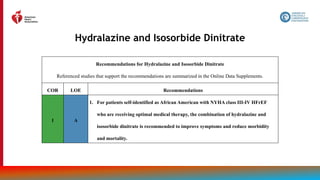
  • 12.
    Top 10 TakeHome Messages 12 8. Patients with advanced HF who wish to prolong survival should be referred to a team specializing in HF. A heart failure specialty team reviews HF management, assesses suitability for advanced HF therapies and uses palliative care including palliative inotropes where consistent with the patient’s goals of care.
  • 13.
    9. Primary preventionis important for those at risk for HF (Stage A) or pre-HF (Stage B). Stages of HF were revised to emphasize the new terminologies of “at risk” for HF for Stage A and Pre-HF for Stage B. Top 10 Take Home Messages 13
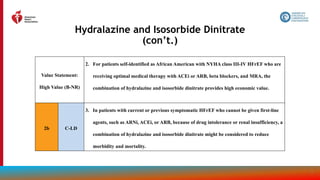
  • 14.
    Top 10 TakeHome Messages 14 10. Recommendations are provided for select patients with HF and iron deficiency, anemia, hypertension, sleep disorders, type 2 diabetes, atrial fibrillation, coronary artery disease and malignancy.
  • 15.
    Table 2. Applying AmericanCollege of Cardiology/American Heart Association Class of Recommendation and Level of Evidence to Clinical Strategies, Interventions, Treatments, or Diagnostic Testing in Patient Care (Updated May 2019)* 15
  • 16.
  • 17.
    Table 3. Stagesof HF 17 Stages Definition and Criteria Stage A: At Risk for HF At risk for HF but without symptoms, structural heart disease, or cardiac biomarkers of stretch or injury (e.g., patients with hypertension, atherosclerotic CVD, diabetes, metabolic syndrome and obesity, exposure to cardiotoxic agents, genetic variant for cardiomyopathy, or positive family history of cardiomyopathy).
  • 18.
    Table 3. Stagesof HF (con’t.) 18 Stage B: Pre-HF No symptoms or signs of HF and evidence of 1 of the following: Structural heart disease*  Reduced left or right ventricular systolic function o Reduced ejection fraction, reduced strain  Ventricular hypertrophy  Chamber enlargement  Wall motion abnormalities  Valvular heart disease Evidence for increased filling pressures*  By invasive hemodynamic measurements  By noninvasive imaging suggesting elevated filling pressures (e.g., Doppler echocardiography) Patients with risk factors and  Increased levels of BNPs* or  Persistently elevated cardiac troponin in the absence of competing diagnoses resulting in such biomarker elevations such as acute coronary syndrome, CKD, pulmonary embolus, or myopericarditis
  • 19.
    Table 3. Stagesof HF (con’t.) 19 Stage C: Symptomatic HF Structural heart disease with current or previous symptoms of HF. Stage D: Advanced HF Marked HF symptoms that interfere with daily life and with recurrent hospitalizations despite attempts to optimize GDMT. BNP indicates B-type natriuretic peptide; CKD, chronic kidney disease; GDMT, guideline-directed medical therapy; HF, heart failure; LV, left ventricular; and RV, right ventricular.
  • 20.
    Figure 1. ACC/AHA Stages of HF 20 TheACC/AHA stages of HF are shown. ACC indicates American College of Cardiology; AHA, American Heart Association; CVD, cardiovascular disease; GDMT, guideline-directed medical therapy; and HF, heart failure.
  • 21.
    Figure 2. Trajectoryof Class C HF 21 The trajectory of stage C HF is displayed. Patients whose symptoms and signs of HF are resolved are still stage C and should be treated accordingly. If all HF symptoms, signs, and structural abnormalities resolve, the patient is considered to have HF in remission. *Full resolution of structural and functional cardiac abnormalities is uncommon. HF indicates heart failure; and LV, left ventricular.
  • 22.
    Table 4. Classificationof HF by LVEF 22 Type of HF According to LVEF Criteria HFrEF (HF with reduced EF)  LVEF ≤40% HFimpEF (HF with improved EF)  Previous LVEF ≤40% and a follow-up measurement of LVEF >40% HFmrEF (HF with mildly reduced EF)  LVEF 41%–49%  Evidence of spontaneous or provokable increased LV filling pressures (e.g., elevated natriuretic peptide, noninvasive and invasive hemodynamic measurement) HFpEF (HF with preserved EF)  LVEF ≥50%  Evidence of spontaneous or provokable increased LV filling pressures (e.g., elevated natriuretic peptide, noninvasive and invasive hemodynamic measurement) HF indicates heart failure; LV, left ventricular; and LVEF, left ventricular ejection fraction.
  • 23.
    Figure 3. Classificationand Trajectories of HF Based on LVEF 23
  • 24.
    Figure 4. Diagnostic Algorithm forHF and EF-Based Classification 24 The algorithm for a diagnosis of HF and EF-based classification is shown. BNP indicates B-type natriuretic peptide; ECG, electrocardiogram; EF, ejection fraction; HF, heart failure; HFmrEF, heart failure with mildly reduced ejection fraction; HFpEF, heart failure with preserved ejection fraction; HFrEF, heart failure with reduced ejection fraction; LVEF, left ventricular ejection fraction; LV, left ventricular; NP, natriuretic peptides; and NT- proBNP, N-terminal pro-B type natriuretic peptide.
  • 25.
  • 26.
    Clinical Assessment: Historyand Physical Examination 26 Recommendations for Clinical Assessment: History and Physical Examination Referenced studies that support the recommendations are summarized in the Online Data Supplements. COR LOE Recommendations 1 B-NR 1. In patients with HF, vital signs and evidence of clinical congestion should be assessed at each encounter to guide overall management, including adjustment of diuretics and other medications. 1 B-NR 2. In patients with symptomatic HF, clinical factors indicating the presence of advanced HF should be sought via the history and physical examination.
  • 27.
    27 Clinical Assessment: Historyand Physical Examination (con’t.) 1 B-NR 3. In patients with cardiomyopathy, a 3-generation family history should be obtained or updated when assessing the cause of the cardiomyopathy to identify possible inherited disease. 1 B-NR 4. In patients presenting with HF, a thorough history and physical examination should direct diagnostic strategies to uncover specific causes that may warrant disease- specific management. 1 C-EO 5. In patients presenting with HF, a thorough history and physical examination should be obtained and performed to identify cardiac and noncardiac disorders, lifestyle and behavioral factors, and social determinants of health that might cause or accelerate the development or progression of HF.
  • 28.
    28 Table 5. OtherPotential Nonischemic Causes of HF Cause Reference Chemotherapy and other cardiotoxic medications (23-25) Rheumatologic or autoimmune (26) Endocrine or metabolic (thyroid, acromegaly, pheochromocytoma, diabetes, obesity) (27-31) Familial cardiomyopathy or inherited and genetic heart disease (32) Heart rhythm–related (e.g., tachycardia-mediated, PVCs, RV pacing) (33) Hypertension (34) Infiltrative cardiac disease (e.g., amyloid, sarcoid, hemochromatosis) (21, 35, 36) Myocarditis (infectious, toxin or medication, immunological, hypersensitivity) (37, 38) Peripartum cardiomyopathy (39) Stress cardiomyopathy (Takotsubo) (40, 41) Substance abuse (e.g., alcohol, cocaine, methamphetamine) HF indicates heart failure; PVC, premature ventricular contraction; and RV, right ventricular.
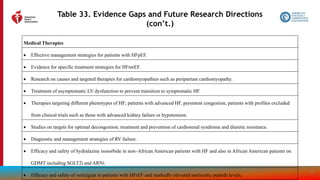
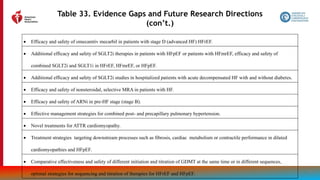
  • 29.
    29 Initial Laboratory and ElectrocardiographicTesting Recommendations for Initial Laboratory and Electrocardiographic Testing Referenced studies that support the recommendations are summarized in the Online Data Supplements. COR LOE Recommendations 1 B-NR 1. For patients presenting with HF, the specific cause of HF should be explored using additional laboratory testing for appropriate management. 1 C-EO 2. For patients who are diagnosed with HF, laboratory evaluation should include complete blood count, urinalysis, serum electrolytes, blood urea nitrogen, serum creatinine, glucose, lipid profile, liver function tests, iron studies, and thyroid- stimulating hormone to optimize management. 1 C-EO 3. For all patients presenting with HF, a 12-lead ECG should be performed at the initial encounter to optimize management.
  • 30.
    30 Use of Biomarkersfor Prevention, Initial Diagnosis, and Risk Stratification 4.2. Recommendations for Use of Biomarkers for Prevention, Initial Diagnosis, and Risk Stratification Referenced studies that support the recommendations are summarized in the Online Data Supplements. COR LOE Recommendations 1 A 1. In patients presenting with dyspnea, measurement of B-type natriuretic peptide (BNP) or N-terminal prohormone of B-type natriuretic peptide (NT-proBNP) is useful to support a diagnosis or exclusion of HF. 1 A 2. In patients with chronic HF, measurements of BNP or NT-proBNP levels are recommended for risk stratification.
  • 31.
    31 Use of Biomarkersfor Prevention, Initial Diagnosis, and Risk Stratification (con’t.) 1 A 3. In patients hospitalized for HF, measurement of BNP or NT-proBNP levels at admission is recommended to establish prognosis. 2a B-R 4. In patients at risk of developing HF, BNP or NT-proBNP–based screening followed by team-based care, including a cardiovascular specialist, can be useful to prevent the development of LV dysfunction or new-onset HF. 2a B-NR 5. In patients hospitalized for HF, a predischarge BNP or NT-proBNP level can be useful to inform the trajectory of the patient and establish a postdischarge prognosis
  • 32.
    32 Table 6. SelectedPotential Causes of Elevated Natriuretic Peptide Levels Cardiac HF, including RV HF syndromes ACS Heart muscle disease, including LVH VHD Pericardial disease AF Myocarditis Cardiac surgery Cardioversion Toxic-metabolic myocardial insults, including cancer chemotherapy
  • 33.
    33 Table 6. SelectedPotential Causes of Elevated Natriuretic Peptide Levels (50-53) (con’t.) Noncardiac Advancing age Anemia Renal failure Pulmonary: Obstructive sleep apnea, severe pneumonia Pulmonary embolism, pulmonary arterial hypertension Critical illness Bacterial sepsis Severe burns ACS indicates acute coronary syndromes; AF, atrial fibrillation; HF, heart failure; LVH, left ventricular hypertrophy; RV, right ventricular; and VHD, valvular heart disease.
  • 34.
    34 Genetic Evaluation andTesting Recommendations for Genetic Evaluation and Testing Referenced studies that support the recommendations are summarized in the Online Data Supplements. COR LOE Recommendations 1 B-NR 1. In first-degree relatives of selected patients with genetic or inherited cardiomyopathies, genetic screening and counseling are recommended to detect cardiac disease and prompt consideration of treatments to decrease HF progression and sudden death. 2a B-NR 2. In select patients with nonischemic cardiomyopathy, referral for genetic counseling and testing is reasonable to identify conditions that could guide treatment for patients and family members.
  • 35.
    35 Table 7. Examplesof Factors Implicating Possible Genetic Cardiomyopathy Phenotypic Category Patient or Family Member Phenotypic Finding* Ask Specifically About Family Members* With Cardiac morphology Marked LV hypertrophy Any mention of cardiomyopathy, enlarged or weak heart, HF. Document even if attributed to other causes, such as alcohol or peripartum cardiomyopathy LV noncompaction Right ventricular thinning or fatty replacement on imaging or biopsy Findings on 12-lead ECG Abnormal high or low voltage or conduction, and repolarization, altered RV forces Long QT or Brugada syndrome
  • 36.
    36 Table 7. Examplesof Factors Implicating Possible Genetic Cardiomyopathy (con’t.) Dysrhythmias Frequent NSVT or very frequent PVCs ICD Recurrent syncope Sudden death attributed to “massive heart attack” without known CAD Unexplained fatal event such as drowning or single-vehicle crash Sustained ventricular tachycardia or fibrillation Early onset AF “Lone” AF before age 65 years Early onset conduction disease Pacemaker before age 65 years Extracardiac features • Skeletal myopathy • Neuropathy • Cutaneous stigmata • Other possible manifestations of systemic syndromes Any known skeletal muscle disease, including mention of Duchenne and Becker’s, Emory-Dreifuss limb-girdle dystrophy Systemic syndromes:  Dysmorphic features  Mental retardation  Congenital deafness  Neurofibromatosis  Renal failure with neuropathy AF indicates atrial fibrillation; CAD, coronary artery disease; LV, left ventricular; NSVT, nonsustained ventricular tachycardia; PVC, premature ventricular contraction; and RV, right ventricular.
  • 37.
    37 Evaluation With CardiacImaging Recommendations for Evaluation With Cardiac Imaging Referenced studies that support the recommendations are summarized in the Online Data Supplements. COR LOE Recommendations 1 C-LD 1. In patients with suspected or new-onset HF, or those presenting with acute decompensated HF, a chest x-ray should be performed to assess heart size and pulmonary congestion and to detect alternative cardiac, pulmonary, and other diseases that may cause or contribute to the patient’s symptoms. 1 C-LD 2. In patients with suspected or newly diagnosed HF, transthoracic echocardiography (TTE) should be performed during initial evaluation to assess cardiac structure and function.
  • 38.
    38 Evaluation With CardiacImaging (con’t.) 1 C-LD 3. In patients with HF who have had a significant clinical change, or who have received GDMT and are being considered for invasive procedures or device therapy, repeat measurement of EF, degree of structural remodeling, and valvular function are useful to inform therapeutic interventions. 1 C-LD 4. In patients for whom echocardiography is inadequate, alternative imaging (e.g., cardiac magnetic resonance [CMR], cardiac computed tomography [CT], radionuclide imaging) is recommended for assessment of LVEF. 2a B-NR 5. In patients with HF or cardiomyopathy, CMR can be useful for diagnosis or management.
  • 39.
    39 Evaluation With CardiacImaging (con’t.) 2a B-NR 6. In patients with HF, an evaluation for possible ischemic heart disease can be useful to identify the cause and guide management. 2b B-NR 7. In patients with HF and CAD who are candidates for coronary revascularization, noninvasive stress imaging (stress echocardiography, single-photon emission CT [SPECT], CMR, or positron emission tomography [PET]) may be considered for detection of myocardial ischemia to help guide coronary revascularization. 3: No Benefit C-EO 8. In patients with HF in the absence of: 1) clinical status change, 2) treatment interventions that might have had a significant effect on cardiac function, or 3) candidacy for invasive procedures or device therapy, routine repeat assessment of LV function is not indicated.
  • 40.
    40 Invasive Evaluation Recommendations forInvasive Evaluation Referenced studies that support the recommendations are summarized in the Online Data Supplements. COR LOE Recommendations 2a B-NR 1. In patients with HF, endomyocardial biopsy may be useful when a specific diagnosis is suspected that would influence therapy.
  • 41.
    41 Invasive Evaluation (con’t.) 2aC-EO 2. In selected patients with HF with persistent or worsening symptoms, signs, diagnostic parameters, and in whom hemodynamics are uncertain, invasive hemodynamic monitoring can be useful to guide management. 3: No Benefit B-R 3. In patients with HF, routine use of invasive hemodynamic monitoring is not recommended. 3: Harm C-LD 4. For patients undergoing routine evaluation of HF, endomyocardial biopsy should not be performed because of the risk of complications.
  • 42.
    42 Wearables and RemoteMonitoring (Including Telemonitoring and Device Monitoring) Recommendation for Wearables and Remote Monitoring (Including Telemonitoring and Device Monitoring) Referenced studies that support the recommendation are summarized in the Online Data Supplements. COR LOE Recommendation 2b B-R 1. In selected adult patients with NYHA class III HF and history of a HF hospitalization in the past year or elevated natriuretic peptide levels, on maximally tolerated stable doses of GDMT with optimal device therapy, the usefulness of wireless monitoring of PA pressure by an implanted hemodynamic monitor to reduce the risk of subsequent HF hospitalizations is uncertain. Value Statement: Uncertain Value (B-NR) 2. In patients with NYHA class III HF with a HF hospitalization within the previous year, wireless monitoring of the PA pressure by an implanted hemodynamic monitor provides uncertain value .
  • 43.
    43 Exercise and FunctionalCapacity Testing Recommendations for Exercise and Functional Capacity Testing Referenced studies that support the recommendations are summarized in the Online Data Supplements. COR LOE Recommendations 1 C-LD 1. In patients with HF, assessment and documentation of NYHA functional classification are recommended to determine eligibility for treatments. 1 C-LD 2. In selected ambulatory patients with HF, cardiopulmonary exercise testing (CPET) is recommended to determine appropriateness of advanced treatments (e.g., LVAD, heart transplant). 2a C-LD 3. In ambulatory patients with HF, performing a CPET or 6- minute walk test is reasonable to assess functional capacity. 2a C-LD 4. In ambulatory patients with unexplained dyspnea, CPET is reasonable to evaluate the cause of dyspnea.
  • 44.
    44 Initial and SerialEvaluation: Clinical Assessment: HF Risk Scoring Recommendation for Initial and Serial Evaluation: Clinical Assessment: HF Risk Scoring Referenced studies that support the recommendation are summarized in the Online Data Supplements. COR LOE Recommendation 2a B-NR 1. In ambulatory or hospitalized patients with HF, validated multivariable risk scores can be useful to estimate subsequent risk of mortality.
  • 45.
    45 Table 8. SelectedMultivariable Risk Scores to Predict Outcome in HF Risk Score Year Published Chronic HF All Patients With Chronic HF Seattle Heart Failure Model https://depts.washington.edu/shfm/?width=1440&h eight=900 2006 Heart Failure Survival Score 1997 MAGGIC http://www.heartfailurerisk.org/ 2013 CHARM Risk Score 2006 CORONA Risk Score 2009 Specific to Chronic HFrEF PARADIGM-HF 2020 HF-ACTION 2012 GUIDE-IT 2019
  • 46.
    46 Specific to ChronicHFpEF I-PRESERVE Score (9) 2011 TOPCAT (10) 2020 Acutely Decompensated HF ADHERE Classification and Regression Tree (CART) Model (11) 2005 AHA Get With The Guidelines Score (12) https://www.mdcalc.com/gwtg- heart-failure-risk-score (17) 2010, 2021 EFFECT Risk Score (13) http://www.ccort.ca/Research/CHF RiskModel.aspx (18) 2003, 2016 ESCAPE Risk Model and Discharge Score (14) 2010 Table 8. Selected Multivariable Risk Scores to Predict Outcome in HF (con’t.) ADHERE indicates Acute Decompensated Heart Failure National Registry; AHA, indicates American Heart Association; ARIC, Atherosclerosis Risk in Communities; CHARM, Candesartan in Heart failure- Assessment of Reduction in Mortality and morbidity; CORONA, Controlled Rosuvastatin Multinational Trial in Heart Failure; EFFECT, Enhanced Feedback for Effective Cardiac Treatment; ESCAPE, Evaluation Study of Congestive Heart Failure and Pulmonary Artery Catheterization Effectiveness; GUIDE-ID, Guiding Evidence-Based Therapy Using Biomarker Intensified Treatment; HF, heart failure; HFpEF, heart failure with preserved ejection fraction; HF- ACTION, Heart Failure: A Controlled Trial Investigating Outcomes of Exercise Training MAGGIC Meta-analysis Global Group in Chronic Heart Failure; I- PRESERVE, Irbesartan in Heart Failure with Preserved Ejection Fraction Study; PCP-HF, Pooled Cohort Equations to Prevent HF; TOPCAT, Treatment of Preserved Cardiac Function Heart Failure with an Aldosterone Antagonist trial.
  • 47.
    47 Stage A (Patientsat Risk for HF)
  • 48.
    48 Patients at Riskfor HF (Stage A: Primary Prevention) Recommendations for Patients at Risk for HF (Stage A: Primary Prevention) Referenced studies that support the recommendations are summarized in the Online Data Supplements. COR LOE Recommendations 1 A 1. In patients with hypertension, blood pressure should be controlled in accordance with GDMT for hypertension to prevent symptomatic HF. 1 A 2. In patients with type 2 diabetes and either established CVD or at high cardiovascular risk, SGLT2i should be used to prevent hospitalizations for HF.
  • 49.
    49 Patients at Riskfor HF (Stage A: Primary Prevention) (con’t.) 1 B-NR 3. In the general population, healthy lifestyle habits such as regular physical activity, maintaining normal weight, healthy dietary patterns, and avoiding smoking are helpful to reduce future risk of HF. 2a B-R 4. For patients at risk of developing HF, natriuretic peptide biomarker–based screening followed by team-based care, including a cardiovascular specialist optimizing GDMT, can be useful to prevent the development of LV dysfunction (systolic or diastolic) or new-onset HF. 2a B-NR 5. In the general population, validated multivariable risk scores can be useful to estimate subsequent risk of incident HF.
  • 50.
    50 Figure 5. Recommendations (Class 1and 2a) for Patients at Risk of HF (Stage A) and Those With Pre-HF (Stage B) Colors correspond to COR in Table 2. Class 1 and Class 2a recommendations for patients at risk for HF (stage A) and those with pre-HF (stage B) are shown. Management strategies implemented in patients at risk for HF (stage A) should be continued though stage B. ACEi indicates angiotensin-converting enzyme inhibitor; ARB, angiotensin receptor blocker; BP, blood pressure; CVD, cardiovascular disease; HF, heart failure; ICD, implantable cardioverter- defibrillator; LVEF, left ventricular ejection fraction; MI, myocardial infarction; and SGLT2i, sodium glucose cotransporter 2 inhibitor.
  • 51.
    51 Table 9. SelectedMultivariable Risk Scores to Predict Development of Incident HF Risk Score Year Published Framingham Heart Failure Risk Score 1999 Health ABC Heart Failure Score 2008 ARIC Risk Score 2012 PCP-HF 2019 HF indicates heart failure; and PCP-HF, Pooled Cohort Equations to Prevent HF.
  • 52.
  • 53.
    53 Management of StageB: Preventing the Syndrome of Clinical HF in Patients With Pre-HF Recommendations for Management of Stage B: Preventing the Syndrome of Clinical HF in Patients With Pre-HF Referenced studies that support the recommendations are summarized in the Online Data Supplements. COR LOE Recommendations 1 A 1. In patients with LVEF ≤40%, ACEi should be used to prevent symptomatic HF and reduce mortality. 1 A 2. In patients with a recent or remote history of MI or ACS, statins should be used to prevent symptomatic HF and adverse cardiovascular events. 1 B-R 3. In patients with a recent or remote history of MI or acute coronary syndrome (ACS) and LVEF ≤40%, evidence-based beta blockers should be used to reduce mortality.
  • 54.
    54 Management of StageB: Preventing the Syndrome of Clinical HF in Patients With Pre- HF (con’t.) 1 B-R 4. In patients with a recent or remote history of MI or ACS, statins should be used to prevent symptomatic HF and adverse cardiovascular events. 1 B-R 5. In patients who are at least 40 days post-MI with LVEF ≤30% and NYHA class I symptoms while receiving GDMT and have reasonable expectation of meaningful survival for >1 year, an ICD is recommended for primary prevention of sudden cardiac death (SCD) to reduce total mortality. 1 C-LD 6. In patients with LVEF ≤40%, beta blockers should be used to prevent symptomatic HF. 3: Harm B-R 7. In patients with LVEF <50%, thiazolidinediones should not be used because they increase the risk of HF, including hospitalizations. 3: Harm C-LD 8. In patients with LVEF <50%, nondihydropyridine calcium channel blockers with negative inotropic effects may be harmful.
  • 55.
    55 Table 10. OtherACC/AHA Clinical Practice Guidelines Addressing Patients With Stage B HF Consideration Reference Patients with an acute MI who have not developed HF symptoms treated in accordance with GDMT 2013 ACCF/AHA Guideline for the Management of ST- Elevation Myocardial Infarction 2014 AHA/ACC Guideline for the Management of Patients With Non–ST-Elevation Acute Coronary Syndromes Coronary revascularization for patients without symptoms of HF in accordance with GDMT 2015 ACC/AHA/SCAI Focused Update on Primary Percutaneous Coronary Intervention for Patients With ST- Elevation Myocardial Infarction: An Update of the 2011 ACCF/AHA/SCAI Guideline for Percutaneous Coronary Intervention and the 2013 ACCF/AHA Guideline for the Management of ST-Elevation Myocardial Infarction (This guideline has been replaced by Lawton, 2021.) 2014 ACC/AHA/AATS/PCNA/SCAI/STS Focused Update of the Guideline for the Diagnosis and Management of Patients With Stable Ischemic Heart Disease 2011 ACCF/AHA Guideline for Coronary Artery Bypass Graft Surgery (This guideline has been replaced by Lawton, 2021.)
  • 56.
    56 Valve replacement orrepair for patients with hemodynamically significant valvular stenosis or regurgitation and no symptoms of HF in accordance with GDMT 2020 ACC/AHA Guideline for the Management of Patients With Valvular Heart Disease Patients with congenital heart disease that may increase the risk for the development of HF 2018 AHA/ACC Guideline for the Management of Adults With Congenital Heart Disease Table 10. Other ACC/AHA Clinical Practice Guidelines Addressing Patients With Stage B HF (con’t.) AATS indicates American Association for Thoracic Surgery; ACC, American College of Cardiology; ACCF, American College of Cardiology Foundation; AHA, American Heart Association; GDMT, guideline-directed medical therapy; HF, heart failure; MI, myocardial infarction; PCNA, Preventive Cardiovascular Nurses Association; SCAI, Society for Cardiovascular Angiography and Interventions; and STS, The Society of Thoracic Surgeons.
  • 57.
  • 58.
    58 Nonpharmacological Interventions: Self-Care Supportin HF Recommendations for Nonpharmacological Interventions: Self-Care Support in HF Referenced studies that support the recommendations are summarized in the Online Data Supplements. COR LOE Recommendations 1 A 1. Patients with HF should receive care from multidisciplinary teams to facilitate the implementation of GDMT, address potential barriers to self-care, reduce the risk of subsequent rehospitalization for HF, and improve survival.
  • 59.
    59 Nonpharmacological Interventions: Self-Care Supportin HF (con’t.) 1 B-R 2. Patients with HF should receive specific education and support to facilitate HF self-care in a multidisciplinary manner. 2a B-NR 3. In patients with HF, vaccinating against respiratory illnesses is reasonable to reduce mortality. 2a B-NR 4. In adults with HF, screening for depression, social isolation, frailty, and low health literacy as risk factors for poor self-care is reasonable to improve management.
  • 60.
    60 Table 11. PotentialBarriers to Effective HF Self-Care and Example Interventions Potential Barrier Example Screening Tools Example Interventions Medical Barriers Cognitive impairment Mini-Cog Mini-Mental State Examination (MMSE) Montreal Cognitive Assessment (MoCA) Home health aide Home meal deliveries Adult day care Geriatric psychiatry referral Memory care support groups Depression Hamilton Depression Rating Scale (HAM-D) Beck Depression Inventory-II (BDI-II) Patient Health Questionnaire-9 (PHQ-9) Psychotherapy Selective serotonin reuptake inhibitors Nurse-led support
  • 61.
    61 Table 11. PotentialBarriers to Effective HF Self-Care and Example Interventions (con’t.) Substance use disorders Tobacco, Alcohol, Prescription medication, and other Substance use (TAPS) Referral to social work services and community support partners Referral for addiction psychiatry consultation Frailty Fried frailty phenotype Cardiac rehabilitation Registered dietitian nutritionist evaluation for malnutrition Social Barriers Financial burden of HF treatments COmprehensive Score for financial Toxicity– Functional Assessment of Chronic Illness Therapy (COST-FACIT) PharmD referral to review prescription assistance eligibilities
  • 62.
    62 Table 11. PotentialBarriers to Effective HF Self-Care and Example Interventions (con’t.) Food insecurity Hunger Vital Sign, 2 items U.S. Household Food Security Survey Module, 6 items Determine eligibility for the Supplemental Nutrition Assistance Program (SNAP) Connect patients with community partners such as food pantries/food banks Home meal deliveries Registered dietitian nutritionist evaluation for potential malnutrition Homelessness or housing insecurity Homelessness Screening Clinical Reminder (HSCR) Referral to local housing services Connect patients with community housing partners
  • 63.
    63 Table 11. PotentialBarriers to Effective HF Self-Care and Example Interventions (con’t.) Intimate partner violence or elder abuse Humiliation, Afraid, Rape, Kick (HARK) questionnaire Partner Violence Screen (PVS) Woman Abuse Screening Tool (WAST) Referral to social work services and community support partners Limited English proficiency or other language barriers Routinely inquire in which language the patient is most comfortable conversing Access to interpreter services covering a wide range of languages, ideally in person or, alternatively, via video platform Printed educational materials in a range of appropriate languages
  • 64.
    64 Table 11. PotentialBarriers to Effective HF Self-Care and Example Interventions (con’t.) Low health literacy Short Assessment of Health Literacy (SAHL) Rapid Estimate of Adult Literacy in Medicine– Short Form (REALM-SF) Brief Health Literacy Screen (BHLS), 3 items Agency for Healthcare Research and Quality (AHRQ) Health Literacy Universal Precautions Toolkit Written education tools provided at sixth grade reading level or below Graphic educational documents Social isolation or low social support Patient-Reported Outcomes Measurement Information System (PROMIS) Social Isolation Short Form Determine eligibility for home care services Support group referral
  • 65.
    65 Table 11. PotentialBarriers to Effective HF Self-Care and Example Interventions (con’t.) Transport limitations No validated tools currently available. Referral to social work services Determine eligibility for insurance or state- based transportation, or reduced-cost public transportation Maximize opportunities for telehealth visits and remote monitoring HF indicates heart failure.
  • 66.
    66 Dietary Sodium Restriction Recommendationfor Dietary Sodium Restriction COR LOE Recommendation 2a C-LD 1. For patients with stage C HF, avoiding excessive sodium intake is reasonable to reduce congestive symptoms.
  • 67.
    67 Management of StageC HF: Activity, Exercise Prescription, and Cardiac Rehabilitation Recommendations for Management of Stage C HF: Activity, Exercise Prescription, and Cardiac Rehabilitation Referenced studies that support the recommendations are summarized in the Online Data Supplements. COR LOE Recommendations 1 A 1. For patients with HF who are able to participate, exercise training (or regular physical activity) is recommended to improve functional status, exercise performance, and QOL. 2a B-NR 2. In patients with HF, a cardiac rehabilitation program can be useful to improve functional capacity, exercise tolerance, and health-related QOL.
  • 68.
    68 Diuretics and DecongestionStrategies in Patients With HF Recommendations for Diuretics and Decongestion Strategies in Patients With HF Referenced studies that support the recommendations are summarized in the Online Data Supplements. COR LOE Recommendations 1 B-NR 1. In patients with HF who have fluid retention, diuretics are recommended to relieve congestion, improve symptoms, and prevent worsening HF. 1 B-NR 2. For patients with HF and congestive symptoms, addition of a thiazide (e.g., metolazone) to treatment with a loop diuretic should be reserved for patients who do not respond to moderate- or high-dose loop diuretics to minimize electrolyte abnormalities.
  • 69.
    69 Table 12. CommonlyUsed Oral Diuretics in Treatment of Congestion for Chronic HF Drug Initial Daily Dose Maximum Total Daily Dose Duration of Action Loop diuretics Bumetanide 0.5–1.0 mg once or twice 10 mg 4–6 h Furosemide 20–40 mg once or twice 600 mg 6–8 h Torsemide 10–20 mg once 200 mg 12–16 h
  • 70.
    70 Table 12. CommonlyUsed Oral Diuretics in Treatment of Congestion for Chronic HF (con’t.) Thiazide diuretics Chlorthiazide 250–500 mg once or twice 1000 mg 6–12 h Chlorthalidone 12.5–25 mg once 100 mg 24–72 h Hydrochloro- thiazide 25 mg once or twice 200 mg 6–12 h Indapamide 2.5 mg once 5 mg 36 h Metolazone 2.5 mg once 20 mg 12–24 h HF indicates heart failure.
  • 71.
    71 Renin-Angiotensin System InhibitionWith ACEi or ARB or ARNi Recommendations for Renin-Angiotensin System Inhibition With ACEi or ARB or ARNi Referenced studies that support the recommendations are summarized in the Online Data Supplements. COR LOE Recommendations 1 A 1. In patients with HFrEF and NYHA class II to III symptoms, the use of ARNi is recommended to reduce morbidity and mortality. 1 A 2. In patients with previous or current symptoms of chronic HFrEF, the use of ACEi is beneficial to reduce morbidity and mortality when the use of ARNi is not feasible.
  • 72.
    72 Renin-Angiotensin System InhibitionWith ACEi or ARB or ARNi (con’t.) 1 A 3. In patients with previous or current symptoms of chronic HFrEF who are intolerant to ACEi because of cough or angioedema and when the use of ARNi is not feasible, the use of ARB is recommended to reduce morbidity and mortality. Value Statement: High Value (A) 4. In patients with previous or current symptoms of chronic HFrEF, in whom ARNi is not feasible, treatment with an ACEi or ARB provides high economic value. 1 B-R 5. In patients with chronic symptomatic HFrEF NYHA class II or III who tolerate an ACEi or ARB, replacement by an ARNi is recommended to further reduce morbidity and mortality.
  • 73.
    73 Renin-Angiotensin System InhibitionWith ACEi or ARB or ARNi (con’t.) Value Statement: High Value (A) 6. In patients with chronic symptomatic HFrEF, treatment with an ARNi instead of an ACEi provides high economic value. 3: Harm B-R 7. ARNi should not be administered concomitantly with ACEi or within 36 hours of the last dose of an ACEi. 3: Harm C-LD 8. ARNi should not be administered to patients with any history of angioedema. 3: Harm C-LD 9. ACEi should not be administered to patients with any history of angioedema.
  • 74.
    74 Beta Blockers Recommendation forBeta Blockers Referenced studies that support the recommendation are summarized in the Online Data Supplements. COR LOE Recommendation 1 A 1. In patients with HFrEF, with current or previous symptoms, use of 1 of the 3 beta blockers proven to reduce mortality (e.g., bisoprolol, carvedilol, sustained-release metoprolol succinate) is recommended to reduce mortality and hospitalizations. Value Statement: High Value (A) 2. In patients with HFrEF, with current or previous symptoms, beta-blocker therapy provides high economic value.
  • 75.
    75 Mineralocorticoid Receptor Antagonists(MRAs) Recommendations for Mineralocorticoid Receptor Antagonists (MRAs) Referenced studies that support the recommendations are summarized in the Online Data Supplements. COR LOE Recommendations A 1. In patients with HFrEF and NYHA class II-IV symptoms, an MRA (spironolactone or eplerenone) is recommended to reduce morbidity and mortality, if eGFR is >30 mL/min/1.73 m2 and serum potassium is <5.0 mEq/L. Careful monitoring of potassium, renal function, and diuretic dosing should be performed at initiation and closely monitored thereafter to minimize risk of hyperkalemia and renal insufficiency. Value Statement: High Value (A) 2. In patients with HFrEF and NYHA class II-IV symptoms, MRA therapy provides high economic value. 3: Harm B-NR 3. In patients taking MRA whose serum potassium cannot be maintained at <5.5 mEq/L, MRA should be discontinued to avoid life-threatening hyperkalemia. 1
  • 76.
    76 Sodium-Glucose Cotransporter 2Inhibitors Recommendation for SGLT2i Referenced studies that support the recommendation are summarized in the Online Data Supplements. COR LOE Recommendation 1 A 1. In patients with symptomatic chronic HFrEF, SGLT2i are recommended to reduce hospitalization for HF and cardiovascular mortality, irrespective of the presence of type 2 diabetes. Value Statement: Intermediate Value (A) 2. In patients with symptomatic chronic HFrEF, SGLT2i therapy provides intermediate economic value.
  • 77.
    77 Hydralazine and IsosorbideDinitrate Recommendations for Hydralazine and Isosorbide Dinitrate Referenced studies that support the recommendations are summarized in the Online Data Supplements. COR LOE Recommendations 1 A 1. For patients self-identified as African American with NYHA class III-IV HFrEF who are receiving optimal medical therapy, the combination of hydralazine and isosorbide dinitrate is recommended to improve symptoms and reduce morbidity and mortality.
  • 78.
    78 Hydralazine and IsosorbideDinitrate (con’t.) Value Statement: High Value (B-NR) 2. For patients self-identified as African American with NYHA class III-IV HFrEF who are receiving optimal medical therapy with ACEi or ARB, beta blockers, and MRA, the combination of hydralazine and isosorbide dinitrate provides high economic value. 2b C-LD 3. In patients with current or previous symptomatic HFrEF who cannot be given first-line agents, such as ARNi, ACEi, or ARB, because of drug intolerance or renal insufficiency, a combination of hydralazine and isosorbide dinitrate might be considered to reduce morbidity and mortality.
  • 79.
    79 Figure 6. Treatment of HFrEFStages C and D Colors correspond to COR in Table 2. Treatment recommendations for patients with HFrEF are displayed. Step 1 medications may be started simultaneously at initial (low) doses recommended for HFrEF. Alternatively, these medications may be started sequentially, with sequence guided by clinical or other factors, without need to achieve target dosing before initiating next medication. Medication doses should be increased to target as tolerated.
  • 80.
    80 Other Drug Treatment Recommendationsfor Other Drug Treatment Referenced studies that support the recommendations are summarized in the Online Data Supplements. COR LOE Recommendations 2b B-R 1. In patients with HF class II to IV symptoms, omega-3 polyunsaturated fatty acid (PUFA) supplementation may be reasonable to use as adjunctive therapy to reduce mortality and cardiovascular hospitalizations.
  • 81.
    81 Other Drug Treatment(con’t.) 2b B-R 2. In patients with HF who experience hyperkalemia (serum potassium level ≥5.5 mEq/L) while taking a renin-angiotensin-aldosterone system inhibitor (RAASi), the effectiveness of potassium binders (patiromer, sodium zirconium cyclosilicate) to improve outcomes by facilitating continuation of RAASi therapy is uncertain. 3: No Benefit B-R 3. In patients with chronic HFrEF without a specific indication (e.g., venous thromboembolism [VTE], AF, a previous thromboembolic event, or a cardioembolic source), anticoagulation is not recommended.
  • 82.
    82 Drugs of UnprovenValue or That May Worsen HF Recommendations for Drugs of Unproven Value or Drugs That May Worsen HF Referenced studies that support the recommendations are summarized in the Online Data Supplements. COR LOE Recommendations 3: No Benefit A 1. In patients with HFrEF, dihydropyridine calcium channel-blocking drugs are not recommended treatment for HF. 3: No Benefit B-R 2. In patients with HFrEF, vitamins, nutritional supplements, and hormonal therapy are not recommended other than to correct specific deficiencies. 3: Harm A 3. In patients with HFrEF, nondihydropyridine calcium channel-blocking drugs are not recommended.
  • 83.
    83 Drugs of UnprovenValue or That May Worsen HF (con’t.) 3: Harm A 4. In patients with HFrEF, class IC antiarrhythmic medications and dronedarone may increase the risk of mortality. 3: Harm A 5. In patients with HFrEF, thiazolidinediones increase the risk of worsening HF symptoms and hospitalizations. 3: Harm B-R 6. In patients with type 2 diabetes and high cardiovascular risk, the dipeptidyl peptidase-4 (DPP-4) inhibitors saxagliptin and alogliptin increase the risk of HF hospitalization and should be avoided in patients with HF. 3: Harm B-NR 7. In patients with HFrEF, NSAIDs worsen HF symptoms and should be avoided or withdrawn whenever possible.
  • 84.
    84 Table 13. SelectedPrescription Medications That May Cause or Exacerbate HF Drug or Therapeutic Class Associated With HF Magnitude of HF Induction or Precipitation Level of Evidence for HF Induction or Precipitation Possible Mechanism(s) Onset Causes Direct Myocardial Toxicity Exacerbates Underlying Myocardial Dysfunction COX, nonselective inhibitors (NSAIDs) X Major B Prostaglandin inhibition leading to sodium and water retention, increased systemic vascular resistance, and blunted response to diuretics Immediate COX, selective inhibitors (COX-2 inhibitors) X Major B Thiazolidinediones X Major A Possible calcium channel blockade Intermediate
  • 85.
    85 Table 13. SelectedPrescription Medications That May Cause or Exacerbate HF (con’t.) Saxagliptin X Major A Unknown Intermediate to delayed Alogliptin X Major A Flecainide X Major A Negative inotrope, proarrhythmic effects Immediate to intermediate Disopyramide X Major B Sotalol X Major A Proarrhythmic properties, beta blockade Immediate to intermediate Dronedarone X Major A Negative inotrope Alpha-1 blockers Doxazosin X Moderate B Beta-1-receptor stimulation with increases in renin and aldosterone Intermediate to delayed Diltiazem X Major B Negative inotrope Immediate to intermediate Verapamil X Major B Nifedipine X Moderate C Negative inotrope Immediate to intermediate COX indicates cyclo- oxygenase; and HF, heart failure.
  • 86.
    86 GDMT Dosing: Sequencingand Uptitration Recommendations for GDMT Dosing: Sequencing and Uptitration Referenced studies that support the recommendations are summarized in the Online Data Supplements. COR LOE Recommendations 1 A 1. In patients with HFrEF, titration of guideline-directed medication dosing to achieve target doses showed to be efficacious in RCTs is recommended, to reduce cardiovascular mortality and HF hospitalizations, unless not well tolerated. 2a C-EO 2. In patients with HFrEF, titration and optimization of guideline-directed medications as frequently as every 1 to 2 weeks depending on the patient’s symptoms, vital signs, and laboratory findings can be useful to optimize management.
  • 87.
    87 Table 14. DrugsCommonly Used for HFrEF (Stage C HF) Drug Initial Daily Dose(s) Target Doses(s) Mean Doses Achieved in Clinical Trials References ACEi Captopril 6.25 mg 3 times daily 50 mg 3 times daily 122.7 mg total daily (19) Enalapril 2.5 mg twice daily 10–20 mg twice daily 16.6 mg total daily (3) Fosinopril 5–10 mg once daily 40 mg once daily NA … Lisinopril 2.5–5 mg once daily 20–40 mg once daily 32.5–35.0 mg total daily (17) Perindopril 2 mg once daily 8–16 mg once daily NA … Quinapril 5 mg twice daily 20 mg twice daily NA … Ramipril 1.25–2.5 mg once daily 10 mg once daily NA … Trandolapril 1 mg once daily 4 mg once daily NA …
  • 88.
    88 Table 14. DrugsCommonly Used for HFrEF (Stage C HF) (con’t.) ARB Candesartan 4–8 mg once daily 32 mg once daily 24 mg total daily (20) Losartan 25–50 mg once daily 50–150 mg once daily 129 mg total daily (18) Valsartan 20–40 mg once daily 160 mg twice daily 254 mg total daily (21) ARNi Sacubitril-valsartan 49 mg sacubitril and 51 mg valsartan twice daily (therapy may be initiated at 24 mg sacubitril and 26 mg valsartan twice daily) 97 mg sacubitril and 103 mg valsartan twice daily 182 mg sacubitril and 193 mg valsartan total daily (22)
  • 89.
    89 Table 14. DrugsCommonly Used for HFrEF (Stage C HF) (con’t.) Beta blockers Bisoprolol 1.25 mg once daily 10 mg once daily 8.6 mg total daily (1) Carvedilol 3.125 mg twice daily 25–50 mg twice daily 37 mg total daily (23) Carvedilol CR 10 mg once daily 80 mg once daily NA … Metoprolol succinate extended release (metoprolol CR/XL) 12.5–25 mg once daily 200 mg once daily 159 mg total daily (11) Mineralocorticoid receptor antagonists Spironolactone 12.5–25 mg once daily 25–50 mg once daily 26 mg total daily (6) Eplerenone 25 mg once daily 50 mg once daily 42.6 mg total daily (13)
  • 90.
    90 Table 14. DrugsCommonly Used for HFrEF (Stage C HF) (con’t.) SGLT2i Dapagliflozin 10 mg once daily 10 mg once daily 9.8 mg total daily (8) Empagliflozin 10 mg once daily 10 mg once daily NR (9) Isosorbide dinitrate and hydralazine Fixed dose combination 20 mg isosorbide dinitrate and 37.5 mg hydralazine 3 times daily 40 mg isosorbide dinitrate and 75 mg hydralazine 3 times daily 90 mg isosorbide dinitrate and ~175 mg hydralazine total daily (10) Isosorbide dinitrate and hydralazine 20–30 mg isosorbide dinitrate and 25–50 mg hydralazine 3–4 times daily 120 mg isosorbide dinitrate total daily in divided doses and 300 mg hydralazine total daily in divided doses NA (24)
  • 91.
    91 Table 14. DrugsCommonly Used for HFrEF (Stage C HF) (con’t.) If Channel inhibitor Ivabradine 5 mg twice daily 7.5 mg twice daily 12.8 total daily (25-27) Soluble guanylate cyclase stimulator Vericiguat 2.5 mg once daily 10 mg once daily 9.2 mg total daily (28) Digoxin 0.125–0.25 mg daily (modified according to monogram) Individualized variable dose to achieve serum digoxin concentration 0.5– <0.9 ng/mL NA (29, 30) ACE indicates angiotensin-converting enzyme; ARB, angiotensin receptor blocker; CR, controlled release; CR/XL, controlled release/extended release; HF, heart failure; HFrEF, heart failure with reduced ejection fraction; NA, not applicable; NR, not reported; and SGLT2i, sodium glucose cotransporter 2 inhibitor.
  • 92.
    92 Table 15. Benefitsof Evidence-Based Therapies for Patients With HFrEF Evidence-Based Therapy Relative Risk Reduction in All- Cause Mortality in Pivotal RCTs, % NNT to Prevent All-Cause Mortality Over Time* NNT for All-Cause Mortality (Standardized to 12 mo) NNT for All- Cause Mortality (Standardized to 36 mo) ACEi or ARB 17 22 over 42 mo 77 26 ARNi† 16 36 over 27 mo 80 27 Beta blocker 34 28 over 12 mo 28 9 Mineralocorticoid receptor antagonist 30 9 over 24 mo 18 6 SGLT2i 17 43 over 18 mo 63 22 Hydralazine or nitrate‡ 43 25 over 10 mo 21 7 CRT 36 12 over 24 mo 24 8 ICD 23 14 over 60 mo 70 23 ACEi indicates angiotensin-converting enzyme inhibitor; ARB, angiotensin receptor blocker; ARNi, angiotensin receptor neprilysin inhibitor; CRT, cardiac resynchronization therapy; ICD, implantable cardioverter-defibrillator; SGLT2i, sodium-glucose cotransporter-2 inhibitor; and NNT, number needed to treat. *Median duration follow-up in the respective clinical trial. †Benefit of ARNi therapy incremental to that achieved with ACEi therapy. For the other medications shown, the benefits are based on comparisons to placebo control. ‡Benefit of hydralazine-nitrate therapy was limited to African American patients in this trial.
  • 93.
    93 Management of StageC HF: Ivabradine Recommendation for the Management of Stage C HF: Ivabradine Referenced studies that support the recommendation are summarized in the Online Data Supplements. COR LOE Recommendation 2a B-R 1. For patients with symptomatic (NYHA class II to III) stable chronic HFrEF (LVEF ≤35%) who are receiving GDMT, including a beta blocker at maximum tolerated dose, and who are in sinus rhythm with a heart rate of ≥70 bpm at rest, ivabradine can be beneficial to reduce HF hospitalizations and cardiovascular death.
  • 94.
    94 Pharmacological Treatment forStage C HFrEF (Digoxin) Recommendation for the Pharmacological Treatment for Stage C HFrEF (Digoxin) Referenced studies that support the recommendation are summarized in the Online Data Supplements. COR LOE Recommendation 2b B-R 1. In patients with symptomatic HFrEF despite GDMT (or who are unable to tolerate GDMT), digoxin might be considered to decrease hospitalizations for HF.
  • 95.
    95 Pharmacological Treatment forStage C HFrEF: Soluble Guanylyl Cyclase Stimulators Recommendation for Pharmacological Treatment for Stage C HFrEF: Soluble Guanylyl Cyclase Stimulators Referenced studies that support the recommendation are summarized in the Online Data Supplements. COR LOE Recommendation 2b B-R 1. In selected high-risk patients with HFrEF and recent worsening of HF already on GDMT, an oral soluble guanylate cyclase stimulator (vericiguat) may be considered to reduce HF hospitalization and cardiovascular death.
  • 96.
    96 Figure 7. Additional Medical Therapies forPatients With HFrEF Colors correspond to COR in Table 2 Recommendations for additional medical therapies that may be considered for patients with HF are shown. GDMT indicates guideline-directed medical therapy; HF, heart failure; HFH, heart failure hospitalization; HFrEF, heart failure with reduced ejection fraction; IV, intravenous; LVEF, left ventricular ejection fraction; LVESD, left ventricular end systolic dimension; MV, mitral valve; MR, mitral regurgitation; NP, natriuretic peptide; NSR, normal sinus rhythm; and NYHA, New York Heart Association; RAASi, renin- angiotensin-aldosterone system inhibitors.
  • 97.
    97 ICDs and CRTs Recommendationsfor ICDs and CRTs Referenced studies that support the recommendations are summarized in the Online Data Supplements. COR LOE Recommendations 1 A 1. In patients with nonischemic DCM or ischemic heart disease at least 40 days post-MI with LVEF ≤35% and NYHA class II or III symptoms on chronic GDMT, who have reasonable expectation of meaningful survival for >1 year, ICD therapy is recommended for primary prevention of SCD to reduce total mortality. Value Statement: High Value (A) 2. A transvenous ICD provides high economic value in the primary prevention of SCD particularly when the patient’s risk of death caused by ventricular arrythmia is deemed high and the risk of nonarrhythmic death (either cardiac or noncardiac) is deemed low based on the patient’s burden of comorbidities and functional status.
  • 98.
    98 ICDs and CRTs(con’t.) 1 B-R 3. In patients at least 40 days post-MI with LVEF ≤30% and NYHA class I symptoms while receiving GDMT, who have reasonable expectation of meaningful survival for >1 year, ICD therapy is recommended for primary prevention of SCD to reduce total mortality. 1 B-R 4. For patients who have LVEF ≤35%, sinus rhythm, left bundle branch block (LBBB) with a QRS duration ≥150 ms, and NYHA class II, III, or ambulatory IV symptoms on GDMT, CRT is indicated to reduce total mortality, reduce hospitalizations, and improve symptoms and QOL. Value Statement: High Value (B-NR) 5. For patients who have LVEF ≤35%, sinus rhythm, LBBB with a QRS duration of ≥150 ms, and NYHA class II, III, or ambulatory IV symptoms on GDMT, CRT implantation provides high economic value.
  • 99.
    99 ICDs and CRTs(con’t.) 2a B-R 6. For patients who have LVEF ≤35%, sinus rhythm, a non-LBBB pattern with a QRS duration ≥150 ms, and NYHA class II, III, or ambulatory class IV symptoms on GDMT, CRT can be useful to reduce total mortality, reduce hospitalizations, and improve symptoms and QOL. 2a B-R 7. In patients with high-degree or complete heart block and LVEF of 36% to 50%, CRT is reasonable to reduce total mortality, reduce hospitalizations, and improve symptoms and QOL. 2a B-NR 8. In patients with AF and LVEF ≤35% on GDMT, CRT can be useful to reduce total mortality, improve symptoms and QOL, and increase LVEF, if: a) the patient requires ventricular pacing or otherwise meets CRT criteria and b) atrioventricular nodal ablation or pharmacological rate control will allow near 100% ventricular pacing with CRT.
  • 100.
    100 ICDs and CRTs(con’t.) 2a B-NR 9. For patients on GDMT who have LVEF ≤35% and are undergoing placement of a new or replacement device implantation with anticipated requirement for significant (>40%) ventricular pacing, CRT can be useful to reduce total mortality, reduce hospitalizations, and improve symptoms and QOL. 2a B-NR 10. For patients who have LVEF ≤35%, sinus rhythm, LBBB with a QRS duration of 120 to 149 ms, and NYHA class II, III, or ambulatory IV symptoms on GDMT, CRT can be useful to reduce total mortality, reduce hospitalizations, and improve symptoms and QOL. 2a B-NR 11. In patients with genetic arrhythmogenic cardiomyopathy with high-risk features of sudden death, with EF ≤45%, implantation of ICD is reasonable to decrease sudden death.
  • 101.
    101 ICDs and CRTs(con’t.) 2b B-NR 12. For patients who have LVEF ≤35%, sinus rhythm, a non-LBBB pattern with QRS duration of 120 to 149 ms, and NYHA class III or ambulatory class IV on GDMT, CRT may be considered to reduce total mortality, reduce hospitalizations, and improve symptoms and QOL. 2b B-NR 13. For patients who have LVEF ≤30%, ischemic cause of HF, sinus rhythm, LBBB with a QRS duration ≥150 ms, and NYHA class I symptoms on GDMT, CRT may be considered to reduce hospitalizations and improve symptoms and QOL. 3: No Benefit B-R 14. In patients with QRS duration <120 ms, CRT is not recommended.
  • 102.
    102 3: No Benefit B-NR 15. Forpatients with NYHA class I or II symptoms and non-LBBB pattern with QRS duration <150 ms, CRT is not recommended (16-21, 28-33). 3: No Benefit C-LD 16. For patients whose comorbidities or frailty limit survival with good functional capacity to <1 year, ICD and cardiac resynchronization therapy with defibrillation (CRT-D) are not indicated (1-9, 16-21). ICDs and CRTs (con’t.)
  • 103.
    103 Figure 8. Algorithm forCRT Indications in Patients With Cardiomyopathy or HFrEF Colors correspond to COR in Table 2. Recommendations for cardiac resynchronization therapy (CRT) are displayed. AF indicates atrial fibrillation; Amb, ambulatory; CM, cardiomyopathy; GDMT, guideline-directed medical therapy; HB, heart block; HF, heart failure; HFrEF, heart failure with reduced ejection fraction; LBBB, left bundle branch block; LV, left ventricular; LVEF, left ventricular ejection fraction; NSR, normal sinus rhythm; NYHA, New York Heart Association; and RV, right ventricular.
  • 104.
    104 Revascularization for CAD Recommendationfor Revascularization for CAD Referenced studies that support the recommendation are summarized in the Online Data Supplements. COR LOE Recommendation 1 B-R 1. In selected patients with HF, reduced EF (EF ≤35%), and suitable coronary anatomy, surgical revascularization plus GDMT is beneficial to improve symptoms, cardiovascular hospitalizations, and long-term all-cause mortality.
  • 105.
    105 Figure 9. Additional Device Therapies Colorscorrespond to COR in Table 2. Recommendations for additional nonpharmaceutical interventions that may be considered for patients with HF are shown. GDMT indicates guideline-directed medical therapy; HF, heart failure; HFH, heart failure hospitalization; HFrEF, heart failure with reduced ejection fraction; IV, intravenous; LVEF, left ventricular ejection fraction; LVESD, left ventricular end systolic dimension; MV, mitral valve; MR, mitral regurgitation; NP, natriuretic peptide; NSR, normal sinus rhythm; NYHA, New York Heart Association; and PASP, pulmonary artery systolic pressure.
  • 106.
    106 Valvular Heart Disease Recommendationsfor Valvular Heart Disease Referenced studies that support the recommendations are summarized in the Online Data Supplements. COR LOE Recommendations 1 B-R 1. In patients with HF, VHD should be managed in a multidisciplinary manner in accordance with clinical practice guidelines for VHD to prevent worsening of HF and adverse clinical outcomes. 1 C-LD 2. In patients with chronic severe secondary MR and HFrEF, optimization of GDMT is recommended before any intervention for secondary MR related to LV dysfunction.
  • 107.
    107 Figure 10. Treatment Approach inSecondary Mitral Regurgitation Colors correspond to Table 2
  • 108.
    108 HF With MildlyReduced Ejection Fraction Recommendations for HF With Mildly Reduced Ejection Fraction Referenced studies that support the recommendations are summarized in the Online Data Supplements. COR LOE Recommendations 2a B-R 1. In patients with HFmrEF, SGLT2i can be beneficial in decreasing HF hospitalizations and cardiovascular mortality. 2b B-NR 2. Among patients with current or previous symptomatic HFmrEF (LVEF 41%– 49%), use of evidence-based beta blockers for HFrEF, ARNi, ACEi or ARB, and MRAs may be considered to reduce the risk of HF hospitalization and cardiovascular mortality, particularly among patients with LVEF on the lower end of this spectrum.
  • 109.
    109 Figure 11. Recommendations for PatientsWith Mildly Reduced LVEF (41%–49%) Medication recommendations for HFmrEF are displayed. ACEi indicates angiotensin-converting enzyme inhibitor; ARB, angiotensin receptor blocker; ARNi, angiotensin receptor-neprilysin inhibitor; HRmrEF, heart failure with mildly reduced ejection fraction; HFrEF, heart failure with reduced ejection fraction; LVEF, left ventricular ejection fraction; MRA, mineralocorticoid receptor antagonist; and SGLT2i, sodium- glucose cotransporter 2 inhibitor. Colors correspond to COR in Table 2.
  • 110.
    110 HF With ImprovedEjection Fraction Recommendation for HF With Improved Ejection Fraction Referenced studies that support the recommendation are summarized in the Online Data Supplements. COR LOE Recommendation 1 B-R 1. In HFimpEF after treatment, GDMT should be continued to prevent relapse of HF and LV dysfunction, even in patients who may become asymptomatic.
  • 111.
    111 HF With PreservedEjection Fraction Recommendations for HF With Preserved Ejection Fraction* Referenced studies that support the recommendations are summarized in the Online Data Supplements. COR LOE Recommendations 1 C-LD 1. Patients with HFpEF and hypertension should have medication titrated to attain blood pressure targets in accordance with published clinical practice guidelines to prevent morbidity. 2a B-R 2. In patients with HFpEF, SGLT2i can be beneficial in decreasing HF hospitalizations and cardiovascular mortality. 2a C-EO 3. In patients with HFpEF, management of AF can be useful to improve symptoms.
  • 112.
    112 HF With PreservedEjection Fraction (con’t.) 2b B-R 4. In selected patients with HFpEF, MRAs may be considered to decrease hospitalizations, particularly among patients with LVEF on the lower end of this spectrum. 2b B-R 5. In selected patients with HFpEF, the use of ARB may be considered to decrease hospitalizations, particularly among patients with LVEF on the lower end of this spectrum. 2b B-R 6. In selected patients with HFpEF, ARNi may be considered to decrease hospitalizations, particularly among patients with LVEF on the lower end of this spectrum. 3: No- Benefit B-R 7. In patients with HFpEF, routine use of nitrates or phosphodiesterase-5 inhibitors to increase activity or QOL is ineffective.
  • 113.
    113 Figure 12. Recommendations for PatientsWith Preserved LVEF (≥50%) Colors correspond to COR in Table 2. Medication recommendations for HFpEF are displayed. *Greater benefit in patients with LVEF closer to 50%. ARB indicates angiotensin receptor blocker; ARNi, angiotensin receptor-neprilysin inhibitor; HF, heart failure; HFpEF, heart failure with preserved ejection fraction; LVEF, left ventricular ejection fraction; MRA, mineralocorticoid receptor antagonist; and SGLT2i, sodium-glucose cotransporter 2 inhibitor.
  • 114.
    114 Diagnosis of CardiacAmyloidosis Recommendations for Diagnosis of Cardiac Amyloidosis Referenced studies that support the recommendations are summarized in the Online Data Supplements. COR LOE Recommendations 1 B-NR 1. Patients for whom there is a clinical suspicion for cardiac amyloidosis* should have screening for serum and urine monoclonal light chains with serum and urine immunofixation electrophoresis and serum free light chains. 1 B-NR 2. In patients with high clinical suspicion for cardiac amyloidosis, without evidence of serum or urine monoclonal light chains, bone scintigraphy should be performed to confirm the presence of transthyretin cardiac amyloidosis. 1 B-NR 3. In patients for whom a diagnosis of transthyretin cardiac amyloidosis is made, genetic testing with TTR gene sequencing is recommended to differentiate hereditary variant from wild-type transthyretin cardiac amyloidosis. *LV wall thickness ≥14 mm in conjunction with fatigue, dyspnea, or edema, especially in the context of discordance between wall thickness on echocardiogram and QRS voltage on ECG, and in the context of aortic stenosis, HFpEF, carpal tunnel syndrome, spinal stenosis, and autonomic or sensory polyneuropathy.
  • 115.
    115 Treatment of CardiacAmyloidosis Recommendations for Treatment of Cardiac Amyloidosis Referenced studies that support the recommendations are summarized in the Online Data Supplements. COR LOE Recommendations 1 B-R 1. In select patients with wild-type or variant transthyretin cardiac amyloidosis and NYHA class I to III HF symptoms, transthyretin tetramer stabilizer therapy (tafamidis) is indicated to reduce cardiovascular morbidity and mortality. Value Statement: Low Value (B-NR) 2. At 2020 list prices, tafamidis provides low economic value (>$180,000 per QALY gained) in patients with HF with wild-type or variant transthyretin cardiac amyloidosis. 2a C-LD 3. In patients with cardiac amyloidosis and AF, anticoagulation is reasonable to reduce the risk of stroke regardless of the CHA2DS2-VASc (congestive heart failure, hypertension, age ≥75 years, diabetes mellitus, stroke or transient ischemic attack [TIA], vascular disease, age 65 to 74 years, sex category) score .
  • 116.
    116 Figure 13. Diagnostic andTreatment of Transthyretin Cardiac Amyloidosis Algorithm Colors correspond to COR in Table 2. AF indicates atrial fibrillation; AL-CM, AL amyloid cardiomyopathy; ATTR-CM, transthyretin amyloid cardiomyopathy; ATTRv, variant transthyretin amyloidosis; ATTRwt, wild-type transthyretin amyloidosis; CHA2DS2-VASc, congestive heart failure, hypertension, age ≥75 years, diabetes mellitus, stroke or transient ischemic attack (TIA), vascular disease, age 65 to 74 years, sex category; ECG, electrocardiogram; H/CL, heart to contralateral chest; HFrEF, heart failure with reduced ejection fraction; IFE, immunofixation electrophoresis; MRI, magnetic resonance imaging; NYHA, New York Heart Association; PYP, pyrophosphate; Tc, technetium; and TTR, transthyretin.
  • 117.
  • 118.
    118 Specialty Referral forAdvanced HF Recommendation for Specialty Referral for Advanced HF COR LOE Recommendation 1 C-LD 1. In patients with advanced HF, when consistent with the patient’s goals of care, timely referral for HF specialty care is recommended to review HF management and assess suitability for advanced HF therapies (e.g., LVAD, cardiac transplantation, palliative care, and palliative inotropes).
  • 119.
    119 Table 16. ESCDefinition of Advanced HF All of these criteria must be present despite optimal guideline- directed treatment: 1. Severe and persistent symptoms of HF (NYHA class III [advanced] or IV) 2. Severe cardiac dysfunction defined by ≥1 of these:  LVEF ≤30%  Isolated RV failure  Nonoperable severe valve abnormalities  Nonoperable severe congenital heart disease  EF ≥40%, elevated natriuretic peptide levels and evidence of significant diastolic dysfunction
  • 120.
    120 Table 16. ESCDefinition of Advanced HF (con’t.) 3. Hospitalizations or unplanned visits in the past 12 mo for episodes of:  Congestion requiring high-dose intravenous diuretics or diuretic combinations  Low output requiring inotropes or vasoactive medications  Malignant arrhythmias 4. Severe impairment of exercise capacity with inability to exercise or low 6-minute walk test distance (<300 m) or peak VO2 (<12–14 mL/kg/min) estimated to be of cardiac origin Criteria 1 and 4 can be met in patients with cardiac dysfunction (as described in criterion 2) but who also have substantial limitations as a result of other conditions (e.g., severe pulmonary disease, noncardiac cirrhosis, renal disease). The therapeutic options for these patients may be more limited. EF indicates ejection fraction; ESC, European Society of Cardiology; HF, heart failure; LVEF, left ventricular ejection fraction; NYHA, New York Heart Association; RV, right ventricular; and VO2, oxygen consumption/oxygen uptake. Adapted from Crespo-Leiro et al.
  • 121.
    121 Table 17. INTERMACSProfiles Profile∗ Profile Description Features 1 Critical cardiogenic shock Life-threatening hypotension and rapidly escalating inotropic/pressor support, with critical organ hypoperfusion often confirmed by worsening acidosis and lactate levels. 2 Progressive decline “Dependent” on inotropic support but nonetheless shows signs of continuing deterioration in nutrition, renal function, fluid retention, or other major status indicator. Can also apply to a patient with refractory volume overload, perhaps with evidence of impaired perfusion, in whom inotropic infusions cannot be maintained because of tachyarrhythmias, clinical ischemia, or other intolerance.
  • 122.
    122 3 Stable butinotrope dependent Clinically stable on mild-moderate doses of intravenous inotropes (or has a temporary circulatory support device) after repeated documentation of failure to wean without symptomatic hypotension, worsening symptoms, or progressive organ dysfunction (usually renal). 4 Resting symptoms on oral therapy at home Patient who is at home on oral therapy but frequently has symptoms of congestion at rest or with activities of daily living (dressing or bathing). He or she may have orthopnea, shortness of breath during dressing or bathing, gastrointestinal symptoms (abdominal discomfort, nausea, poor appetite), disabling ascites, or severe lower extremity edema. 5 Exertion intolerant Patient who is comfortable at rest but unable to engage in any activity, living predominantly within the house or housebound. Table 17. INTERMACS Profiles (con’t.)
  • 123.
    123 Table 17. INTERMACSProfiles (con’t.) 6 Exertion limited Patient who is comfortable at rest without evidence of fluid overload but who is able to do some mild activity. Activities of daily living are comfortable, and minor activities outside the home such as visiting friends or going to a restaurant can be performed, but fatigue results within a few minutes or with any meaningful physical exertion. 7 Advanced NYHA class III Patient who is clinically stable with a reasonable level of comfortable activity, despite a history of previous decompensation that is not recent. This patient is usually able to walk more than a block. Any decompensation requiring intravenous diuretics or hospitalization within the previous month should make this person a Patient Profile 6 or lower.
  • 124.
    124 Table 17. INTERMACSProfiles (con’t.) ICD indicates implantable cardioverter-defibrillator; INTERMACS, Interagency Registry for Mechanically Assisted Circulatory Support; and NYHA, New York Heart Association.
  • 125.
    125 Table 18. ClinicalIndicators of Advanced HF Repeated hospitalizations or emergency department visits for HF in the past 12 mo. Need for intravenous inotropic therapy. Persistent NYHA functional class III to IV symptoms despite therapy. Severely reduced exercise capacity (peak VO2, <14 mL/kg/min or <50% predicted, 6-minute walk test distance <300 m, or inability to walk 1 block on level ground because of dyspnea or fatigue). Intolerance to RAAS inhibitors because of hypotension or worsening renal function. Intolerance to beta blockers as a result of worsening HF or hypotension. Recent need to escalate diuretics to maintain volume status, often reaching daily furosemide equivalent dose >160 mg/d or use of supplemental metolazone therapy.
  • 126.
    126 Table 18. ClinicalIndicators of Advanced HF (con’t.) Refractory clinical congestion. Progressive deterioration in renal or hepatic function. Worsening right HF or secondary pulmonary hypertension. Frequent SBP ≤90 mm Hg. Cardiac cachexia. Persistent hyponatremia (serum sodium, <134 mEq/L). Refractory or recurrent ventricular arrhythmias; frequent ICD shocks. Increased predicted 1-year mortality (e.g., >20%) according to HF survival models (e.g., MAGGIC, SHFM). HF indicates heart failure; ICD, implantable cardioverter-defibrillator; MAGGIC, Meta-analysis Global Group in Chronic Heart Failure; NYHA, New York Heart Association; RAAS, renin-angiotensin- aldosterone system; SBP, systolic blood pressure; SHFM, Seattle Heart Failure model; and VO2, oxygen consumption/oxygen uptake.
  • 127.
    127 Table 19. Indicationsand Contraindications to Durable Mechanical Support Indications (combination of these):  Frequent hospitalizations for HF  NYHA class IIIb to IV functional limitations despite maximal therapy  Intolerance of neurohormonal antagonists  Increasing diuretic requirement  Symptomatic despite CRT  Inotrope dependence  Low peak VO2 (<14–16)  End-organ dysfunction attributable to low cardiac output
  • 128.
    128 Table 19. Indicationsand Contraindications to Durable Mechanical Support (con’t.) Contraindications: Absolute  Irreversible hepatic disease  Irreversible renal disease  Irreversible neurological disease  Medical nonadherence  Severe psychosocial limitations
  • 129.
    129 Table 19. Indications and Contraindications toDurable Mechanical Support (con’t.) Relative  Age >80 y for destination therapy  Obesity or malnutrition  Musculoskeletal disease that impairs rehabilitation  Active systemic infection or prolonged intubation  Untreated malignancy  Severe PVD  Active substance abuse  Impaired cognitive function  Unmanaged psychiatric disorder  Lack of social support CRT indicates cardiac resynchronization therapy; HF, heart failure; NYHA, New York Heart Association; VO2, oxygen consumption; and PVD, peripheral vascular disease.
  • 130.
    130 Nonpharmacological Management: Advanced HF Recommendationfor Nonpharmacological Management: Advanced HF COR LOE Recommendation 2b C-LD 1. For patients with advanced HF and hyponatremia, the benefit of fluid restriction to reduce congestive symptoms is uncertain.
  • 131.
    131 Inotropic Support Recommendations forInotropic Support Referenced studies that support the recommendations are summarized in the Online Data Supplements. COR LOE Recommendations 2a B-NR 1. In patients with advanced (stage D) HF refractory to GDMT and device therapy who are eligible for and awaiting MCS or cardiac transplantation, continuous intravenous inotropic support is reasonable as “bridge therapy”. 2b B-NR 2. In select patients with stage D HF, despite optimal GDMT and device therapy who are ineligible for either MCS or cardiac transplantation, continuous intravenous inotropic support may be considered as palliative therapy for symptom control and improvement in functional status. 3: Harm B-R 3. In patients with HF, long-term use of either continuous or intermittent intravenous inotropic agents, for reasons other than palliative care or as a bridge to advanced therapies, is potentially harmful.
  • 132.
    132 Table 20. IntravenousInotropic Agents Used in the Management of HF Inotropic Agent Dose (mcg/kg) Drug Kinetics and Metabolism Effects Adverse Effects Special Considerations Bolus Infusion (/min) CO HR SVR PVR Adrenergic agonists Dopamine NA 5–10 t1/2: 2–20 min R, H, P ↑ ↑ ↔ ↔ T, HA, N, tissue necrosis Caution: MAO-I NA 10–15 ↑ ↑ ↑ ↔ Dobutamine NA 2.5–20 t1/2: 2–3 min H ↑ ↑ ↔ ↔ ↑/↓BP, HA, T, N, F, hypersensitivity Caution: MAO-I; CI: sulfite allergy
  • 133.
    133 Table 20. IntravenousInotropic Agents Used in the Management of HF (con’t.) PDE 3 inhibitor Milrinone NR 0.125–0.75 t1/2: 2.5 h H ↑ ↑ ↓ ↓ T, ↓BP Accumulation may occur in setting of renal failure; monitor kidney function and LFTs
  • 134.
    134 Table 20. IntravenousInotropic Agents Used in the Management of HF (con’t.) Vasopressors Epinephrine NR 5–15 mcg/min t1/2: 2–3 min ↑ ↑ ↑ (↓) ↔ HA, T Caution: MAO-I 15–20 mcg/min t1/2: 2–3 min ↑ ↑↑ ↑↑ ↔ HA, T, Caution: MAO-I Norepinephrine NR 0.5–30 mcg/min t1/2: 2.5 min ↔ ↑ ↑↑ ↔ ↓ HR, tissue necrosis Caution: MAO-I BP indicates blood pressure; CI, contraindication; CO, cardiac output; F, fever; H, hepatic; HA, headache; HF, heart failure; HR, heart rate; LFT, liver function test; MAO-I, monoamine oxidase inhibitor; N, nausea; NA, not applicable; NR, not recommended; P, plasma; PDE, phosphodiesterase; PVR, pulmonary vascular resistance; R, renal; SVR, systemic vascular resistance; T, tachyarrhythmias; and t1/2, elimination half-life. Up arrow means increase. Side arrow means no change. Down arrow means decrease. Up/down arrow means either increase or decrease.
  • 135.
    135 Mechanical Circulatory Support Recommendationsfor Mechanical Circulatory Support Referenced studies that support the recommendations are summarized in the Online Data Supplements. COR LOE Recommendations 1 A 1. In select patients with advanced HFrEF with NYHA class IV symptoms who are deemed to be dependent on continuous intravenous inotropes or temporary MCS, durable LVAD implantation is effective to improve functional status, QOL, and survival. 2a B-R 2. In select patients with advanced HFrEF who have NYHA class IV symptoms despite GDMT, durable MCS can be beneficial to improve symptoms, improve functional class, and reduce mortality.
  • 136.
    136 Mechanical Circulatory Support ValueStatement: Uncertain Value (B- NR) 3. In patients with advanced HFrEF who have NYHA class IV symptoms despite GDMT, durable MCS devices provide low to intermediate economic value based on current costs and outcomes. 2a B-NR 4. In patients with advanced HFrEF and hemodynamic compromise and shock, temporary MCS, including percutaneous and extracorporeal ventricular assist devices, are reasonable as a “bridge to recovery” or “bridge to decision”.
  • 137.
    137 Cardiac Transplantation Recommendation forCardiac Transplantation COR LOE Recommendation 1 C-LD 1. For selected patients with advanced HF despite GDMT, cardiac transplantation is indicated to improve survival and QOL (1-3). Value Statement: Intermediate Value (C-LD) 2. In patients with stage D (advanced) HF despite GDMT, cardiac transplantation provides intermediate economic value (4).
  • 138.
  • 139.
    139 Assessment of PatientsHospitalized With Decompensated HF Recommendations for Assessment of Patients Hospitalized With Decompensated HF 1 C-LD 1. In patients hospitalized with HF, severity of congestion and adequacy of perfusion should be assessed to guide triage and initial therapy. 1 C-LD 2. In patients hospitalized with HF, the common precipitating factors and the overall patient trajectory should be assessed to guide appropriate therapy. Goals for Optimization and Continuation of GDMT 1 C-LD 3. For patients admitted with HF, treatment should address reversible factors, establish optimal volume status, and advance GDMT toward targets for outpatient therapy.
  • 140.
    140 Table 21. Common Factors PrecipitatingHF Hospitalization With Acute Decompensated HF ACS Uncontrolled hypertension AF and other arrhythmias Additional cardiac disease (e.g., endocarditis) Acute infections (e.g., pneumonia, urinary tract) Nonadherence with medication regimen or dietary intake Anemia Hyper- or hypothyroidism Medications that increase sodium retention (e.g., NSAID) Medications with negative inotropic effect (e.g., verapamil) ACS indicates acute coronary syndrome; AF, atrial fibrillation; and NSAID, nonsteroidal anti- inflammatory drug.
  • 141.
    141 Maintenance or Optimizationof GDMT During Hospitalization Recommendations for Maintenance or Optimization of GDMT During Hospitalization Referenced studies that support the recommendations are summarized in the Online Data Supplements. COR LOE Recommendations 1 B-NR 1. In patients with HFrEF requiring hospitalization, preexisting GDMT should be continued and optimized to improve outcomes, unless contraindicated. 1 B-NR 2. In patients experiencing mild decrease of renal function or asymptomatic reduction of blood pressure during HF hospitalization, diuresis and other GDMT should not routinely be discontinued. 1 B-NR 3. In patients with HFrEF, GDMT should be initiated during hospitalization after clinical stability is achieved. 1 B-NR 4. In patients with HFrEF, if discontinuation of GDMT is necessary during hospitalization, it should be reinitiated and further optimized as soon as possible.
  • 142.
    142 Diuretics in HospitalizedPatients: Decongestion Strategy Recommendations for Diuretics in Hospitalized Patients: Decongestion Strategy Referenced studies that support the recommendations are summarized in the Online Data Supplements. COR LOE Recommendations 1 B-NR 1. Patients with HF admitted with evidence of significant fluid overload should be promptly treated with intravenous loop diuretics to improve symptoms and reduce morbidity. 1 B-NR 2. For patients hospitalized with HF, therapy with diuretics and other guideline- directed medications should be titrated with a goal to resolve clinical evidence of congestion to reduce symptoms and rehospitalizations.
  • 143.
    143 Diuretics in HospitalizedPatients: Decongestion Strategy (con’t.) 1 B-NR 3. For patients requiring diuretic treatment during hospitalization for HF, the discharge regimen should include a plan for adjustment of diuretics to decrease rehospitalizations. 2a B-NR 4. In patients hospitalized with HF when diuresis is inadequate to relieve symptoms and signs of congestion, it is reasonable to intensify the diuretic regimen using either: a. higher doses of intravenous loop diuretics; or b. addition of a second diuretic.
  • 144.
    144 Parenteral Vasodilation Therapyin Patients Hospitalized With HF Recommendation for Parenteral Vasodilation Therapy in Patients Hospitalized With HF Referenced studies that support the recommendation are summarized in the Online Data Supplements. COR LOE Recommendation 2b B-NR 1. In patients who are admitted with decompensated HF, in the absence of systemic hypotension, intravenous nitroglycerin or nitroprusside may be considered as an adjuvant to diuretic therapy for relief of dyspnea.
  • 145.
    145 VTE Prophylaxis inHospitalized Patients Recommendation for VTE Prophylaxis in Hospitalized Patients Referenced studies that support the recommendation are summarized in the Online Data Supplements. COR LOE Recommendation 1 B-R 1. In patients hospitalized with HF, prophylaxis for VTE is recommended to prevent venous thromboembolic disease.
  • 146.
    146 Evaluation and Managementof Cardiogenic Shock Recommendations for Evaluation and Management of Cardiogenic Shock Referenced studies that support the recommendations are summarized in the Online Data Supplements. COR LOE Recommendations 1 B-NR 1. In patients with cardiogenic shock, intravenous inotropic support should be used to maintain systemic perfusion and preserve end-organ performance. 2a B-NR 2. In patients with cardiogenic shock, temporary MCS is reasonable when end-organ function cannot be maintained by pharmacologic means to support cardiac function.
  • 147.
    147 Evaluation and Managementof Cardiogenic Shock (con’t.) 2a B-NR 3. In patients with cardiogenic shock, management by a multidisciplinary team experienced in shock in reasonable. 2b B-NR 4. In patients presenting with cardiogenic shock, placement of a PA line may be considered to define hemodynamic subsets and appropriate management strategies. 2b C-LD 5. For patients who are not rapidly responding to initial shock measures, triage to centers that can provide temporary MCS may be considered to optimize management.
  • 148.
    148 Table 22. SuggestedShock Clinical Criteria* SBP <90 mm Hg for >30 min: a. Or mean BP <60 mm Hg for >30 min b. Or requirement of vasopressors to maintain systolic BP ≥90 mm Hg or mean BP ≥60 mm Hg Hypoperfusion defined by: c. Decreased mentation d. Cold extremities, livedo reticularis e. Urine output <30 mL/h f. Lactate >2 mmol/L BP indicates blood pressure; and SBP, systolic blood pressure. *Systolic BP and hypoperfusion criteria need to be met for the shock diagnosis.
  • 149.
    149 Table 23. SuggestedShock Hemodynamic Criteria* 1. SBP <90 mm Hg or mean BP <60 mm Hg 2. Cardiac index <2.2 L/min/m2 3. Pulmonary capillary wedge pressure >15 mm Hg 4. Other hemodynamic considerations a. Cardiac power output ([CO x MAP]/451) <0.6 W b. Shock index (HR/systolic BP) >1.0 c. RV shock i. Pulmonary artery pulse index [(PASP- PADP)/CVP] <1.0 i. CVP >15 mm Hg i. CVP-PCW >0.6 BP indicates blood pressure; CO, cardiac output; CVP, central venous pressure; HR, heart rate; MAP, mean arterial pressure; PADP , pulmonary artery diastolic pressure; PASP, pulmonary artery systolic pressure; PCW, pulmonary capillary wedge; RV, right ventricular; and SBP, systolic blood pressure. *Diagnosis of shock requires ≥1 criteria to be present along with cardiac index <2.0 L/min/m2 and SBP <90 mm Hg.
  • 150.
    150 Table 24. Societyfor Cardiovascular Angiography and Interventions (SCAI) Cardiogenic Shock Criteria Stage Bedside Findings Selected Laboratory Markers Hemodynamics A: At risk --Normotensive --Normal perfusion --Cause for risk for shock such as large myocardial infarction or HF --Normal venous pressure --Clear lungs --Warm extremities --Strong palpable pulses --Normal mentation --Normal renal function --Normal lactate --SBP >100 mm Hg --Hemodynamics: Normal
  • 151.
    151 Table 24. Societyfor Cardiovascular Angiography and Interventions (SCAI) Cardiogenic Shock Criteria (con’t.) B: Beginning shock (“pre- shock”) --Hypotension --Normal perfusion --Elevated venous pressure --Rales present --Warm extremities --Strong pulses --Normal mentation --Preserved renal function --Normal lactate --Elevated BNP a) SBP <90 mm Hg b) MAP <60 mm Hg or c) >30 mm Hg decrease from baseline SBP --HR >100 bpm --Hemodynamics: CI ≥2.2 L/min/m2
  • 152.
    152 Table 24. Societyfor Cardiovascular Angiography and Interventions (SCAI) Cardiogenic Shock Criteria (con’t.) C: Classic cardiogenic shock --Hypotension --Hypoperfusion --Elevated venous pressure --Rales present --Cold, ashen, livedo --Weak or nonpalpable pulses --Altered mentation --Decreased urine output --Respiratory distress --Impaired renal function --Increased lactate --Elevated BNP --Increased LFTs --Acidosis --SBP <90 mm Hg; MAP <60 mm Hg; >30 mm Hg from baseline SBP despite drugs and temporary MCS --HR >100 bpm --Hemodynamics: CI ≤2.2 L/min/m2; PCW >15 mm Hg; CPO <0.6 W; PAPi <2.0; CVP-PCW >1.0
  • 153.
    153 Table 24. Societyfor Cardiovascular Angiography and Interventions (SCAI) Cardiogenic Shock Criteria (con’t.) D: Deteriorating --Worsening hypotension --Worsening hypoperfusion Same as stage C --Persistent or worsening values of stage C Escalating use of pressors or MCS to maintain SBP and end-organ perfusion in setting of stage C hemodynamics E: Extremis --Refractory hypotension --Refractory hypoperfusion --Cardiac arrest --CPR --Worsening values of stage C laboratories --SBP only with resuscitation --PEA --Recurrent VT/VF BNP indicates brain natriuretic peptide; CI, cardiac index; CPO, cardiac power output; CPR, cardiopulmonary resuscitation; CVP, central venous pressure; HR, heart rate; LFT, liver function test; MAP, mean arterial blood pressure; MCS, mechanical circulatory support; PAPi, pulmonary artery pulsatility index; PCW, pulmonary capillary wedge pressures; PEA, pulseless electrical activity; SBP, systolic blood pressure; VF, ventricular fibrillation; and VT, ventricular tachycardia.
  • 154.
    154 Integration of Care:Transitions and Team-Based Approaches Recommendations for Integration of Care: Transitions and Team-Based Approaches Referenced studies that support the recommendations are summarized in the Online Data Supplements. COR LOE Recommendations 1 B-R 1. In patients with high-risk HF, particularly those with recurrent hospitalizations for HFrEF, referral to multidisciplinary HF disease management programs is recommended to reduce the risk of hospitalization.
  • 155.
    155 1 B-NR 2. Inpatients hospitalized with worsening HF, patient-centered discharge instructions with a clear plan for transitional care should be provided before hospital discharge. 2a B-NR 3. In patients hospitalized with worsening HF, participation in systems that allow benchmarking to performance measures is reasonable to increase use of evidence-based therapy, and to improve quality of care. 2a B-NR 4. In patients being discharged after hospitalization for worsening HF, an early follow-up, generally within 7 days of hospital discharge, is reasonable to optimize care and reduce rehospitalization. Integration of Care: Transitions and Team-Based Approaches (con’t.)
  • 156.
    156 Table 25. Important Components of a Transitional CarePlan A transitional care plan, communicated with the patient and their outpatient clinicians before hospital discharge, should clearly outline plans for:  Addressing any precipitating causes of worsening HF identified in the hospital;  Adjusting diuretics based on volume status (including weight) and electrolytes;  Coordination of safety laboratory checks (e.g., electrolytes after initiation or intensification of GDMT);  Further changes to optimize GDMT, including: a. Plans for resuming medications held in the hospital; b. Plans for initiating new medications; c. Plans for titration of GDMT to goal doses as tolerated;  Reinforcing HF education and assessing compliance with medical therapy and lifestyle modifications, including dietary restrictions and physical activity;  Addressing high-risk characteristics that may be associated with poor postdischarge clinical outcomes, such as: a. Comorbid conditions (e.g., renal dysfunction, pulmonary disease, diabetes, mental health, and substance use disorders); b. Limitations in psychosocial support; c. Impaired health literacy, cognitive impairment;  Additional surgical or device therapy, referral to cardiac rehabilitation in the future, where appropriate;  Referral to palliative care specialists and/or enrollment in hospice in selected patients. GDMT indicates guideline-directed medical therapy; and HF, heart failure.
  • 157.
  • 158.
    158 Management of Comorbiditiesin Patients With HF Recommendations for the Management of Comorbidities in Patients With HF Referenced studies that support the recommendations are summarized in the Online Data Supplements. COR LOE Recommendations Management of Anemia or Iron Deficiency 2a B-R 1. In patients with HFrEF and iron deficiency with or without anemia, intravenous iron replacement is reasonable to improve functional status and QOL. 3: Harm B-R 2. In patients with HF and anemia, erythropoietin-stimulating agents should not be used to improve morbidity and mortality.
  • 159.
    159 Management of Comorbiditiesin Patients With HF (con’t.) Management of Hypertension 1 C-LD 3. In patients with HFrEF and hypertension, uptitration of GDMT to the maximally tolerated target dose is recommended. Management of Sleep Disorders 2a C-LD 4. In patients with HF and suspicion of sleep-disordered breathing, a formal sleep assessment is reasonable to confirm the diagnosis and differentiate between obstructive and central sleep apnea.
  • 160.
    160 Management of Comorbiditiesin Patients With HF (con’t.) 2a B-R 5. In patients with HF and obstructive sleep apnea, continuous positive airway pressure may be reasonable to improve sleep quality and decrease daytime sleepiness. 3: Harm B-R 6. In patients with NYHA class II to IV HFrEF and central sleep apnea, adaptive servo-ventilation causes harm. Management of Diabetes 1 A 7. In patients with HF and type 2 diabetes, the use of SGLT2i is recommended for the management of hyperglycemia and to reduce HF- related morbidity and mortality.
  • 161.
    161 Figure 14. Recommendations for Treatmentof Patients With HF and Selected Comorbidities Colors correspond to COR in Table 2. Recommendations for treatment of patients with HF and select comorbidities are displayed. *Patients with chronic HF with permanent-persistent-paroxysmal AF and a CHA2DS2-VASc score of ≥2 (for men) and ≥3 (for women). ACEi indicates angiotensin- converting enzyme inhibitor; AF, atrial fibrillation; ARB, angiotensin receptor blocker; AV, atrioventricular; CHA2DS2- VASc, congestive heart failure, hypertension, age ≥75 years, diabetes mellitus, stroke or transient ischemic attack [TIA], vascular disease, age 65 to 74 years, sex category; CPAP, continuous positive airway pressure; CRT, cardiac resynchronization therapy; EF, ejection fraction; GDMT, guideline- directed medical therapy; HF, heart failure; HFrEF, heart failure with reduced ejection fraction; IV, intravenous; LVEF, left ventricular ejection fraction; NYHA, New York Heart Association; SGLT2i, sodium-glucose cotransporter 2 inhibitor; and VHD, valvular heart disease.
  • 162.
    162 Beneficiaries Age ≥65y (n=4,376,150)∗ Beneficiaries Age <65 y (n=571,768)† n % n % Hypertension 3,685,373 84.2 Hypertensio n 461,235 80.7 Ischemic heart disease 3,145,718 71.9 Ischemic heart disease 365,889 64.0 Hyperlipidemia 2,623,601 60.0 Diabetes 338,687 59.2 Anemia 2,200,674 50.3 Hyperlipide mia 325,498 56.9 Table 26. Most Common Co-Occurring Chronic Conditions Among Medicare Beneficiaries With HF (N=4,947,918), 2011
  • 163.
    163 Table 26. MostCommon Co-Occurring Chronic Conditions Among Medicare Beneficiaries With HF (N=4,947,918), 2011 (con’t.) Diabetes 2,027,875 46.3 Anemia 284,102 49.7 Arthritis 1,901,447 43.5 CKD 257,015 45.0 CKD 1,851,812 42.3 Depression 207,082 36.2 COPD 1,311,118 30.0 Arthritis 201,964 35.3 AF 1,247,748 28.5 COPD 191,016 33.4 Alzheimer’s disease or dementia 1,207,704 27.6 Asthma 88,816 15.5 AF indicates atrial fibrillation; CKD, chronic kidney disease; COPD, chronic obstructive pulmonary disease; and HF, heart failure. ∗Mean No. of conditions is 6.1; median is 6. †Mean No. of conditions is 5.5; median is 5.
  • 164.
    164 Management of AFin HF Recommendations for Management of AF in HF Referenced studies that support the recommendations are summarized in the Online Data Supplements. COR LOE Recommendations 1 A 1. Patients with chronic HF with permanent-persistent-paroxysmal AF and a CHA2DS2-VASc score of ≥2 (for men) and ≥3 (for women) should receive chronic anticoagulant therapy. 1 A 2. For patients with chronic HF with permanent-persistent-paroxysmal AF, DOAC is recommended over warfarin in eligible patients.
  • 165.
    165 Management of AFin HF (con’t.) 2a B-R 3. For patients with HF and symptoms caused by AF, AF ablation is reasonable to improve symptoms and QOL. 2a B-R 4. For patients with AF and LVEF ≤50%, if a rhythm control strategy fails or is not desired, and ventricular rates remain rapid despite medical therapy, atrioventricular nodal ablation with implantation of a CRT device is reasonable . 2a B-NR 5. For patients with chronic HF and permanent/persistent/paroxysmal AF, chronic anticoagulant therapy is reasonable for men and women without additional risk factors.
  • 166.
  • 167.
    167 Disparities and VulnerablePopulations* Recommendations for Disparities and Vulnerable Populations Referenced studies that support the recommendations are summarized in the Online Data Supplements. COR LOE Recommendations 1 C-LD 1. In vulnerable patient populations at risk for health disparities, HF risk assessments and multidisciplinary management strategies should target both known risks for CVD and social determinants of health, as a means toward elimination of disparate HF outcomes. 1 C-LD 2. Evidence of health disparities should be monitored and addressed at the clinical practice and the health care system levels.
  • 168.
    168 Table 27. Riskof HF and Outcomes in Special Populations Vulnerable Population Risk of HF HF Outcomes Women The lifetime risk of HF is equivalent between sexes, but HFpEF risk is higher in women—in FHS participants with new- onset HF, odds of HFpEF (EF >45%) are 2.8-fold higher in women than in men. Sex-specific differences in the predictive value of cardiac biomarkers for incident HF. Nontraditional cardiovascular risk factors, including anxiety, depression, caregiver stress, and low household income may contribute more toward incident heart disease in women than men. Overall, more favorable survival with HF than men. In the OPTIMIZE-HF registry, women with acute HF had a lower 1-y mortality (HR, 0.93; 95% CI, 0.89–0.97), although women are more likely not to receive optimal GDMT. Lower patient-reported quality of life for women with HFrEF, compared with men. Greater transplant waitlist mortality for women but equivalent survival after heart transplantation or LVAD implantation.
  • 169.
    169 Table 27. Riskof HF and Outcomes in Special Populations (con’t.) Older adults Per FHS, at 40 y of age, the lifetime risk of incident HF is 20% for both sexes; at 80 y of age, the risk remains 20% for men and women despite the shorter life expectancy. LVEF is preserved in at least two-thirds of older adults with the diagnosis of HF. Among 1233 patients with HF aged ≥80 y, 40% mortality during mean 27-mo follow-up; survival associated with prescription of GDMT. Lower socioeconomic status populations Among 27,078 White and Black adults of low income (70% earned <$15,000/y) participating from 2002–2009 in the Southern Community Cohort Study, a 1 interquartile increase in neighborhood deprivation index was associated with a 12% increase in risk of HF (adjusted HR, 1.12; 95% CI, 1.07–1.18). Age-adjusted 1999–2018 HF mortality (deaths/100,000; mean and 95% CI) was higher with increasing quartiles of ADI, which is based on 17 indicators of employment, poverty, and education: Quartile 1, 20.0 (19.4–20.5); Quartile 2, 23.3 (22.6–24.0); Quartile 3, 26.4 (25.5–27.3); Quartile 4, 33.1 (31.8–34.4) .
  • 170.
    170 Table 27. Riskof HF and Outcomes in Special Populations (con’t.) Black populations In MESA, patients of Black race had highest risk of incident HF (4.6/1000 person-years) and highest proportion of nonischemic incident HF. Higher prevalence of HF risk factors including hypertension, obesity, and diabetes, compared with White populations. CDC data show race-based differences in HF mortality over time: Black men had a 1.16- fold versus 1.43-fold higher age-adjusted HF- related CVD death rate compared with White men in 1999 versus 2017; Black women had a 1.35-fold versus 1.54-fold higher age- adjusted HF-related CVD death rate compared with White women in 1999 versus 2017. Gap in outcomes is more pronounced among younger adults (35–64 y of age) versus older adults (65–84 y of age); age-adjusted HF- related CVD death rates were 2.60-fold and 2.97-fold higher in young Black versus White men and women, respectively. Higher rates of hospitalization and mortality among patients with HFpEF. Lower 5-year survival after heart transplant.
  • 171.
    171 Table 27. Riskof HF and Outcomes in Special Populations (con’t.) Hispanic populations MESA study showed higher HF incidence in Hispanic compared with non-Hispanic White groups (3.5 versus 2.4 per 1000 person-years) but lower than for African Americans (4.6/1000 person-years). Despite higher rates of hospitalization for HF compared with non-Hispanic Whites, Hispanic patients with HF have shown lower short-term mortality rates. In GWTG, Hispanic patients with HFpEF had lower mortality (OR, 0.50; 95% CI, 0.31–0.81) than non-Hispanic Whites, but this was not the case for Hispanic patients with HFrEF (OR, 0.94; 95% CI, 0.62–1.43). Lower risk of developing AF in the setting of HF, compared with White patients.
  • 172.
    172 Table 27. Riskof HF and Outcomes in Special Populations (con’t.) Asian and Pacific Islander populations Limited population-specific data for Asian and pacific Islander subgroups in the United States. High rates of preventable HF hospitalization observed in some Asian and Pacific Islander populations. Lower mortality rates from HF for Asian subgroups when listed as the primary cause of death, compared with non-Hispanic White groups. Native American and Alaskan Native populations Limited population-specific data, with cardiovascular risk factor trends best characterized by the Strong Heart Study and Strong Heart Family Study, demonstrating high rates of hypertension and diabetes. Limited data suggest HF mortality rates in American Indians and Alaska Natives are similar to those in White populations. CDC indicates Centers for Disease Control and Prevention; CVD, cardiovascular disease; FHS, Framingham Heart Study; GDMT, guideline-directed medical therapy; GWTG, Get With The Guidelines registry; HF, heart failure; HFpEF, heart failure with preserved ejection fraction; HFrEF, heart failure with reduced ejection fraction; HR, hazard ratio; LVAD, left ventricular assist device; LVEF, left ventricular ejection fraction; MESA, Multi-Ethnic Study of Atherosclerosis; OPTMIZE-HF, Organized Program To Initiate Lifesaving Treatment In Hospitalized Patients With Heart Failure; and OR, odds ratio.
  • 173.
    173 Cardio-Oncology Recommendations for Cardio-Oncology Referencedstudies that support the recommendations are summarized in the Online Data Supplements. COR LOE Recommendations 1 B-NR 1. In patients who develop cancer therapy–related cardiomyopathy or HF, a multidisciplinary discussion involving the patient about the risk-benefit ratio of cancer therapy interruption, discontinuation, or continuation is recommended to improve management. 2a B-NR 2. In asymptomatic patients with cancer therapy–related cardiomyopathy (EF <50%), ARB, ACEi, and beta blockers are reasonable to prevent progression to HF and improve cardiac function.
  • 174.
    174 Cardio-Oncology (con’t.) 2a B-NR 3.In patients with cardiovascular risk factors or known cardiac disease being considered for potentially cardiotoxic anticancer therapies, pretherapy evaluation of cardiac function is reasonable to establish baseline cardiac function and guide the choice of cancer therapy. 2a B-NR 4. In patients with cardiovascular risk factors or known cardiac disease receiving potentially cardiotoxic anticancer therapies, monitoring of cardiac function is reasonable for the early identification of drug-induced cardiomyopathy. 2b B-R 5. In patients at risk of cancer therapy–related cardiomyopathy, initiation of beta blockers and ACEi/ARB for the primary prevention of drug-induced cardiomyopathy is of uncertain benefit.
  • 175.
    175 Cardio-Oncology (con’t.) 2b C-LD 6.In patients being considered for potentially cardiotoxic therapies, serial measurement of cardiac troponin might be reasonable for further risk stratification.
  • 176.
    176 Table 28. CancerTherapies Known to Be Associated With Cardiomyopathy Class Agent(s) Cardiac Function Monitoring Often Performed in Clinical Practice Pretherapy Serial Anthracyclines Doxorubicin, epirubicin X X Alkylating agents Cyclophosphamide, ifosfamide, melphalan X Antimicrotubule agents Docetaxel Antimetabolites Fluorouracil, capecitabine, fludarabine, decitabine Anti-HER2 agents Trastuzumab, pertuzumab X X Monoclonal antibodies Rituximab
  • 177.
    177 Tyrosine-kinase inhibitors Dabrafenib, dasatinib,lapatinib, pazopanib, ponatinib, sorafenib, trametinib, sunitinib, vandetanib, imatinib, vandetanib Immune checkpoint inhibitors Nivolumab, ipilimumab, pembrolizumab Protease inhibitors Bortezomib, carfilzomib Endocrine therapy Goserelin, leuprolide, flutamide, bicalutamide, nilutamide Chimeric antigen receptor T-cell therapy Tisagenlecleucel, axicabtagene ciloleucel X Hematopoietic stem cell transplantation Hematopoietic stem cell transplantation X Radiation Chest Table 28. Cancer Therapies Known to Be Associated With Cardiomyopathy (con’t.)
  • 178.
    178 Table 29. RiskFactors for Cancer Therapy–Related Cardiomyopathy Age ≥60 y Black race CAD Hypertension Diabetes Preexisting cardiomyopathy Previous exposure to anthracyclines Previous chest radiation Elevated troponin pretherapy CAD indicates coronary artery disease.
  • 179.
    179 HF and Pregnancy Recommendationsfor HF and Pregnancy Referenced studies that support the recommendations are summarized in the Online Data Supplements. COR LOE Recommendations 1 C-LD 1. In women with a history of HF or cardiomyopathy, including previous peripartum cardiomyopathy, patient-centered counseling regarding contraception and the risks of cardiovascular deterioration during pregnancy should be provided. 2b C-LD 2. In women with acute HF caused by peripartum cardiomyopathy and LVEF <30%, anticoagulation may be reasonable at diagnosis, until 6 to 8 weeks postpartum, although the efficacy and safety are uncertain. 3: Harm C-LD 3. In women with HF or cardiomyopathy who are pregnant or currently planning for pregnancy, ACEi, ARB, ARNi, MRA, SGLT2i, ivabradine, and vericiguat should not be administered because of significant risks of fetal harm.
  • 180.
    180 Table 30. HFManagement Strategies Across the Pregnancy Continuum Preconception During Pregnancy Postpartum Nonpharmacological strategies Preconception genetic counseling and testing for potentially heritable cardiac conditions. Use of pregnancy cardiovascular risk tools, and echocardiography for myocardial structure and function assessment, to provide information that facilitates informed counseling. For women planning a pregnancy, provide personalized counseling that promotes the autonomy and goals of the patient (and her partner, as applicable), the patient’s ability for self-care and risk awareness, and ensures adequate psychosocial support for decision-making. For women not currently planning a pregnancy but who might conceive, discuss HF-specific considerations regarding pregnancy and refer to gynecology or primary care for contraceptive counseling. Close maternal monitoring for HF signs or symptoms or other cardiovascular instability by cardiology and obstetric and maternal-fetal medicine teams; close fetal monitoring by the obstetric and maternal-fetal medicine teams. Consideration of routine echocardiographic screening in the third trimester for reassessment of myocardial structure and function before labor; echocardiography for any significant changes in HF symptoms or signs during pregnancy, or if HF medications are reduced or discontinued. BNP or NT-proBNP monitoring during pregnancy may have some value for prediction of cardiovascular events. Close maternal monitoring by obstetrics and maternal-fetal medicine teams for preeclampsia, which has shared risk factors and pathogenesis with PPCM. For women presenting with decompensated HF or cardiogenic shock, hemodynamic monitoring and MCS, as appropriate, within a multidisciplinary collaborative approach that supports prompt decision-making about the timing and mechanism of delivery. Multidisciplinary recommendations from obstetrics and neonatology and pediatrics teams and shared decision-making regarding the maternal and neonatal risks and benefits of breastfeeding. For women presenting with decompensated HF or cardiogenic shock, HF management should include hemodynamic monitoring and mechanical circulatory support as appropriate
  • 181.
    181 Table 30. HFManagement Strategies Across the Pregnancy Continuum (con’t.) Pharmacological strategies Review of all current medications. For women planning pregnancy imminently, modification of HF pharmacotherapy including. discontinuation of any ACEi, ARB, ARNi, MRA, or SGLT2i or ivabradine medications; within a construct of multidisciplinary shared decision-making, continuation of a beta blocker (most commonly metoprolol), hydralazine, and nitrates; adjustment of diuretic dosing to minimize the risk of placental hypoperfusion. Ideally, repeat echocardiography approximately 3 mo after preconception HF medication adjustments to ensure stability of myocardial structure and function before conception. Close monitoring of maternal blood pressure, heart rate, and volume status, with adjustment of the modified HF regimen as appropriate to avoid hypotension (systemic vasodilation peaks in the second trimester) and placental hypoperfusion. For women with HF or cardiomyopathy presenting during pregnancy without preconception counseling and assessment, urgent discontinuation of any GDMT pharmacotherapies with fetal toxicities; within a construct of multidisciplinary shared decision-making, continuation of a beta blocker (most commonly metoprolol succinate), hydralazine, and nitrates; adjustment of diuretic dosing to minimize the risk of placental hypoperfusion. For women with acute HF caused by PPCM and LVEF <30%, consideration of anticoagulation until 6–8 wk postpartum, although the efficacy and safety remain uncertain at this time. For postpartum women with severe acute HF caused by PPCM and LVEF <35%, in GDMT pharmacotherapy and prophylactic anticoagulation, to improve LVEF recovery; the efficacy and safety of bromocriptine for acute PPCM treatment remains uncertain at this time, particularly in the setting of contemporary HF GDMT and cardiogenic shock management.* For women who choose to breastfeed, review medications with neonatology and pediatrics teams for neonatal safety during lactation, ideally with pharmacist consultation if available. Within a construct of multidisciplinary shared decision-making, medications that may be appropriate during breastfeeding include ACEi (enalapril or captopril preferred, monitor neonatal weight), beta blockers (metoprolol preferred, monitor neonatal heart rate). Diuretics can suppress lactation, but with neonatal follow-up the use of furosemide may be appropriate.
  • 182.
    182 Table 30. HFManagement Strategies Across the Pregnancy Continuum (con’t.) Multidisciplinary care beyond the cardiology team Consultation with genetics, gynecology, and maternal-fetal medicine teams, as appropriate to the outcome of shared decision- making. Multidisciplinary management with obstetrics and maternal-fetal medicine teams during pregnancy. For women with decompensated HF or evidence of hemodynamic instability antepartum, delivery planning will include obstetrics and maternal- fetal medicine, anesthesia, and neonatology teams. Multidisciplinary management with obstetrics, maternal-fetal medicine, neonatology, and pediatrics teams, especially for multidisciplinary recommendations regarding lactation. Consultation with gynecology team for ongoing contraceptive planning. ACEi indicates angiotensin-converting enzyme inhibitor; ARB, angiotensin receptor blocker; ARNi, angiotensin receptor-neprilysin inhibitor; BNP, B-natriuretic peptide; GDMT, guideline-directed medical therapy; HF, heart failure; LVEF, left ventricular ejection fraction; MCS, mechanical circulatory support; MRA, mineralocorticoid receptor antagonist; NT-proBNP, N-terminal prohormone of brain natriuretic peptide; PPCM, peripartum cardiomyopathy; RCT, randomized controlled trial; RV, right ventricular; and SGLT2i, sodium-glucose cotransporter-2 inhibitor.
  • 183.
  • 184.
    184 Quality Metrics andReporting Recommendations for Performance Measurement Referenced studies that support the recommendations are summarized in the Online Data Supplements. COR LOE Recommendations 1 B-NR 1. Performance measures based on professionally developed clinical practice guidelines should be used with the goal of improving quality of care for patients with HF. 2a B-NR 2. Participation in quality improvement programs, including patient registries that provide benchmark feedback on nationally endorsed, clinical practice guideline–based quality and performance measures can be beneficial in improving the quality of care for patients with HF.
  • 185.
    185 Table 31. ACC/AHA2020 HF Clinical Performance, Quality, and Structural Measures Measure No. Measure Title Care Setting Attribution Measure Domain PM-1 LVEF assessment Outpatient Individual practitioner Facility Diagnostic PM-2 Symptom and activity assessment Outpatient Individual practitioner Facility Monitoring PM-3 Symptom management Outpatient Individual practitioner Facility Treatment PM-4 Beta-blocker therapy for HFrEF Outpatient Inpatient Individual practitioner Facility Treatment PM-5 ACEi, ARB, or ARNi therapy for HFrEF Outpatient Inpatient Individual practitioner Facility Treatment PM-6 ARNi therapy for HFrEF Outpatient Inpatient Individual practitioner Facility Treatment
  • 186.
    186 Table 31. ACC/AHA2020 HF Clinical Performance, Quality, and Structural Measures (con’t.) PM-7 Dose of beta blocker therapy for HFrEF Outpatient Individual practitioner Facility Treatment PM-8 Dose of ACEi, ARB, or ARNi therapy for HFrEF Outpatient Individual practitioner Facility Treatment PM-9 MRA therapy for HFrEF Outpatient Inpatient Individual practitioner Facility Treatment PM-10 Laboratory monitoring in new MRA therapy Outpatient Inpatient Individual practitioner Facility Monitoring PM-11 Hydralazine and isosorbide dinitrate therapy for HFrEF in those patients self-identified as Black or African American Outpatient Inpatient Individual practitioner Facility Treatment PM-12 Counseling regarding ICD placement for patients with HFrEF on GDMT Outpatient Individual practitioner Facility Treatment
  • 187.
    187 Table 31. ACC/AHA2020 HF Clinical Performance, Quality, and Structural Measures (con’t.) PM-13 CRT implantation for patients with HFrEF on GDMT Outpatient Individual practitioner Facility Treatment QM-1 Patient self-care education Outpatient Individual practitioner Facility Self-Care QM-2 Measurement of patient-reported outcome-health status Outpatient Individual practitioner Facility Monitoring QM-3 Sustained or improved health status in HF Outpatient Individual practitioner Facility Outcome QM-4 Post-discharge appointment for patients with HF Inpatient Individual practitioner, facility Treatment SM-1 HF registry participation Outpatient Inpatient Facility Structure
  • 188.
    188 Table 31. ACC/AHA2020 HF Clinical Performance, Quality, and Structural Measures (con’t.) Rehabilitation PMs Related to HF (From the 2018 ACC/AHA performance measures for cardiac rehabilitation (10)) Rehab PM-2 Exercise training referral for HF from inpatient setting Inpatient Facility Process Rehab PM-4 Exercise training referral for HF from outpatient setting Outpatient Individual practitioner Facility Process ACEi indicates angiotensin-converting enzyme inhibitor; ACC, American College of Cardiology; AHA, American Heart Association; ARB, angiotensin receptor blocker; ARNi, angiotensin receptor-neprilysin inhibitor; CRT, cardiac resynchronization therapy; GDMT, guideline-directed medical therapy; HF, heart failure; HFrEF, heart failure with reduced ejection fraction; ICD, implantable cardioverter-defibrillator; LVEF, left ventricular ejection fraction; MRA, mineralocorticoid receptor antagonist; PM, performance measure; QM, quality measure; and SM, structural measure.
  • 189.
  • 190.
    190 Palliative and SupportiveCare, Shared Decision-Making, and End-of-Life Recommendations for Palliative and Supportive Care, Shared Decision-Making, and End-of-Life Referenced studies that support the recommendations are summarized in the Online Data Supplements. COR LOE Recommendations 1 C-LD 1. For all patients with HF, palliative and supportive care—including high-quality communication, conveyance of prognosis, clarifying goals of care, shared decision- making, symptom management, and caregiver support—should be provided to improve QOL and relieve suffering. 1 C-LD 2. For patients with HF being considered for, or treated with, life-extending therapies, the option for discontinuation should be anticipated and discussed through the continuum of care, including at the time of initiation, and reassessed with changing medical conditions and shifting goals of care.
  • 191.
    191 Palliative and SupportiveCare, Shared Decision-Making, and End-of-Life (con’t.) 2a C-LD 4. For patients with HF, execution of advance care directives can be useful to improve documentation of treatment preferences, delivery of patient-centered care, and dying in preferred place. 2a C-LD 5. In patients with advanced HF with expected survival <6 months, timely referral to hospice can be useful to improve QOL. 2a B-R 3. For patients with HF—particularly stage D HF patients being evaluated for advanced therapies, patients requiring inotropic support or temporary mechanical support, patients experiencing uncontrolled symptoms, major medical decisions, or multimorbidity, frailty, and cognitive impairment— specialist palliative care consultation can be useful to improve QOL and relieve suffering.
  • 192.
    192 Table 32. Palliativeand Supportive Care Domains to Improve Processes of Care and Patient Outcomes Palliative and Supportive Domains of Care What Palliative Care Adds to Overall HF Management High-quality communication Central to palliative care approaches are communication and patient-caregiver engagement techniques. Conveyance of prognosis Palliative care specifically addresses patient and caregiver understanding of disease, treatment, and prognosis. Research suggests that patients tend to overestimate their survival and overestimate the potential benefits of treatment. Objective risk models can calibrate expectations, but discussion of uncertainty should accompany prognostic conversations, often summarized as “hope for the best, plan for the worst.” Clarifying goals of care Management of patients with HF as their disease becomes end-stage and death seems near includes decisions about when to discontinue treatments designed primarily to prolong life (e.g., ICD, hospitalization, tube feeding), decisions on when to initiate treatments to reduce pain and suffering that may hasten death (e.g., narcotics), and decisions about the location of death, home services, and hospice care. Exploring patients’ expressed preferences, values, needs, concerns, means and desires through clinician-led discussion can clarify values-treatment concordance and improve medical decision-making.
  • 193.
    193 Table 32. Palliativeand Supportive Care Domains to Improve Processes of Care and Patient Outcomes Shared decision-making Shared decision-making is a process by which patients and clinicians work together to make optimal health care decisions from medically reasonable options that align with what matters most to patients. Shared decision-making requires: unbiased medical evidence about the risks, benefits, and burdens of each alternative, including no intervention; clinician expertise in communication and tailoring that evidence for individual patients; and patient goals and informed preferences. Symptom management Dyspnea, fatigue, pain, nausea, depression, anxiety, and other symptoms of HF refractory to cardiovascular therapies can be partially remediated through palliative and supportive approaches in addition to GDMT. Caregiver support Care of the patient with heart failure should extend to their loved ones, including beyond their death, to offer support to families and help them cope with loss. GDMT indicates guideline-directed medical therapy; HF, heart failure; and ICD, implantable cardioverter-defibrillator.
  • 194.
    194 Inversion Point to End-of-Life Care: Reliefof suffering and quality of life outweigh extending quantity of life Time Disease- modifying therapies Symptom palliation therapies Decompensations Onset of CHF Intensity of Care Pump Failure Sudden Death Quality of Life Transition to Advanced Heart Failure: Oral therapies failing; consider MCS and/or transplantation, if eligible Clinical Course Figure 15. A Depiction of the Clinical Course of HF With Associated Types and Intensities of Available Therapies Over Time CHF indicates congestive heart failure; HF, heart failure; and MCS, mechanical circulatory support.
  • 195.
    195 Recommendation for Patient- ReportedOutcomes and Evidence Gaps and Future Research Directions
  • 196.
    196 Patient-Reported Outcomes Recommendation forPatient-Reported Outcomes COR LOE Recommendation 2a C-LD 1. In patients with HF, standardized assessment of patient-reported health status using a validated questionnaire can be useful to provide incremental information for patient functional status, symptom burden, and prognosis.
  • 197.
    197 Table 33. EvidenceGaps and Future Research Directions Definition  Consensus on specific classifications of HFrEF, HFpEF, HFmrEF, and HFimpEF or whether a 2-category definition of HFrEF and HF with normal EF, or an additional category of HFimpEF is needed separately for HFpEF; and whether these approaches can be uniformly applied to clinical trials and practice.  Definitions, detection, and management of myocarditis and myocardial injury, especially in the context of rapidly evolving concepts, such as COVID-19 infection and cardiotoxicity.  Definition and classification of cardiomyopathies. Screening  Cost-effectiveness of different strategies to screen for HF.  Prediction of higher risk for HF among patients with traditional risk factors (e.g., which patients with diabetes would be at a higher risk HF, warranting preventive treatment for HF).
  • 198.
    198 Table 33. EvidenceGaps and Future Research Directions (con’t.) Diagnostics and Monitoring  Individualized treatment targeting specific causes.  Advanced role of precision medicine with incorporation of genetic, personalized, and individualized factors in medical management of HF.  High-value methods to use biomarkers in the optimization of medical therapy.  Ability to use integrated systems biology models, including biomarkers, molecular markers, omics, diagnostic modalities, and genetic variables for diagnosis, prognosis, and targeting therapies.  Ability to monitor and adjust therapy to individual changes over time. Nonmedical Strategies  Efficacy and safety of specific dietary interventions, sodium restriction, and fluid restriction to prevent and treat HF.  Efficacy and safety of cardiac rehabilitation in patients with HFpEF and HFmrEF.
  • 199.
    199 Table 33. EvidenceGaps and Future Research Directions (con’t.) Medical Therapies  Effective management strategies for patients with HFpEF.  Evidence for specific treatment strategies for HFmrEF.  Research on causes and targeted therapies for cardiomyopathies such as peripartum cardiomyopathy.  Treatment of asymptomatic LV dysfunction to prevent transition to symptomatic HF.  Therapies targeting different phenotypes of HF; patients with advanced HF, persistent congestion, patients with profiles excluded from clinical trials such as those with advanced kidney failure or hypotension.  Studies on targets for optimal decongestion; treatment and prevention of cardiorenal syndrome and diuretic resistance.  Diagnostic and management strategies of RV failure.  Efficacy and safety of hydralazine isosorbide in non–African American patients with HF and also in African American patients on GDMT including SGLT2i and ARNi.  Efficacy and safety of vericiguat in patients with HFrEF and markedly elevated natriuretic peptide levels.
  • 200.
    200 Table 33. EvidenceGaps and Future Research Directions (con’t.)  Efficacy and safety of omecamtiv mecarbil in patients with stage D (advanced HF) HFrEF.  Additional efficacy and safety of SGLT2i therapies in patients with HFpEF or patients with HFmrEF, efficacy and safety of combined SGLT2i and SGLT1i in HFrEF, HFmrEF, or HFpEF.  Additional efficacy and safety of SGLT2i studies in hospitalized patients with acute decompensated HF with and without diabetes.  Efficacy and safety of nonsteroidal, selective MRA in patients with HF.  Efficacy and safety of ARNi in pre-HF stage (stage B).  Effective management strategies for combined post- and precapillary pulmonary hypertension.  Novel treatments for ATTR cardiomyopathy.  Treatment strategies targeting downstream processes such as fibrosis, cardiac metabolism or contractile performance in dilated cardiomyopathies and HFpEF.  Comparative effectiveness and safety of different initiation and titration of GDMT at the same time or in different sequences, optimal strategies for sequencing and titration of therapies for HFrEF and HFpEF.
  • 201.
    201 Table 33. EvidenceGaps and Future Research Directions (con’t.)  Studies on prediction of patient response; studies on how to incorporate patient preferences.  Efficacy and safety of optimal BP target in patients with established HF and hypertension.  Optimal BP target while optimizing GDMT in patients with HFrEF and HFpEF.  Appropriate management of electrolyte abnormalities in HF (e.g., hyperkalemia or hypokalemia).  Role of potassium binders in optimization of GDMT and clinical outcomes in patients with HF.  Efficacy and safety of pirfenidone and other targeted treatment strategies for maladaptive fibrosis in patients with HFpEF.  AF risk in patients treated with PUFA for patients at risk for HF or with HF. Device Management and Advanced Therapies  Optimal and timely selection of candidates for percutaneous interventions, MCS, or cardiac transplantation.  Interventional approaches to recurrent, life-threatening ventricular tachyarrhythmias.  Comparative effectiveness of His-bundle pacing or multisite pacing to prevent progression of HF.
  • 202.
    202 Table 33. EvidenceGaps and Future Research Directions (con’t.)  Safety and efficacy of cardiac contractility modulation, vagal nerve stimulation, autonomic modulation, and renal denervation in patients with HF.  Safety and efficacy of splanchnic nerve ablation splanchnic nerve ablation to reduce splanchnic vasoconstriction and volume redistribution in HF.  Safety and efficacy of interatrial shunt, pericardiectomy, baroreceptor and neuromodulation, and renal denervation in HFpEF.  Safety and efficacy of percutaneous or surgical interventions for tricuspid regurgitation. Clinical Outcomes  Impact of therapies in patient-reported outcomes, including symptoms and QOL.  Studies addressing patient goals about care and care intensity as it intersects with disease trajectory.  Real-world evidence data to characterize generalization of therapies in HF populations who may not have been represented in trials.
  • 203.
    203 Table 33. EvidenceGaps and Future Research Directions (con’t.) Systems of Care and Social Determinants of Health  Implementation studies on how to develop a structured approach to patient participation in informed decision-making and goal setting through the continuum of HF care.  Implementation science for adoption and optimization of GDMT by clinicians on how to initiate multiple or sequenced GDMT, how to integrate these into learning health systems and networks, and how to increase patient education and adherence.  Pragmatic studies on multidisciplinary new care models (e.g., cardiac teams for structural and valve management, shock teams, cardiometabolic clinics, telemedicine, digital health, cardiac rehabilitation at home or postdischarge, and palliative care).  Studies on strategies to eliminate structural racism, disparities, and health inequities in HF care.  Studies addressing evidence gaps in women, racial, and ethnic populations.  Management strategies for palliative care.  Identification of factors that lead to unwarranted variations in HF care.  Identify characteristics of systems of care (e.g., disciplines and staffing, electronic health records, and models of care) that optimize GDMT before and after the discharge of hospitalized patients.
  • 204.
    204 Table 33. EvidenceGaps and Future Research Directions (con’t.) Comorbidities  Further studies on rhythm control versus ablation in AF.  Appropriate patient selection in evolving percutaneous approaches in VHD (e.g., timing and appropriate patient selection for TAVI, Mitraclip, tricuspid valve interventions).  Effective and safe treatment options in CKD, sleep-disordered breathing, chronic lung disease, diabetes, depression, cognitive disorders, and iron deficiency.  Efficacy and safety of transvenous stimulation of the phrenic nerve or role of nocturnal supplemental oxygen for treatment of central sleep apnea in patients with HF.  Efficacy and safety of weight loss management and treatment strategies in patients with HF and obesity.  Efficacy and safety of nutritional and food supplementation in patients with HF and frailty and malnutrition.  Efficacy and safety of GDMT in end-stage renal disease or in patients with eGFR <30 mL/min/1.73 m2.
  • 205.
    205 Table 33. EvidenceGaps and Future Research Directions (con’t.) Future/Novel Strategies  Pharmacological therapies targeting novel pathways and endophenotypes.  New device therapies, including percutaneous and durable mechanical support devices.  Invasive (e.g., pulmonary artery pressure monitoring catheter) or noninvasive remote monitoring.  Studies on telehealth, digital health, apps, wearables technology, and artificial intelligence.  Role of enrichment trials, adaptive trials, umbrella trials, basket trials, and machine learning–based trials.  Therapies targeting multiple cardiovascular, cardiometabolic, renovascular, and pathobiological mechanisms.  Novel dissemination and implementation techniques to identify patients with HF (e.g., natural language processing of electronic health records and automated analysis of cardiac imaging data) and to test and monitor proven interventions. AF indicates atrial fibrillation; ARNi, angiotensin receptor-neprilysin inhibitor; ATTR, transthyretin amyloidosis; BP, blood pressure; CKD, chronic kidney disease; COVID-19, coronavirus disease 2019; eGFR, estimated glomerular filtration rate; GDMT, guideline-directed medical therapy; HF, heart failure; HFimpEF, heart failure with improved ejection fraction; HFmrEF, heart failure with mildly reduced ejection fraction; HFpEF, heart failure with preserved ejection fraction; HFrEF, heart failure with reduced ejection fraction; LV, left ventricular; MCS, mechanical circulatory support; MRA, mineralocorticoid receptor antagonist; PUFA, polyunsaturated fatty acid; QOL, quality of life; RV, right ventricular; SGLT1i, sodium-glucose cotransporter-1 inhibitors; SGLT2i, sodium-glucose cotransporter-2 inhibitors; TAVI, transcatheter aortic valve implantation; and VHD, valvular heart disease.
  • 206.
    206 Abbreviations Abbreviation Meaning/Phrase ACEi angiotensin-convertingenzyme inhibitor ACS acute coronary syndrome ARNi angiotensin receptor-neprilysin inhibitor ARB angiotensin (II) receptor blocker AF atrial fibrillation AL-CM immunoglobulin light chain amyloid cardiomyopathy ATTR-CM transthyretin amyloid cardiomyopathy ATTRv variant transthyretin amyloidosis ATTRwt wild-type transthyretin amyloidosis
  • 207.
    207 Abbreviations BNP B-type natriureticpeptide CABG coronary artery bypass graft CAD coronary artery disease CCM cardiac contractility modulation CHF congestive heart failure CKD chronic kidney disease CMR cardiovascular magnetic resonance COVID-19 coronavirus disease 2019 CPET cardiopulmonary exercise test CRT cardiac resynchronization therapy CRT-D cardiac resynchronization therapy with defibrillation CRT-P cardiac resynchronization therapy with pacemaker CT computed tomography CVD cardiovascular disease
  • 208.
    208 Abbreviations DOAC direct-acting oralanticoagulants DPP-4 dipeptidyl peptidase-4 ECG electrocardiogram EF ejection fraction eGFR estimated glomerular filtration rate FDA U.S. Food and Drug Administration FLC free light chain GDMT guideline-directed medical therapy HF heart failure HFimpEF heart failure with improved ejection fraction HFmrEF heart failure with mildly reduced ejection fraction HFpEF heart failure with preserved ejection fraction HFrEF heart failure with reduced ejection fraction
  • 209.
    209 Abbreviations IFE immunofixation electrophoresis LBBBleft bundle branch block LV left ventricular LVAD left ventricular assist device LVEDV left ventricular end-diastolic volume LVEF left ventricular ejection fraction LVH left ventricular hypertrophy MCS mechanical circulatory support MI myocardial infarction MR mitral regurgitation MRA mineralocorticoid receptor antagonist MV mitral valve NSAID nonsteroidal anti-inflammatory drug
  • 210.
    210 Abbreviations NSVT nonsustained ventriculartachycardia NT-proBNP N-terminal prohormone of B-type natriuretic peptide NYHA New York Heart Association QALY quality-adjusted life year QOL quality of life PA pulmonary artery PCWP pulmonary capillary wedge pressure PET positron emission tomography PPAR-γ peroxisome proliferator-activated receptor gamma PUFA polyunsaturated fatty acid RA right atrial RAASi renin-angiotensin-aldosterone system inhibitor RCT randomized controlled trial
  • 211.
    211 Abbreviations SCD sudden cardiacdeath SGLT2i sodium-glucose cotransporter-2 inhibitors SPECT single photon emission CT 99mTc-PYP technetium pyrophosphate TEE transesophageal echocardiogram TEER transcatheter mitral edge-to-edge repair TTE transthoracic echocardiogram VA ventricular arrhythmia VF ventricular fibrillation VHD valvular heart disease VO2 oxygen consumption/oxygen uptake VT ventricular tachycardia