Sleep paralysisThe terrifying nightmareBy Taher Haddad
Historical Background ..Real Frightening Experience !!On Scientific Base What Prevents You From Acting Your Dream??Diagnostic CriteriaHow to Treat It?Factors Linked to Sleep ParalysisWhat can I do about it?The webOutlines:
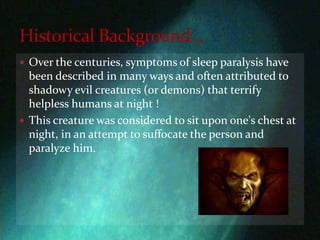
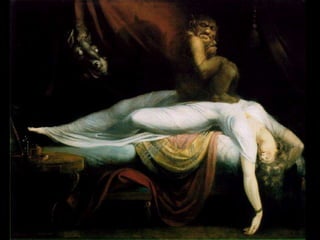
Over the centuries, symptoms of sleep paralysis have been described in many ways and often attributed to shadowy evil creatures (or demons) that terrify helpless humans at night !This creature was considered to sit upon one's chest at night, in an attempt to suffocate the person and paralyze him. Historical Background ..
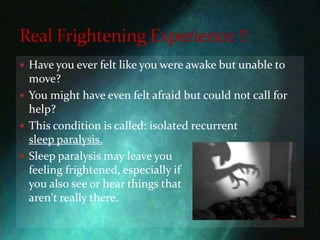
Have you ever felt like you were awake but unable to move?You might have even felt afraid but could not call for help?This condition is called: isolated recurrent                    sleep paralysis. Sleep paralysis may leave you     feeling frightened, especially if                                                        you also see or hear things that                                                       aren't really there.Real Frightening Experience !!
PLAY
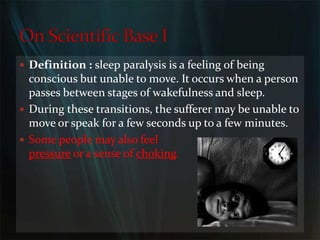
Definition : sleepparalysisis a feeling of being conscious but unable to move. It occurs when a person passes between stages of wakefulness and sleep. During these transitions, the sufferer may be unable to move or speak for a few seconds up to a few minutes.                                                                               Some people may also feel                                                                    pressure or a sense of choking. On Scientific Base I
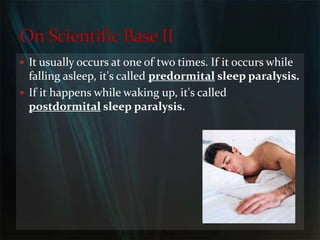
It usually occurs at one of two times. If it occurs while falling asleep, it's called predormital sleep paralysis.If it happens while waking up, it's called postdormital sleep paralysis.On Scientific Base II
Up to as many as 4 out of every 10 people may have sleep paralysis*.This common condition is often first noticed in the teen years. But men and women of any age can have it. Sleep paralysis may run in families.On Scientific Base III*according to webmd.com
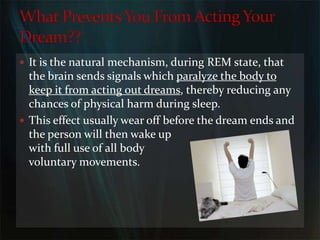
It is the natural mechanism, during REM state, that the brain sends signals which paralyze the body to keep it from acting out dreams, thereby reducing any chances of physical harm during sleep. This effect usually wear off before the dream ends and                              the person will then wake up                                       with full use of all body                                        voluntary movements. What Prevents You From Acting Your Dream??
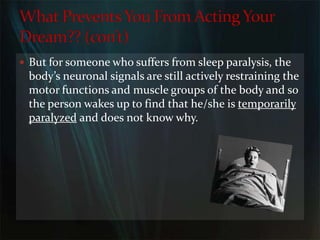
But for someone who suffers from sleep paralysis, the body’s neuronal signals are still actively restraining the motor functions and muscle groups of the body and so the person wakes up to find that he/she is temporarily paralyzed and does not know why. What Prevents You From Acting Your Dream?? (con’t)
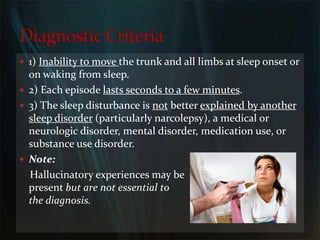
1) Inability to move the trunk and all limbs at sleep onset or on waking from sleep.2) Each episode lasts seconds to a few minutes.3) The sleep disturbance is not better explained by another sleep disorder (particularly narcolepsy), a medical or neurologic disorder, mental disorder, medication use, or substance use disorder.Note:    Hallucinatory experiences may be                                            present but are not essential to                                                   the diagnosis.Diagnostic Criteria
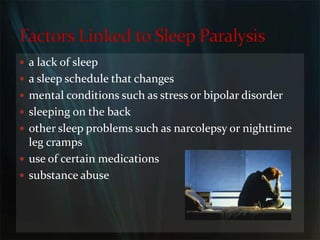
a lack of sleepa sleep schedule that changesmental conditions such as stress or bipolar disordersleeping on the backother sleep problems such as narcolepsy or nighttime leg crampsuse of certain medicationssubstance abuseFactors Linked to Sleep Paralysis
Most people need no treatment for sleep paralysis. Treating any underlying conditions such as narcolepsy may help for betterment. How to Treat It?
improving sleep habits -- such as making sure you get 6 to 8 hours of sleep each nightusing antidepressant medication (to help regulate sleep cycles)treating any mental health                                   problems that may contribute                                         to sleep paralysistreating any other sleep                                                         disorders, such as narcolepsy                                                      or leg cramps.How to Treat It? (con’t)
A good way to leave the paralyzed state is to breathe in a calm, relaxed fashion and make attempts to move small body parts, such as the eyelids or fingers and toes.What can I do about it?
Sleep Paralysis Information Servicehttp://www.spis.org.uk/The web
References webmd.com – sleep disorders
medterms.com

Sleep paralysis

  • 2.
    Sleep paralysisThe terrifyingnightmareBy Taher Haddad
  • 3.
    Historical Background ..RealFrightening Experience !!On Scientific Base What Prevents You From Acting Your Dream??Diagnostic CriteriaHow to Treat It?Factors Linked to Sleep ParalysisWhat can I do about it?The webOutlines:
  • 4.
    Over the centuries,symptoms of sleep paralysis have been described in many ways and often attributed to shadowy evil creatures (or demons) that terrify helpless humans at night !This creature was considered to sit upon one's chest at night, in an attempt to suffocate the person and paralyze him. Historical Background ..
  • 6.
    Have you everfelt like you were awake but unable to move?You might have even felt afraid but could not call for help?This condition is called: isolated recurrent sleep paralysis. Sleep paralysis may leave you feeling frightened, especially if you also see or hear things that aren't really there.Real Frightening Experience !!
  • 7.
  • 8.
    Definition : sleepparalysisisa feeling of being conscious but unable to move. It occurs when a person passes between stages of wakefulness and sleep. During these transitions, the sufferer may be unable to move or speak for a few seconds up to a few minutes. Some people may also feel pressure or a sense of choking. On Scientific Base I
  • 9.
    It usually occursat one of two times. If it occurs while falling asleep, it's called predormital sleep paralysis.If it happens while waking up, it's called postdormital sleep paralysis.On Scientific Base II
  • 10.
    Up to asmany as 4 out of every 10 people may have sleep paralysis*.This common condition is often first noticed in the teen years. But men and women of any age can have it. Sleep paralysis may run in families.On Scientific Base III*according to webmd.com
  • 11.
    It is thenatural mechanism, during REM state, that the brain sends signals which paralyze the body to keep it from acting out dreams, thereby reducing any chances of physical harm during sleep. This effect usually wear off before the dream ends and the person will then wake up with full use of all body voluntary movements. What Prevents You From Acting Your Dream??
  • 12.
    But for someonewho suffers from sleep paralysis, the body’s neuronal signals are still actively restraining the motor functions and muscle groups of the body and so the person wakes up to find that he/she is temporarily paralyzed and does not know why. What Prevents You From Acting Your Dream?? (con’t)
  • 13.
    1) Inability tomove the trunk and all limbs at sleep onset or on waking from sleep.2) Each episode lasts seconds to a few minutes.3) The sleep disturbance is not better explained by another sleep disorder (particularly narcolepsy), a medical or neurologic disorder, mental disorder, medication use, or substance use disorder.Note: Hallucinatory experiences may be present but are not essential to the diagnosis.Diagnostic Criteria
  • 14.
    a lack ofsleepa sleep schedule that changesmental conditions such as stress or bipolar disordersleeping on the backother sleep problems such as narcolepsy or nighttime leg crampsuse of certain medicationssubstance abuseFactors Linked to Sleep Paralysis
  • 15.
    Most people needno treatment for sleep paralysis. Treating any underlying conditions such as narcolepsy may help for betterment. How to Treat It?
  • 16.
    improving sleep habits-- such as making sure you get 6 to 8 hours of sleep each nightusing antidepressant medication (to help regulate sleep cycles)treating any mental health problems that may contribute to sleep paralysistreating any other sleep disorders, such as narcolepsy or leg cramps.How to Treat It? (con’t)
  • 17.
    A good wayto leave the paralyzed state is to breathe in a calm, relaxed fashion and make attempts to move small body parts, such as the eyelids or fingers and toes.What can I do about it?
  • 18.
    Sleep Paralysis InformationServicehttp://www.spis.org.uk/The web
  • 19.
  • 20.